Pinnacle iWPPSI-IV - Wechsler Preschool and Primary Scale of Intelligence–IV
share
The Wechsler Preschool and Primary Scale of Intelligence–IV (WPPSI-IV) is an assessment tool designed to measure cognitive development in children aged 2 years 6 months to 7 years 7 months, providing key insights into their intellectual abilities. It helps in identifying developmental conditions early so that personalized intervention plans can be designed.
The WPPSI-IV is a comprehensive assessment that evaluates various aspects of a child''s intelligence, including verbal comprehension, visual spatial abilities, and working memory. It is used to gain insights into the cognitive development of young children.
Understanding a child''s intellectual strengths and weaknesses through WPPSI-IV allows parents and educators to tailor educational approaches and therapeutic interventions that cater to the child''s needs, promoting optimal development and learning outcomes.
Trained professionals administer the WPPSI-IV in a supportive environment, ensuring the child is comfortable and engaged while their cognitive abilities are evaluated.
Assessments are conducted at Pinnacle Blooms Network''s centers, which are equipped with the latest tools and expertise across India, USA, Dubai, and Singapore.
Pinnacle Blooms Network has successfully conducted over 1,00,00,000 assessments with a 97%+ accuracy rate using the world''s first patented Pinnacle TherapeuticAI.
*Names are indicative only and have been changed for privacy protectionA New Light for Arjun
Arjun, a 5-year-old boy, was often misunderstood in his playgroup. His parents were worried about his delayed speech and social skills. Upon recommendation, they visited Pinnacle Blooms Network. After a thorough WPPSI-IV assessment, therapists identified his strengths in visual-spatial processing but noted challenges in verbal comprehension. This insight led to a tailored intervention plan focusing on speech therapy and cognitive exercises. Now, Arjun is not only thriving but has also become the little artist of his class, beaming with confidence and joy.
Progress : Avi''s communication has vastly improved, and he shows better engagement in social activities.
Join the countless families who have benefited from our precise assessments. Call us at 9100 181 181 or email at care@pinnacleblooms.org to schedule your child''s assessment today.
*Names are indicative only and have been changed for privacy protectionSuccess Testimonial
Name : Sunita Sharma
RelationShip : Mother
Testimonial : The WPPSI-IV assessment at Pinnacle Blooms Network opened our eyes to Avi''s potential. The personalized therapy plan has made a significant difference in his development. We are grateful for the expertise and care provided.
Testimonial : Seeing Sneha''s progress after her assessment at Pinnacle Blooms was unbelievable. The targeted therapies have immensely helped her focus and learning capabilities.
These are reference questions and illustrative examples. This section does not collect child responses, calculate scores or produce an individual assessment result.
Can the child understand the meaning of common words (e.g., cat, chair)?
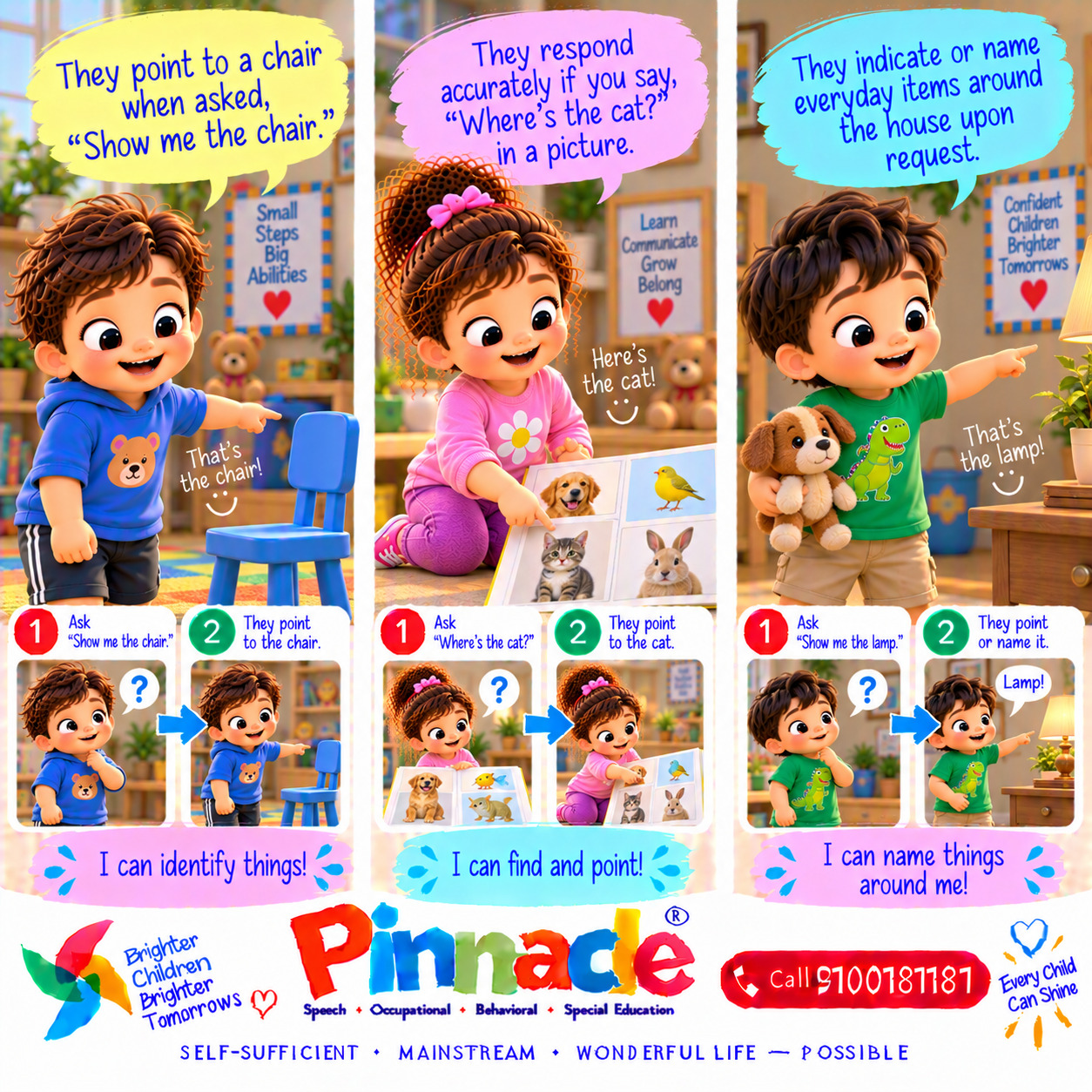
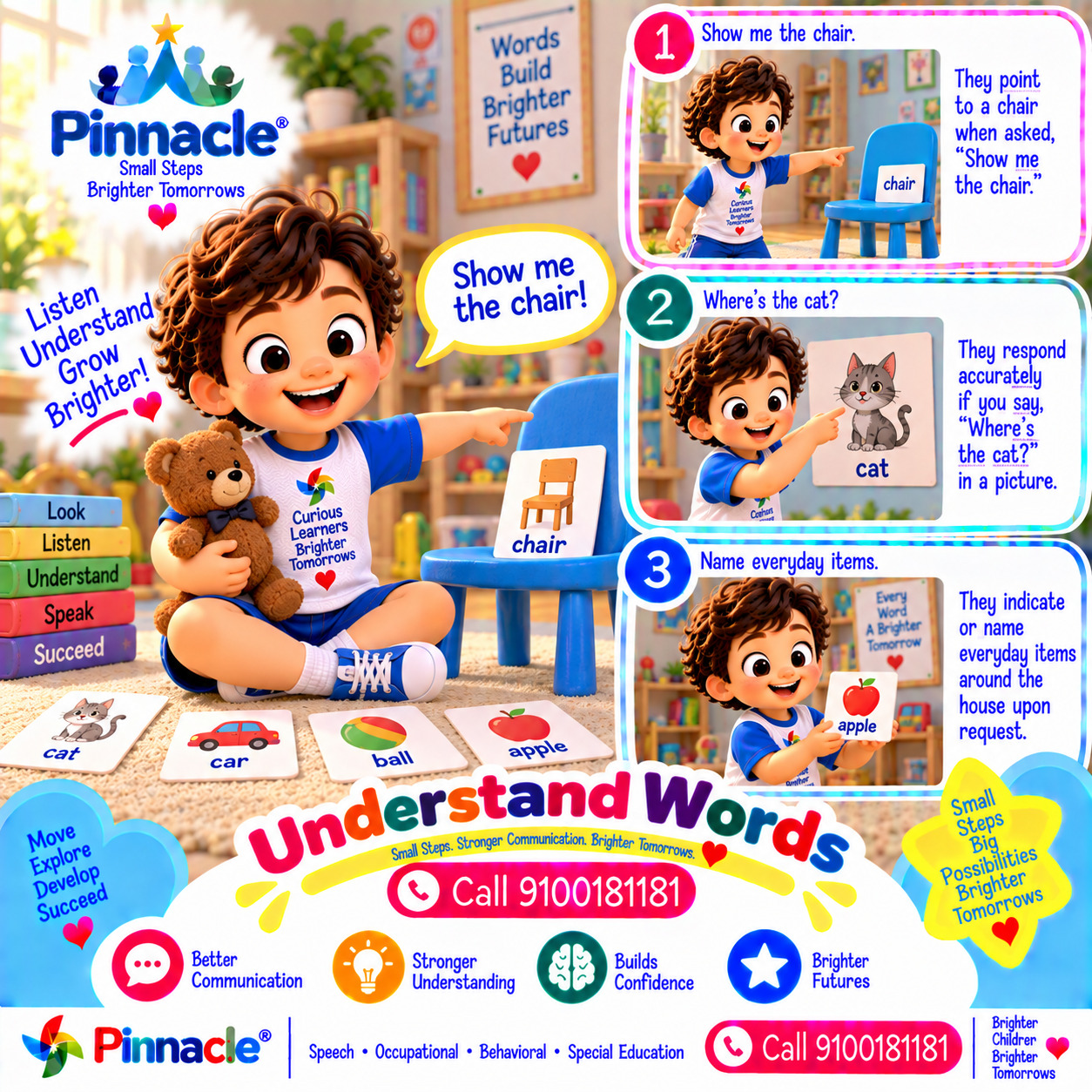
Topic: Understand Words
Example 1
They point to a chair when asked, “Show me the chair.”
Example 2
They respond accurately if you say, “Where’s the cat?” in a picture.
Example 3
They indicate or name everyday items around the house upon request.
Example illustrationQuestion illustration
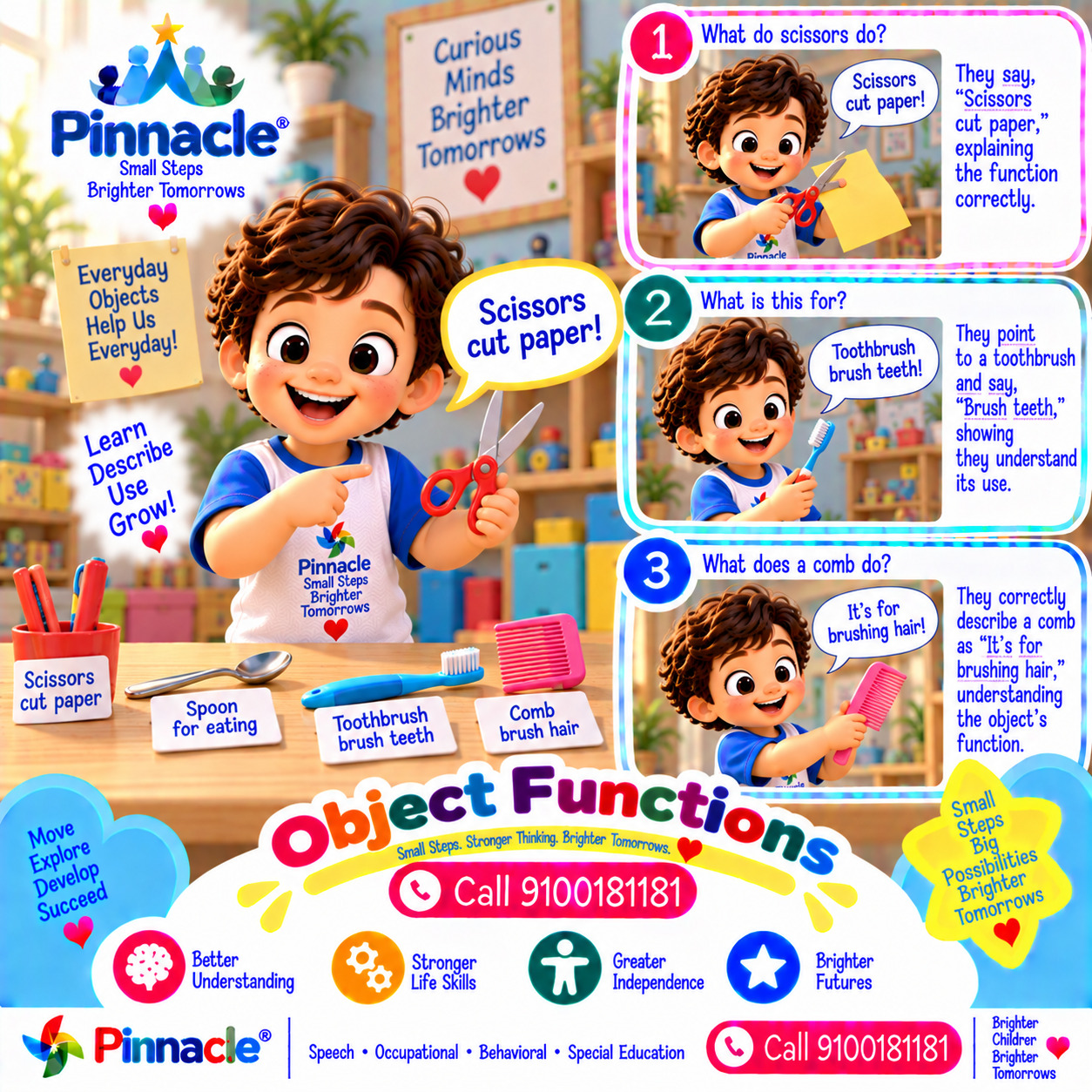
Can the child explain the function of everyday objects (e.g., “What do scissors do?”)?
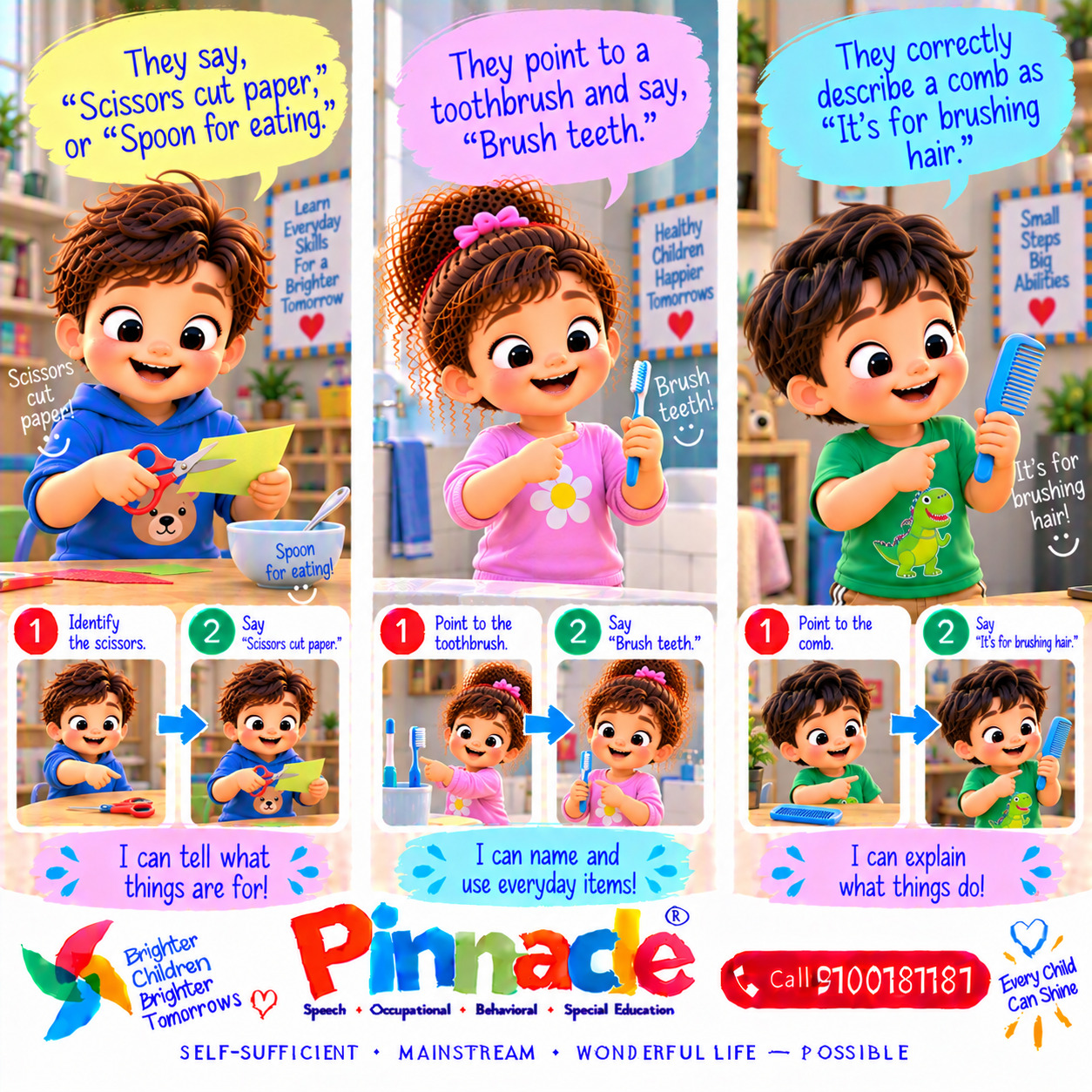
Topic: Object Functions
Example 1
They say, “Scissors cut paper,” or “Spoon for eating.”
Example 2
They point to a toothbrush and say, “Brush teeth.”
Example 3
They correctly describe a comb as “It’s for brushing hair.”
Example illustrationQuestion illustration
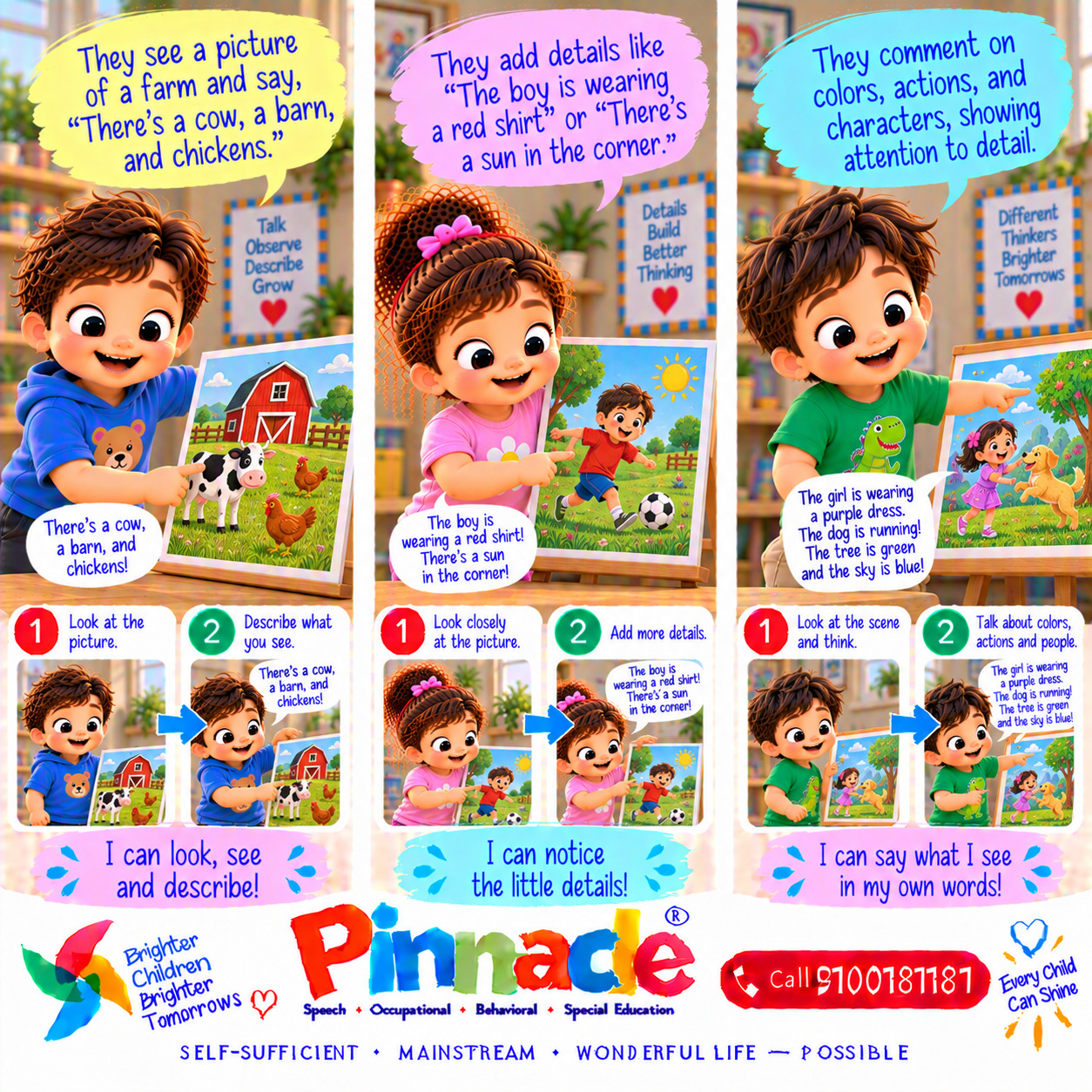
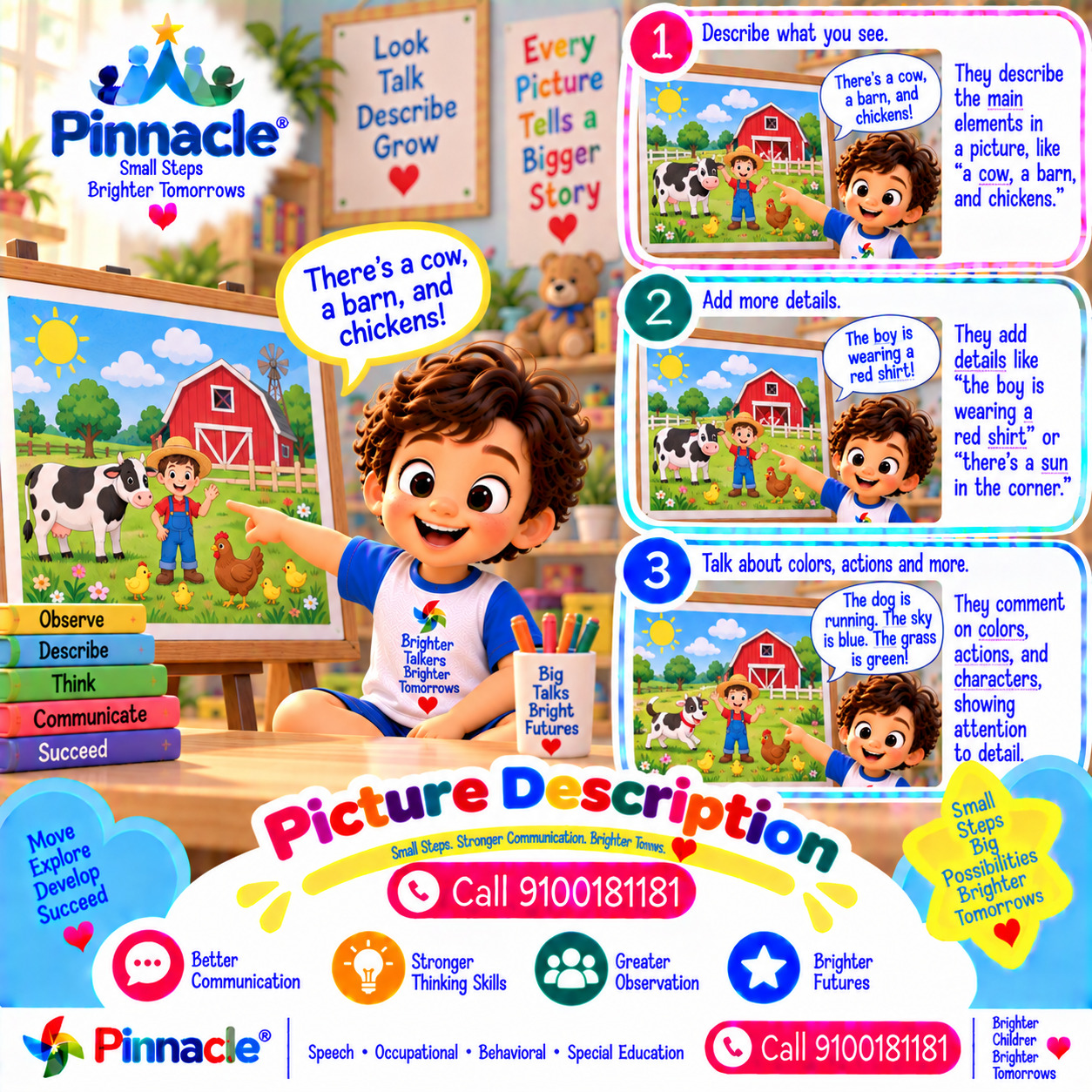
Can the child describe pictures in detail?
Topic: Picture Description
Example 1
They see a picture of a farm and say, “There’s a cow, a barn, and chickens.”
Example 2
They add details like “The boy is wearing a red shirt” or “There’s a sun in the corner.”
Example 3
They comment on colors, actions, and characters, showing attention to detail.
Example illustrationQuestion illustration
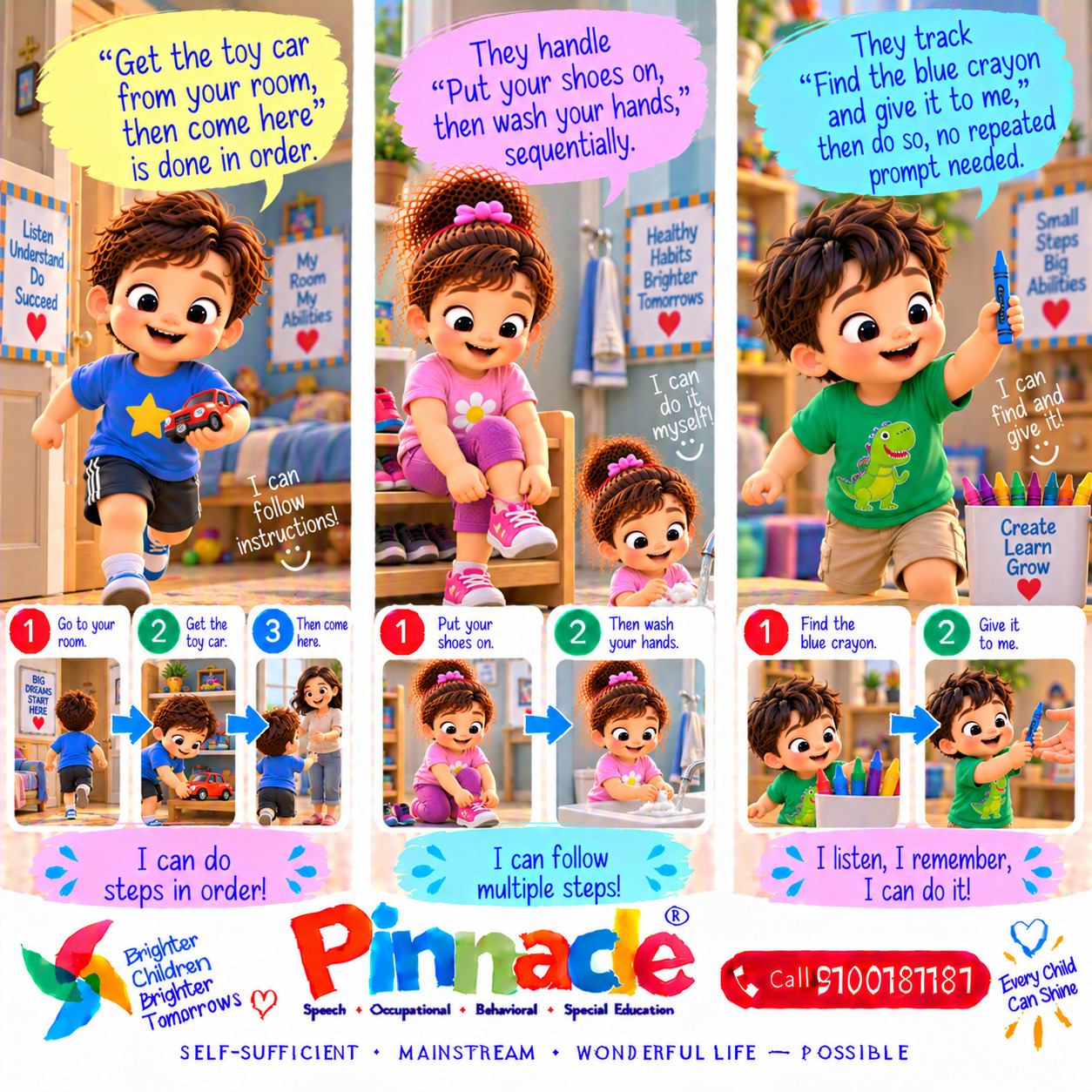
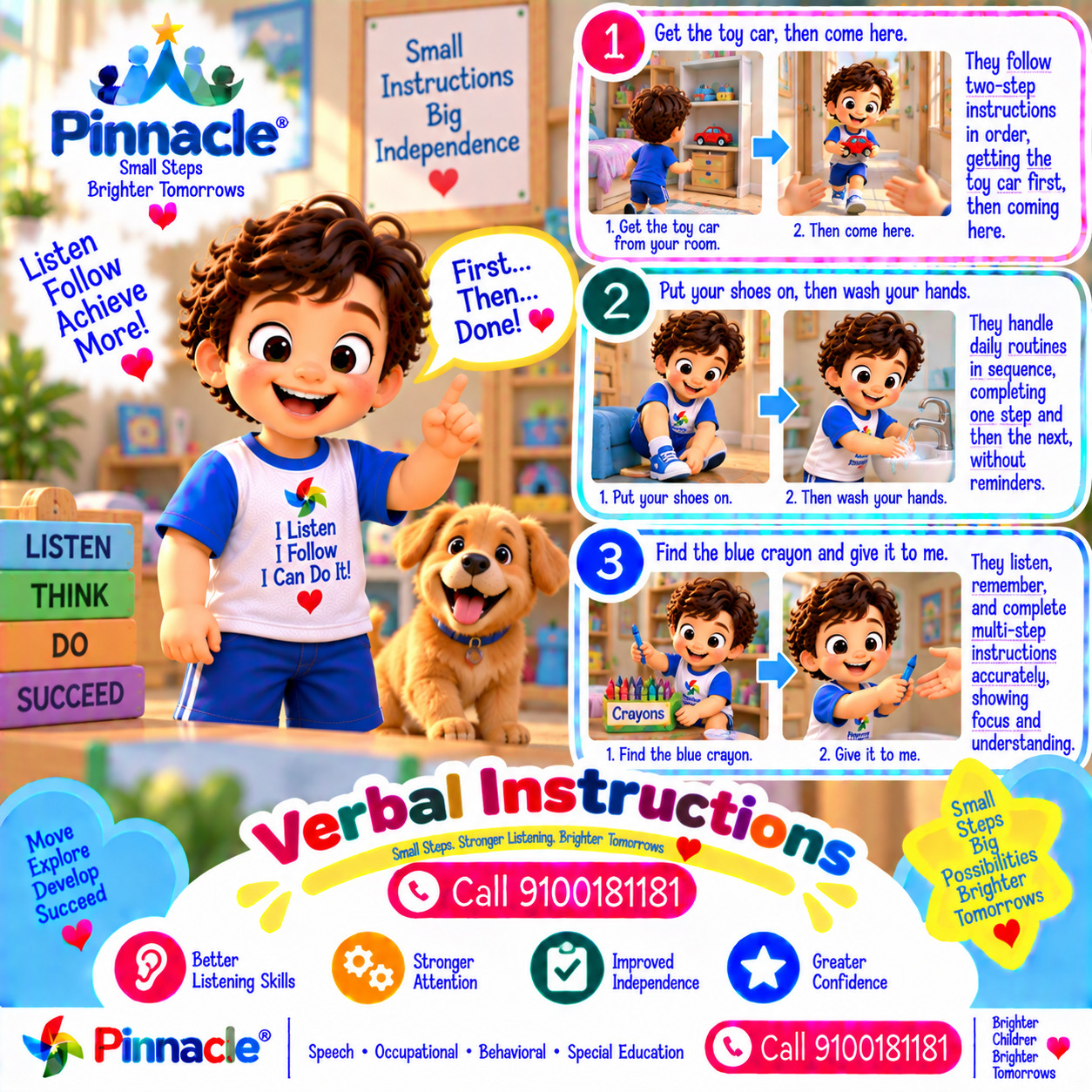
Can the child follow multi-step verbal instructions?
Topic: Verbal Instructions
Example 1
“Get the toy car from your room, then come here” is done in order.
Example 2
They handle “Put your shoes on, then wash your hands,” sequentially.
Example 3
They track “Find the blue crayon and give it to me,” then do so, no repeated prompt needed.
Example illustrationQuestion illustration
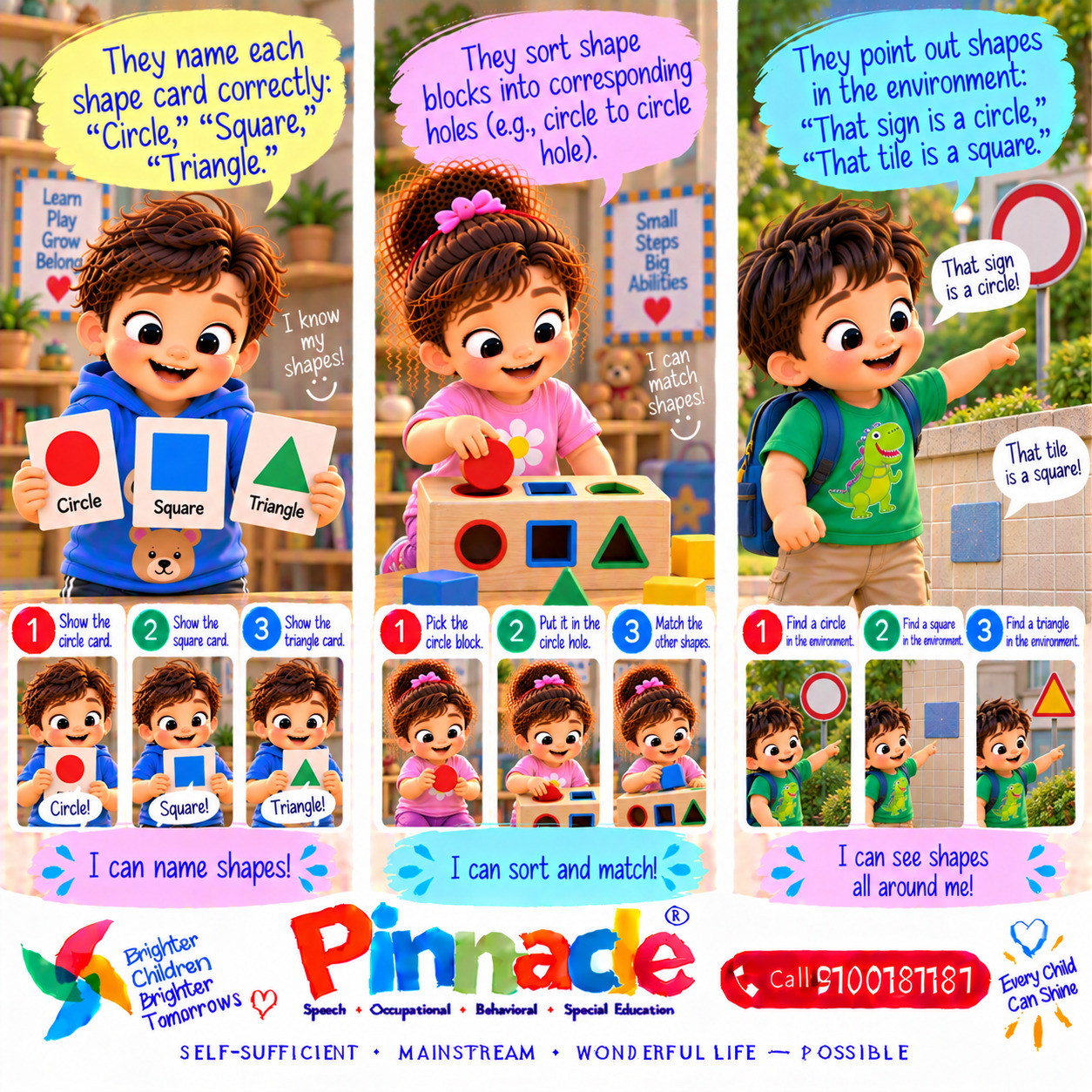
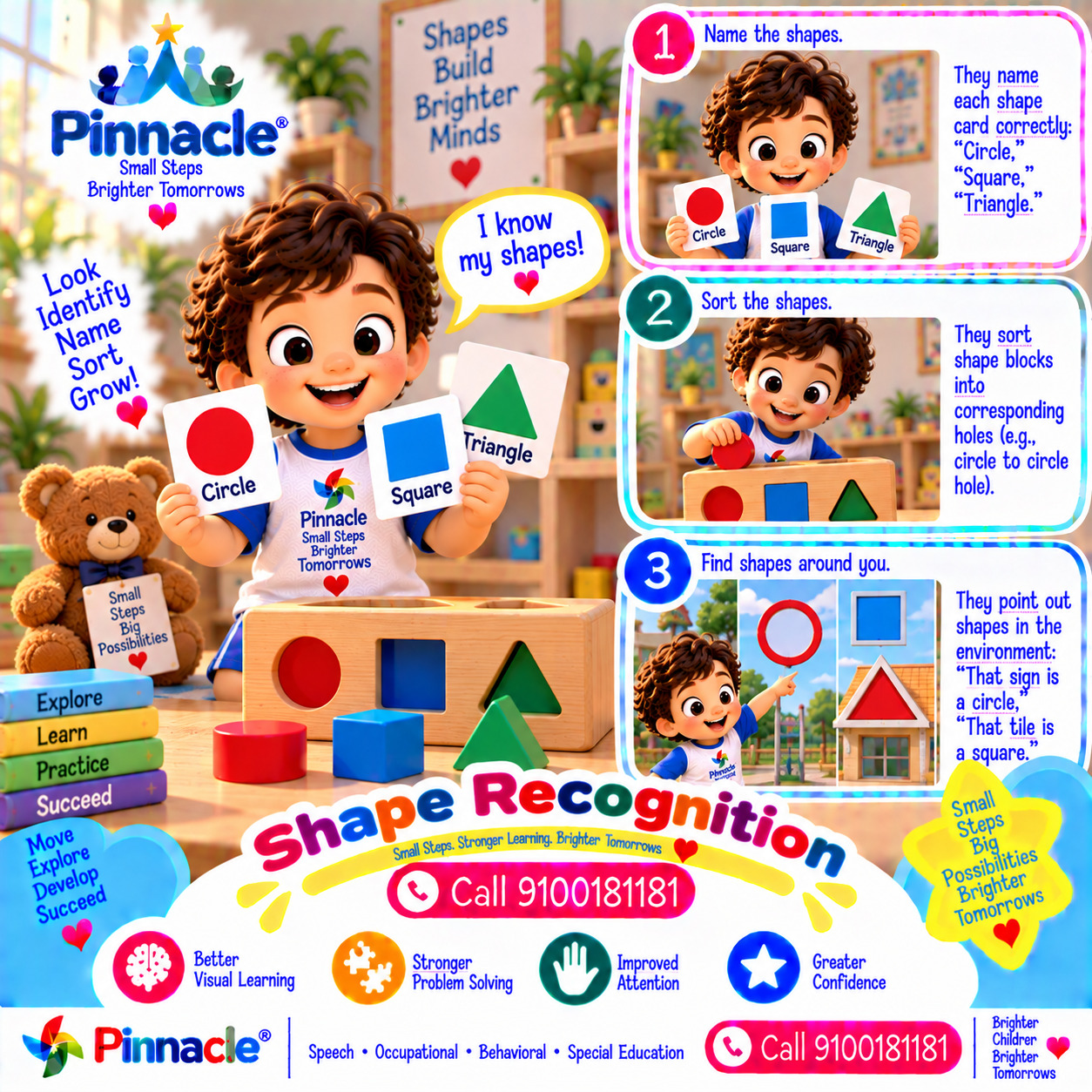
Can the child recognize shapes such as circles, squares, and triangles?
Topic: Shape Recognition
Example 1
They name each shape card correctly: “Circle,” “Square,” “Triangle.”
Example 2
They sort shape blocks into corresponding holes (e.g., circle to circle hole).
Example 3
They point out shapes in the environment: “That sign is a circle,” “That tile is a square.”
Example illustrationQuestion illustration
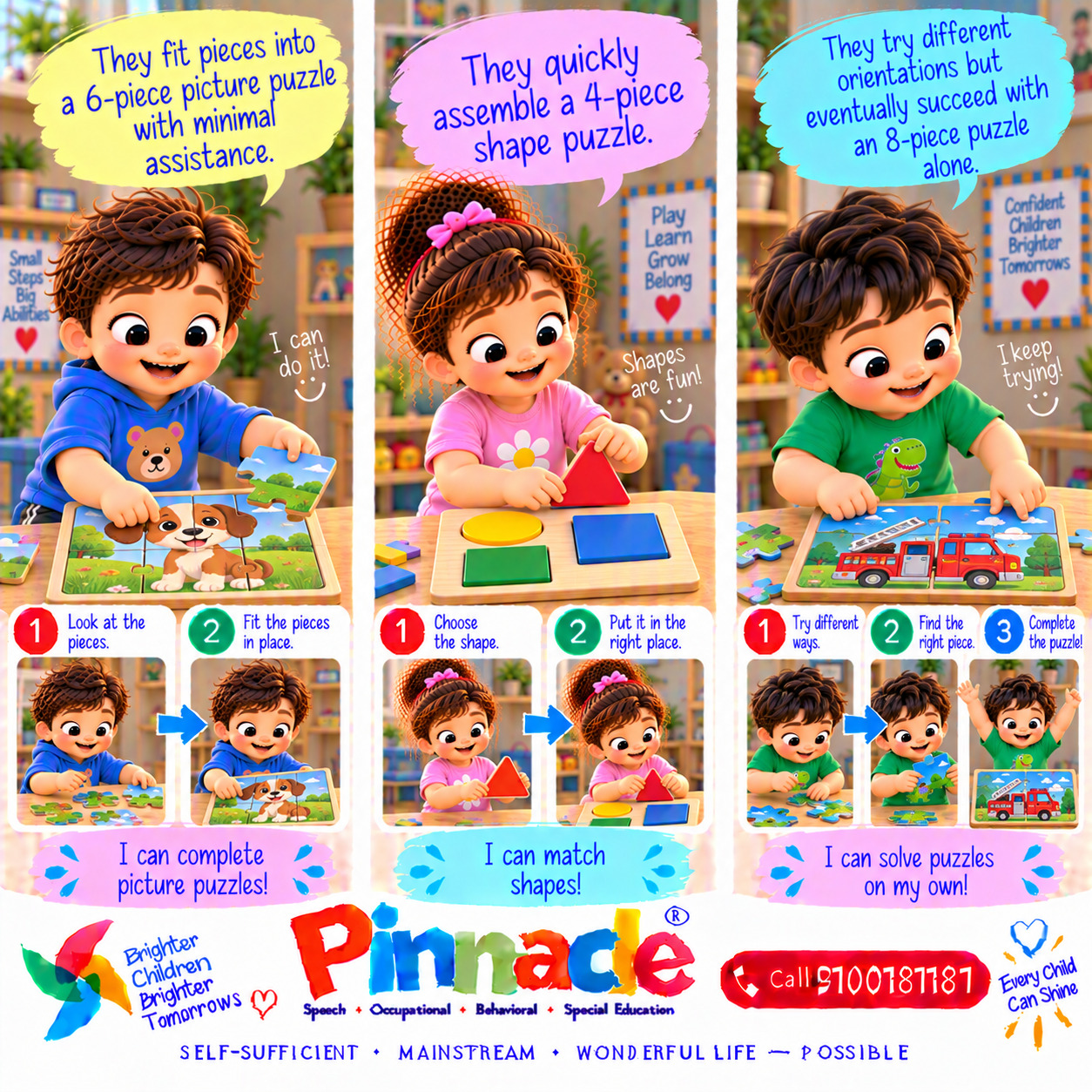
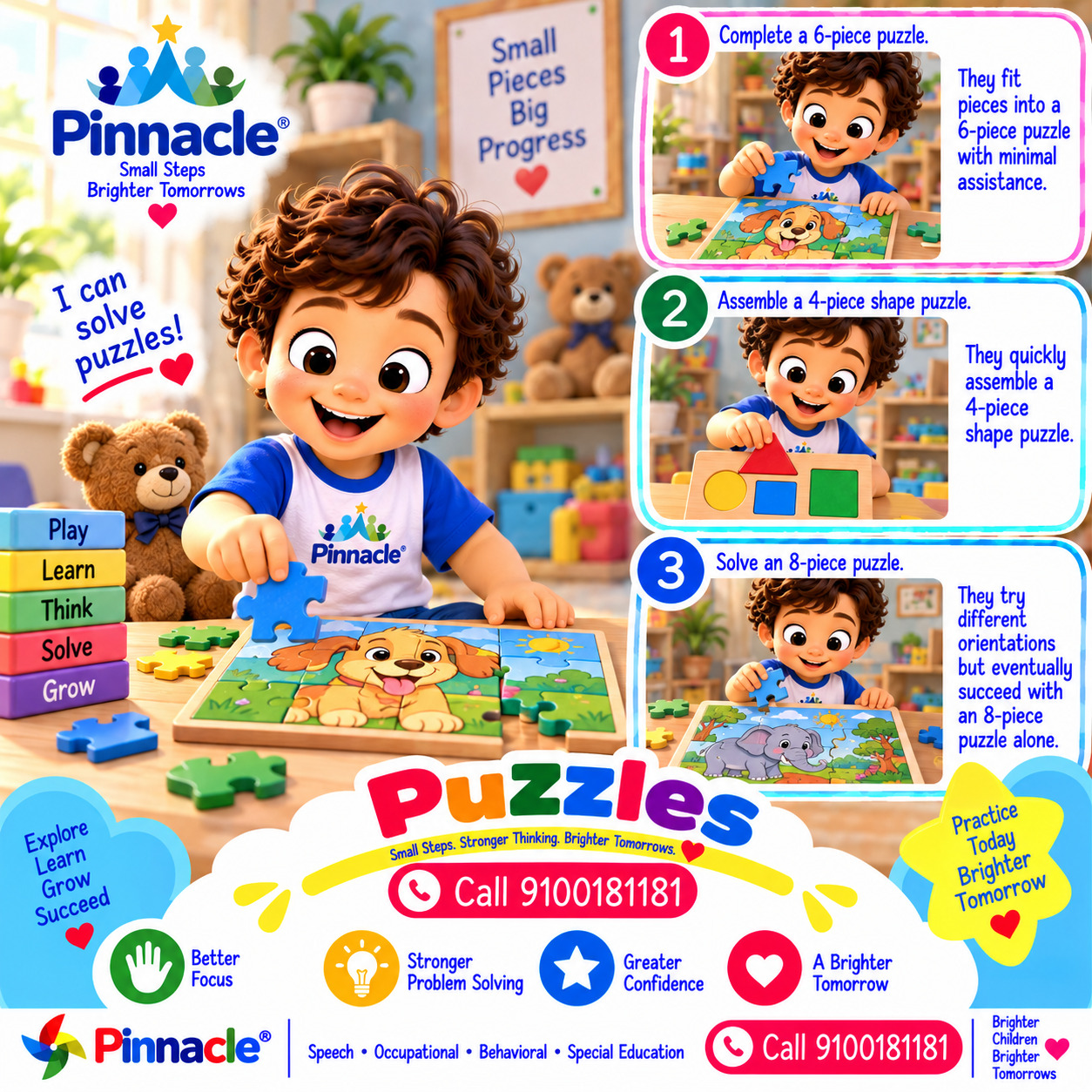
Can the child complete simple puzzles (4-8 pieces)?
Topic: Puzzles
Example 1
They fit pieces into a 6-piece picture puzzle with minimal assistance.
Example 2
They quickly assemble a 4-piece shape puzzle.
Example 3
They try different orientations but eventually succeed with an 8-piece puzzle alone.
Example illustrationQuestion illustration
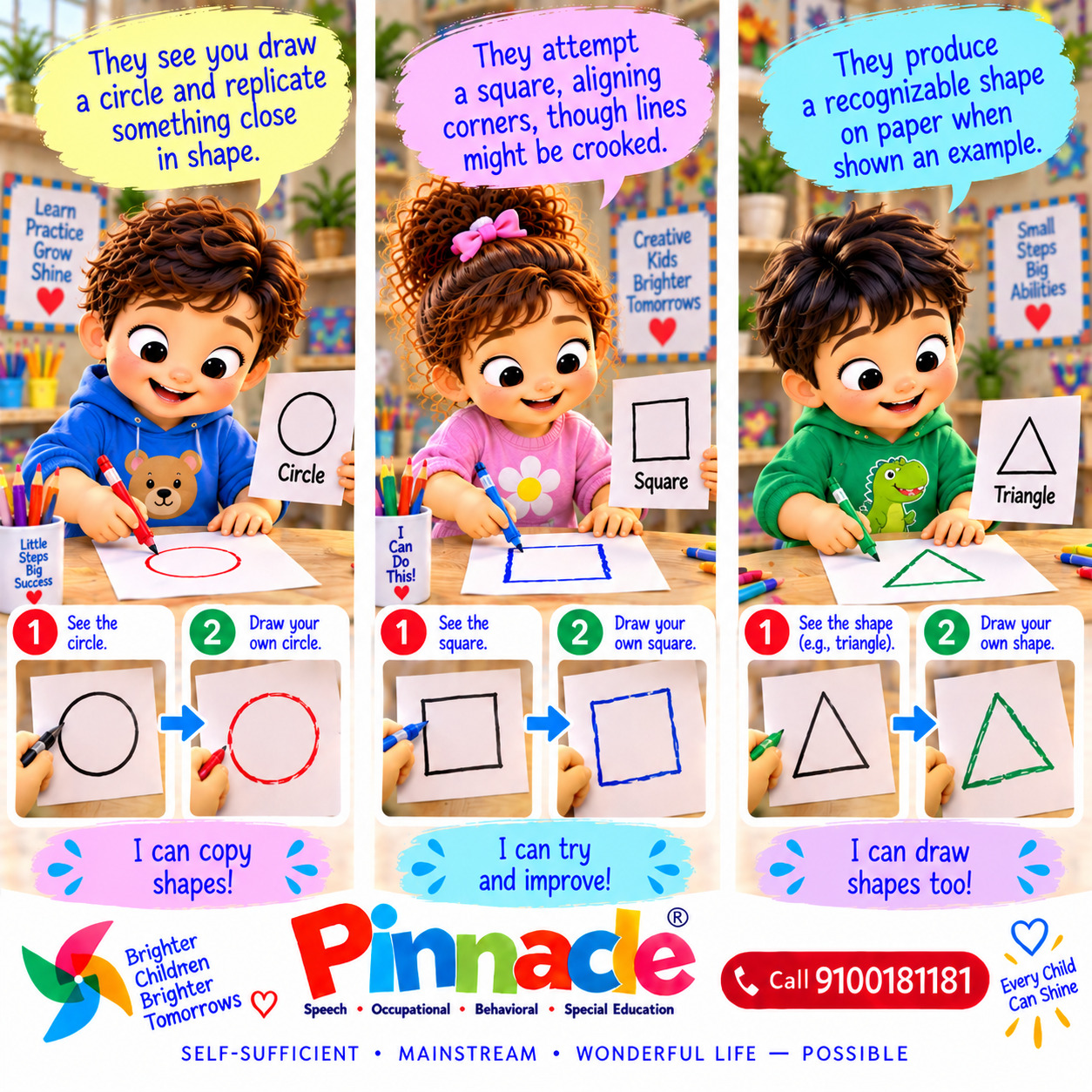
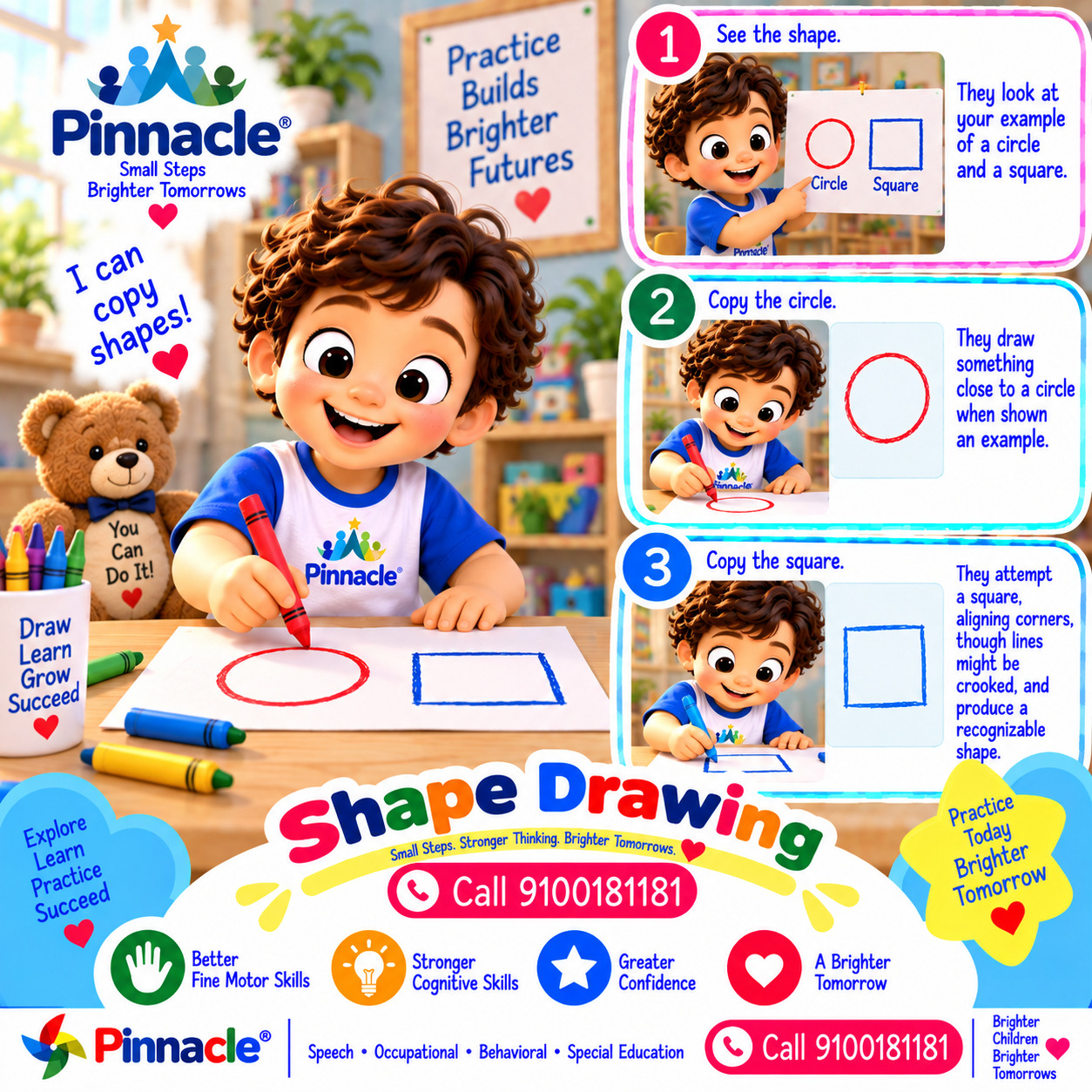
Can the child copy a drawing of basic shapes (circle, square)?
Topic: Shape Drawing
Example 1
They see you draw a circle and replicate something close in shape.
Example 2
They attempt a square, aligning corners, though lines might be crooked.
Example 3
They produce a recognizable shape on paper when shown an example.
Example illustrationQuestion illustration
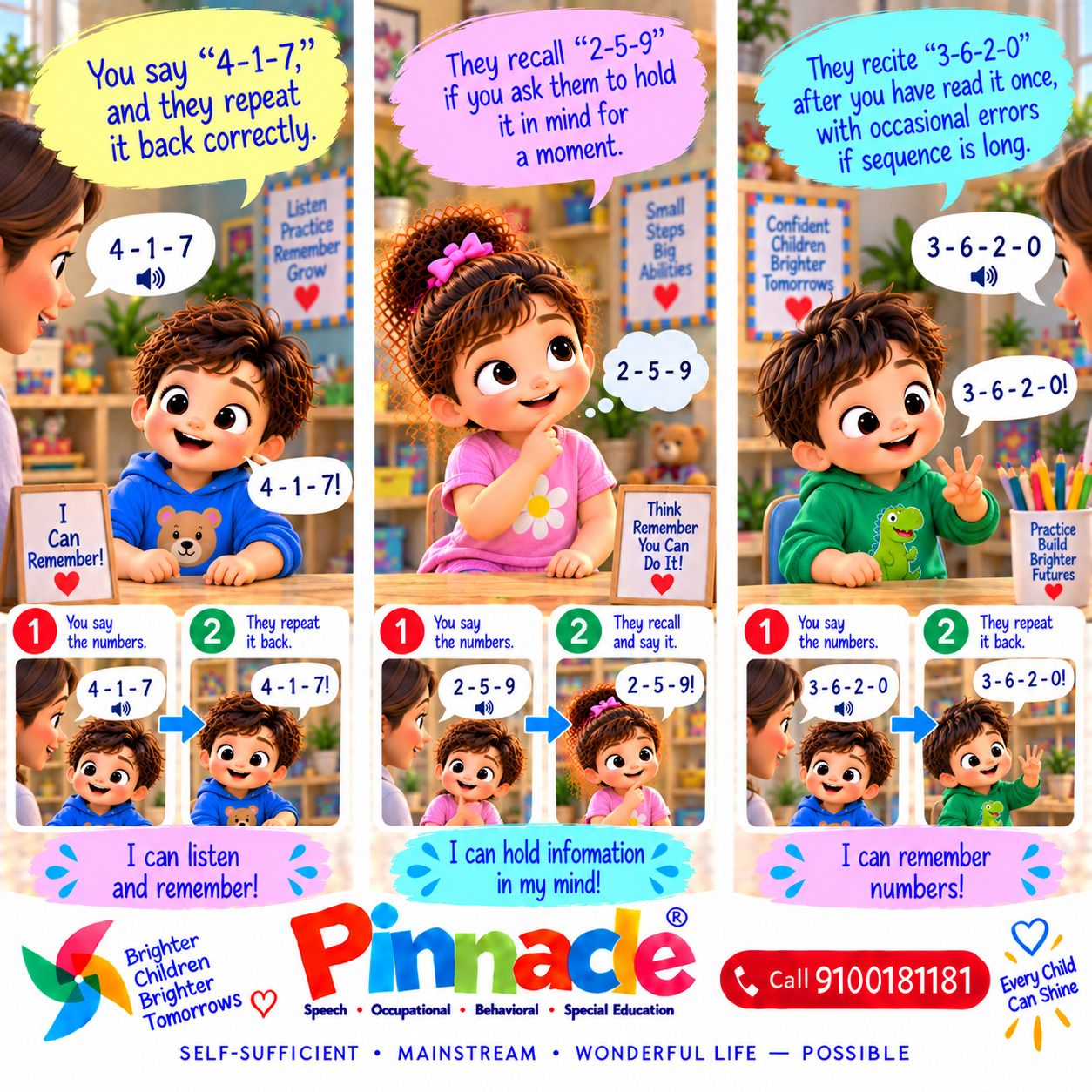
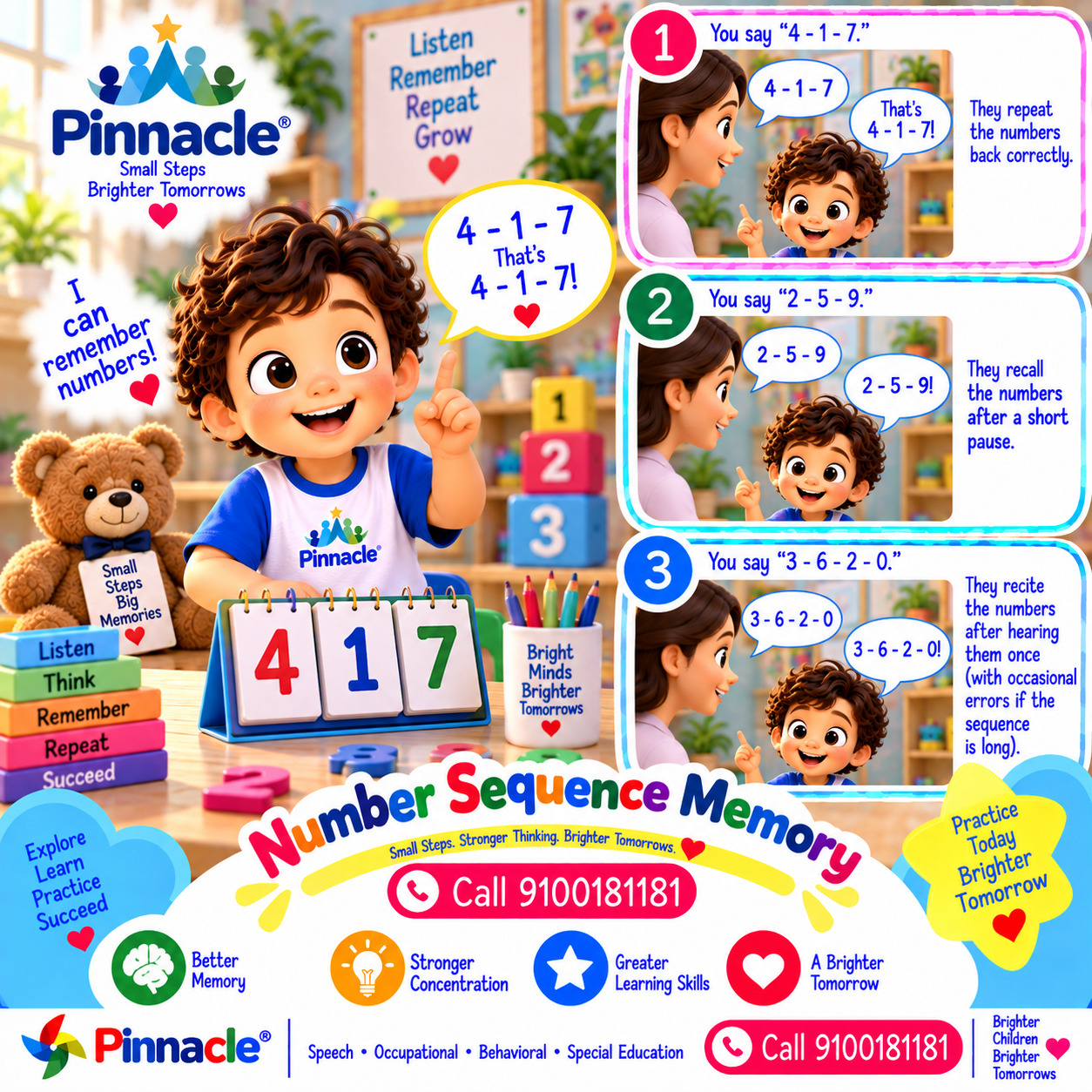
Can the child remember a short sequence of numbers (e.g., 3-4 digits) after hearing them?
Topic: Number Sequence Memory
Example 1
You say “4-1-7,” and they repeat it back correctly.
Example 2
They recall “2-5-9” if you ask them to hold it in mind for a moment.
Example 3
They recite “3-6-2-0” after you have read it once, with occasional errors if sequence is long.
Example illustrationQuestion illustration
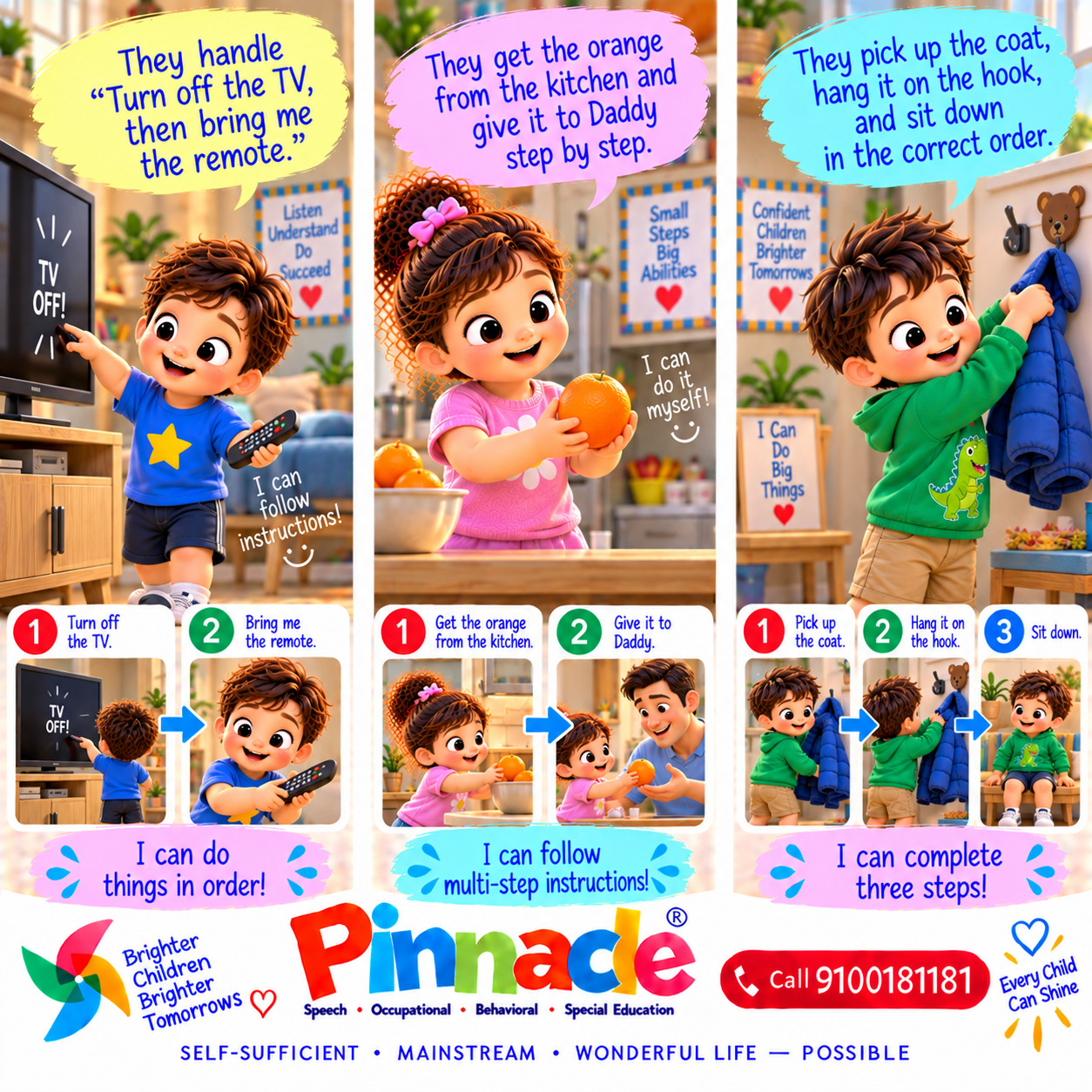
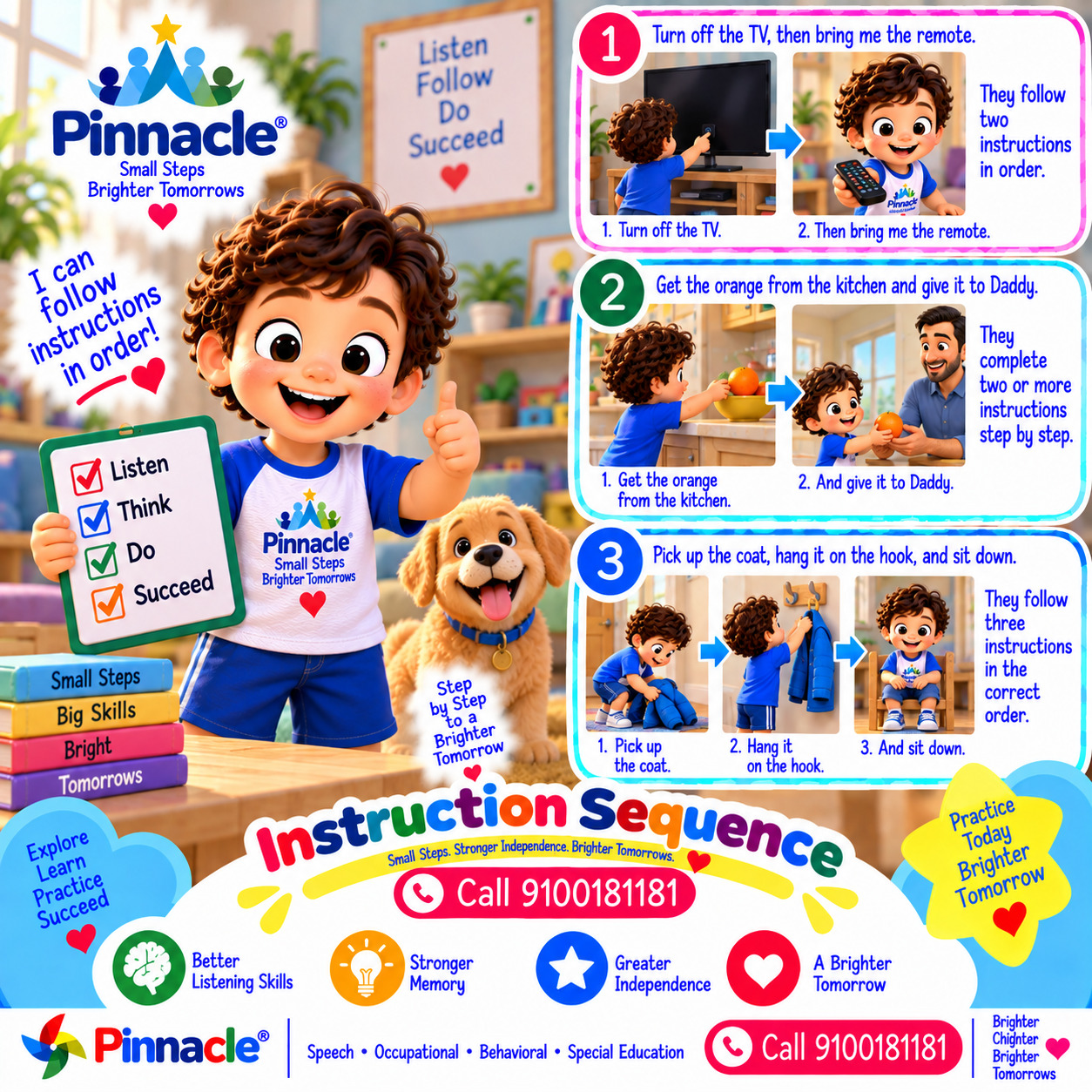
Can the child follow a sequence of two or more instructions in order?
Topic: Instruction Sequence
Example 1
They handle “Turn off the TV, then bring me the remote.”
Example 2
“Get the orange from the kitchen and give it to Daddy” is done step by step.
Example 3
They complete “Pick up the coat, hang it on the hook, and sit down,” in the correct order.
Example illustrationQuestion illustration
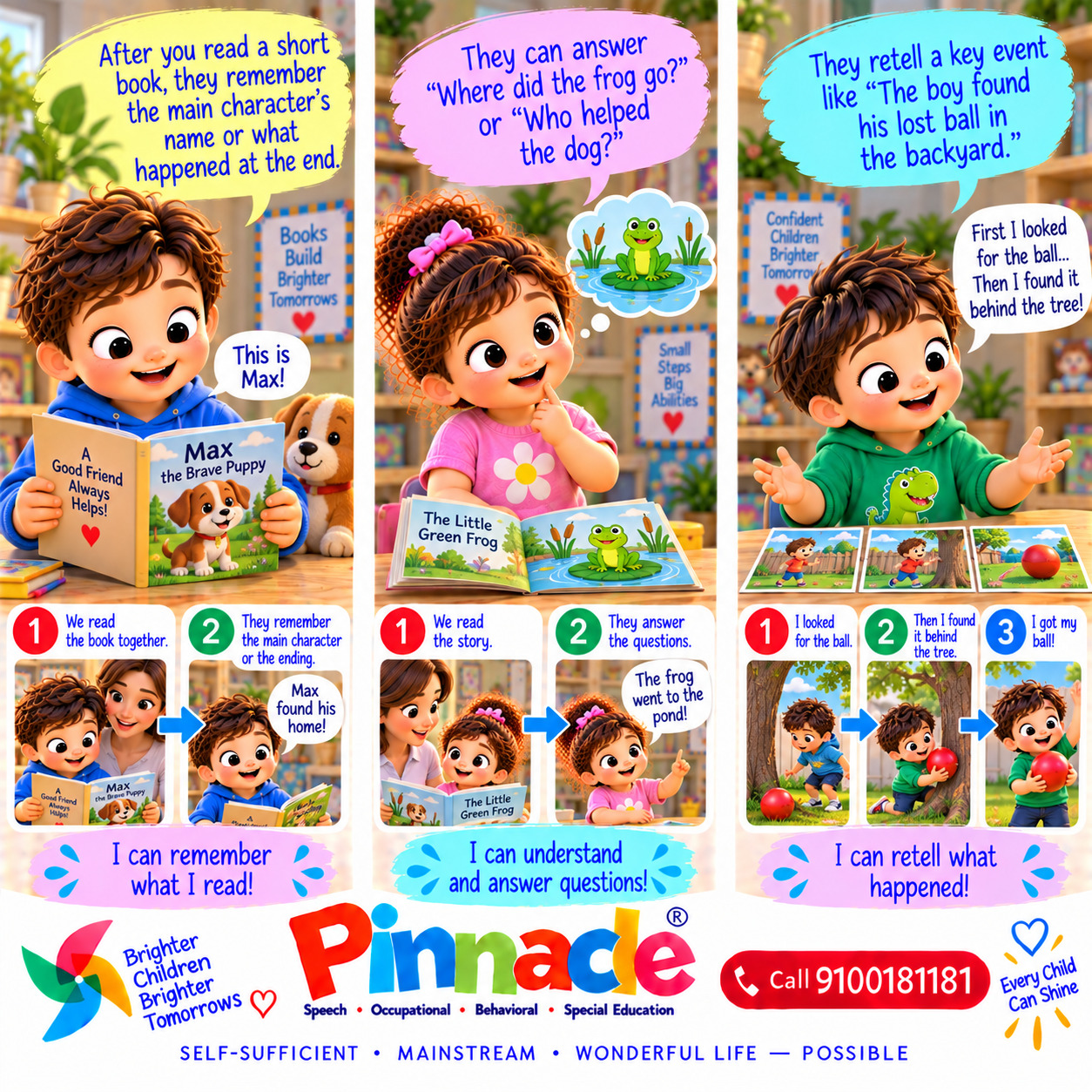
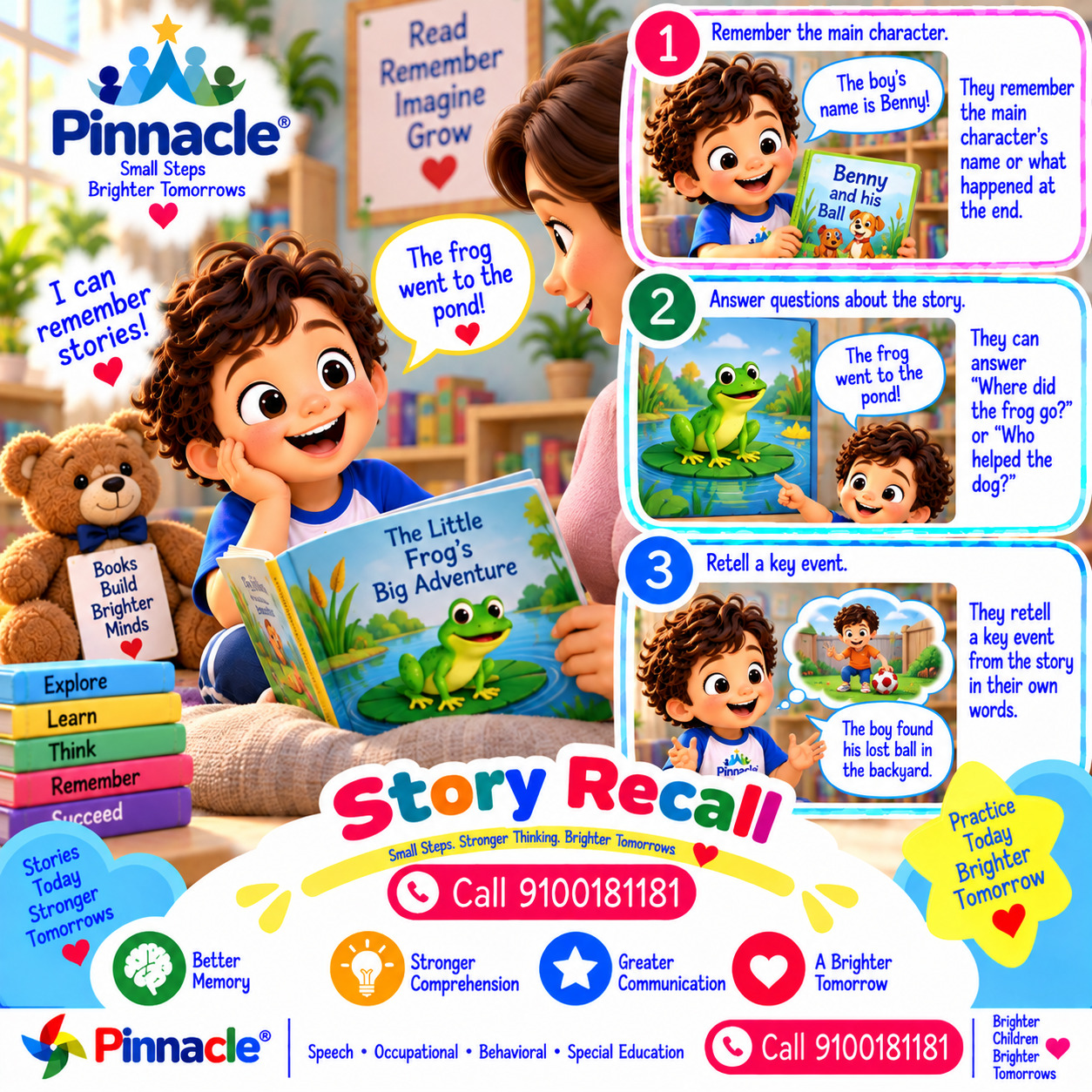
Can the child recall details from a story read aloud?
Topic: Story Recall
Example 1
After you read a short book, they remember the main character’s name or what happened at the end.
Example 2
They can answer “Where did the frog go?” or “Who helped the dog?”
Example 3
They retell a key event like “The boy found his lost ball in the backyard.”
Example illustrationQuestion illustration
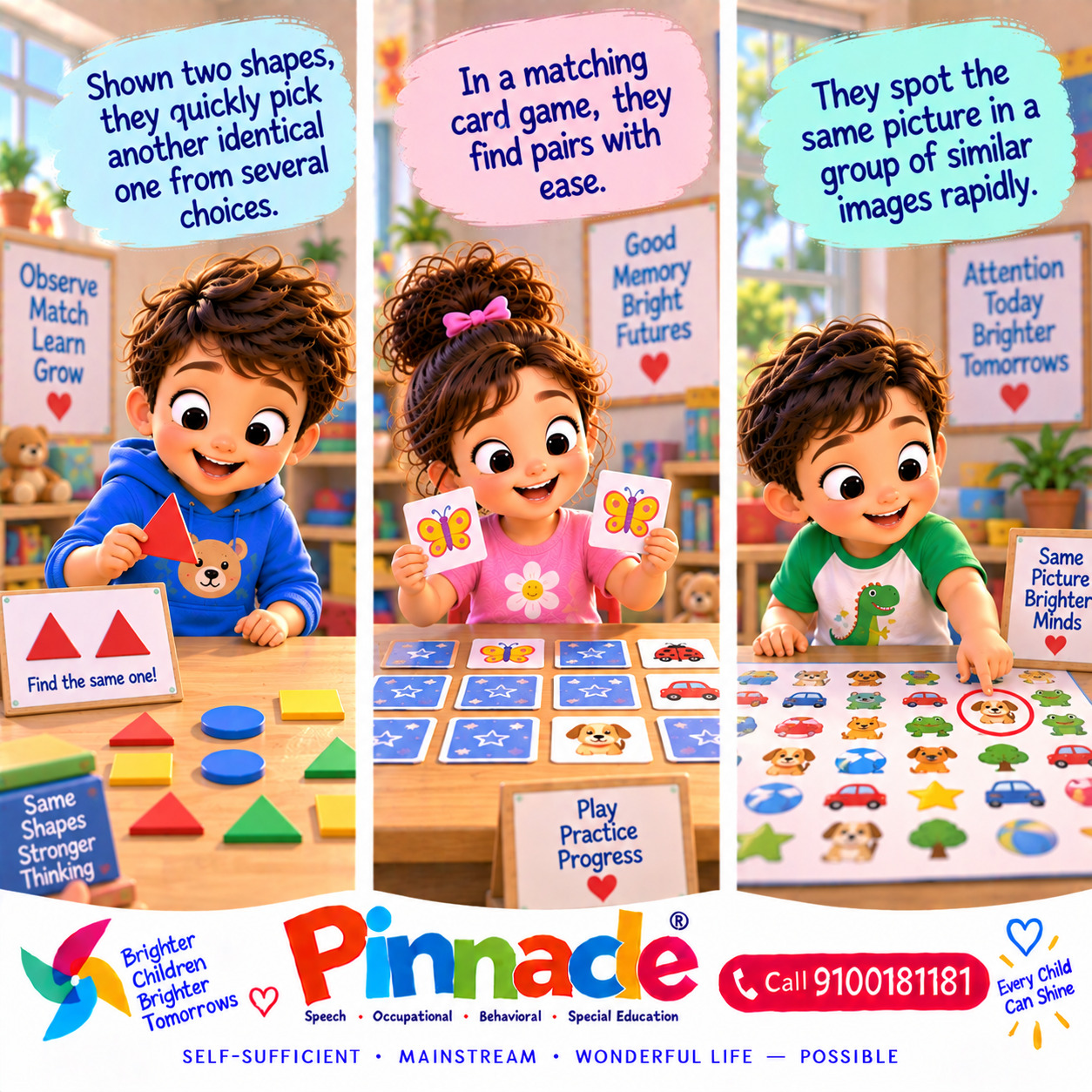
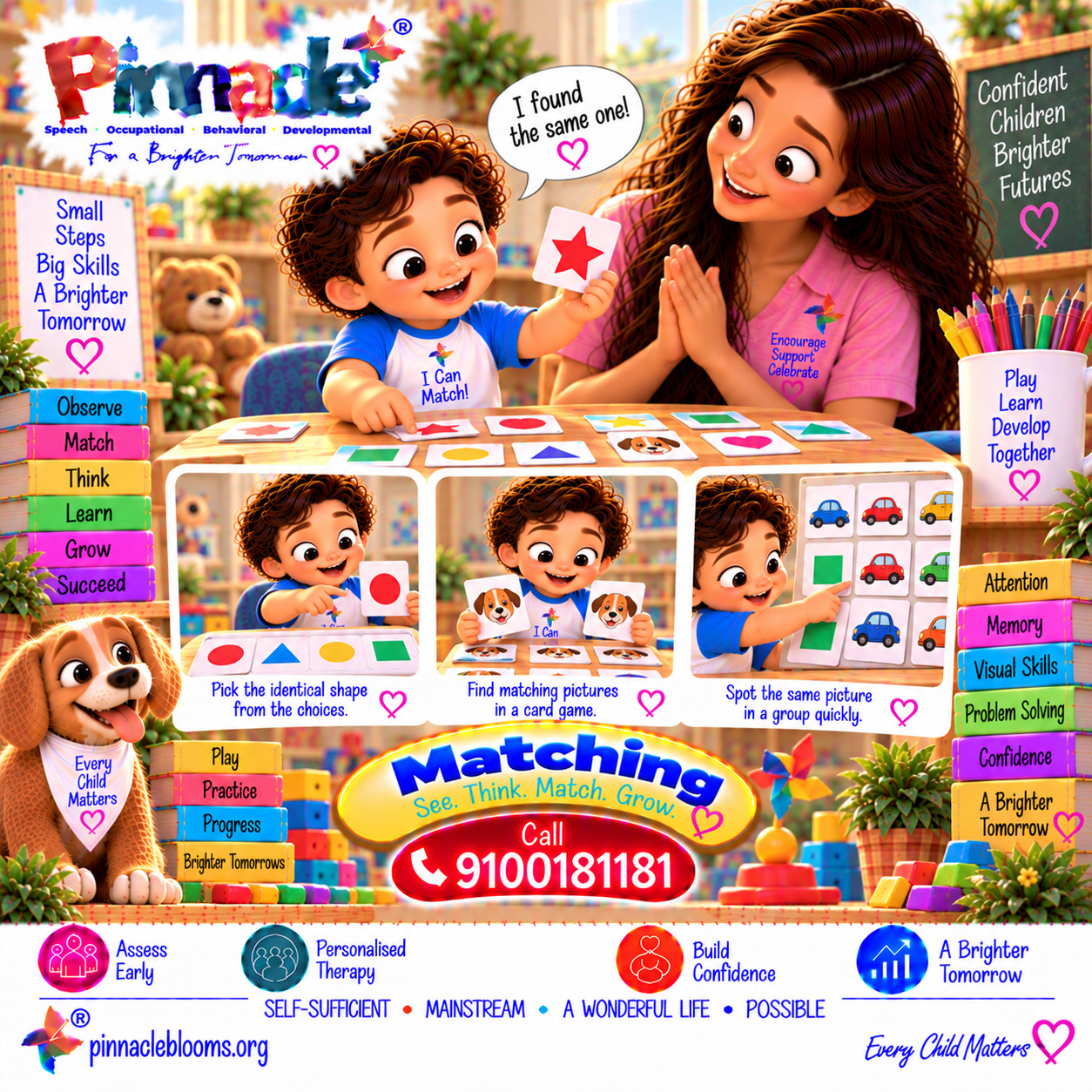
Can the child identify matching shapes or pictures quickly?
Topic: Matching
Example 1
Shown two shapes, they quickly pick another identical one from several choices.
Example 2
In a matching card game, they find pairs with ease.
Example 3
They spot the same picture in a group of similar images rapidly.
Example illustrationQuestion illustration
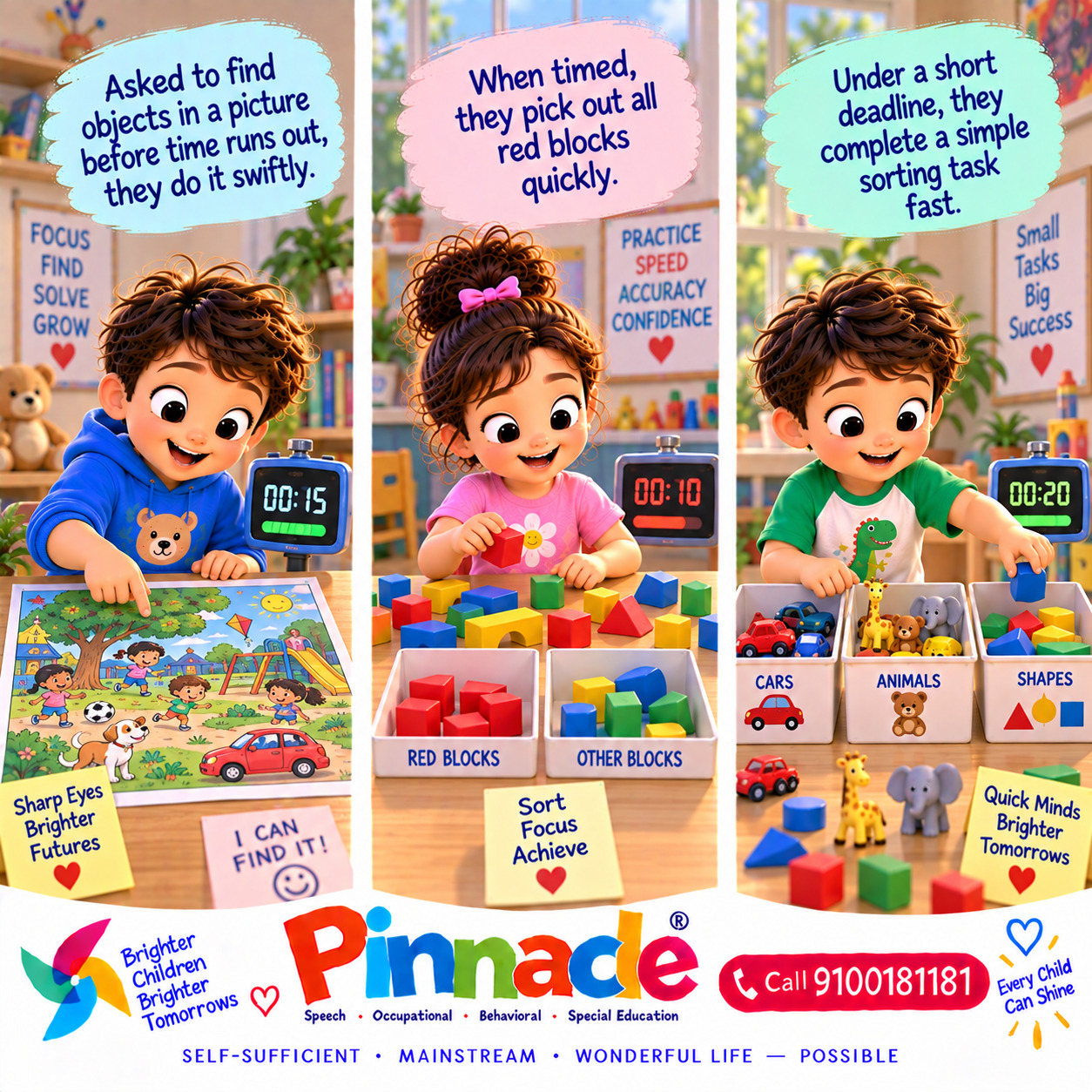
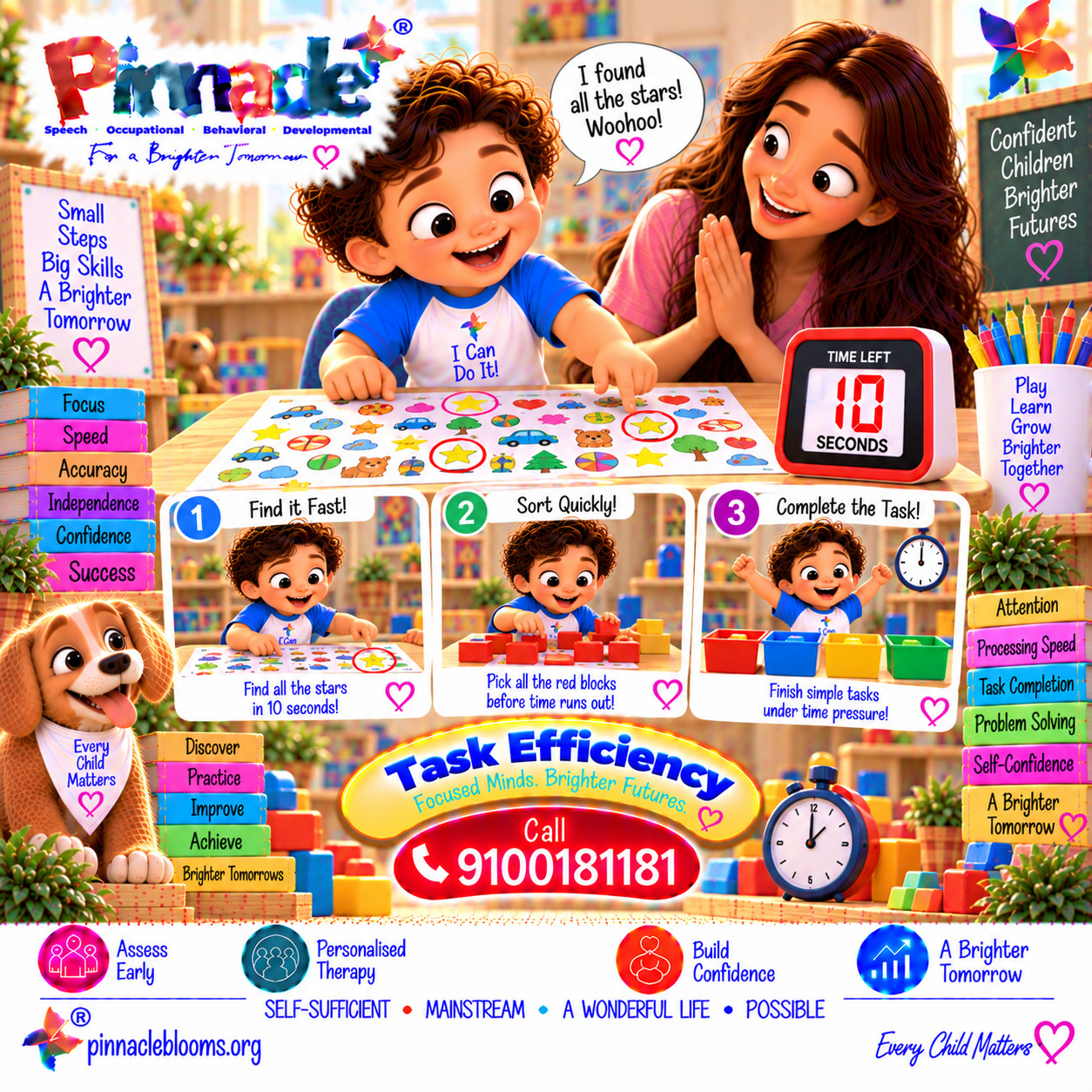
Does the child finish tasks quickly when under time pressure (e.g., “Find all the stars in 10 seconds”)?
Topic: Task Efficiency
Example 1
Asked to find objects in a picture before time runs out, they do it swiftly.
Example 2
When timed, they pick out all red blocks quickly.
Example 3
Under a short deadline, they complete a simple sorting task fast.
Example illustrationQuestion illustration
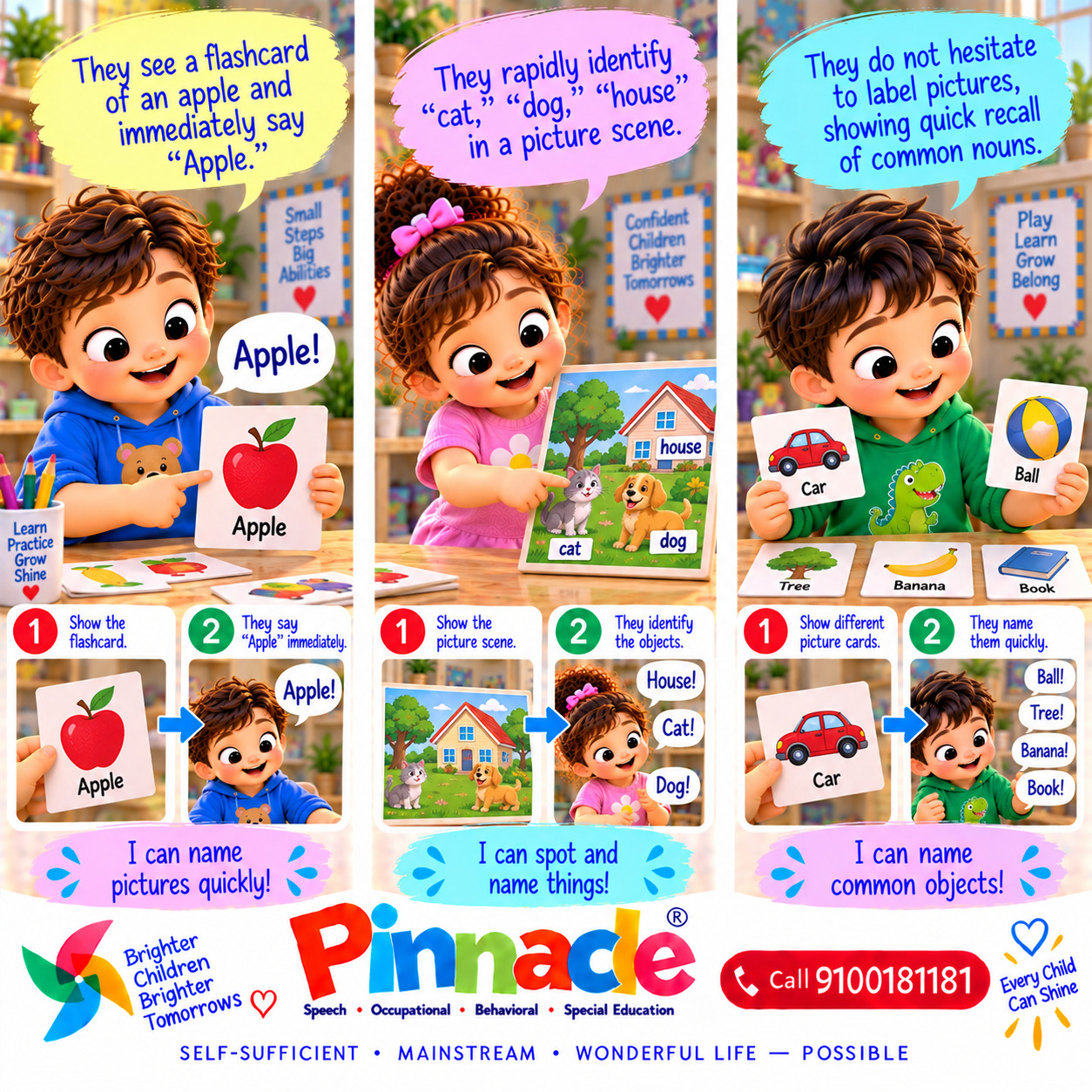
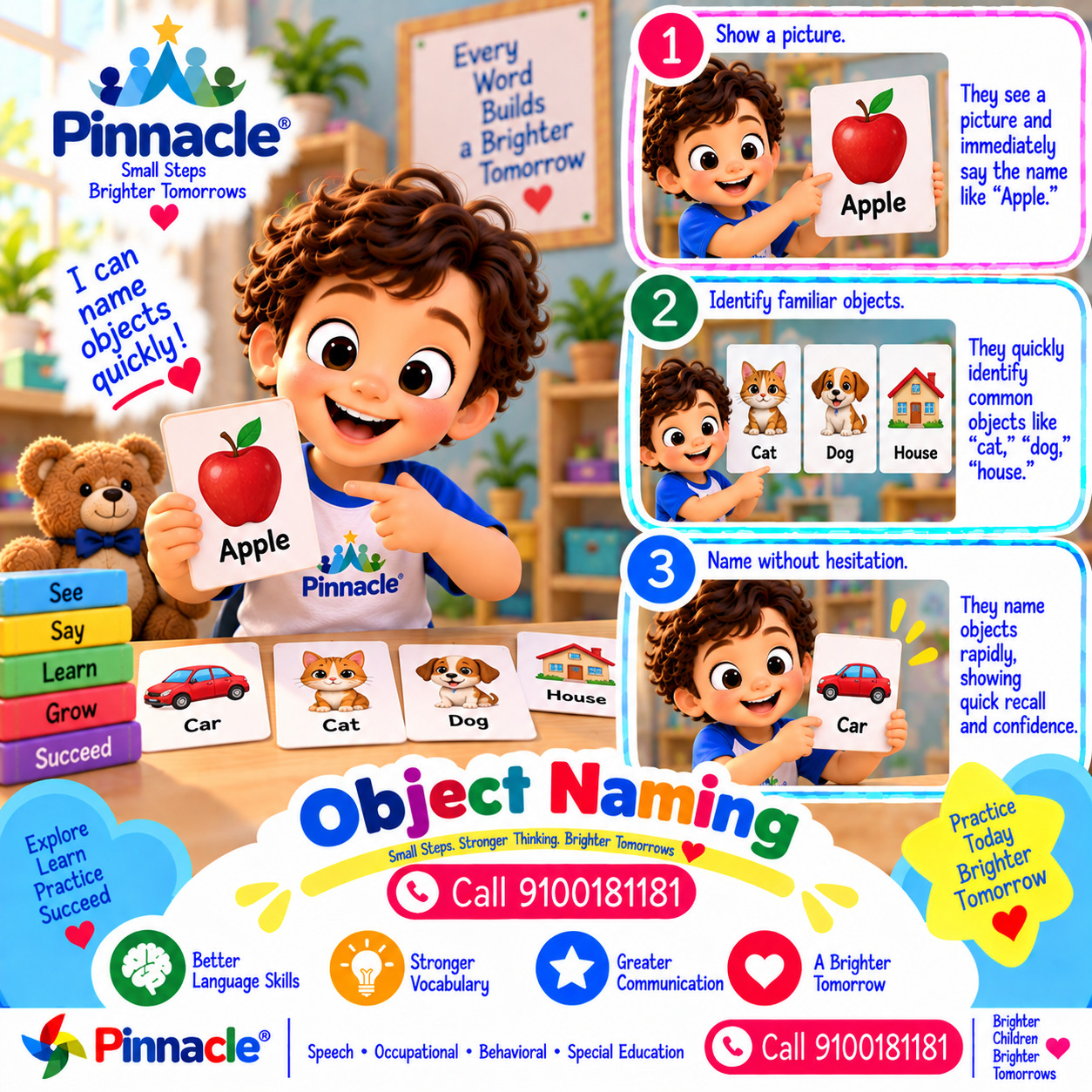
Can the child name familiar objects quickly when shown pictures (e.g., apple, car)?
Topic: Object Naming
Example 1
They see a flashcard of an apple and immediately say “Apple.”
Example 2
They rapidly identify “cat,” “dog,” “house” in a picture scene.
Example 3
They do not hesitate to label pictures, showing quick recall of common nouns.
Example illustrationQuestion illustration
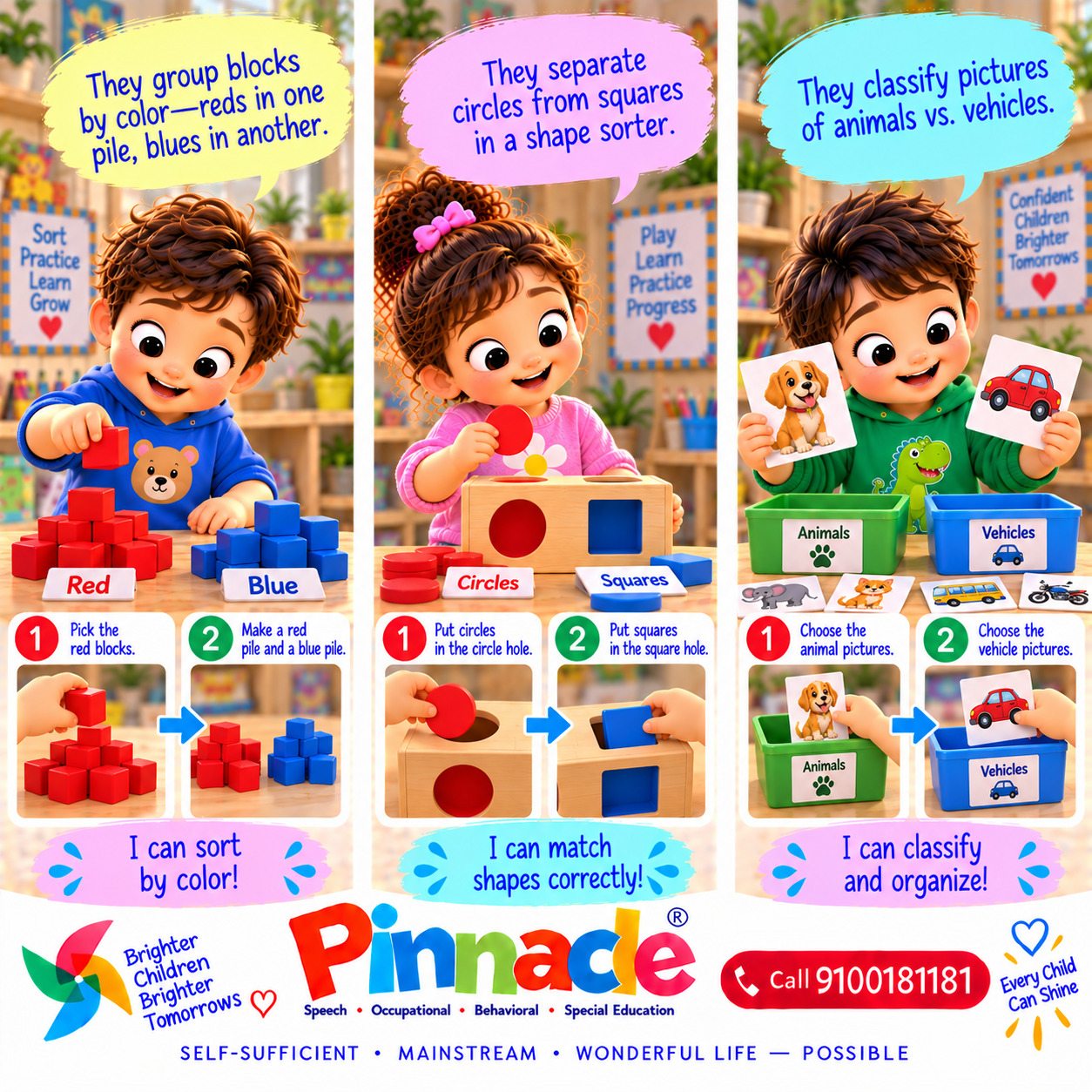
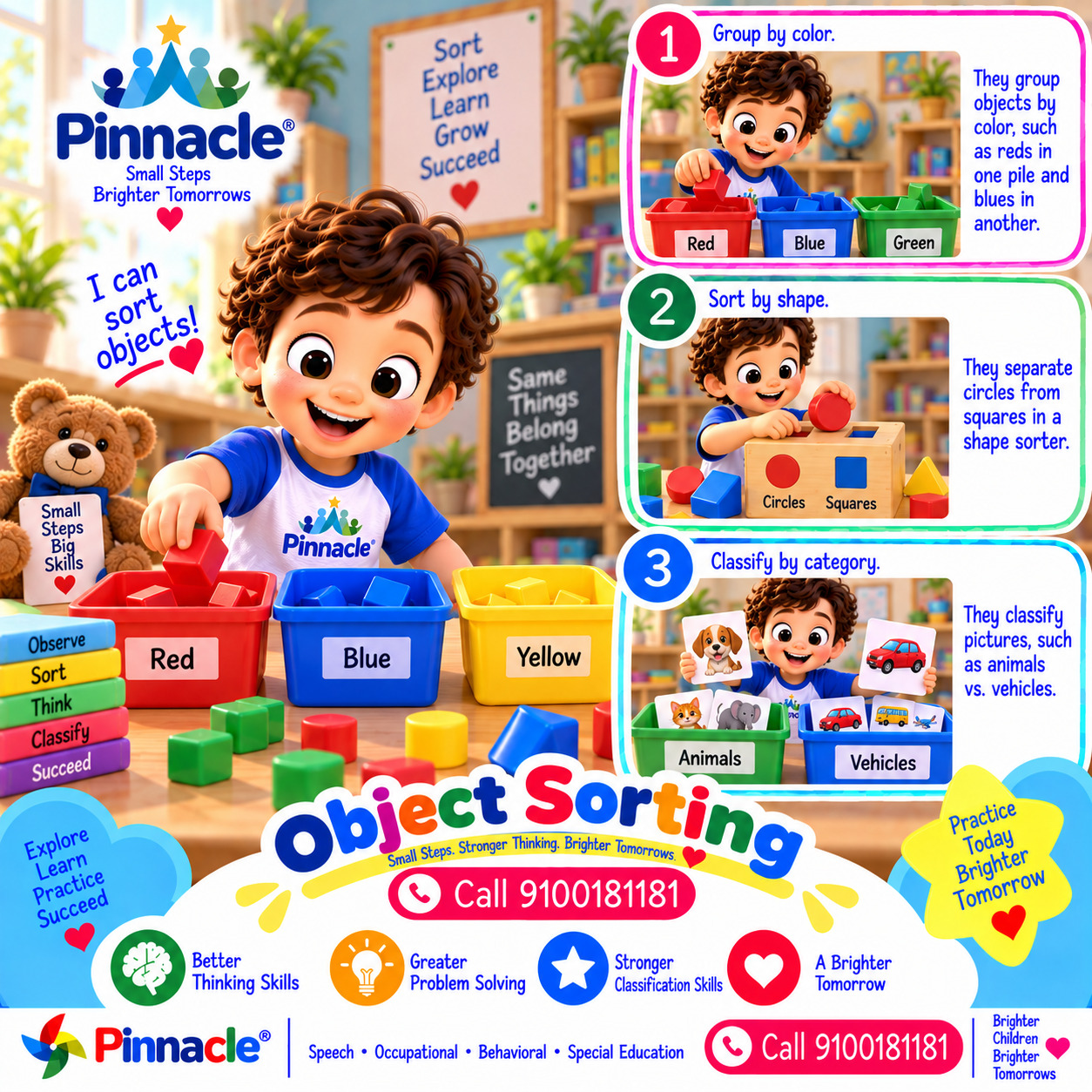
Can the child sort objects by common properties (e.g., color, shape)?
Topic: Object Sorting
Example 1
They group blocks by color—reds in one pile, blues in another.
Example 2
They separate circles from squares in a shape sorter.
Example 3
They classify pictures of animals vs. pictures of vehicles.
Example illustrationQuestion illustration
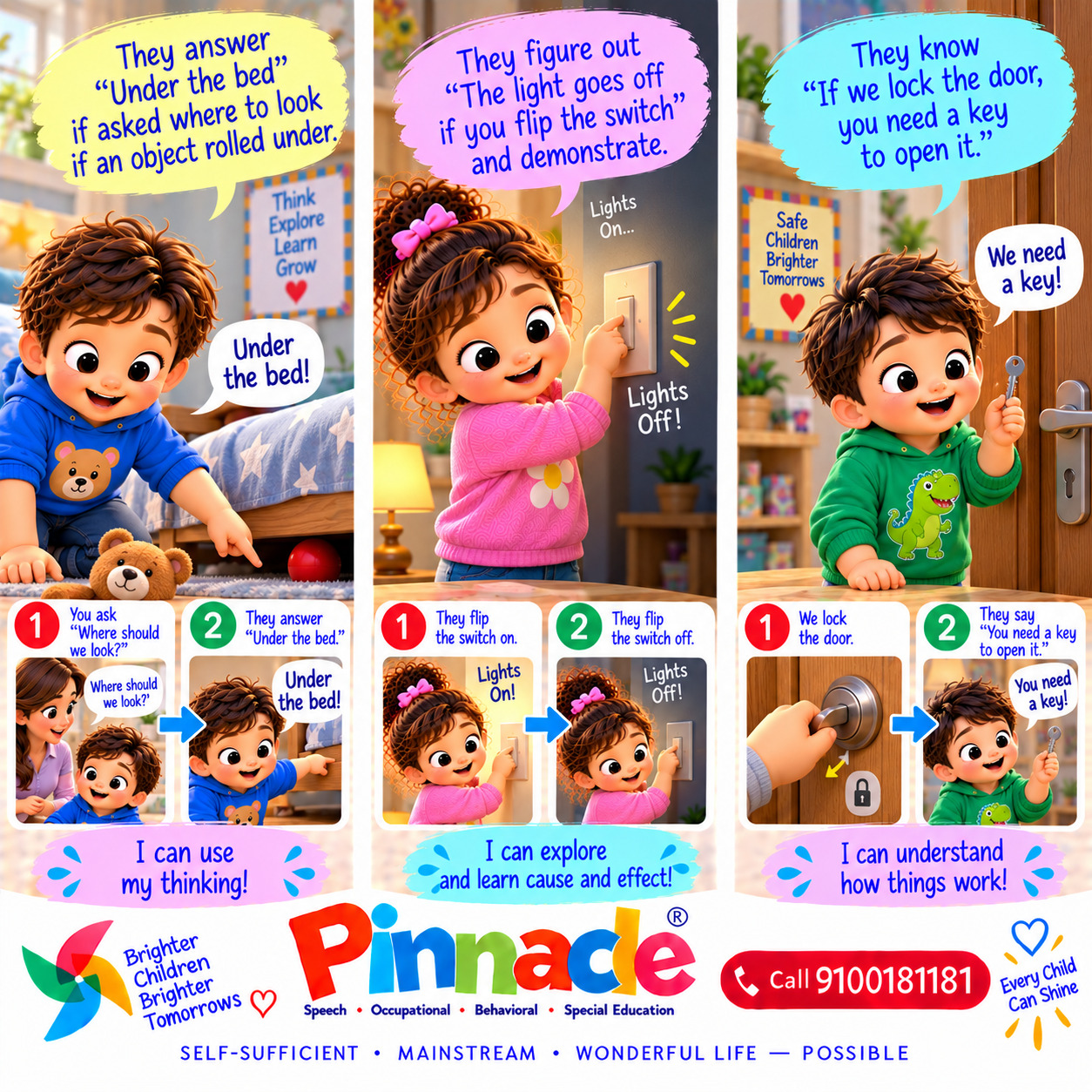
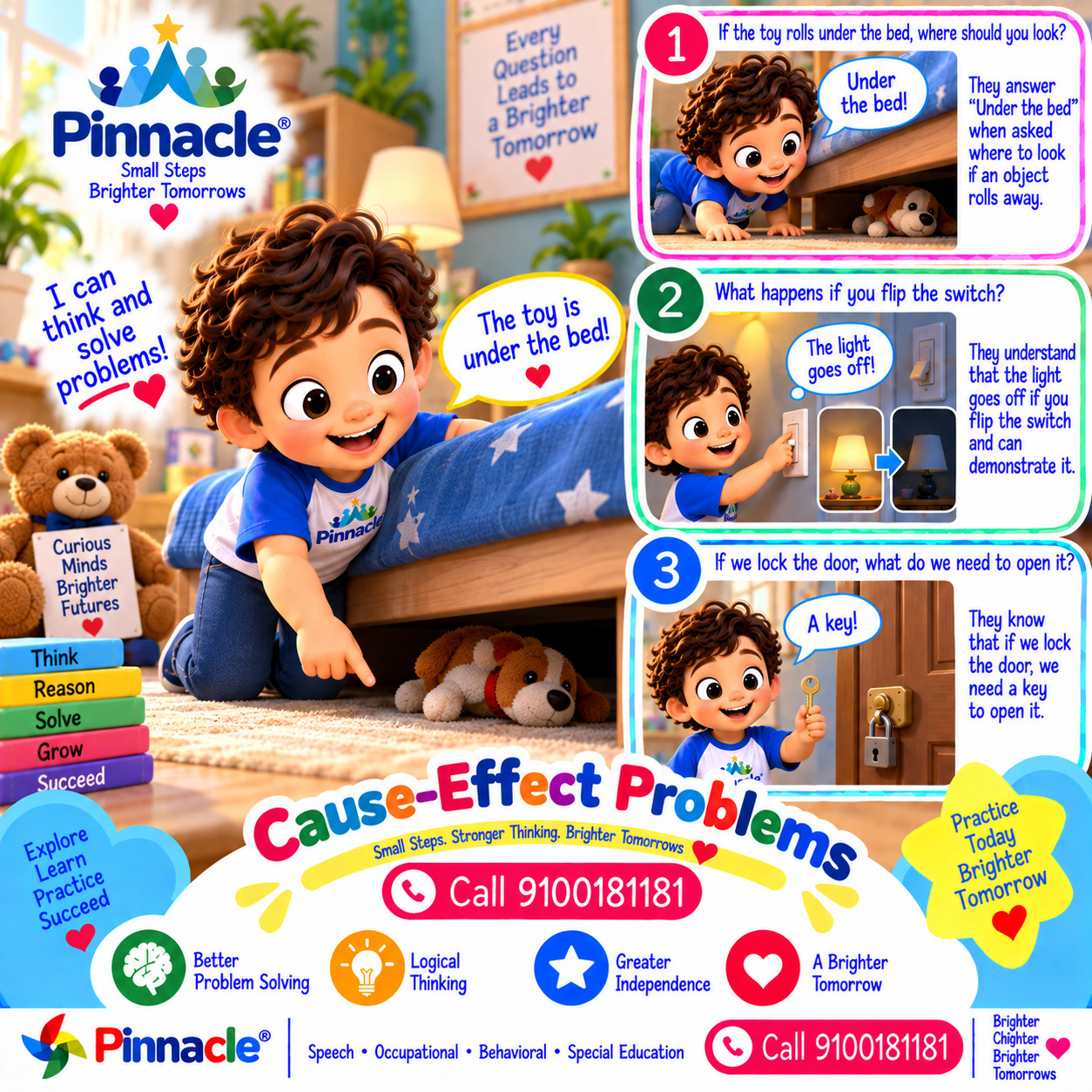
Can the child solve simple cause-and-effect problems (e.g., 'If the toy is under the bed, where should you look?')?
Topic: Cause-Effect Problems
Example 1
They answer “Under the bed” if asked where to look if an object rolled under.
Example 2
They figure out “The light goes off if you flip the switch” and demonstrate.
Example 3
They know “If we lock the door, you need a key to open it.”
Example illustrationQuestion illustration
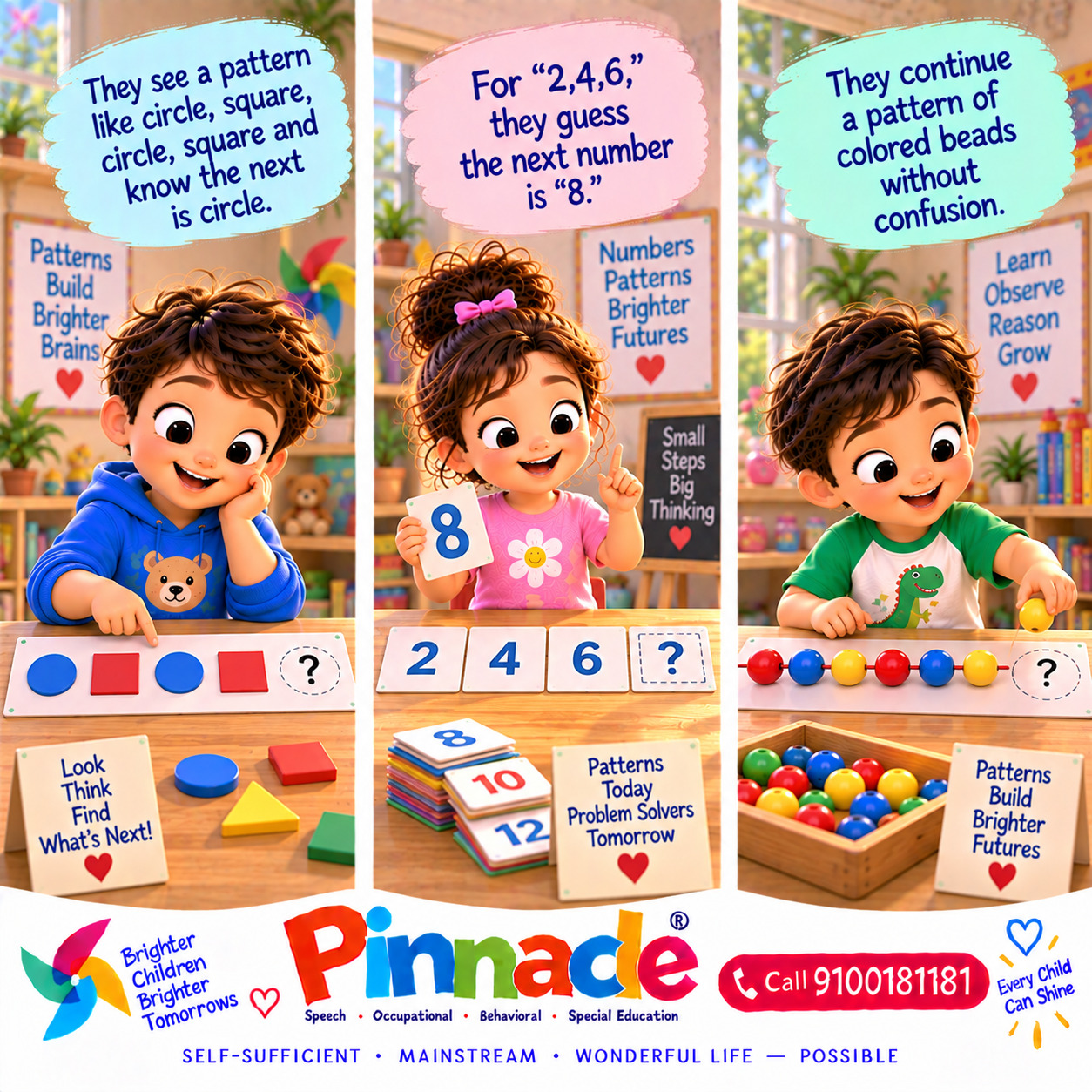
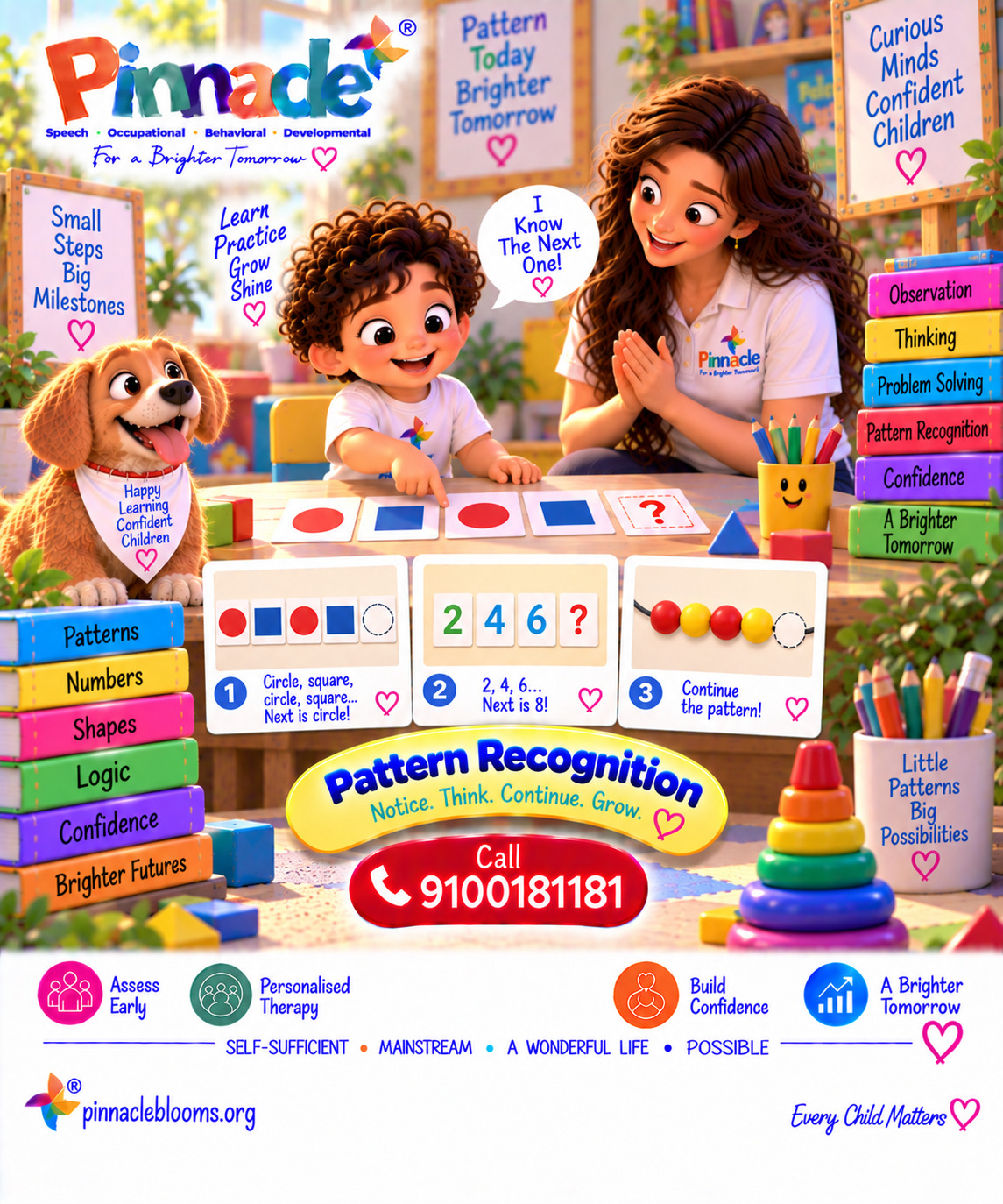
Can the child identify patterns in a sequence of shapes or numbers?
Topic: Pattern Recognition
Example 1
They see a pattern like circle, square, circle, square and know the next is circle.
Example 2
For “2,4,6,” they guess the next number is “8.”
Example 3
They continue a pattern of colored beads without confusion.
Example illustrationQuestion illustration
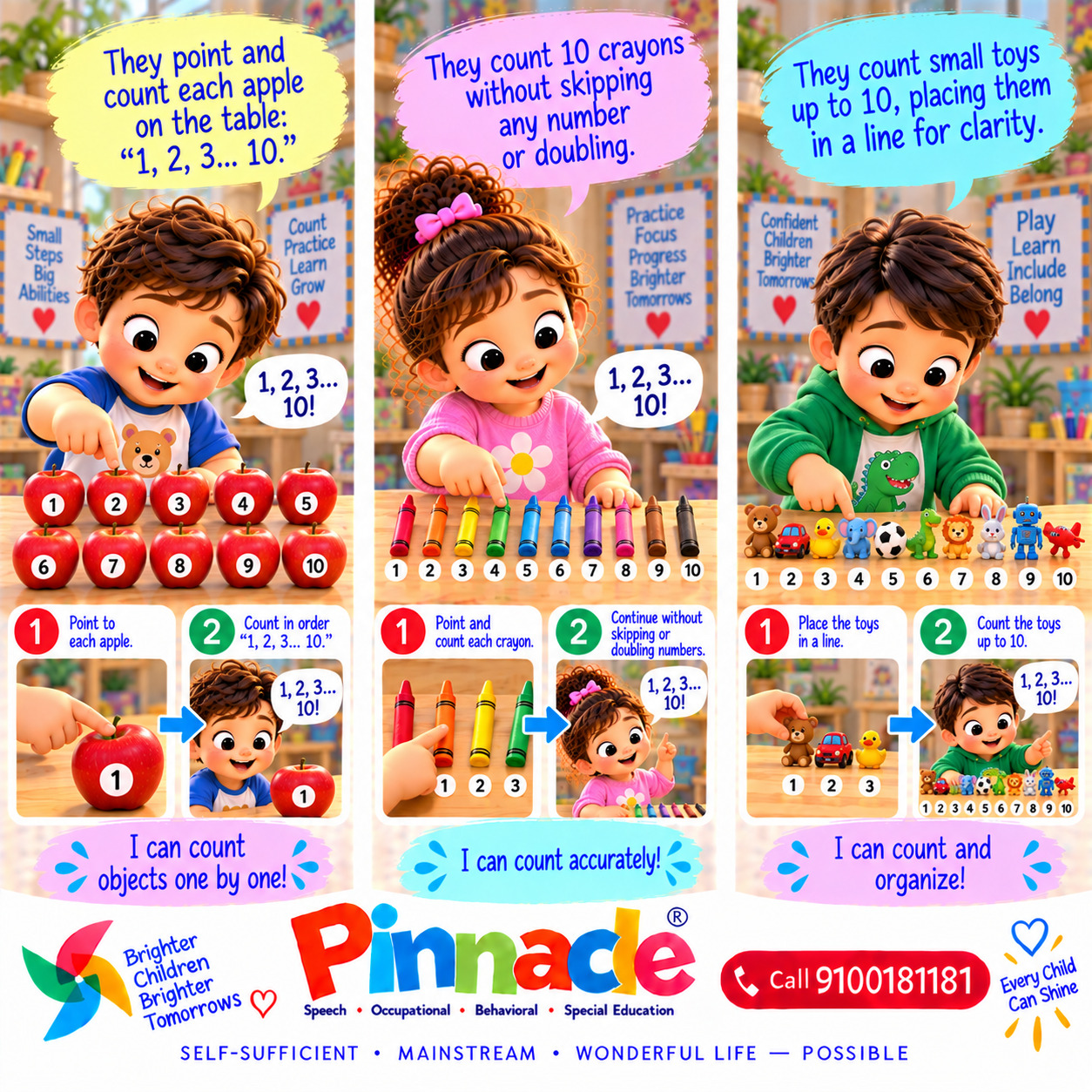
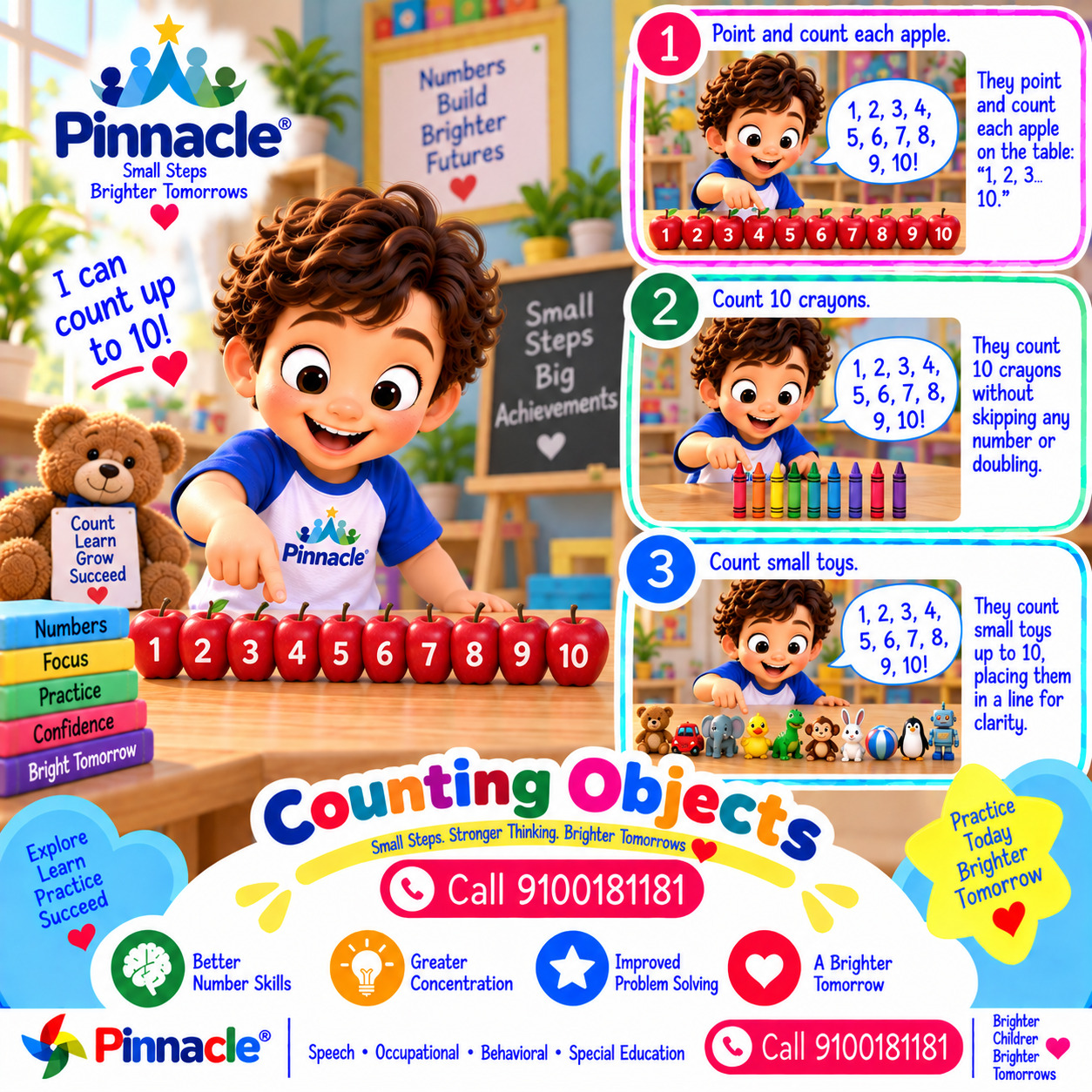
Can the child count objects accurately up to 10?
Topic: Counting Objects
Example 1
They point and count each apple on the table: “1, 2, 3... 10.”
Example 2
They count 10 crayons without skipping any number or doubling.
Example 3
They count small toys up to 10, placing them in a line for clarity.
Example illustrationQuestion illustration
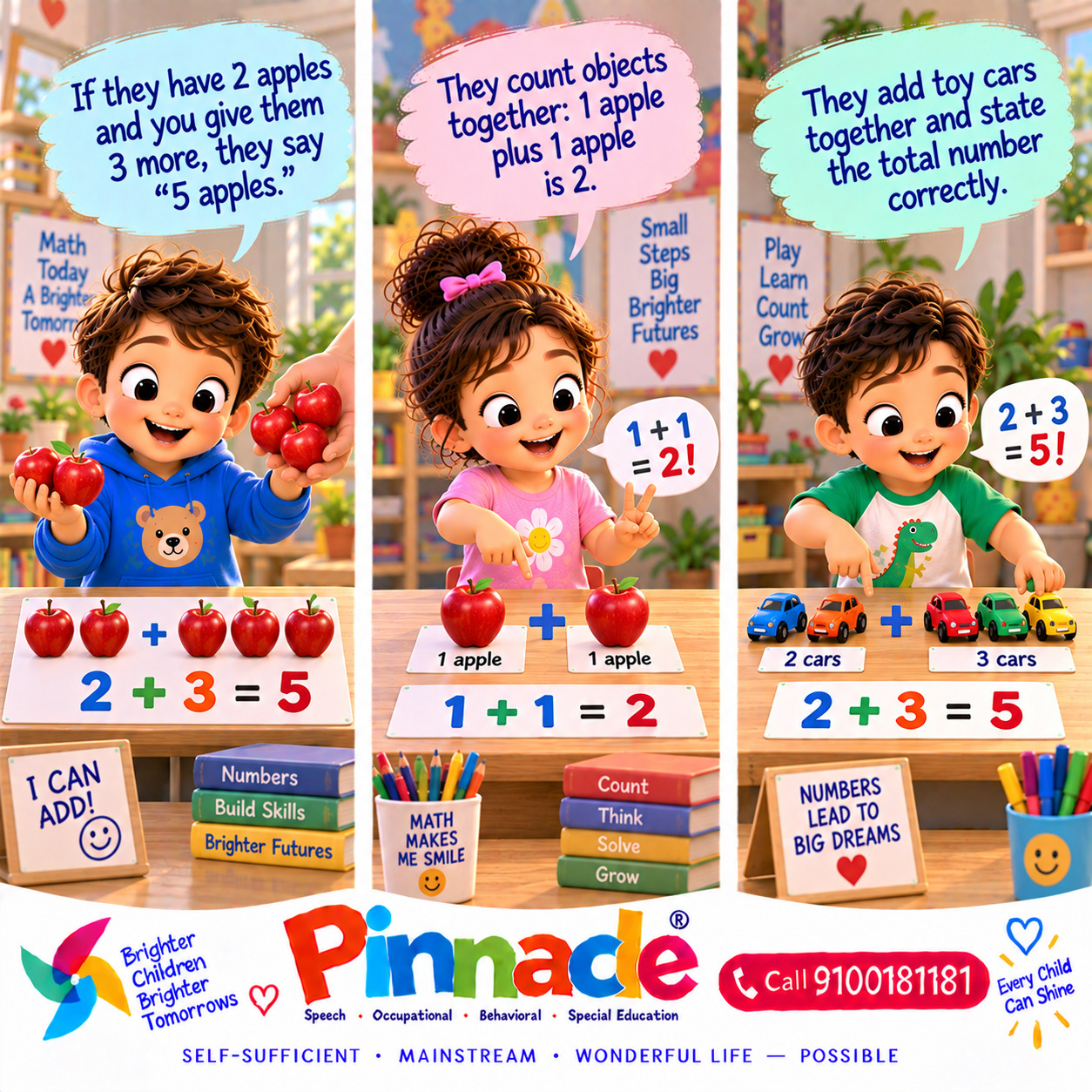
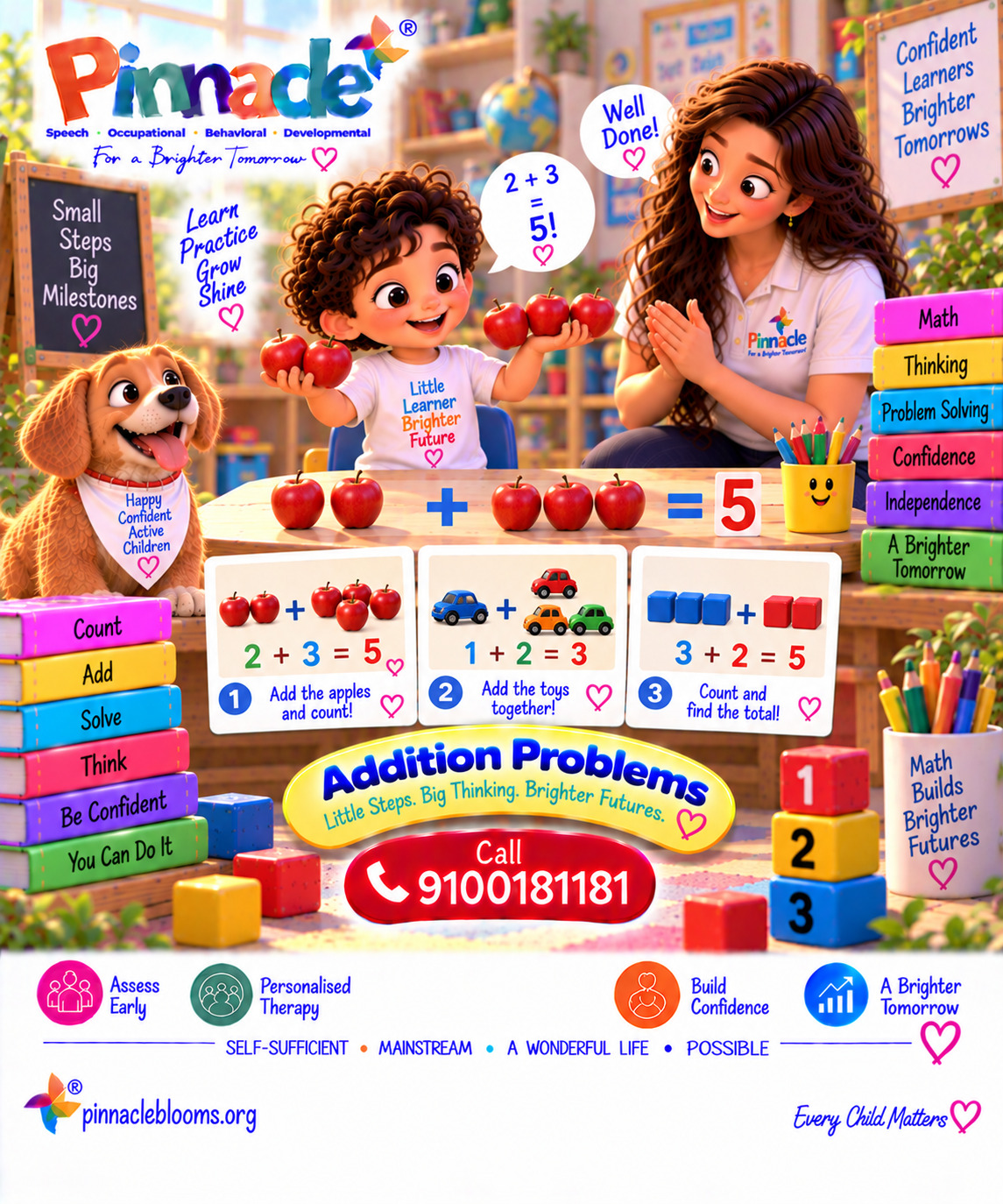
Can the child solve simple addition problems using objects (e.g., “How many if we add 2 apples to 3 apples?”)?
Topic: Addition Problems
Example 1
If they have 2 apples and you give them 3 more, they say “5 apples.”
Example 2
They count objects together: 1 apple plus 1 apple is 2.
Example 3
They add toy cars together and state the total number correctly.
Example illustrationQuestion illustration
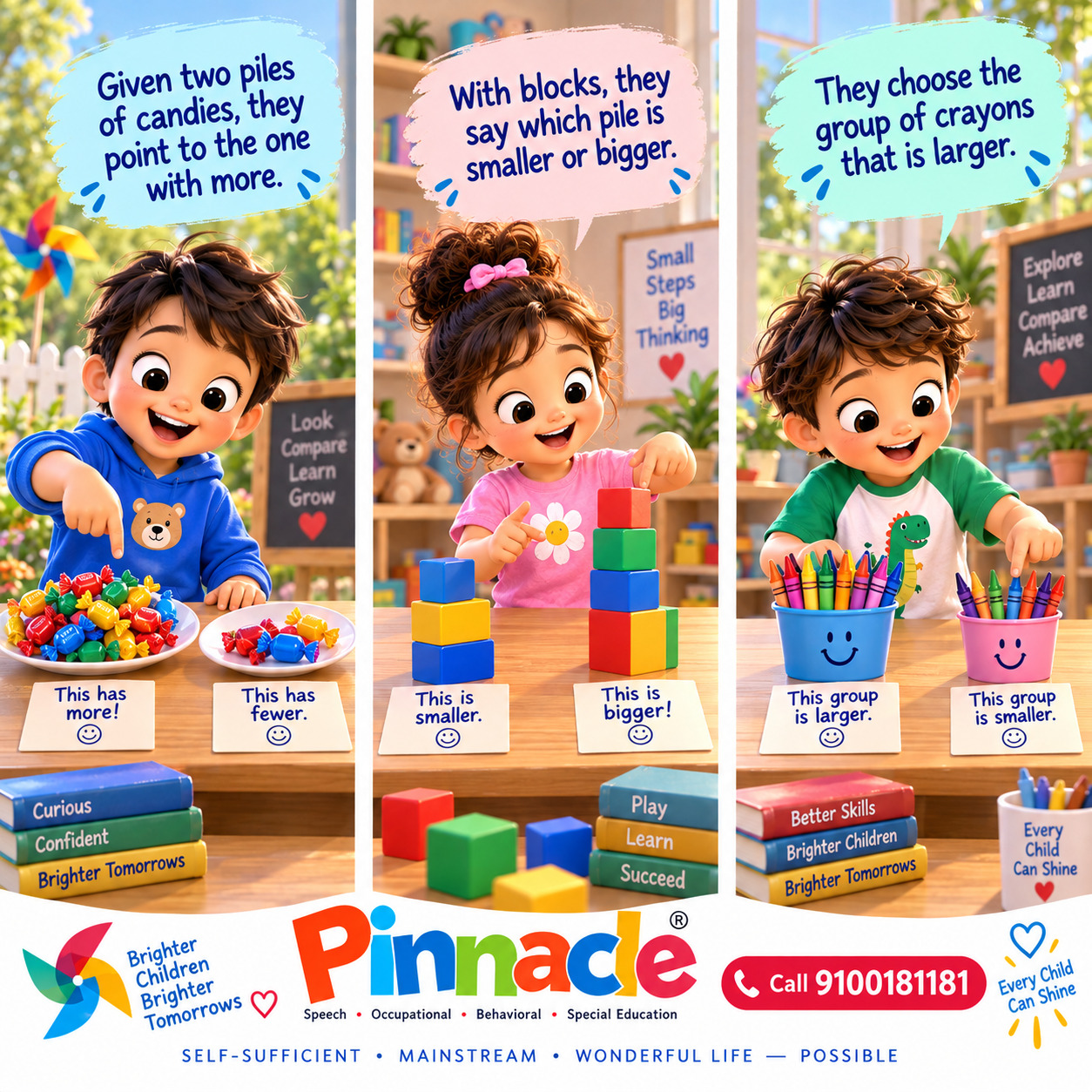
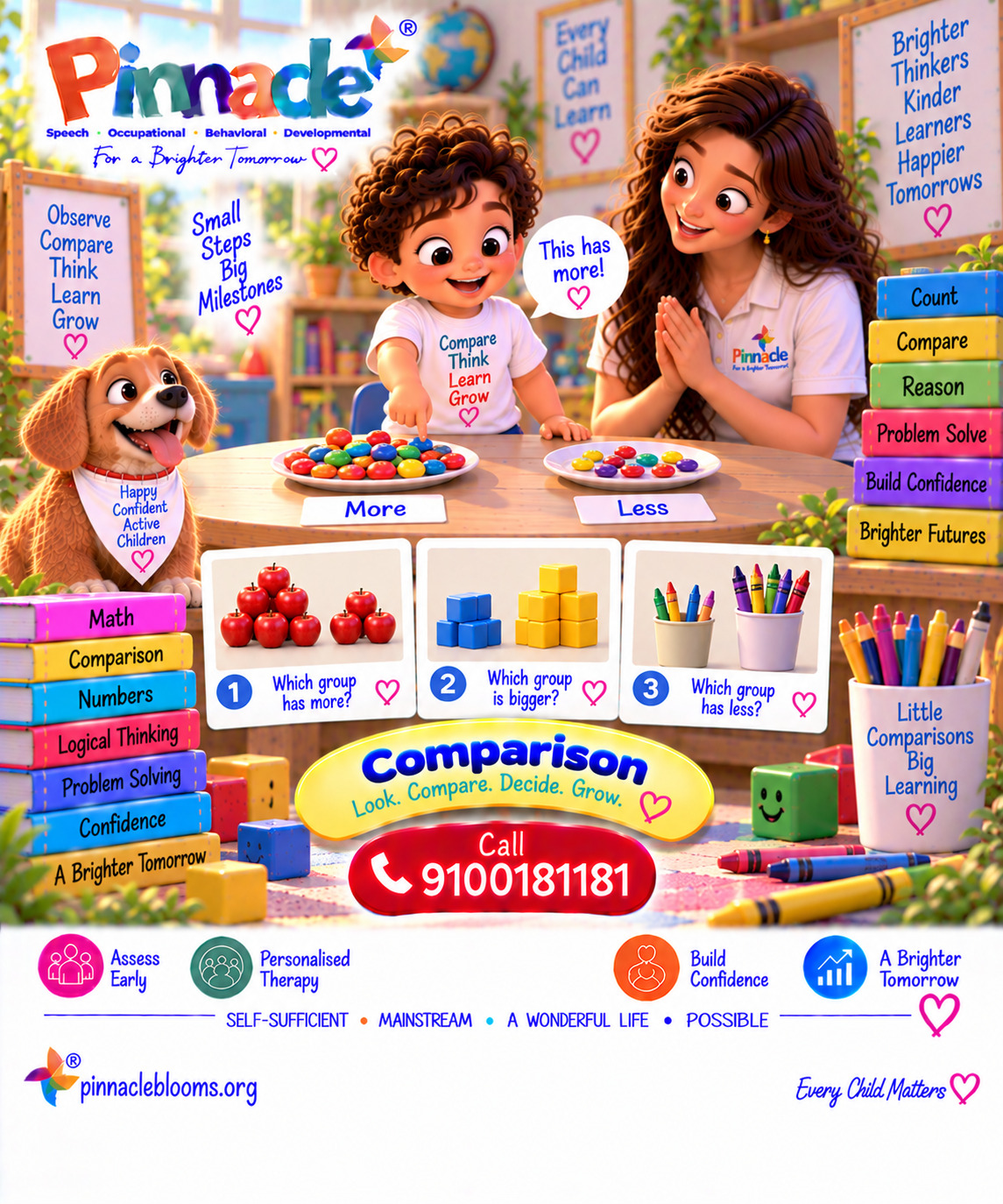
Can the child compare groups of items to determine which has more or less?
Topic: Comparison
Example 1
Given two piles of candies, they point to the one with more.
Example 2
With blocks, they say which pile is smaller or bigger.
Example 3
They choose the group of crayons that is larger.
Example illustrationQuestion illustration
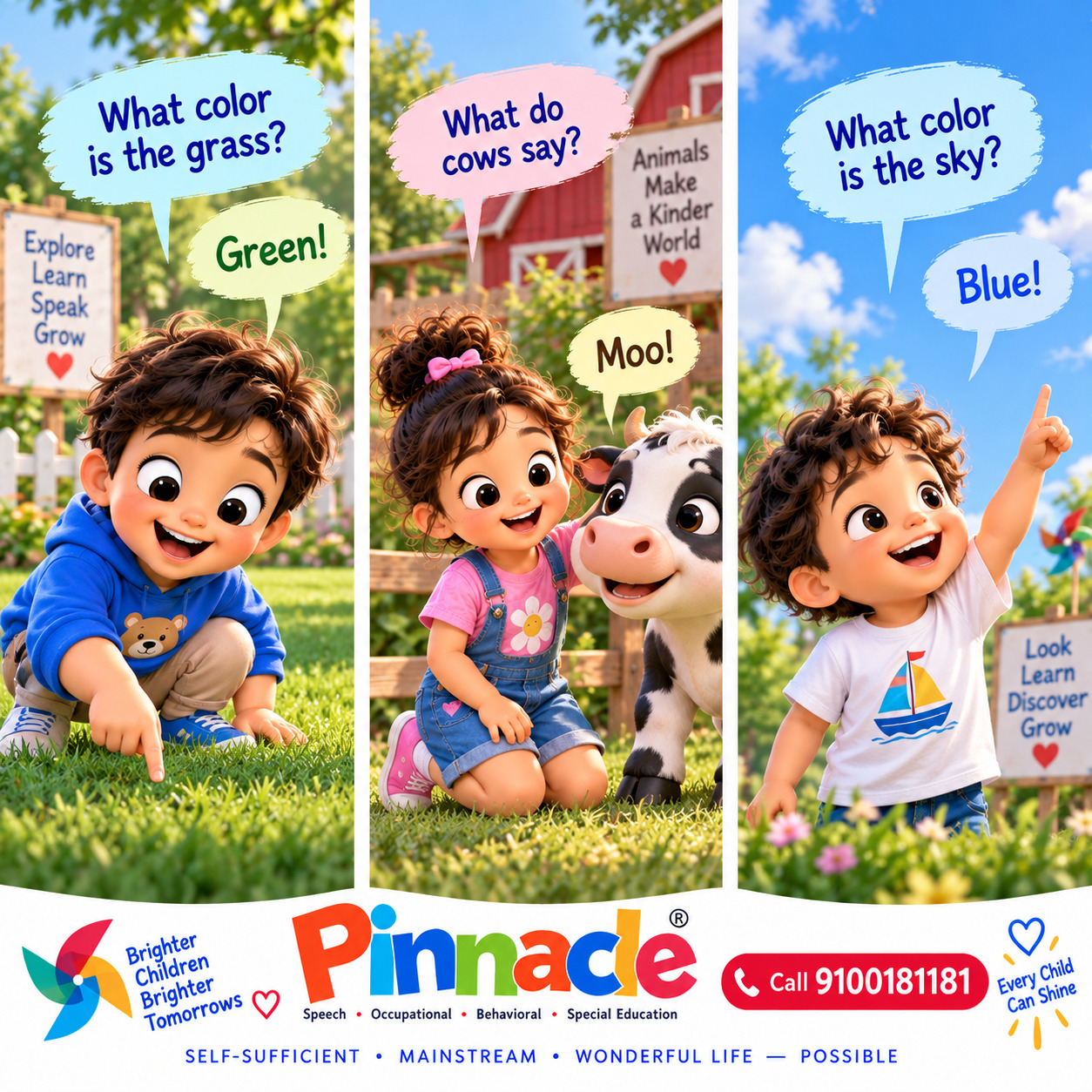
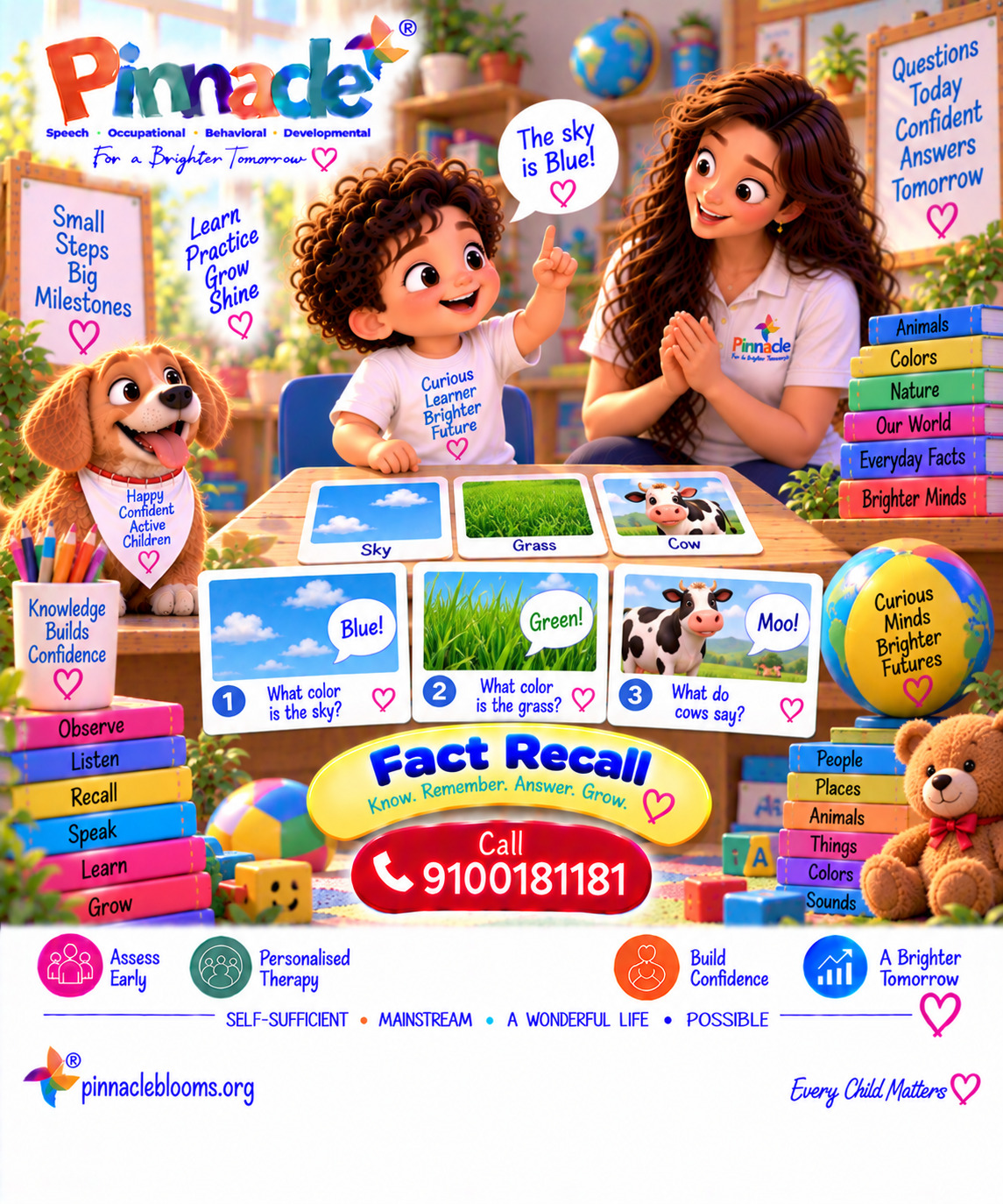
Can the child recall common facts (e.g., “What color is the sky?”)?
Topic: Fact Recall
Example 1
Asked “What color is the grass?” they say “Green.”