Attention Deficit Hyperactivity Disorder (ADHD) assessments are evaluations designed to identify challenges related to attention span, hyperactivity, and impulsiveness in children.
Early assessment and diagnosis enable high-impact interventions tailored to the child''s unique needs, preventing long-term developmental difficulties.
Our assessments employ a combination of in-depth interviews, observations, standardized tests, and the use of the Pinnacle TherapeuticAI for precise results.
Ideally, assessments should be conducted when parents observe consistent symptoms of hyperactivity or inattentiveness in their child early in their developmental years.
Pinnacle Blooms Network has successfully conducted over 1,00,00,000 personalized assessments, achieving a 97%+ accuracy rate through innovative AI tools.
Six-year-old Arjun was struggling at school. Daily tasks seemed a challenge, and his parents were overwhelmed. Turning to Pinnacle Blooms Network, they found clarity. Our expert ADHD assessments uncovered Arjun''s needs, leading to personalized therapies. Today, Arjun confidently engages in class and displays a newfound passion for learning. The relief and joy on the faces of his parents, Priya and Raghav, are a testament to the transformative power of understanding and early intervention.
Progress : Rohan''s focus has improved significantly, and he shows enhanced engagement in school activities.
Rohan''s story exemplifies how timely ADHD assessments and customized therapies at Pinnacle Blooms Network can transform a child''s life. Connect with us to embark on this life-changing journey.
*Names are indicative only and have been changed for privacy protectionSuccess Testimonial
Name : Sujata
RelationShip : Mother
Testimonial : The transformation in Rohan after the assessments was unbelievable. Pinnacle Blooms Network understood his unique needs, and today, Rohan is thriving. Their support has been invaluable.
Progress : Radha now communicates effectively and her attention span has substantially improved.
Radha''s journey shows the power of precise ADHD assessments and therapy plans. Let Pinnacle Blooms Network assist your child in carving out their success path.
Testimonial : Our lives have changed thanks to Pinnacle Blooms Network. Radha is more attentive and expressive. The joy in her eyes makes every bit of effort worthwhile.
These are reference questions and illustrative examples. This section does not collect child responses, calculate scores or produce an individual assessment result.
Does the child have difficulty sitting still, often moving around or fidgeting?
Topic: Moving Around
Example 1
They can’t remain seated for an entire meal, getting up multiple times.
Example 2
During storytime, they squirm, rock, or play with objects instead of sitting calmly.
Example 3
They shift positions constantly on the sofa, tapping feet or wiggling.
Example illustrationQuestion illustration
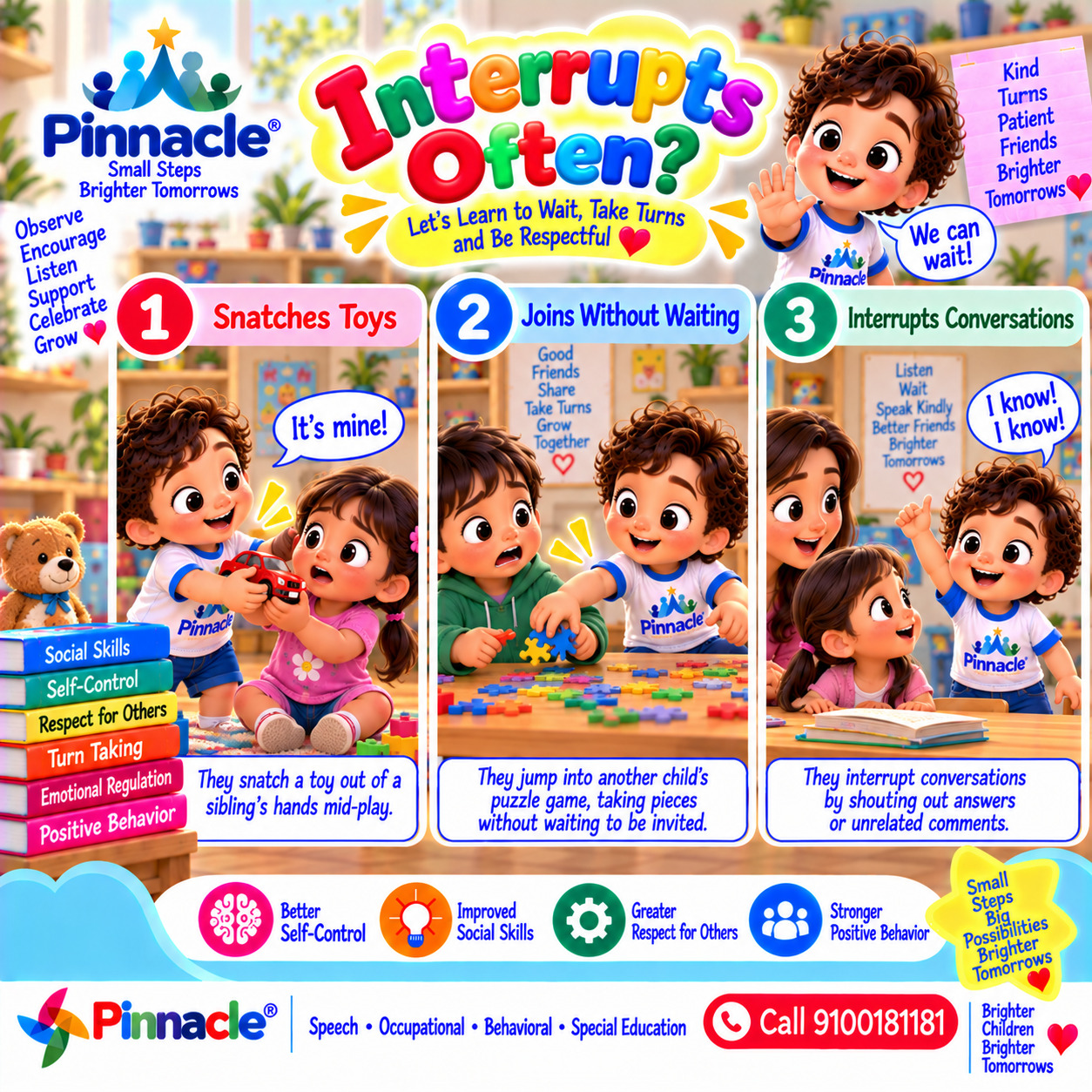
Does the child frequently interrupt or intrude on others’ activities, such as grabbing toys without asking?
Topic: Interrupt
Example 1
They snatch a toy out of a sibling’s hands mid-play.
Example 2
They jump into another child’s puzzle game, taking pieces without waiting to be invited.
Example 3
They interrupt conversations by shouting out answers or unrelated comments.
Example illustrationQuestion illustration
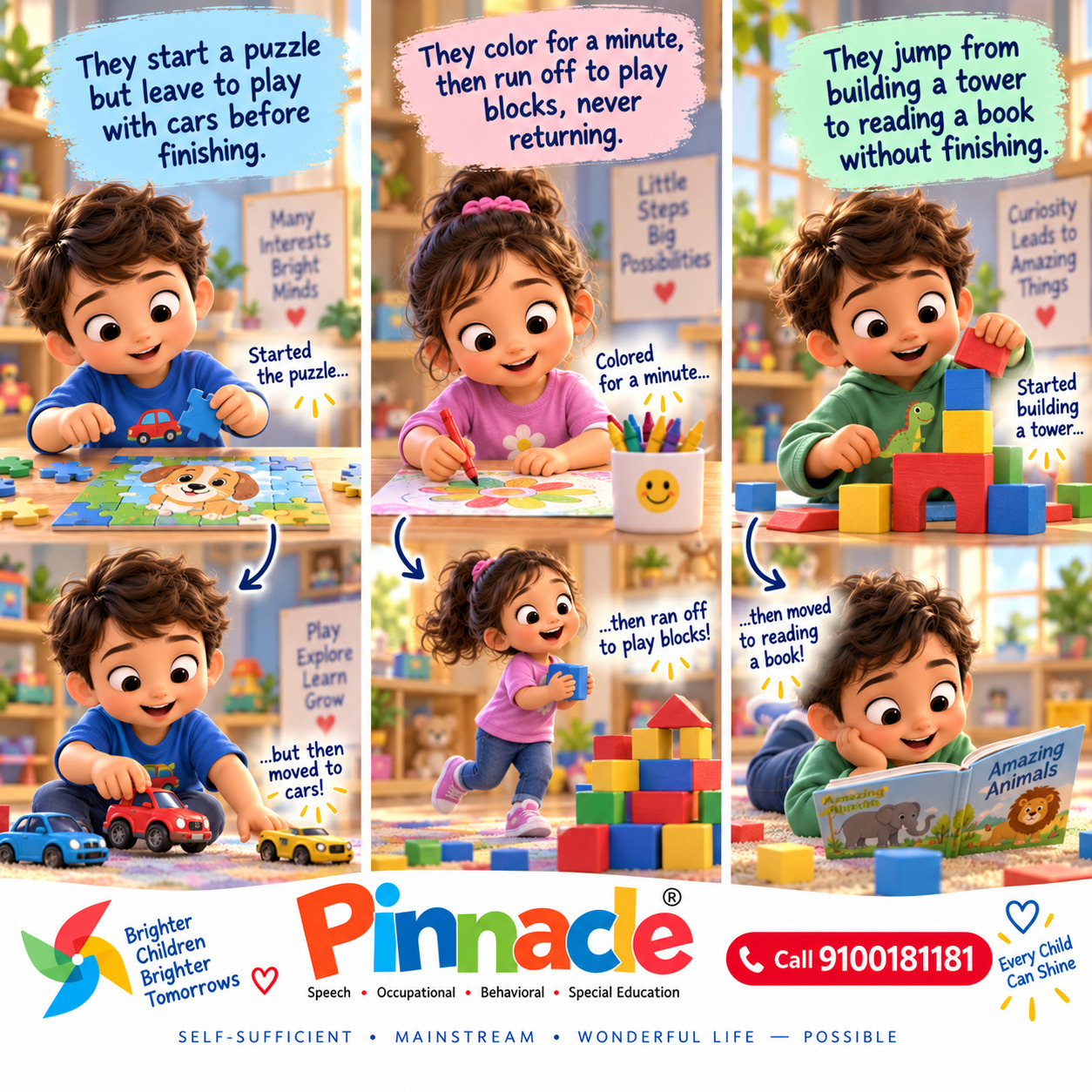
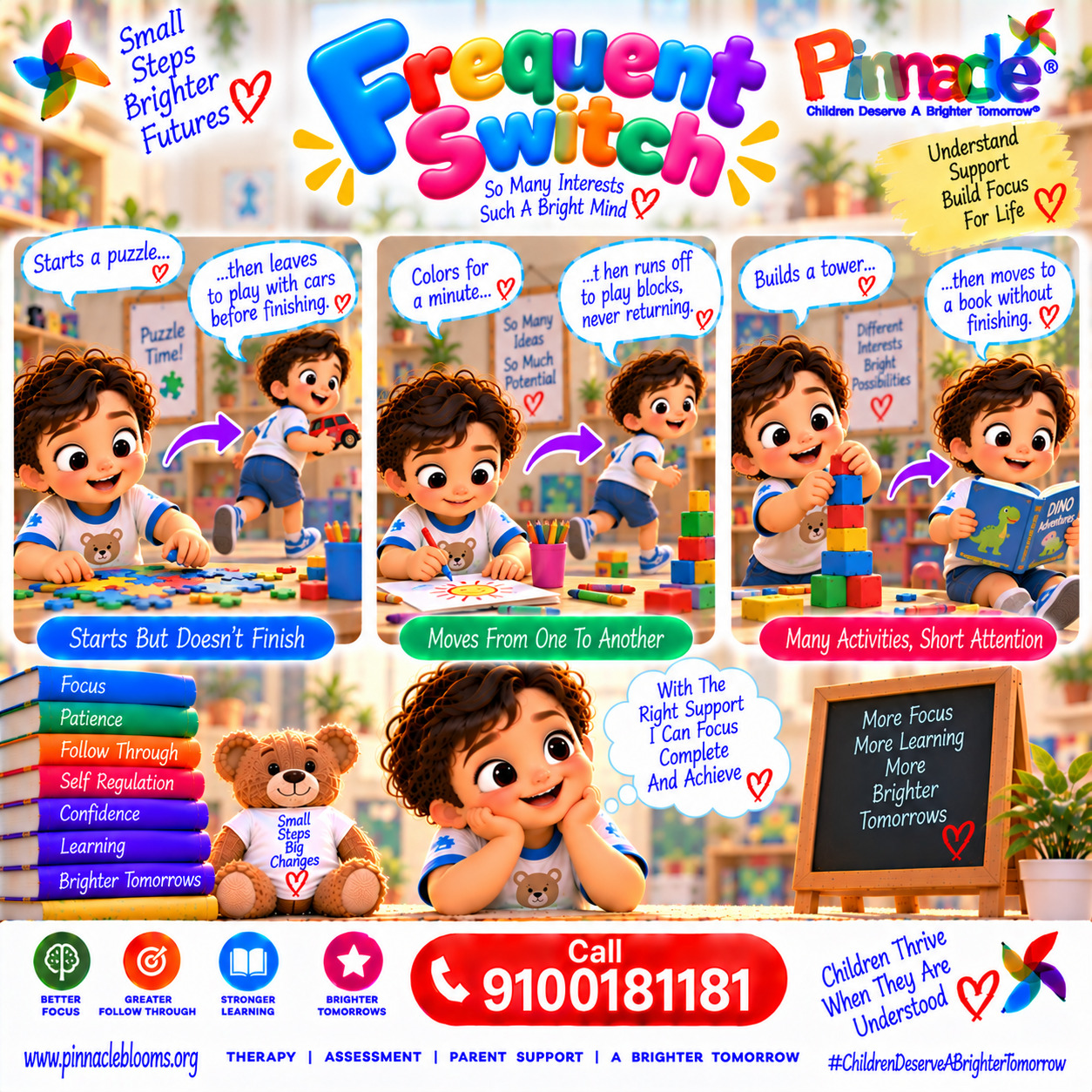
Does the child frequently switch from one activity to another without completing the first one?
Topic: Frequent Switch
Example 1
They start a puzzle but leave to play with cars before finishing.
Example 2
They color for a minute, then run off to play blocks, never returning.
Example 3
They jump from building a tower to reading a book without finishing.
Example illustrationQuestion illustration
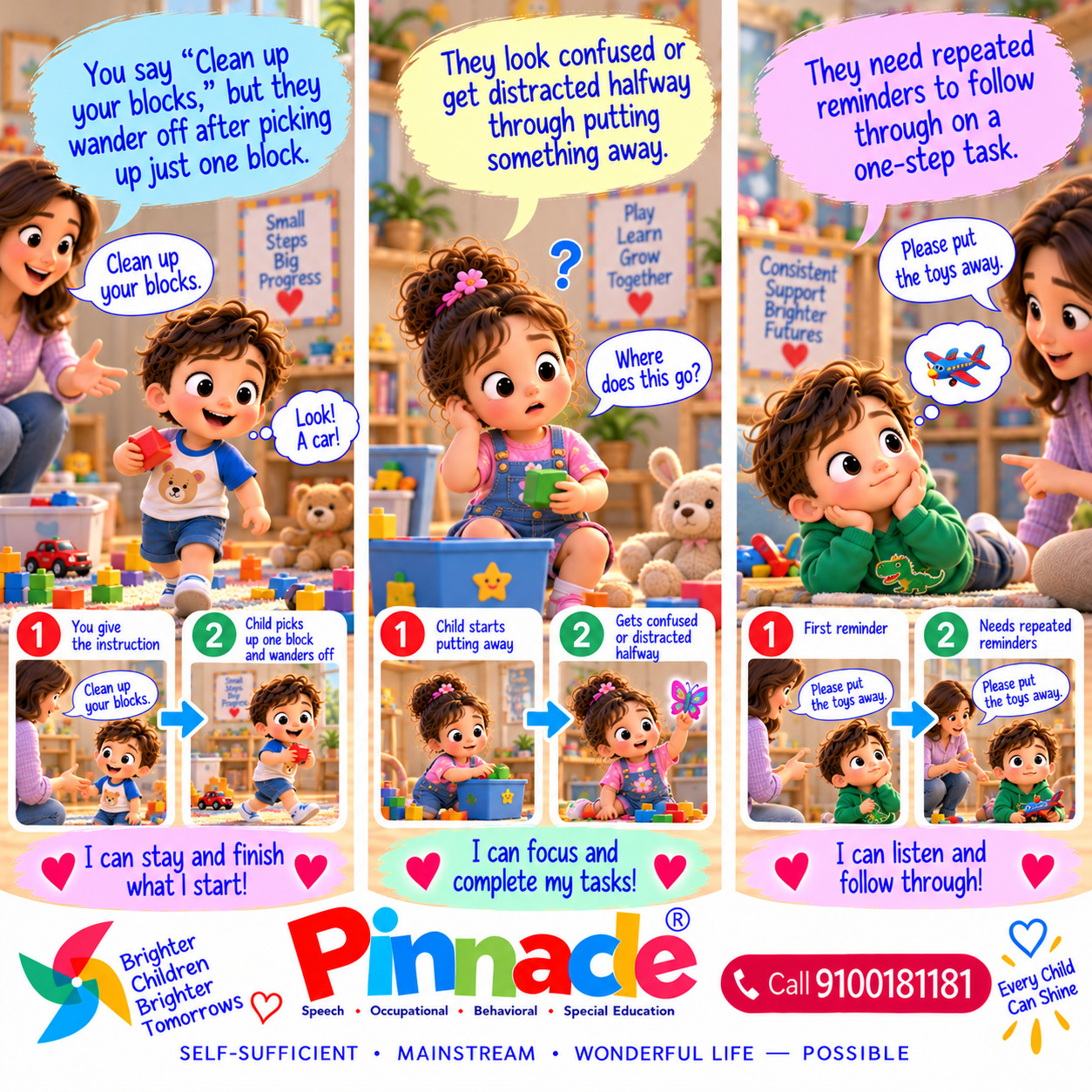
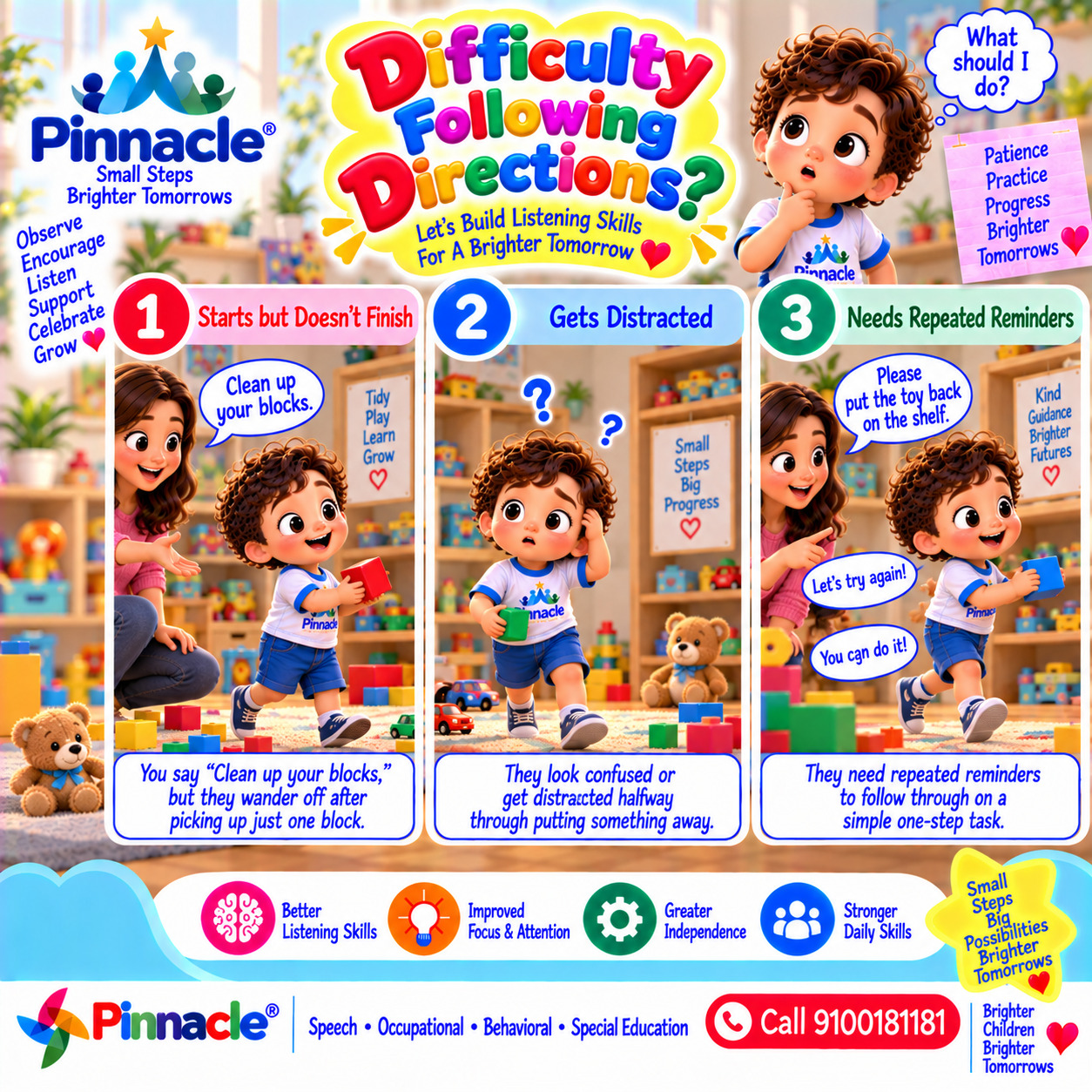
Does the child have trouble following simple directions, such as “put the toy back on the shelf”?
Topic: Simple Directions
Example 1
You say “Clean up your blocks,” but they wander off after picking up just one block.
Example 2
They look confused or get distracted halfway through putting something away.
Example 3
They need repeated reminders to follow through on a one-step task.
Example illustrationQuestion illustration
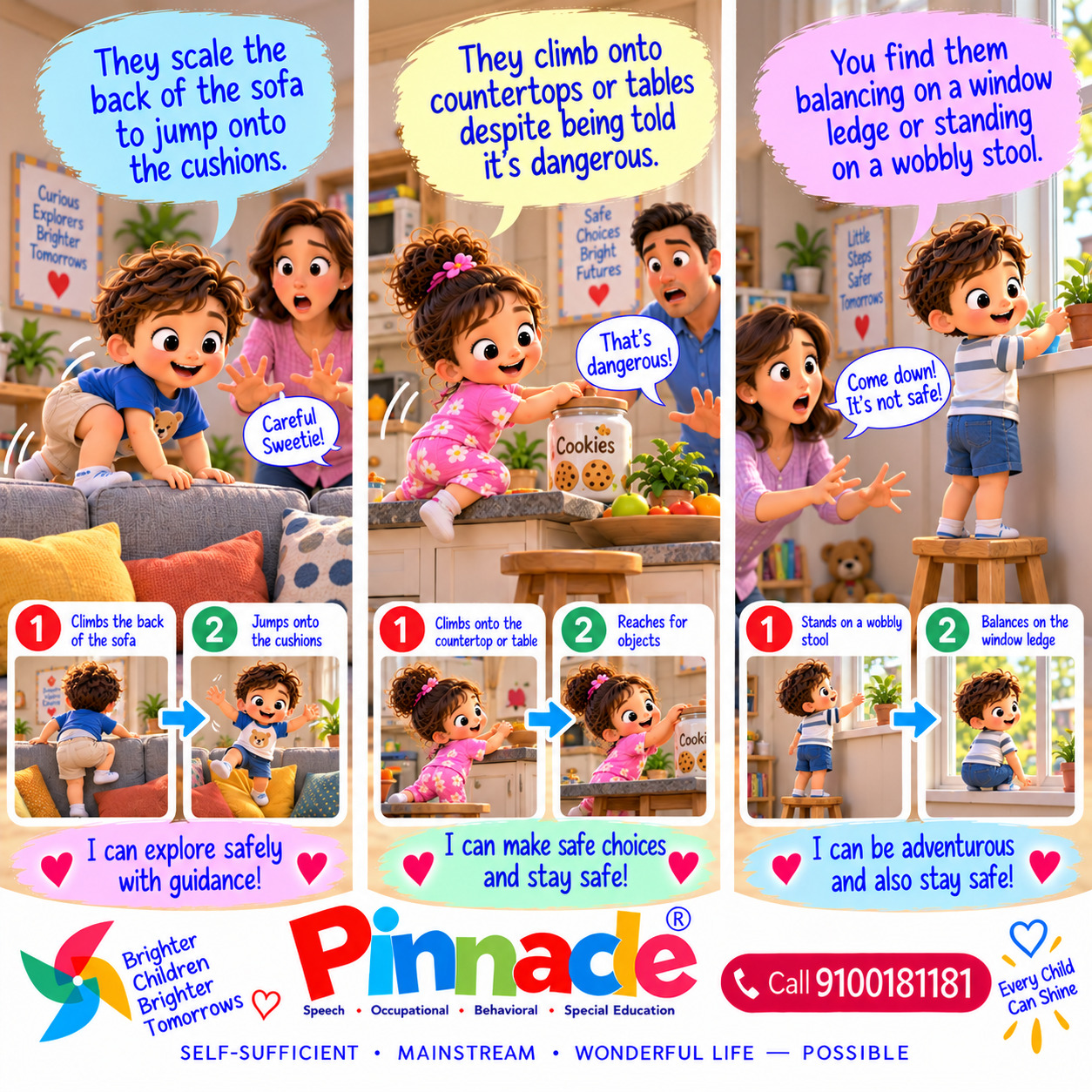
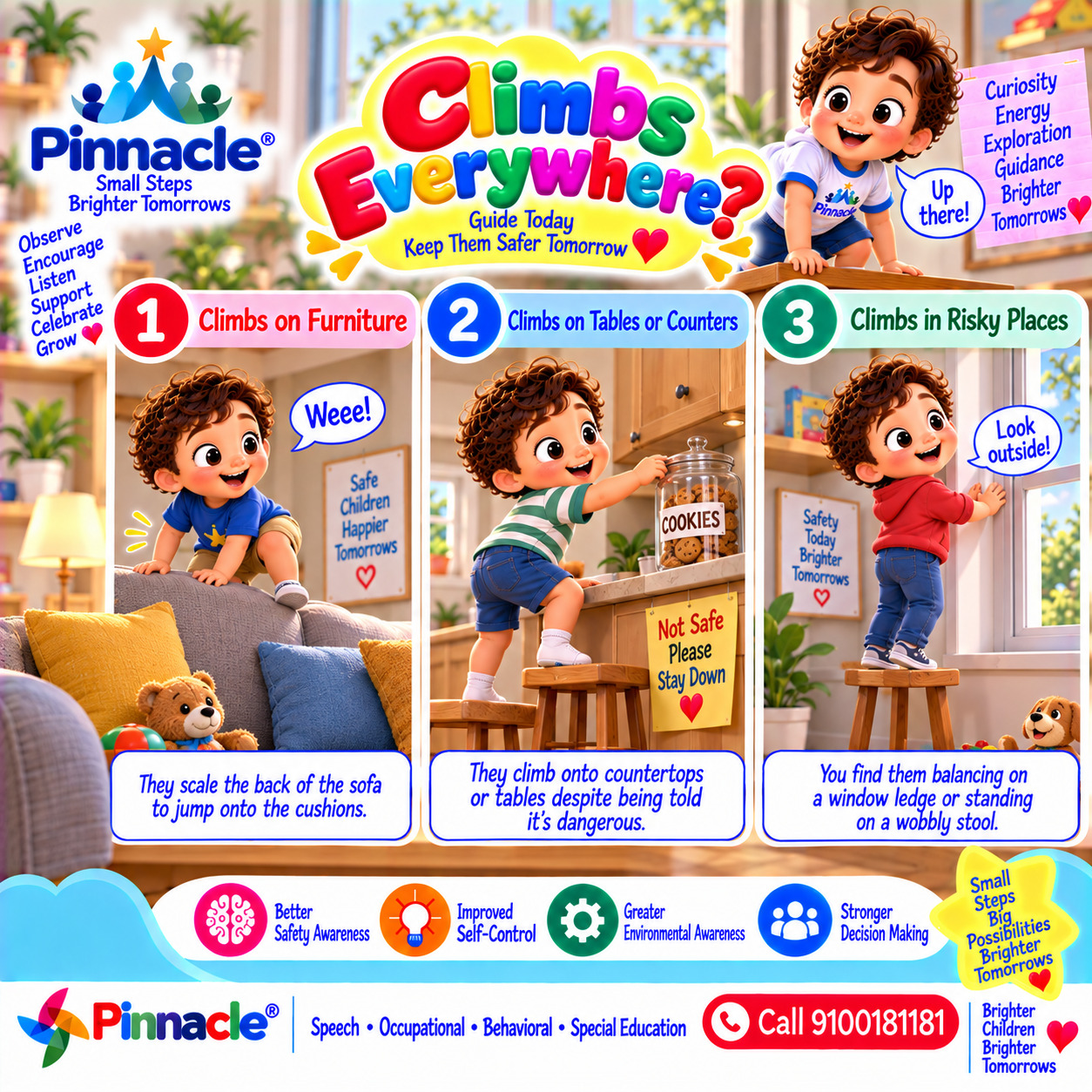
Does the child frequently climb on furniture or objects in unsafe situations?
Topic: Climb
Example 1
They scale the back of the sofa to jump onto the cushions.
Example 2
They climb onto countertops or tables despite being told it’s dangerous.
Example 3
You find them balancing on a window ledge or standing on a wobbly stool.
Example illustrationQuestion illustration
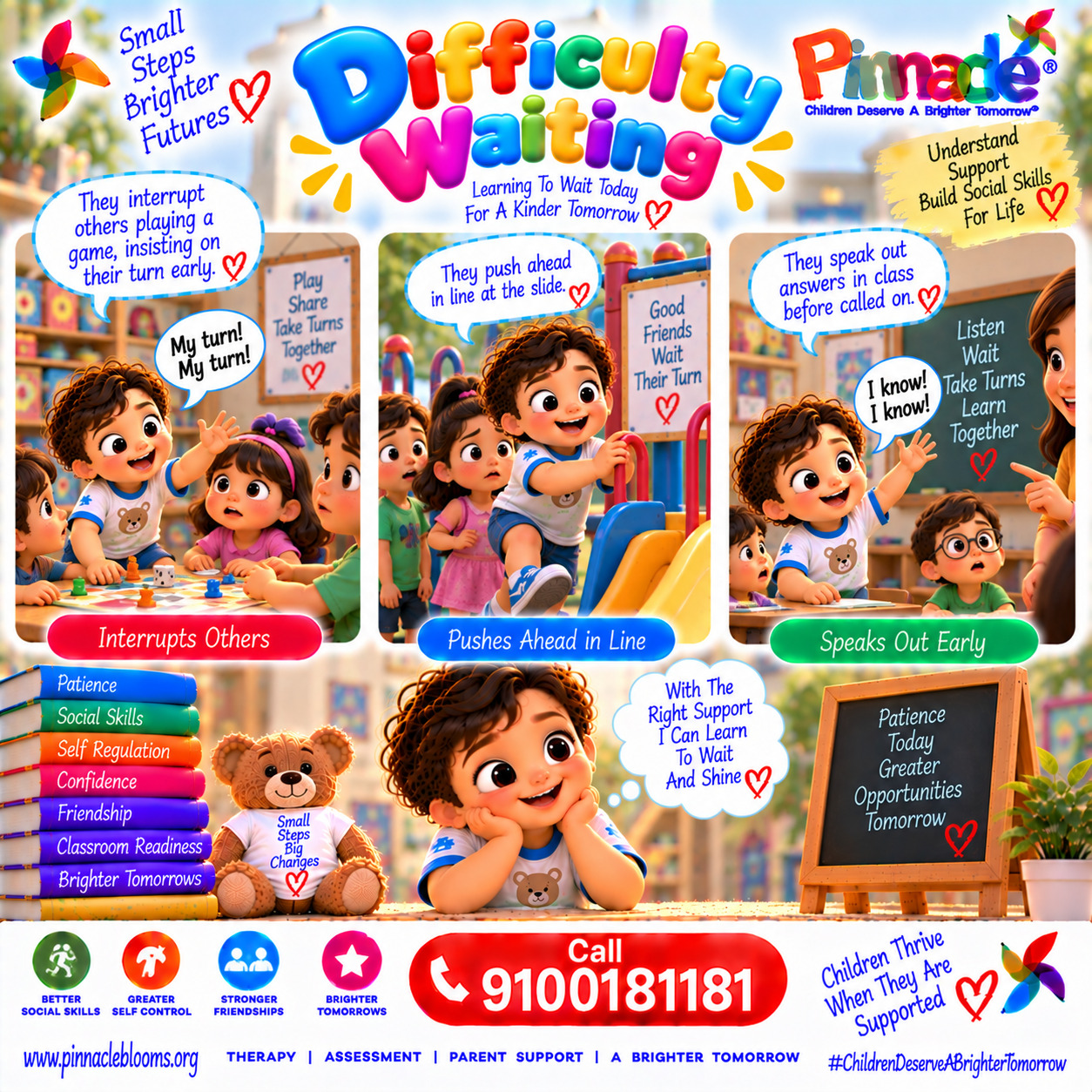
Does the child have difficulty waiting for their turn during group activities or games?
Topic: Difficulty Waiting
Example 1
They interrupt others playing a game, insisting on their turn early.
Example 2
They push ahead in line at the slide.
Example 3
They speak out answers in class before called on.
Example illustrationQuestion illustration
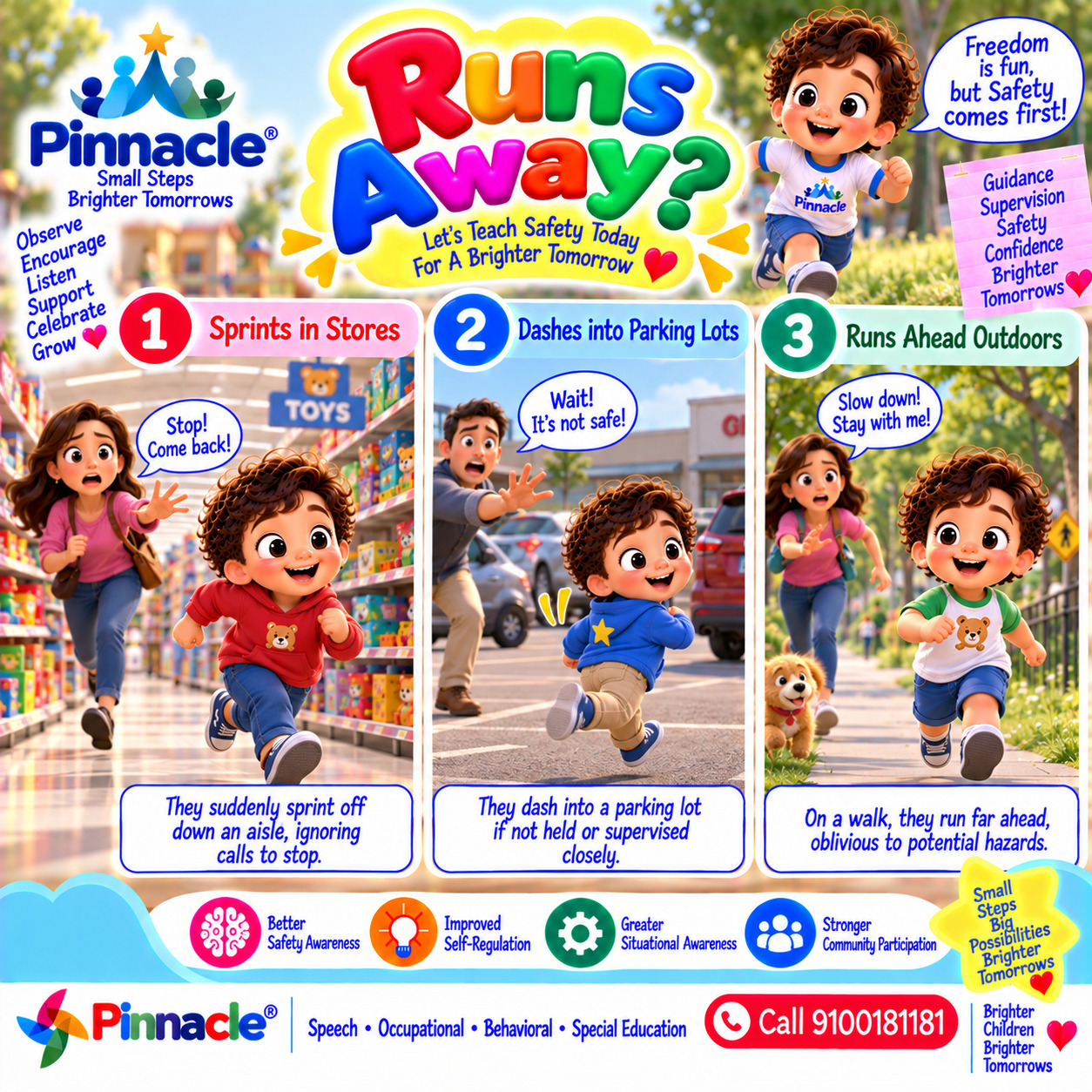
Does the child frequently run or dash away in public settings without regard to safety?
Topic: Safety
Example 1
In a store, they suddenly sprint off down an aisle, ignoring calls to stop.
Example 2
They dash into a parking lot if not held or supervised closely.
Example 3
On a walk, they run far ahead, oblivious to potential hazards.
Example illustrationQuestion illustration
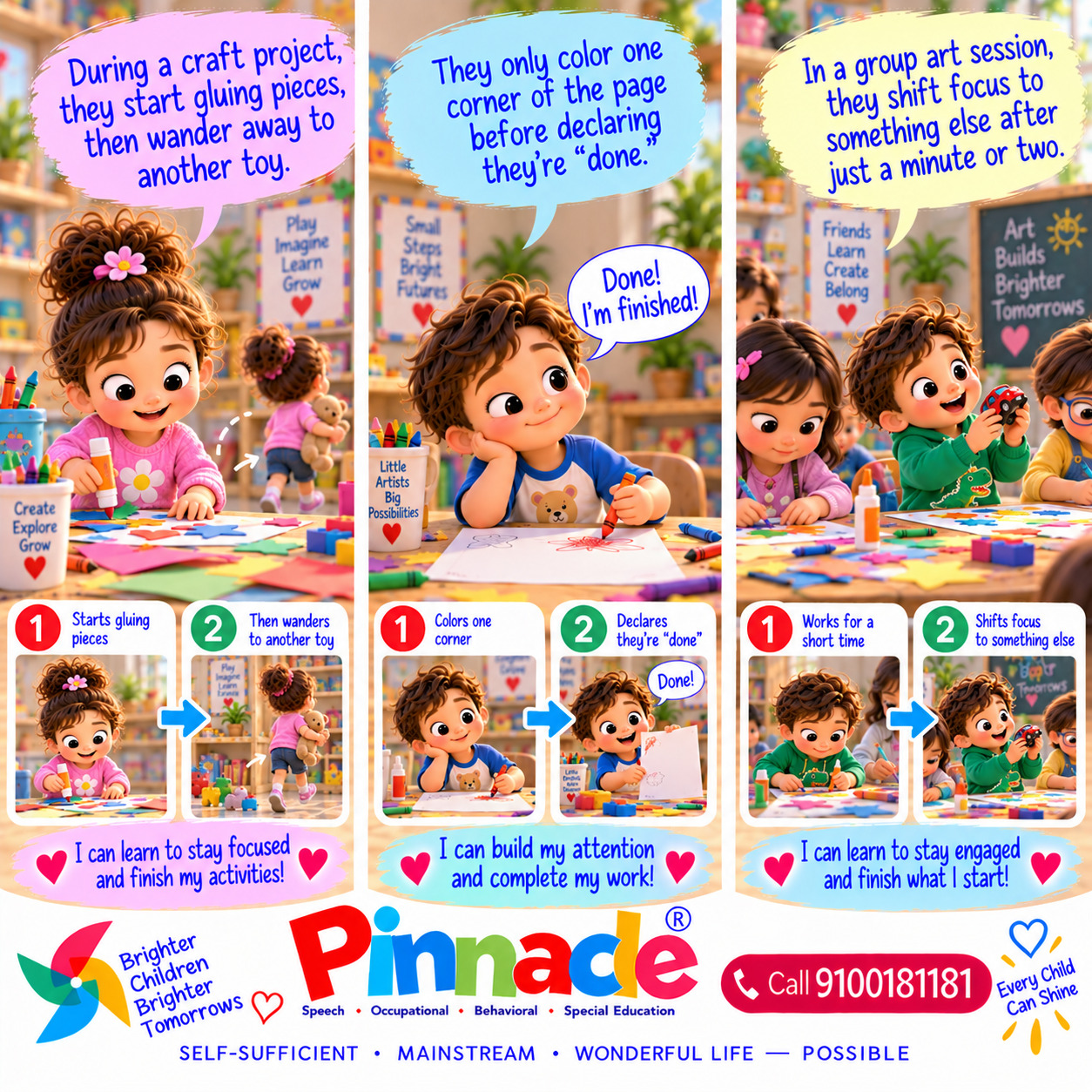
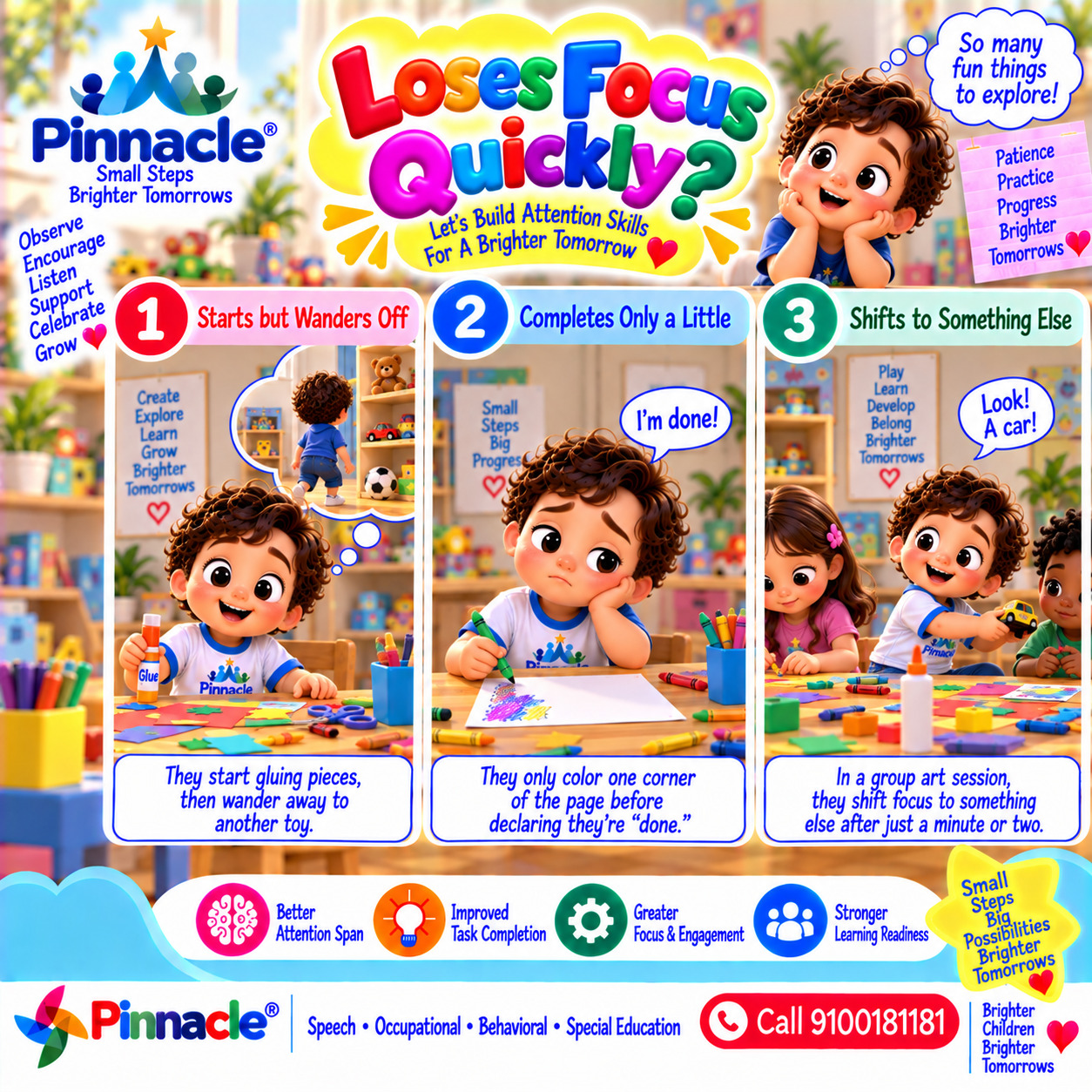
Does the child often lose focus or stop paying attention when engaged in structured activities like crafts?
Topic: Lose Focus
Example 1
During a craft project, they start gluing pieces, then wander away to another toy.
Example 2
They only color one corner of the page before declaring they’re “done.”
Example 3
In a group art session, they shift focus to something else after just a minute or two.
Example illustrationQuestion illustration
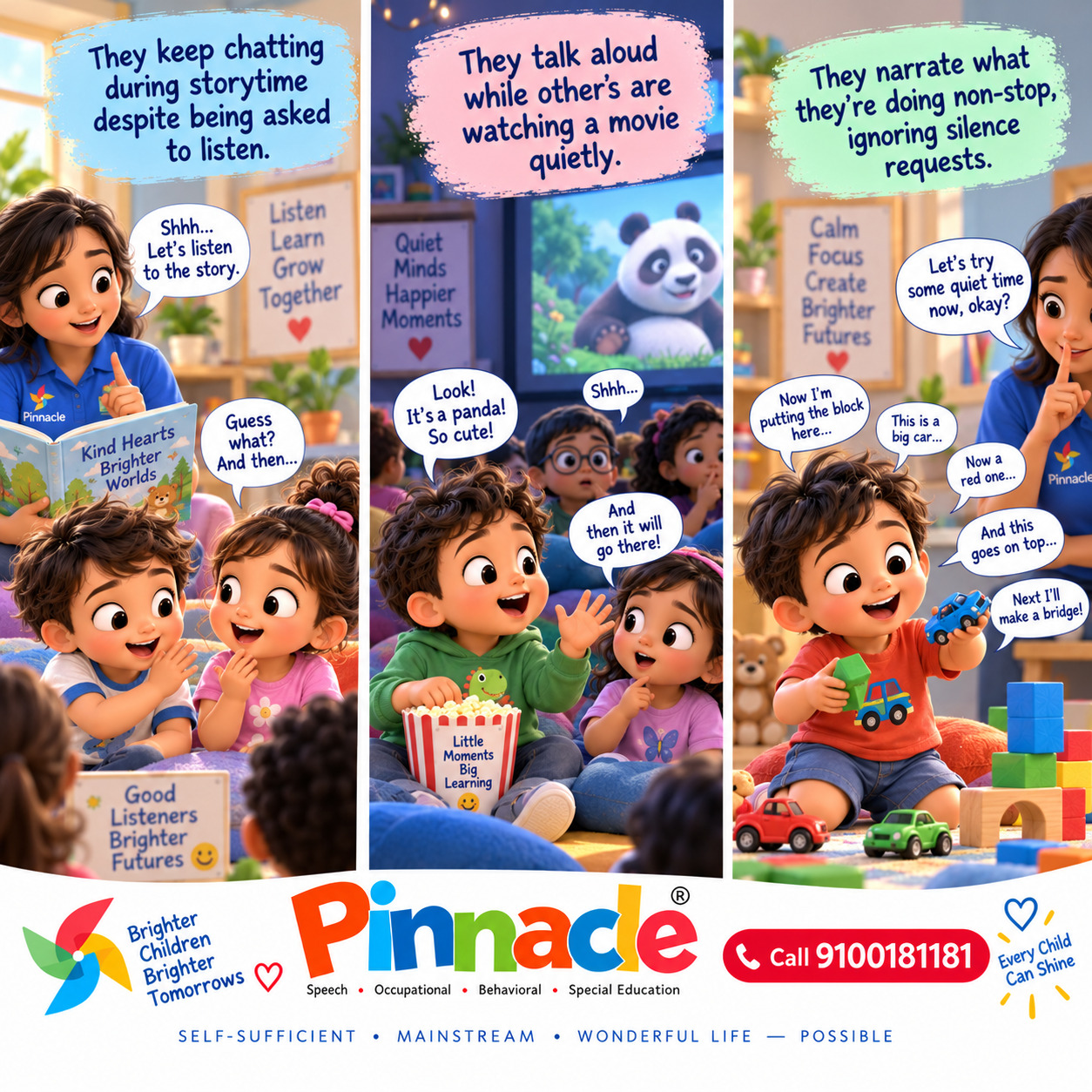
Does the child talk excessively, even in quiet situations like group activities?
Topic: Talk Excessive
Example 1
They keep chatting during storytime despite being asked to listen.
Example 2
They talk aloud while others are watching a movie quietly.
Example 3
They narrate what they’re doing non-stop, ignoring silence requests.
Example illustrationQuestion illustration
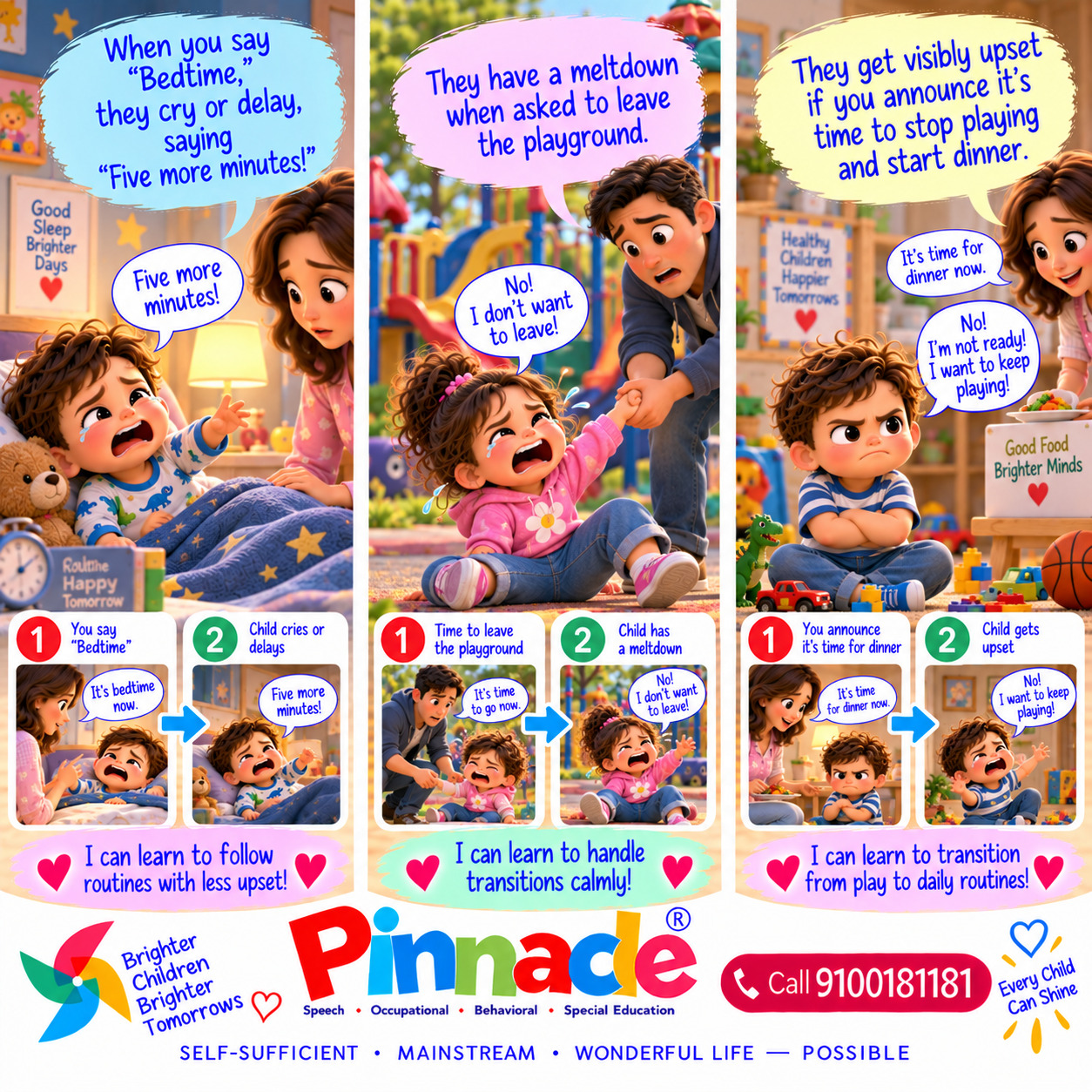
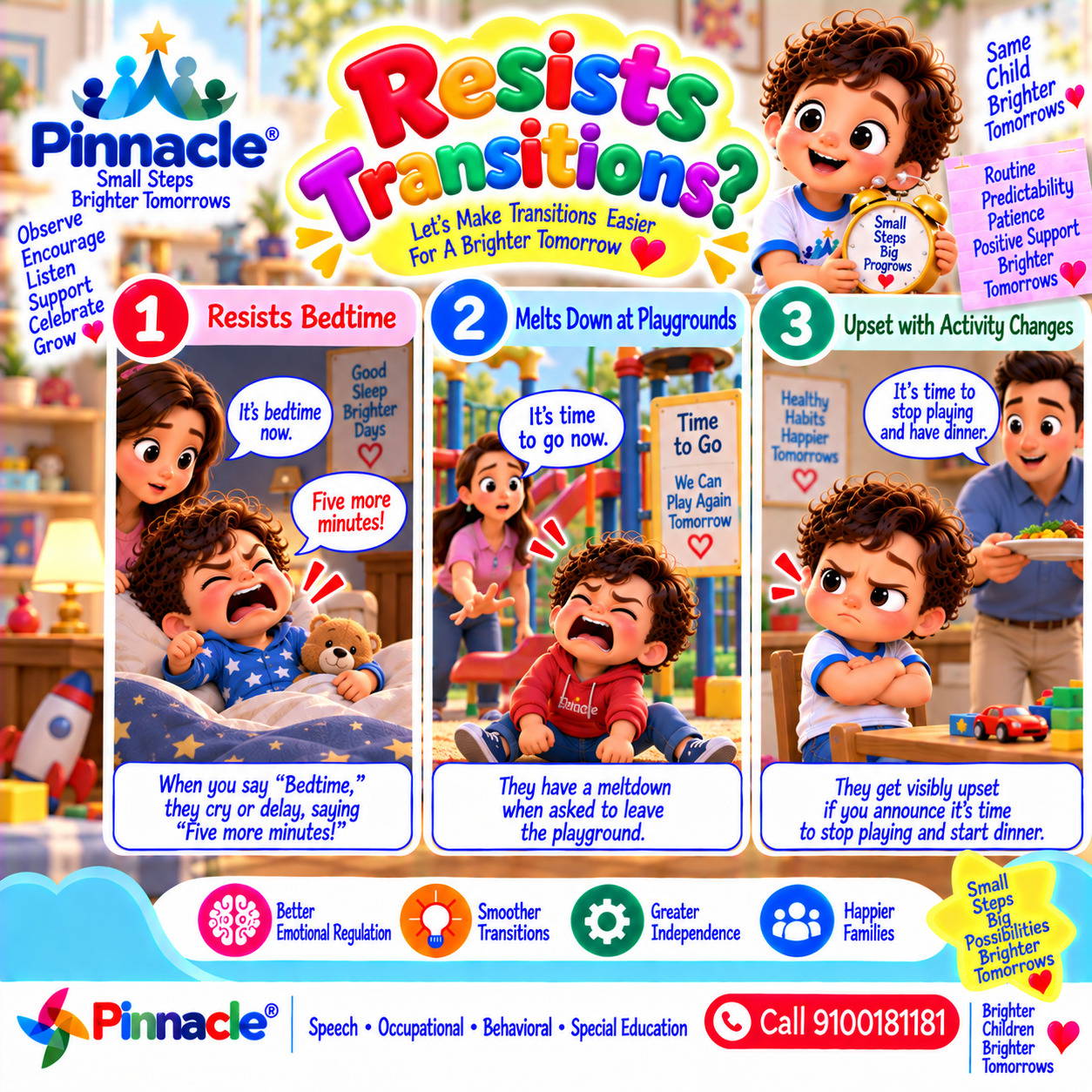
Does the child frequently resist transitions from one activity to another (e.g., from play to bedtime)?
Topic: Resist Transition
Example 1
When you say “Bedtime,” they cry or delay, saying “Five more minutes!”
Example 2
They have a meltdown when asked to leave the playground.
Example 3
They get visibly upset if you announce it’s time to stop playing and start dinner.
Example illustrationQuestion illustration
Does the child appear to be constantly “on the go” or act as if “driven by a motor”?
Topic: Constantly On The Go
Example 1
They run around the house or classroom without resting.
Example 2
They struggle to sit still for even short periods.
Example 3
They climb, jump, and move non-stop, even when others are resting.
Example illustrationQuestion illustration
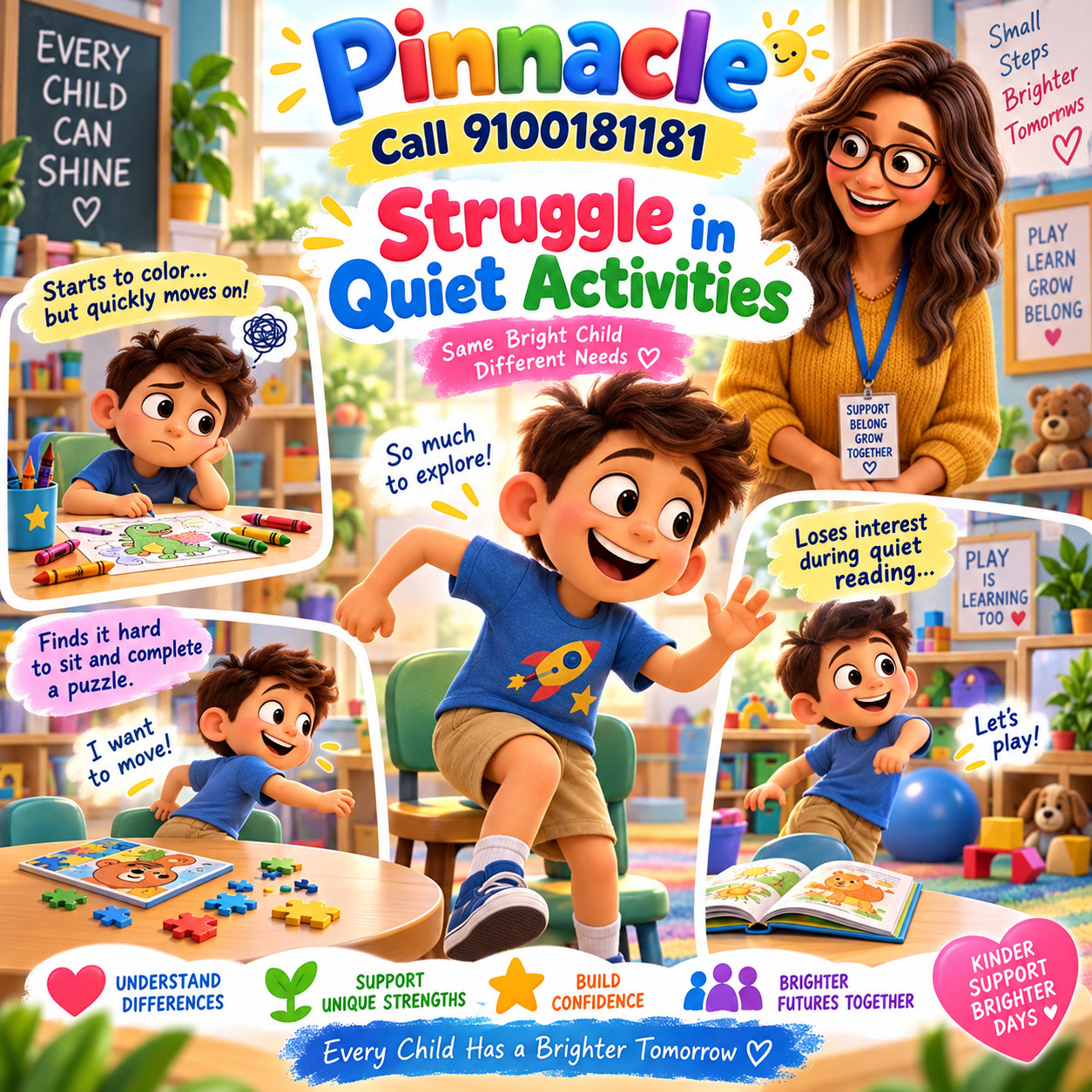
Does the child struggle to engage in quiet activities independently?
Topic: Struggle in Quiet Activities
Example 1
They quickly abandon coloring for something more active.
Example 2
They find it hard to sit and do a puzzle quietly.
Example 3
They lose interest in quiet reading time, preferring to move.
Example illustrationQuestion illustration
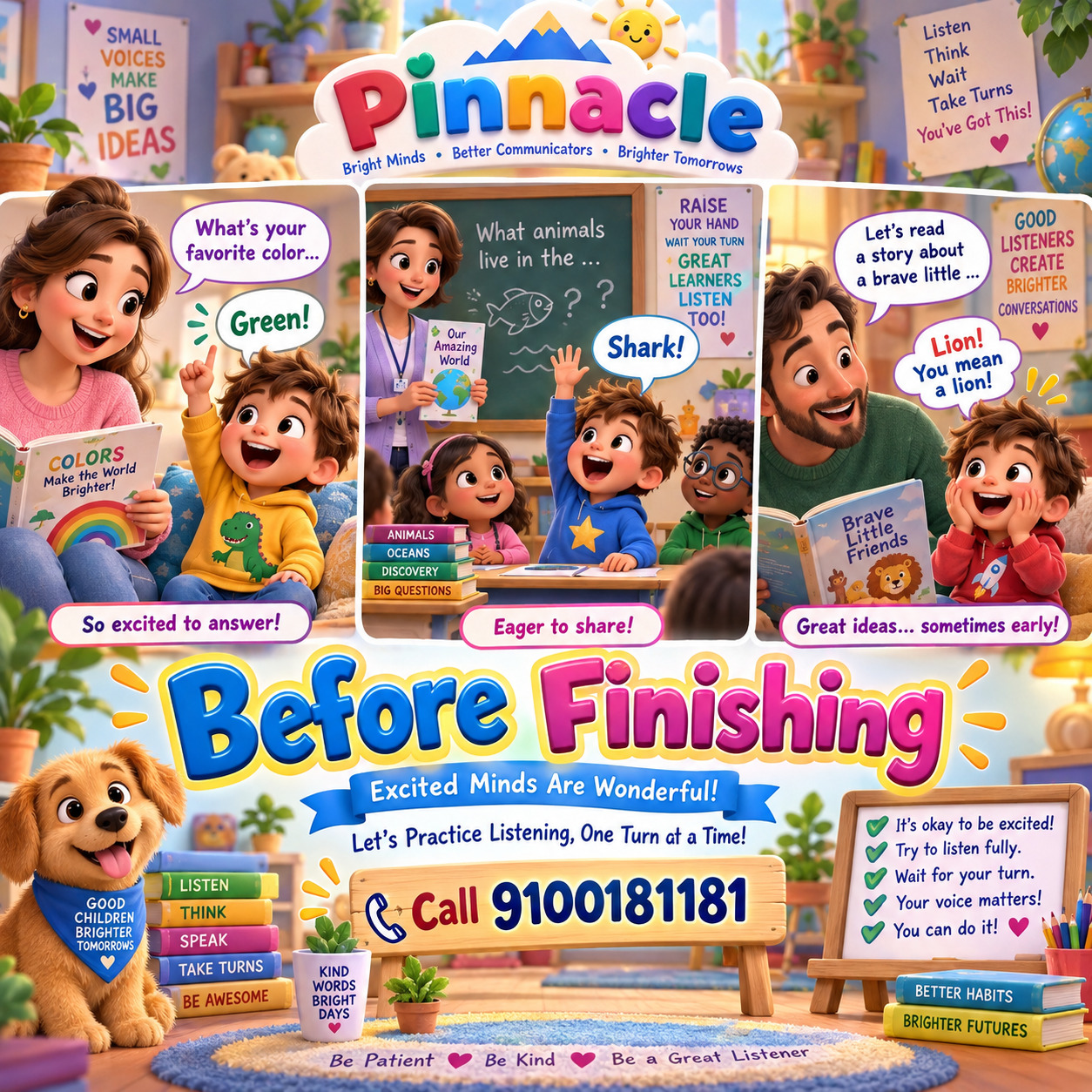
Does the child frequently blurt out answers or statements before others finish asking questions?
Topic: Before Finishing
Example 1
They answer “Green!” before you finish asking “What’s your favorite color?”
Example 2
They interrupt the teacher’s question mid-sentence.
Example 3
They guess the end of your sentence prematurely.
Example illustrationQuestion illustration
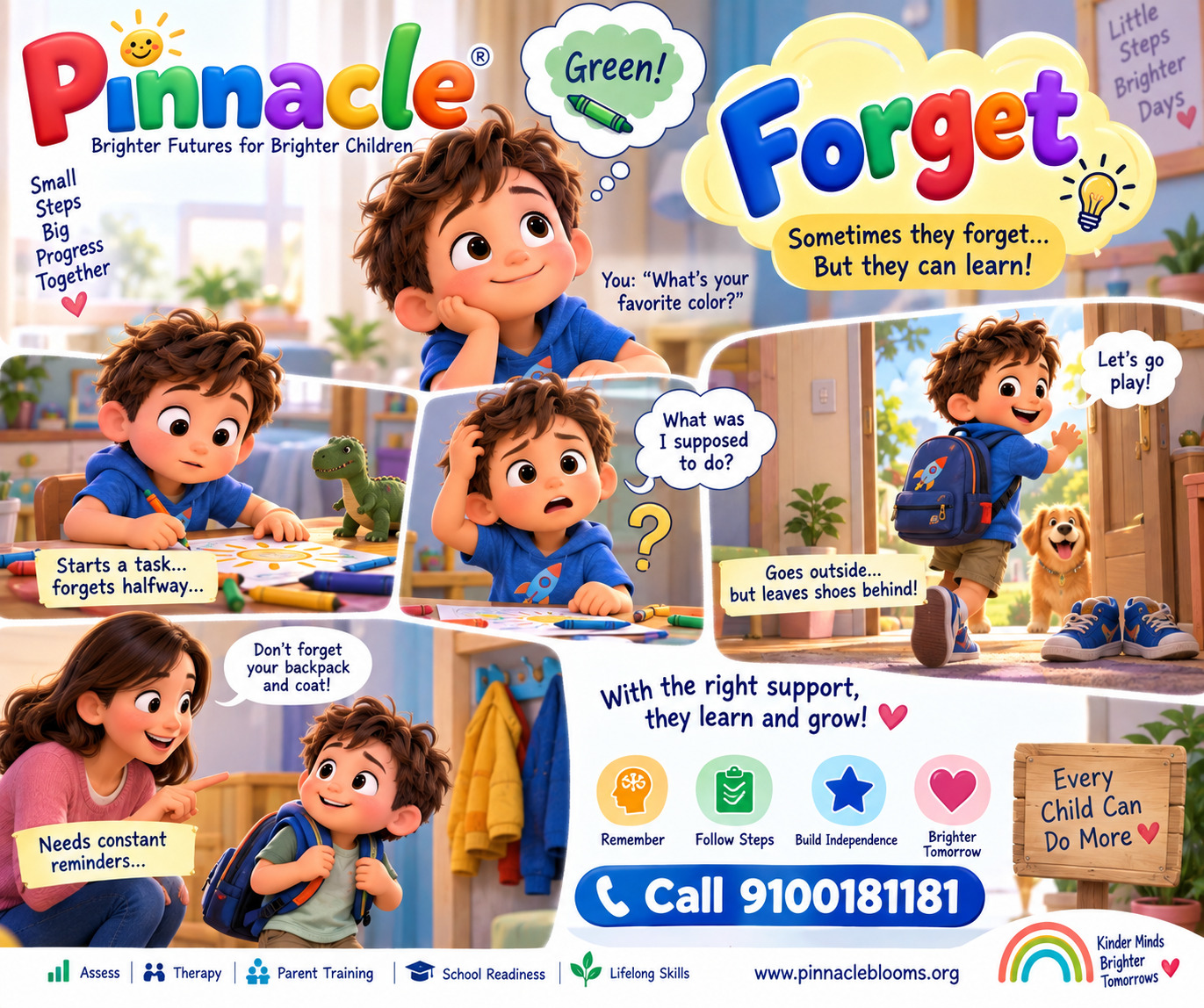
Does the child frequently forget instructions or items they need for activities?
Topic: Forget
Example 1
They start a task, forget the instructions halfway, and ask again.
Example 2
They go to play outside but leave shoes behind, forgetting them.
Example 3
They need constant reminders to bring their backpack or coat.
Example illustrationQuestion illustration
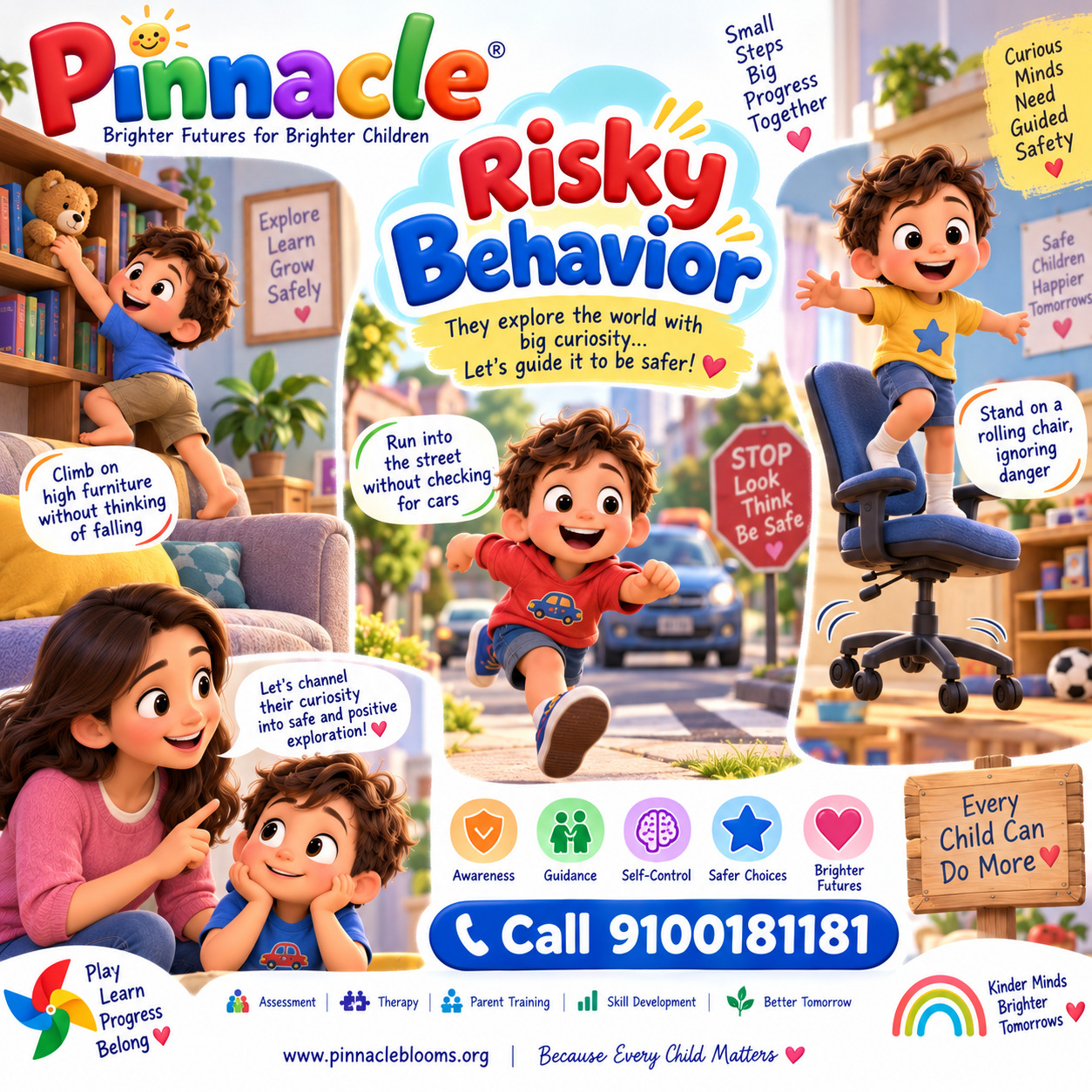
Does the child frequently engage in risky behavior without considering the consequences?
Topic: Risky Behavior
Example 1
They climb high furniture without thinking of falling.
Example 2
They run into the street without checking for cars.
Example 3
They stand on a rolling chair, ignoring potential danger.
Example illustration
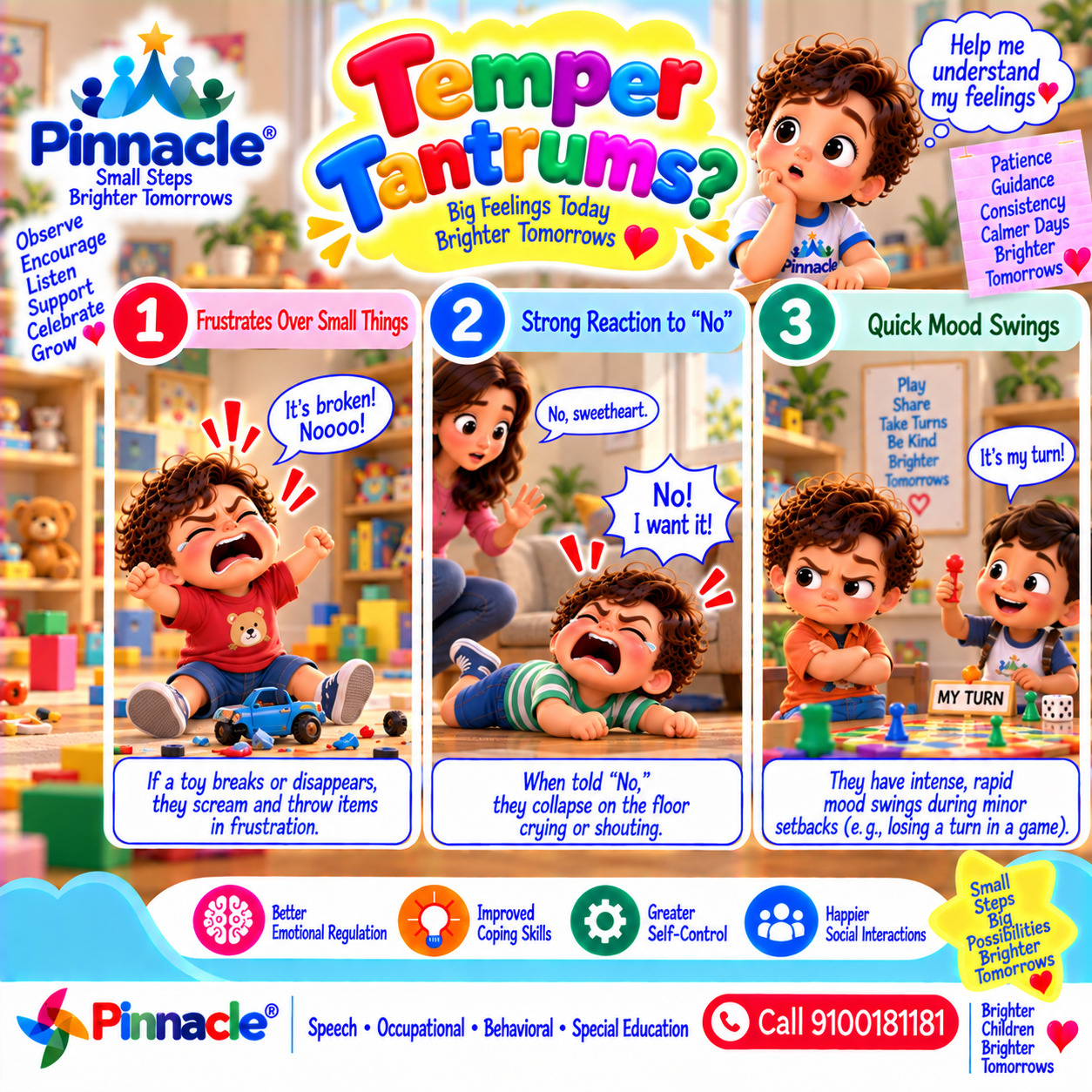
Does the child exhibit frequent temper tantrums or emotional outbursts?
Topic: Temper Tantrums
Example 1
If a toy breaks or disappears, they scream and throw items in frustration.
Example 2
When told “No,” they collapse on the floor crying or shouting.
Example 3
They have intense, rapid mood swings during minor setbacks (e.g., losing a turn in a game).
Example illustrationQuestion illustration
Does the child have difficulty calming down after becoming upset?
Topic: Calming Down
Example 1
After a tantrum, they remain agitated for a long time.
Example 2
They cry intensely and struggle to settle themselves once triggered.
Example 3
They pace around or keep whining even after the cause is resolved.
Example illustrationQuestion illustration
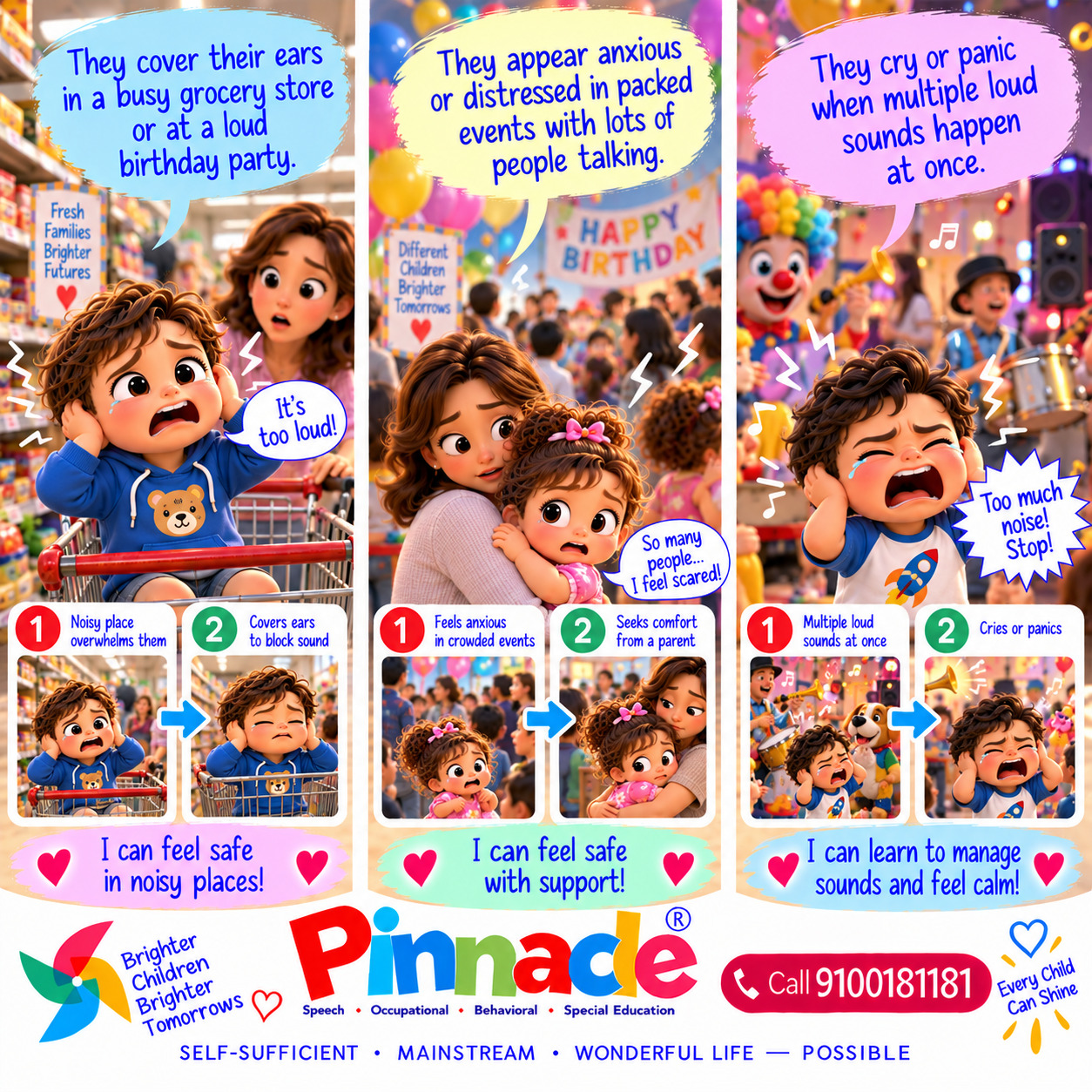
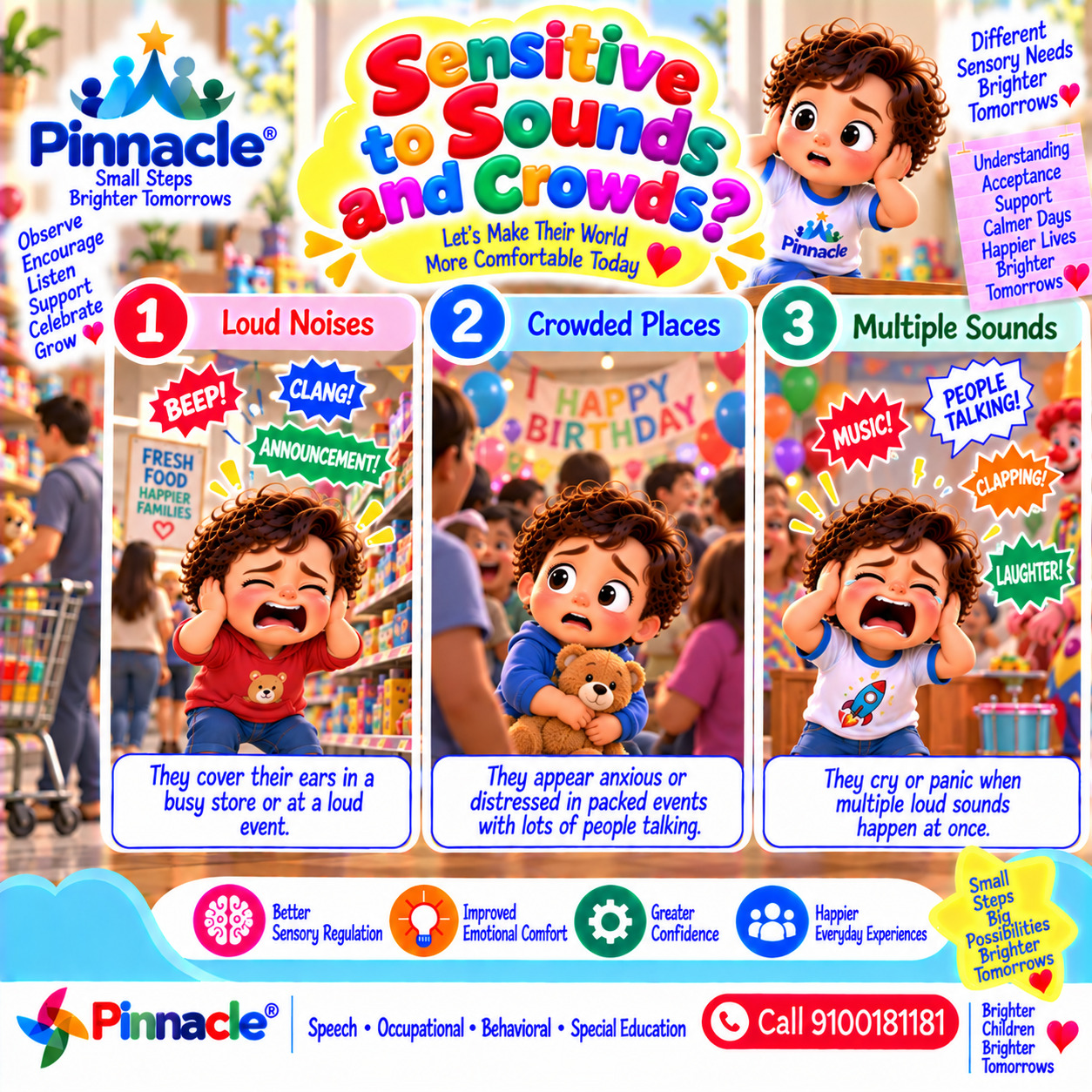
Does the child show signs of being overwhelmed by sensory input, such as loud noises or crowded places?
Topic: Overwhelmed
Example 1
They cover their ears in a busy grocery store or at a loud birthday party.
Example 2
They appear anxious or distressed in packed events with lots of people talking.
Example 3
They cry or panic when multiple loud sounds happen at once.
Example illustrationQuestion illustration
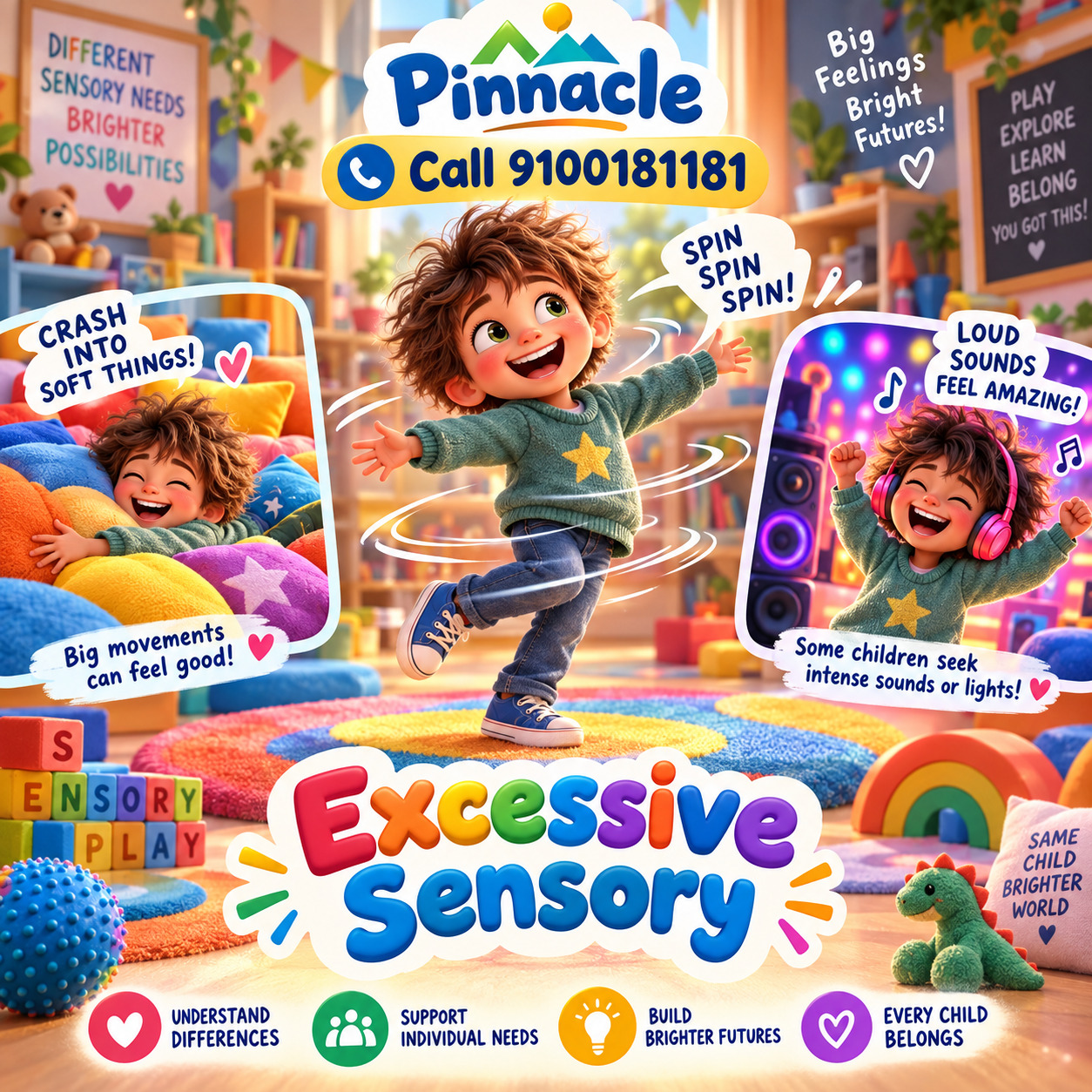
Does the child frequently seek excessive sensory stimulation, such as spinning or crashing into objects?
Topic: Excessive Sensory
Example 1
They spin in circles repeatedly without getting dizzy.
Example 2
They crash into cushions or pillows for fun.
Example 3
They love very loud music or intense lights.
Example illustrationQuestion illustration
Does the child struggle to fall asleep or stay asleep through the night?
Topic: Sleep Struggle
Example 1
They toss and turn, taking a long time to settle at bedtime.
Example 2
They wake up frequently during the night.
Example 3
They resist bedtime routines and seem restless in bed.