Early autism assessments like the ADOS for toddlers can make a significant difference in understanding your child''s unique needs and setting them on a path towards success.
Through personalized, one-on-one assessments using ADOS, we gain insights into your child''s abilities and needs, creating a tailored intervention plan.
The early years, particularly between 9 months to 7 years, are crucial for assessments as they offer the best opportunity for beneficial interventions.
The child demonstrates strong skills across domains, reflecting age-appropriate or advanced development. Continued support and practice will further enhance their growth.
AUTISM SPECTRUM
The child shows emerging skills but requires targeted support to strengthen specific areas such as social sharing or pretend play.
AUTISM
The child demonstrates significant developmental delays across multiple domains. Comprehensive interventions are recommended to address these challenges.
Pinnacle Blooms Network has successfully conducted over 1 million assessments with a 97% + measured accuracy rate. We have extended our expertise to parents in more than 60 countries.
For little Arjun’s parents, the journey was fraught with anxiety and questions. At three, Arjun struggled with speech, and connecting socially felt insurmountable. After visiting Pinnacle Blooms, our ADOS assessment illuminated Arjun''s strengths and areas for growth, paving the way for a targeted therapy plan. Today, thanks to early intervention, Arjun confidently engages with his peers.
Progress : Significant improvement in communication and social engagement within six months.
With unparalleled accuracy and personalized care at Pinnacle Blooms, we offer a beacon of hope. Book your child''s assessment today.
*Names are indicative only and have been changed for privacy protectionSuccess Testimonial
Name : Neha
RelationShip : Mother
Testimonial : The moment we walked into Pinnacle Blooms, we felt at ease. The staff and therapists were compassionate and understanding. Our son Sanjay has made incredible strides.
These are reference questions and illustrative examples. This section does not collect child responses, calculate scores or produce an individual assessment result.
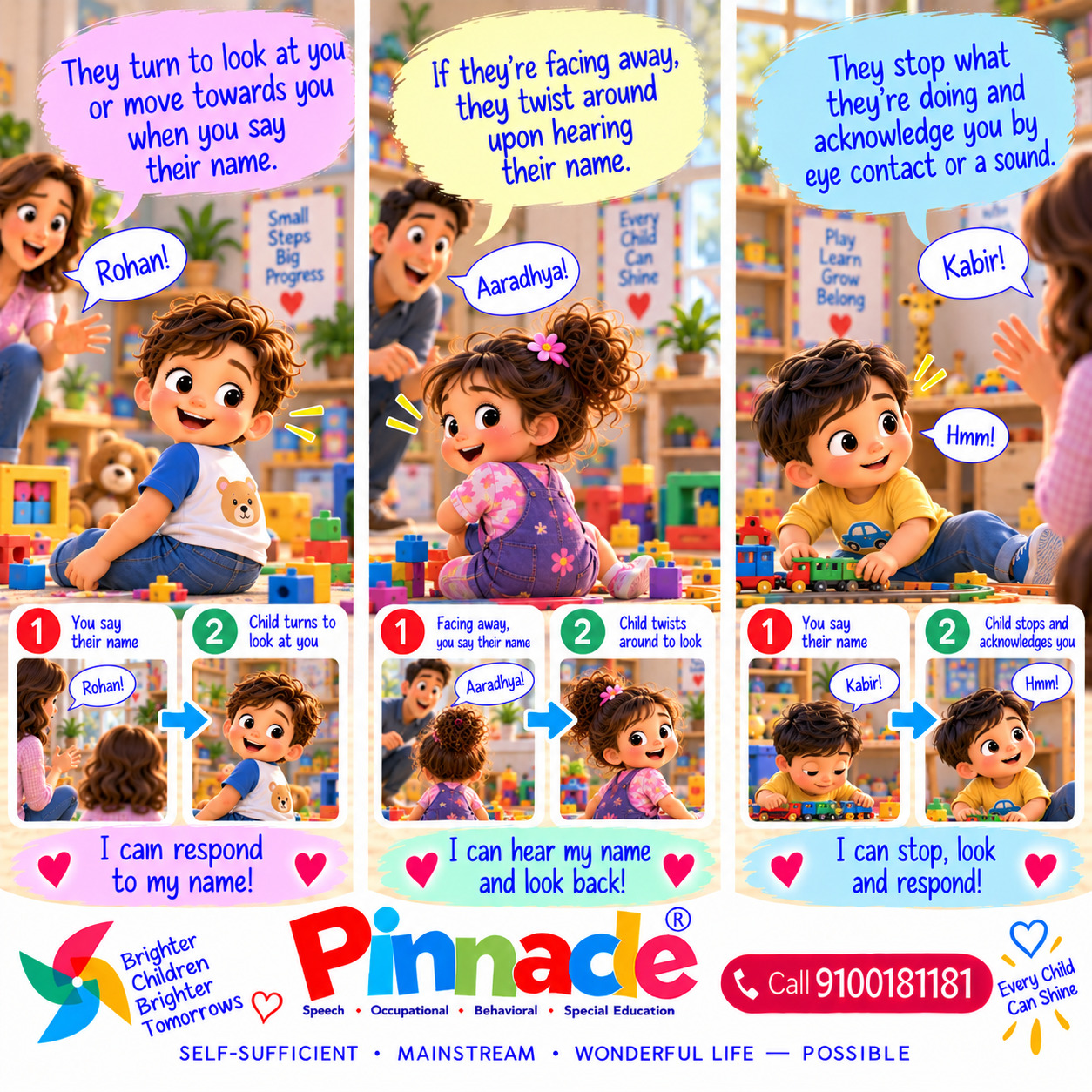
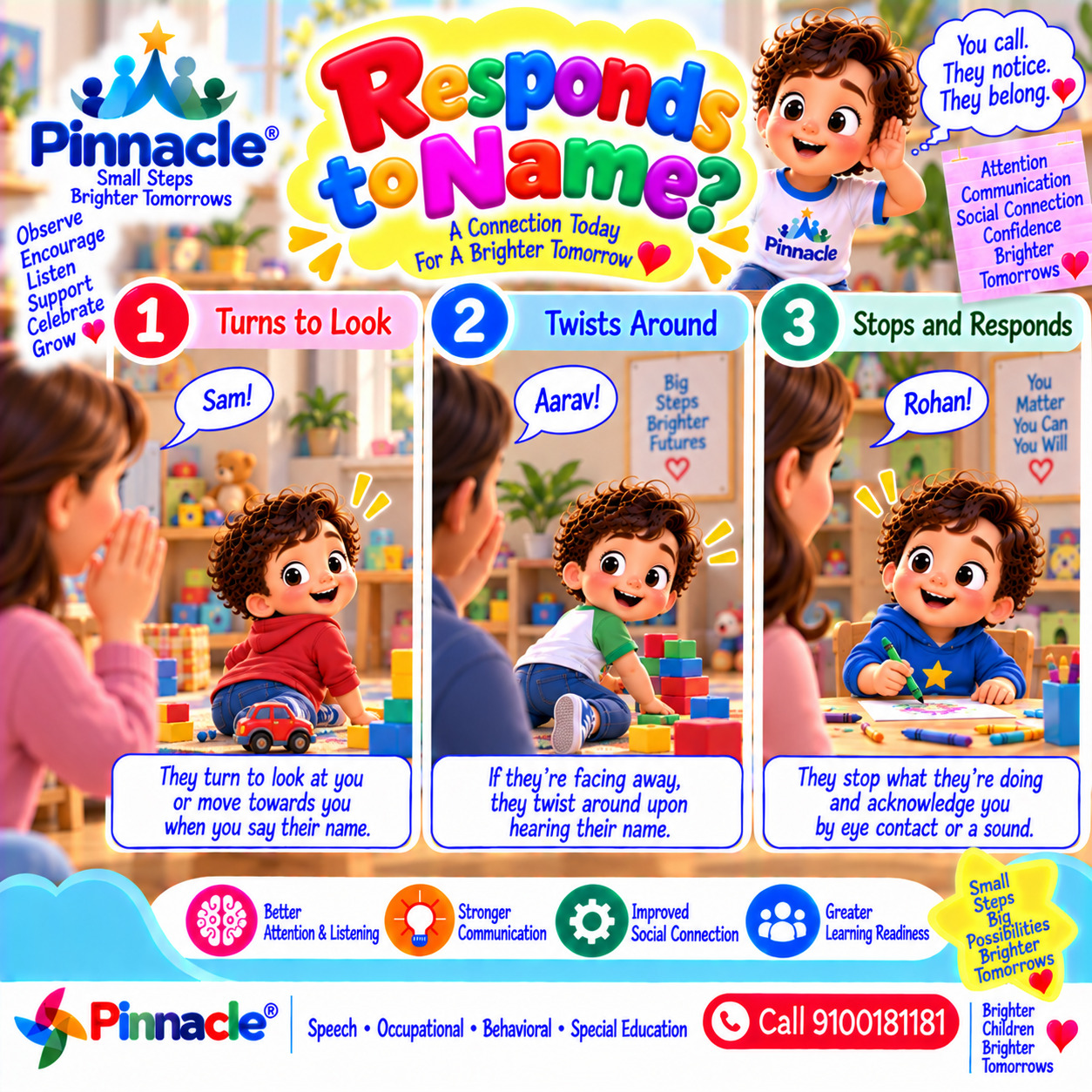
Does your child respond when you call their name?
Topic: Name Call
Example 1
They turn to look at you or move towards you when you say their name.
Example 2
If they’re facing away, they twist around upon hearing their name.
Example 3
They stop what they’re doing and acknowledge you by eye contact or a sound.
Example illustrationQuestion illustration
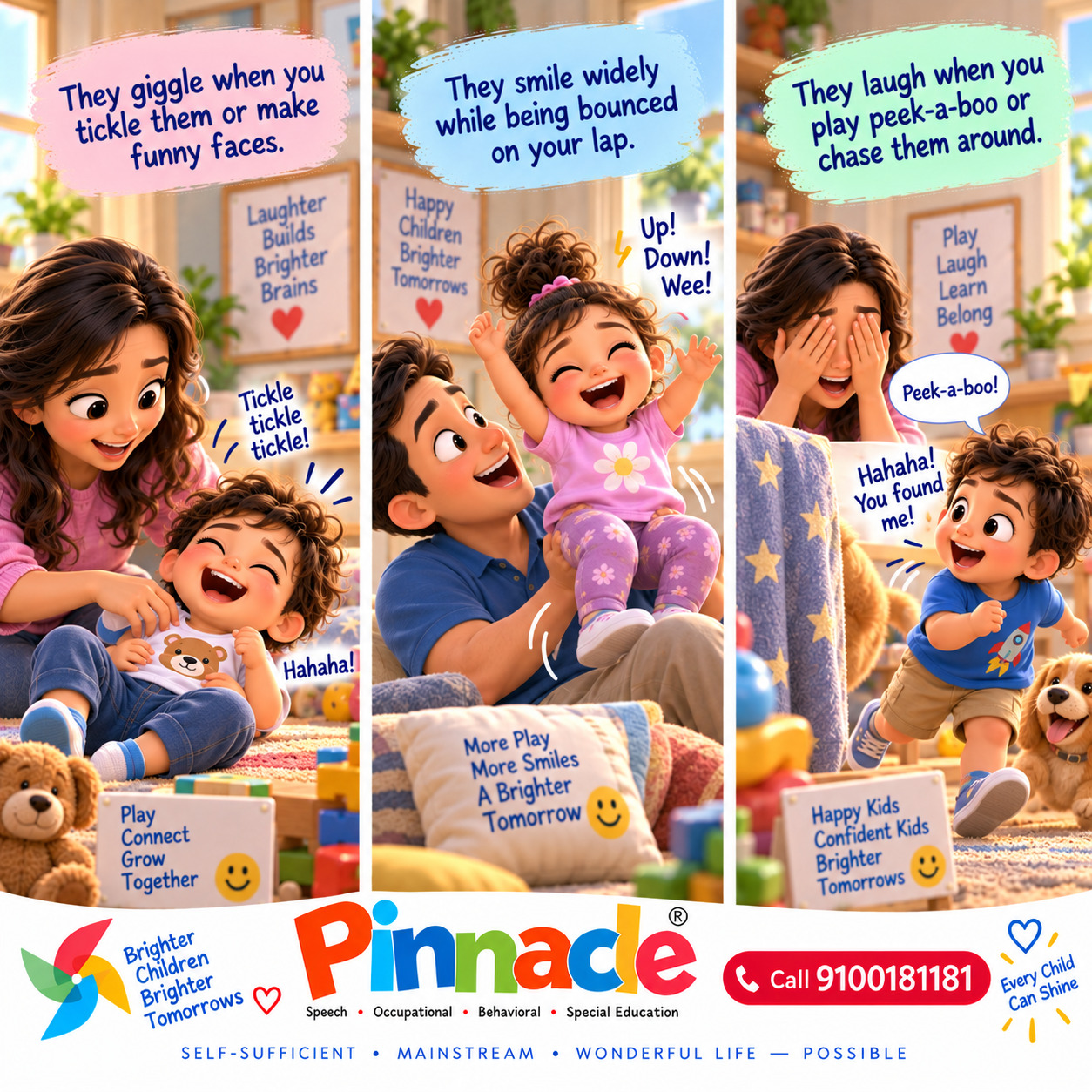
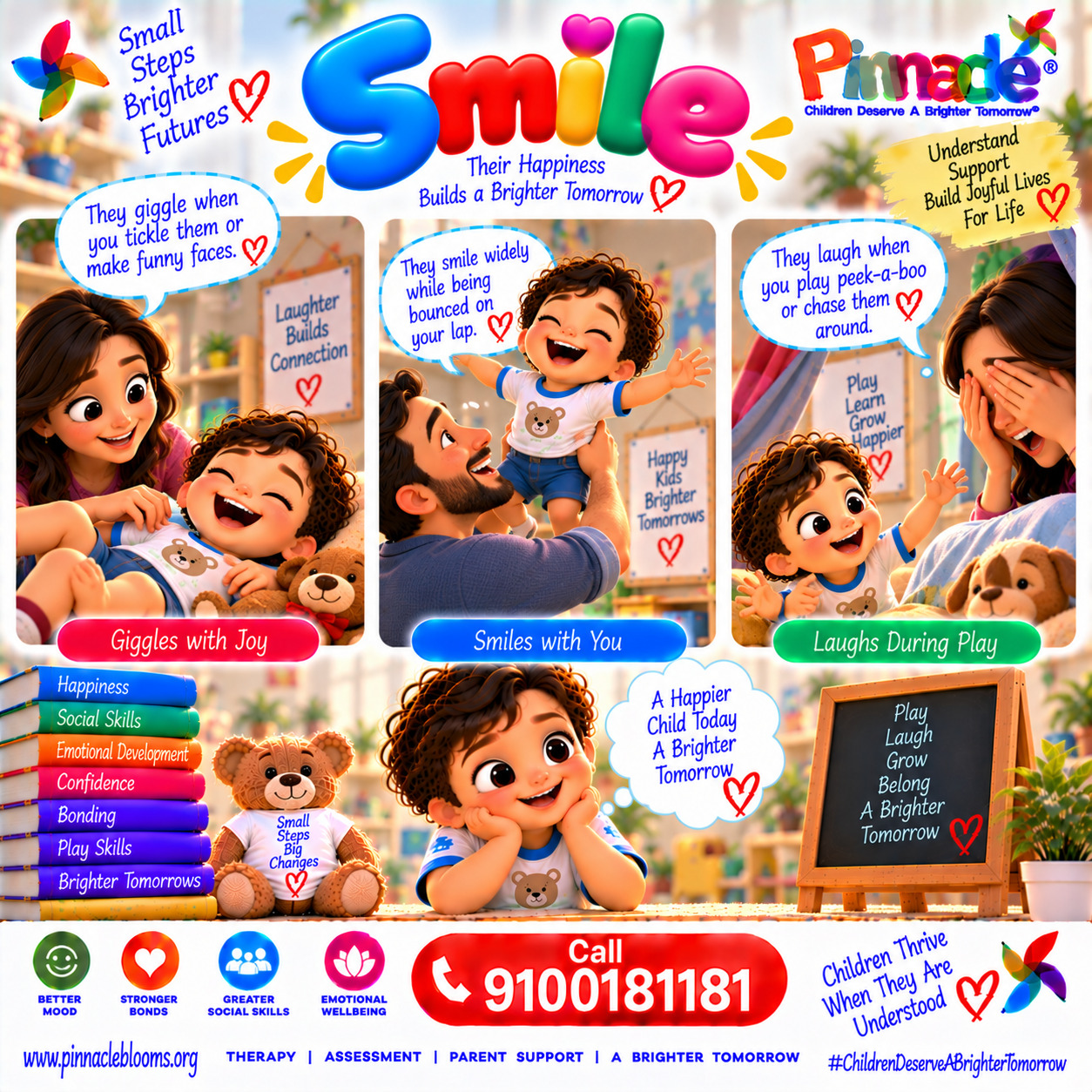
Does the child smile or laugh during play?
Topic: Smile
Example 1
They giggle when you tickle them or make funny faces.
Example 2
They smile widely while being bounced on your lap.
Example 3
They laugh when you play peek-a-boo or chase them around.
Example illustrationQuestion illustration
Does your child make eye contact during feeding or play?
Topic: Eye Contact
Example 1
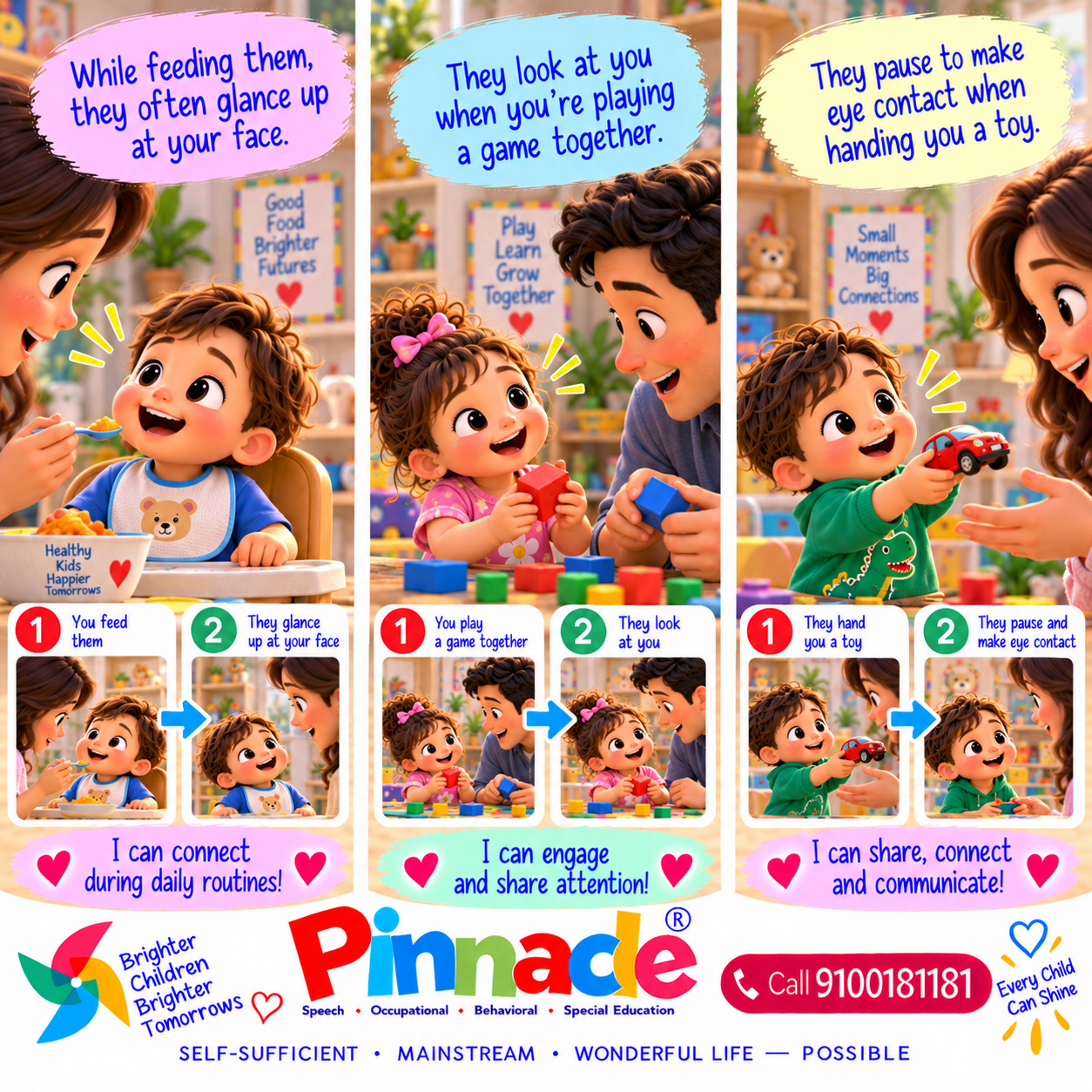
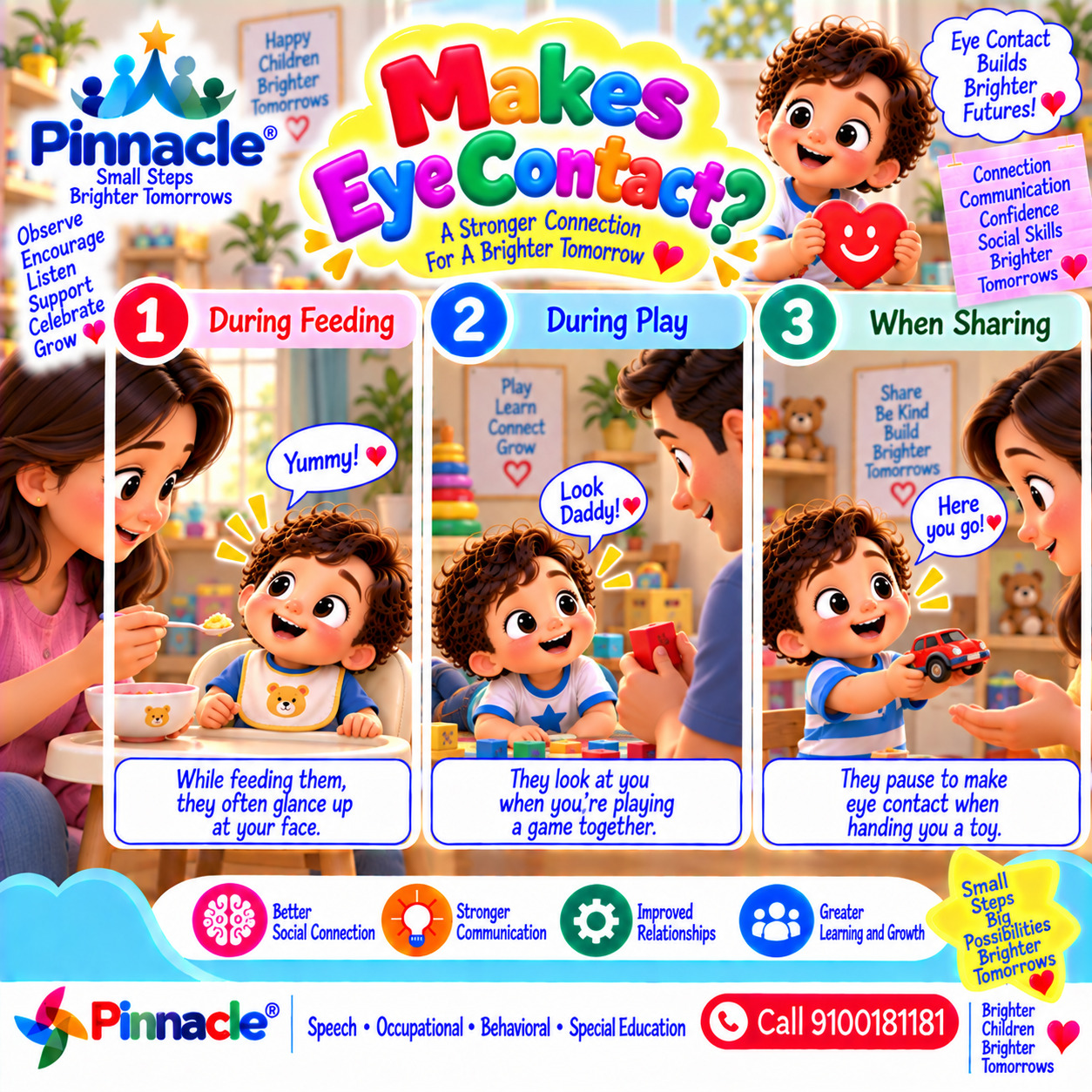
While feeding them, they often glance up at your face.
Example 2
They look at you when you’re playing a game together.
Example 3
They pause to make eye contact when handing you a toy.
Example illustrationQuestion illustration
Social Interaction: Does the child initiate interactions, like waving or reaching out to others?
Topic: Initiate Play
Example 1
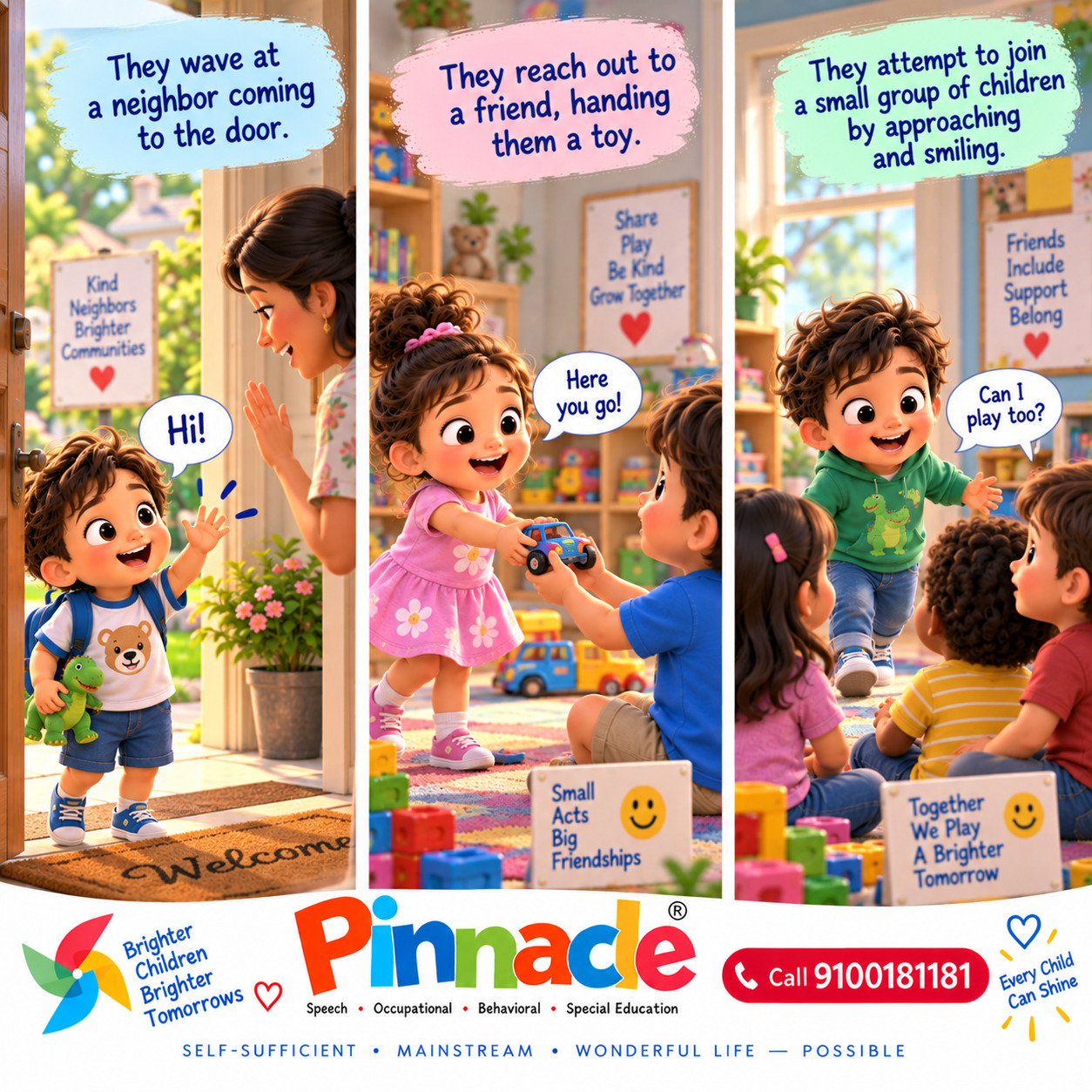
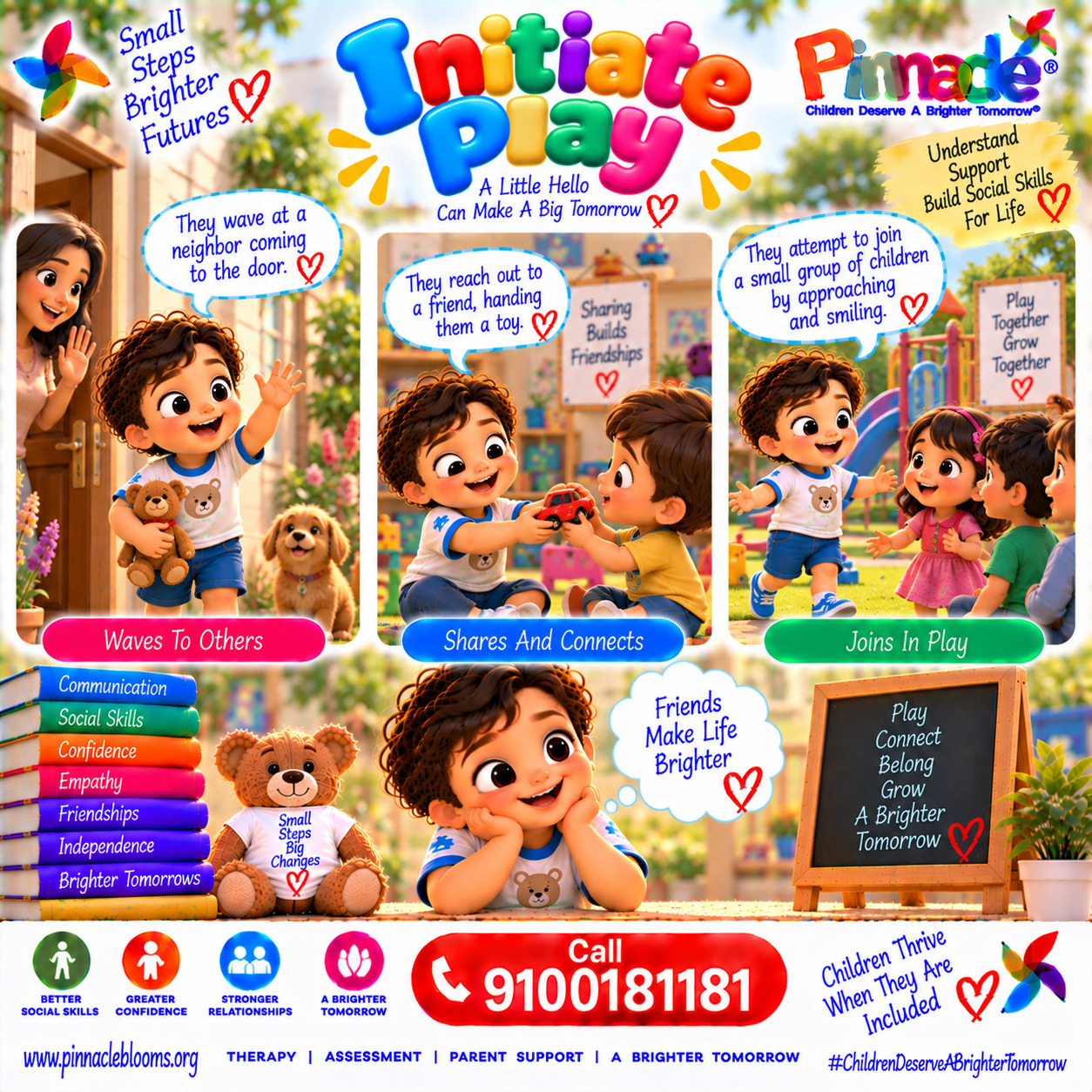
They wave at a neighbor coming to the door.
Example 2
They reach out to a friend, handing them a toy.
Example 3
They attempt to join a small group of children by approaching and smiling.
Example illustrationQuestion illustration
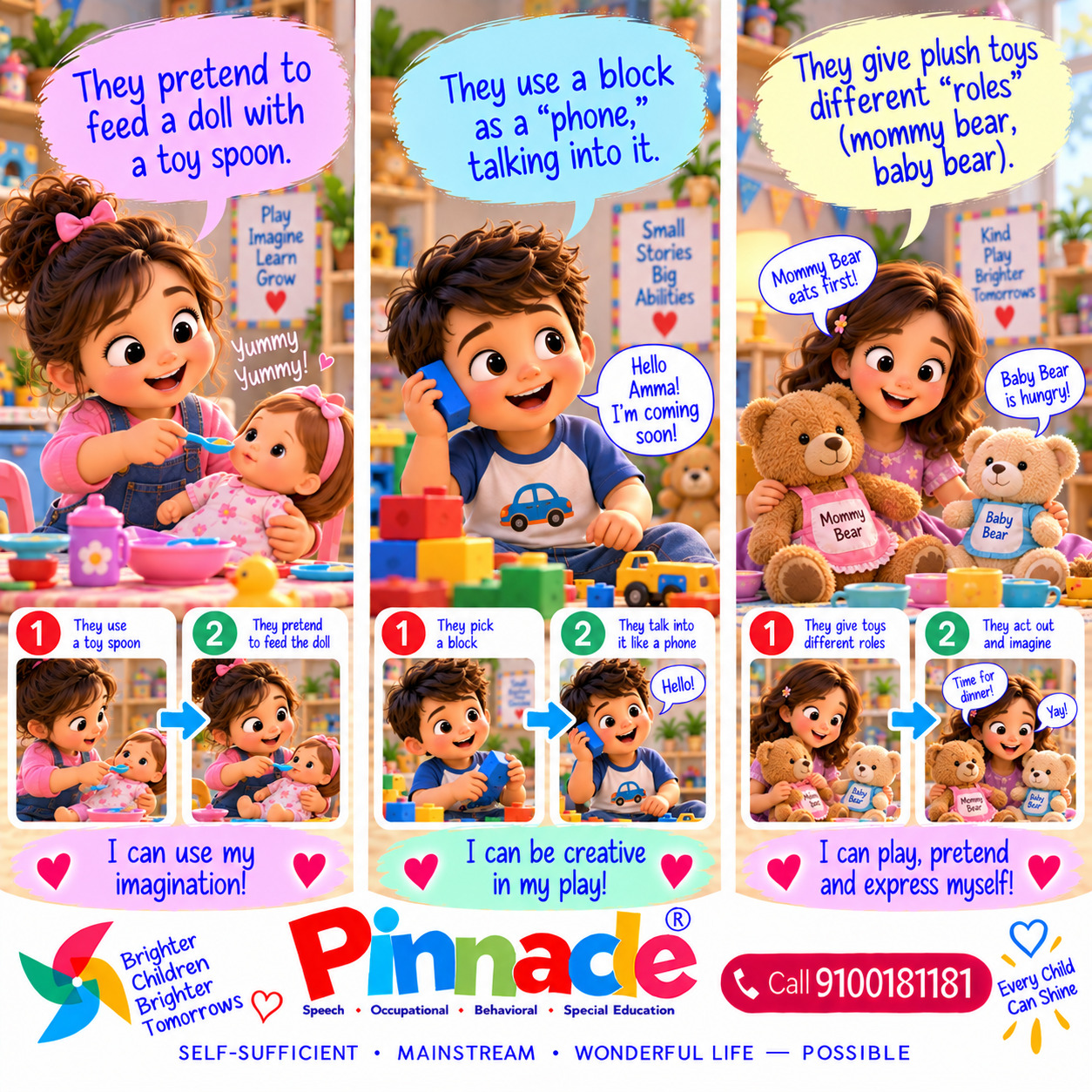
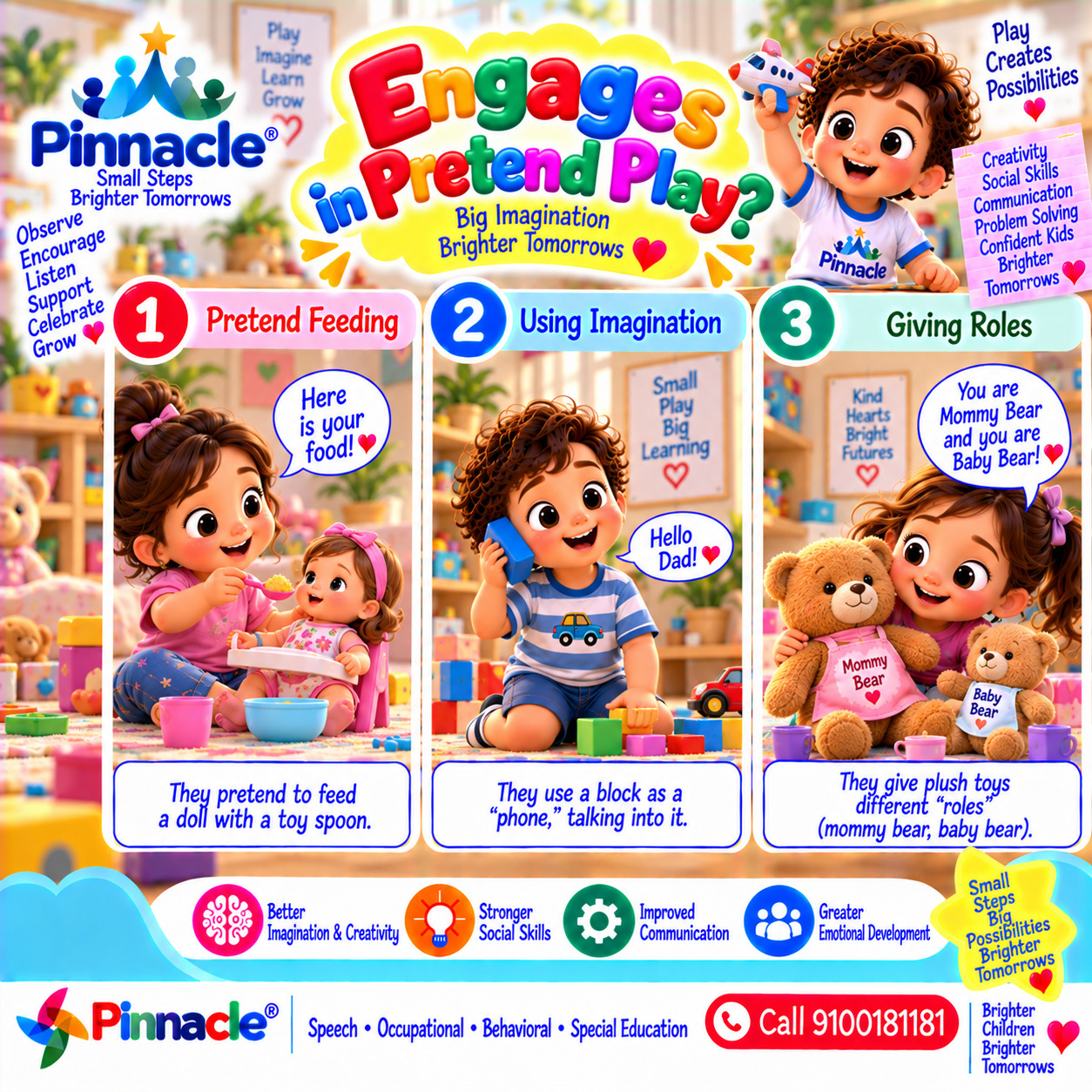
Does your child engage in pretend play?
Topic: Pretend Play
Example 1
They pretend to feed a doll with a toy spoon.
Example 2
They use a block as a “phone,” talking into it.
Example 3
They give plush toys different “roles” (mommy bear, baby bear).
Example illustrationQuestion illustration
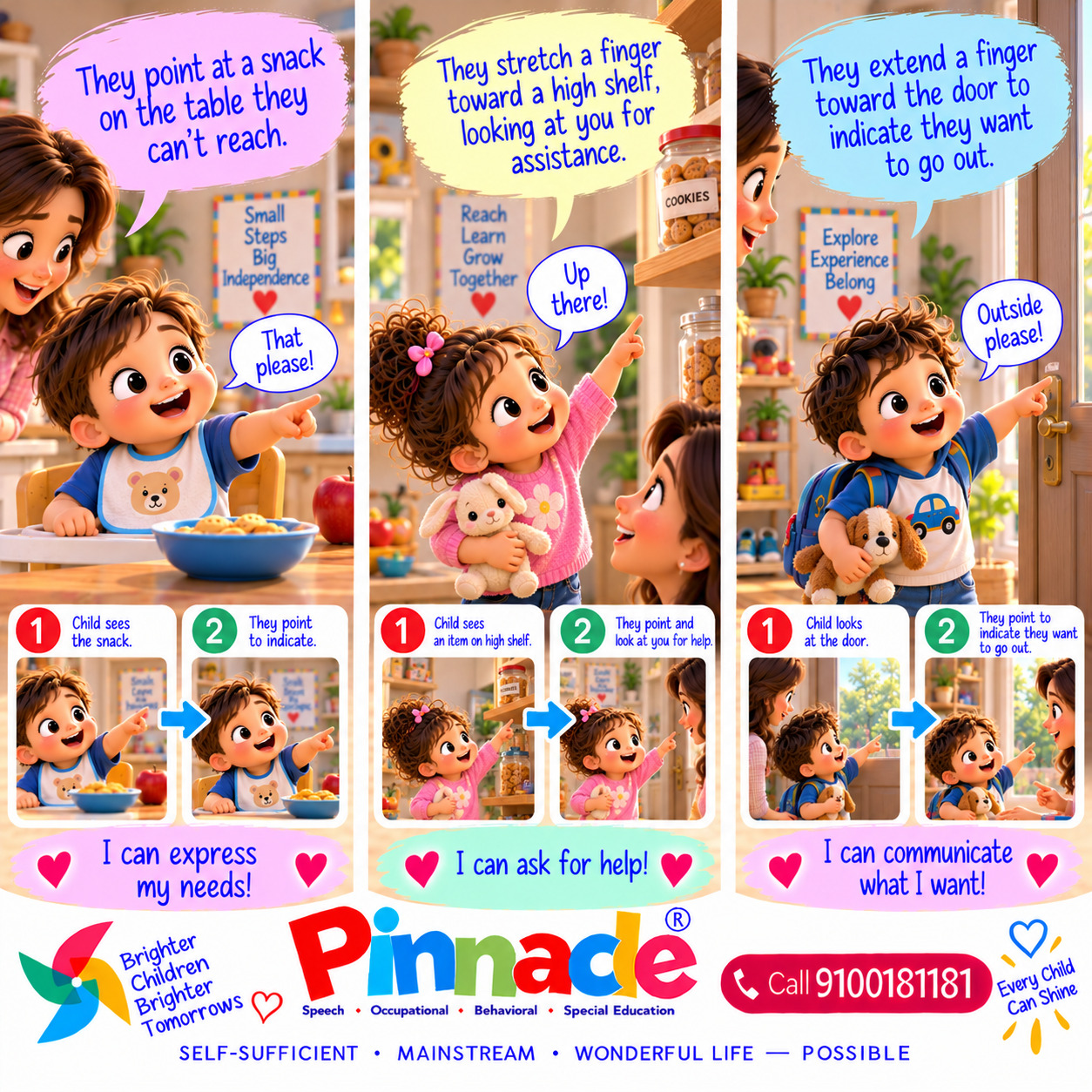
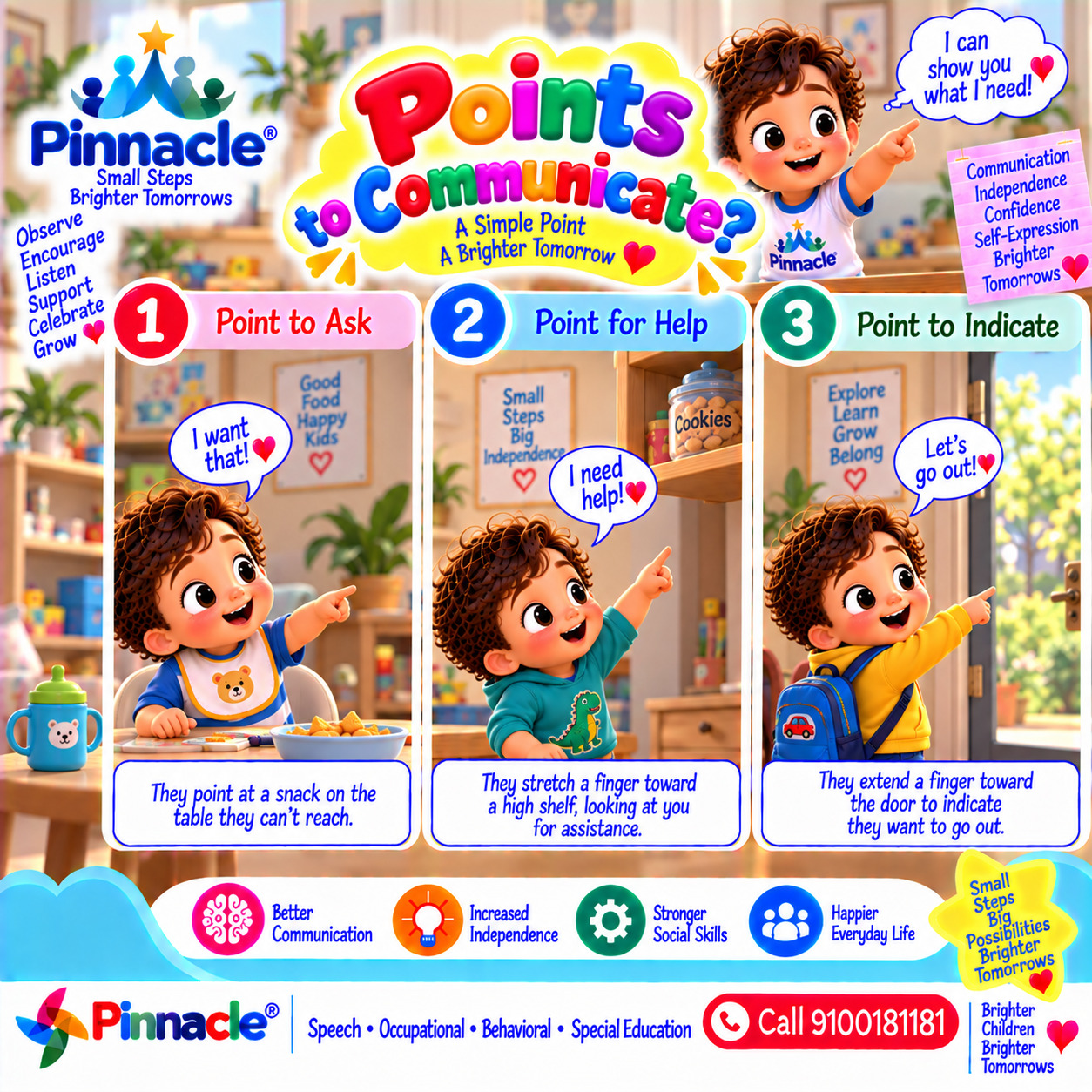
Does your child point with one finger to ask for something or to get help?
Topic: Finger Pointing
Example 1
They point at a snack on the table they can’t reach.
Example 2
They stretch a finger toward a high shelf, looking at you for assistance.
Example 3
They extend a finger toward the door to indicate they want to go out.
Example illustrationQuestion illustration
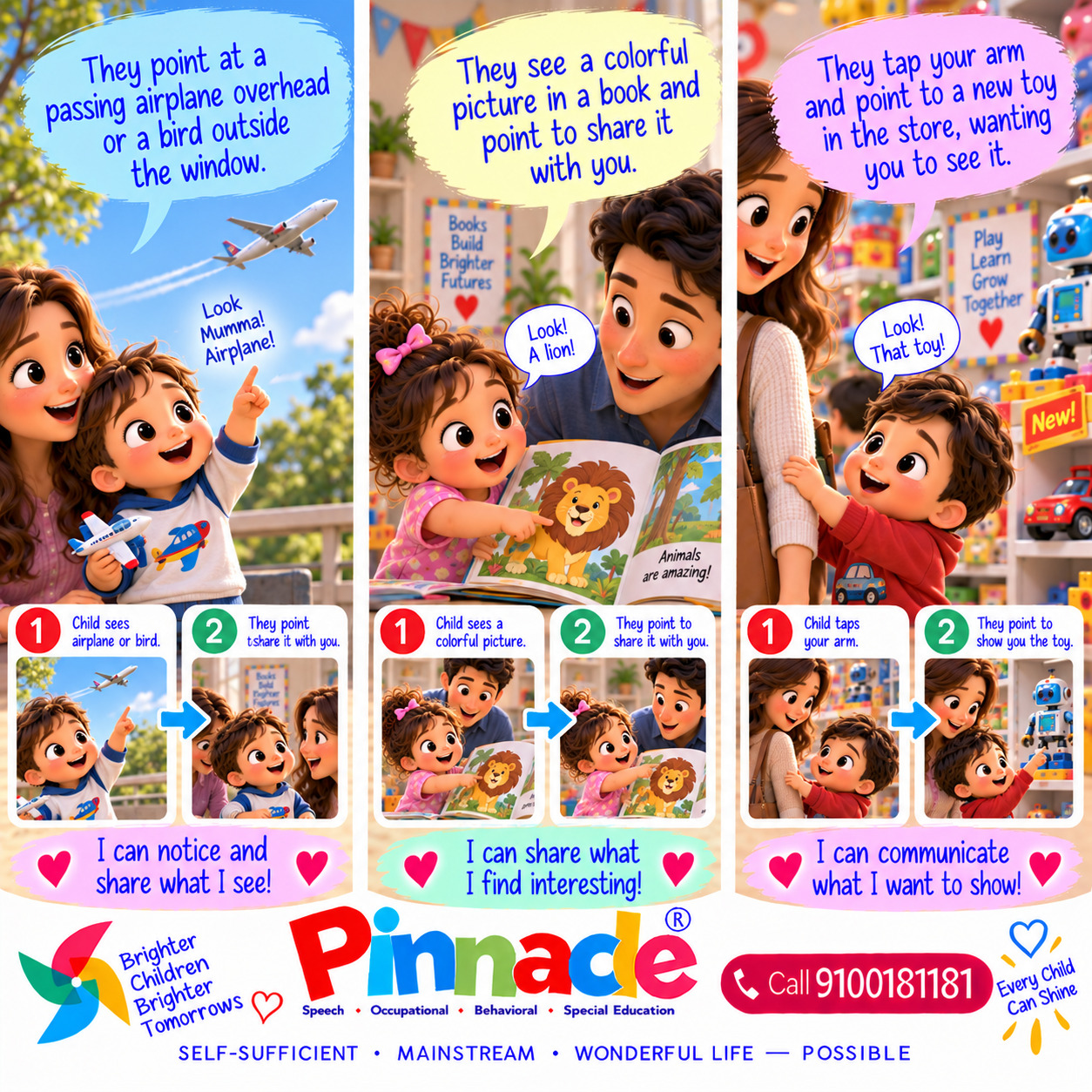
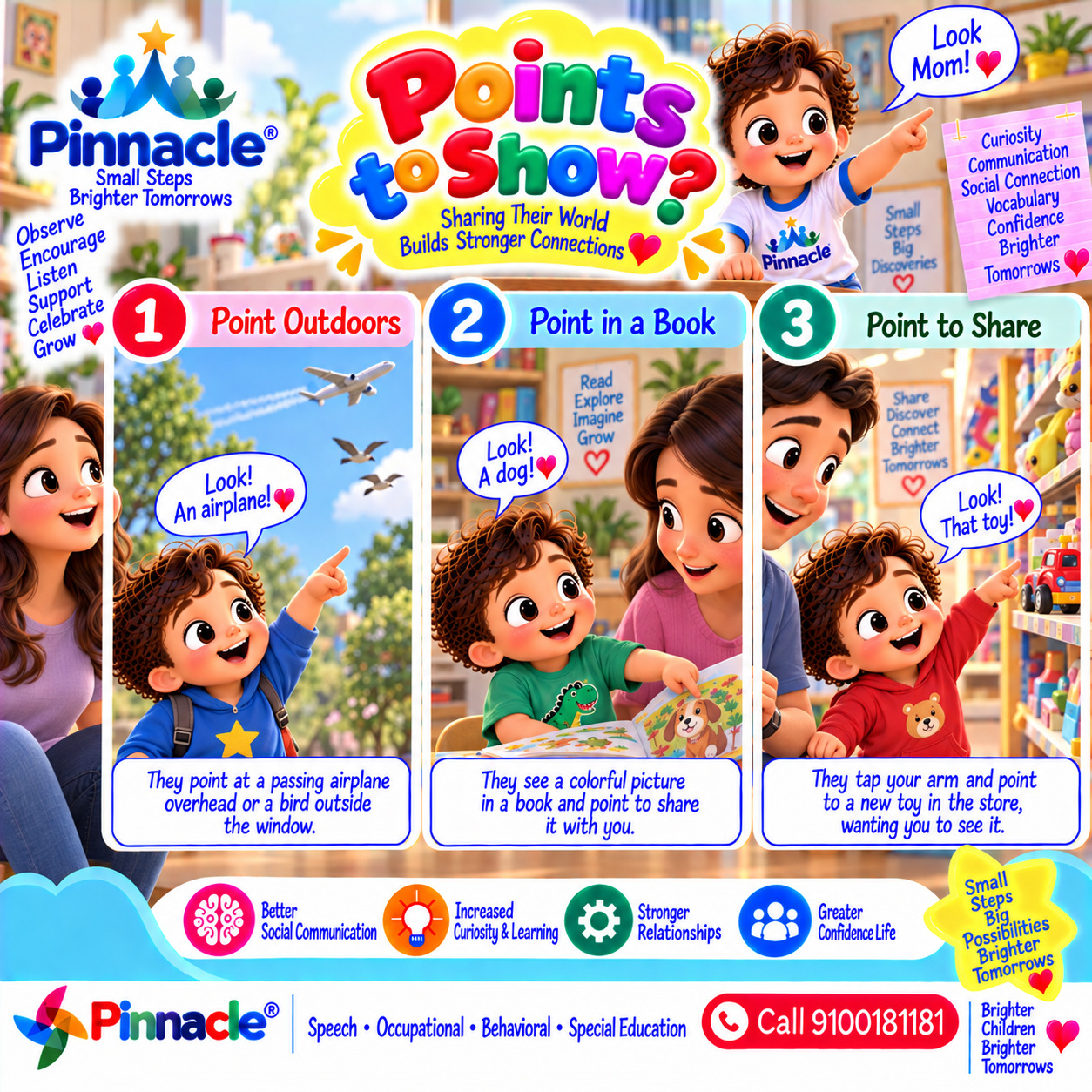
Does your child point to show you something interesting?
Topic: Finger Pointing
Example 1
They point at a passing airplane overhead or a bird outside the window.
Example 2
They see a colorful picture in a book and point to share it with you.
Example 3
They tap your arm and point to a new toy in the store, wanting you to see it.
Example illustrationQuestion illustration
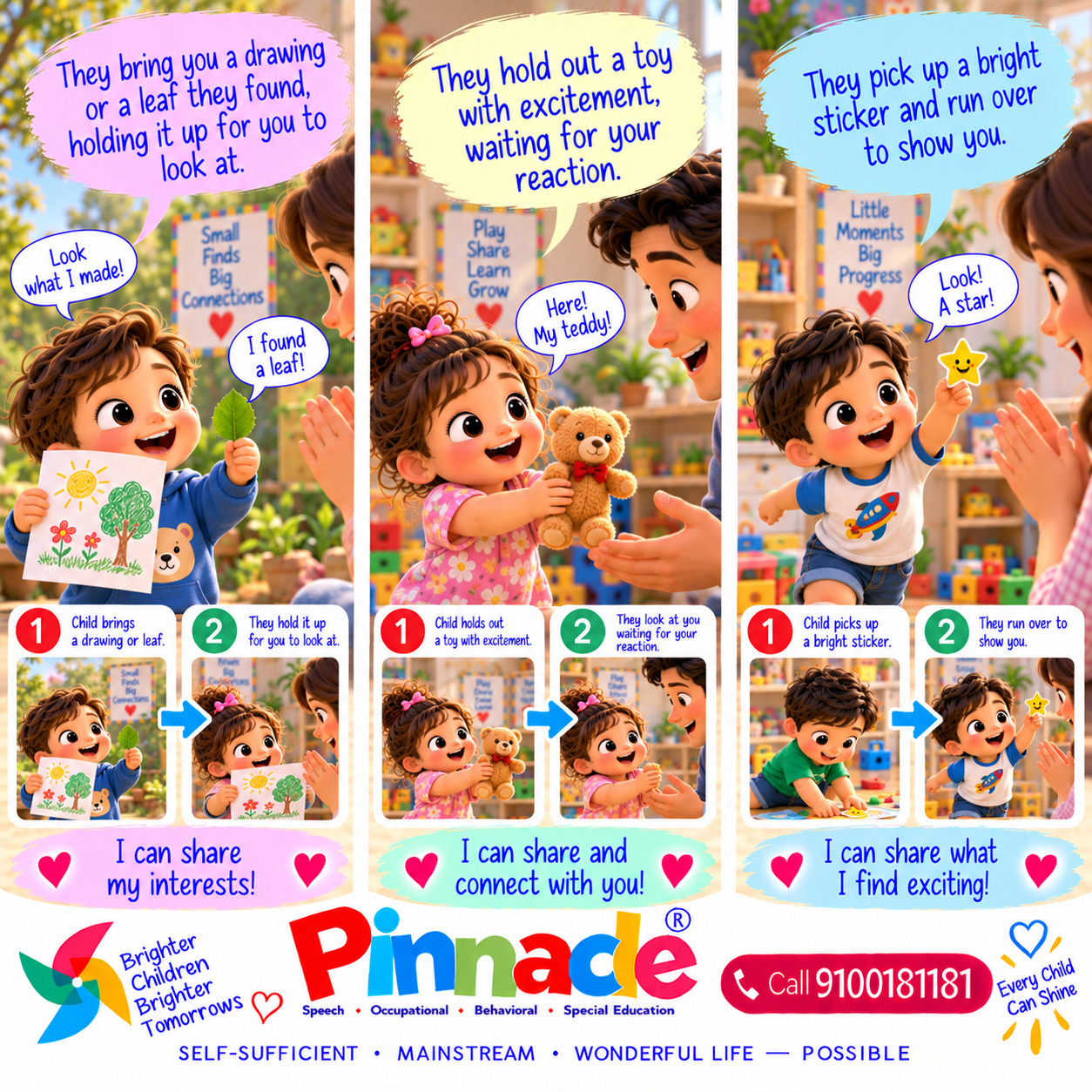
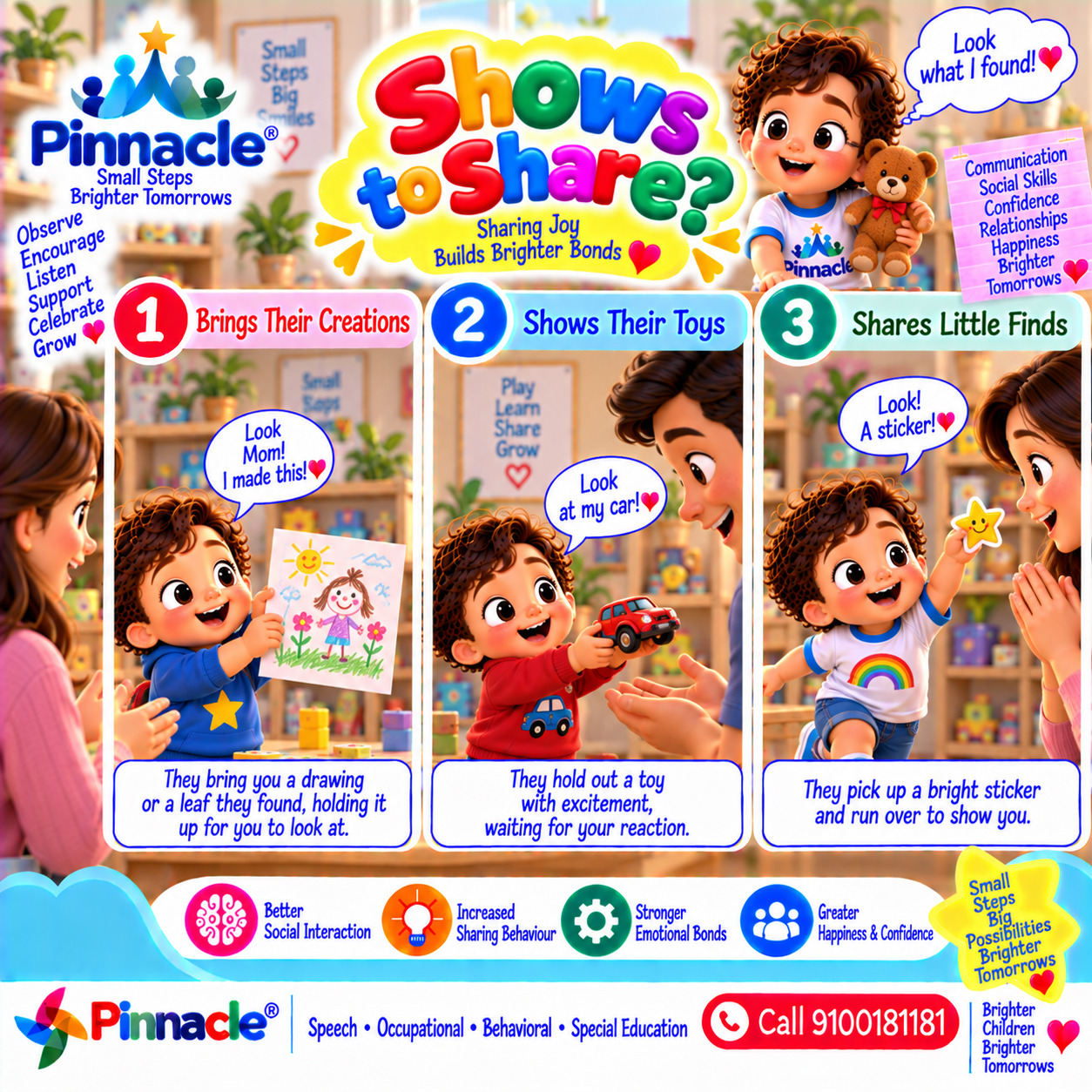
Does your child attempt to share their enjoyment by showing you objects?
Topic: Share Joy
Example 1
They bring you a drawing or a leaf they found, holding it up for you to look at.
Example 2
They hold out a toy with excitement, waiting for your reaction.
Example 3
They pick up a bright sticker and run over to show you.
Example illustrationQuestion illustration
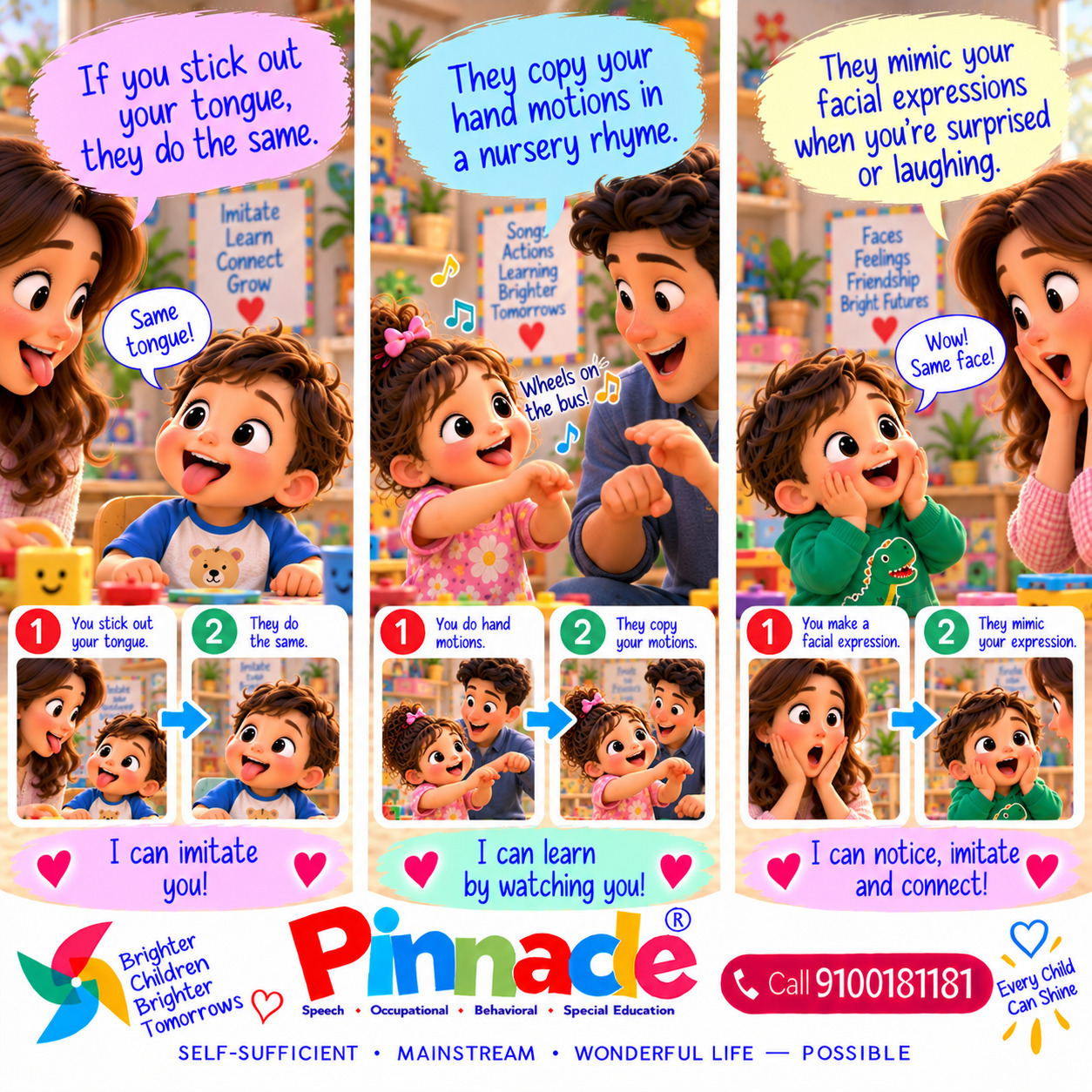
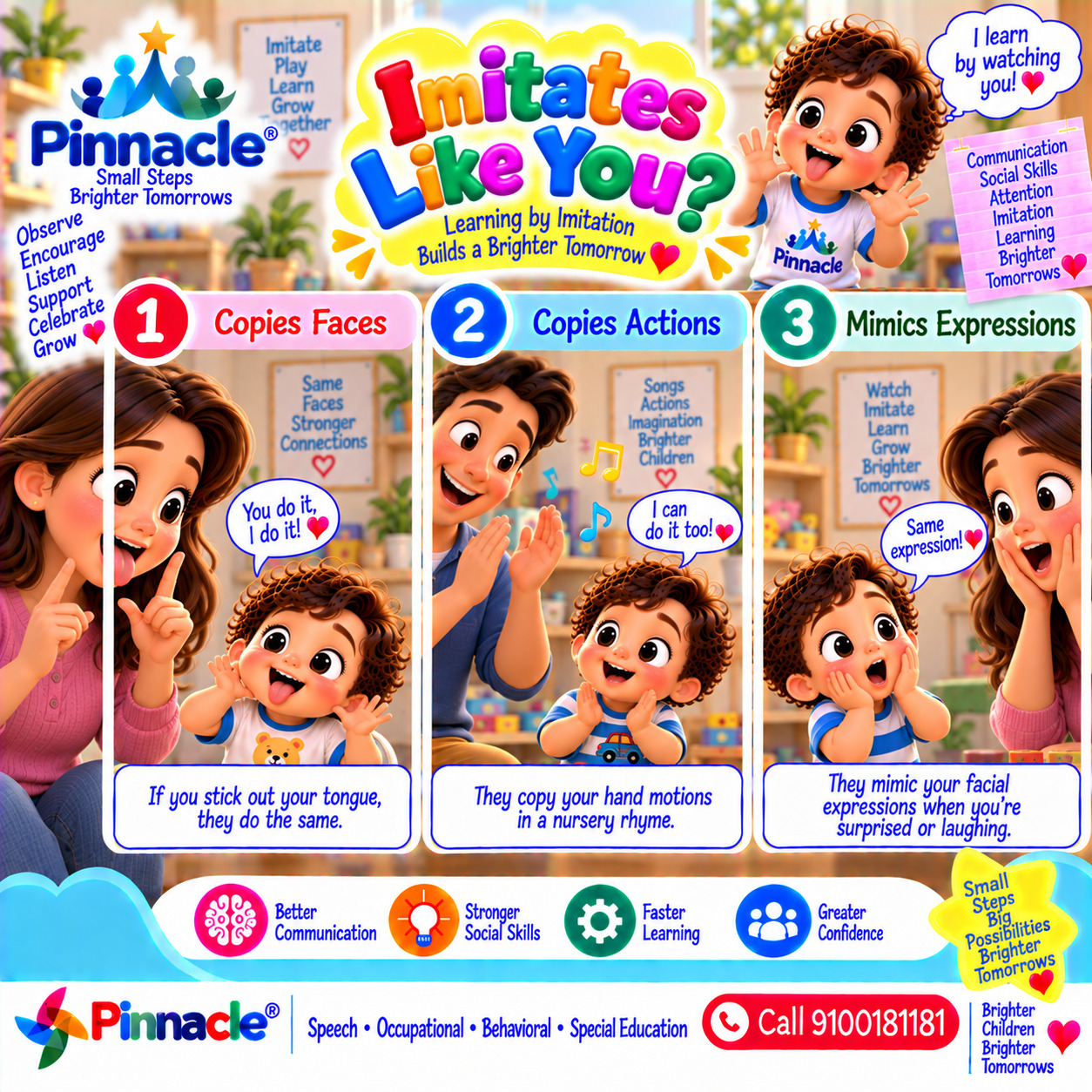
Does your child imitate you, such as by making faces?
Topic: Imitation
Example 1
If you stick out your tongue, they do the same.
Example 2
They copy your hand motions in a nursery rhyme.
Example 3
They mimic your facial expressions when you’re surprised or laughing.
Example illustrationQuestion illustration
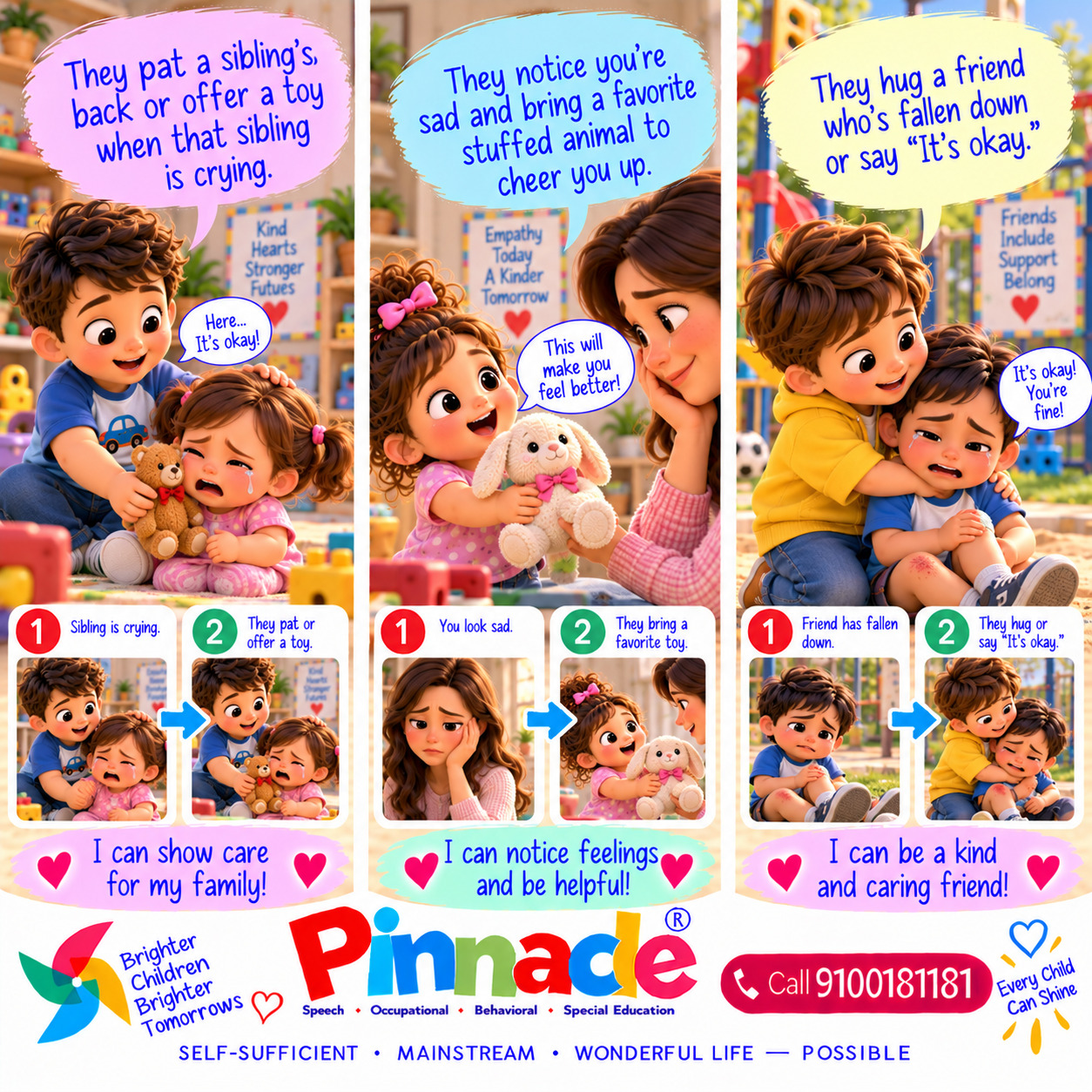
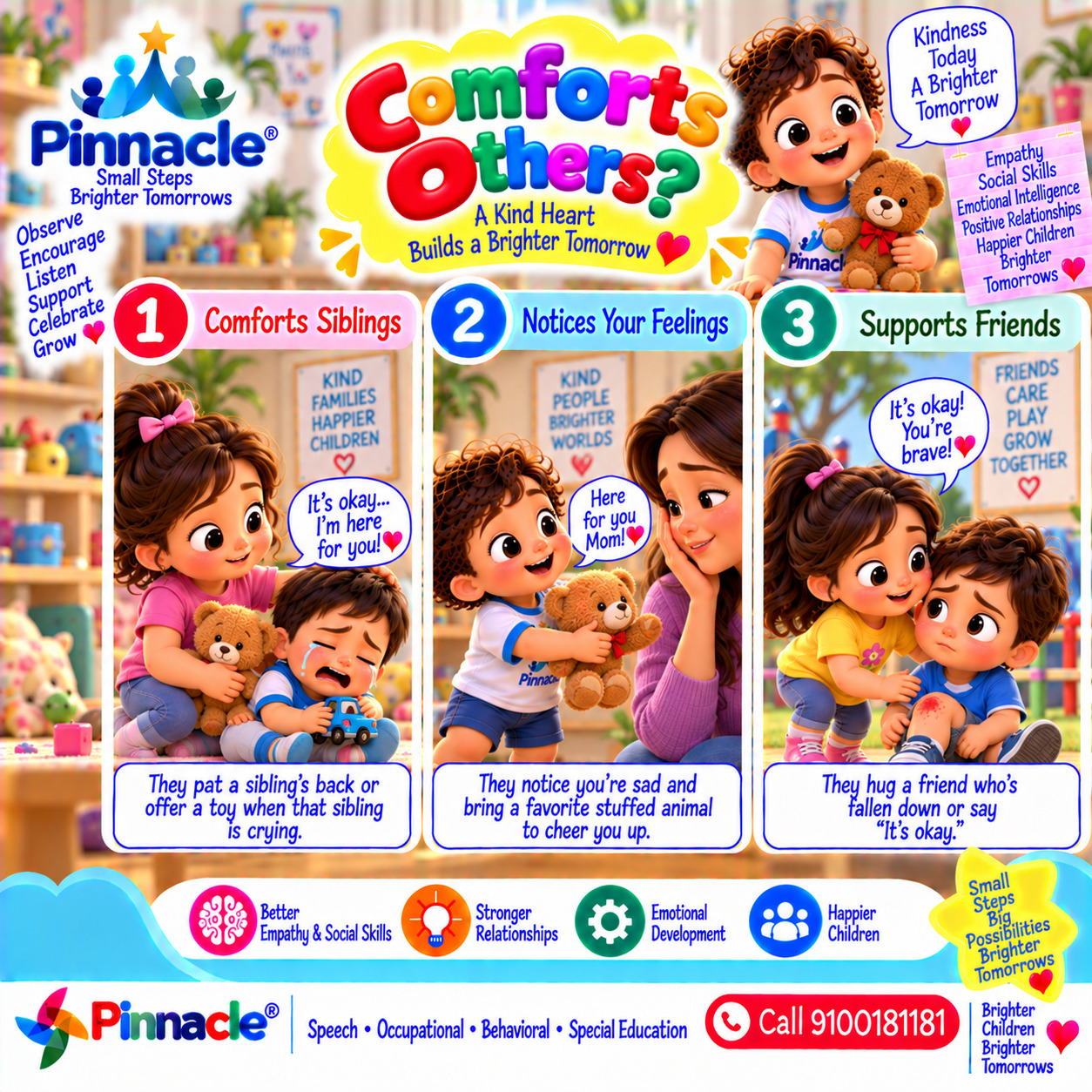
Does your child try to comfort others when they seem upset?
Topic: Comfort Others
Example 1
They pat a sibling’s back or offer a toy when that sibling is crying.
Example 2
They notice you’re sad and bring a favorite stuffed animal to cheer you up.
Example 3
They hug a friend who’s fallen down or say “It’s okay.”
Example illustrationQuestion illustration
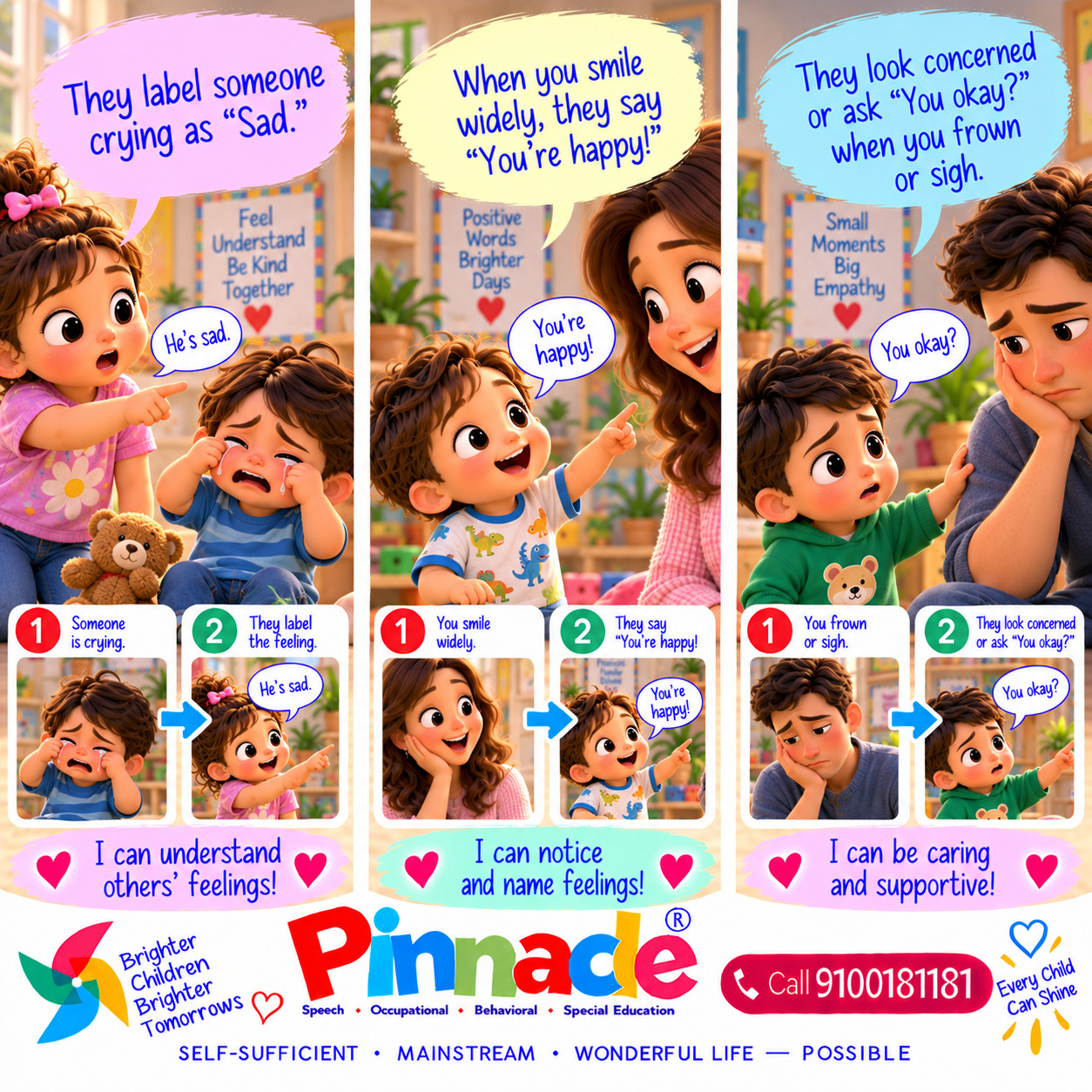
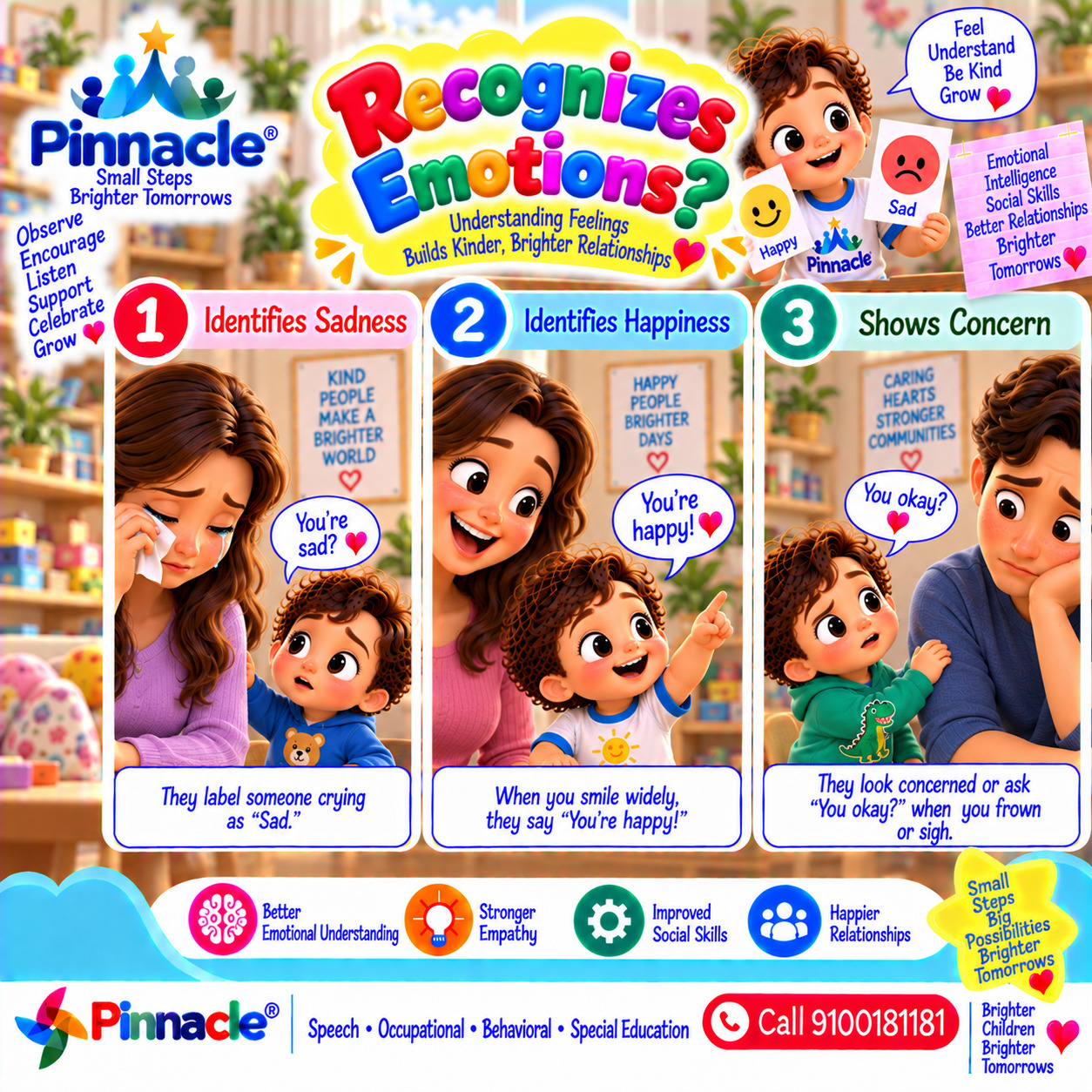
Does your child show an understanding of basic emotions in others, like recognizing when someone is sad or happy?
Topic: Understand Others Emotions
Example 1
They label someone crying as “Sad.”
Example 2
When you smile widely, they say “You’re happy!”
Example 3
They look concerned or ask “You okay?” when you frown or sigh.
Example illustrationQuestion illustration
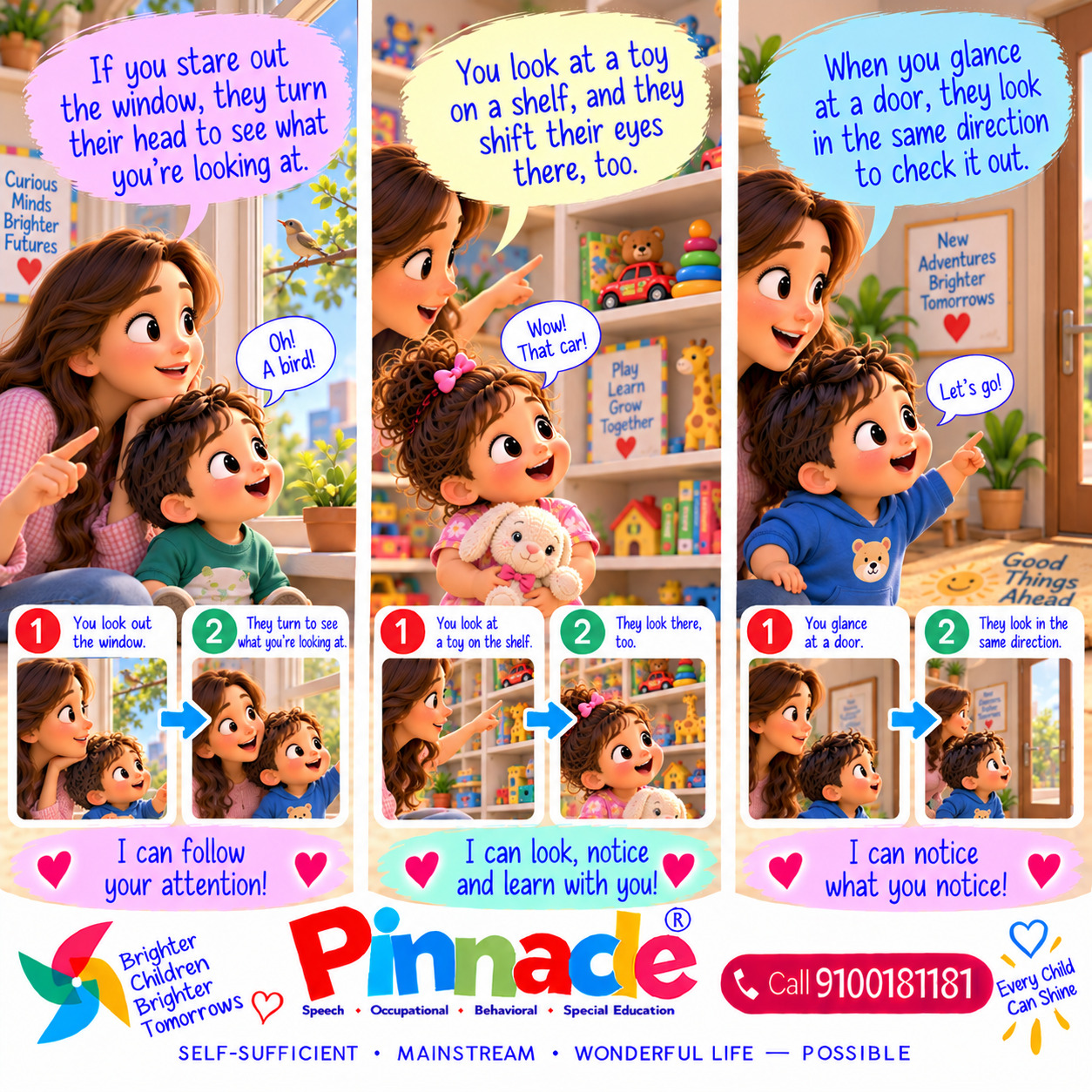
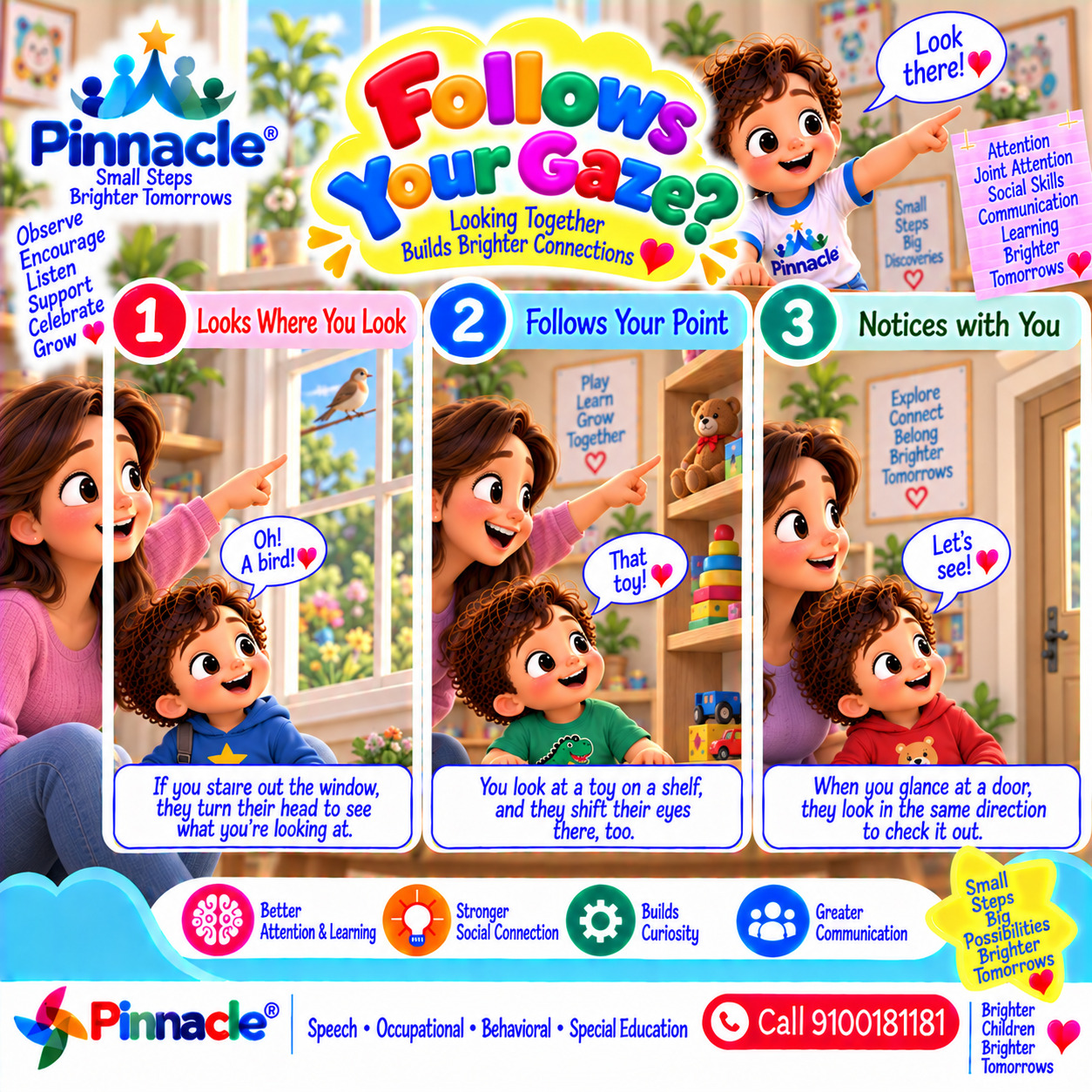
Does your child follow your gaze if you look across the room?
Topic: Follow Your Gaze
Example 1
If you stare out the window, they turn their head to see what you’re looking at.
Example 2
You look at a toy on a shelf, and they shift their eyes there, too.
Example 3
When you glance at a door, they look in the same direction to check it out.
Example illustrationQuestion illustration
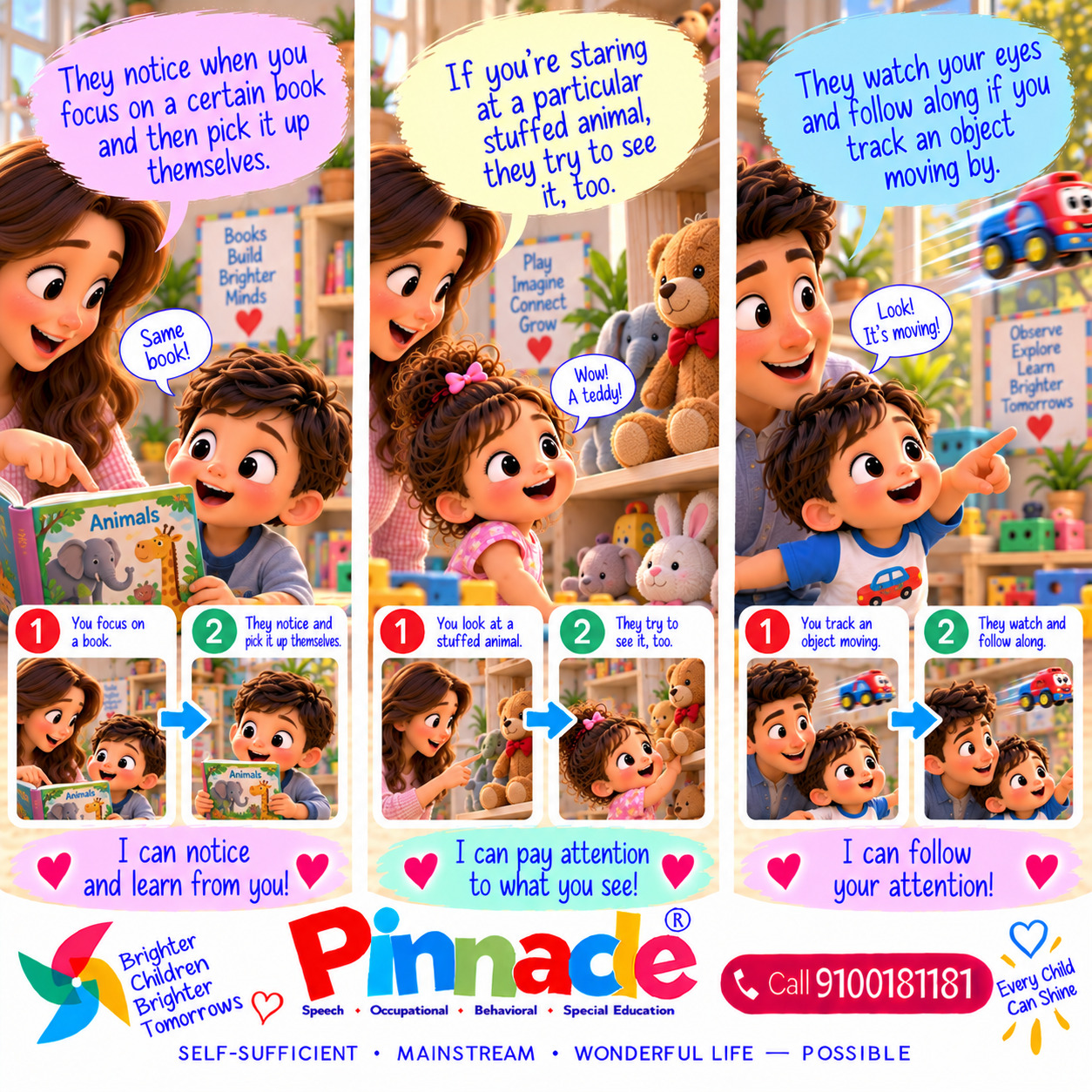
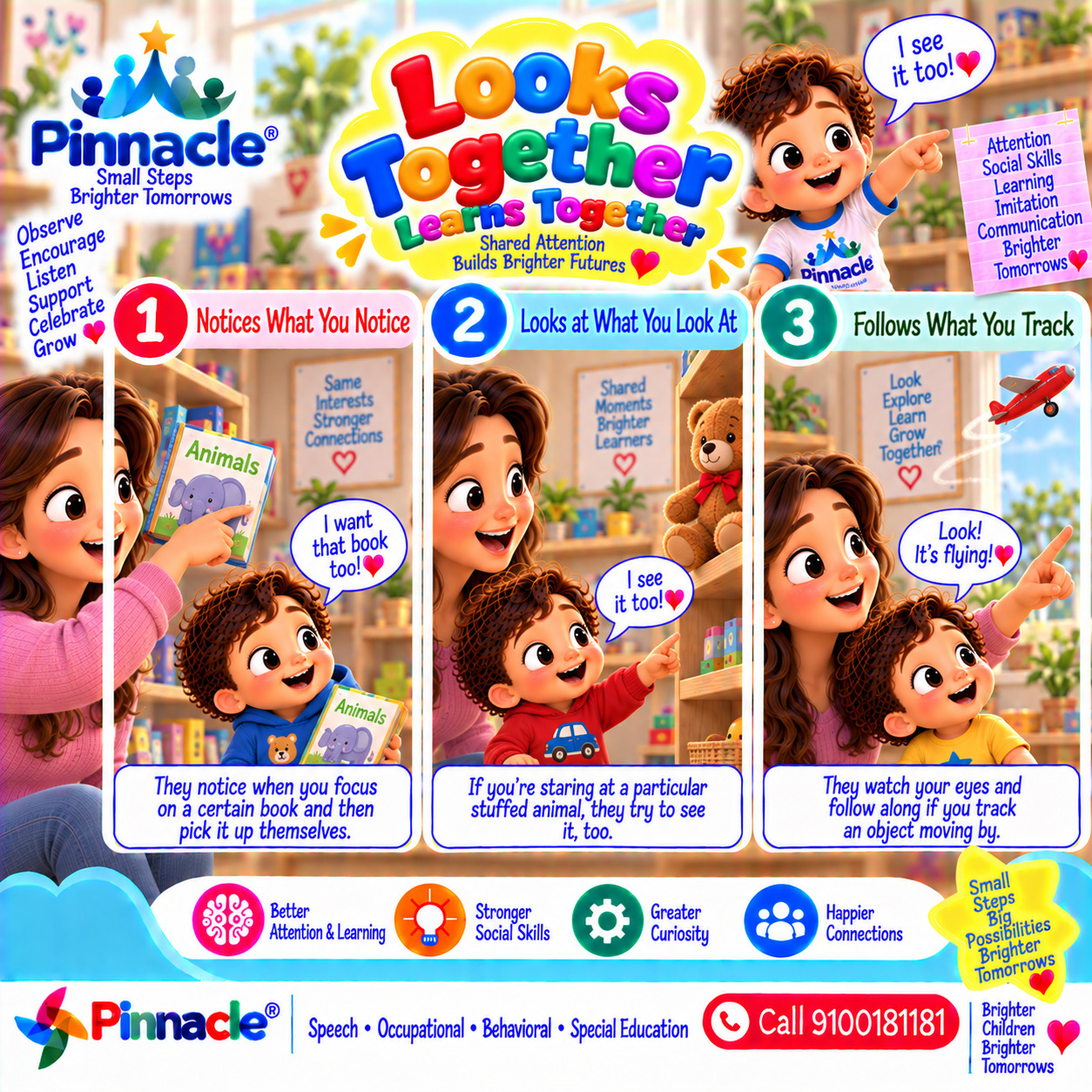
Does your child look at things you are looking at?
Topic: Look at what you are looking
Example 1
They notice when you focus on a certain book and then pick it up themselves.
Example 2
If you’re staring at a particular stuffed animal, they try to see it, too.
Example 3
They watch your eyes and follow along if you track an object moving by.
Example illustrationQuestion illustration
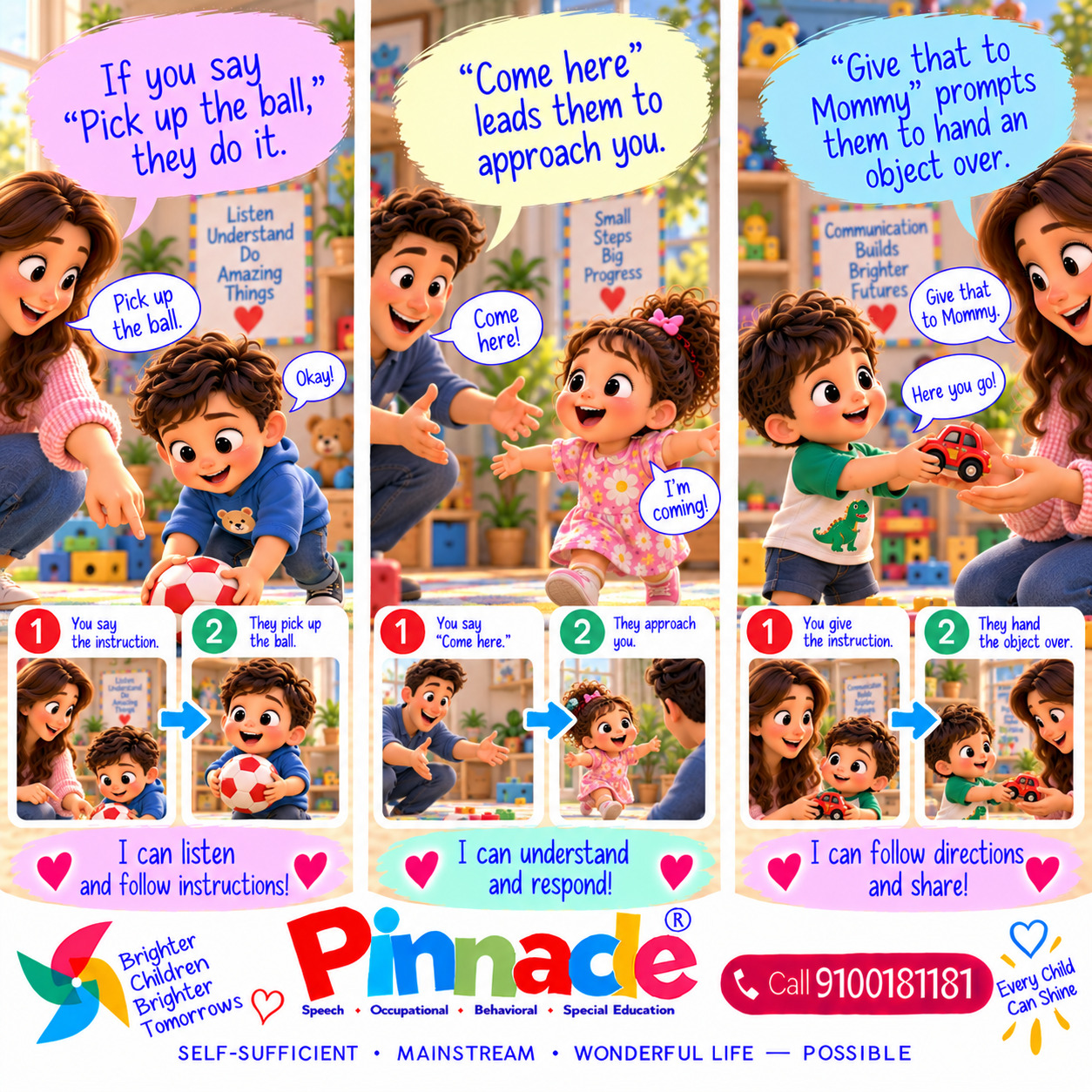
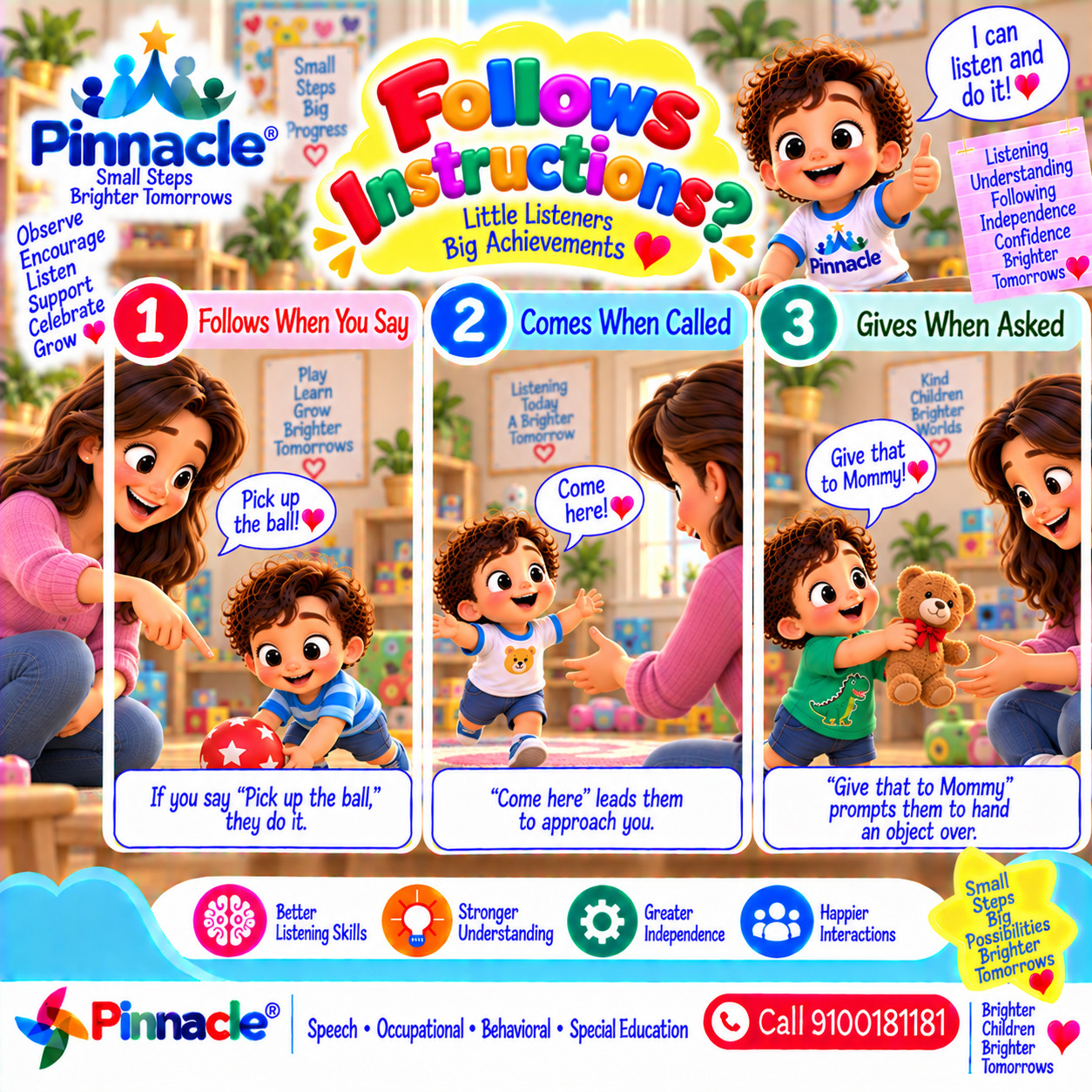
Can the child follow simple instructions?
Topic: Follow Instructions
Example 1
If you say “Pick up the ball,” they do it.
Example 2
“Come here” leads them to approach you.
Example 3
“Give that to Mommy” prompts them to hand an object over.
Example illustrationQuestion illustration
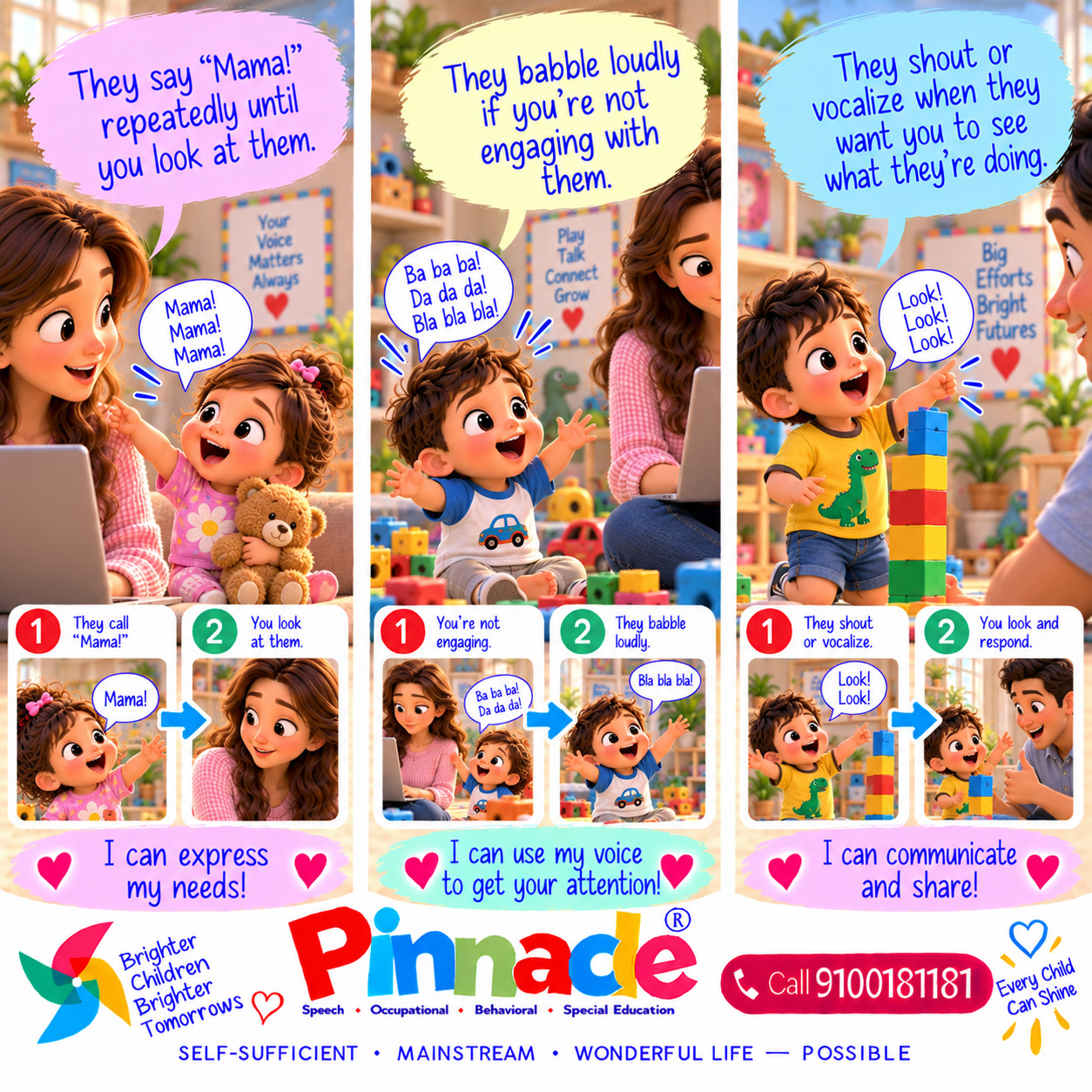
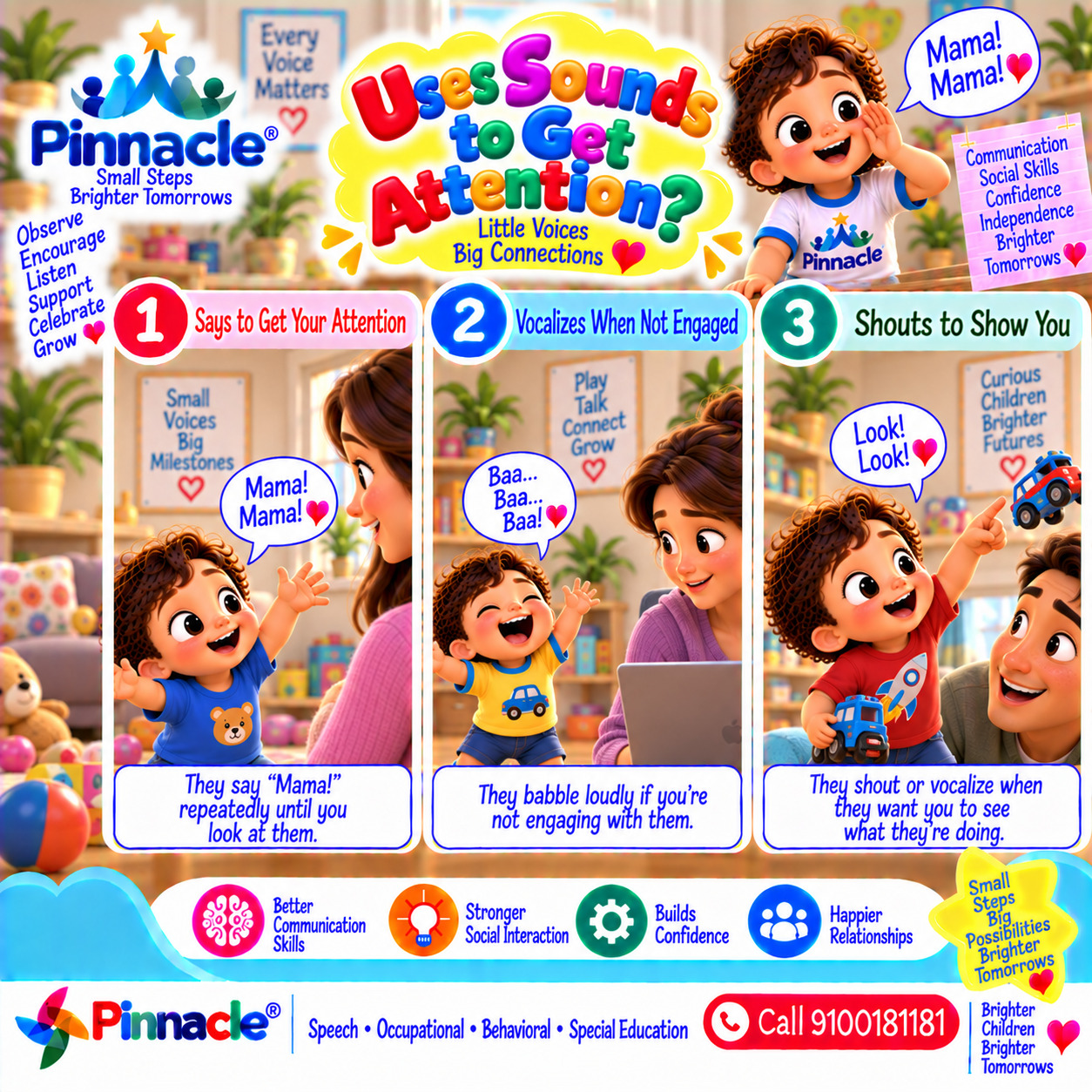
Does your child make sounds or words to get your attention?
Topic: Attention
Example 1
They say “Mama!” repeatedly until you look at them.
Example 2
They babble loudly if you’re not engaging with them.
Example 3
They shout or vocalize when they want you to see what they’re doing.
Example illustrationQuestion illustration
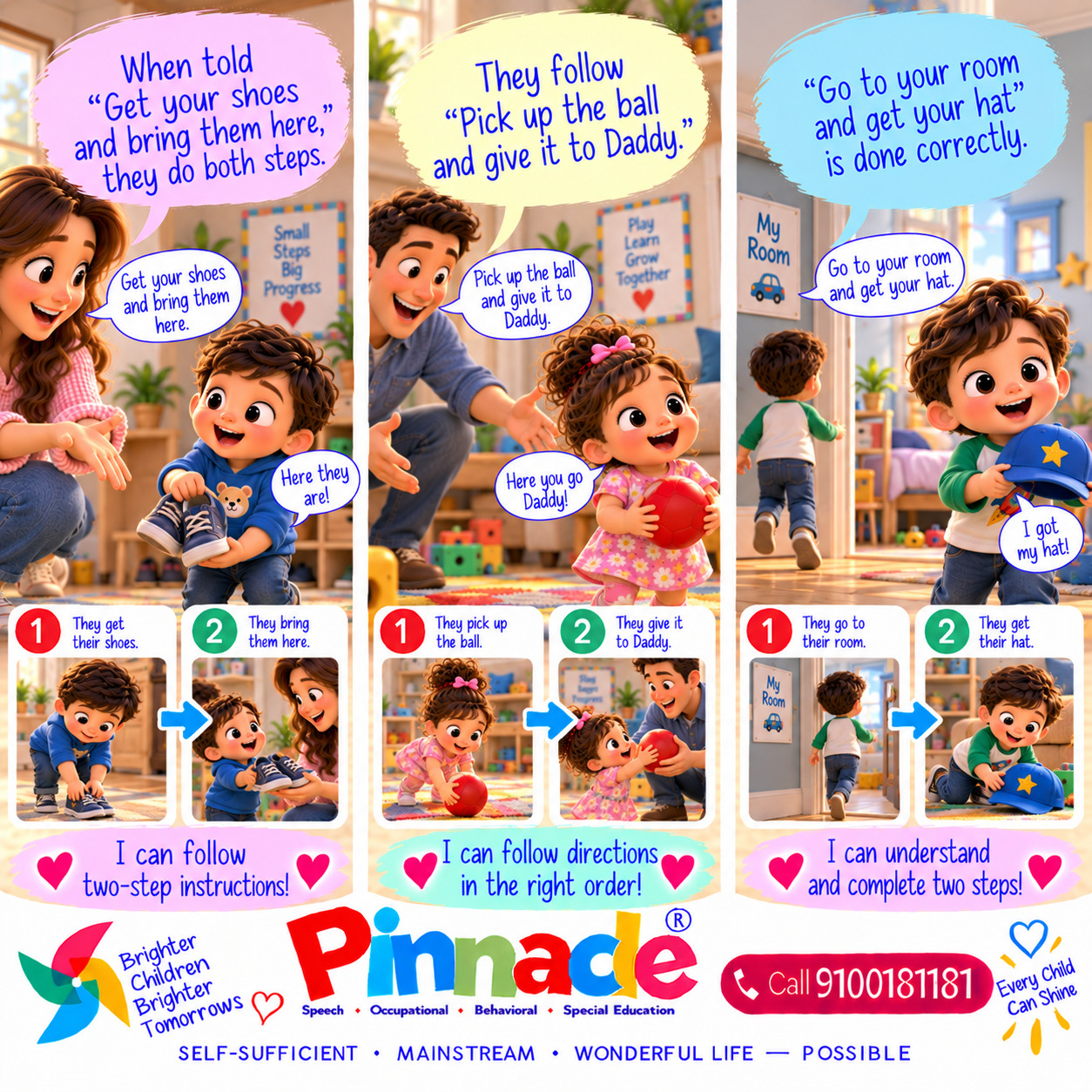
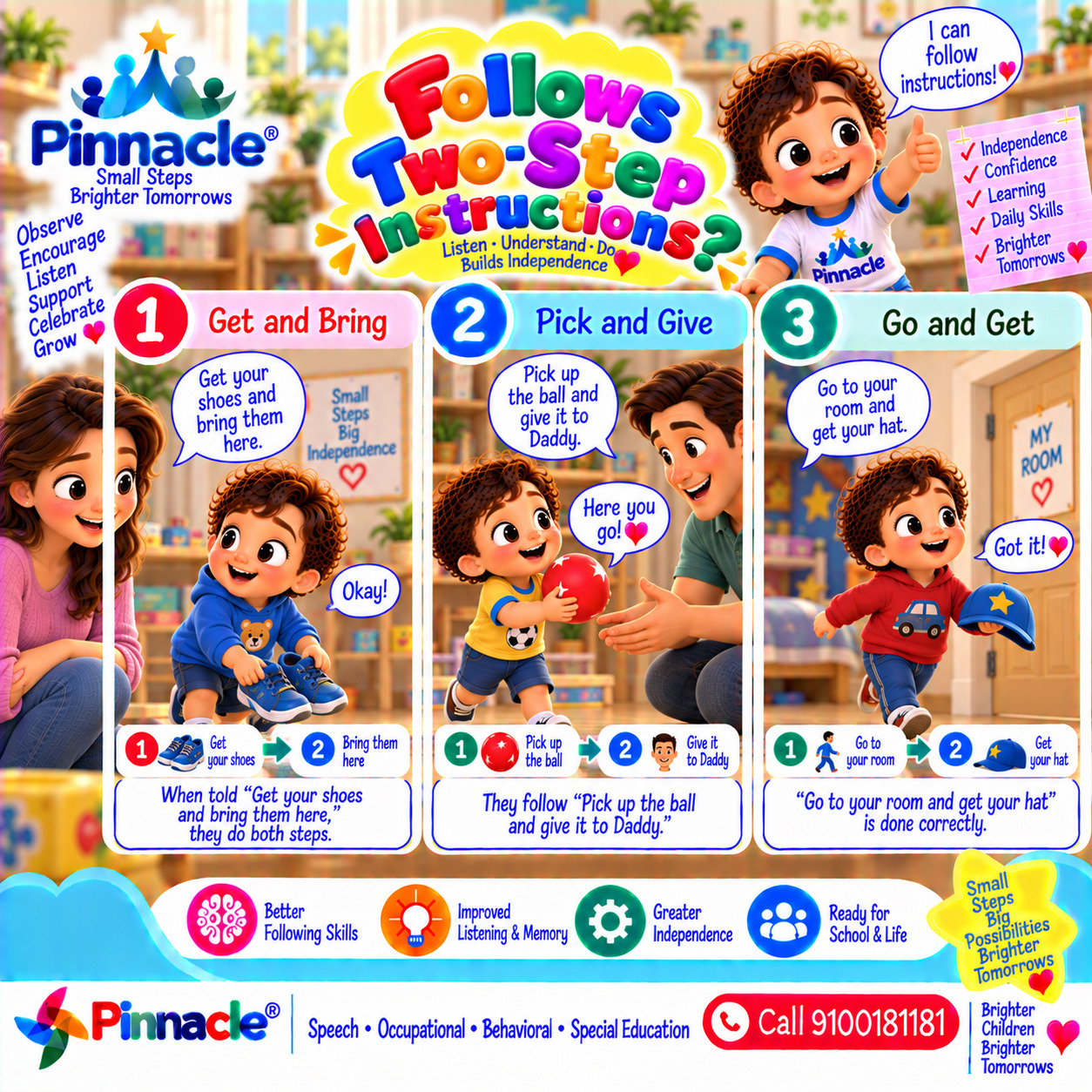
Does your child follow two-step instructions, like 'Pick up the toy and put it on the table'?
Topic: Two-Step Instructions
Example 1
When told “Get your shoes and bring them here,” they do both steps.
Example 2
They follow “Pick up the ball and give it to Daddy.”
Example 3
“Go to your room and get your hat” is done correctly.
Example illustrationQuestion illustration
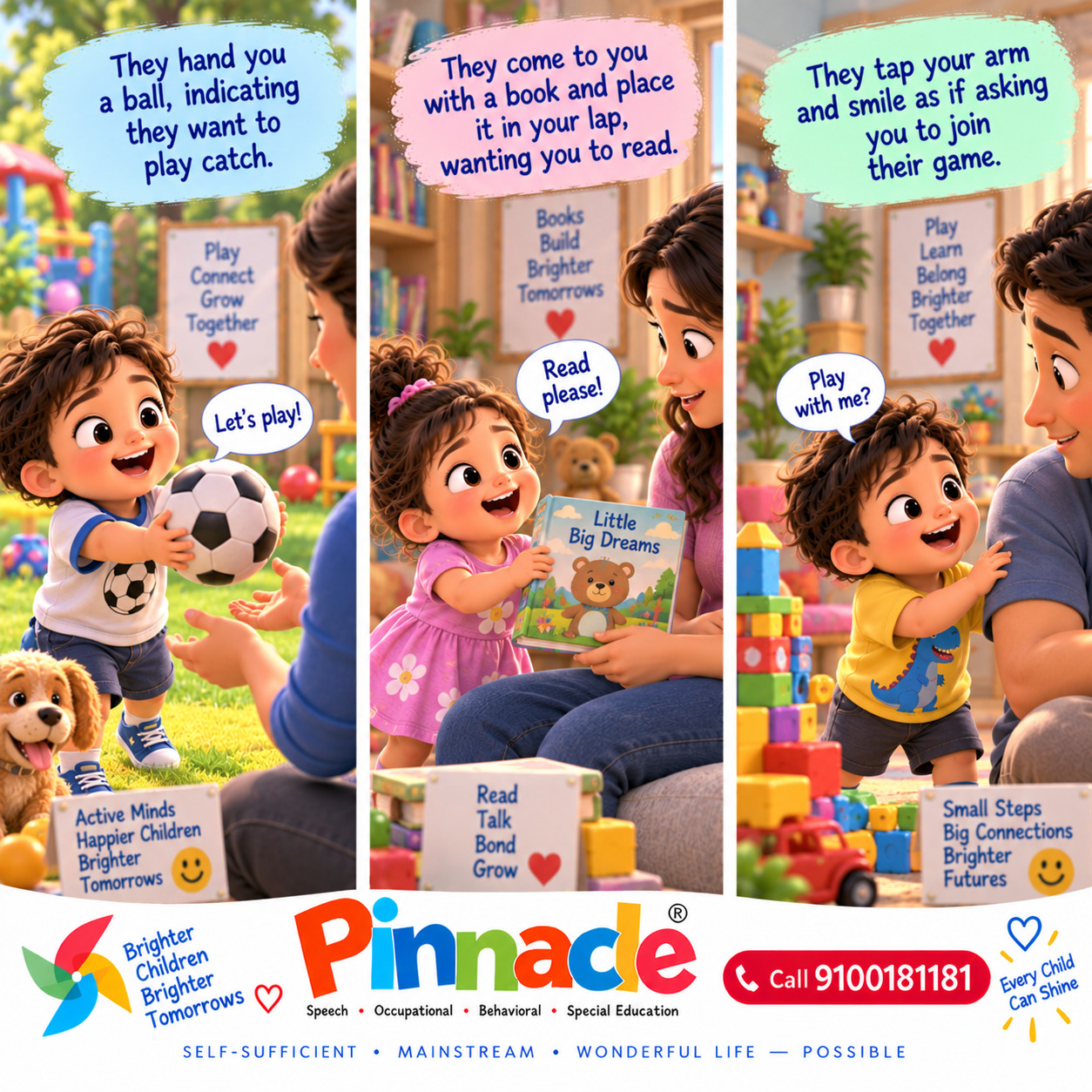
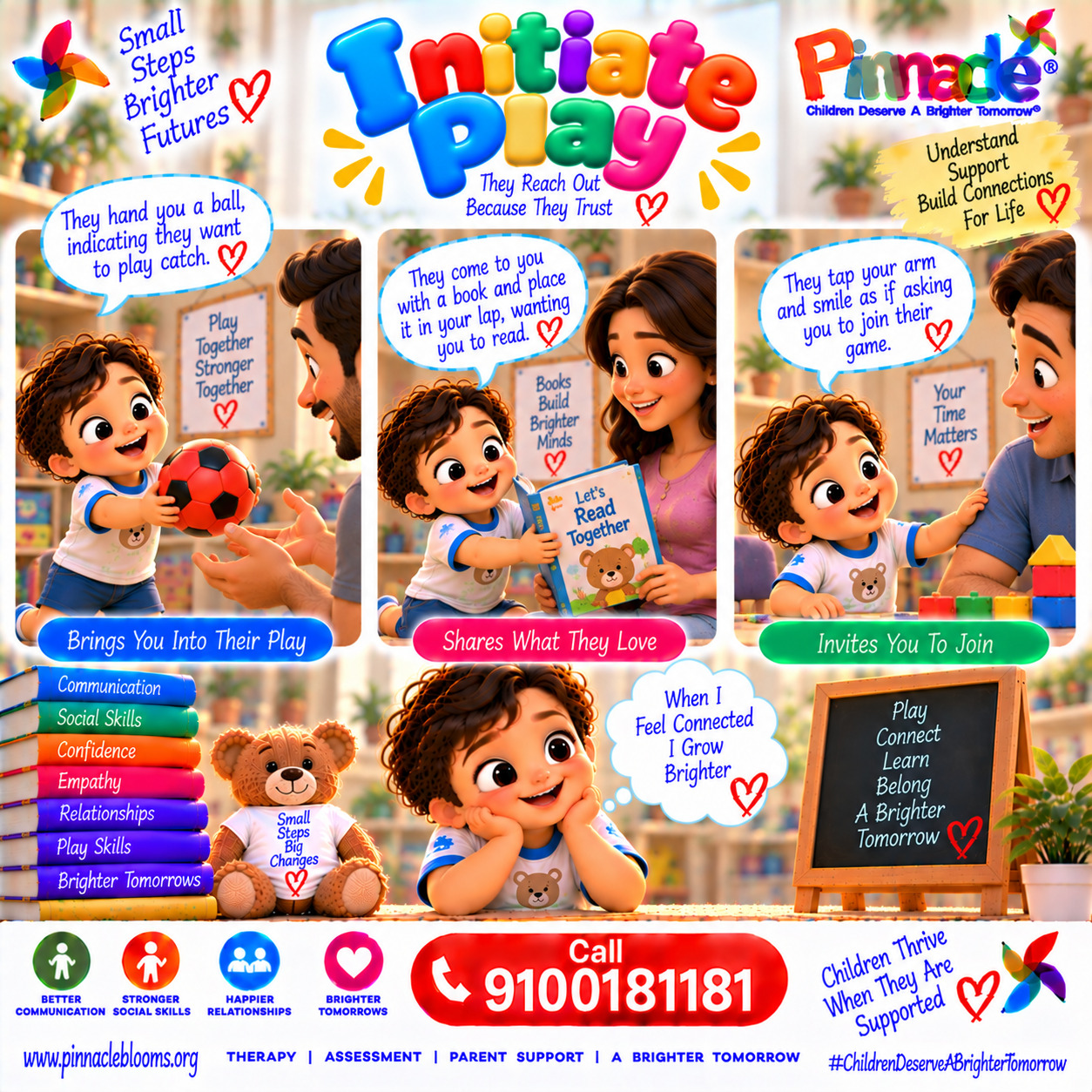
Does the child initiate play or interaction with adults?
Topic: Initiate Play
Example 1
They hand you a ball, indicating they want to play catch.
Example 2
They come to you with a book and place it in your lap, wanting you to read.
Example 3
They tap your arm and smile as if asking you to join their game.
Example illustrationQuestion illustration
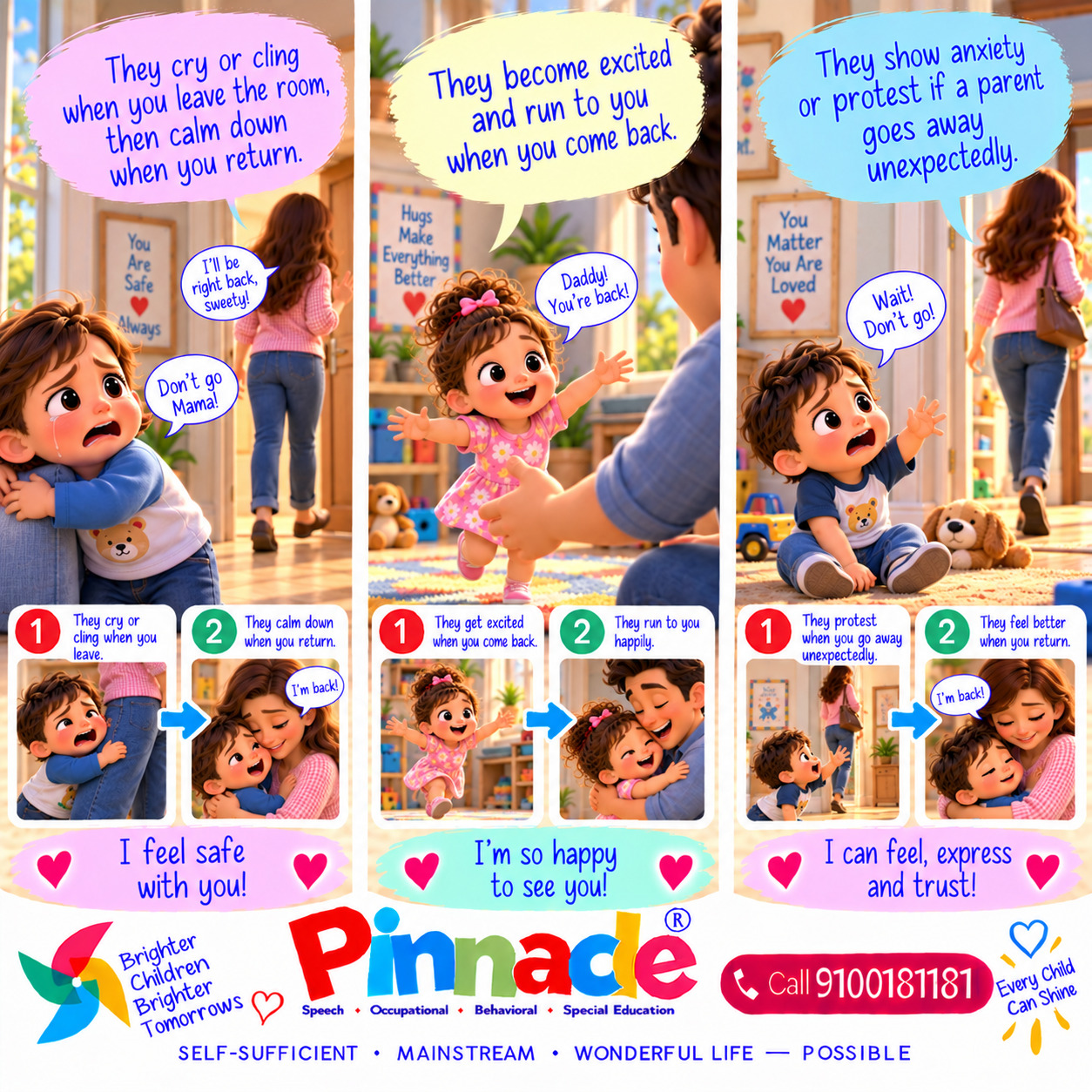
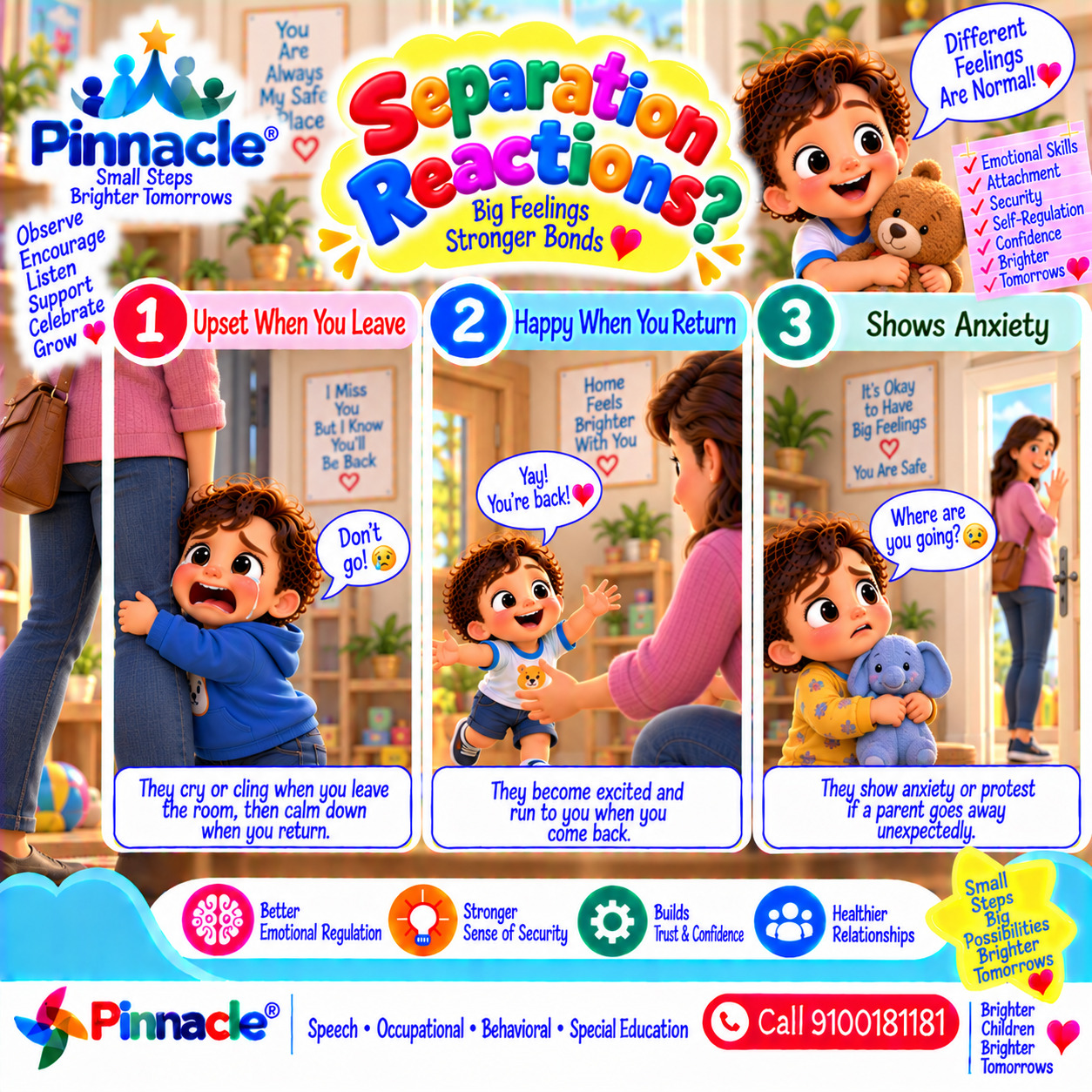
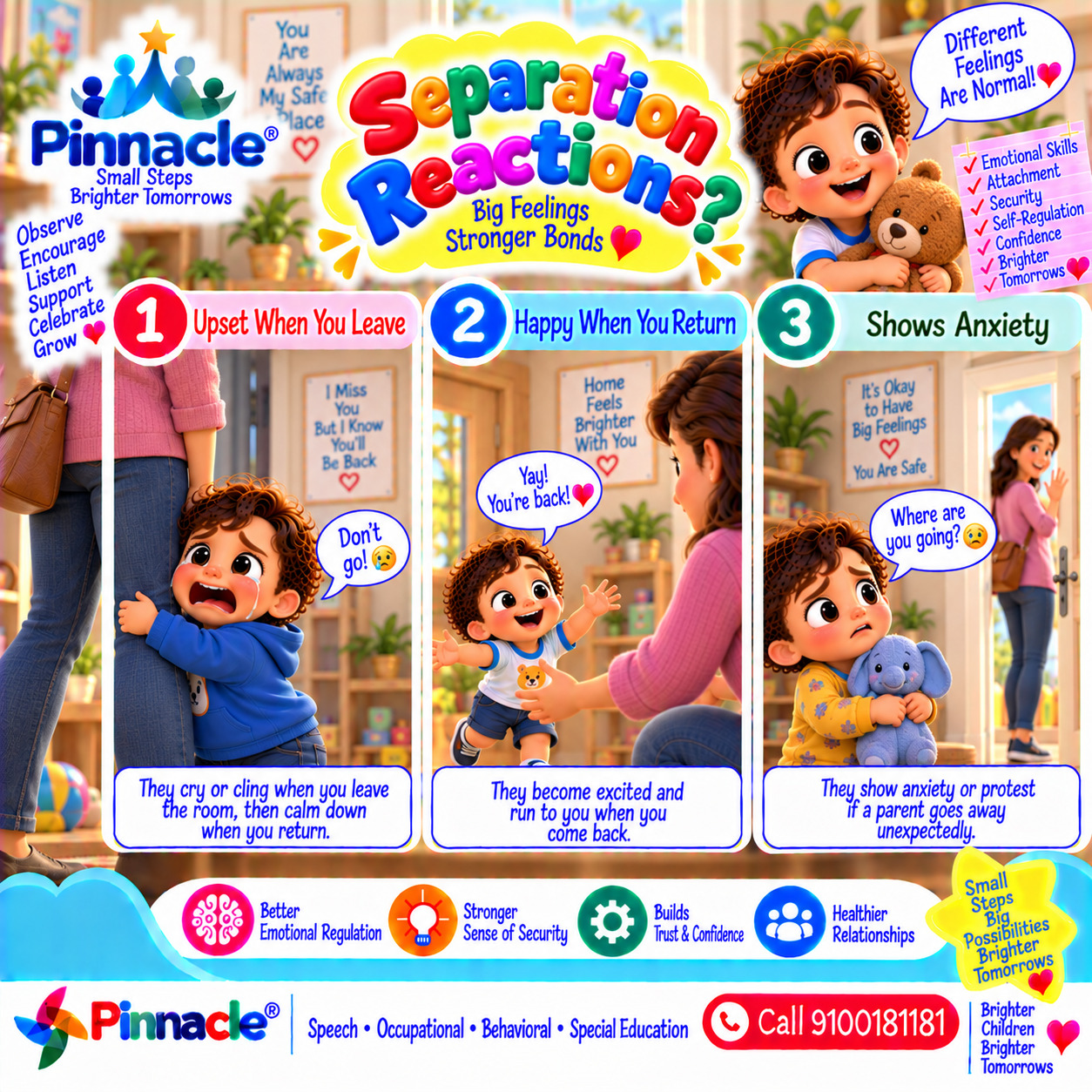
Does your child show a reaction (such as excitement or distress) when separated from a primary caregiver?
Topic: Separation
Example 1
They cry or cling when you leave the room, then calm down when you return.
Example 2
They become excited and run to you when you come back.
Example 3
They show anxiety or protest if a parent goes away unexpectedly.
Example illustrationQuestion illustration
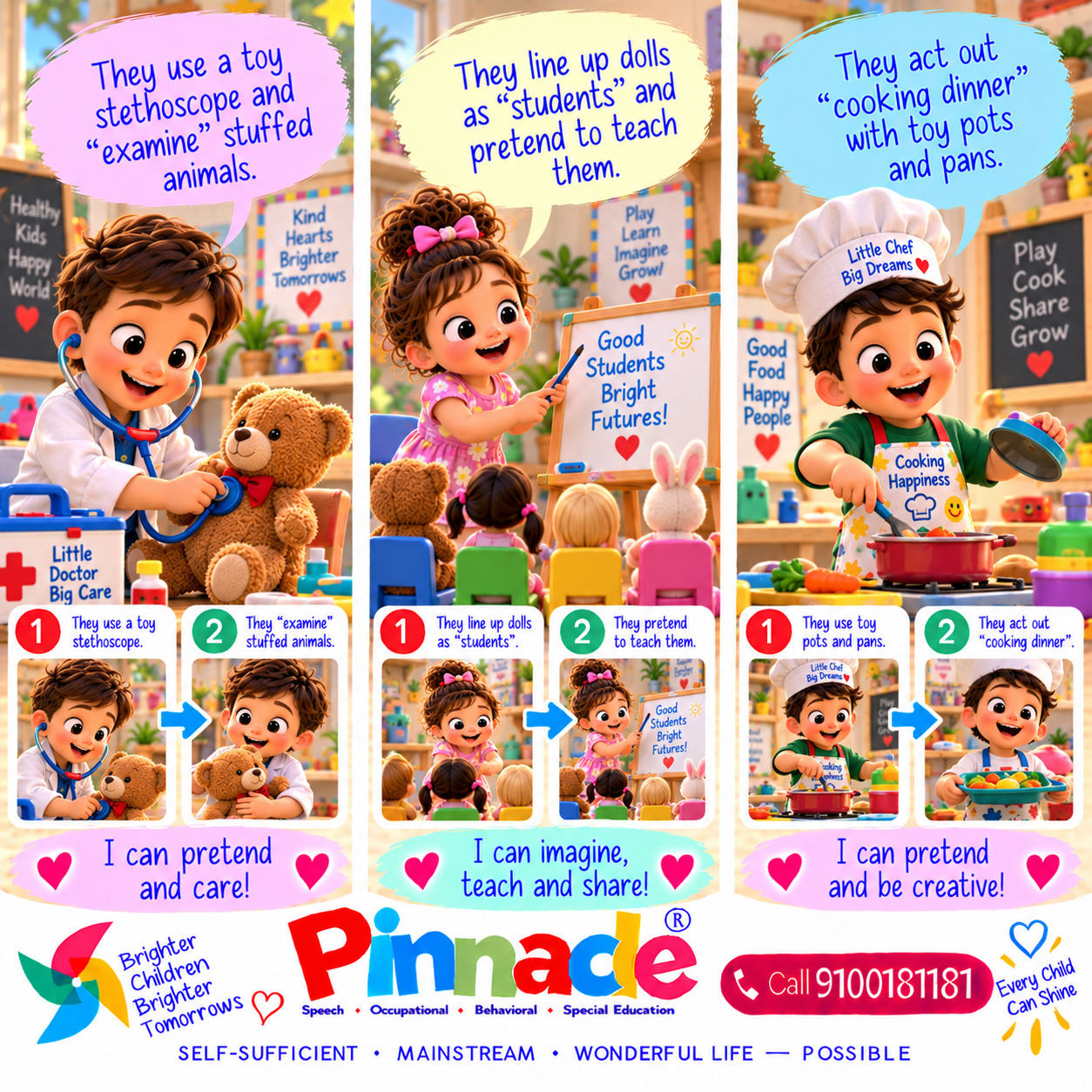
Does your child engage in role-playing games, such as pretending to be a doctor, teacher, or parent?
Topic: Role-Playing
Example 1
They use a toy stethoscope and “examine” stuffed animals.
Example 2
They line up dolls as “students” and pretend to teach them.
Example 3
They act out “cooking dinner” with toy pots and pans.
Example illustrationQuestion illustration
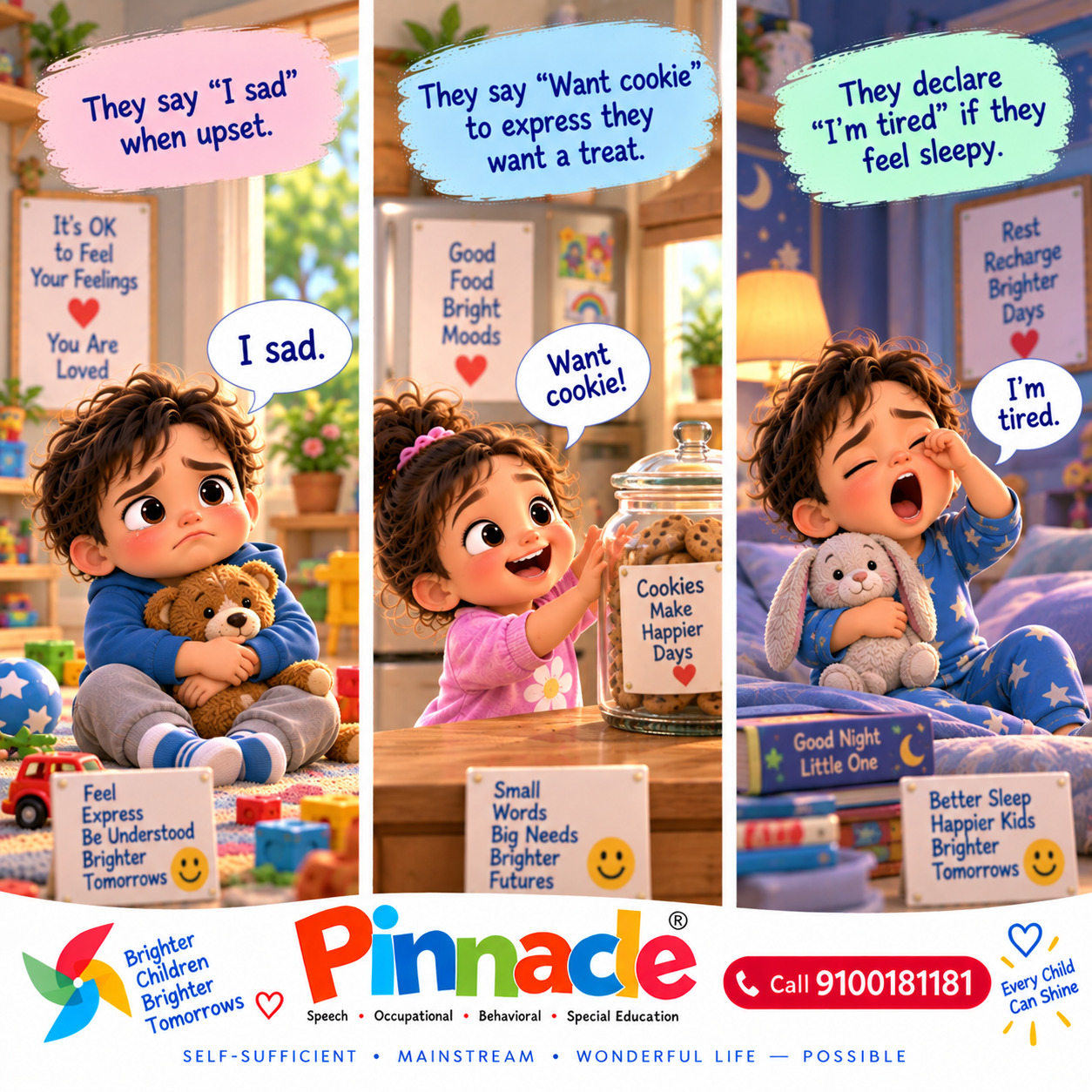
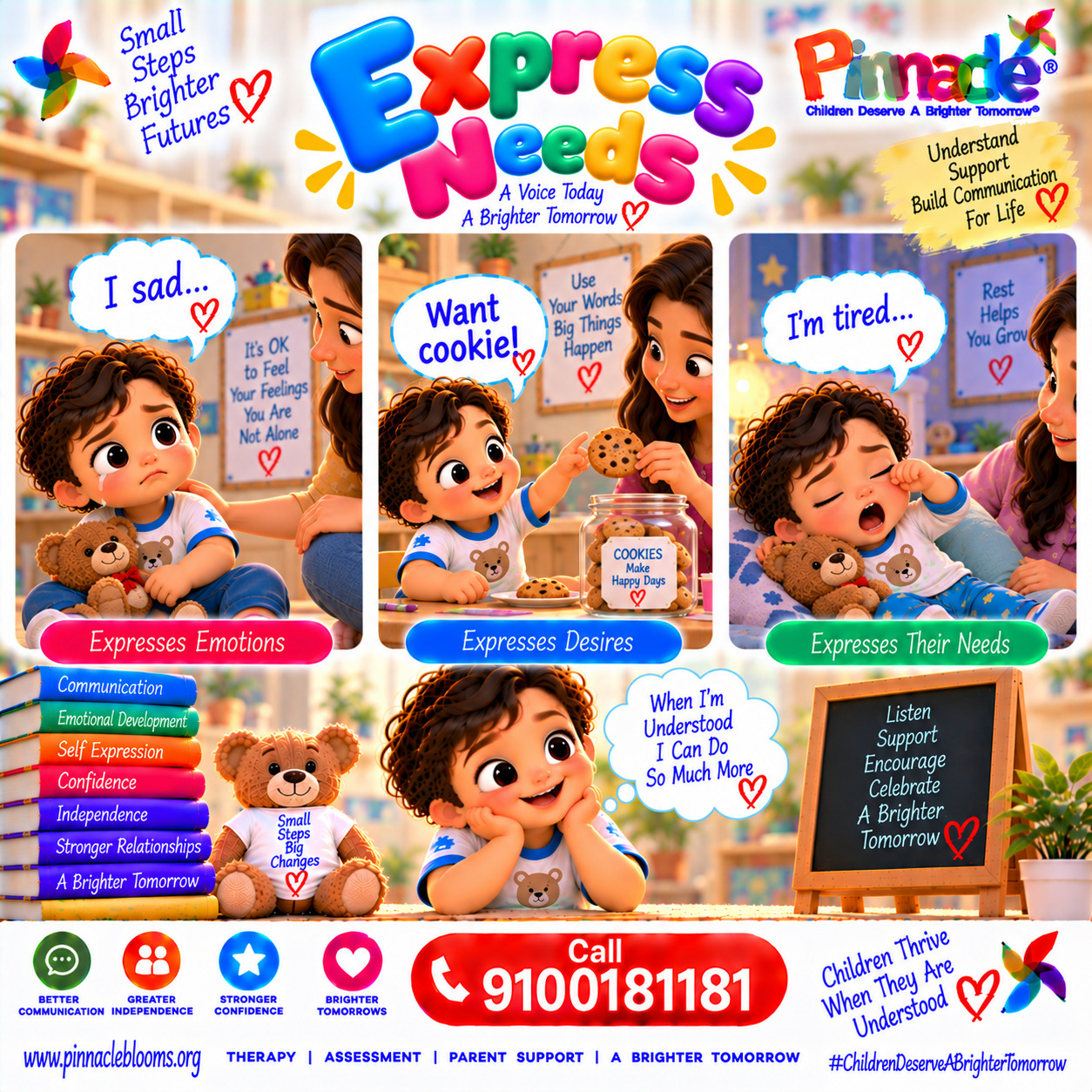
Does the child use words to express feelings or desires?
Topic: Express Needs
Example 1
They say “I sad” when upset.
Example 2
They say “Want cookie” to express they want a treat.
Example 3
They declare “I’m tired” if they feel sleepy.
Example illustrationQuestion illustration
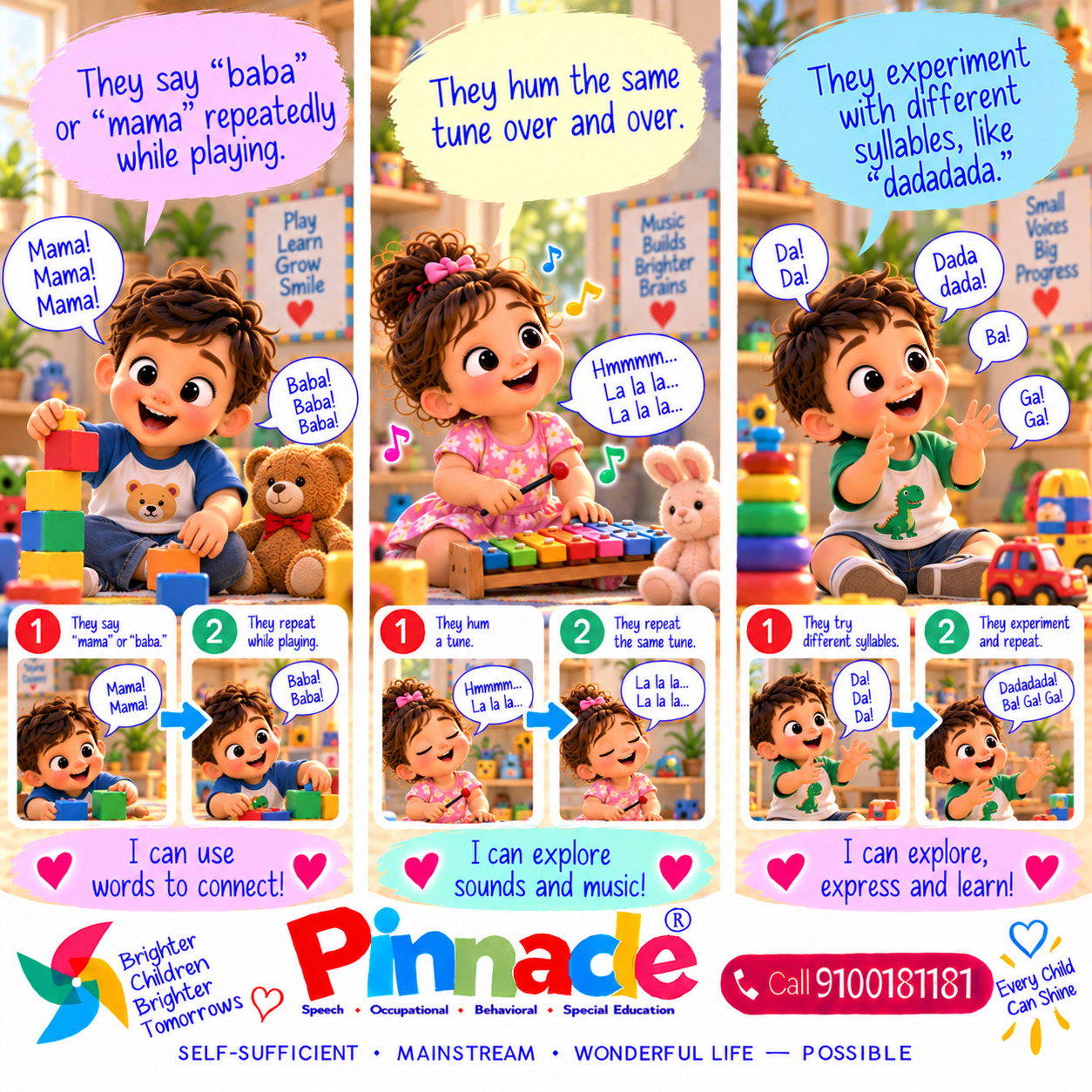
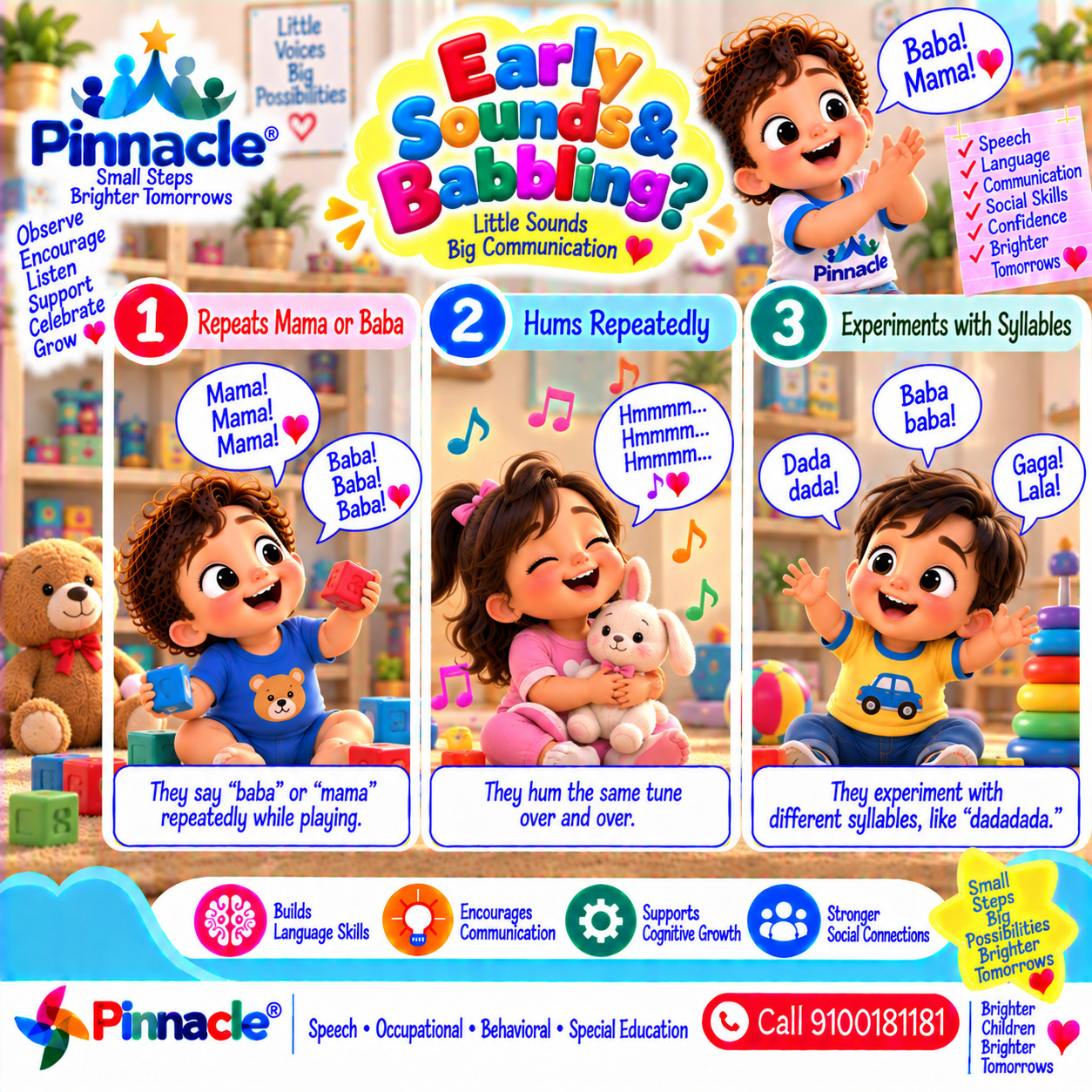
Does your child babble or make repetitive sounds?
Topic: Repetitive Sounds
Example 1
They say “baba” or “mama” repeatedly while playing.
Example 2
They hum the same tune over and over.
Example 3
They experiment with different syllables, like “dadadada.”
Example illustrationQuestion illustration
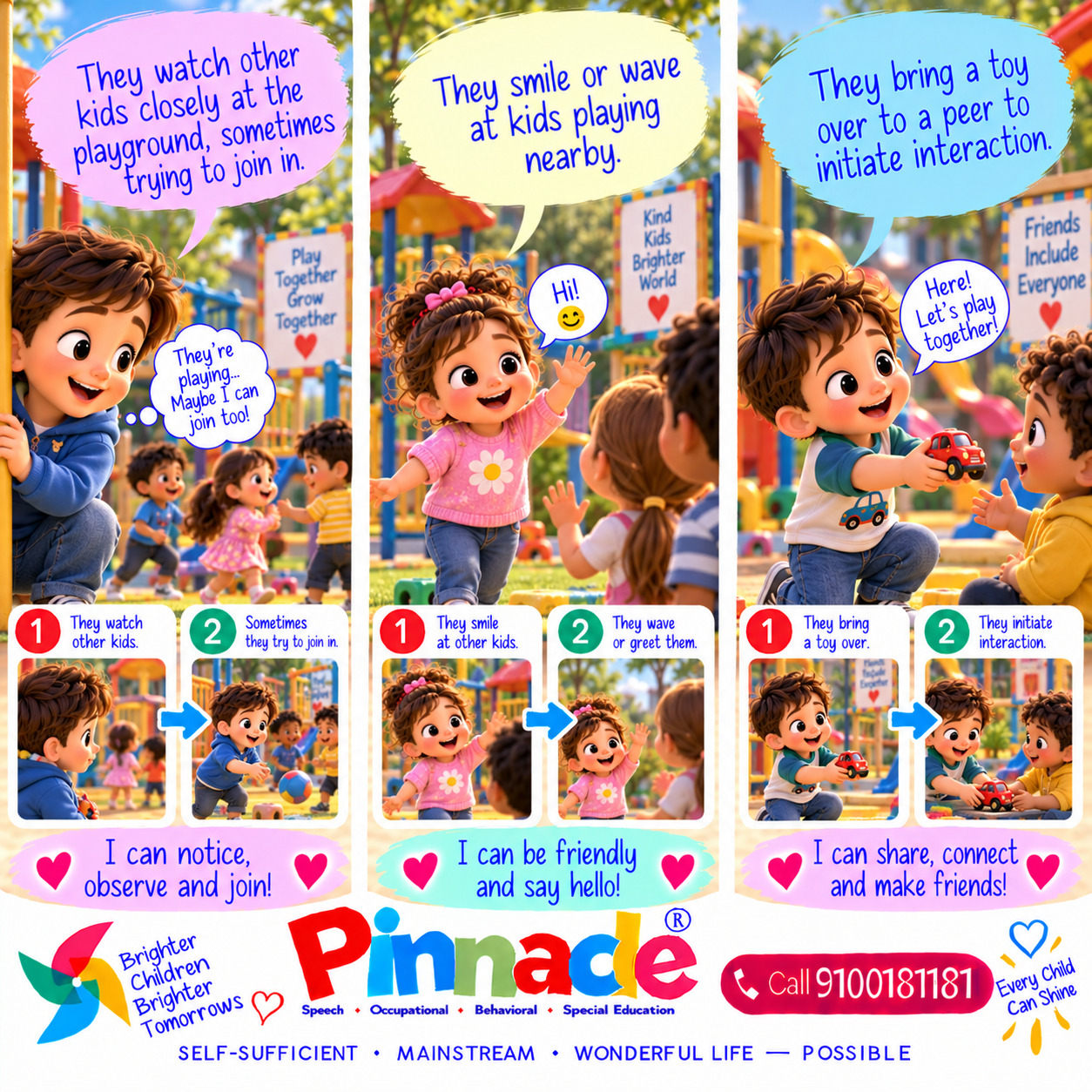
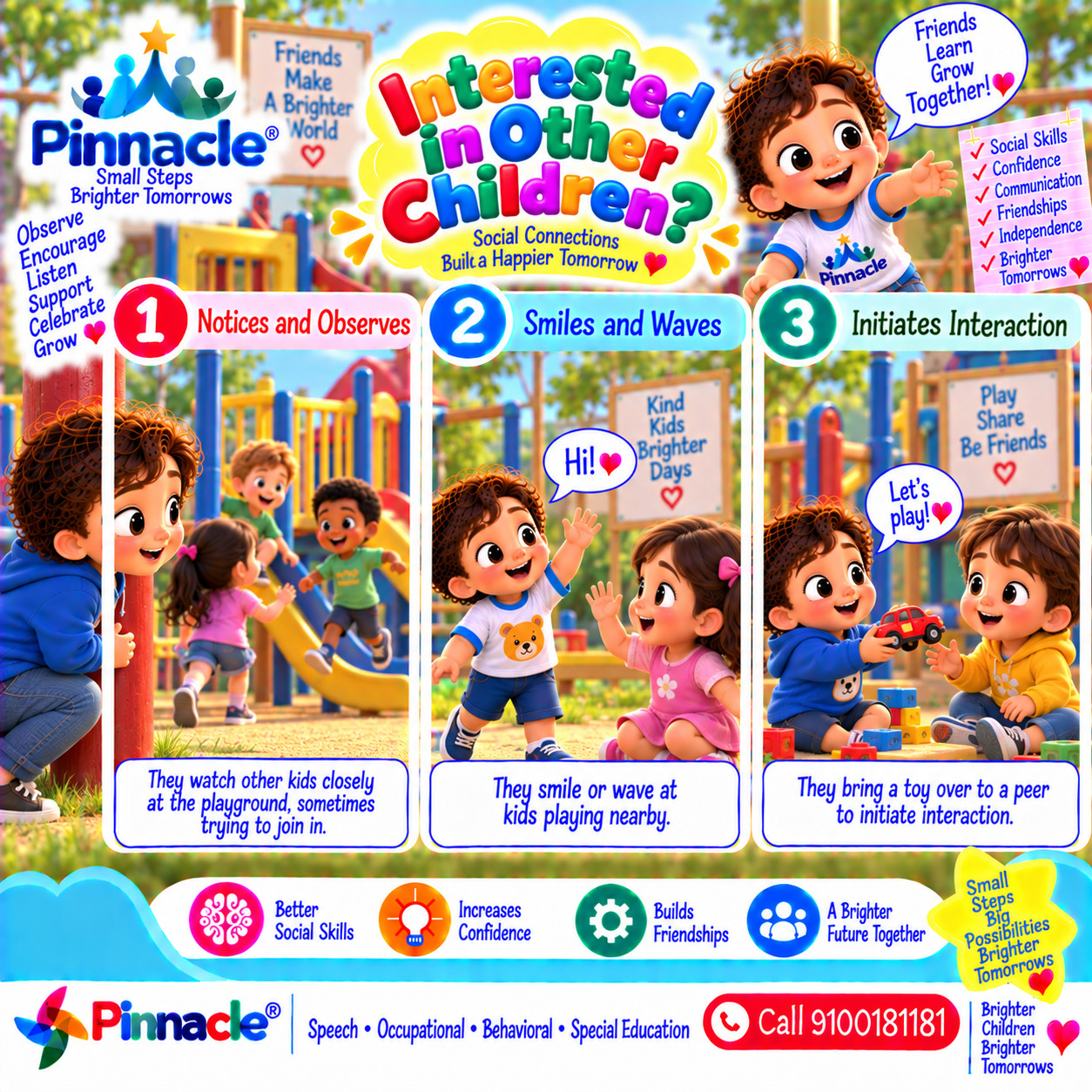
Does your child take an interest in other children?
Topic: Interest In Others
Example 1
They watch other kids closely at the playground, sometimes trying to join in.
Example 2
They smile or wave at kids playing nearby.
Example 3
They bring a toy over to a peer to initiate interaction.
Example illustrationQuestion illustration
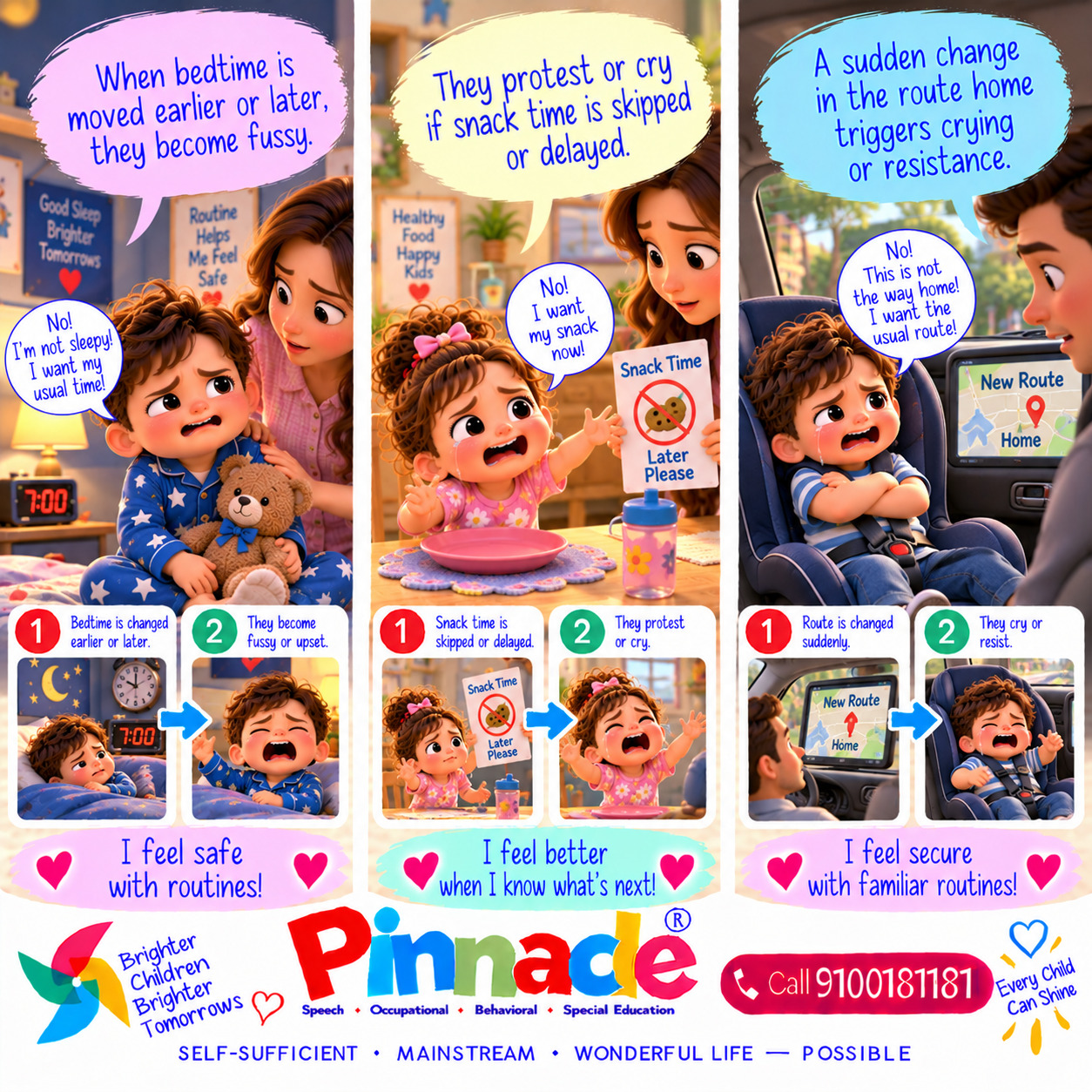
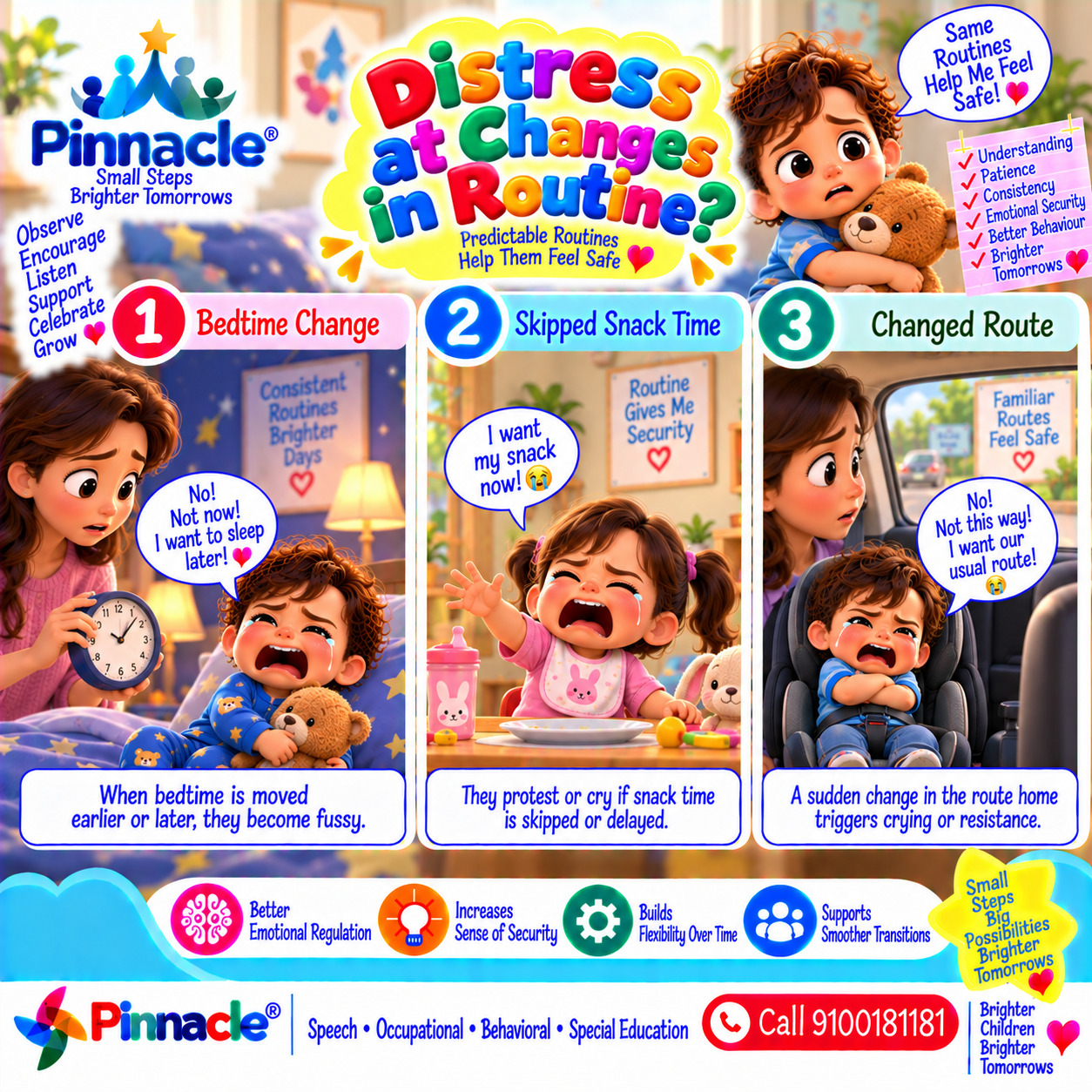
Does the child display distress at changes in routine?
Topic: Routine
Example 1
When bedtime is moved earlier or later, they become fussy.
Example 2
They protest or cry if snack time is skipped or delayed.
Example 3
A sudden change in the route home triggers crying or resistance.