The Social Responsiveness Scale–2 (SRS-2) offers a comprehensive look into your child''s social abilities, critical for tailoring effective intervention strategies.
Early and accurate assessment of social skills is vital to developing tailored interventions that maximize social development and integration into society.
Successfully conducted 1,00,00,000+ personalized 1:1 assessments. Our approach has a 97%+ measured accuracy rate in improving social outcomes.
*Names are indicative only and have been changed for privacy protectionA New Dawn with SRS-2
When Anaya''s parents noticed she struggled in social settings, they felt anxious about her future. Through SRS-2 testing at Pinnacle Blooms, they gained a clearer understanding, receiving targeted interventions that transformed Anaya into a confident, socially adept child.
Progress : Significant improvement in social interaction and reduced social anxiety.
At Pinnacle Blooms Network, we empower families like Aarav''s to navigate autism with clarity and hope through scientifically-backed assessments and therapies.
*Names are indicative only and have been changed for privacy protectionSuccess Testimonial
Name : Meena Reddy
RelationShip : Mother
Testimonial : Pinnacle Blooms not only provided us with an SRS-2 assessment but a roadmap for a better future for Aarav. His growth has been nothing short of miraculous.
Testimonial : Riya''s journey with Pinnacle Blooms has been transformative. The SRS-2 was instrumental in understanding her needs and facilitating her progress.
These are reference questions and illustrative examples. This section does not collect child responses, calculate scores or produce an individual assessment result.
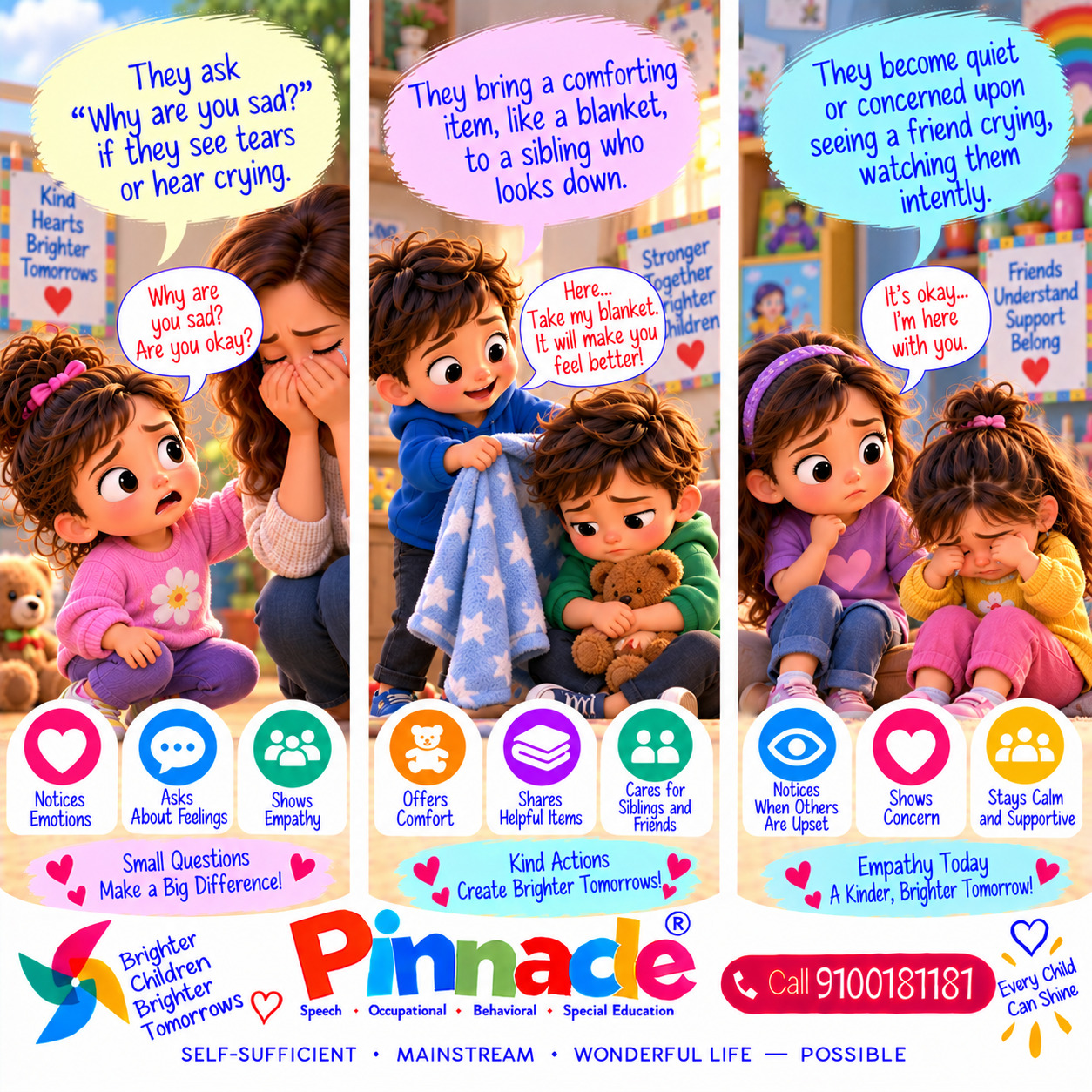
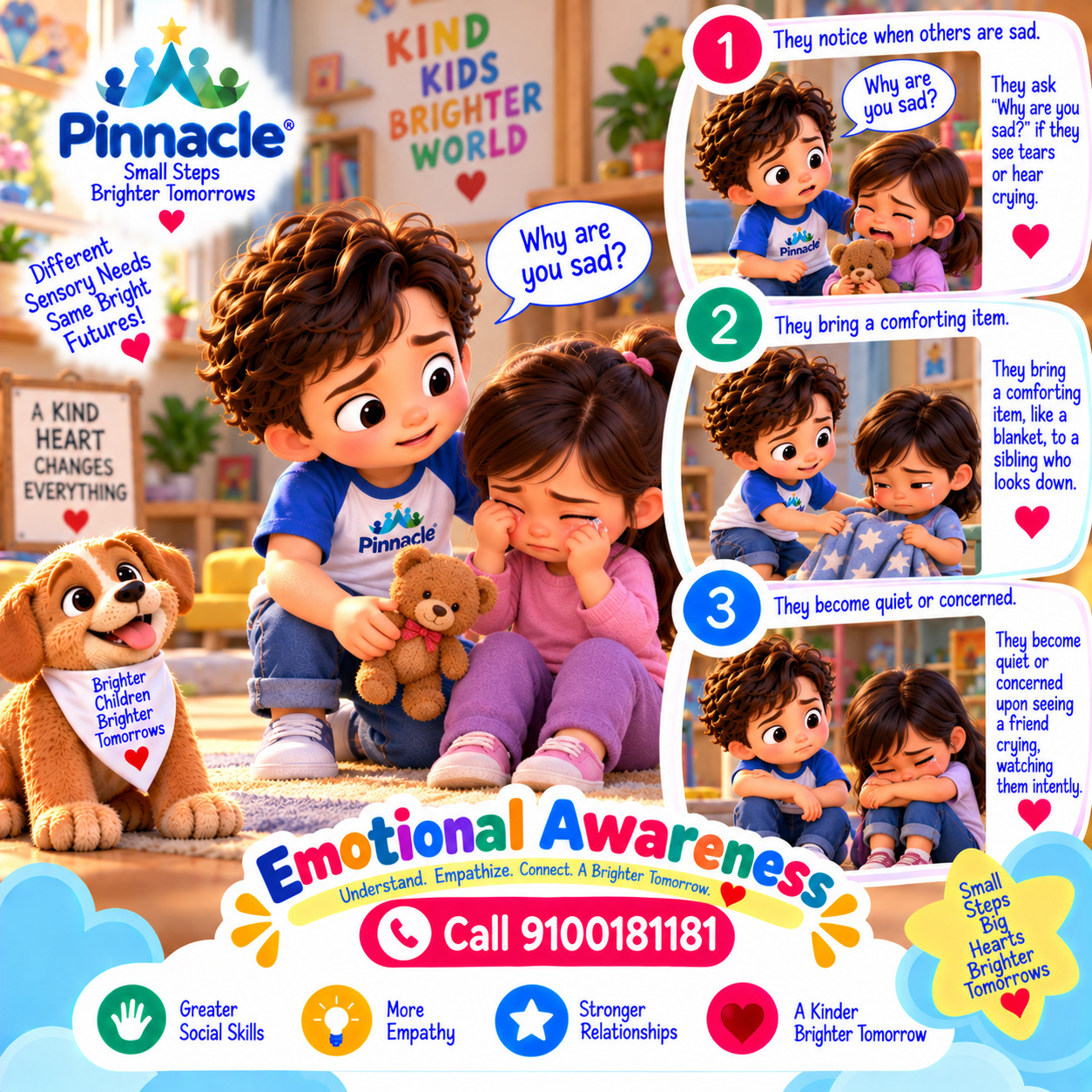
Does the child notice when others are upset or sad?
Topic: Emotional Awareness
Example 1
They ask “Why are you sad?” if they see tears or hear crying.
Example 2
They bring a comforting item, like a blanket, to a sibling who looks down.
Example 3
They become quiet or concerned upon seeing a friend crying, watching them intently.
Example illustrationQuestion illustration
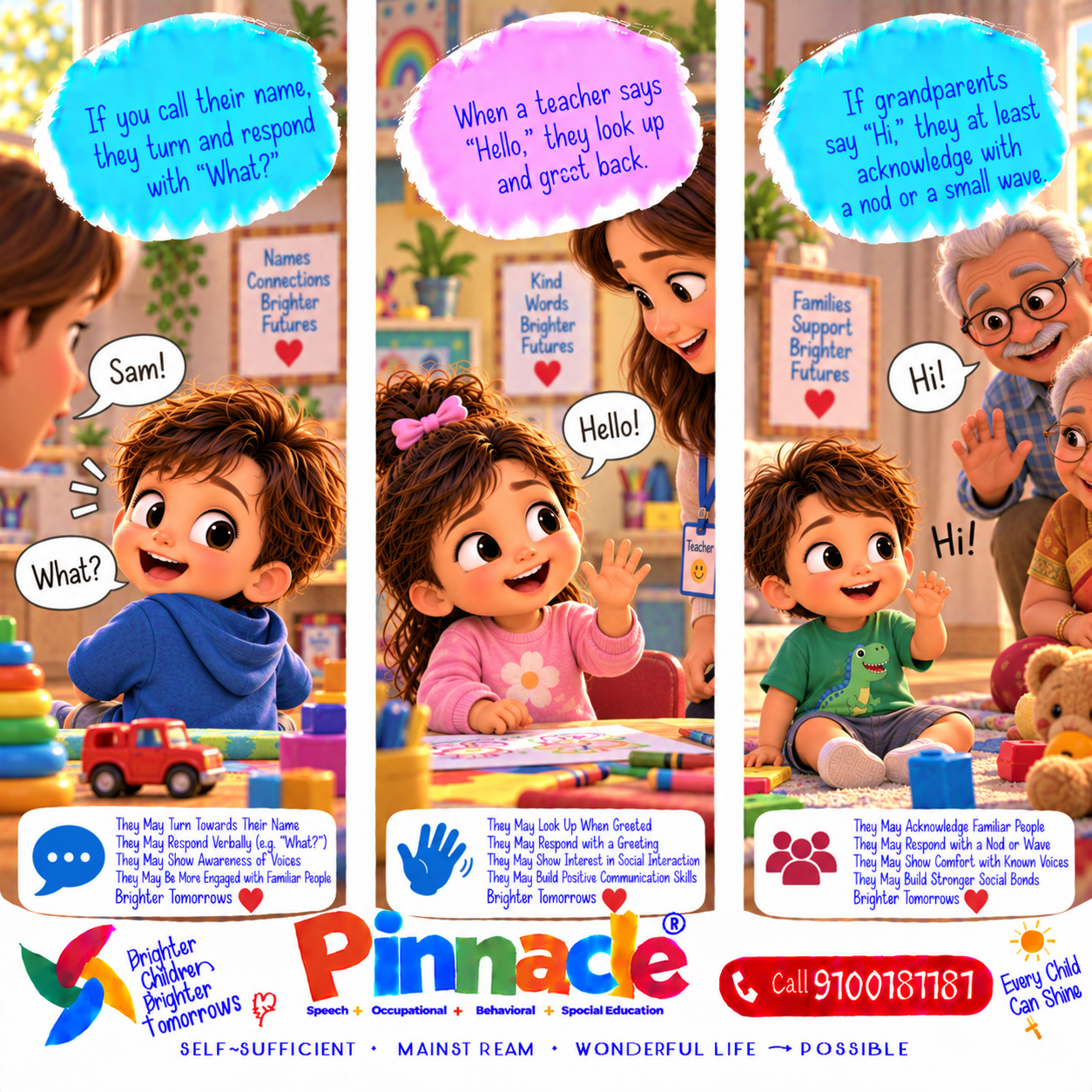
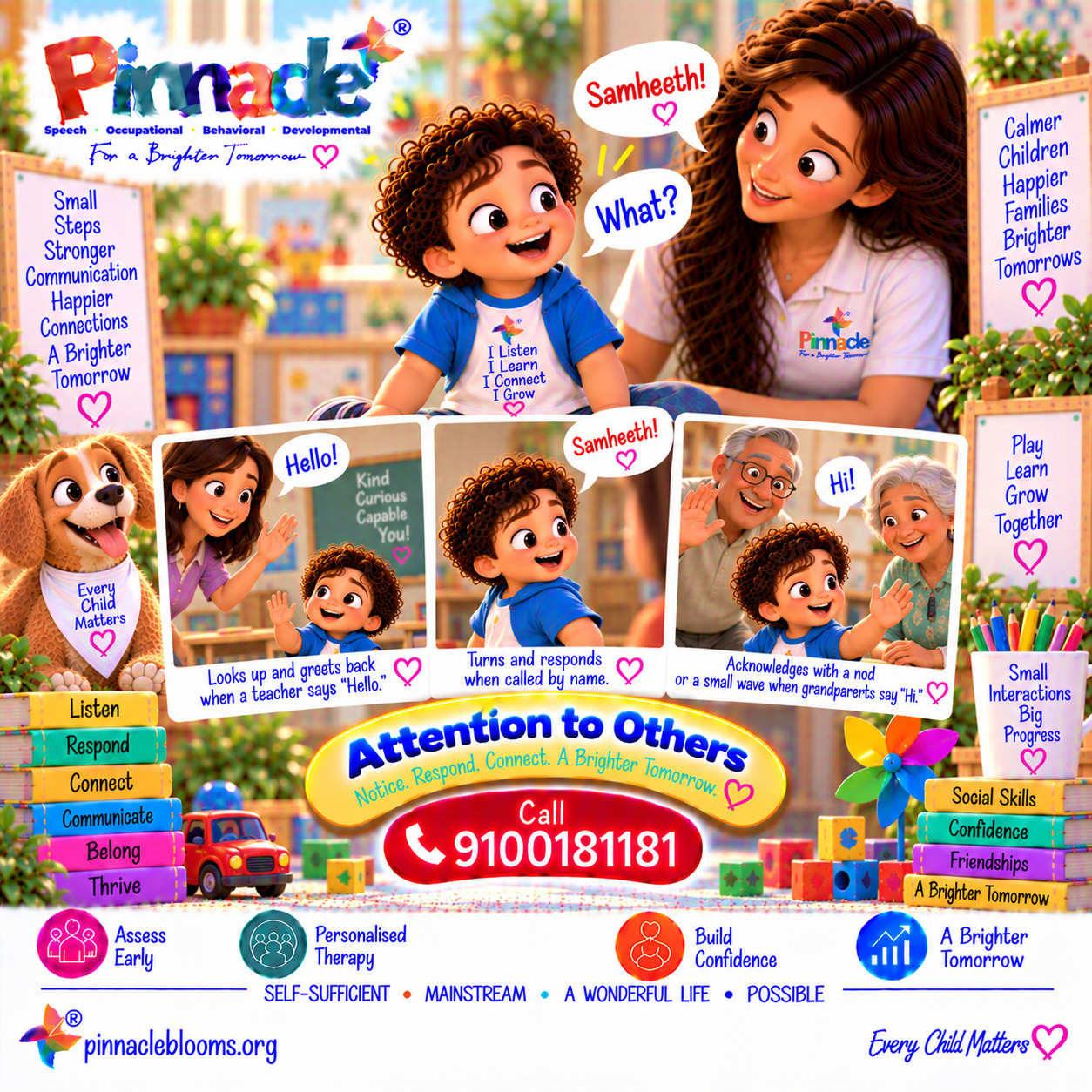
Does the child notice when someone speaks to them?
Topic: Attention to Others
Example 1
If you call their name, they turn and respond with “What?”
Example 2
When a teacher says “Hello,” they look up and greet back.
Example 3
If grandparents say “Hi,” they at least acknowledge with a nod or a small wave.
Example illustrationQuestion illustration
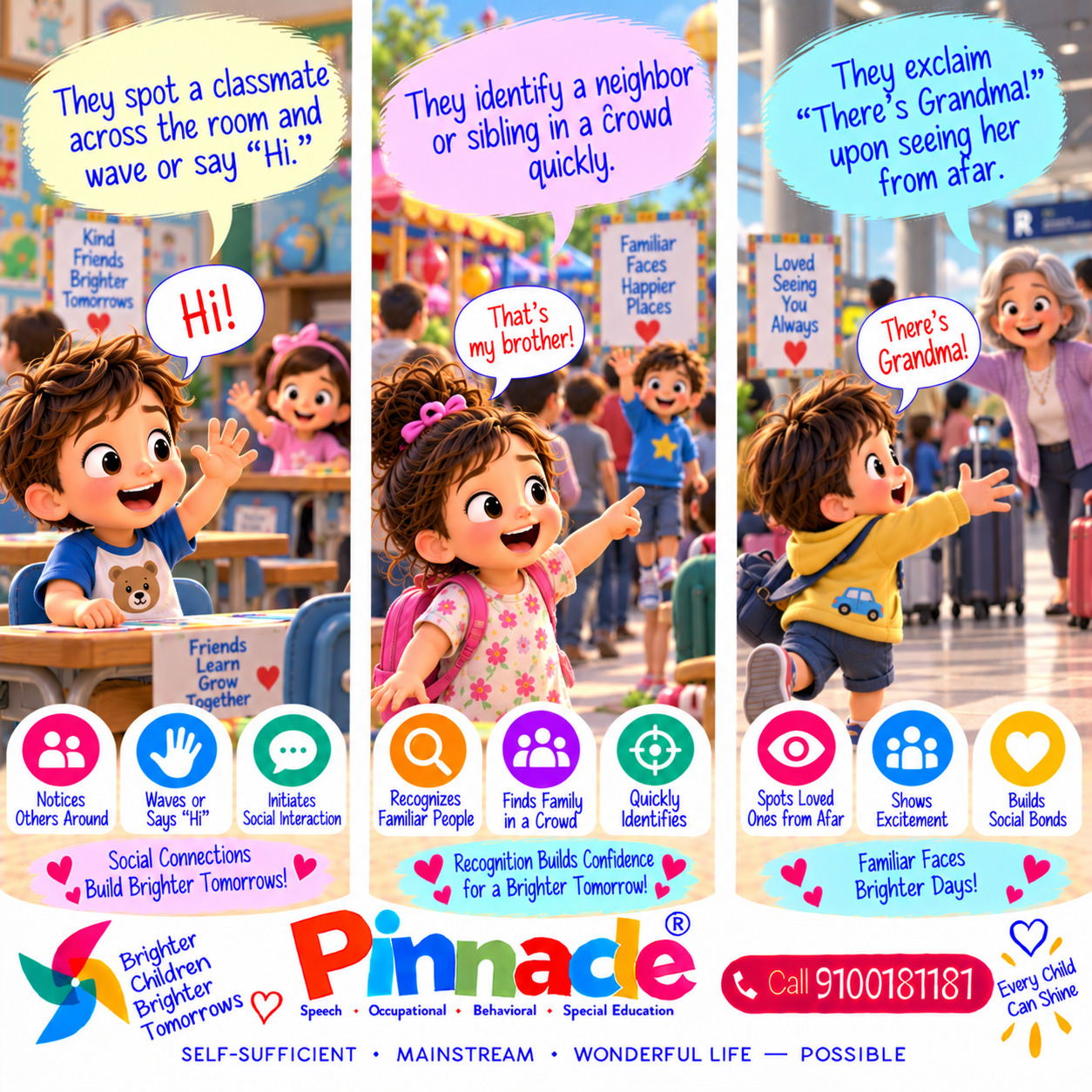
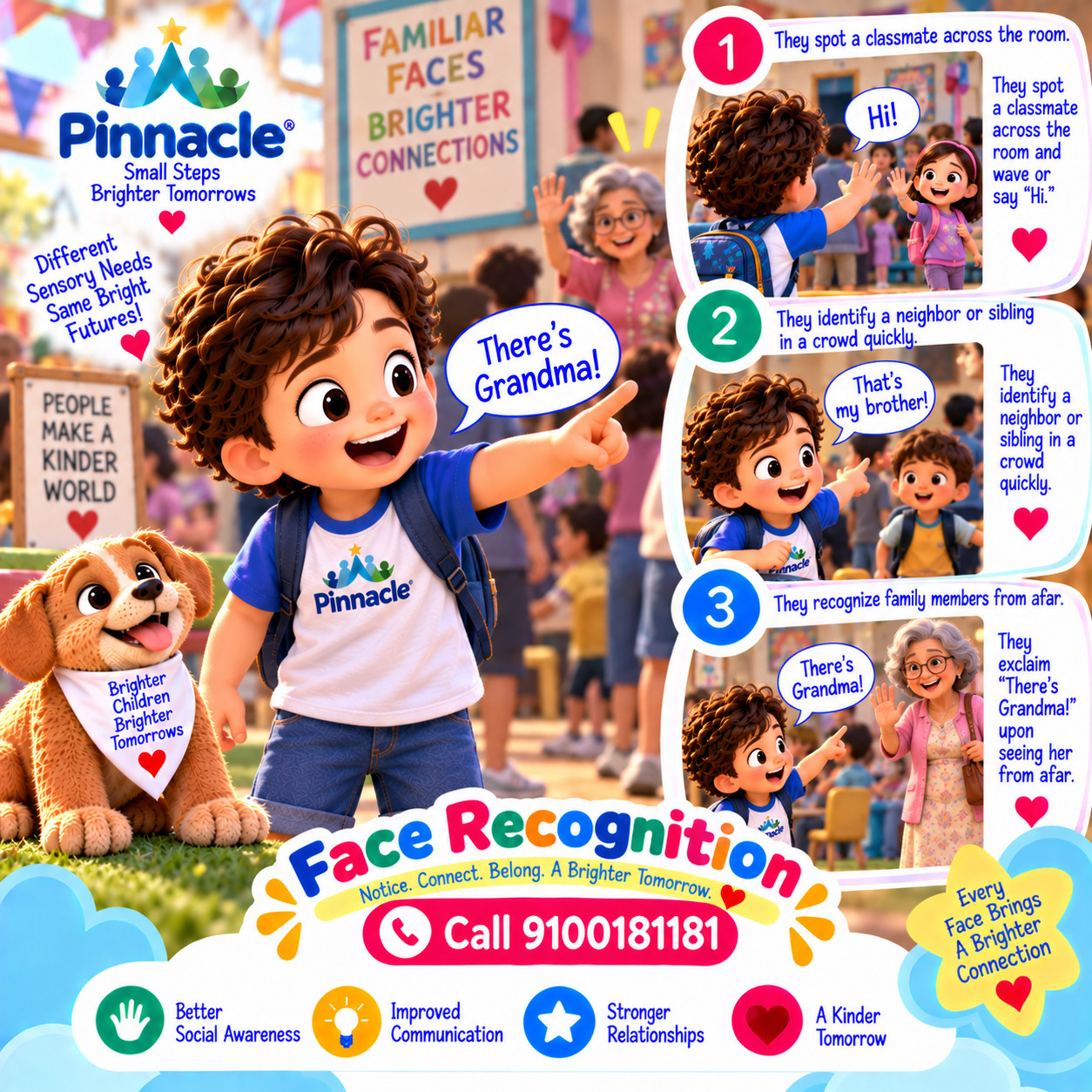
Does the child recognize familiar faces in a group?
Topic: Face Recognition
Example 1
They spot a classmate across the room and wave or say “Hi.”
Example 2
They identify a neighbor or sibling in a crowd quickly.
Example 3
They exclaim “There’s Grandma!” upon seeing her from afar.
Example illustrationQuestion illustration
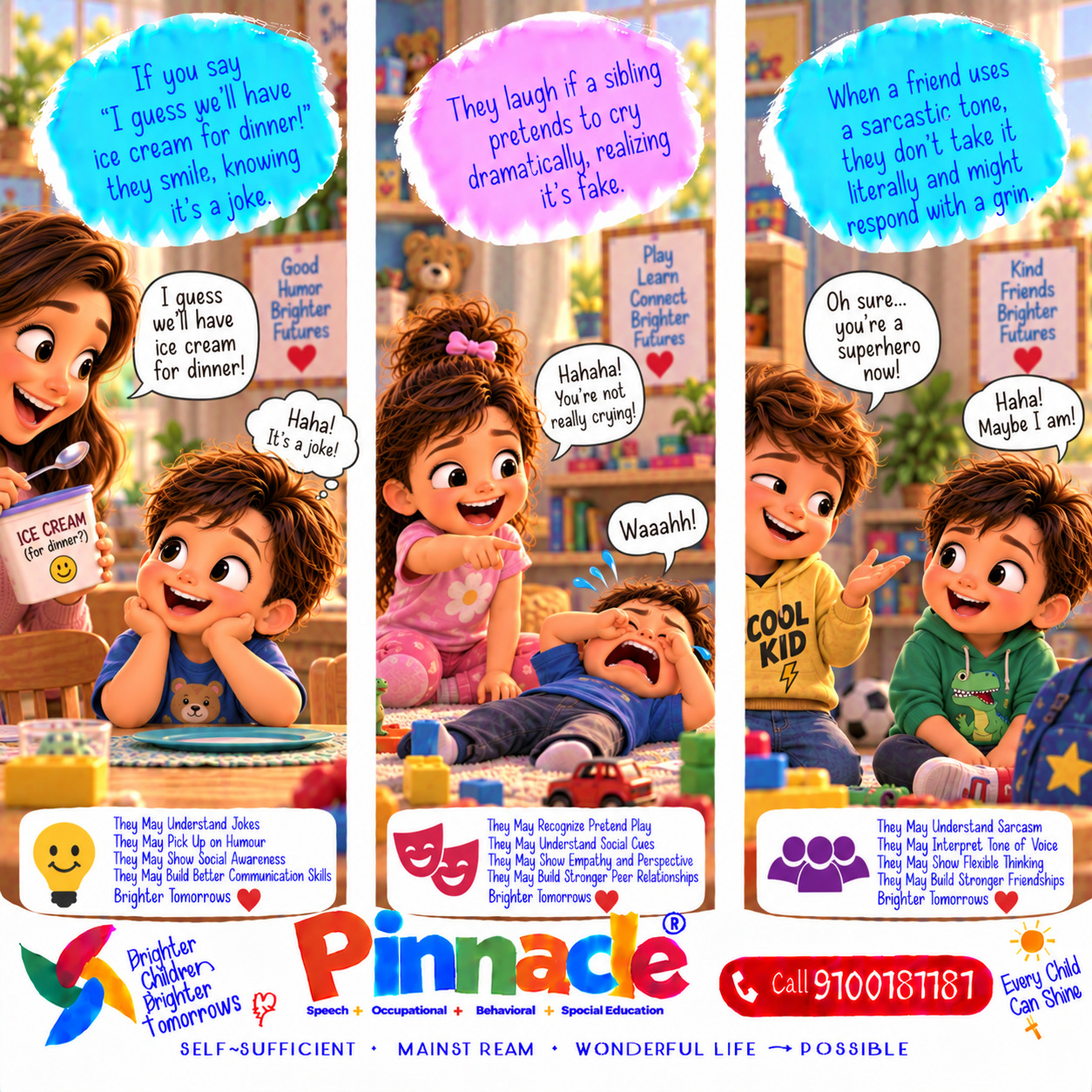
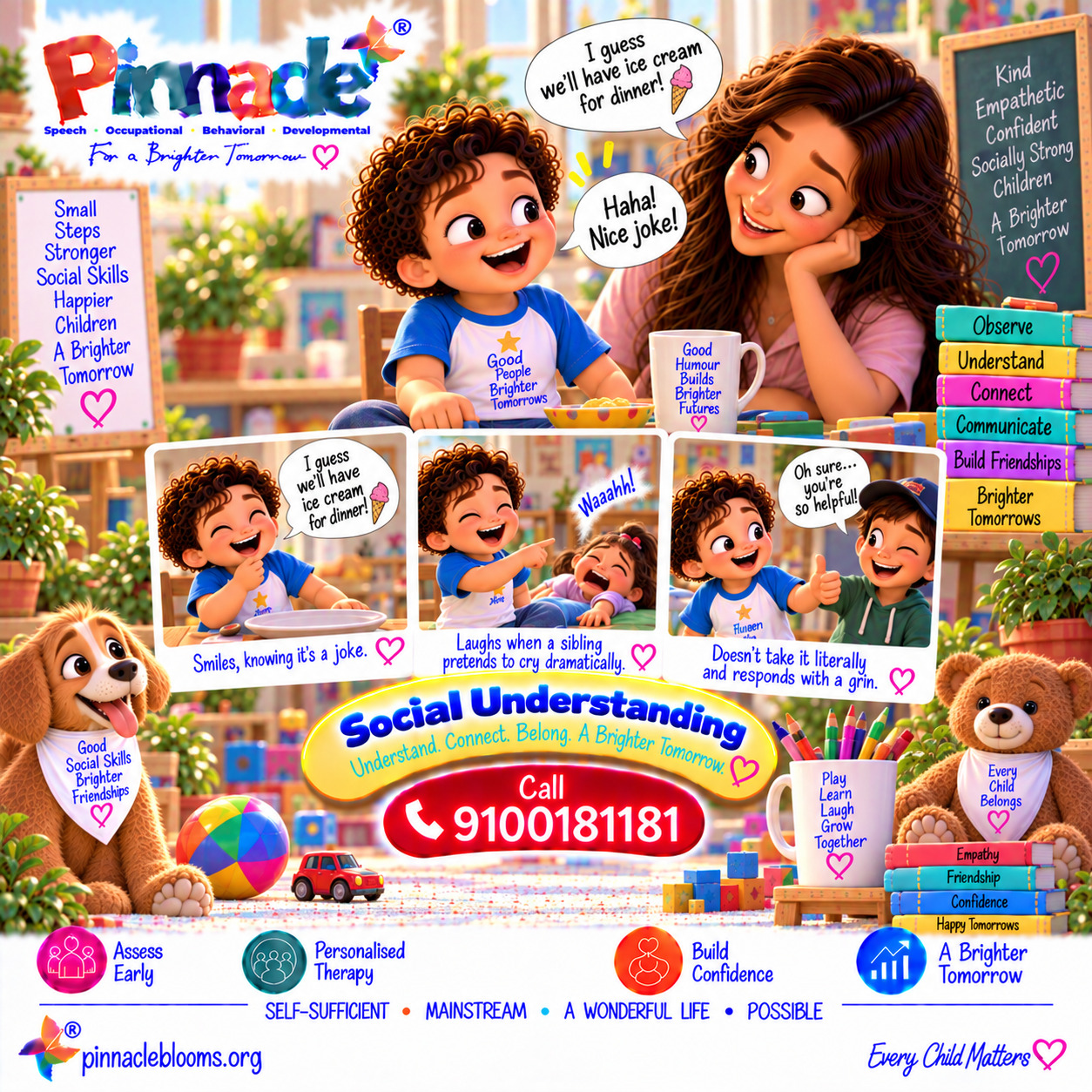
Does the child understand when someone is joking or being sarcastic?
Topic: Social Understanding
Example 1
If you say “I guess we’ll have ice cream for dinner!” they smile, knowing it’s a joke.
Example 2
They laugh if a sibling pretends to cry dramatically, realizing it’s fake.
Example 3
When a friend uses a sarcastic tone, they don’t take it literally and might respond with a grin.
Example illustrationQuestion illustration
Can the child guess how someone else might be feeling based on facial expressions?
Topic: Emotional Inference
Example 1
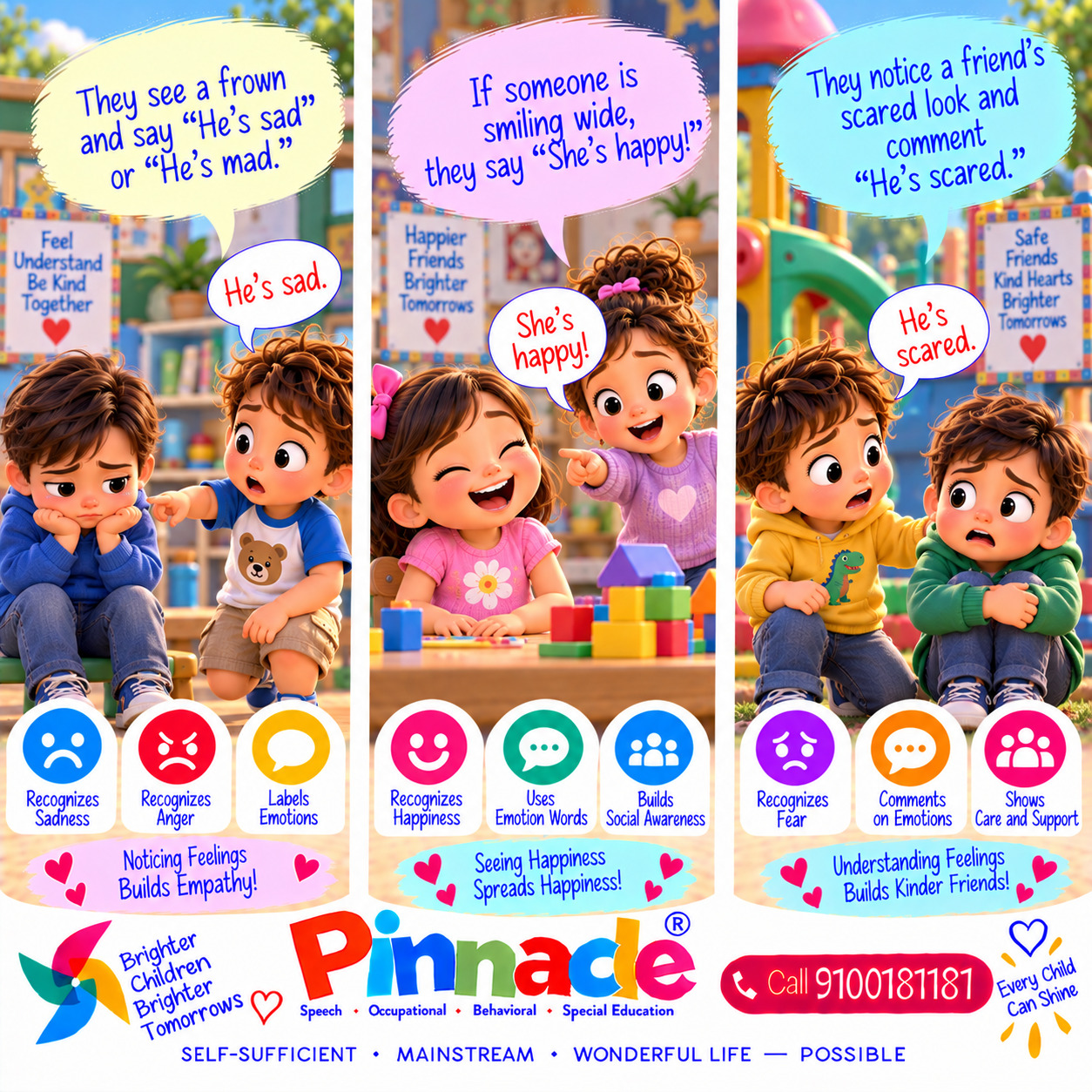
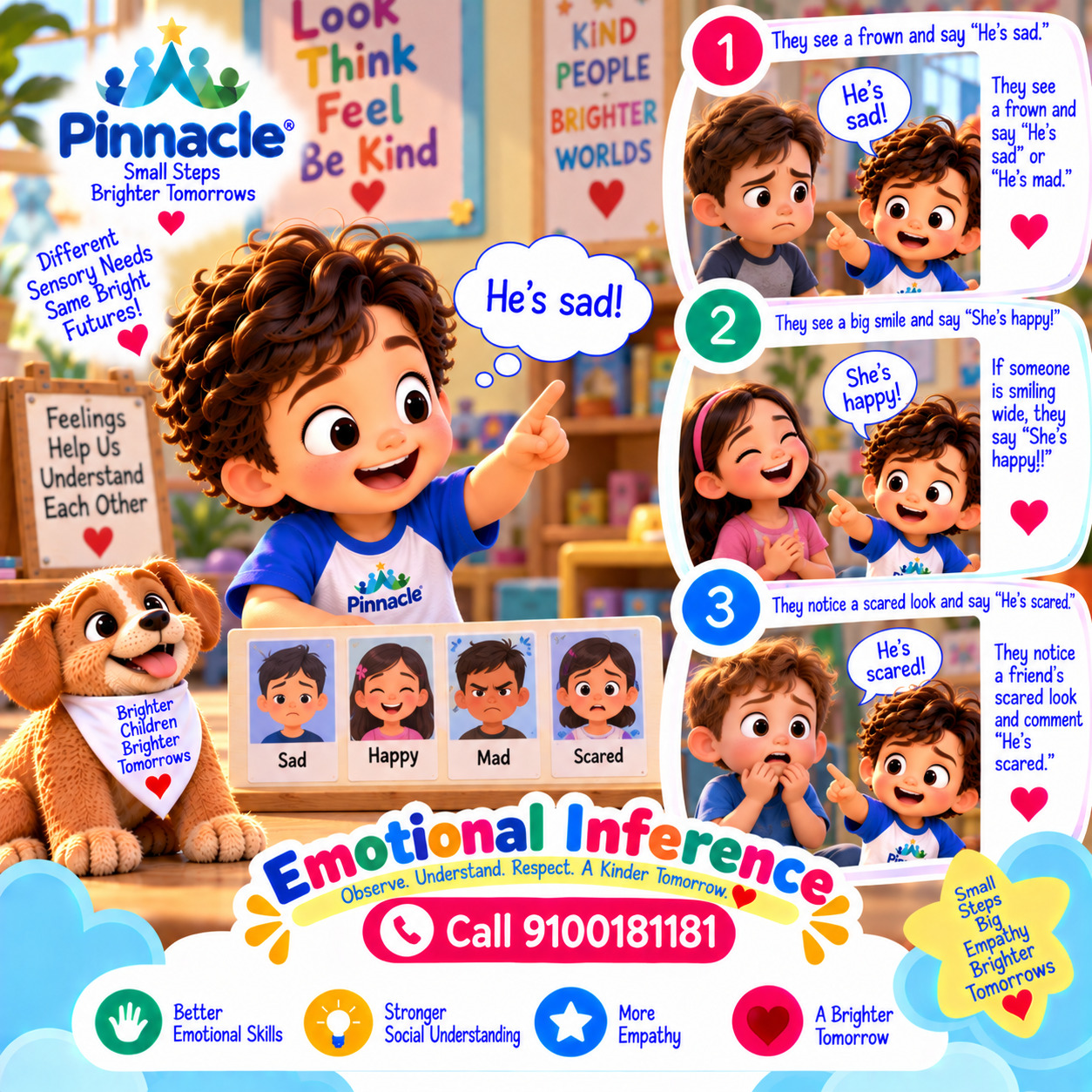
They see a frown and say “He’s sad” or “He’s mad.”
Example 2
If someone is smiling wide, they say “She’s happy!”
Example 3
They notice a friend’s scared look and comment “He’s scared.”
Example illustrationQuestion illustration
Does the child understand the rules of a simple game?
Topic: Game Rule Understanding
Example 1
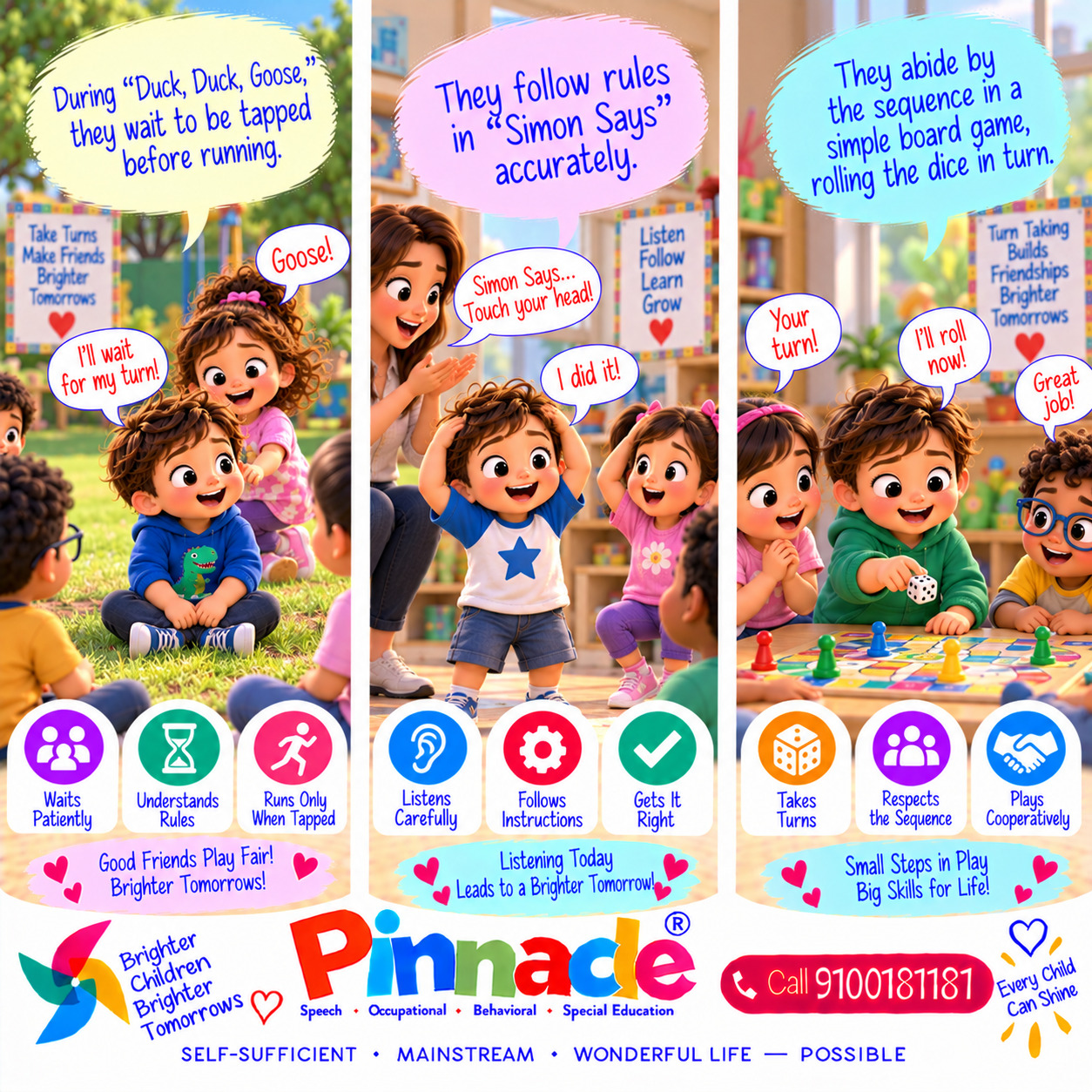
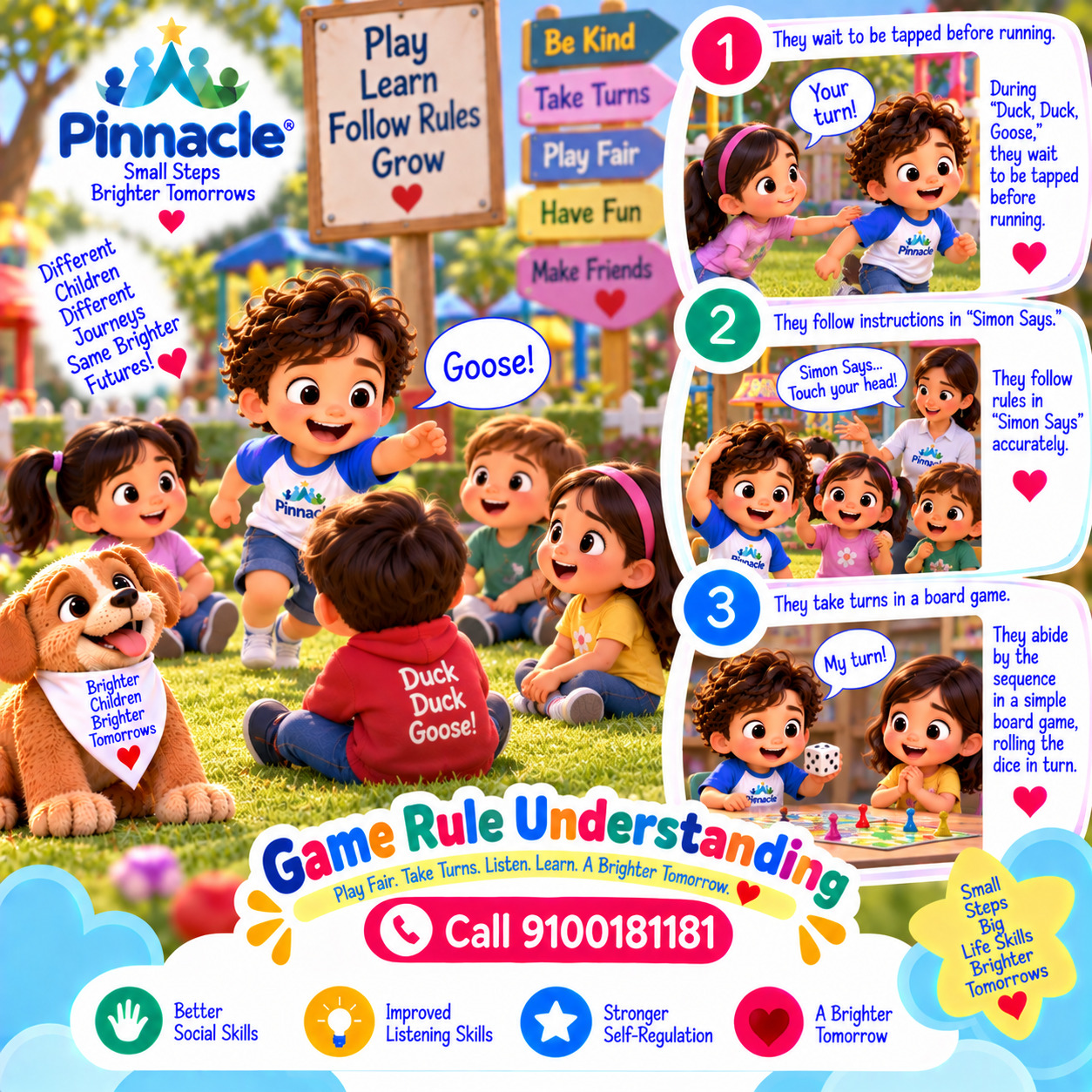
During “Duck, Duck, Goose,” they wait to be tapped before running.
Example 2
They follow rules in “Simon Says” accurately.
Example 3
They abide by the sequence in a simple board game, rolling the dice in turn.
Example illustrationQuestion illustration
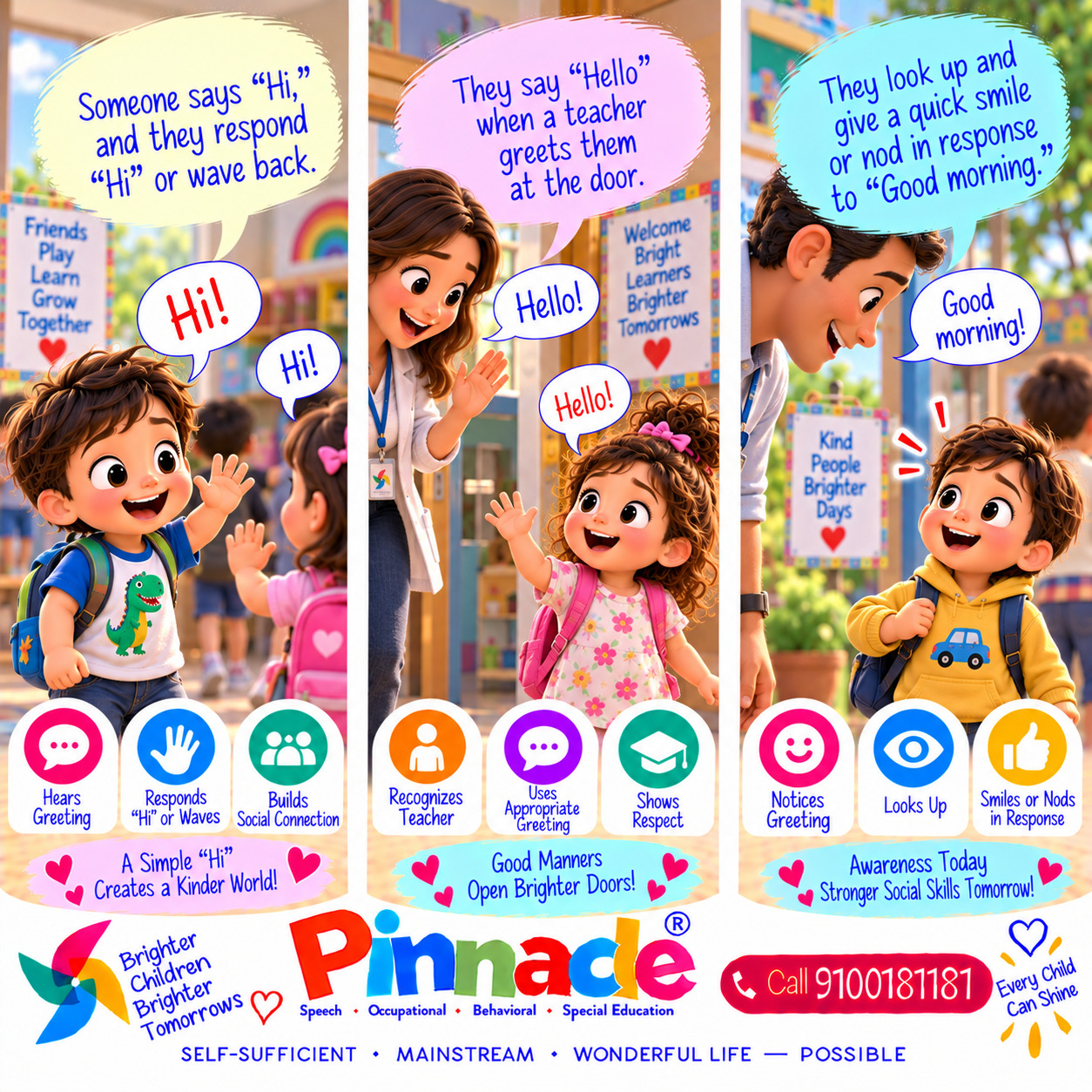
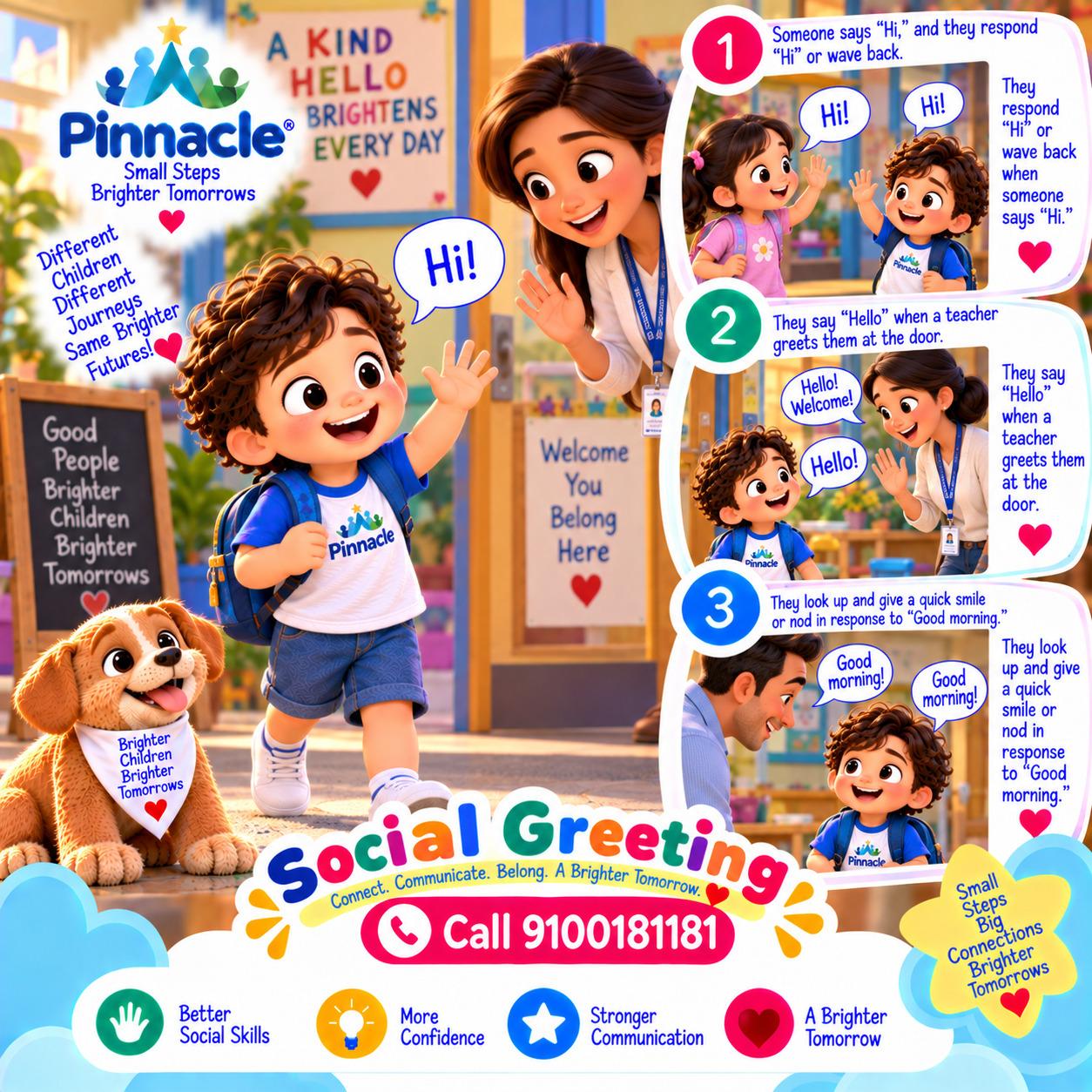
Does the child respond appropriately when greeted?
Topic: Social Greeting
Example 1
Someone says “Hi,” and they respond “Hi” or wave back.
Example 2
They say “Hello” when a teacher greets them at the door.
Example 3
They look up and give a quick smile or nod in response to “Good morning.”
Example illustrationQuestion illustration
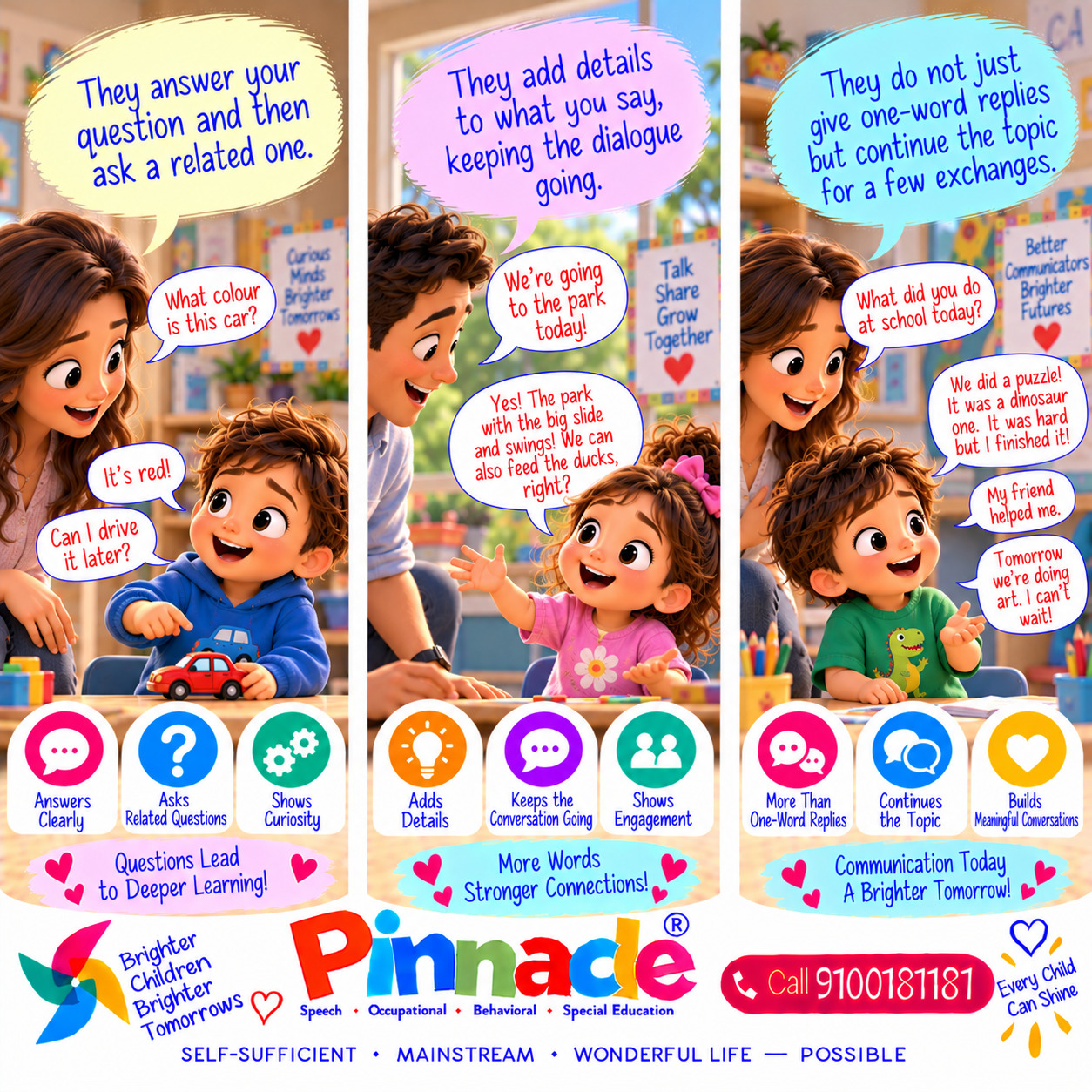
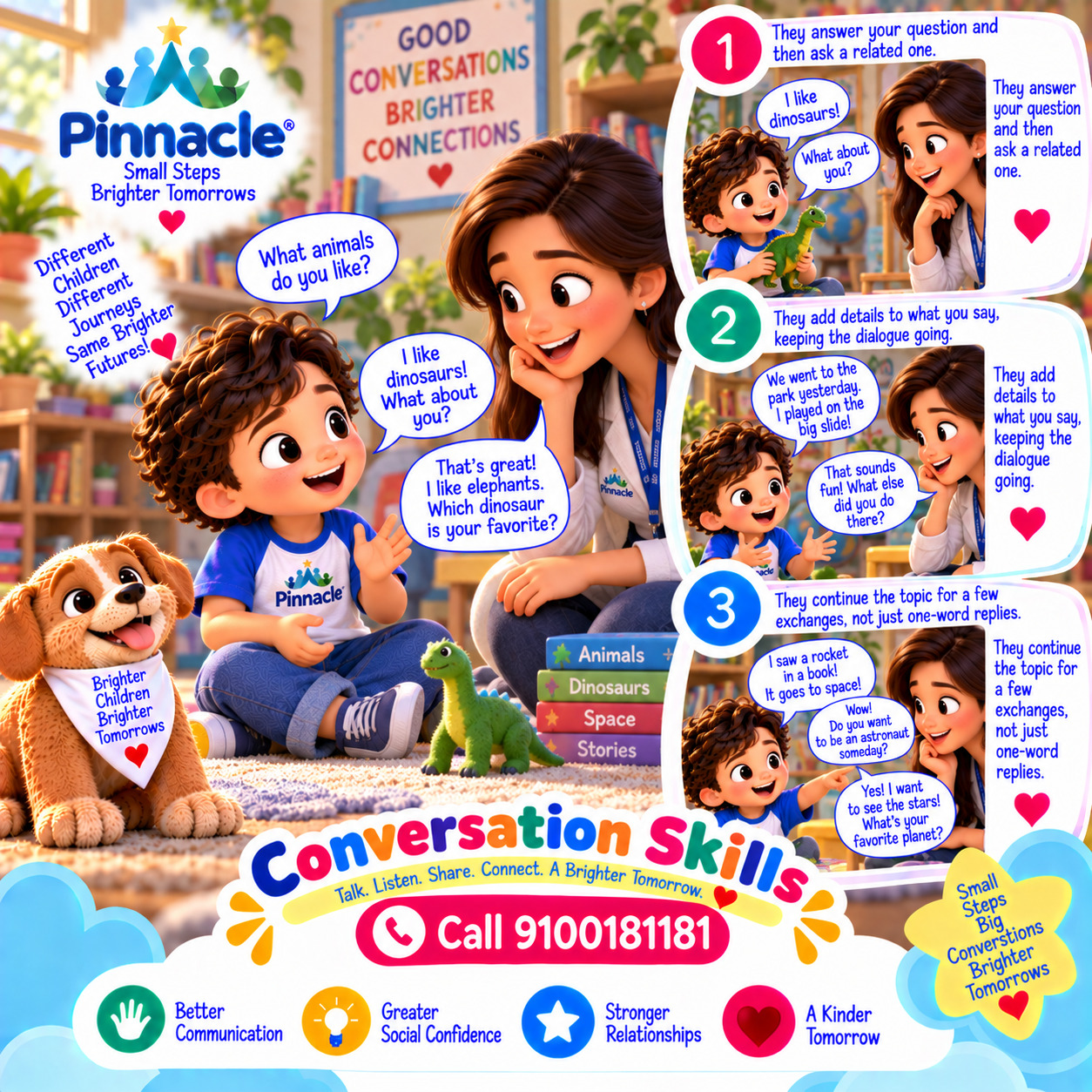
Does the child engage in back-and-forth conversations?
Topic: Conversation Skills
Example 1
They answer your question and then ask a related one.
Example 2
They add details to what you say, keeping the dialogue going.
Example 3
They do not just give one-word replies but continue the topic for a few exchanges.
Example illustrationQuestion illustration
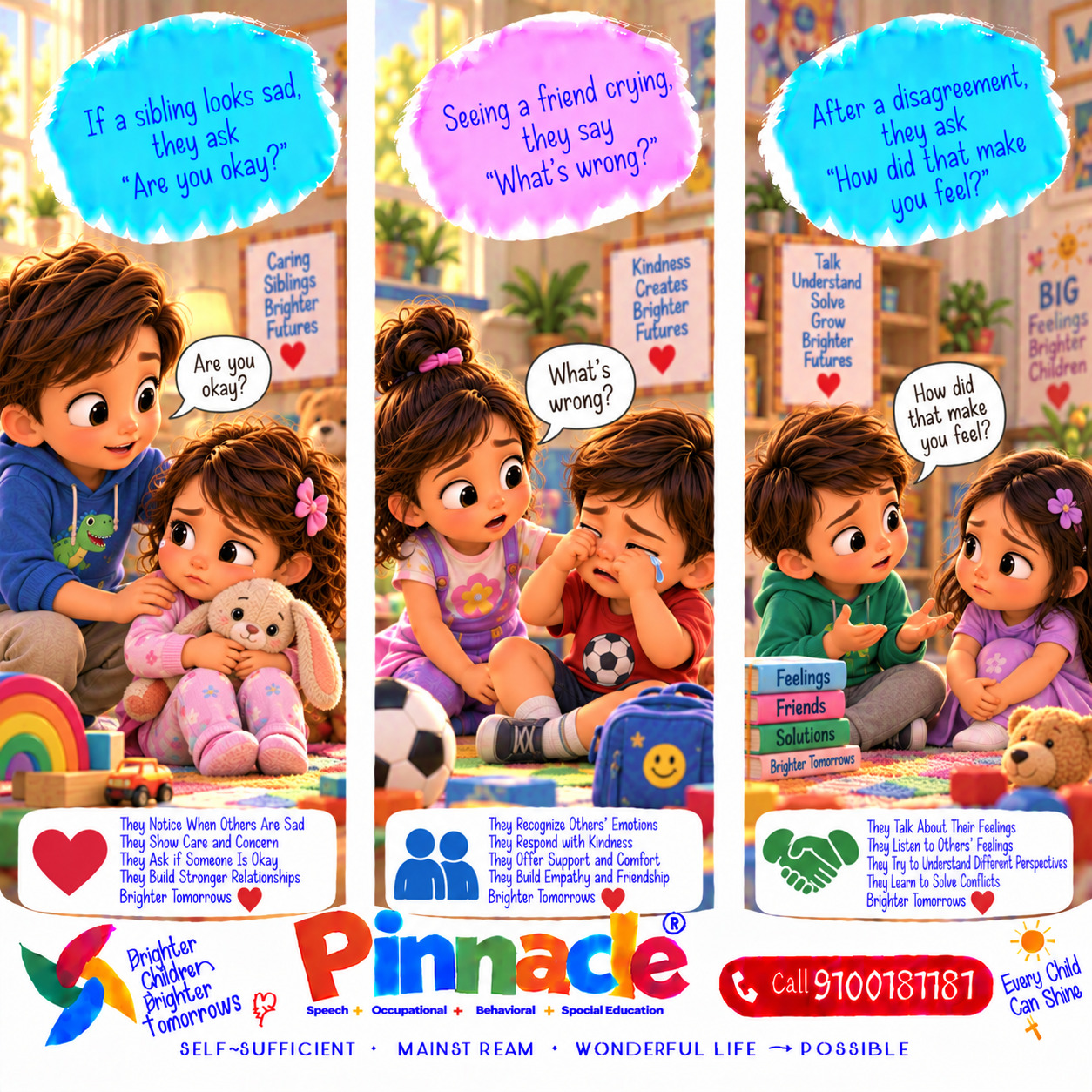
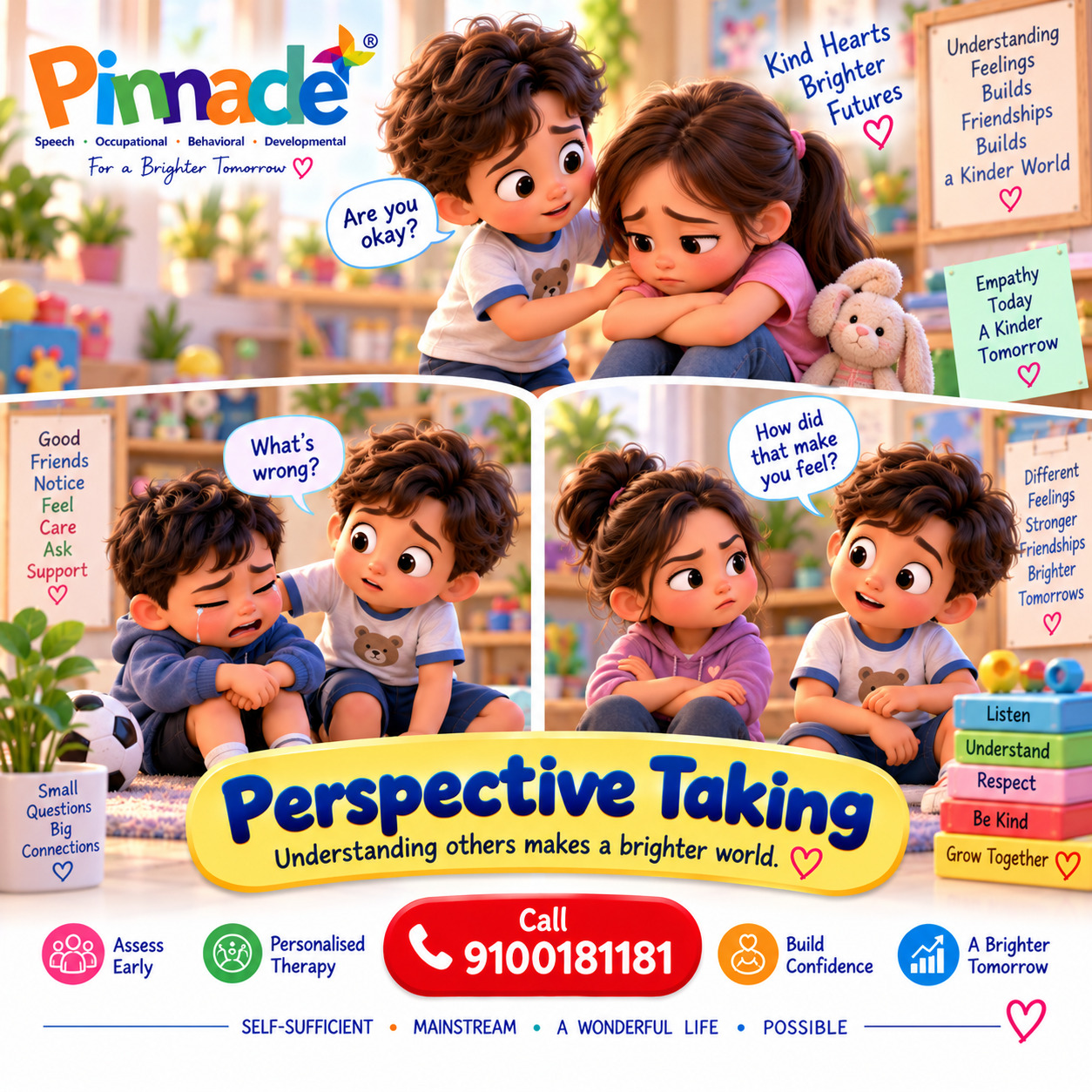
Does the child ask questions about others’ feelings or thoughts?
Topic: Perspective Taking
Example 1
If a sibling looks sad, they ask “Are you okay?”
Example 2
Seeing a friend crying, they say “What’s wrong?”
Example 3
After a disagreement, they ask “How did that make you feel?” to understand emotions.
Example illustrationQuestion illustration
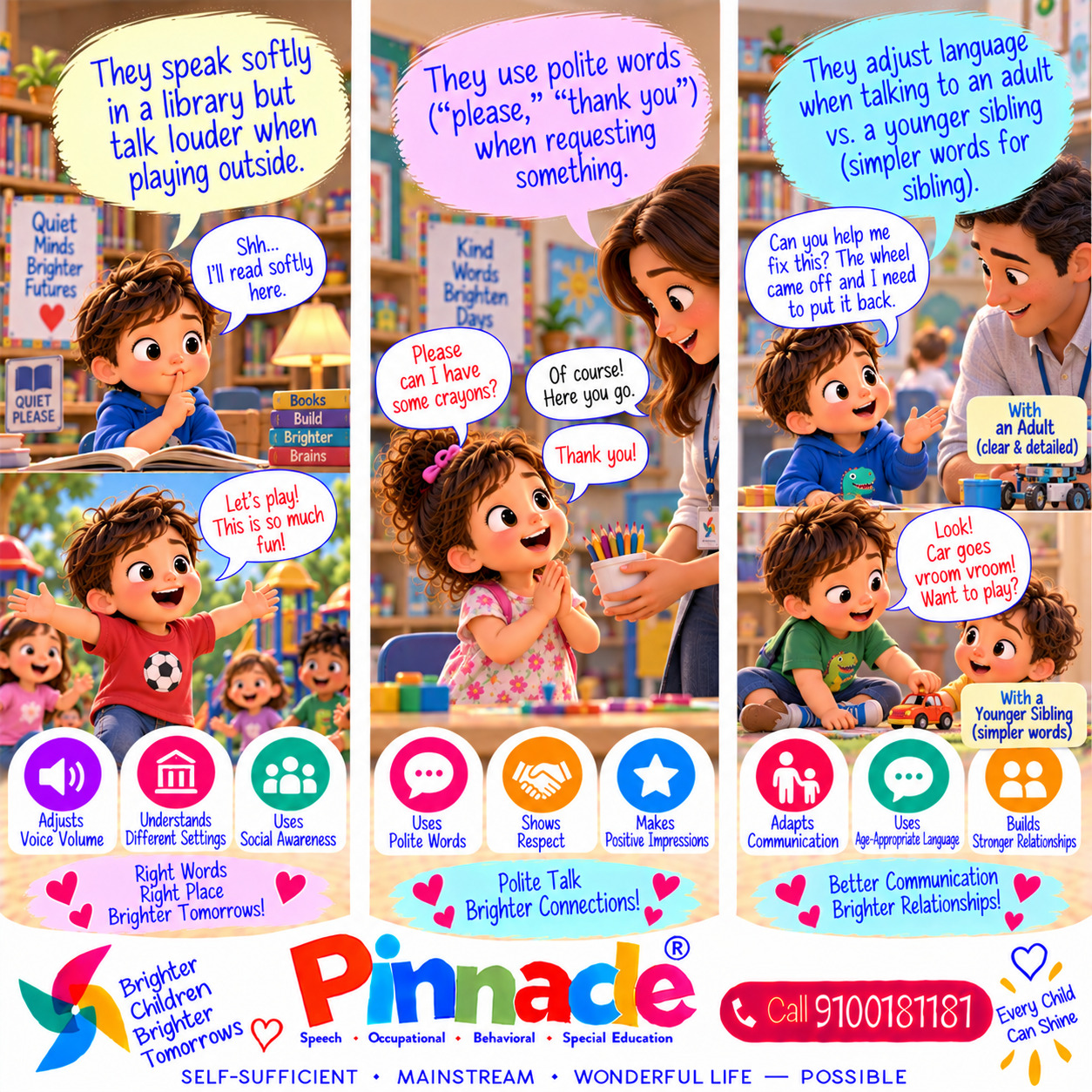
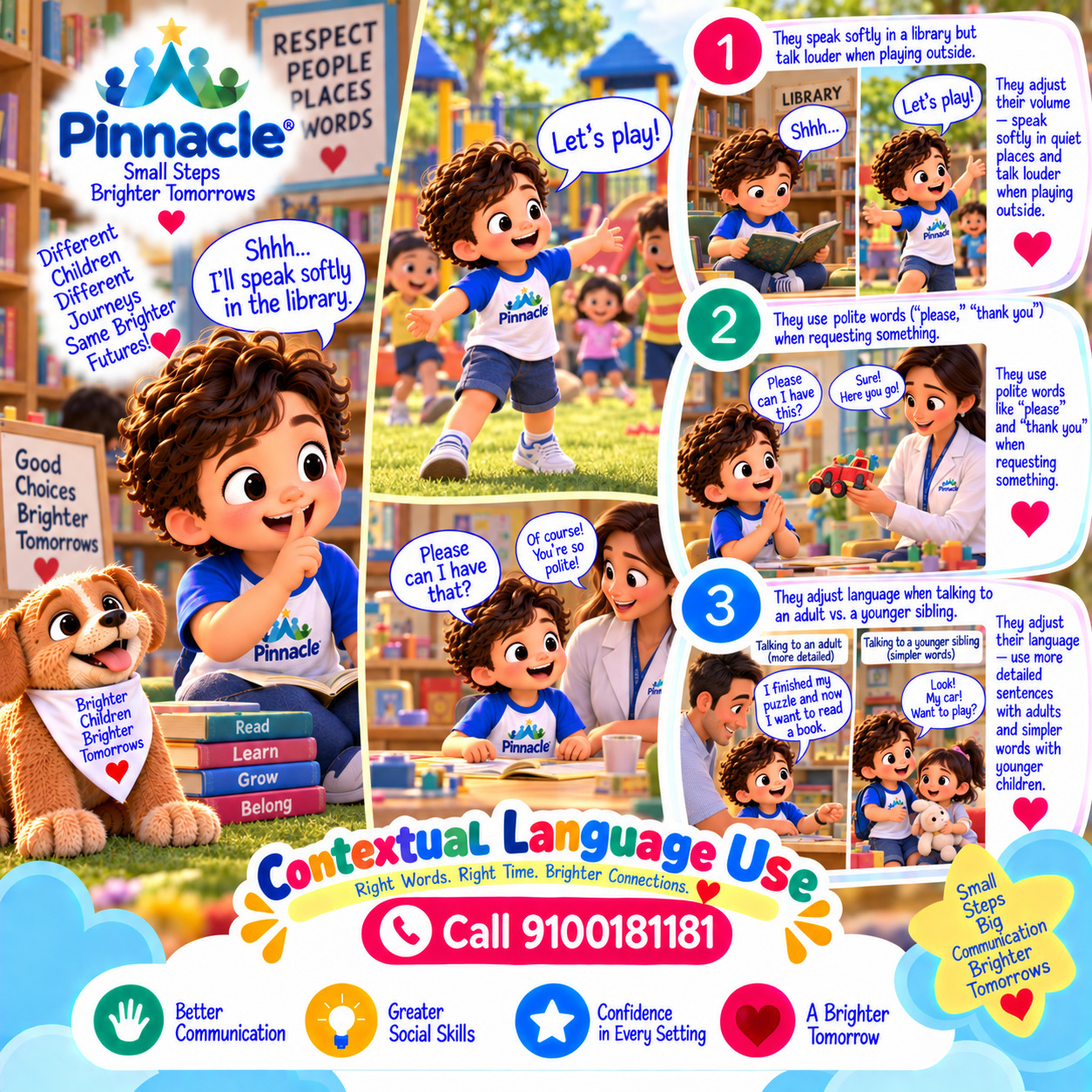
Does the child use language appropriately in different situations?
Topic: Contextual Language Use
Example 1
They speak softly in a library but talk louder when playing outside.
Example 2
They use polite words (“please,” “thank you”) when requesting something.
Example 3
They adjust language when talking to an adult vs. a younger sibling (simpler words for sibling).
Example illustrationQuestion illustration
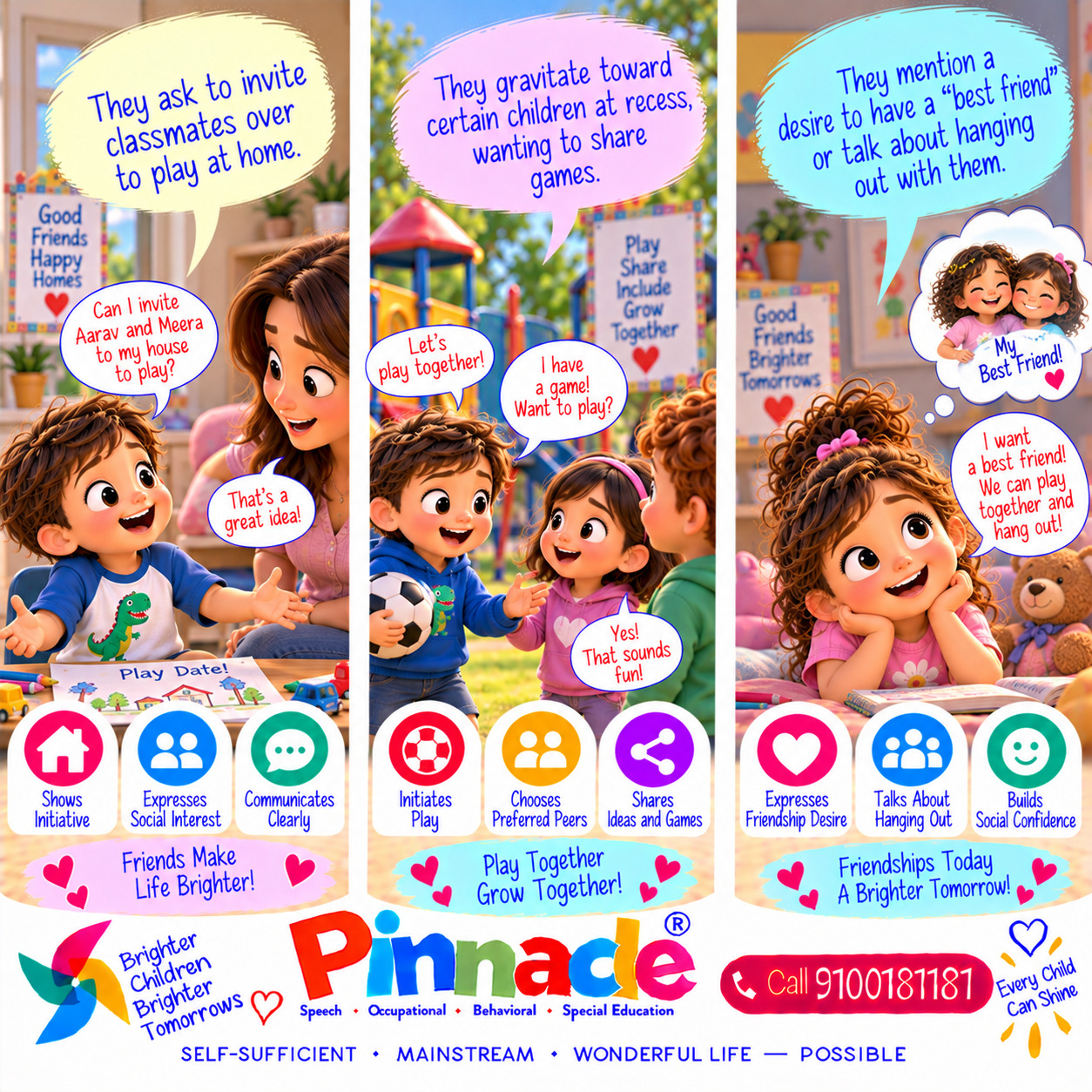
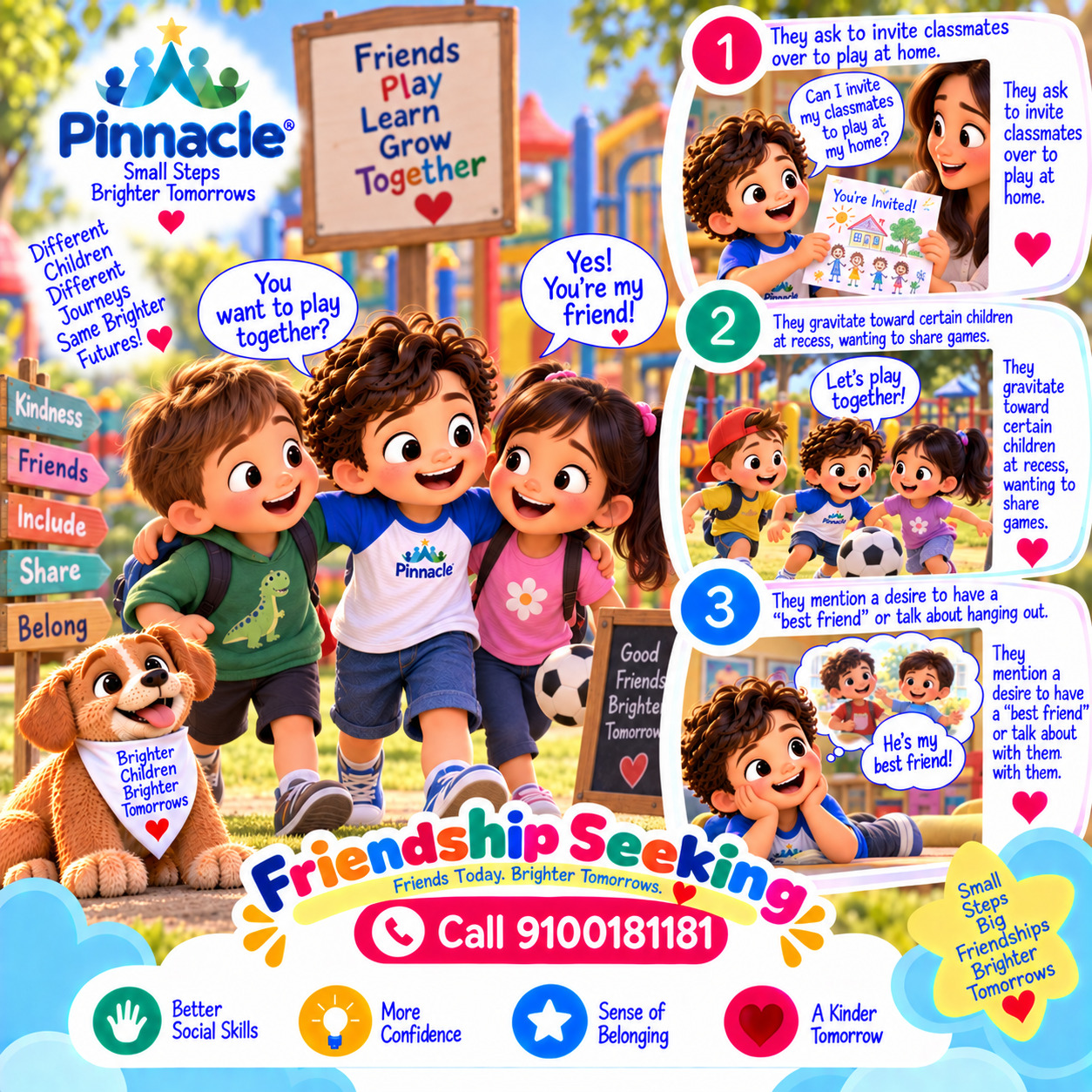
Does the child seek out friendships with peers?
Topic: Friendship Seeking
Example 1
They ask to invite classmates over to play at home.
Example 2
They gravitate toward certain children at recess, wanting to share games.
Example 3
They mention a desire to have a “best friend” or talk about hanging out with them.
Example illustrationQuestion illustration
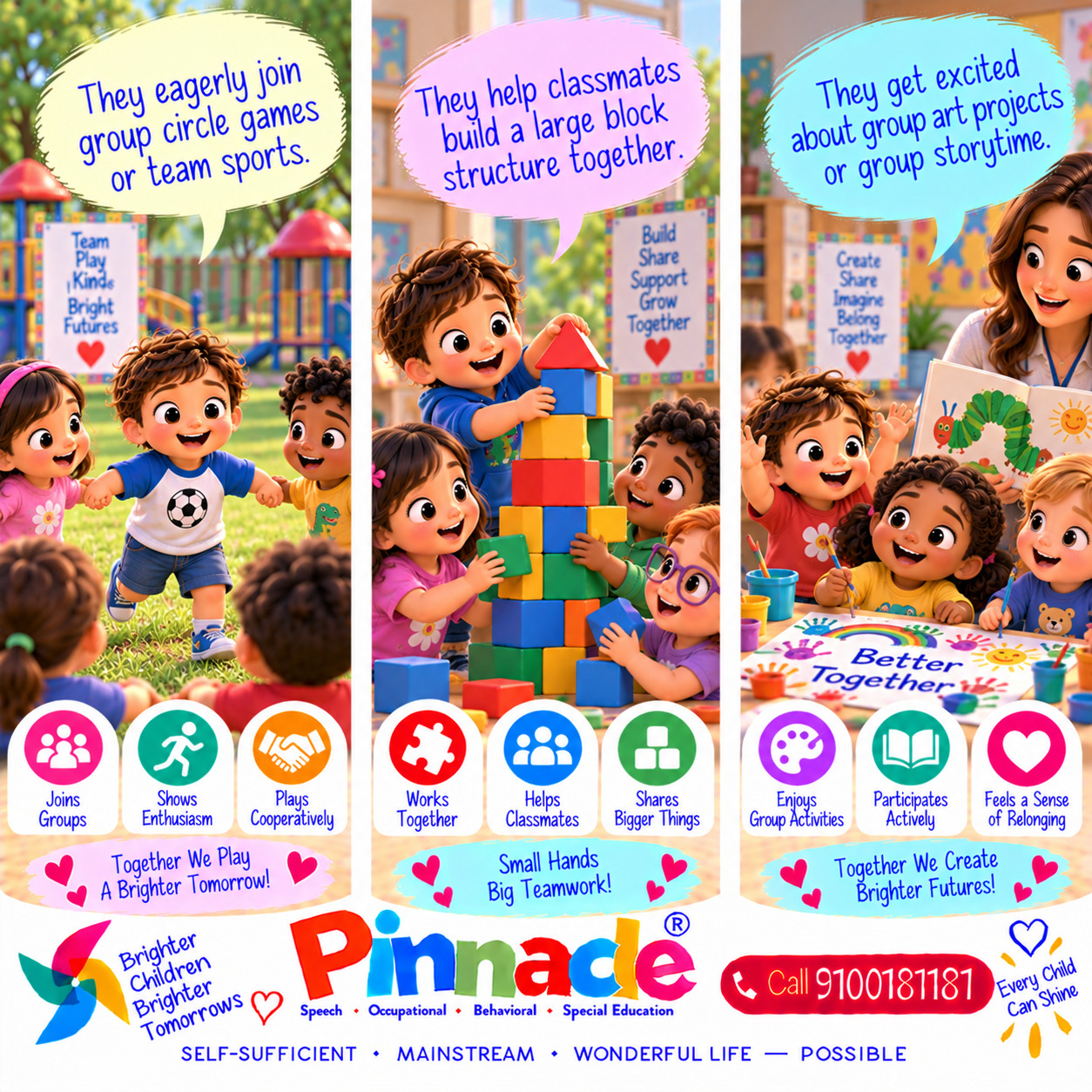
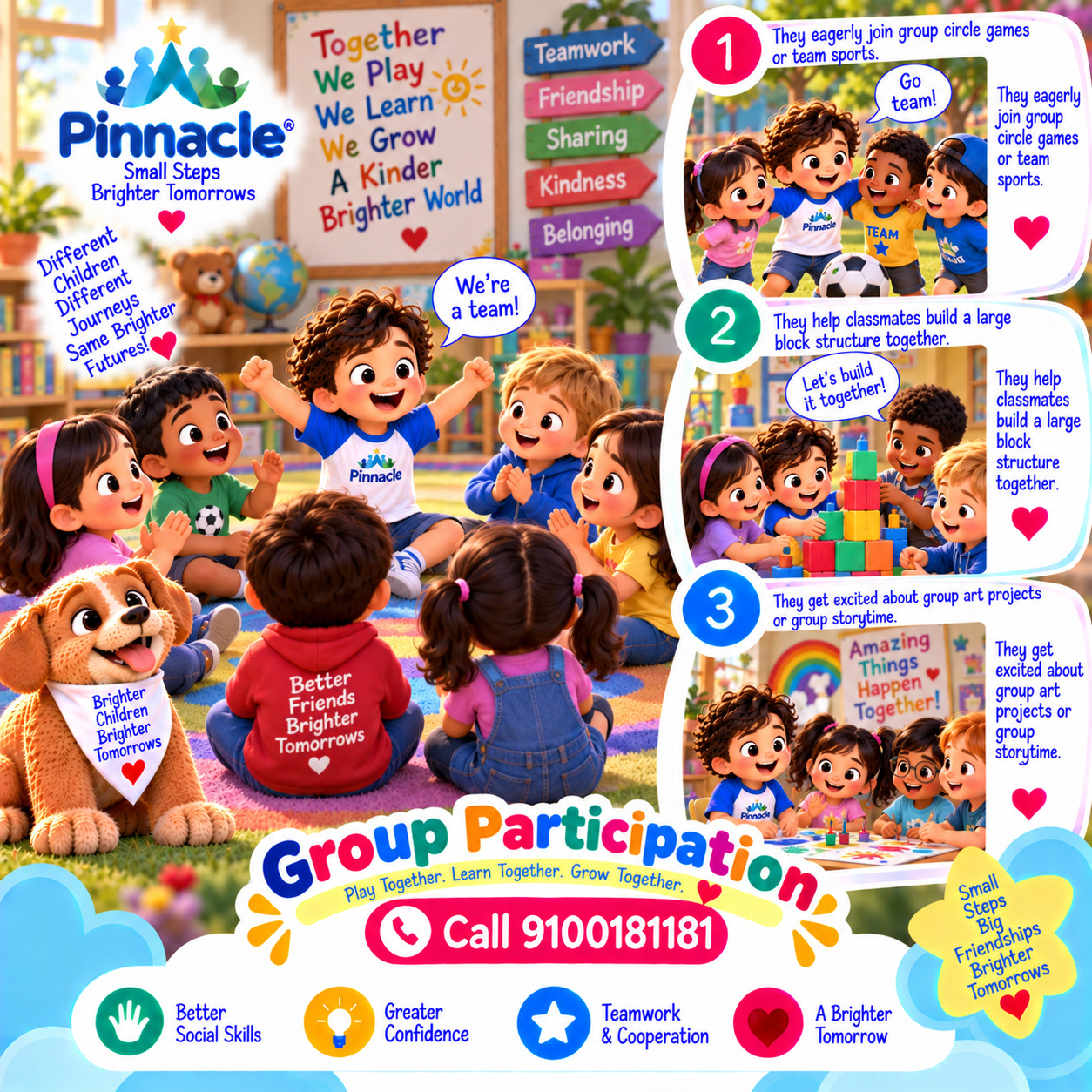
Does the child enjoy being part of a group or team activity?
Topic: Group Participation
Example 1
They eagerly join group circle games or team sports.
Example 2
They help classmates build a large block structure together.
Example 3
They get excited about group art projects or group storytime.
Example illustrationQuestion illustration
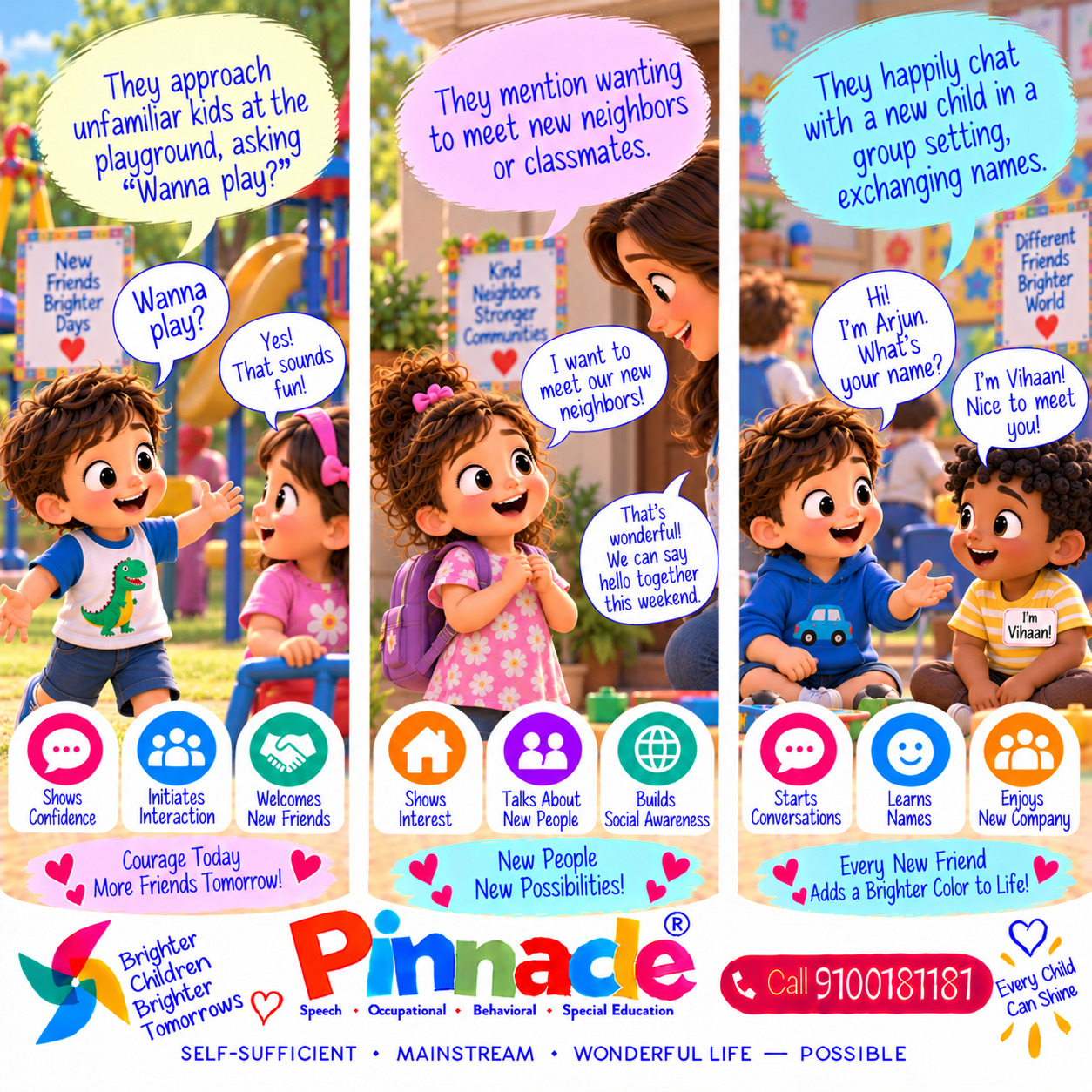
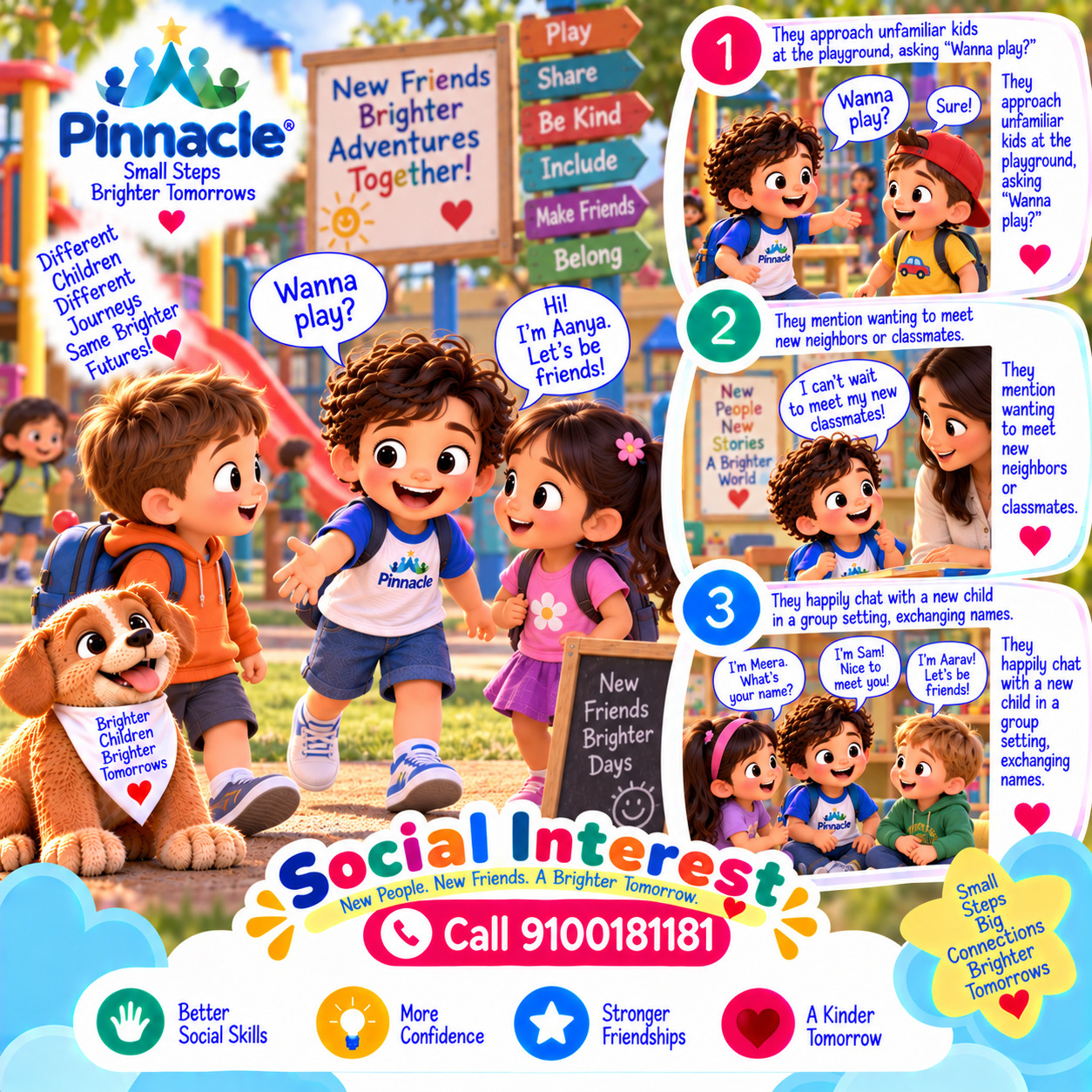
Does the child seem interested in making new friends?
Topic: Social Interest
Example 1
They approach unfamiliar kids at the playground, asking “Wanna play?”
Example 2
They mention wanting to meet new neighbors or classmates.
Example 3
They happily chat with a new child in a group setting, exchanging names.
Example illustrationQuestion illustration
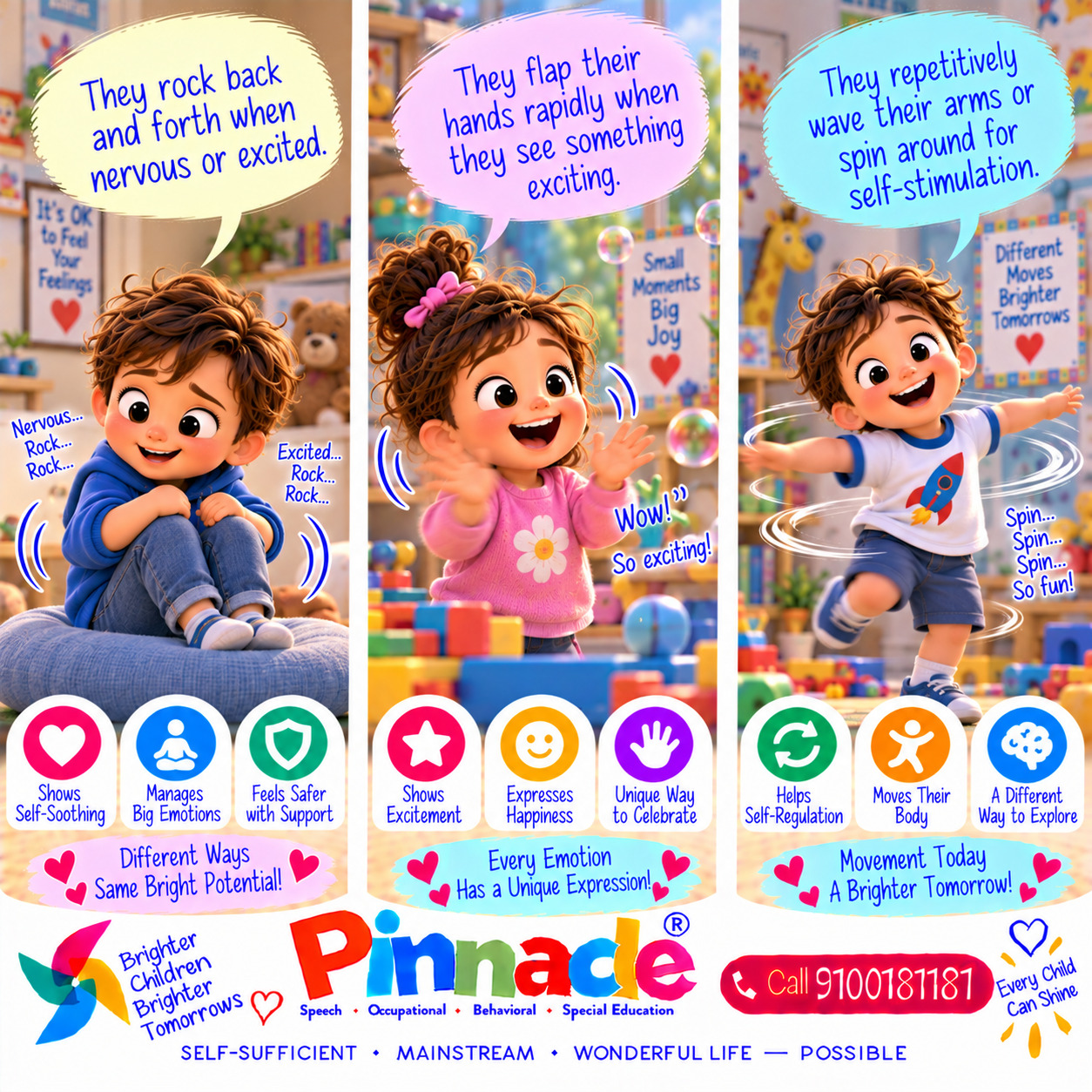
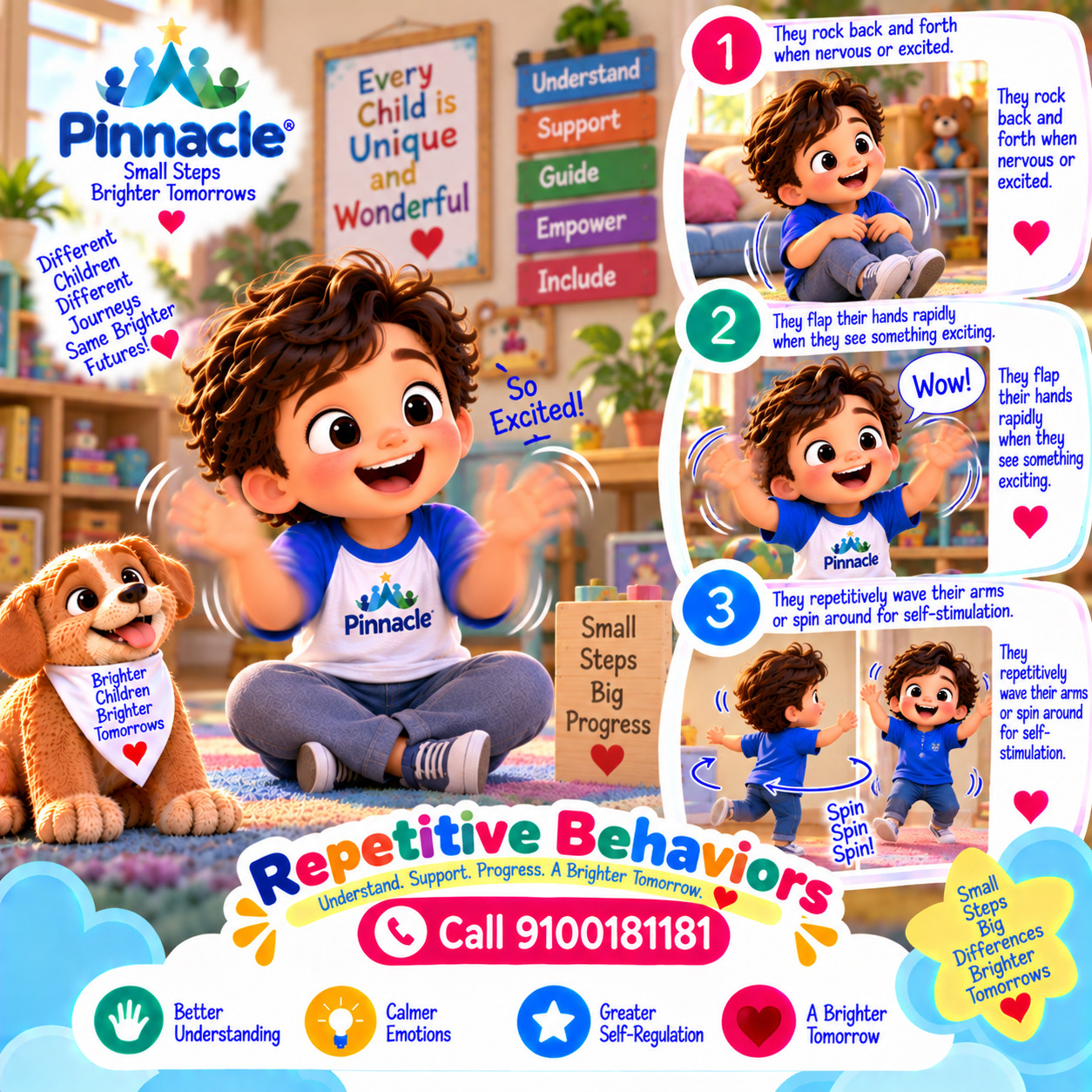
Does the child engage in repetitive body movements (e.g., rocking, hand-flapping)?
Topic: Repetitive Behaviors
Example 1
They rock back and forth when nervous or excited.
Example 2
They flap their hands rapidly when they see something exciting.
Example 3
They repetitively wave their arms or spin around for self-stimulation.
Example illustrationQuestion illustration
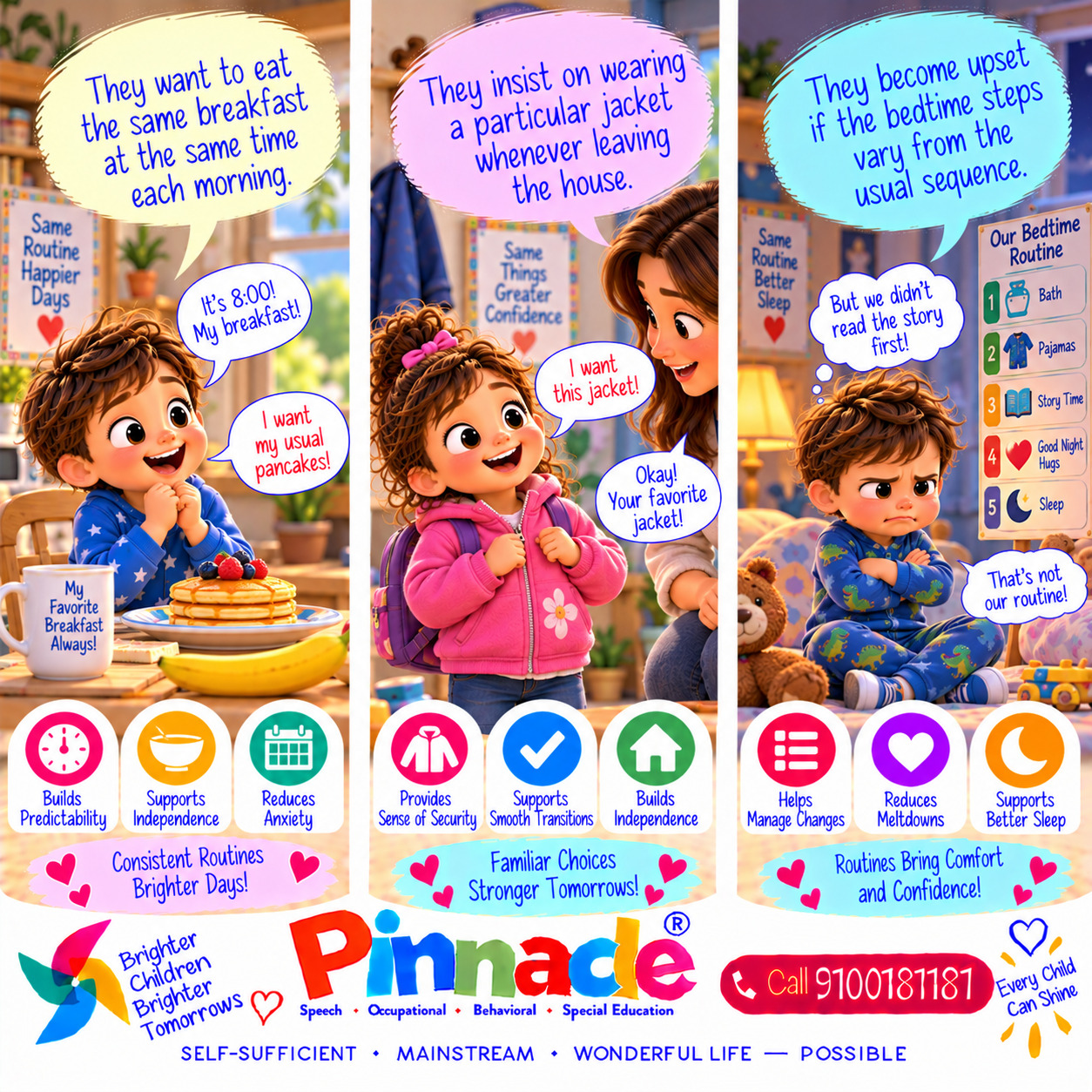
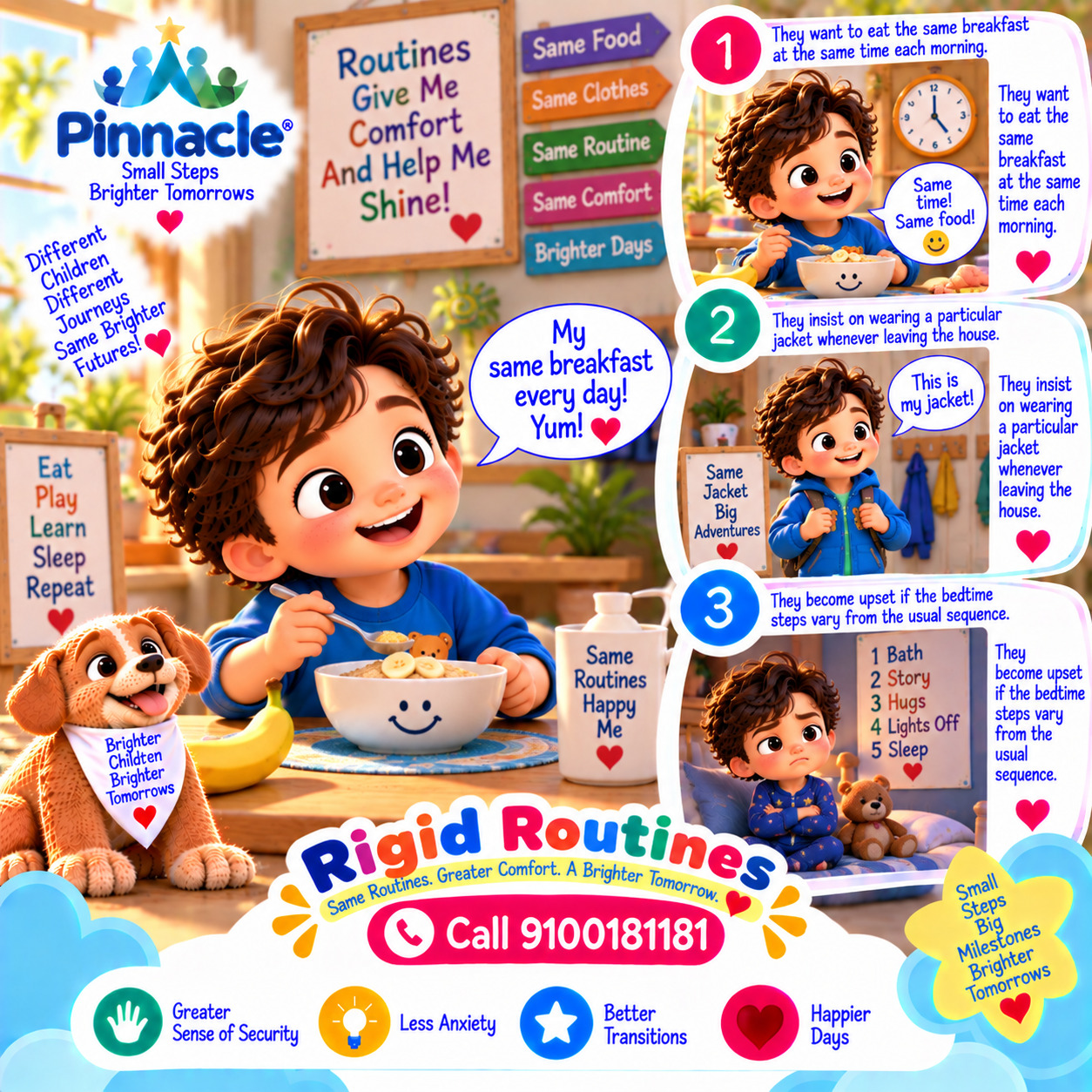
Does the child insist on following the same routines every day?
Topic: Rigid Routines
Example 1
They want to eat the same breakfast at the same time each morning.
Example 2
They insist on wearing a particular jacket whenever leaving the house.
Example 3
They become upset if the bedtime steps vary from the usual sequence.
Example illustrationQuestion illustration
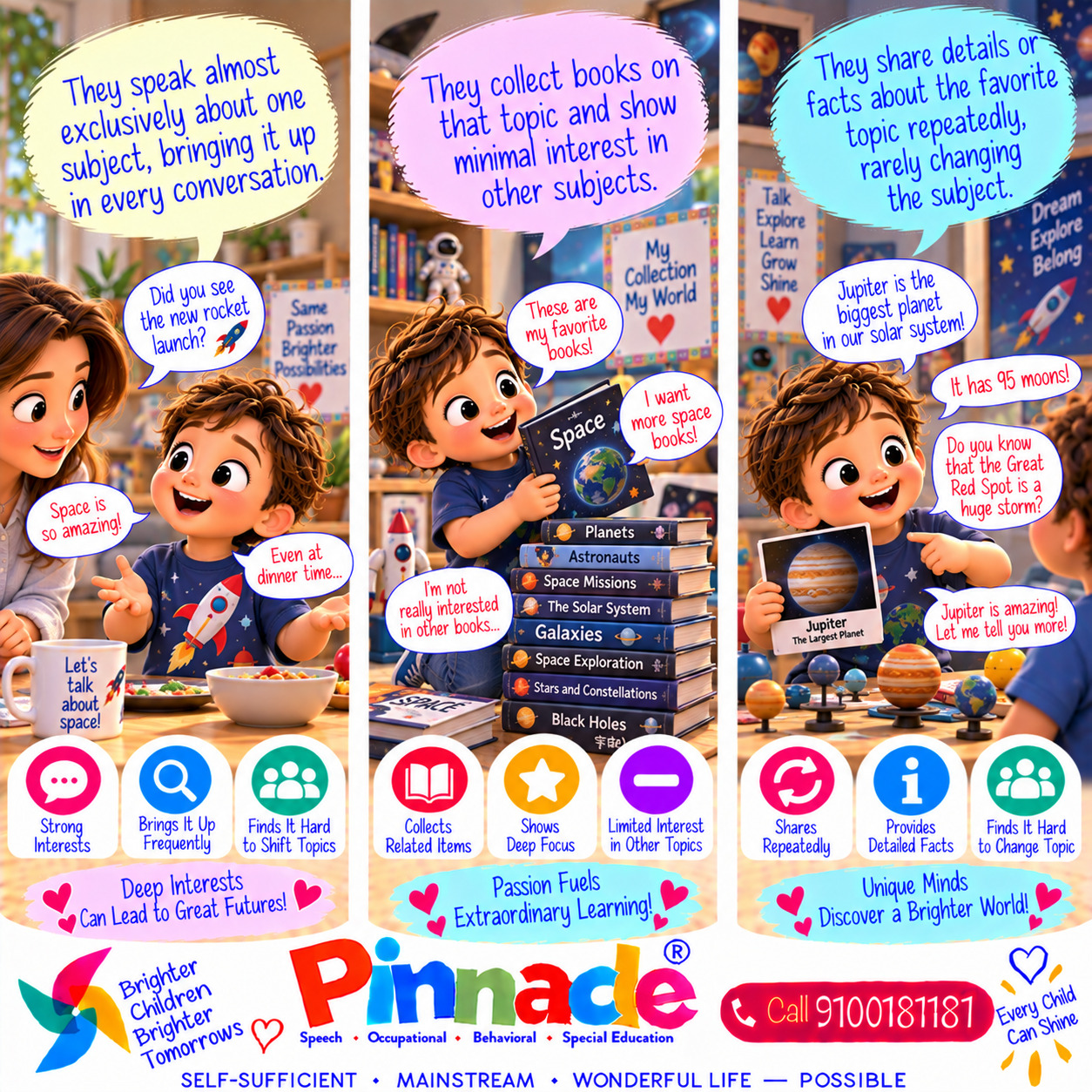
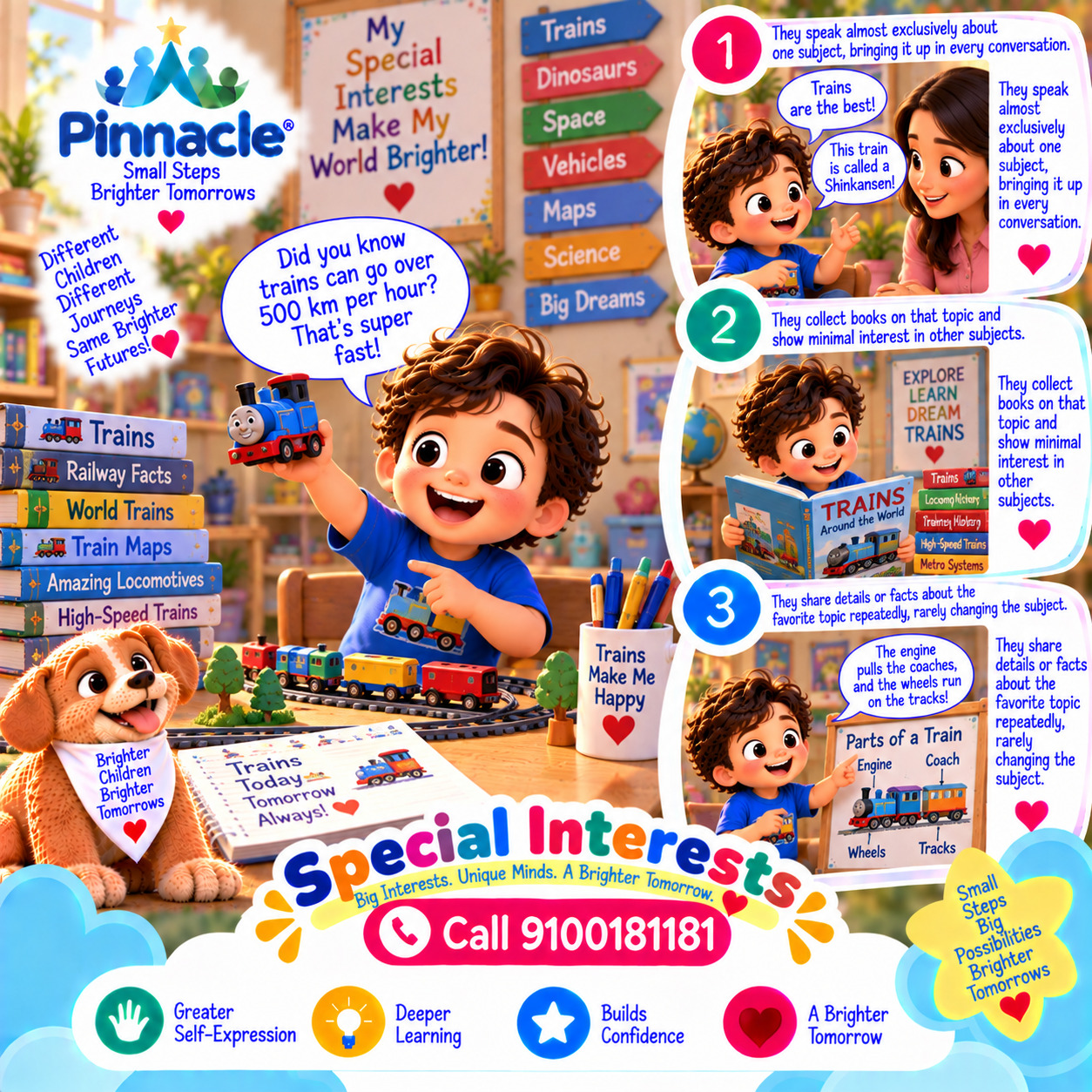
Does the child talk only about specific favorite topics (e.g., trains, dinosaurs)?
Topic: Special Interests
Example 1
They speak almost exclusively about one subject, bringing it up in every conversation.
Example 2
They collect books on that topic and show minimal interest in other subjects.
Example 3
They share details or facts about the favorite topic repeatedly, rarely changing the subject.
Example illustrationQuestion illustration
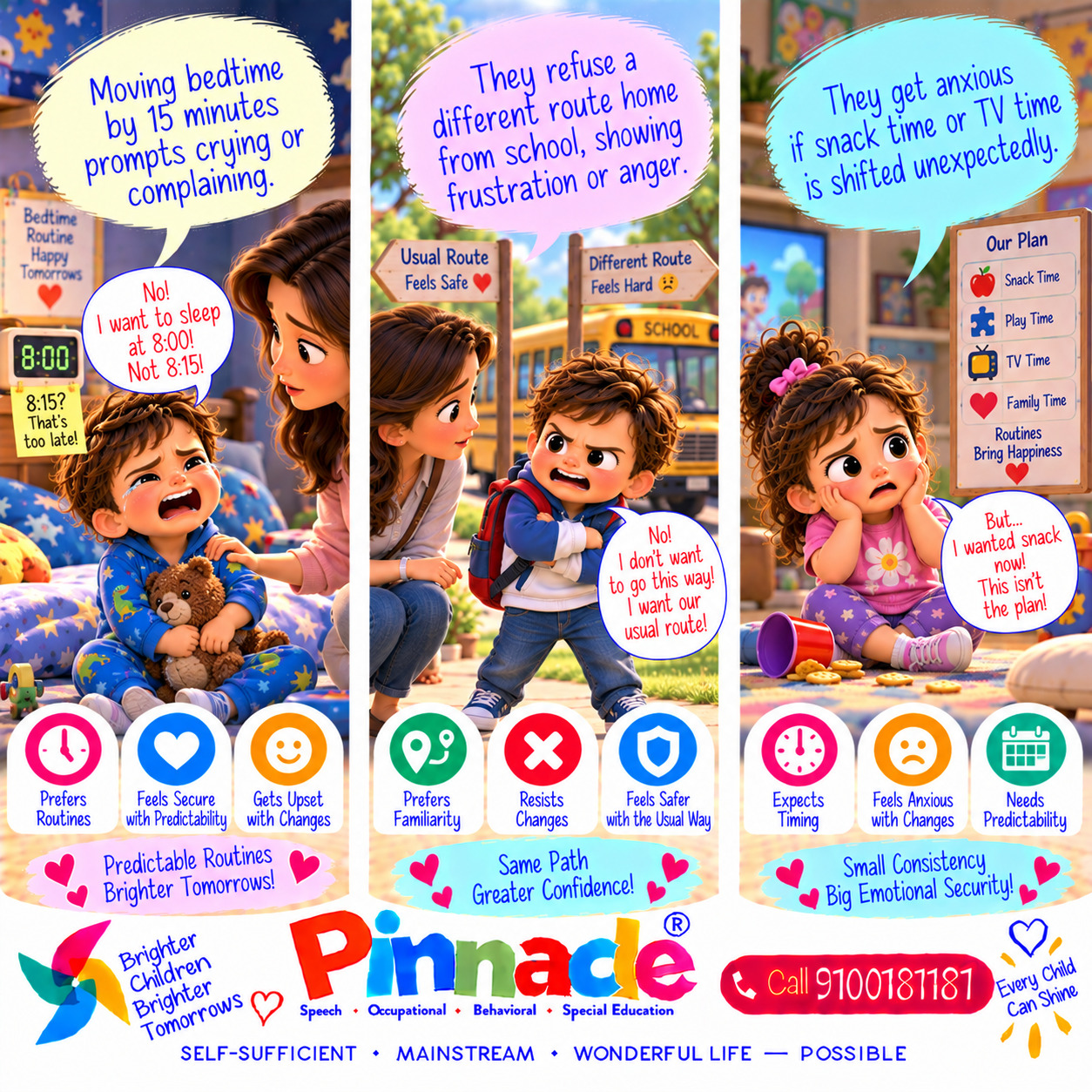
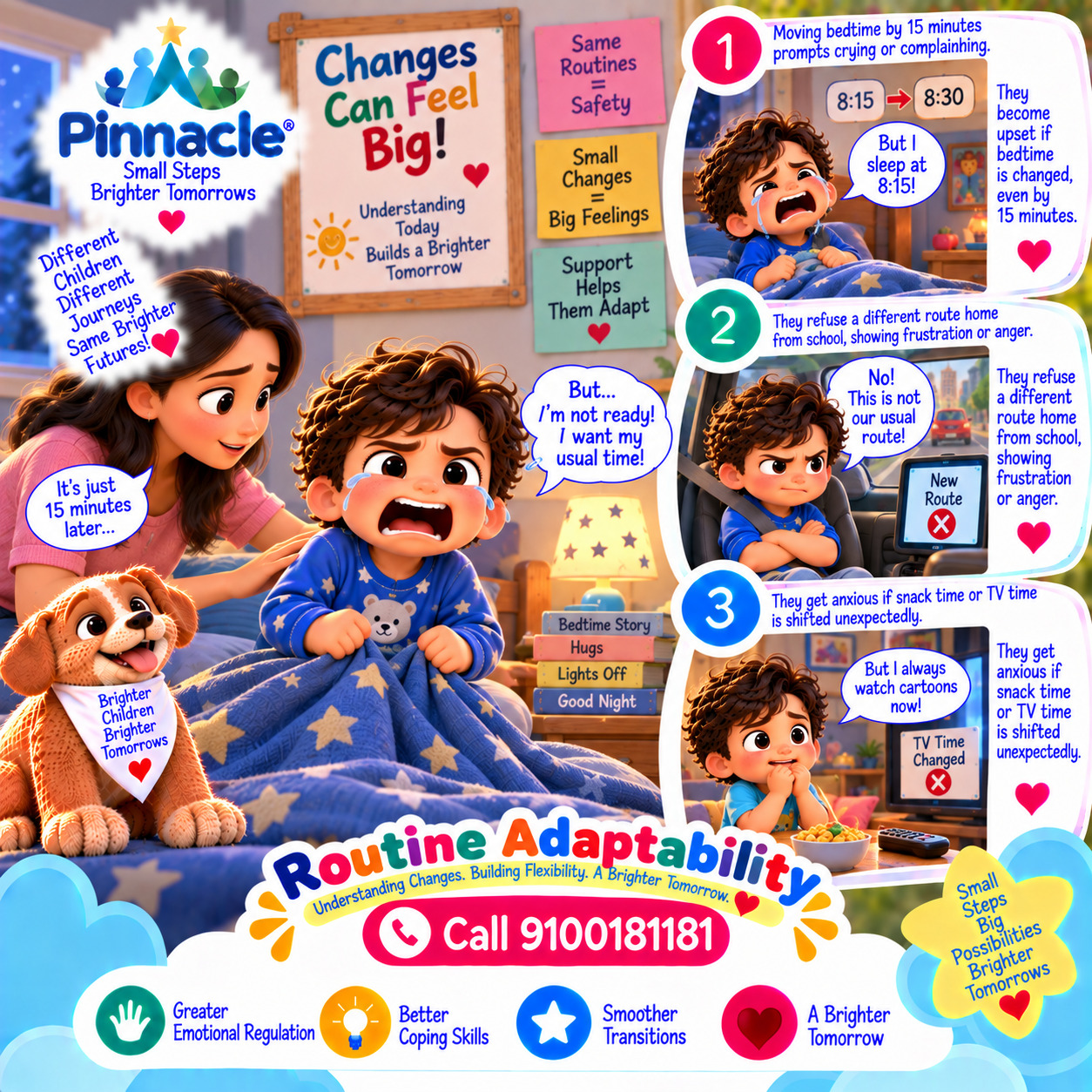
Does the child become upset if routines are changed?
Topic: Routine Adaptability
Example 1
Moving bedtime by 15 minutes prompts crying or complaining.
Example 2
They refuse a different route home from school, showing frustration or anger.
Example 3
They get anxious if snack time or TV time is shifted unexpectedly.
Example illustrationQuestion illustration
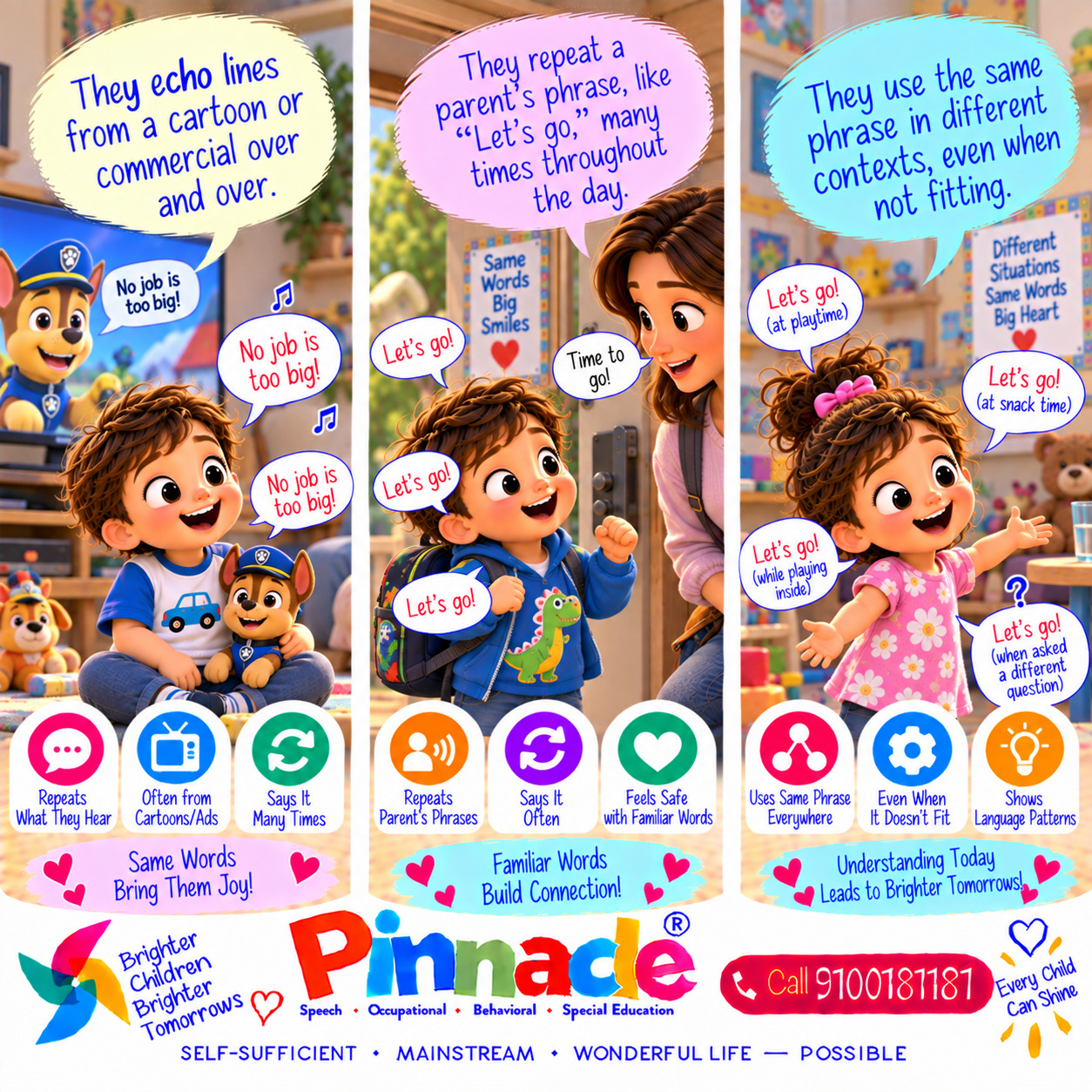
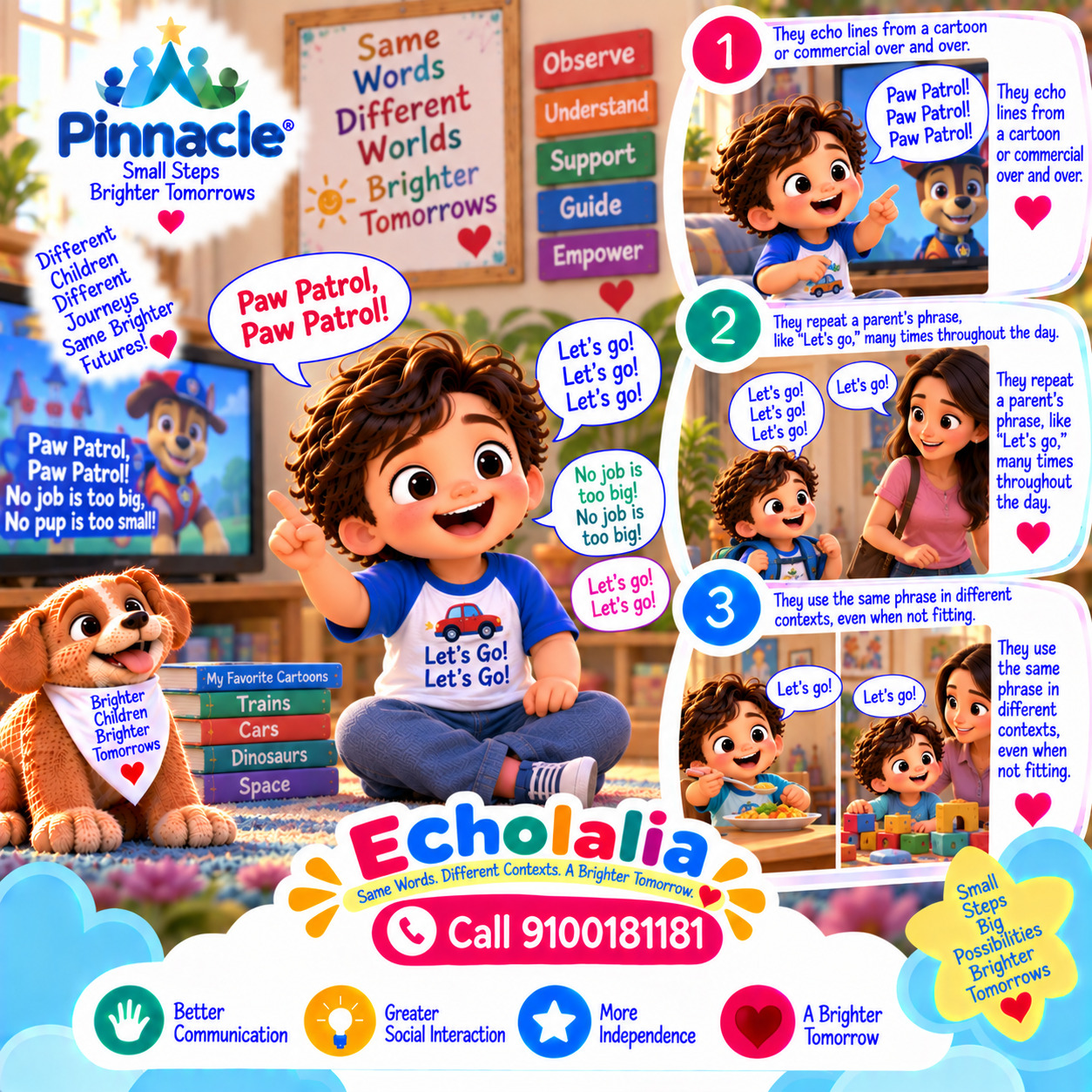
Does the child repeat phrases or words frequently?
Topic: Echolalia
Example 1
They echo lines from a cartoon or commercial over and over.
Example 2
They repeat a parent’s phrase, like “Let’s go,” many times throughout the day.
Example 3
They use the same phrase in different contexts, even when not fitting.
Example illustrationQuestion illustration
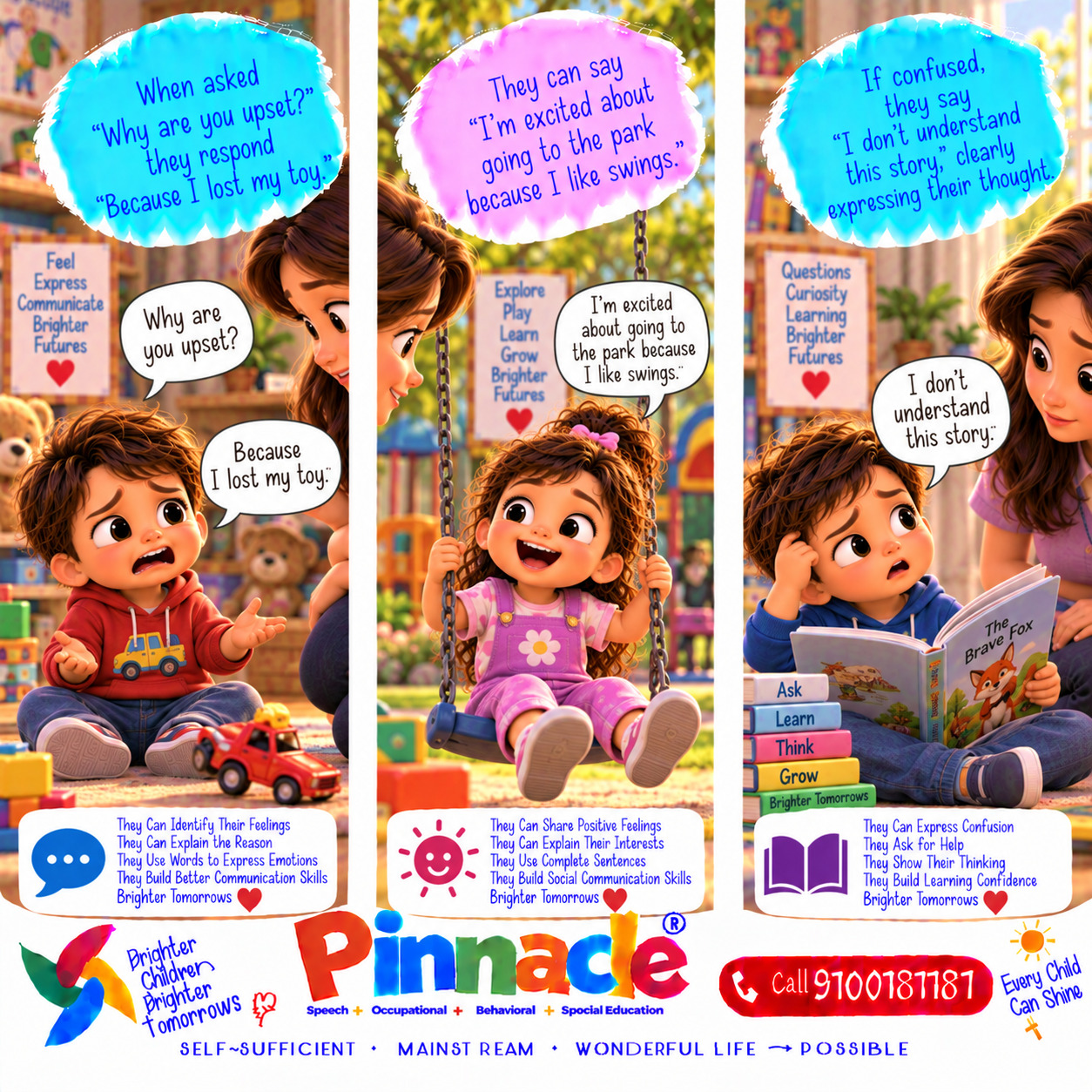
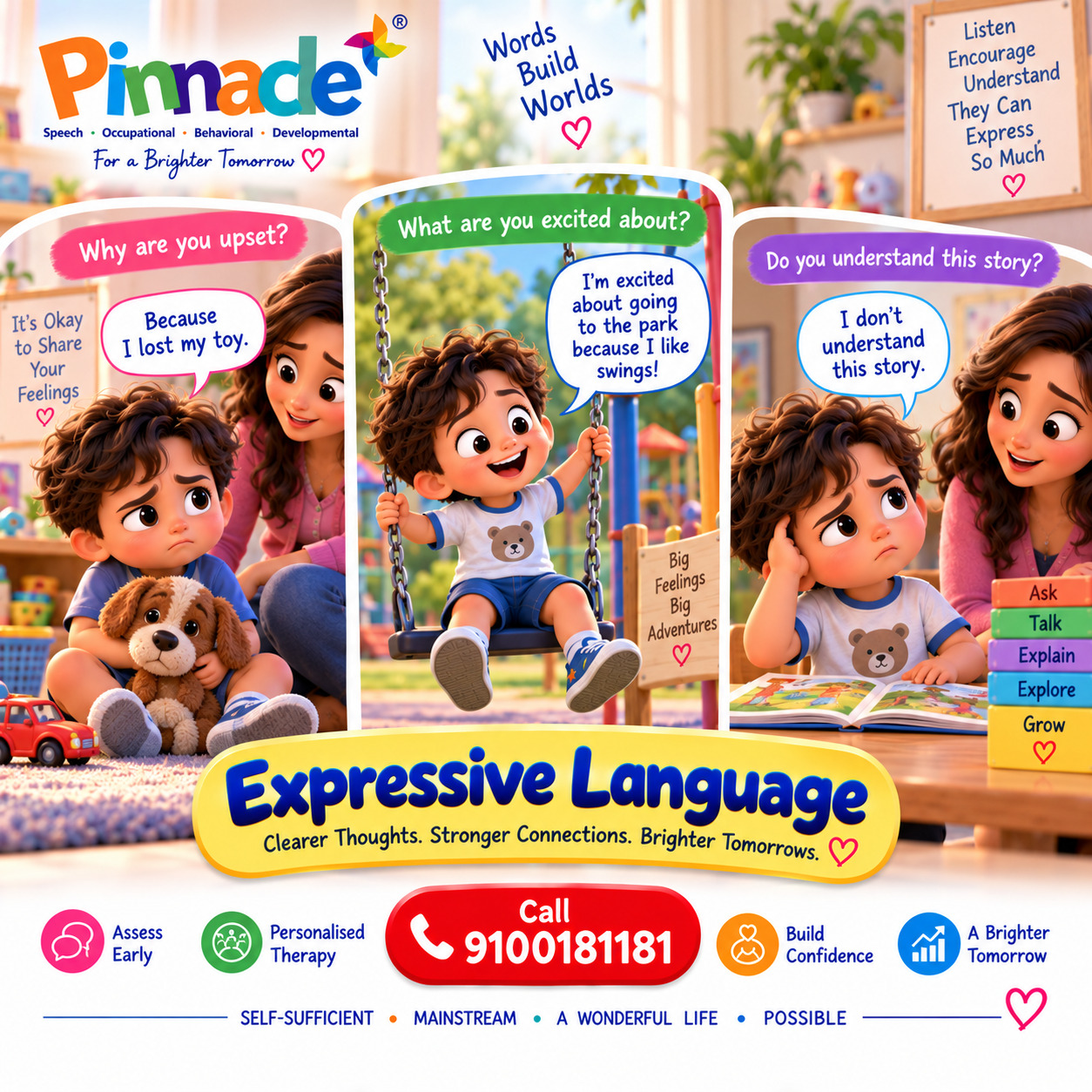
Can the child explain what they are thinking clearly?
Topic: Expressive Language
Example 1
When asked “Why are you upset?” they respond “Because I lost my toy.”
Example 2
They can say “I’m excited about going to the park because I like swings.”
Example 3
If confused, they say “I don’t understand this story,” clearly expressing their thought.
Example illustrationQuestion illustration
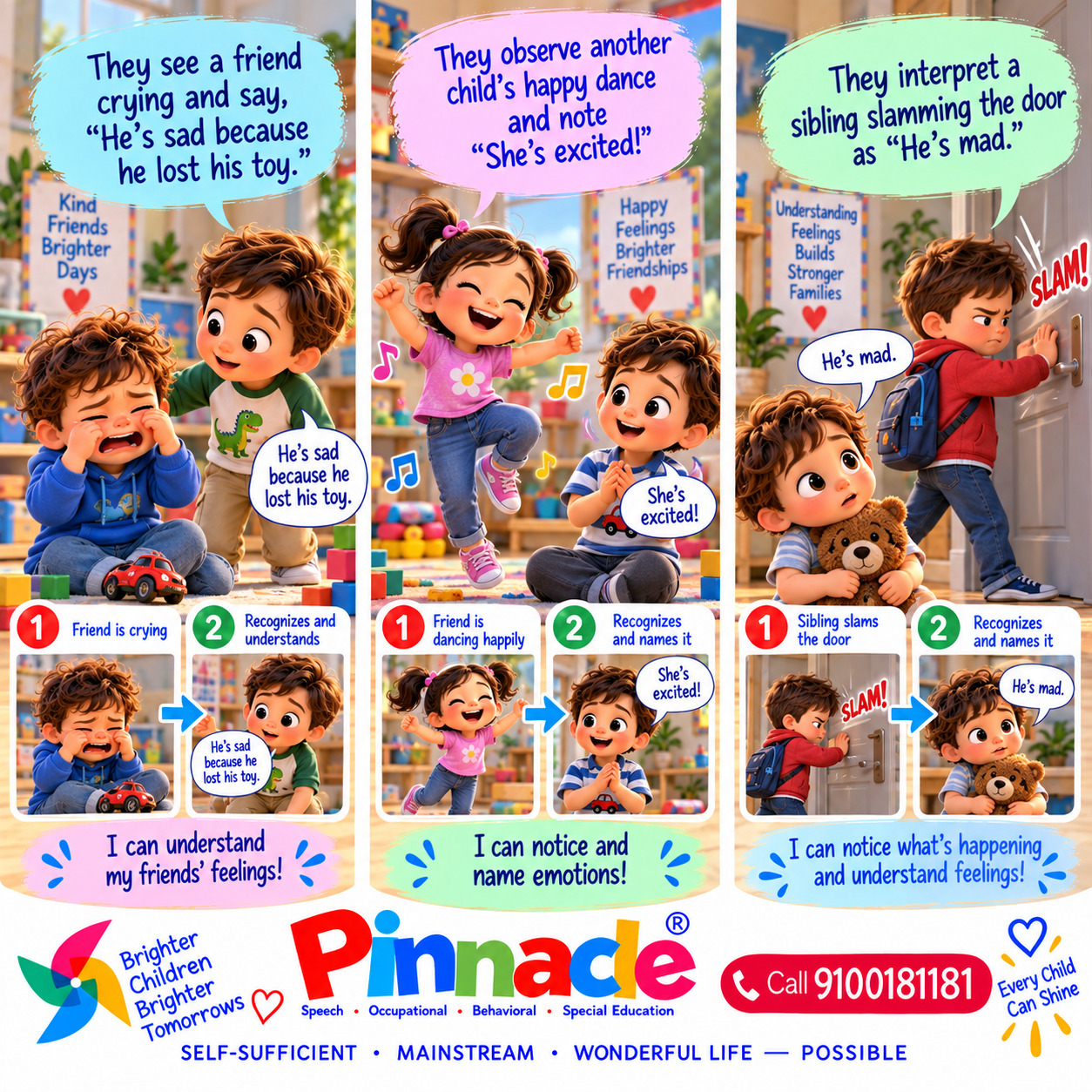
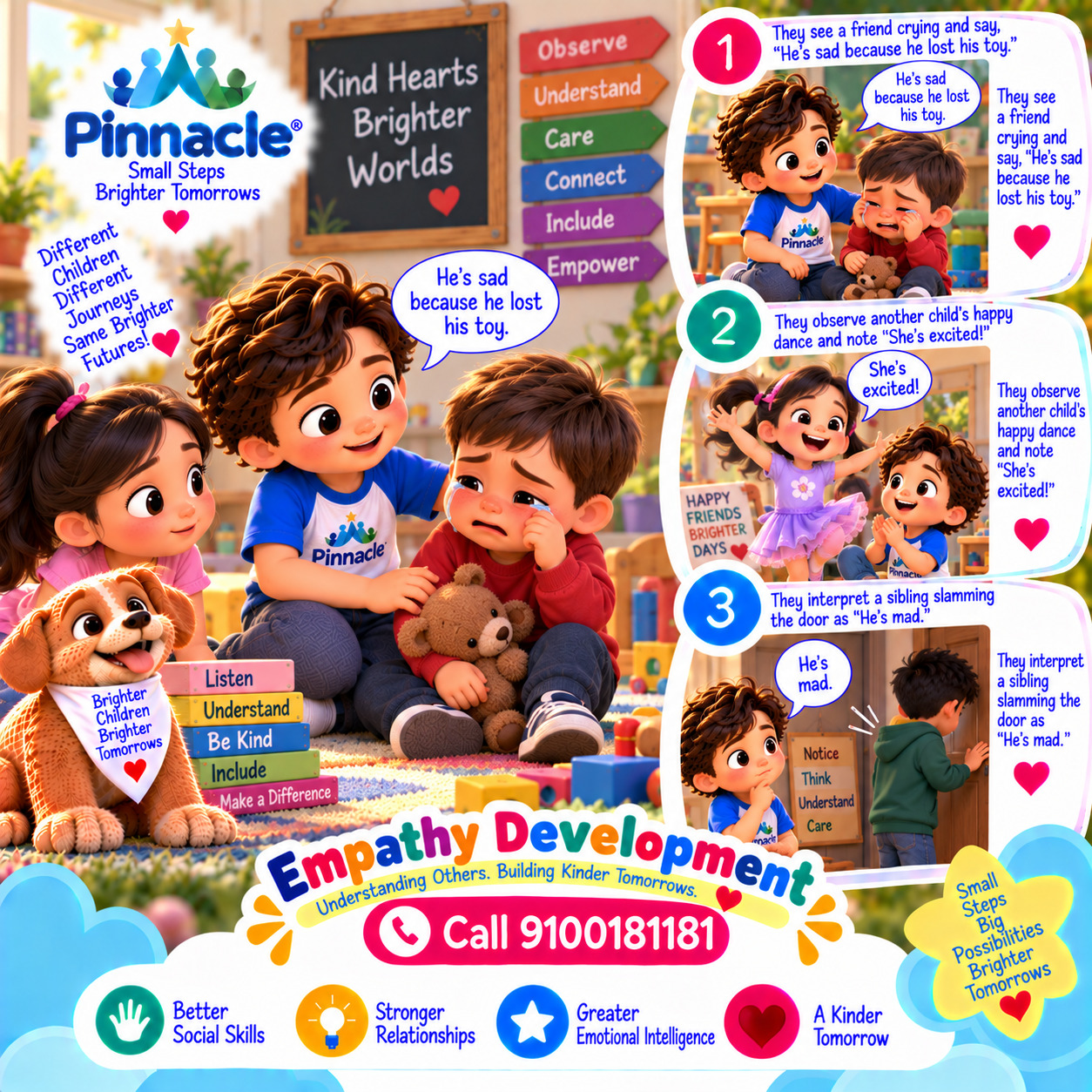
Can the child describe what someone else might be feeling based on their actions?
Topic: Empathy Development
Example 1
They see a friend crying and say, “He’s sad because he lost his toy.”
Example 2
They observe another child’s happy dance and note “She’s excited!”
Example 3
They interpret a sibling slamming the door as “He’s mad.”