Meera, a delightful 3-year-old girl from Chennai, was often overwhelmed by loud sounds and certain textures. Her parents, worried and searching for answers, brought her to Pinnacle Blooms Network. Through a comprehensive assessment using the Dunn’s Sensory Profile-2, our therapists unraveled Meera''s sensory sensitivities. Today, Meera enjoys participating in group activities with improved comfort and confidence, bringing smiles to her family.
Progress : Significant improvements in sensory processing and social interaction.
Unlock your child''s potential with Pinnacle Blooms Network. Our cutting-edge assessments bring clarity and hope for a brighter future. Contact us: 9100 181 181.
*Names are indicative only and have been changed for privacy protectionSuccess Testimonial
Name : Priya
RelationShip : Mother
Testimonial : Pinnacle Blooms Network has been a lifesaver for our family. Aarav has progressed beyond our expectations, and we are forever grateful for their dedicated support and expertise.
Testimonial : Choosing Pinnacle Blooms Network was the best decision for Krishna. He has made incredible progress, and their comprehensive approach has truly made a difference.
These are reference questions and illustrative examples. This section does not collect child responses, calculate scores or produce an individual assessment result.
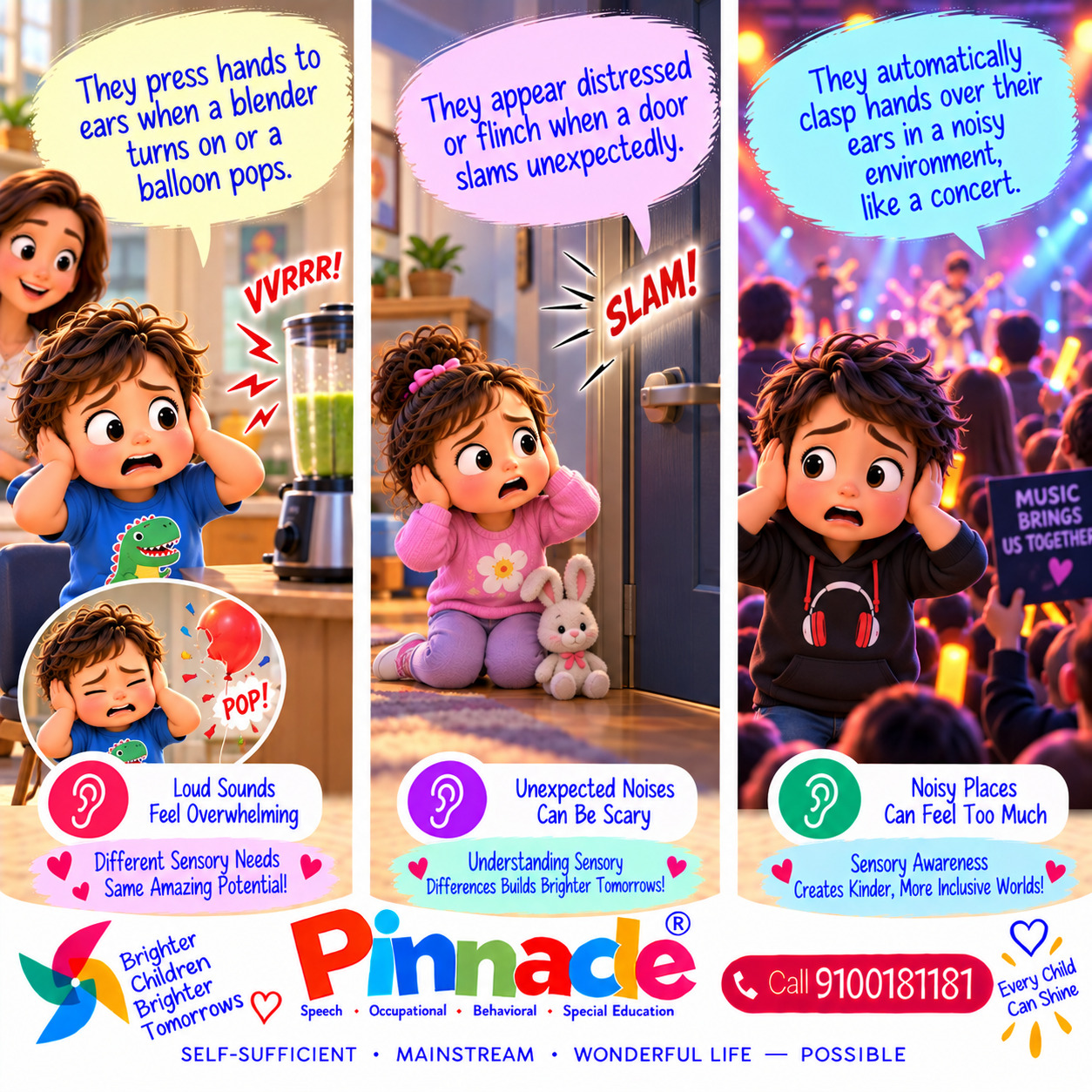
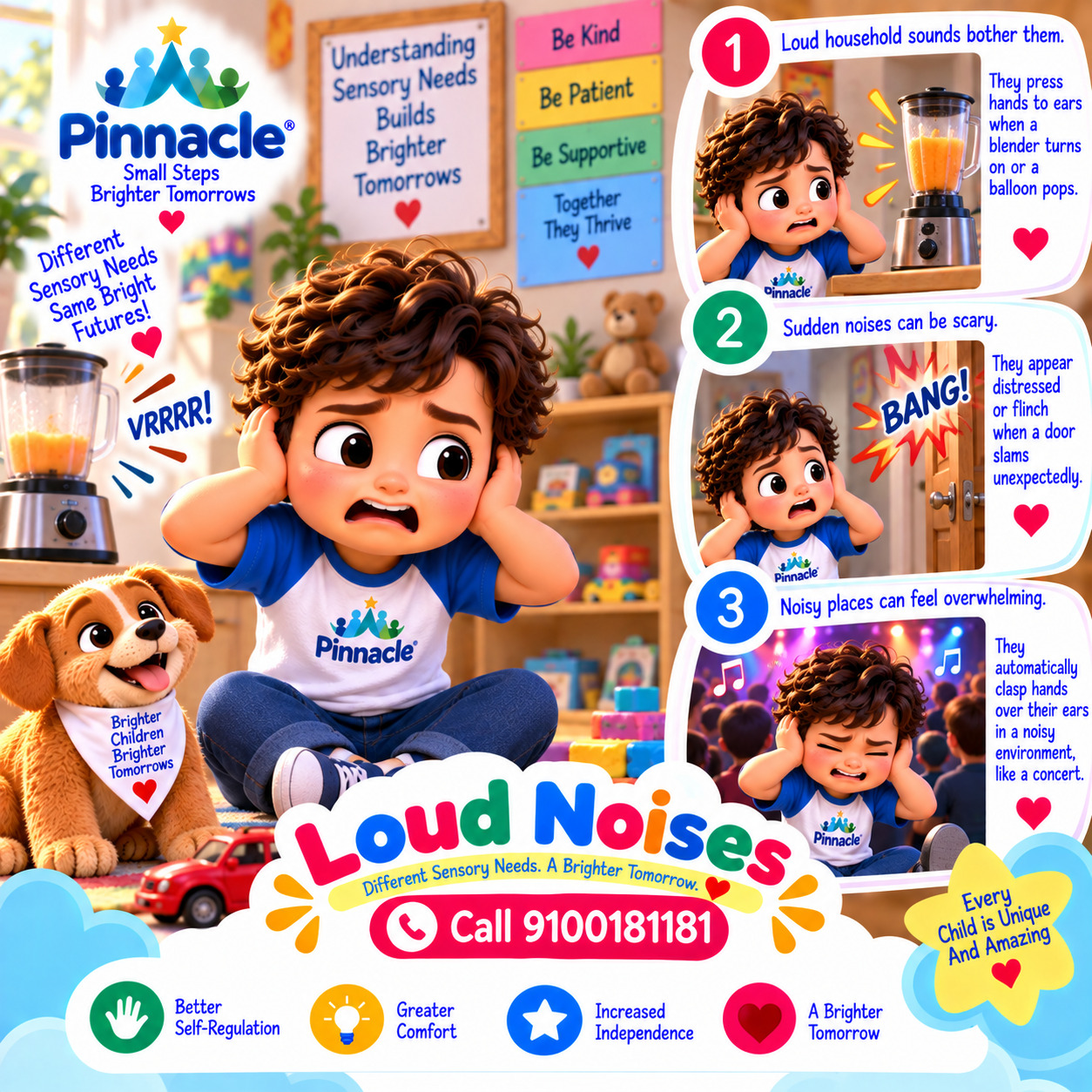
Does the child cover their ears in response to loud or sudden sounds?
Topic: Loud Noises
Example 1
They press hands to ears when a blender turns on or a balloon pops.
Example 2
They appear distressed or flinch when a door slams unexpectedly.
Example 3
They automatically clasp hands over their ears in a noisy environment, like a concert.
Example illustrationQuestion illustration
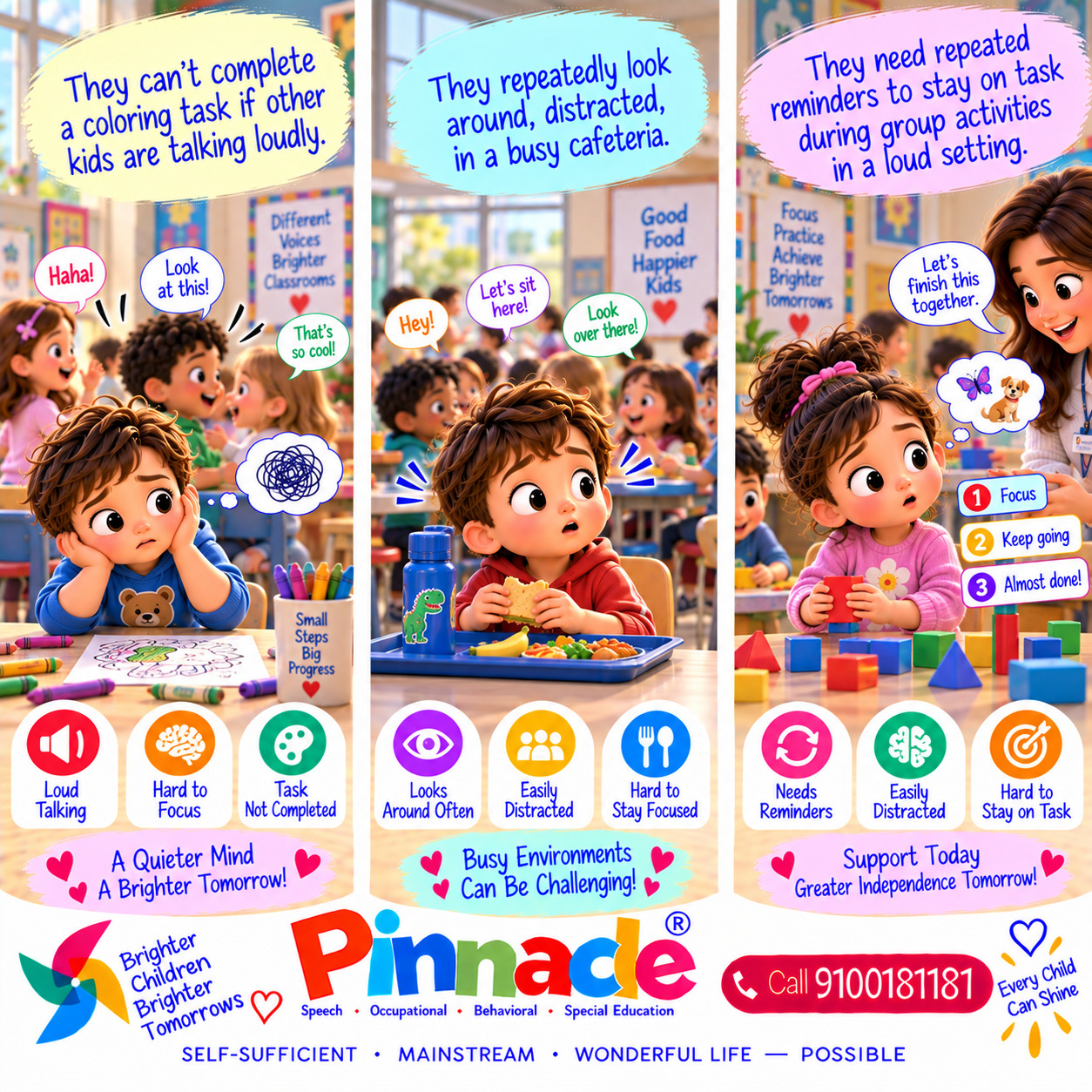
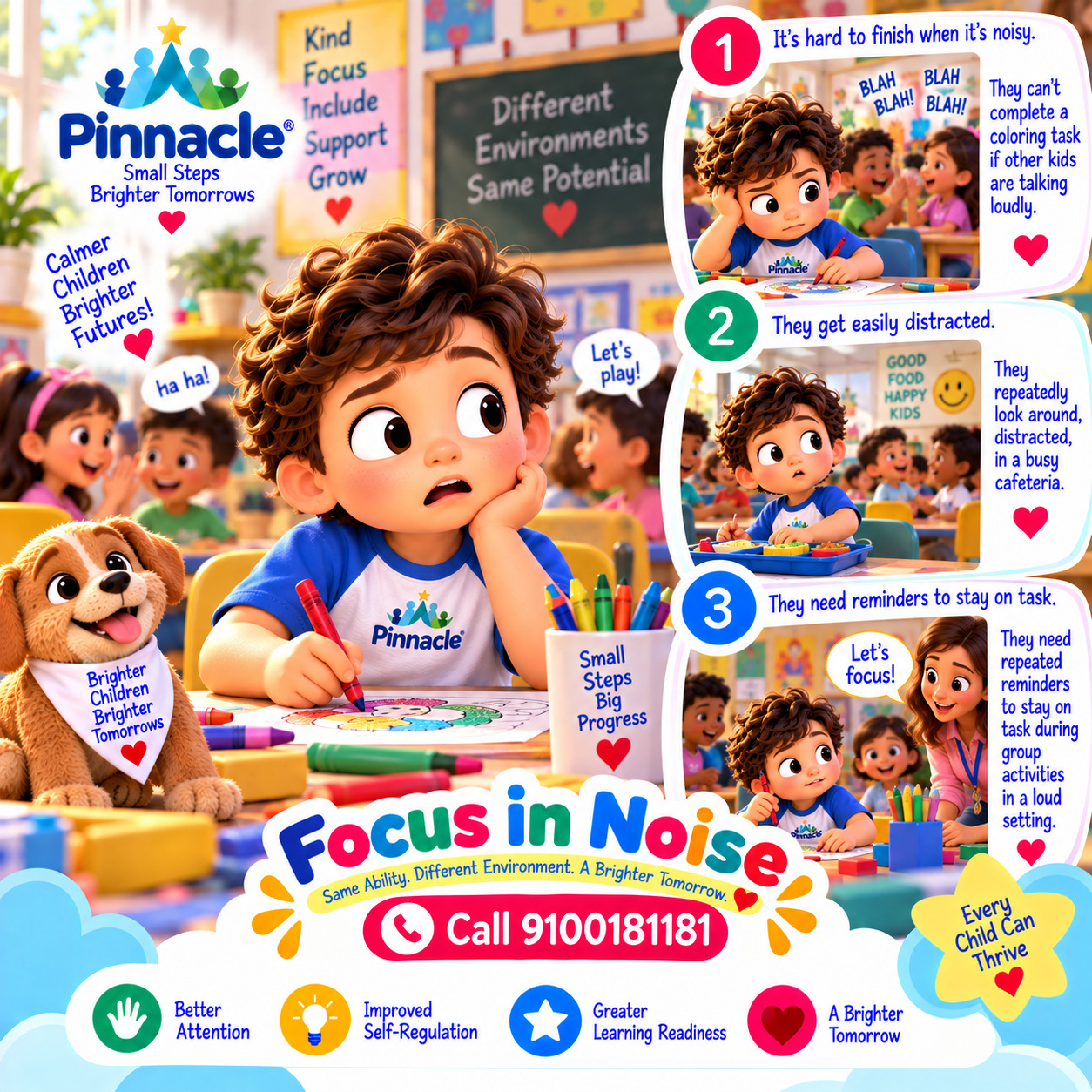
Does the child have trouble focusing in noisy environments (e.g., classroom, playground)?
Topic: Focus in Noise
Example 1
They can’t complete a coloring task if other kids are talking loudly.
Example 2
They repeatedly look around, distracted, in a busy cafeteria.
Example 3
They need repeated reminders to stay on task during group activities in a loud setting.
Example illustrationQuestion illustration
Does the child avoid or seem distracted by background noise (e.g., fans, traffic)?
Topic: Distraction by Noise
Example 1
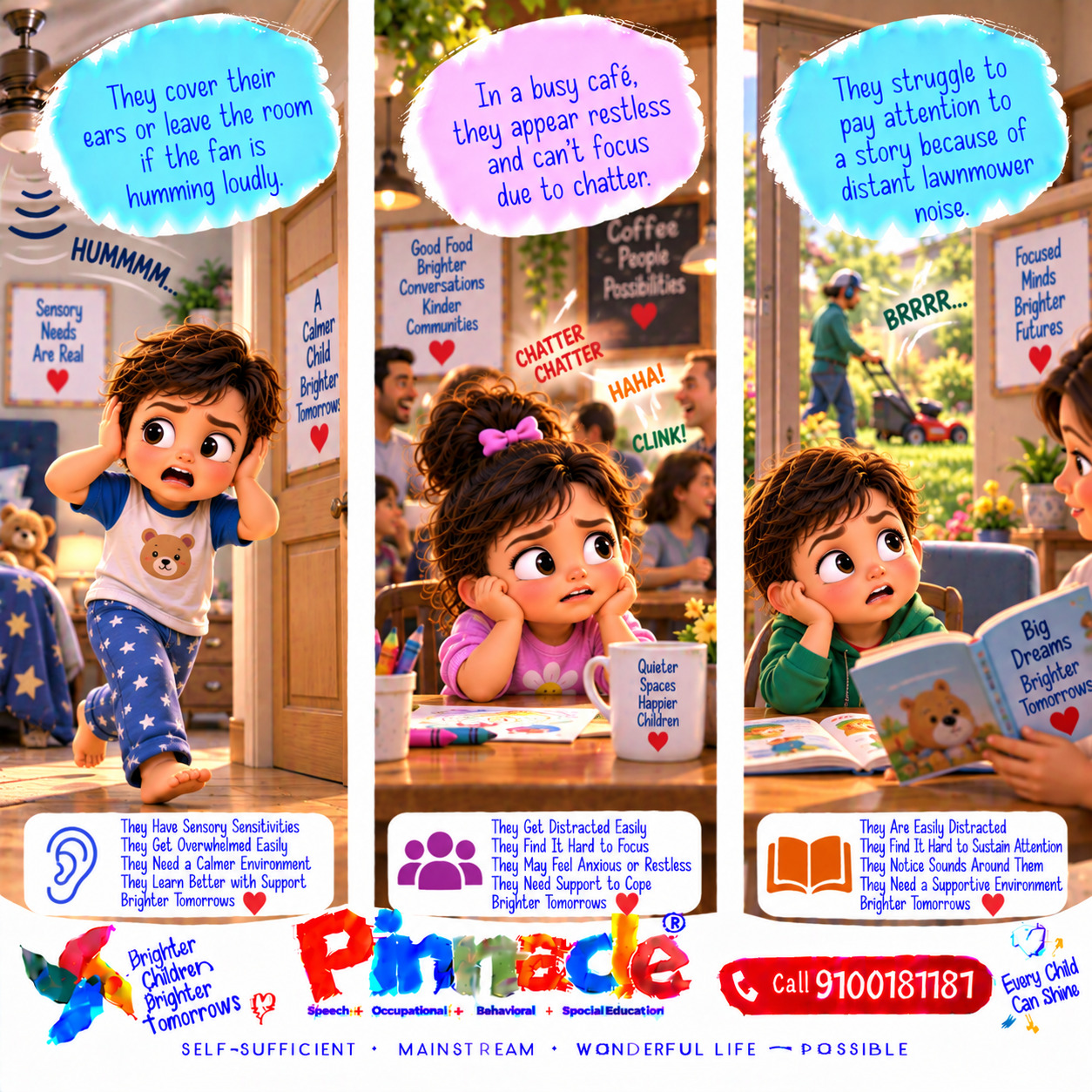
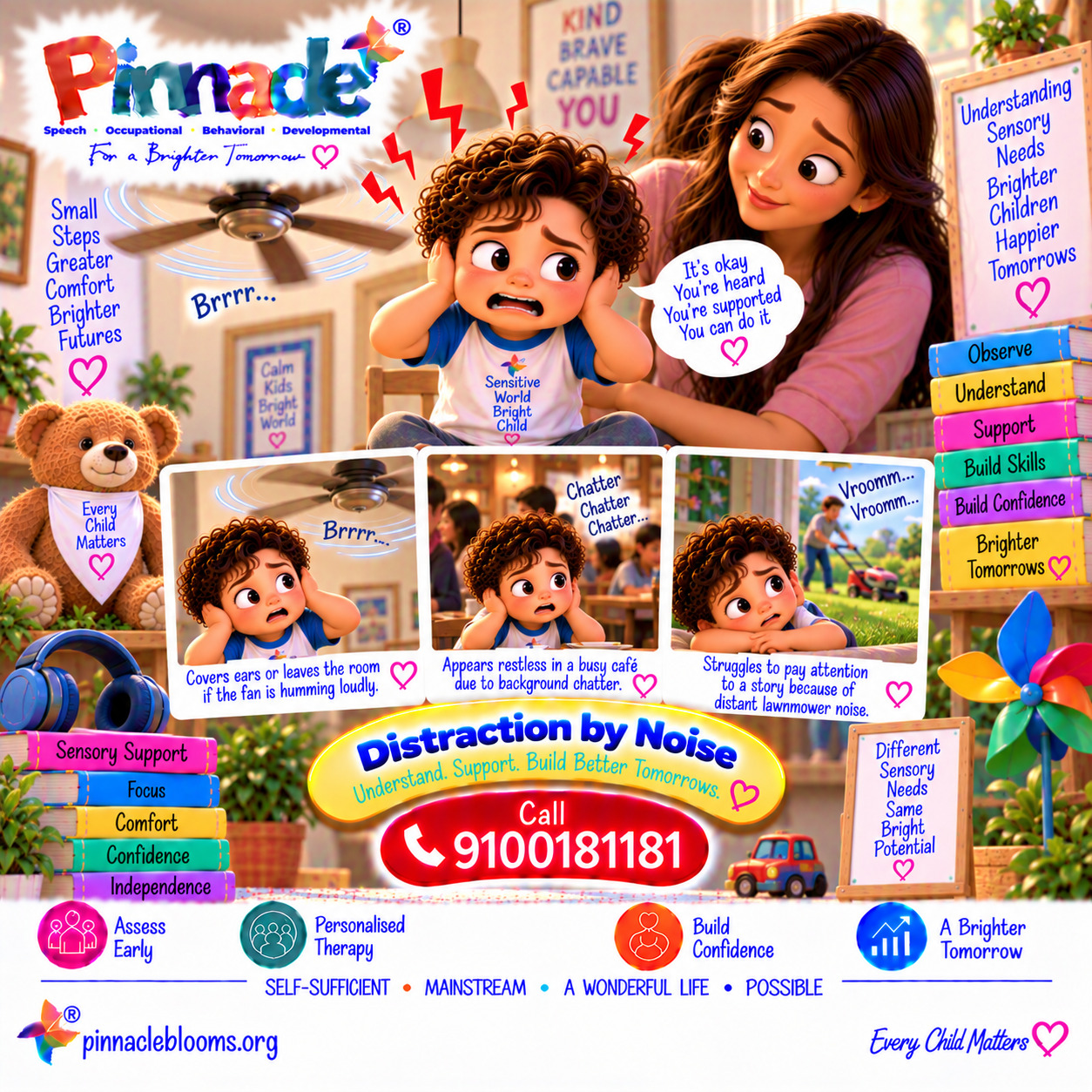
They cover their ears or leave the room if the fan is humming loudly.
Example 2
In a busy café, they appear restless and can’t focus due to chatter.
Example 3
They struggle to pay attention to a story because of distant lawnmower noise.
Example illustrationQuestion illustration
Does the child respond to their name when called in a noisy environment?
Topic: Response to Name
Example 1
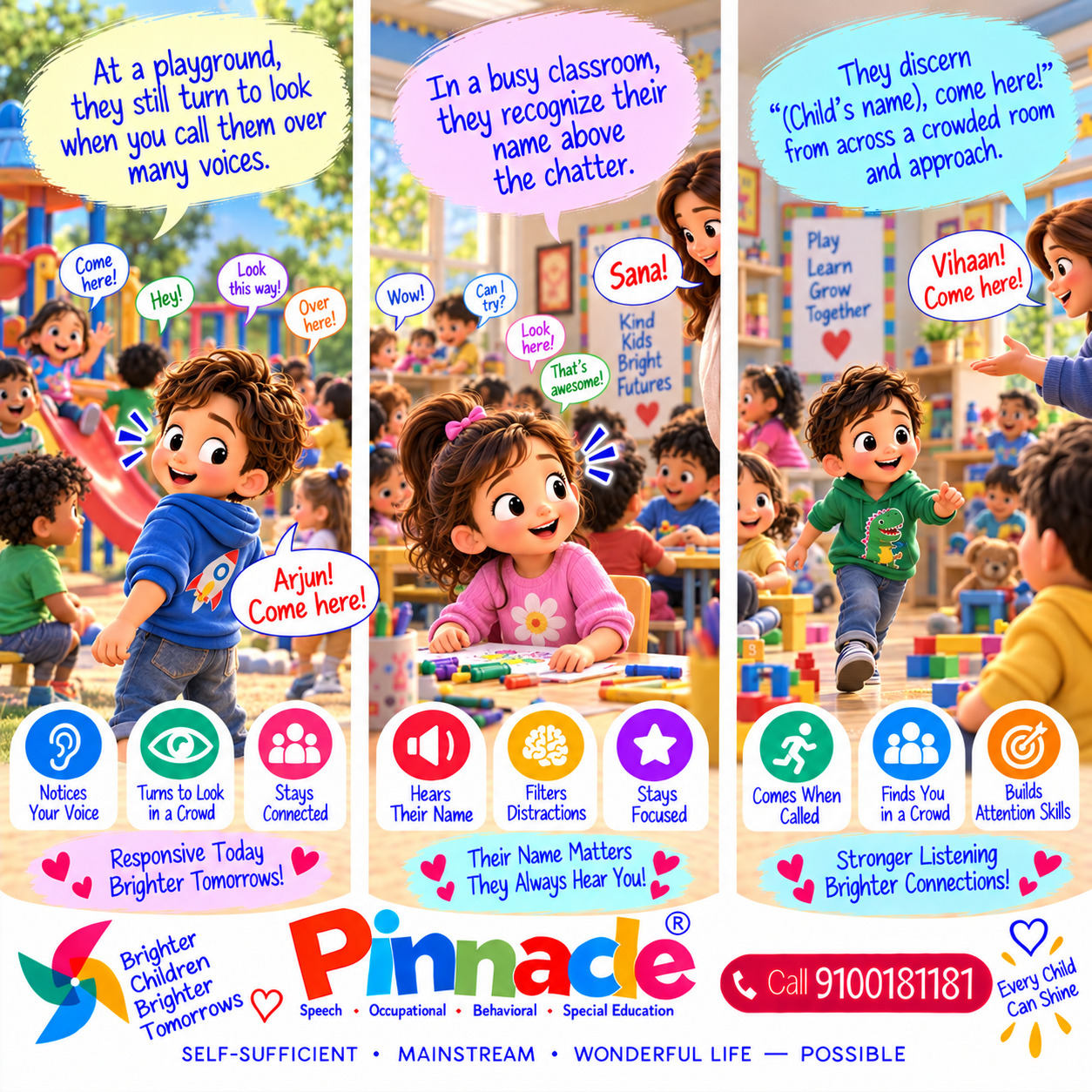
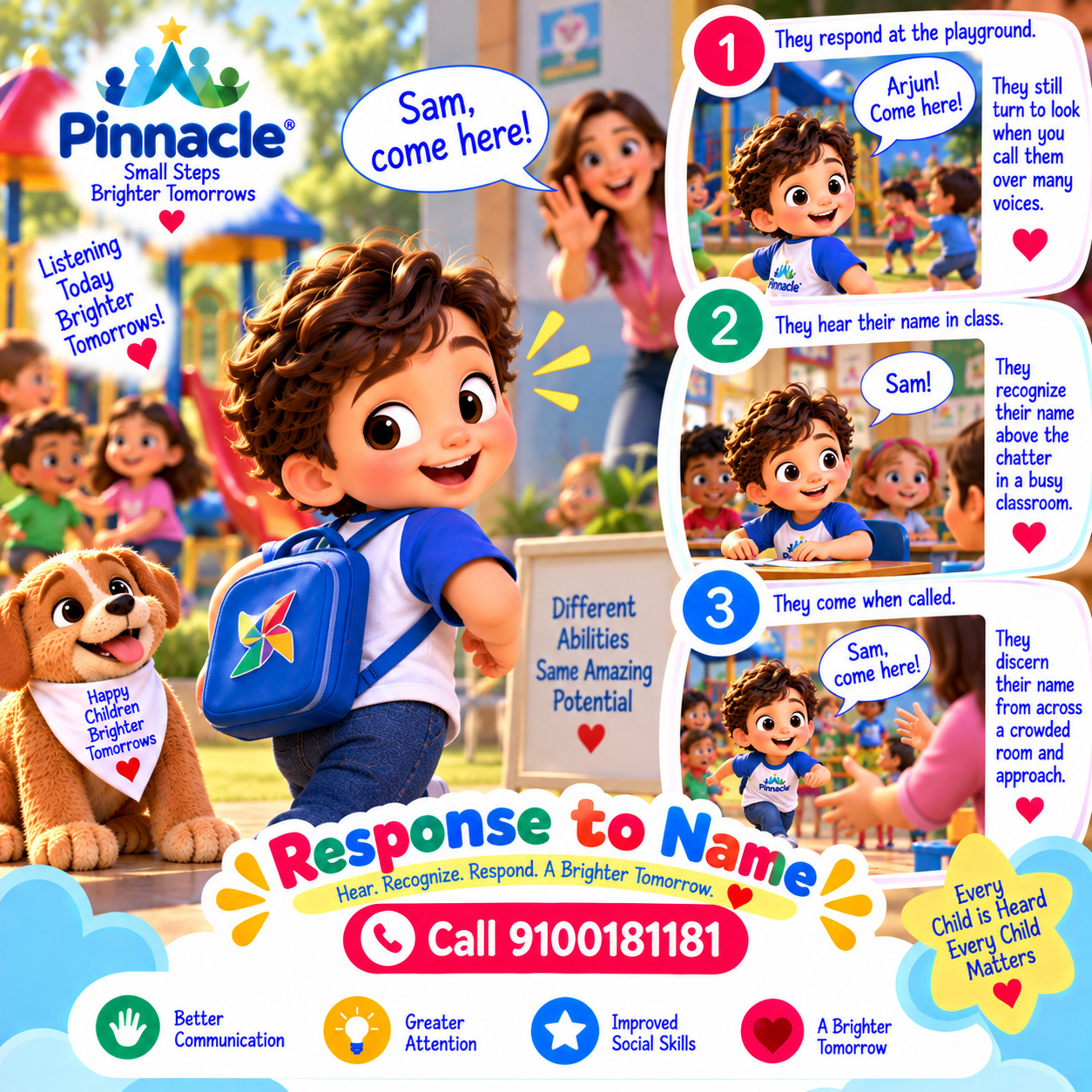
At a playground, they still turn to look when you call them over many voices.
Example 2
In a busy classroom, they recognize their name above the chatter.
Example 3
They discern “(Child’s name), come here!” from across a crowded room and approach.
Example illustrationQuestion illustration
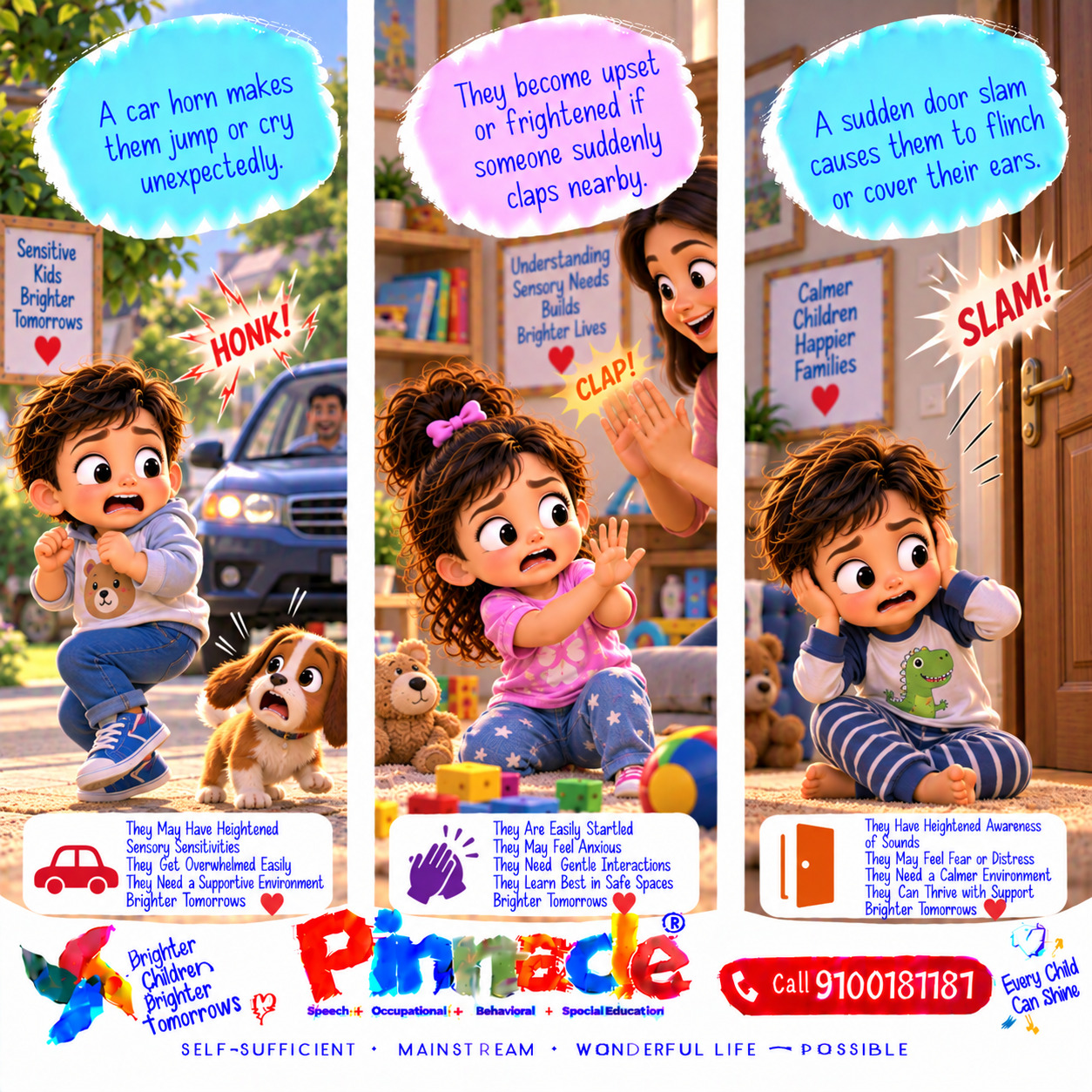
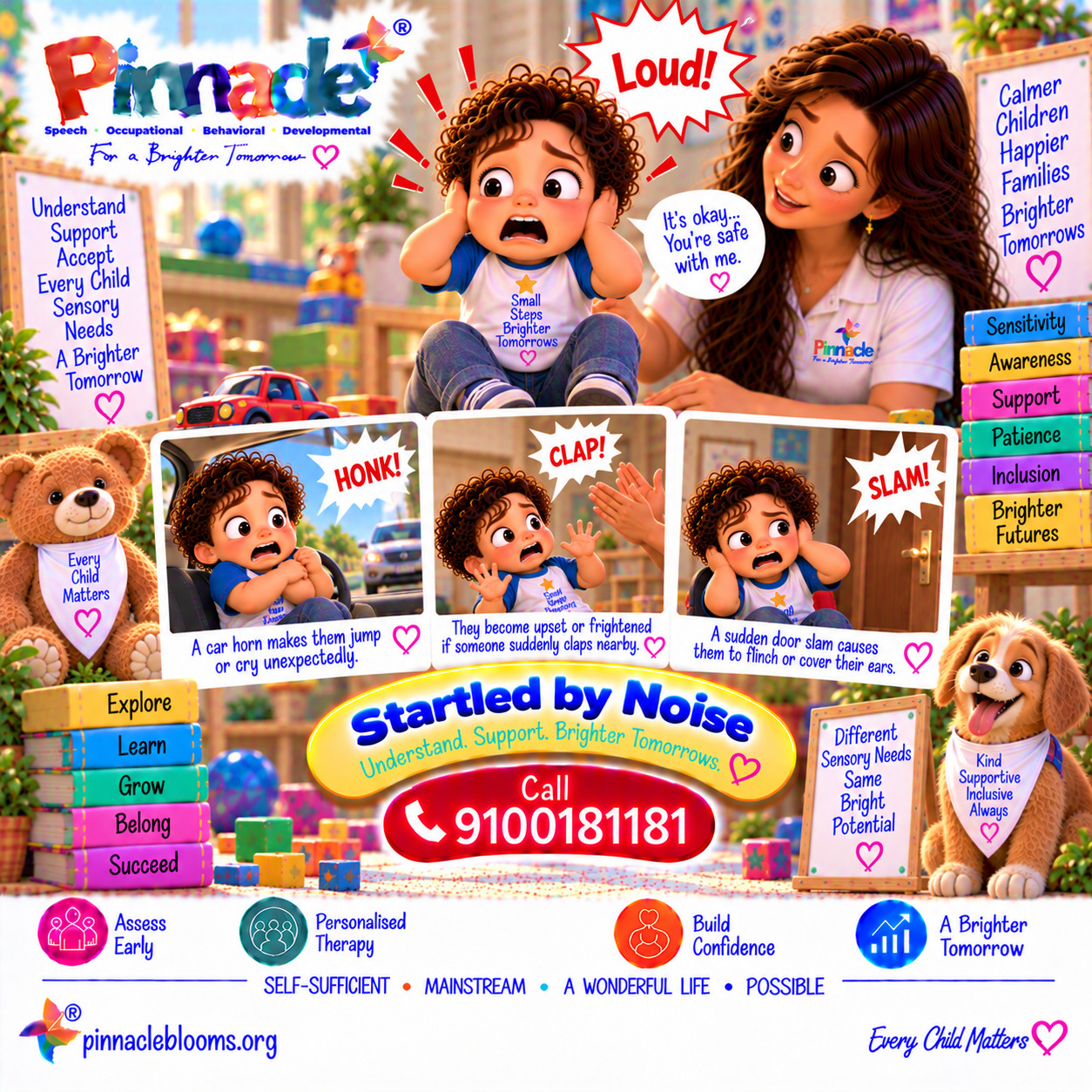
Does the child seem startled by sudden loud noises (e.g., clapping, alarms)?
Topic: Startled by Noise
Example 1
A car horn makes them jump or cry unexpectedly.
Example 2
They become upset or frightened if someone suddenly claps nearby.
Example 3
A sudden door slam causes them to flinch or cover their ears.
Example illustrationQuestion illustration
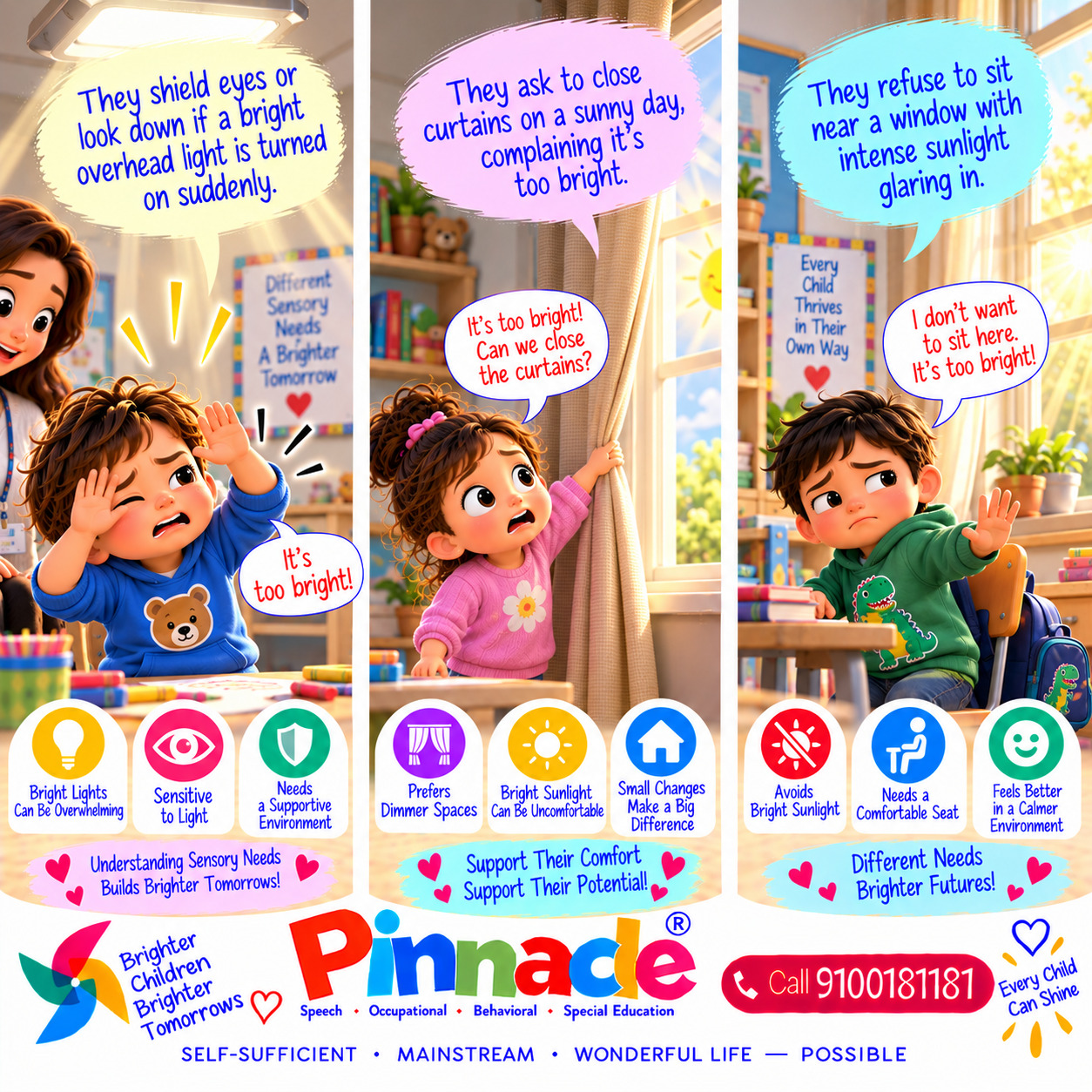
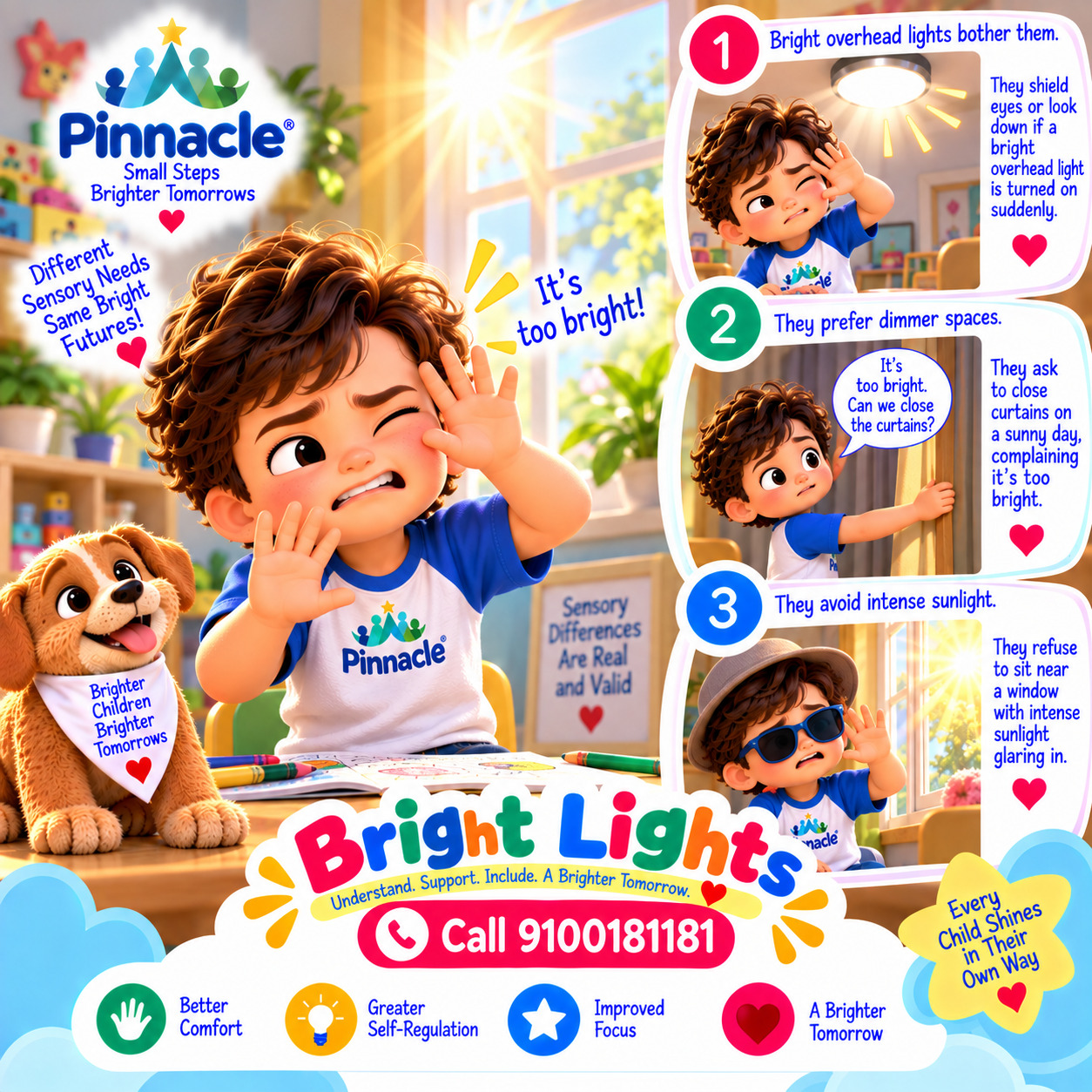
Does the child squint, turn away, or avoid bright lights?
Topic: Bright Lights
Example 1
They shield eyes or look down if a bright overhead light is turned on suddenly.
Example 2
They ask to close curtains on a sunny day, complaining it’s too bright.
Example 3
They refuse to sit near a window with intense sunlight glaring in.
Example illustrationQuestion illustration
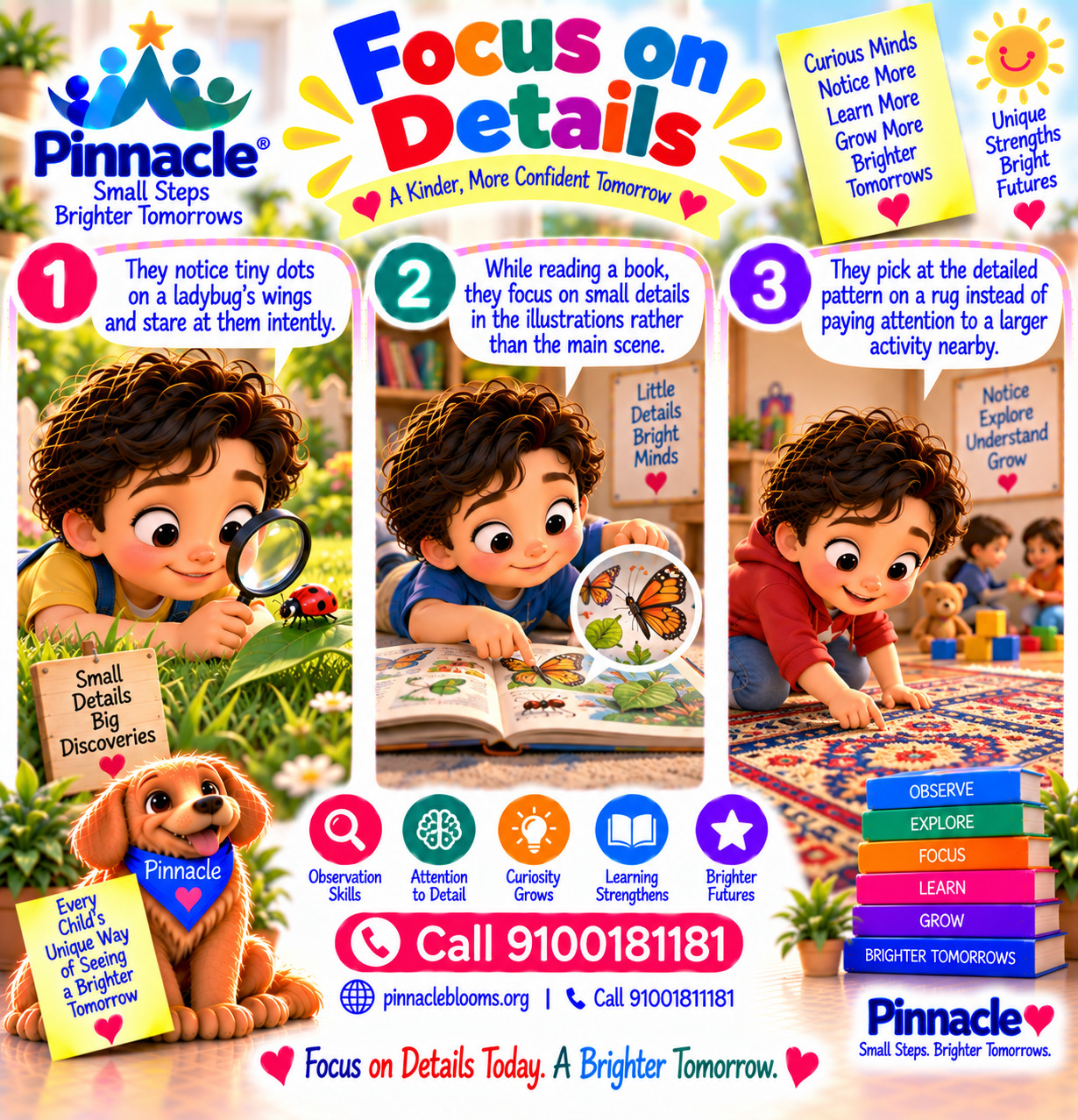
Does the child focus on small details in objects or pictures (e.g., patterns, tiny objects)?
Topic: Focus on Details
Example 1
They notice tiny dots on a ladybug’s wings and stare at them intently.
Example 2
While reading a book, they focus on small details in the illustrations rather than the main scene.
Example 3
They pick at the detailed pattern on a rug instead of paying attention to a larger activity nearby.
Example illustrationQuestion illustration
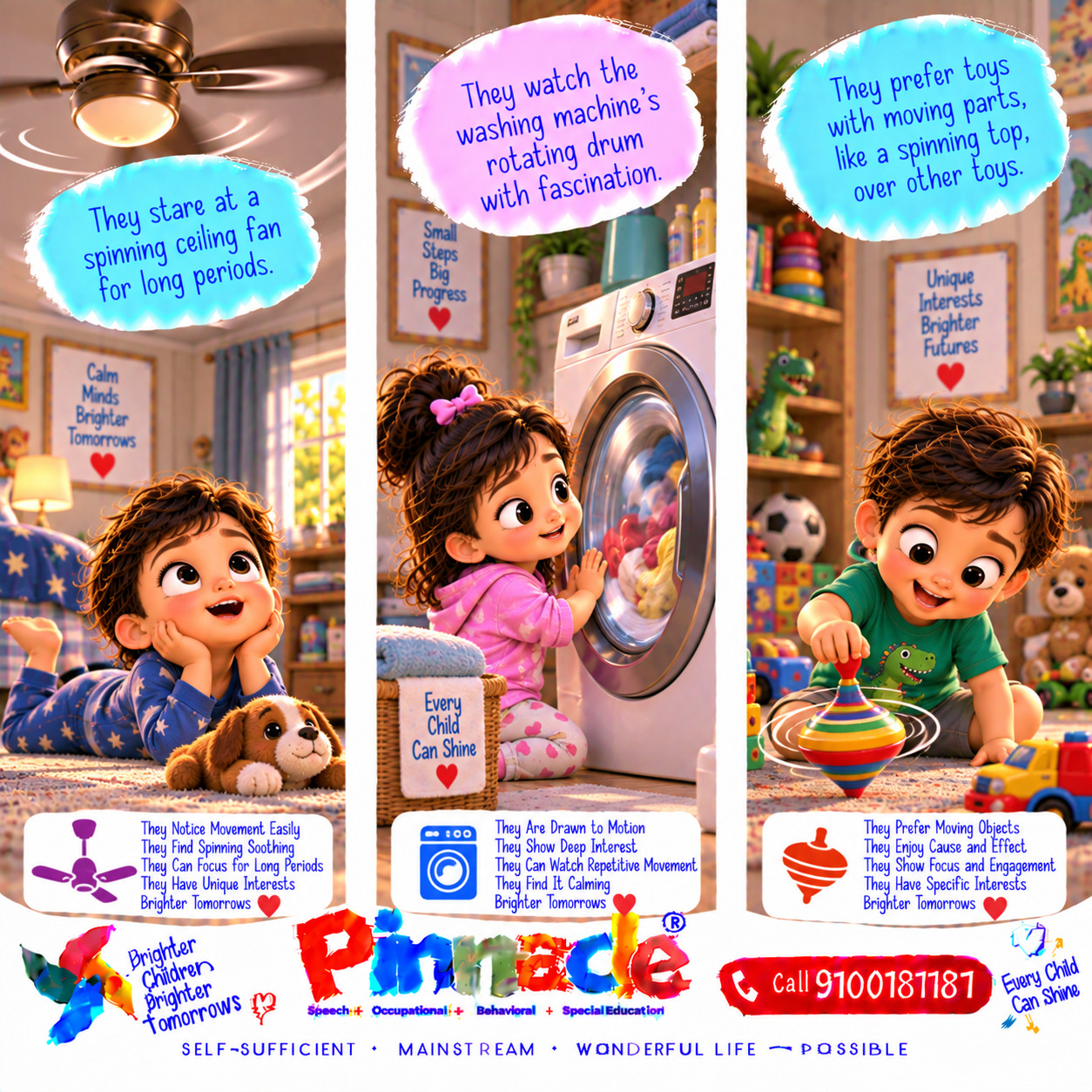
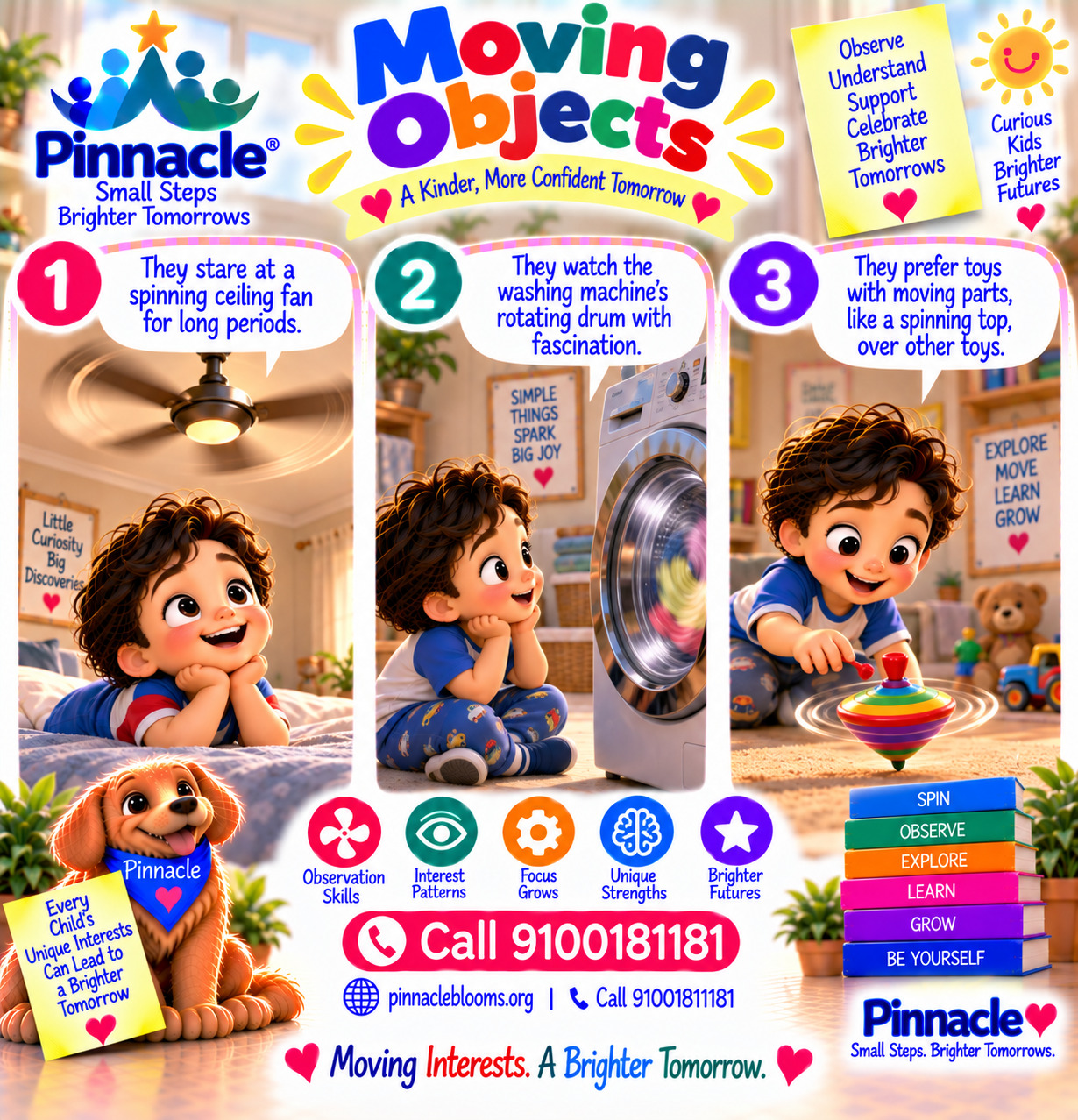
Does the child prefer watching spinning or moving objects (e.g., fans, wheels)?
Topic: Moving Objects
Example 1
They stare at a spinning ceiling fan for long periods.
Example 2
They watch the washing machine’s rotating drum with fascination.
Example 3
They prefer toys with moving parts, like a spinning top, over other toys.
Example illustrationQuestion illustration
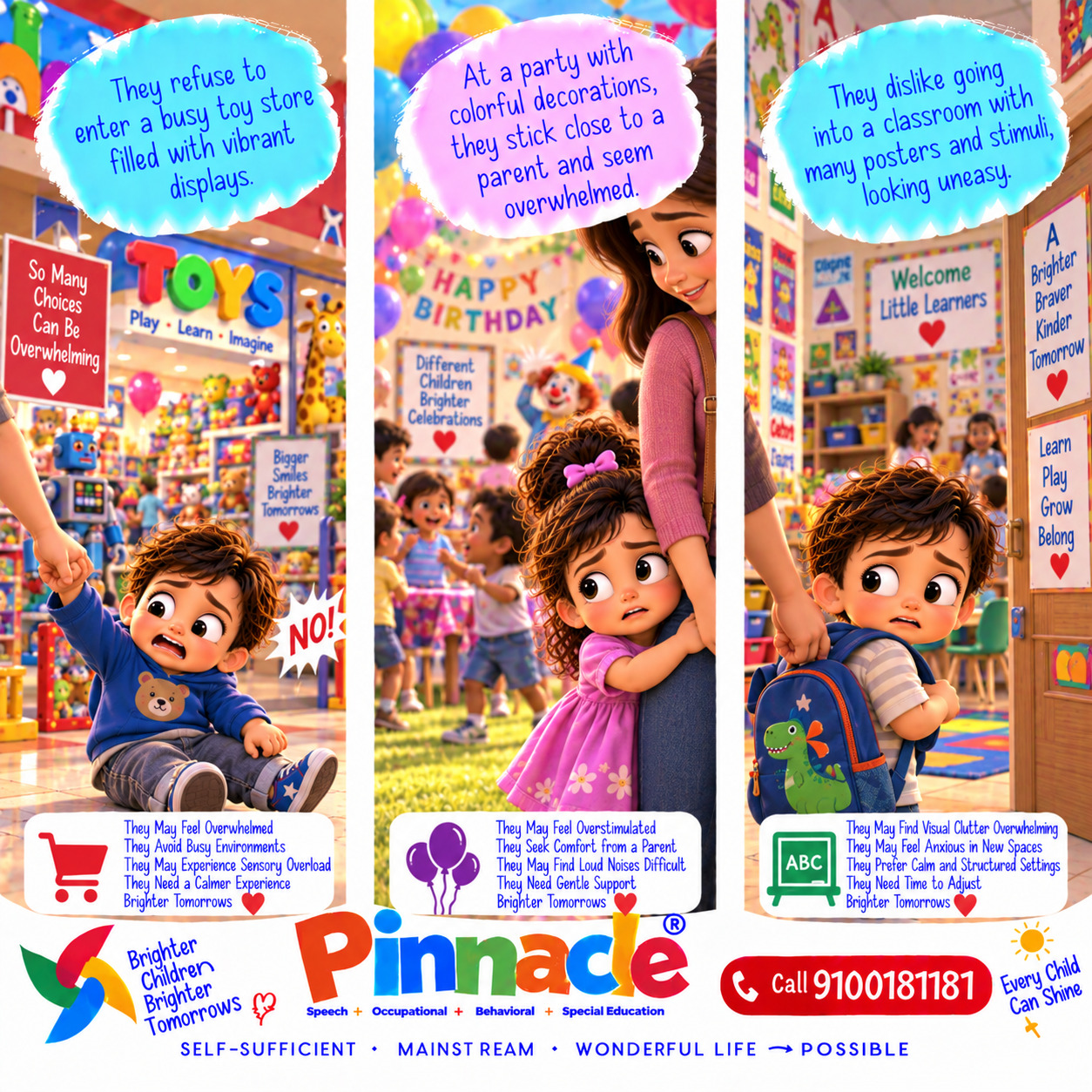
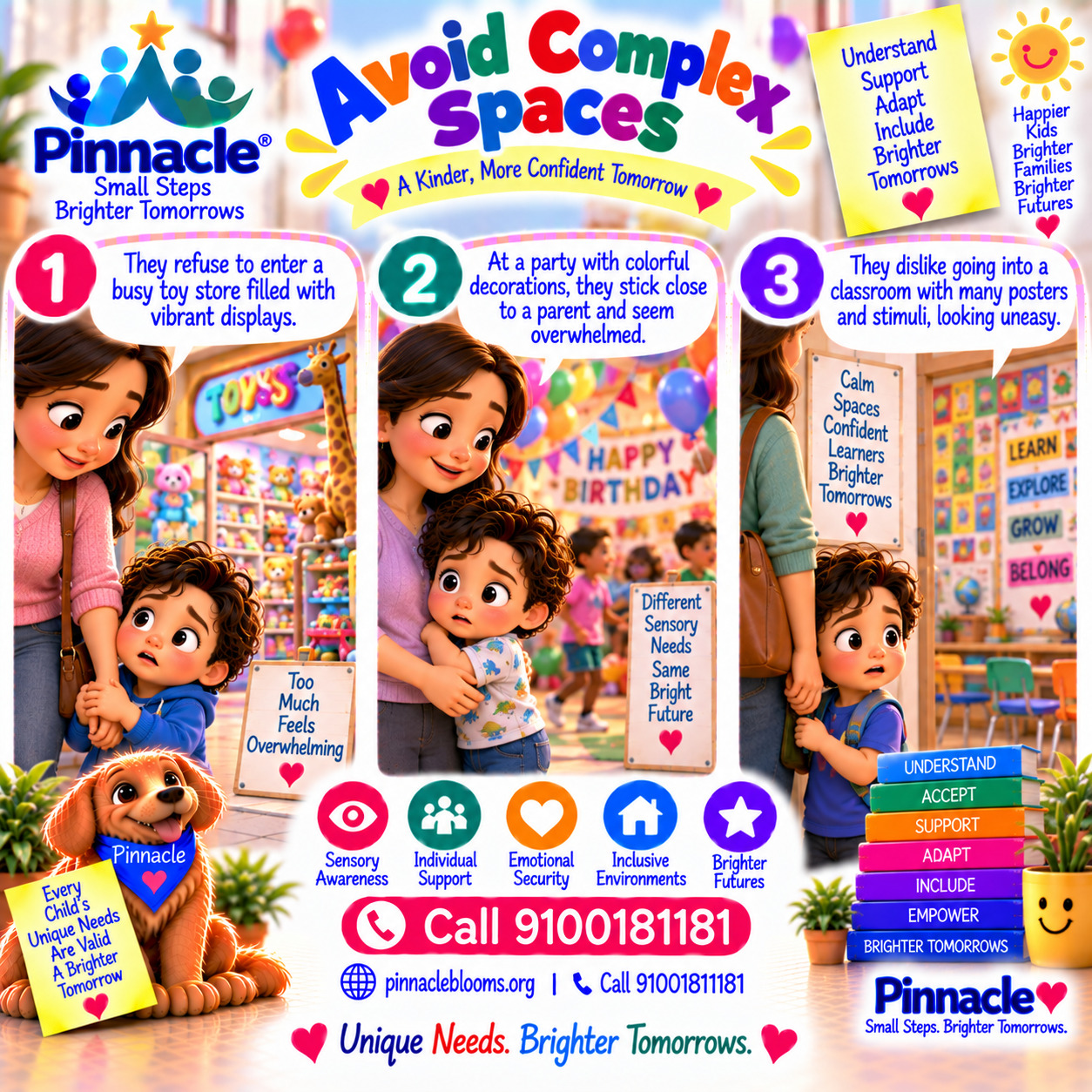
Does the child avoid visually complex environments (e.g., crowded or brightly decorated spaces)?
Topic: Avoid Complex Spaces
Example 1
They refuse to enter a busy toy store filled with vibrant displays.
Example 2
At a party with colorful decorations, they stick close to a parent and seem overwhelmed.
Example 3
They dislike going into a classroom with many posters and stimuli, looking uneasy.
Example illustrationQuestion illustration
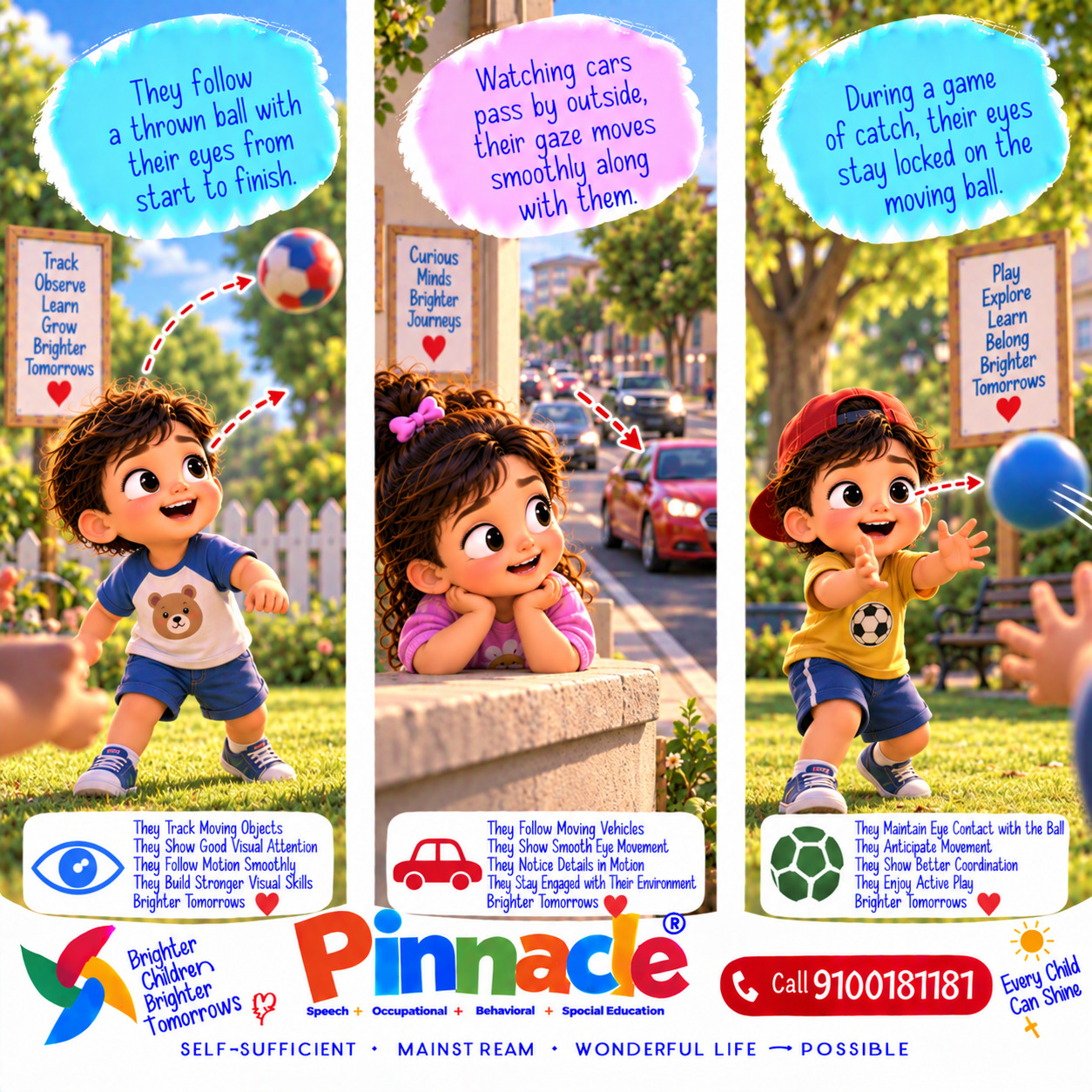
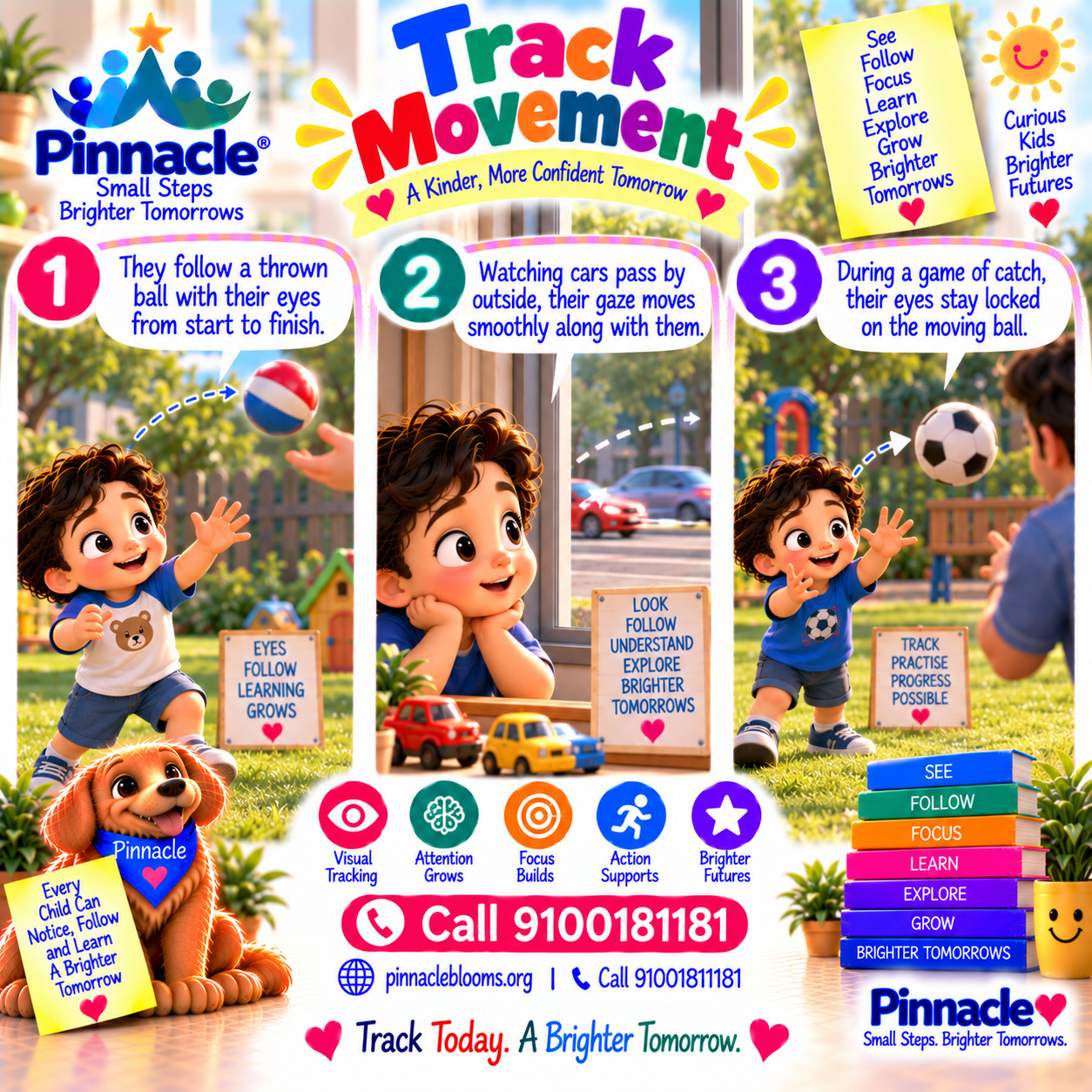
Does the child seem to track moving objects smoothly (e.g., balls, cars)?
Topic: Track Movement
Example 1
They follow a thrown ball with their eyes from start to finish.
Example 2
Watching cars pass by outside, their gaze moves smoothly along with them.
Example 3
During a game of catch, their eyes stay locked on the moving ball.
Example illustrationQuestion illustration
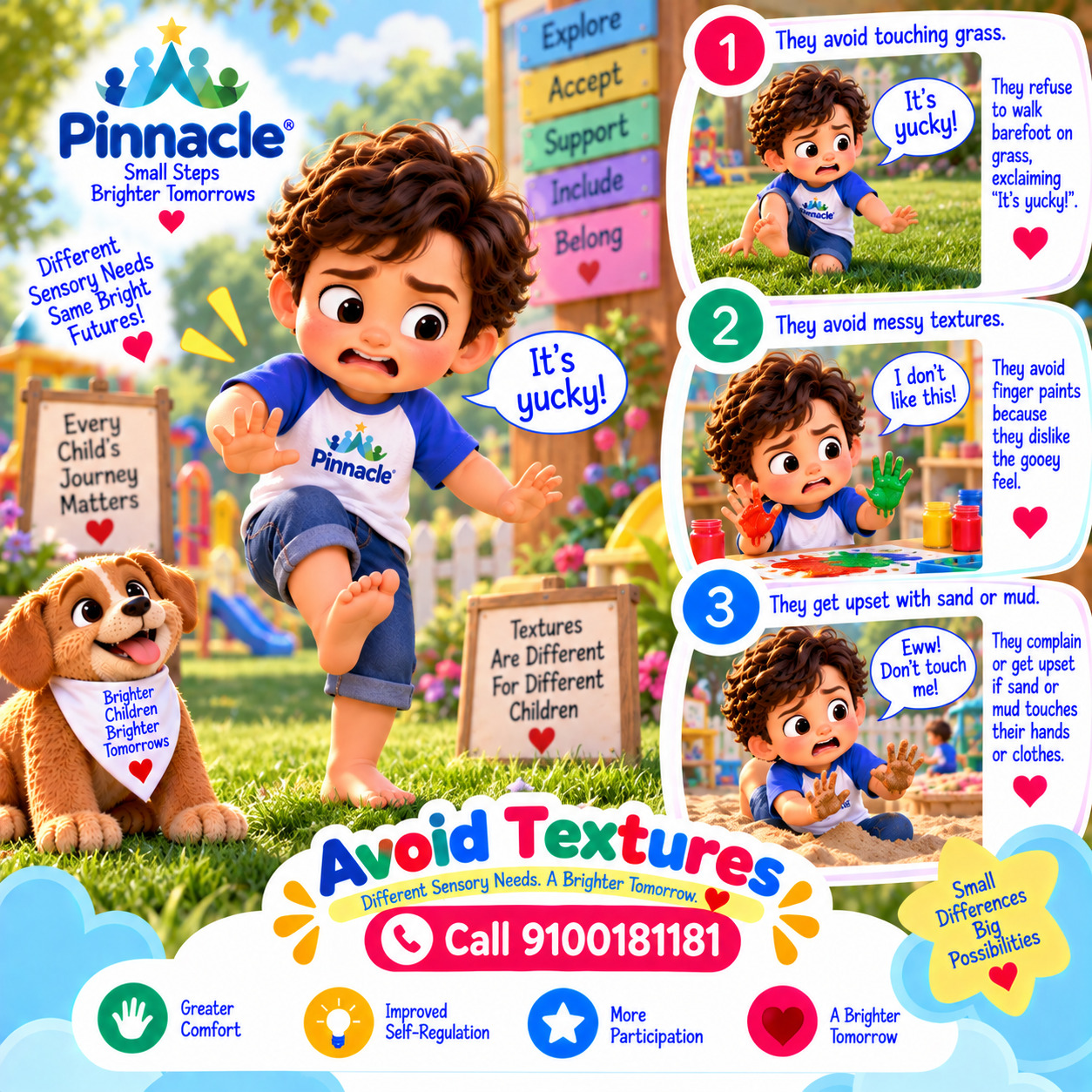
Does the child avoid certain textures (e.g., sand, grass, sticky substances)?
Topic: Avoid Textures
Example 1
They refuse to walk barefoot on grass, exclaiming “It’s yucky!”
Example 2
They avoid finger paints because they dislike the gooey feel.
Example 3
They complain or get upset if sand or mud touches their hands or clothes.
Example illustrationQuestion illustration
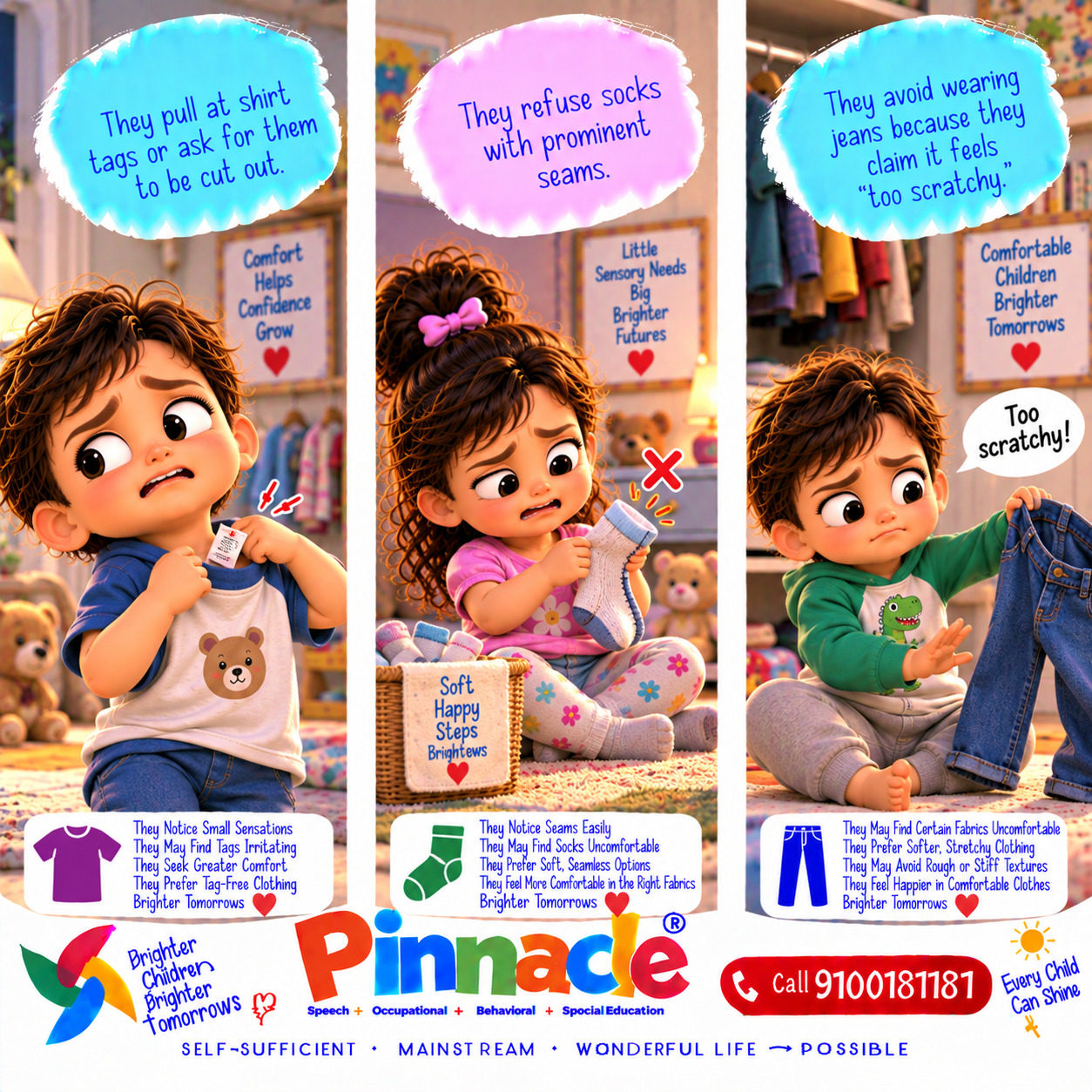
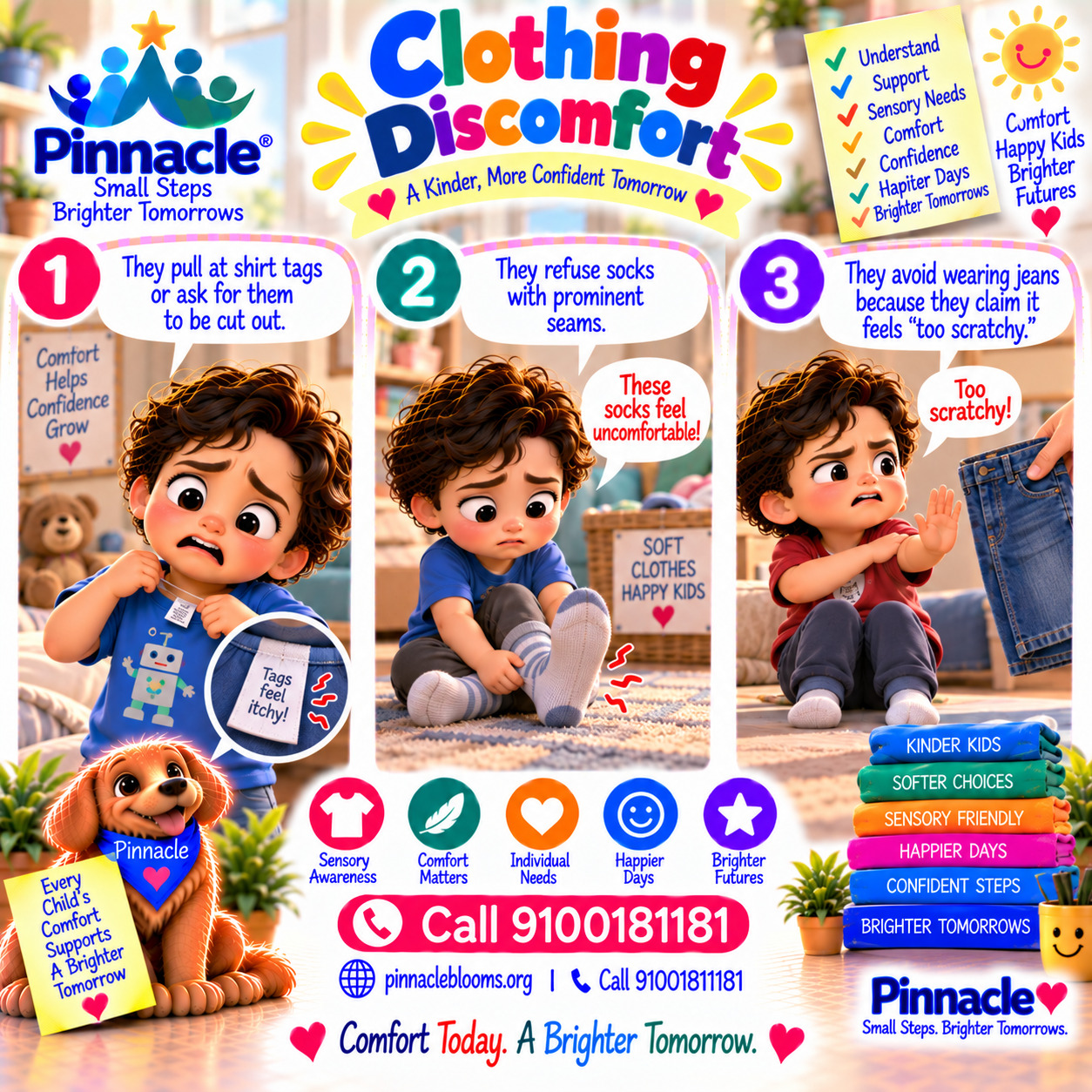
Does the child complain about tags, seams, or tight clothing?
Topic: Clothing Discomfort
Example 1
They pull at shirt tags or ask for them to be cut out.
Example 2
They refuse socks with prominent seams.
Example 3
They avoid wearing jeans because they claim it feels “too scratchy.”
Example illustrationQuestion illustration
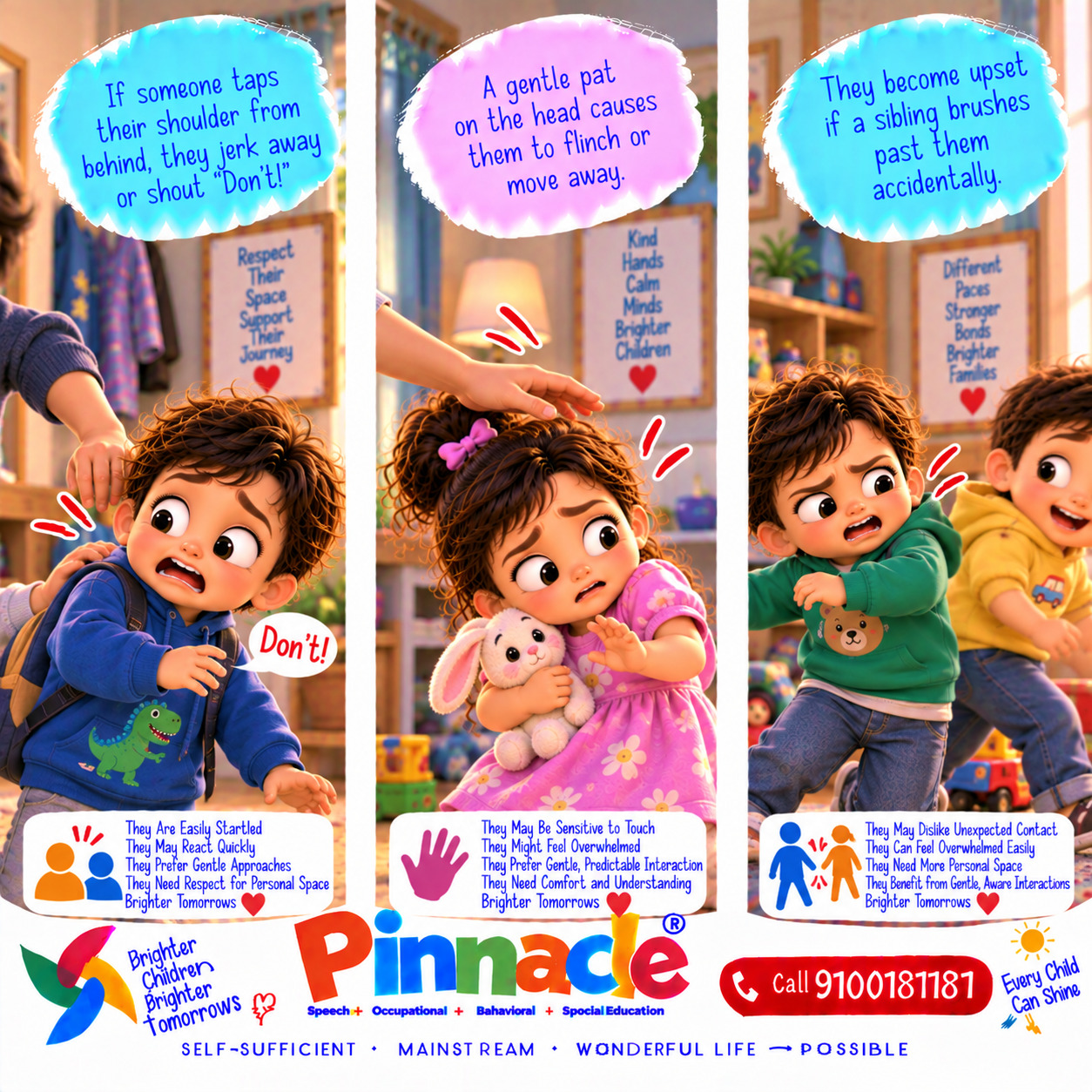
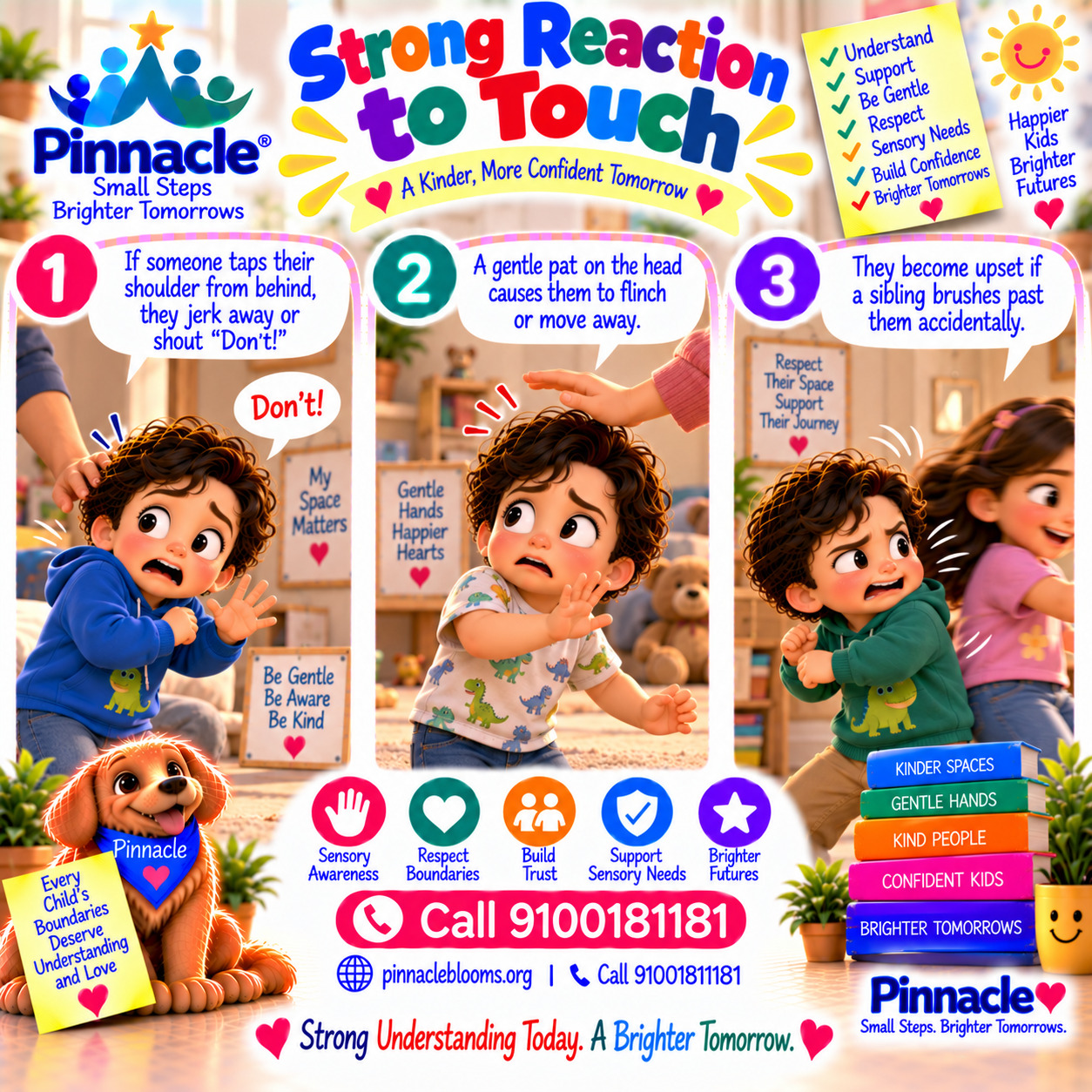
Does the child react strongly to being touched unexpectedly?
Topic: Strong Reaction to Touch
Example 1
If someone taps their shoulder from behind, they jerk away or shout “Don’t!”
Example 2
A gentle pat on the head causes them to flinch or move away.
Example 3
They become upset if a sibling brushes past them accidentally.
Example illustrationQuestion illustration
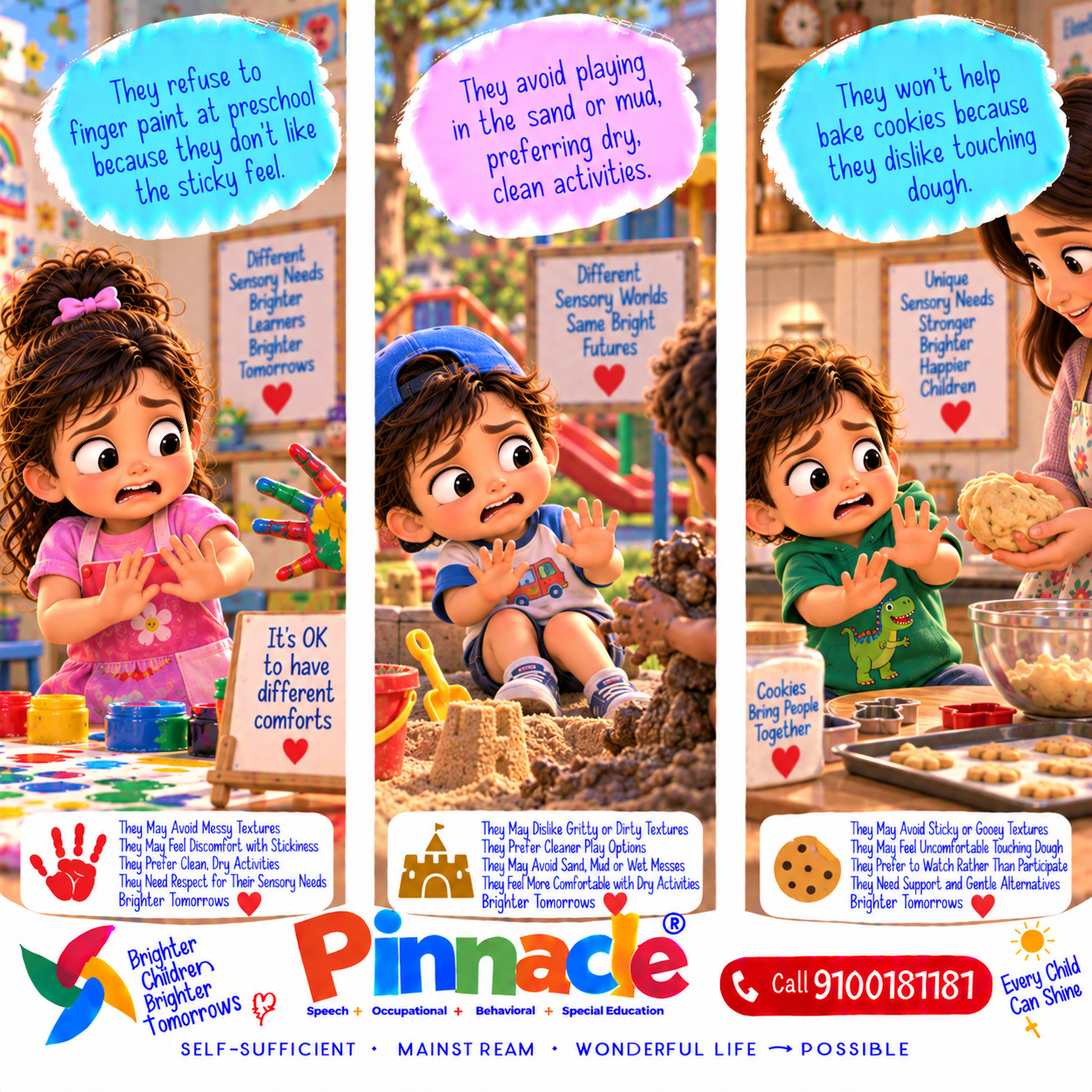
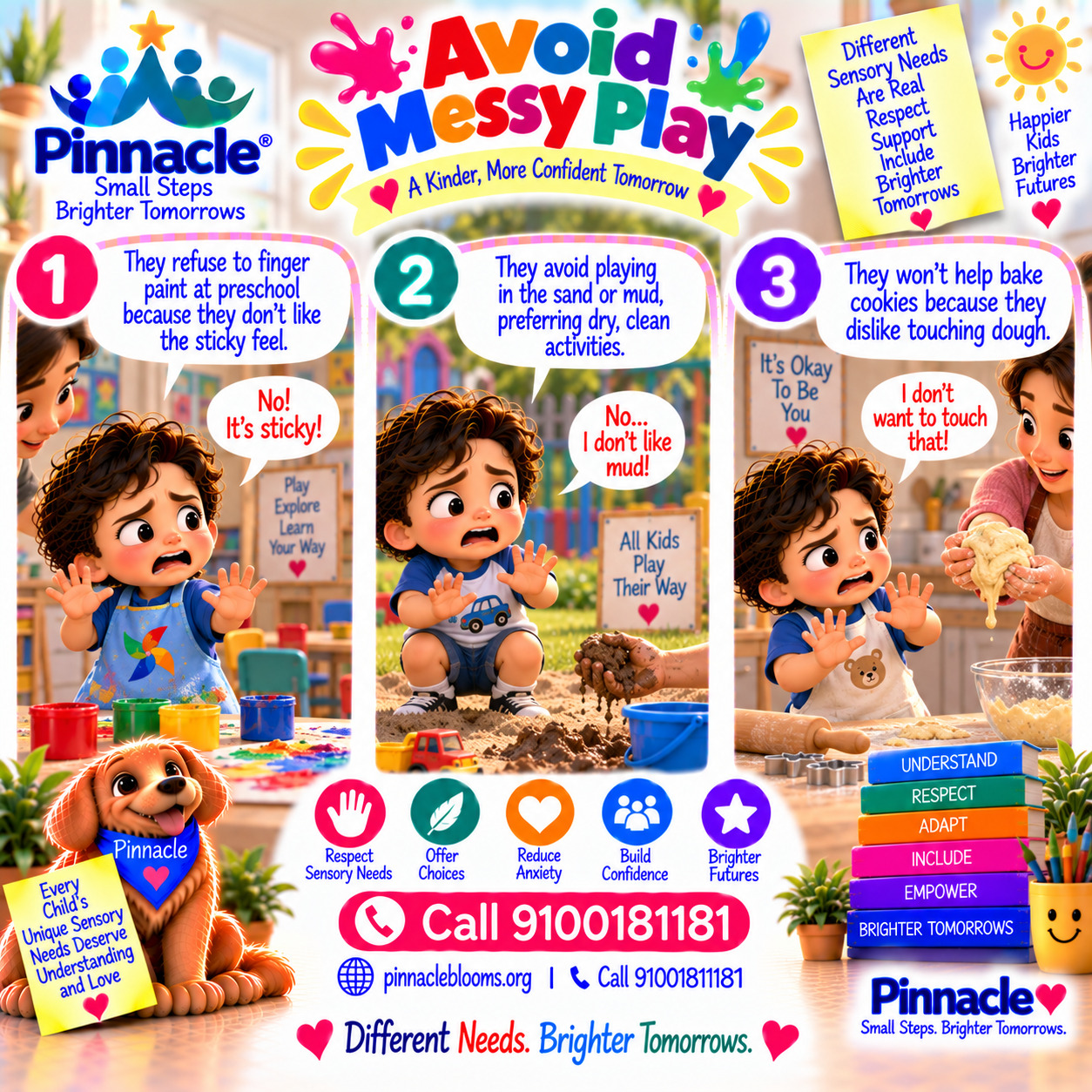
Does the child avoid messy play (e.g., finger painting, mud)?
Topic: Avoid Messy Play
Example 1
They refuse to finger paint at preschool because they don’t like the sticky feel.
Example 2
They avoid playing in the sand or mud, preferring dry, clean activities.
Example 3
They won’t help bake cookies because they dislike touching dough.
Example illustrationQuestion illustration
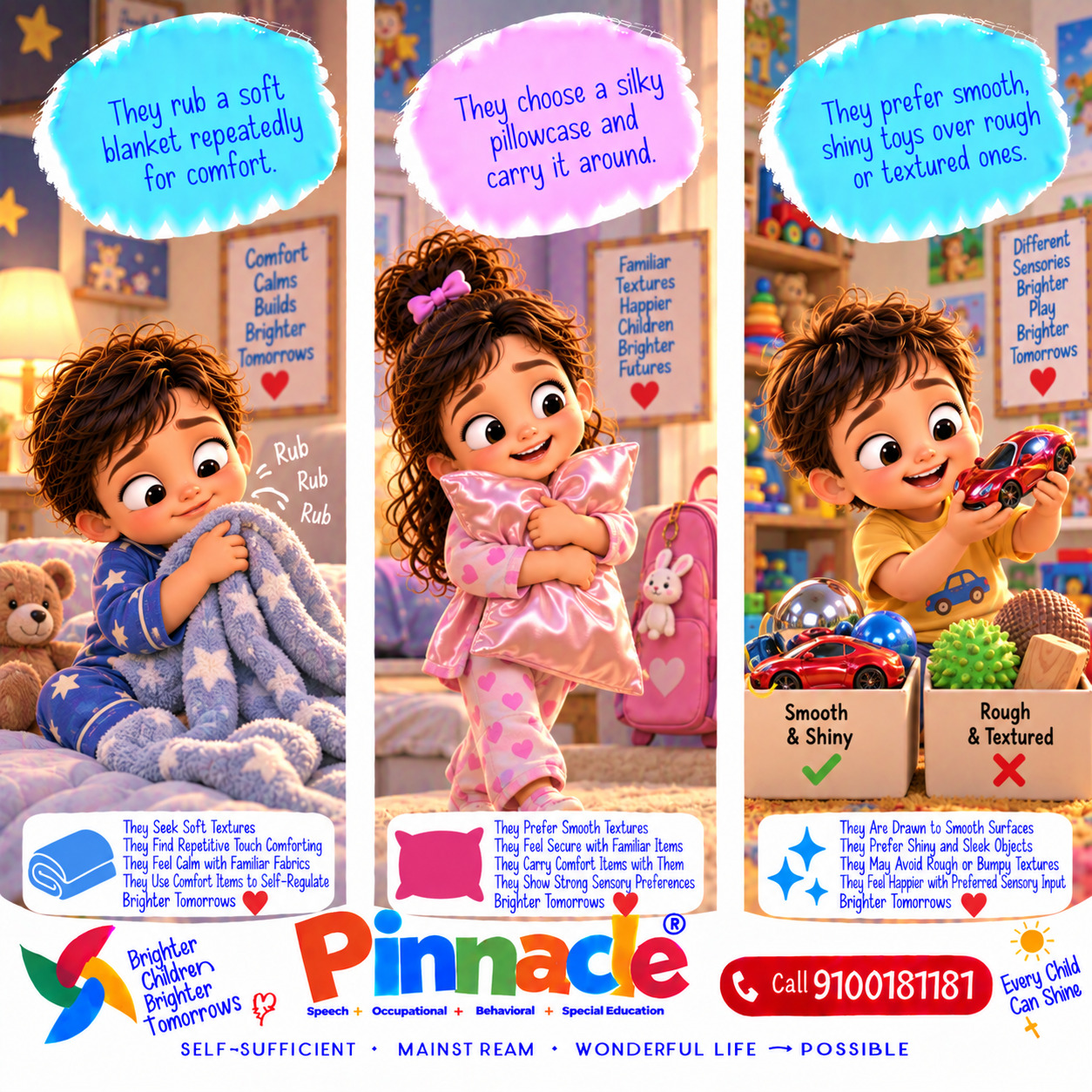
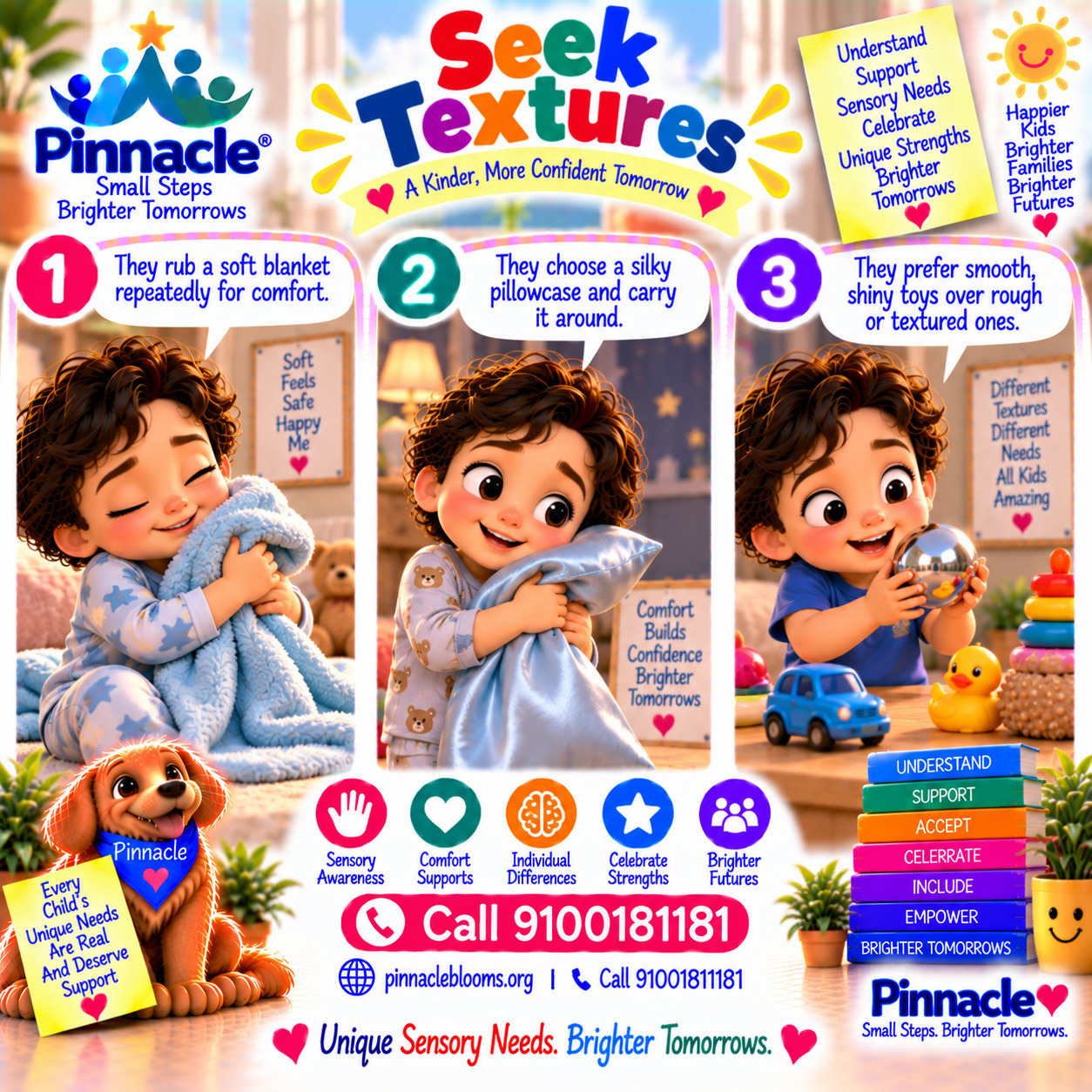
Does the child seek out certain textures (e.g., soft blankets, smooth objects)?
Topic: Seek Textures
Example 1
They rub a soft blanket repeatedly for comfort.
Example 2
They choose a silky pillowcase and carry it around.
Example 3
They prefer smooth, shiny toys over rough or textured ones.
Example illustrationQuestion illustration
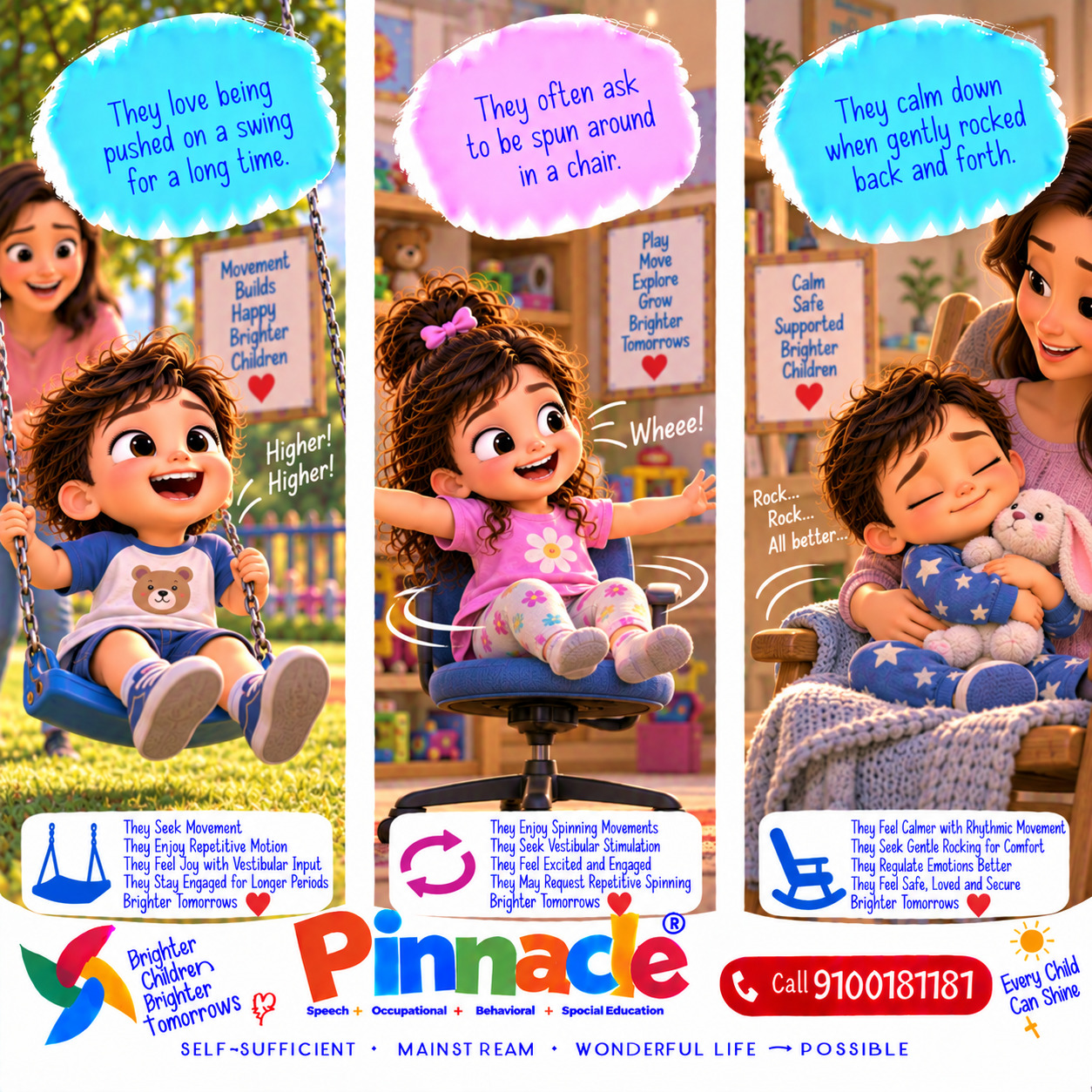
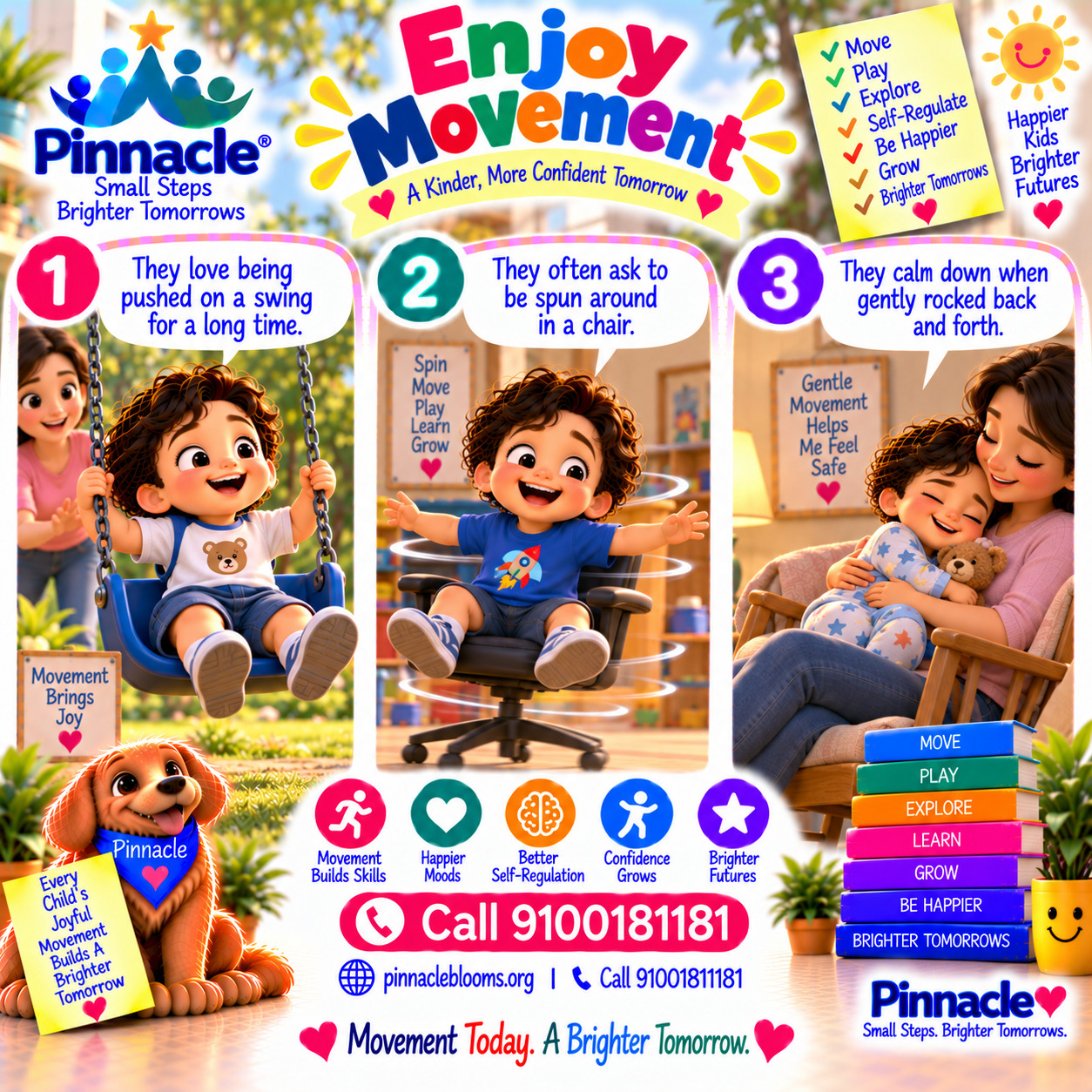
Does the child enjoy being swung, rocked, or spun?
Topic: Enjoy Movement
Example 1
They love being pushed on a swing for a long time.
Example 2
They often ask to be spun around in a chair.
Example 3
They calm down when gently rocked back and forth.
Example illustrationQuestion illustration
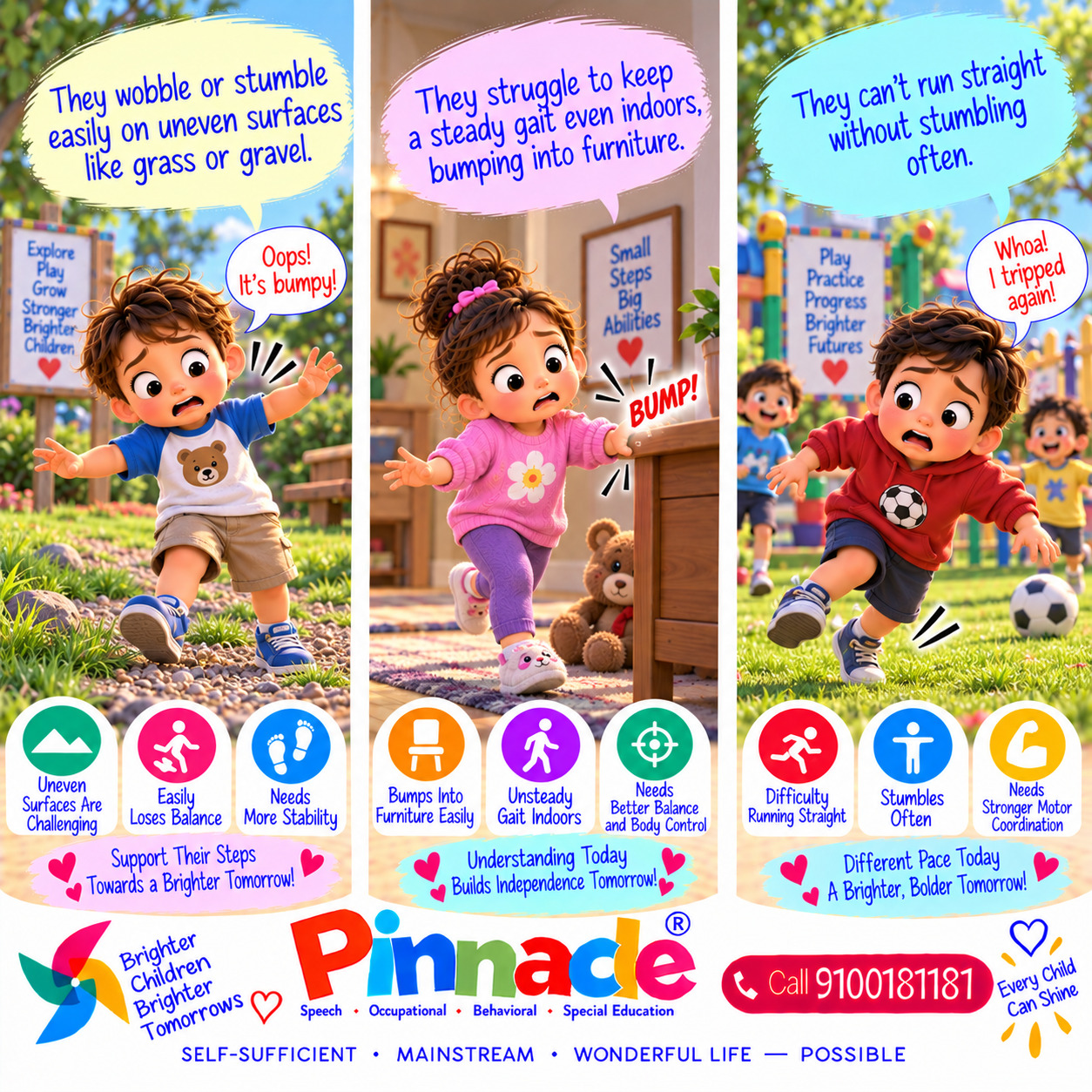
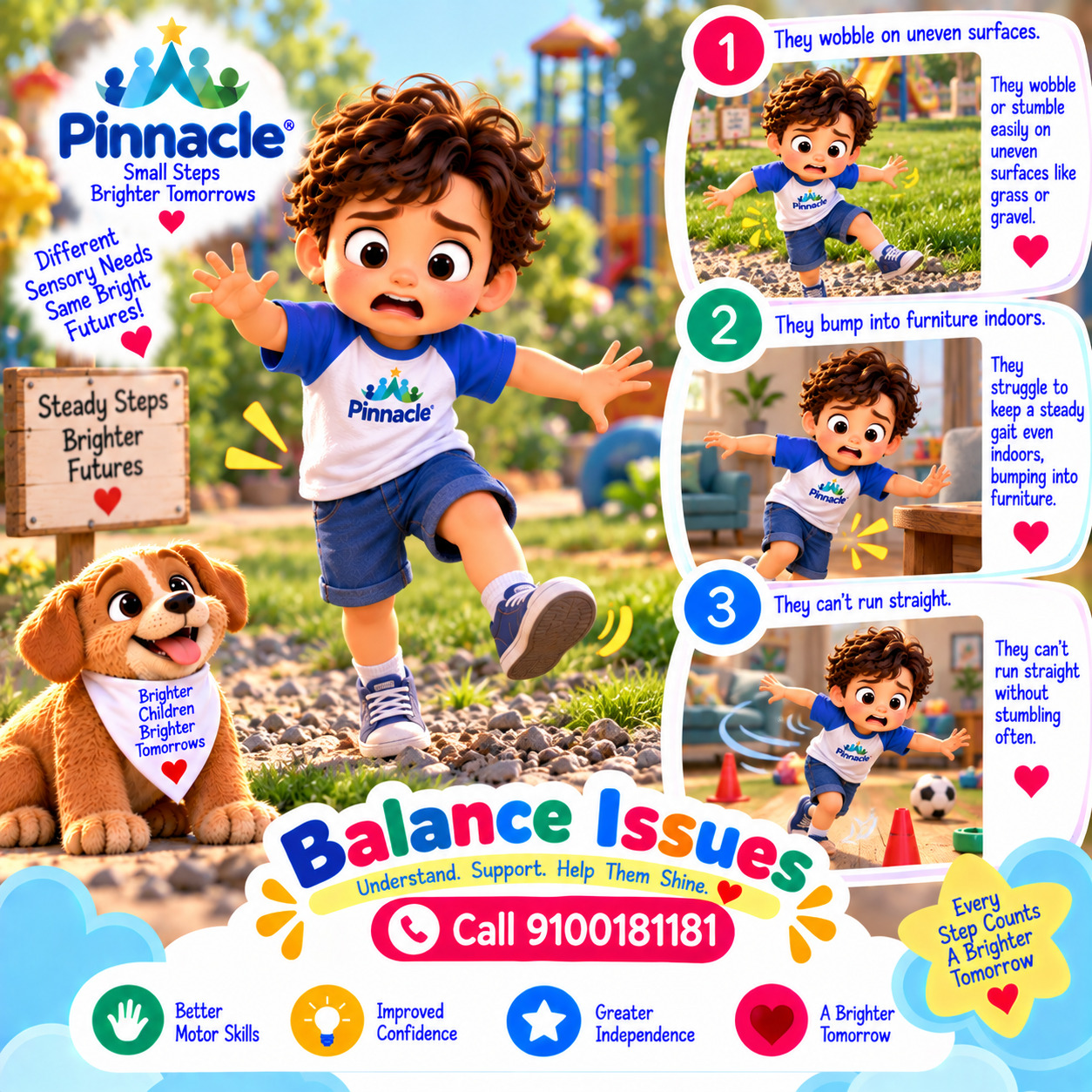
Does the child have difficulty maintaining balance when walking or running?
Topic: Balance Issues
Example 1
They wobble or stumble easily on uneven surfaces like grass or gravel.
Example 2
They struggle to keep a steady gait even indoors, bumping into furniture.
Example 3
They can’t run straight without stumbling often.
Example illustrationQuestion illustration
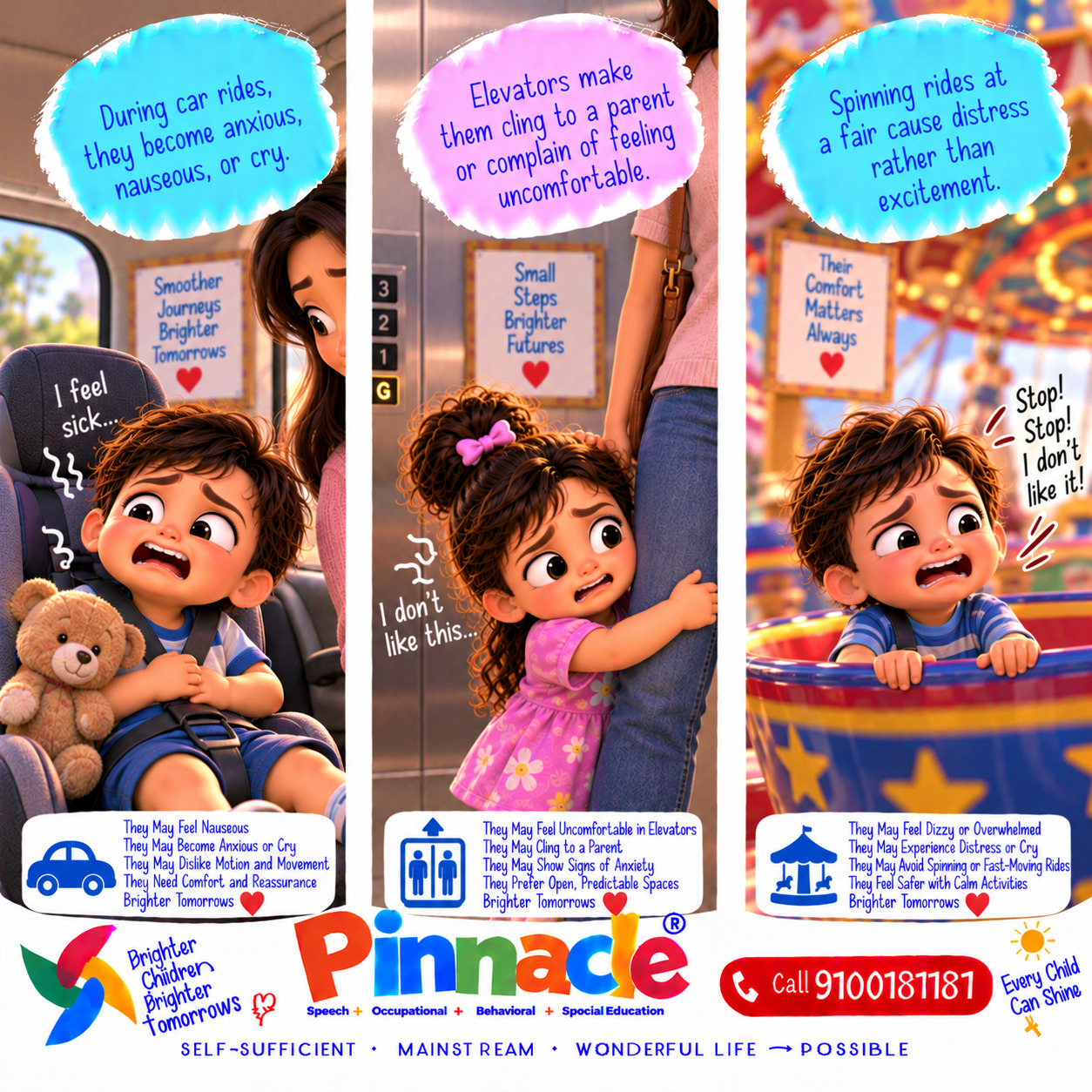
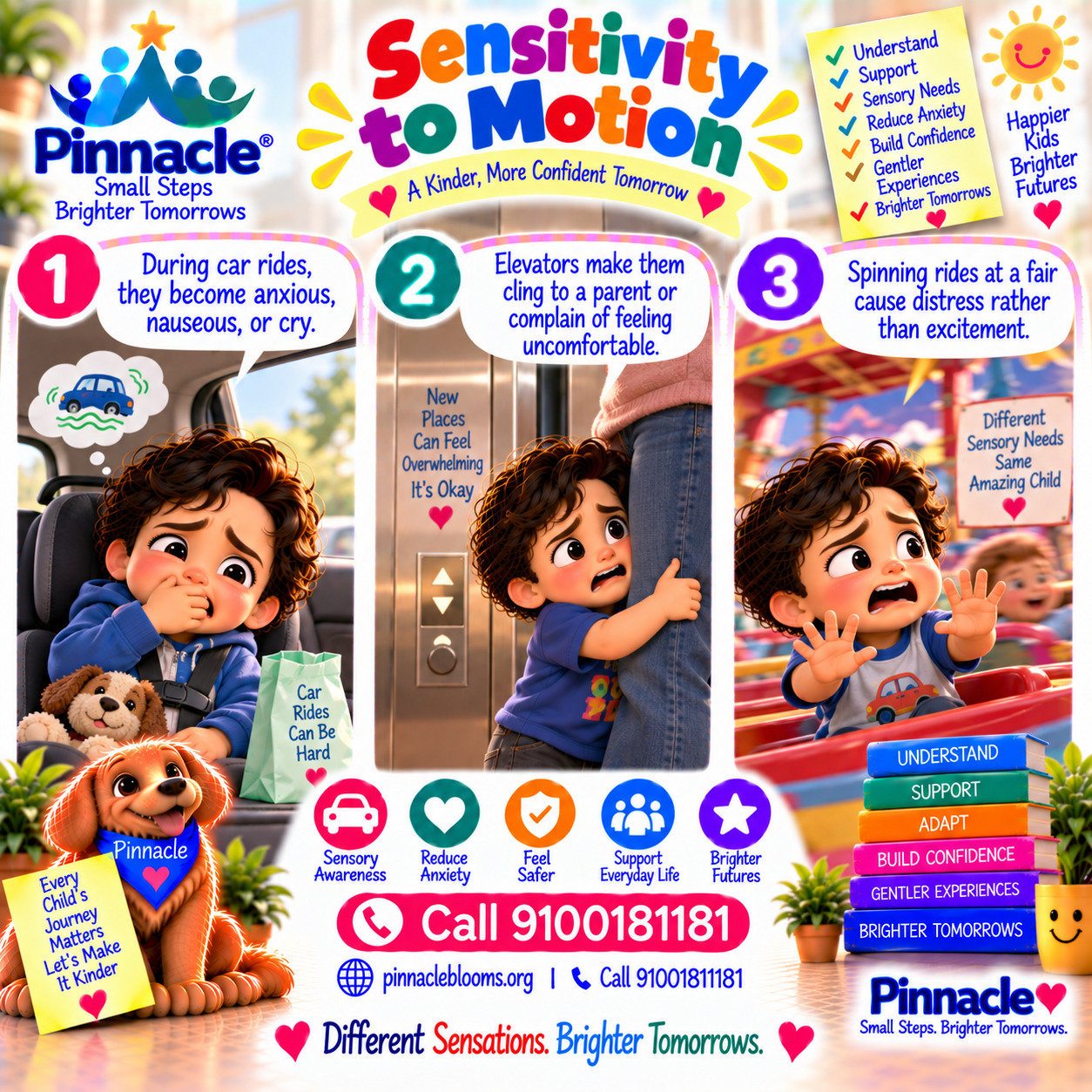
Does the child get upset by motion, such as car rides or elevators?
Topic: Sensitivity to Motion
Example 1
During car rides, they become anxious, nauseous, or cry.
Example 2
Elevators make them cling to a parent or complain of feeling uncomfortable.
Example 3
Spinning rides at a fair cause distress rather than excitement.
Example illustrationQuestion illustration
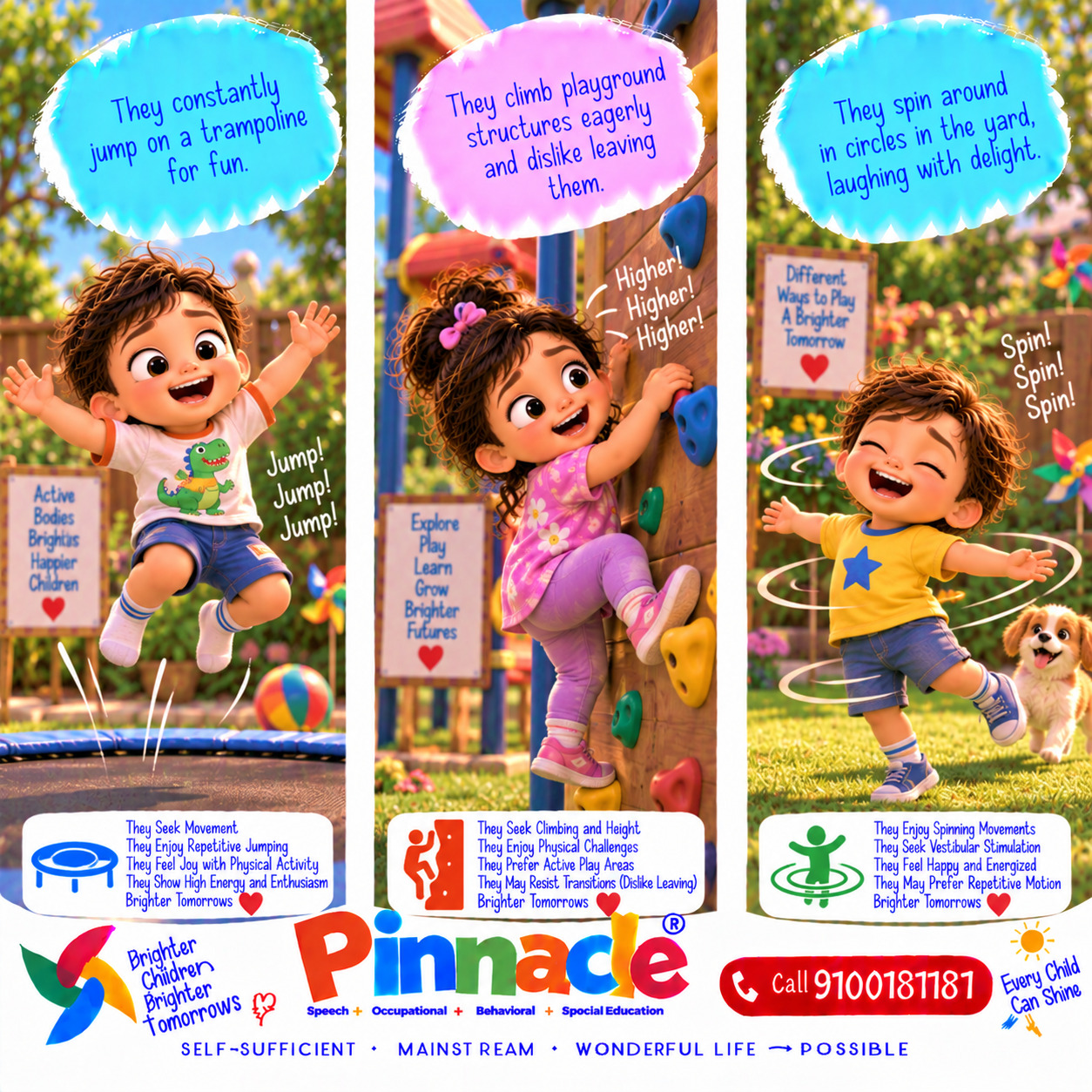
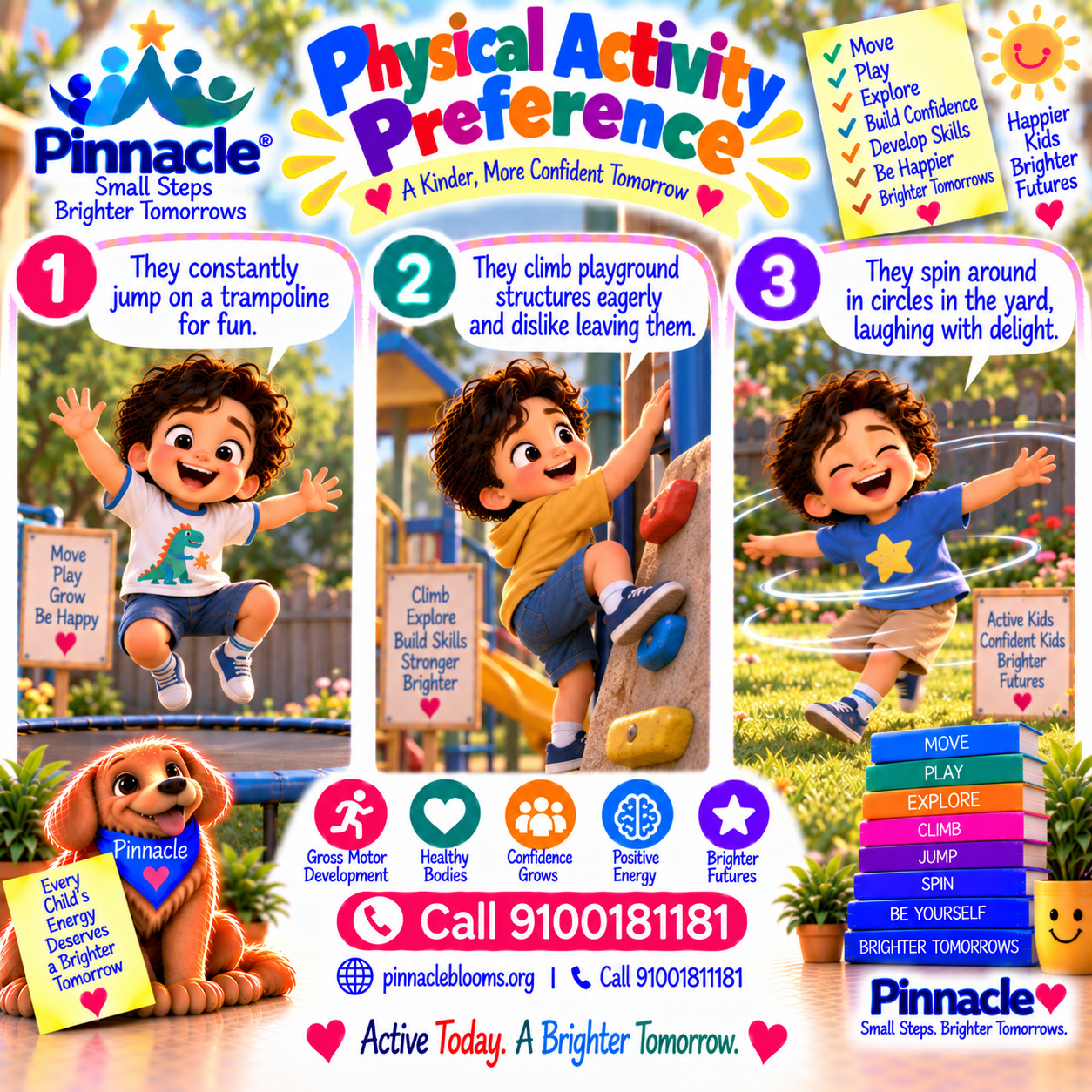
Does the child prefer activities involving spinning, jumping, or climbing?
Topic: Physical Activity Preference
Example 1
They constantly jump on a trampoline for fun.
Example 2
They climb playground structures eagerly and dislike leaving them.
Example 3
They spin around in circles in the yard, laughing with delight.
Example illustrationQuestion illustration
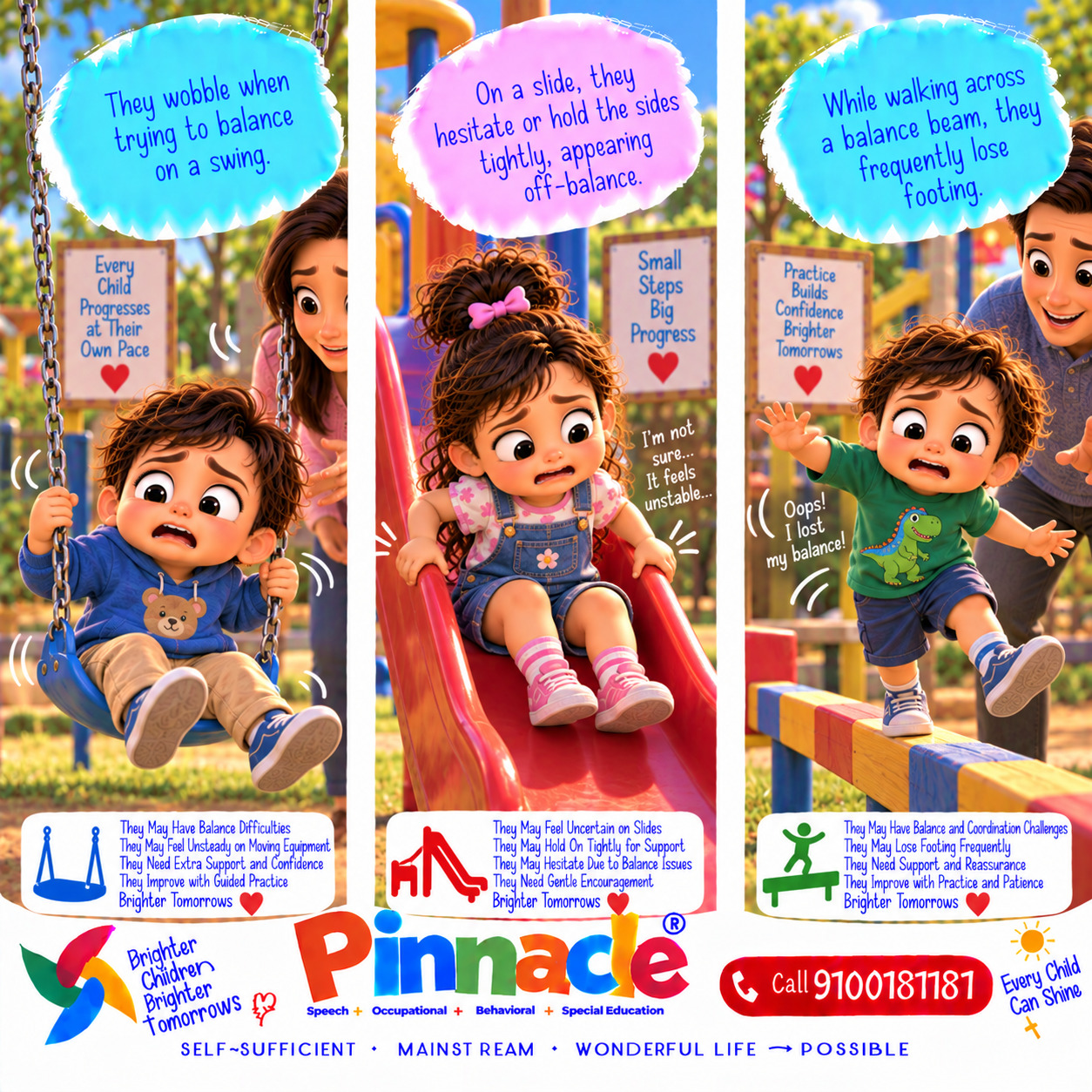
Does the child seem unsteady when using playground equipment like swings or slides?
Topic: Unsteady on Equipment
Example 1
They wobble when trying to balance on a swing.
Example 2
On a slide, they hesitate or hold the sides tightly, appearing off-balance.
Example 3
While walking across a balance beam, they frequently lose footing.
Example illustrationQuestion illustration
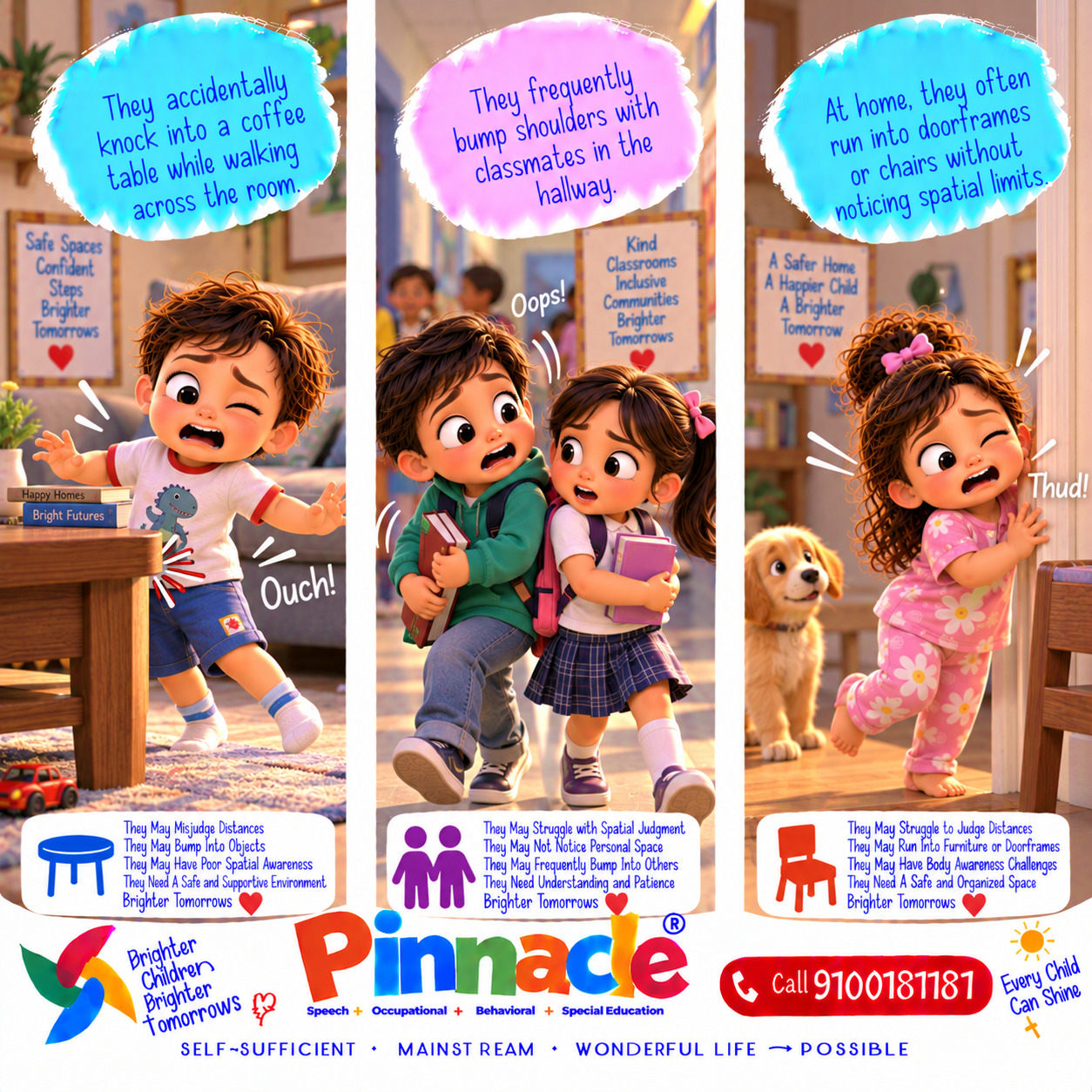
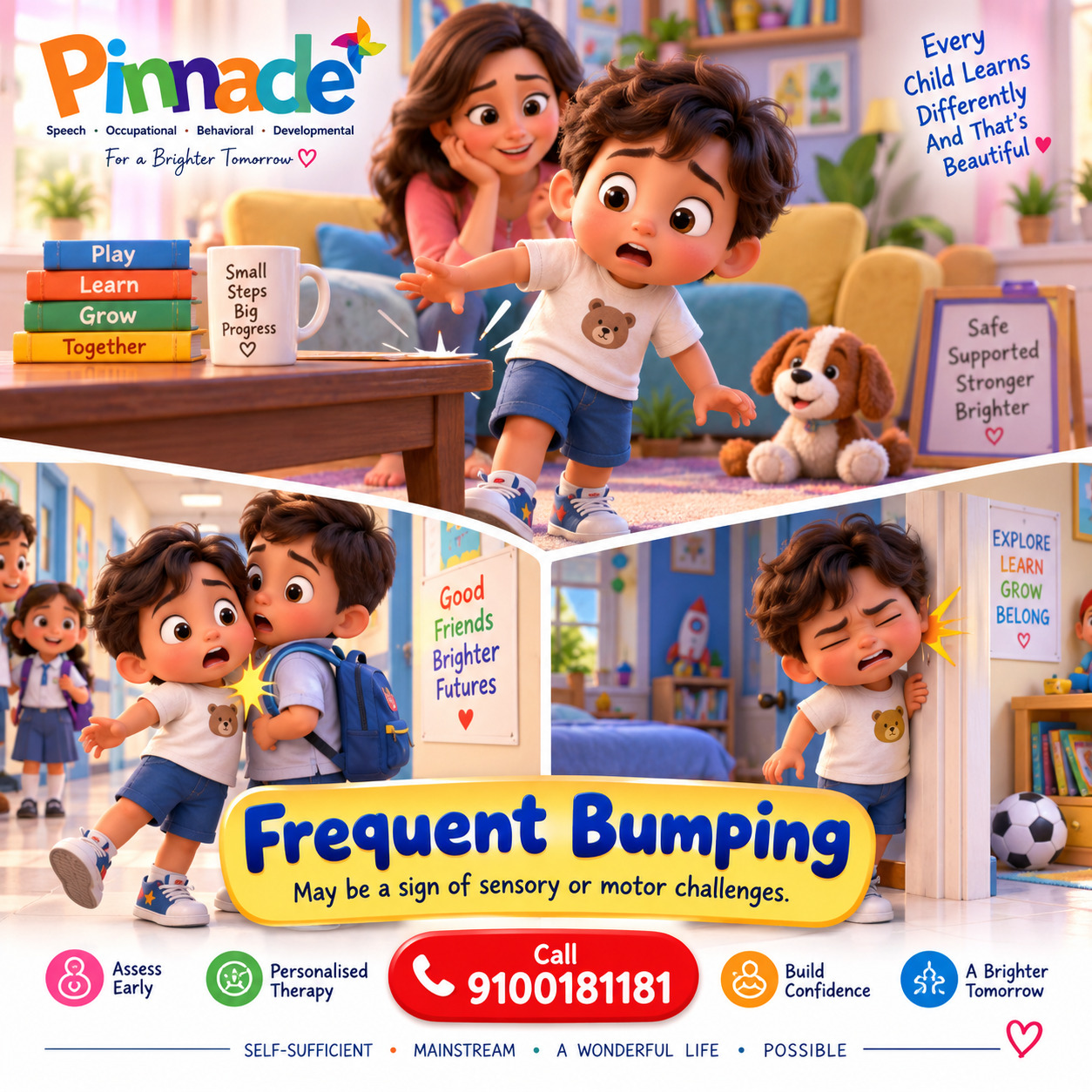
Does the child frequently bump into furniture, walls, or people?
Topic: Frequent Bumping
Example 1
They accidentally knock into a coffee table while walking across the room.
Example 2
They frequently bump shoulders with classmates in the hallway.
Example 3
At home, they often run into doorframes or chairs without noticing spatial limits.
Example illustrationQuestion illustration
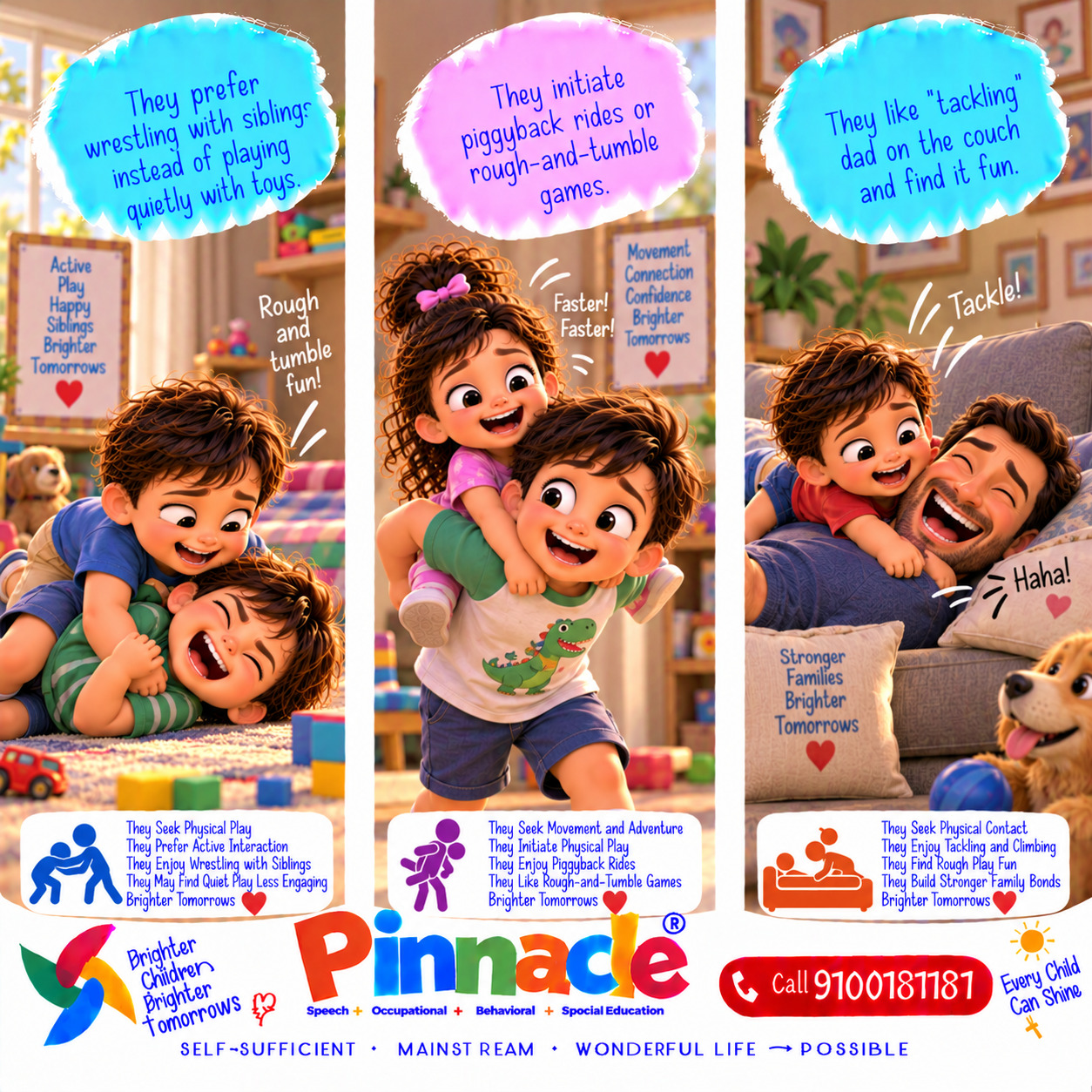
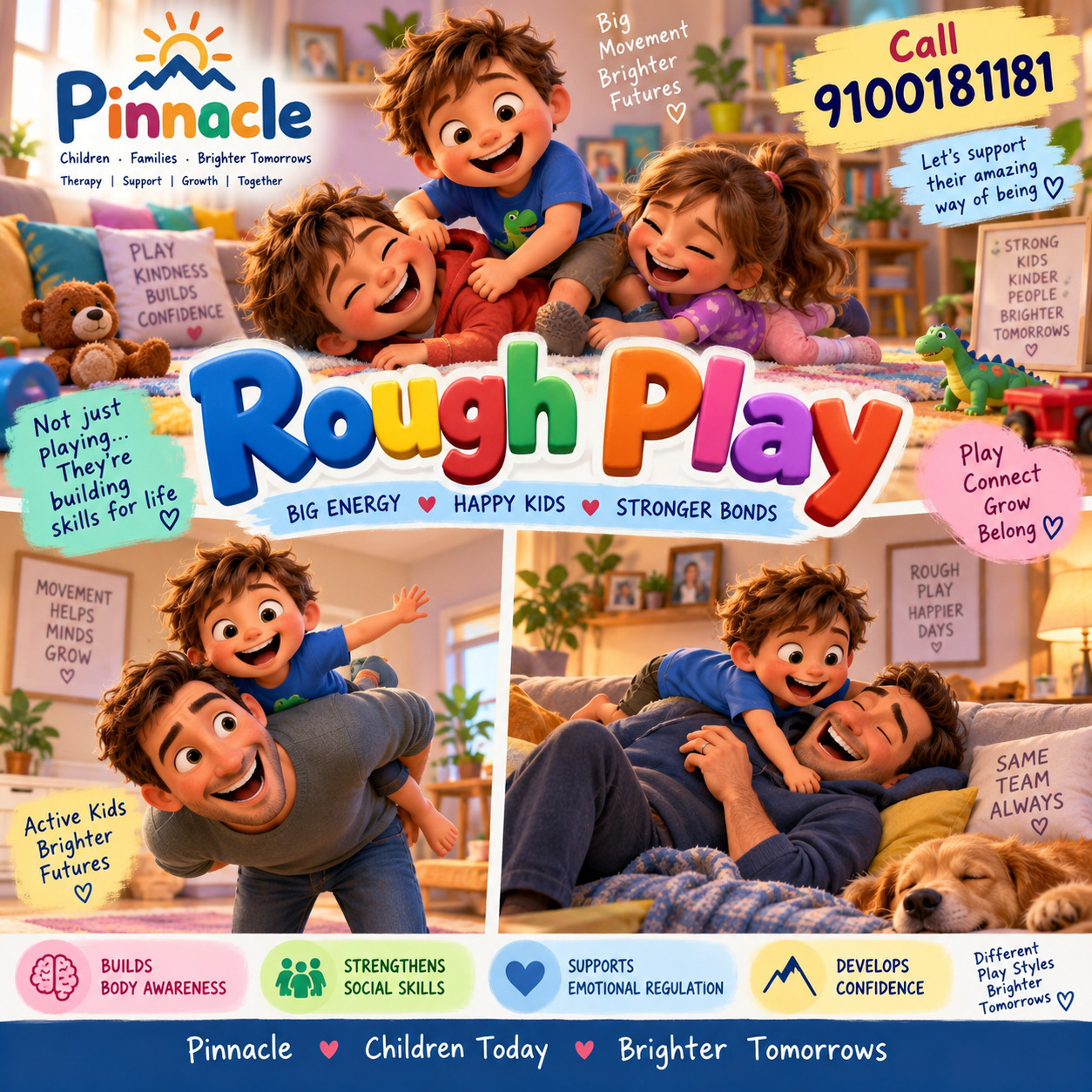
Does the child seek out rough play (e.g., wrestling, tackling)?
Topic: Rough Play
Example 1
They prefer wrestling with siblings instead of playing quietly with toys.
Example 2
They initiate piggyback rides or rough-and-tumble games.
Example 3
They like “tackling” dad on the couch and find it fun.
Example illustrationQuestion illustration
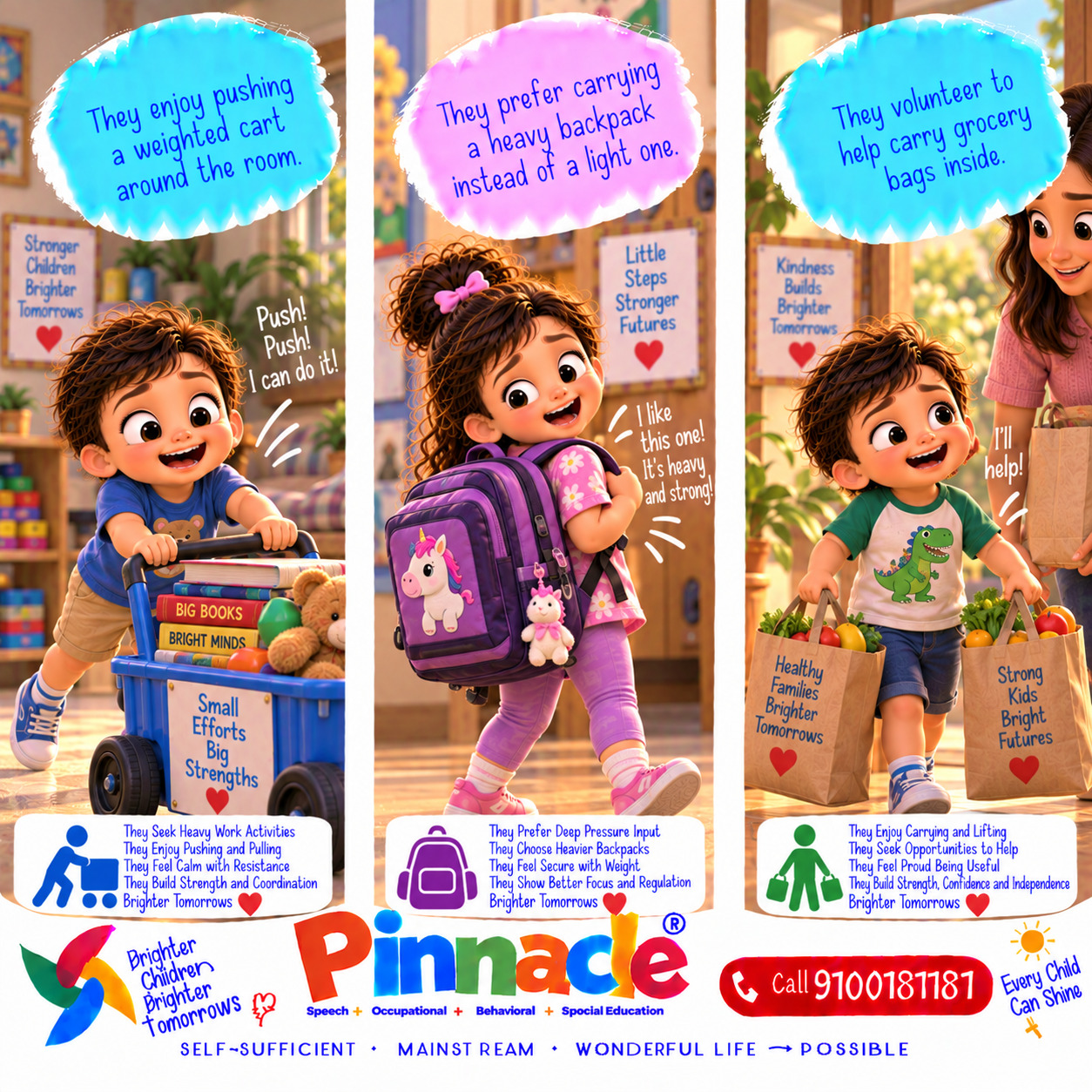
Does the child prefer carrying or pushing heavy objects (e.g., backpacks)?
Topic: Heavy Objects
Example 1
They enjoy pushing a weighted cart around the room.
Example 2
They prefer carrying a heavy backpack instead of a light one.
Example 3
They volunteer to help carry grocery bags inside.
Example illustrationQuestion illustration
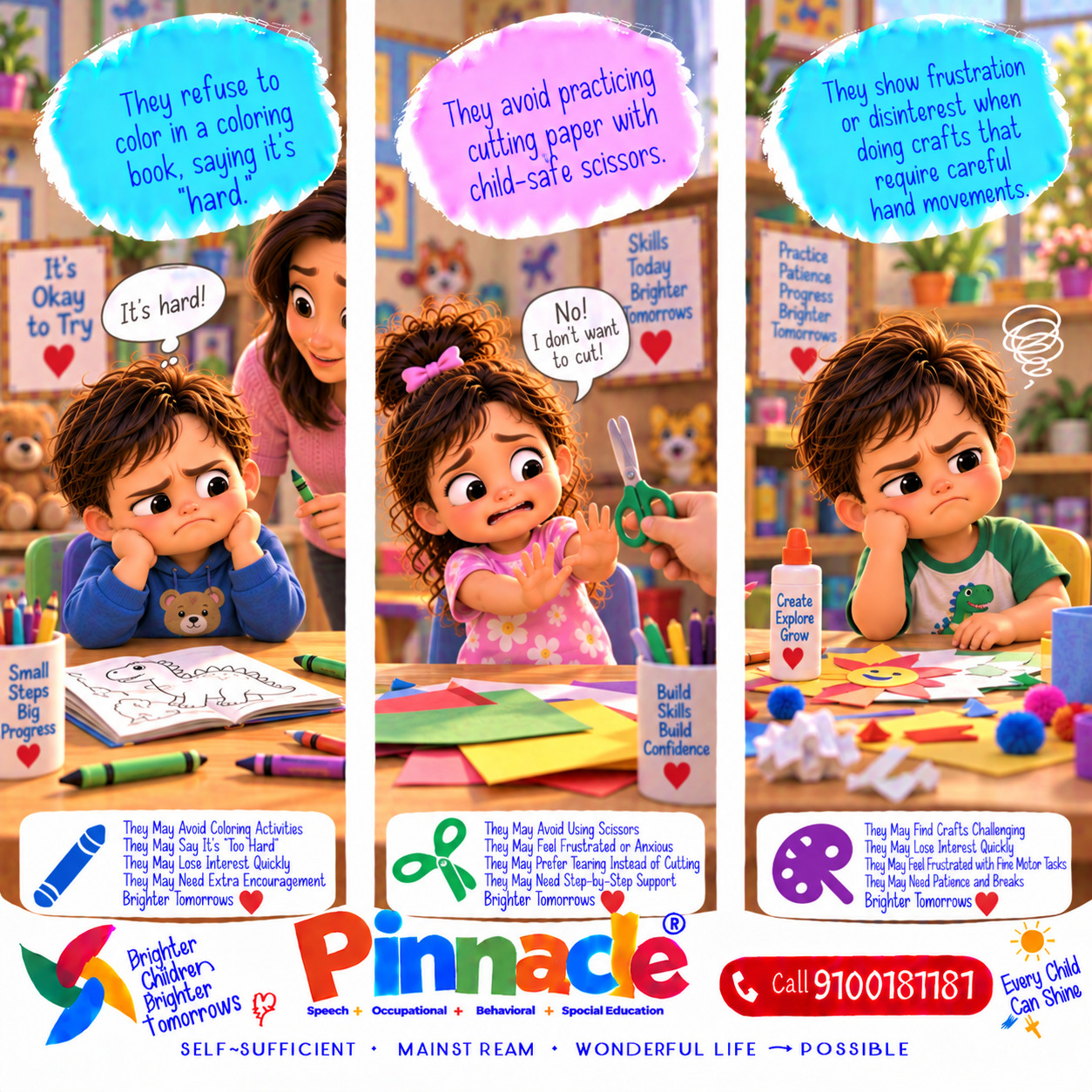
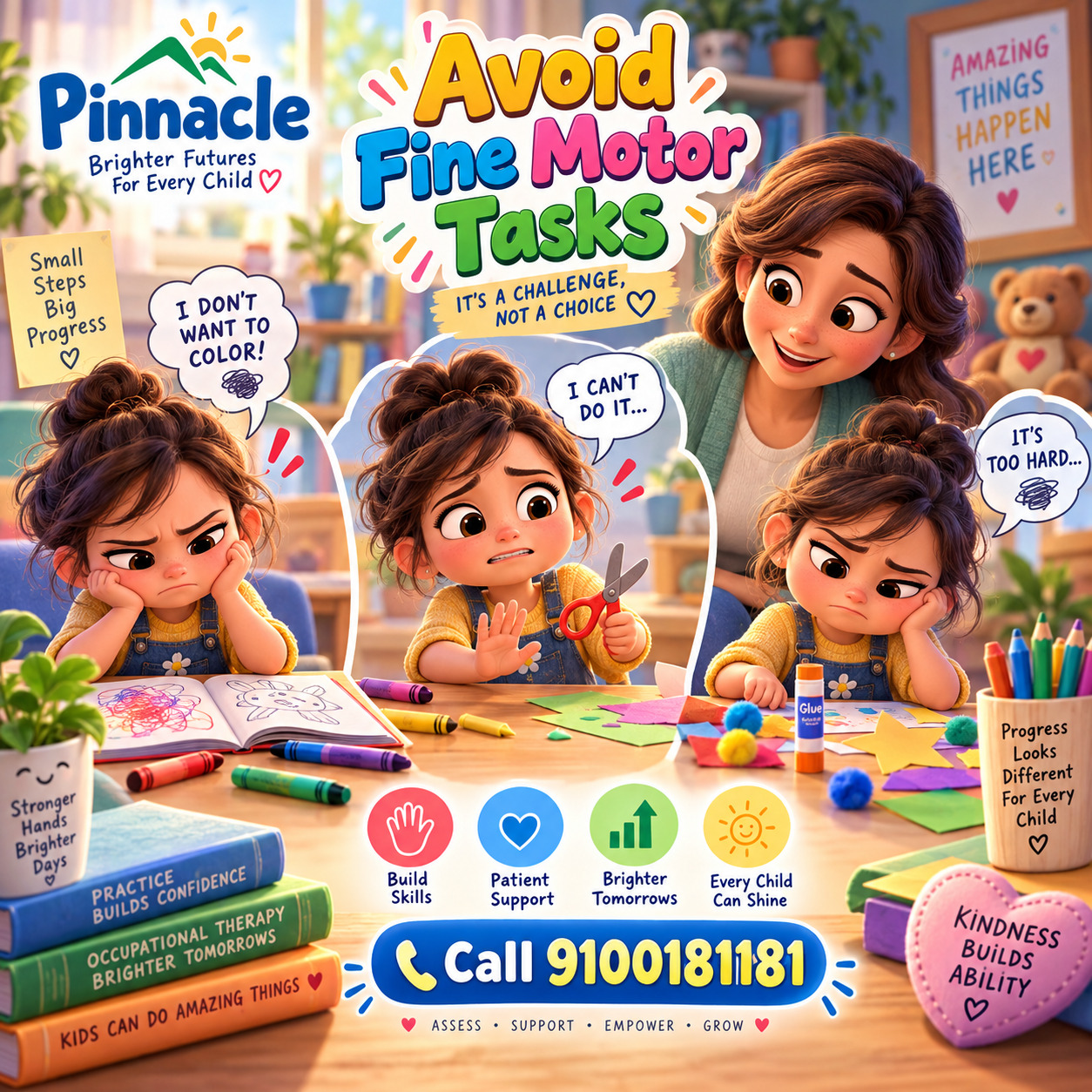
Does the child avoid fine motor tasks (e.g., using scissors, coloring)?
Topic: Avoid Fine Motor Tasks
Example 1
They refuse to color in a coloring book, saying it’s “hard.”
Example 2
They avoid practicing cutting paper with child-safe scissors.
Example 3
They show frustration or disinterest when doing crafts that require careful hand movements.
Example illustrationQuestion illustration
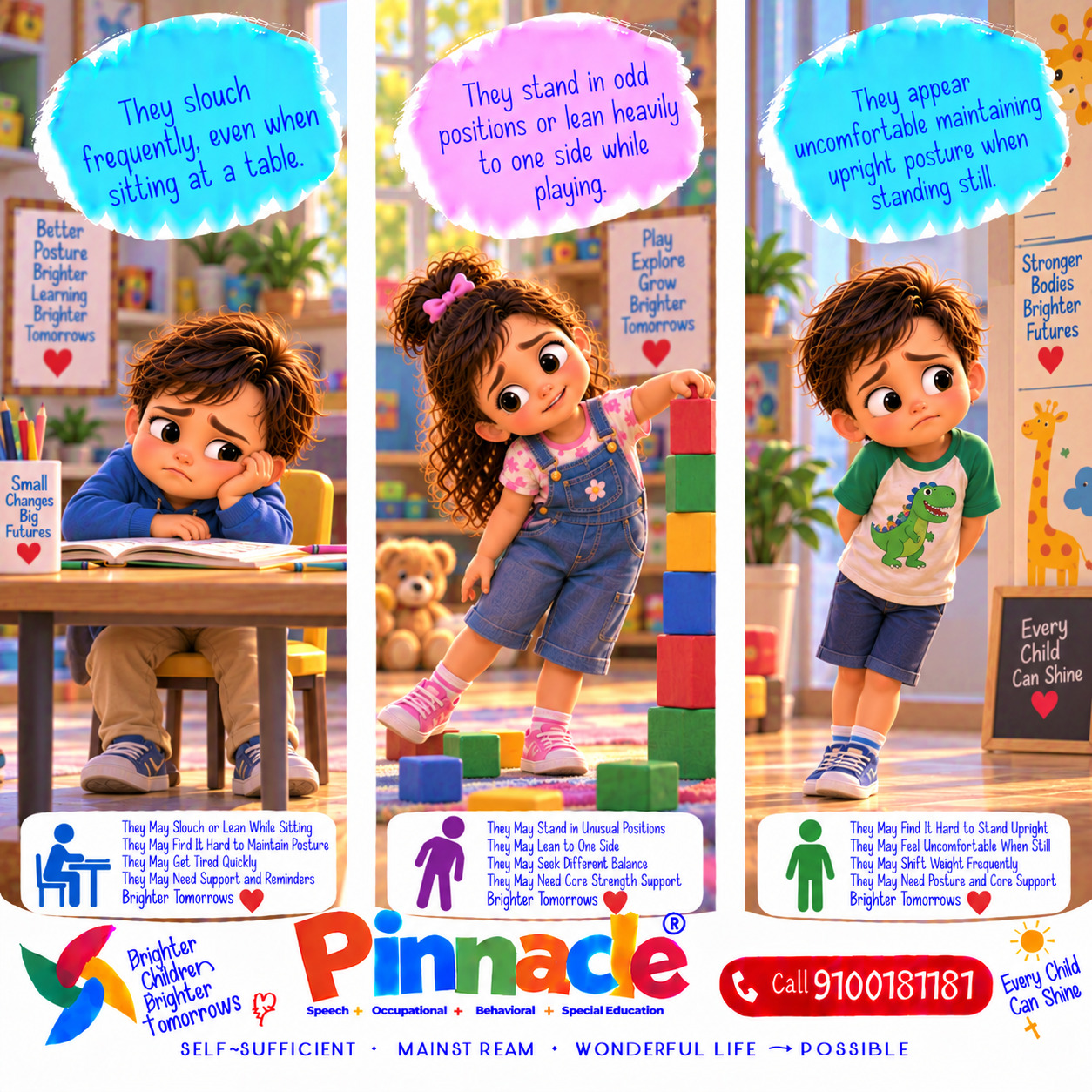
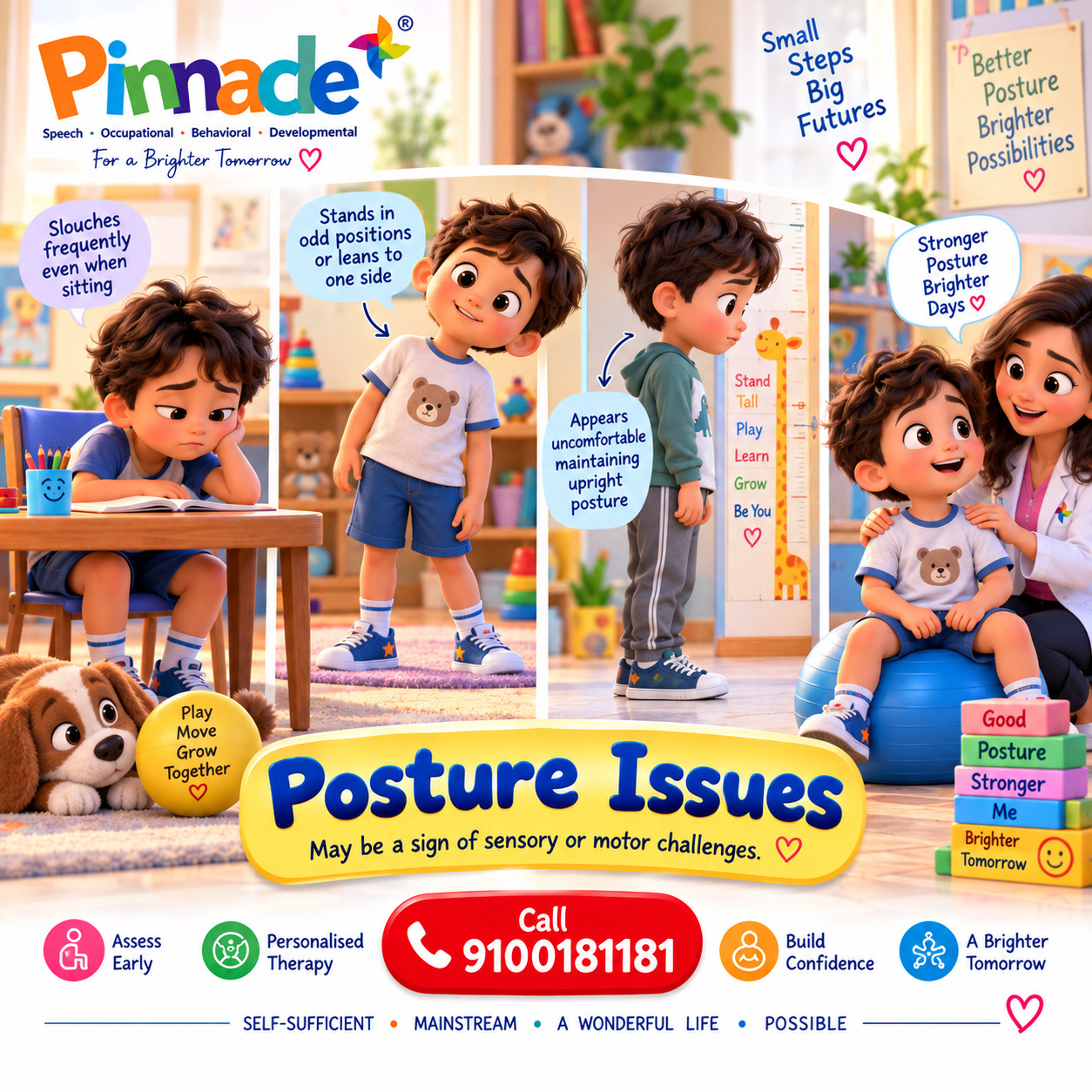
Does the child seem to hold their body awkwardly or have poor posture?
Topic: Posture Issues
Example 1
They slouch frequently, even when sitting at a table.
Example 2
They stand in odd positions or lean heavily to one side while playing.
Example 3
They appear uncomfortable maintaining upright posture when standing still.
Example illustrationQuestion illustration
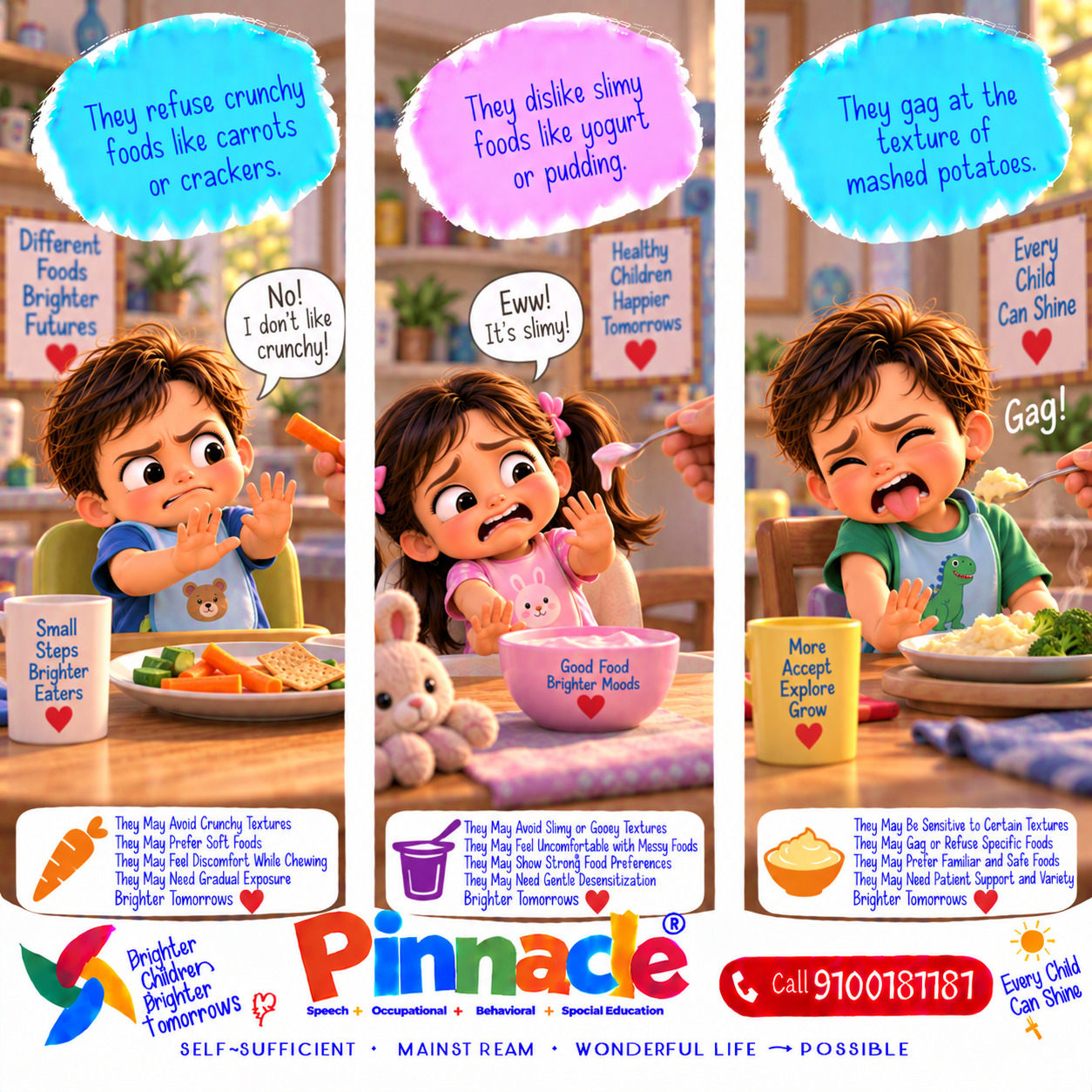
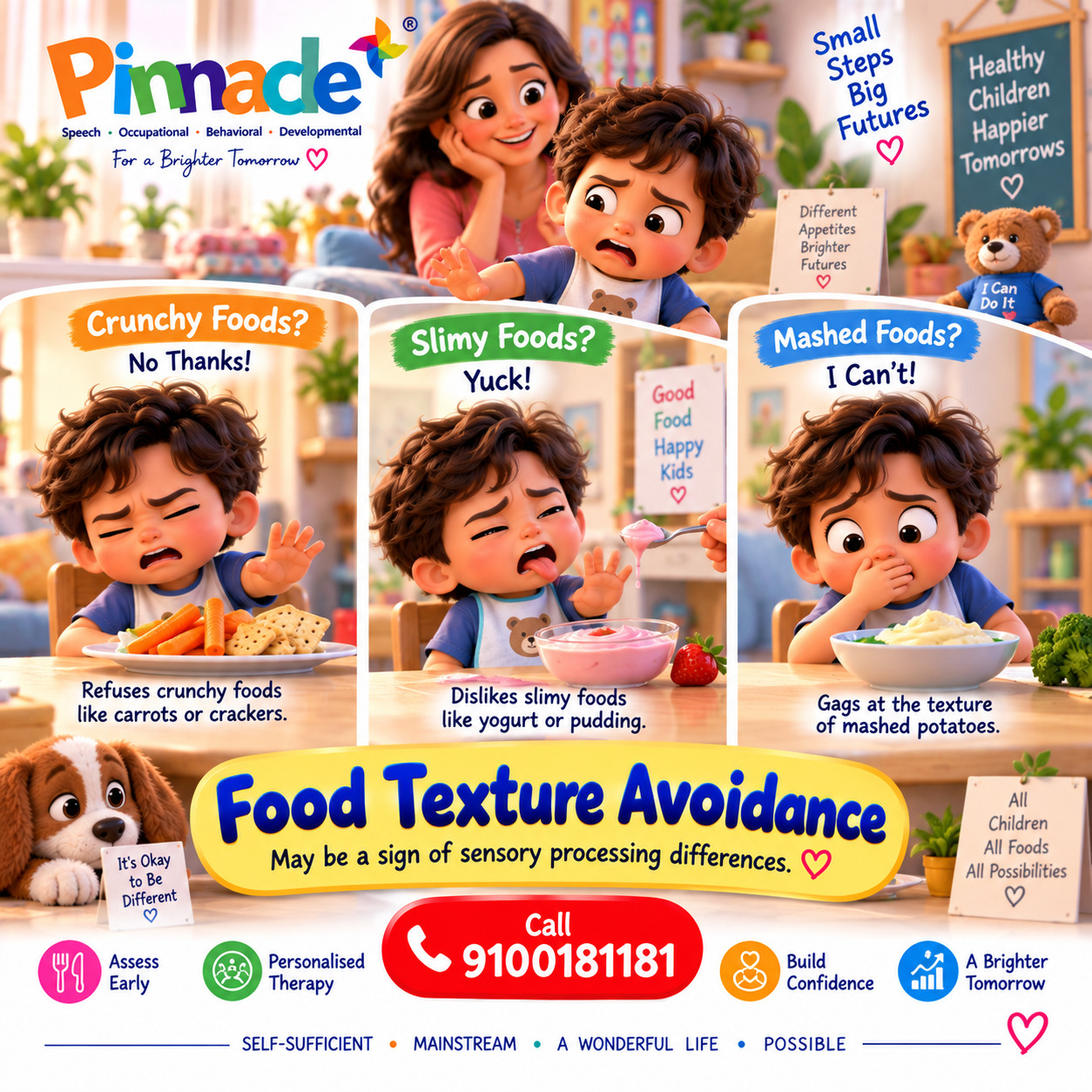
Does the child avoid certain food textures (e.g., crunchy, slimy)?
Topic: Food Texture Avoidance
Example 1
They refuse crunchy foods like carrots or crackers.
Example 2
They dislike slimy foods like yogurt or pudding.
Example 3
They gag at the texture of mashed potatoes.
Example illustrationQuestion illustration
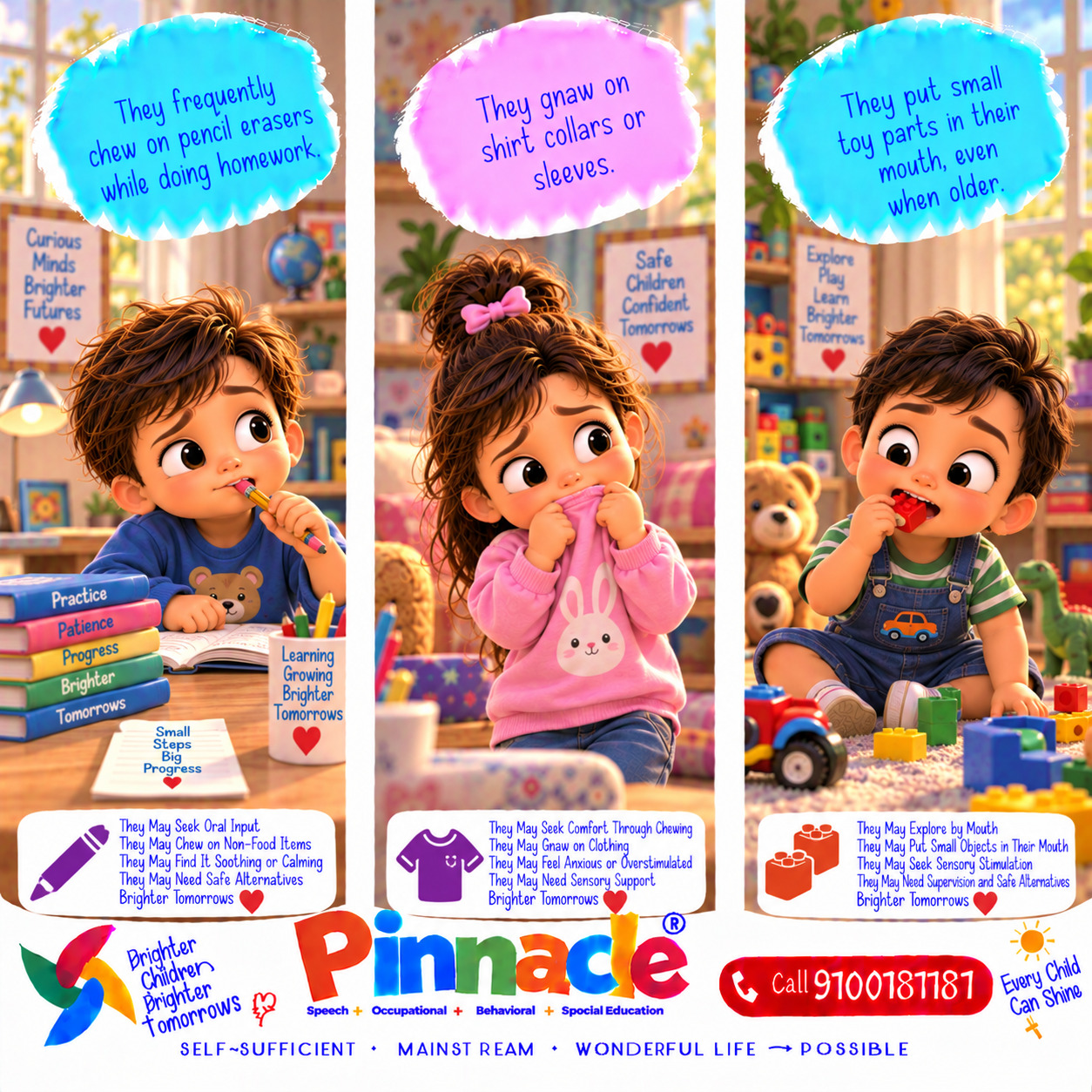
Does the child chew or bite on objects (e.g., pencils, toys)?
Topic: Chewing Objects
Example 1
They frequently chew on pencil erasers while doing homework.
Example 2
They gnaw on shirt collars or sleeves.
Example 3
They put small toy parts in their mouth, even when older.
Example illustrationQuestion illustration
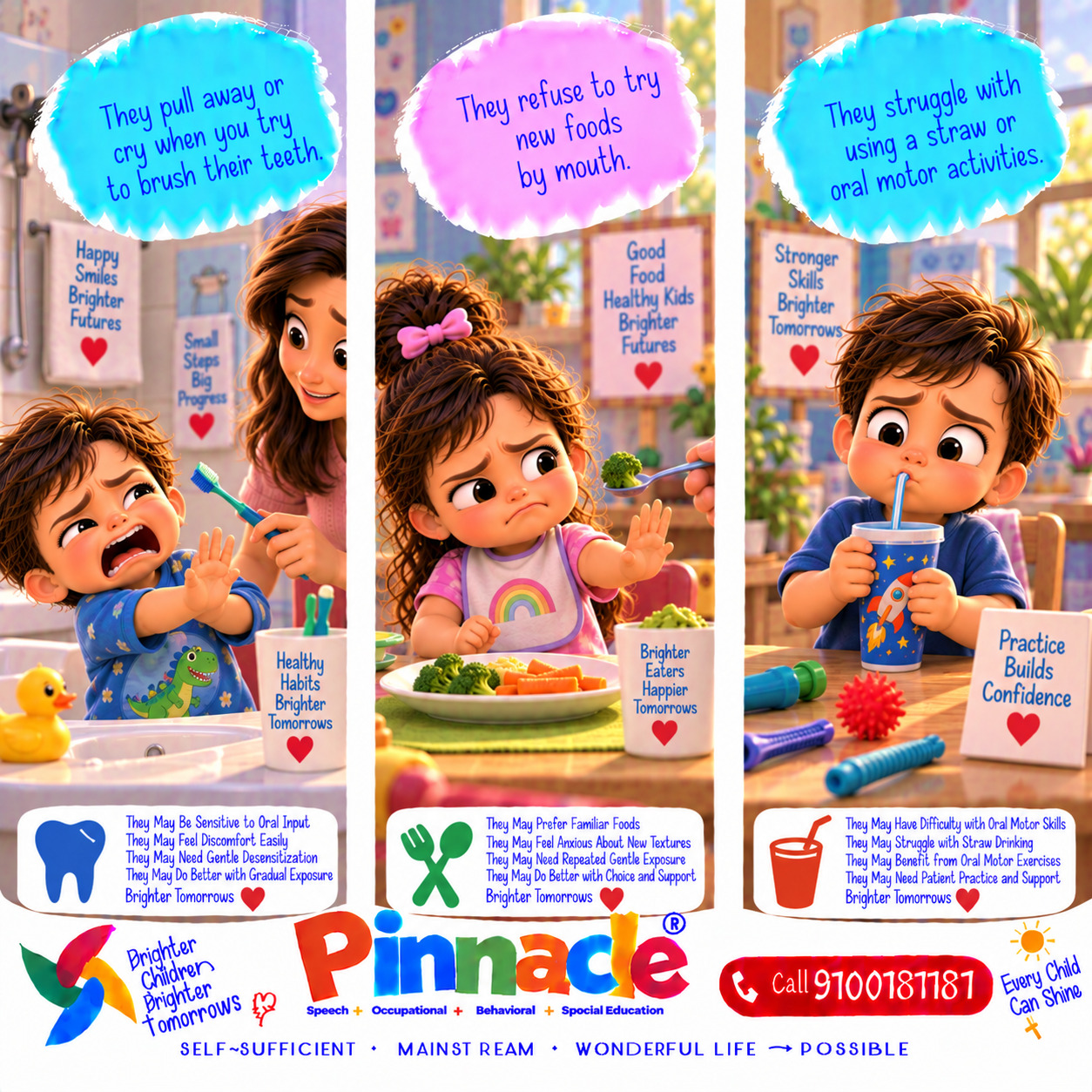
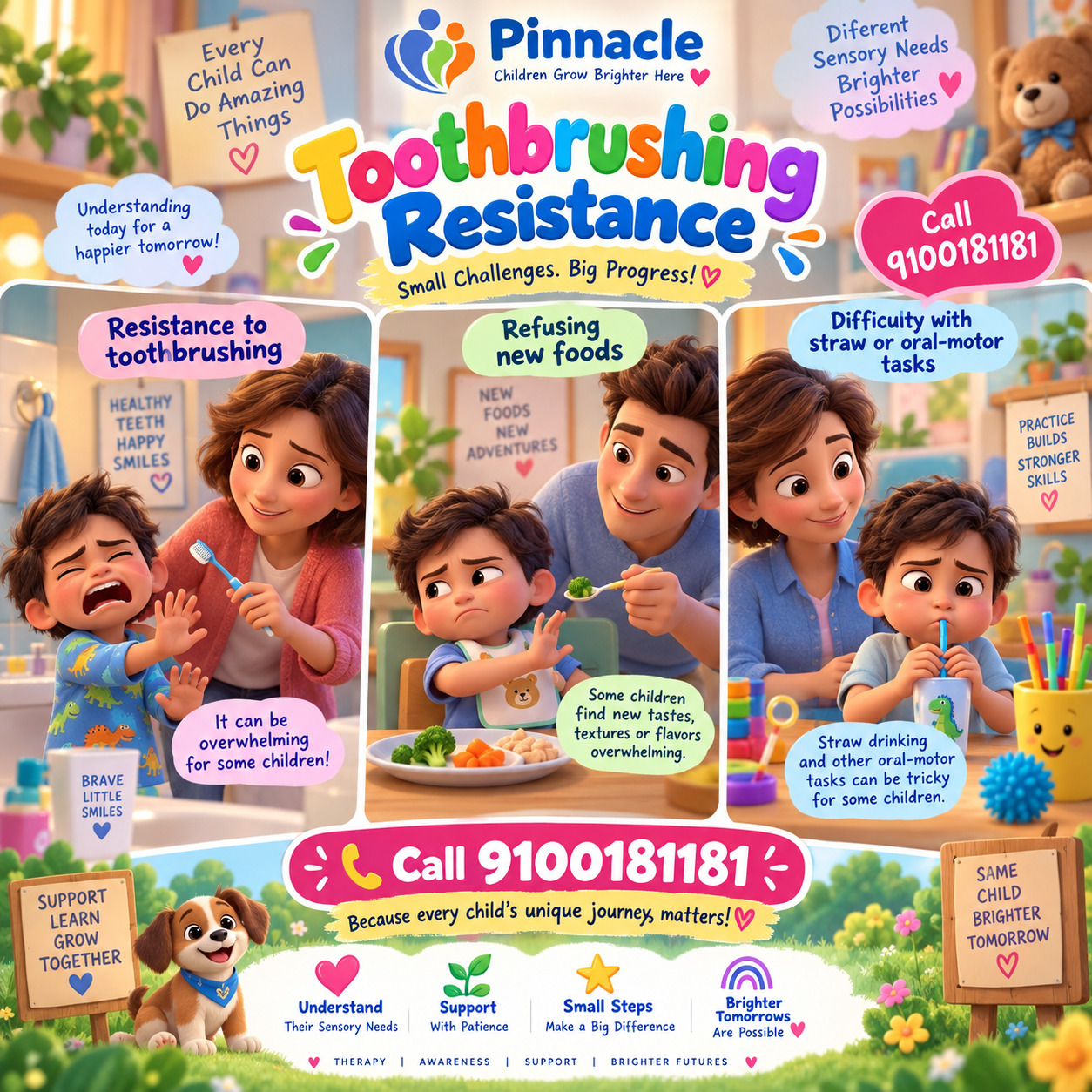
Does the child resist toothbrushing or putting things in their mouth?
Topic: Toothbrushing Resistance
Example 1
They pull away or cry when you try to brush their teeth.
Example 2
They refuse to try new foods by mouth.
Example 3
They struggle with using a straw or oral motor activities.
Example illustrationQuestion illustration
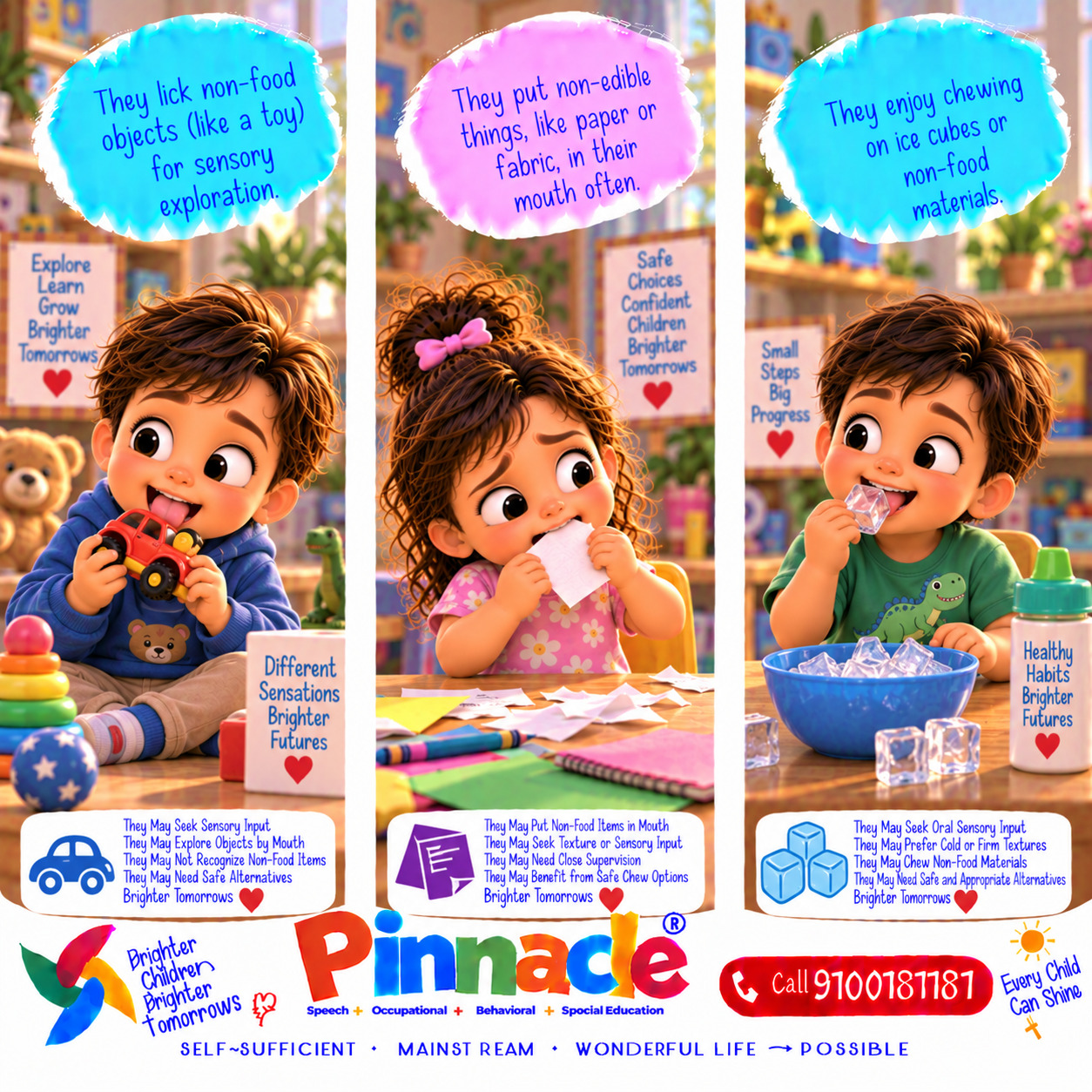
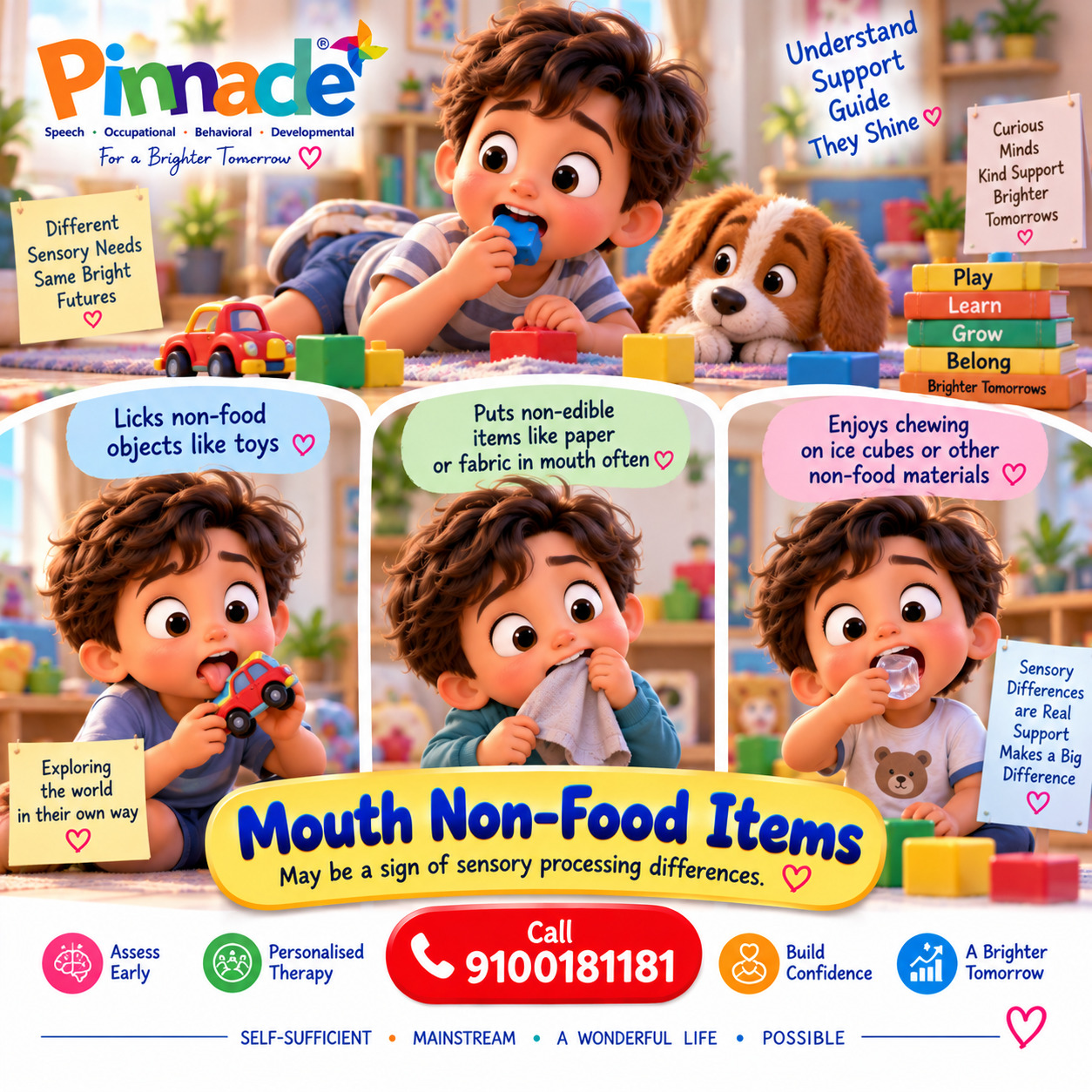
Does the child enjoy tasting or mouthing non-food items?
Topic: Mouth Non-Food Items
Example 1
They lick non-food objects (like a toy) for sensory exploration.
Example 2
They put non-edible things, like paper or fabric, in their mouth often.
Example 3
They enjoy chewing on ice cubes or non-food materials.
Example illustrationQuestion illustration
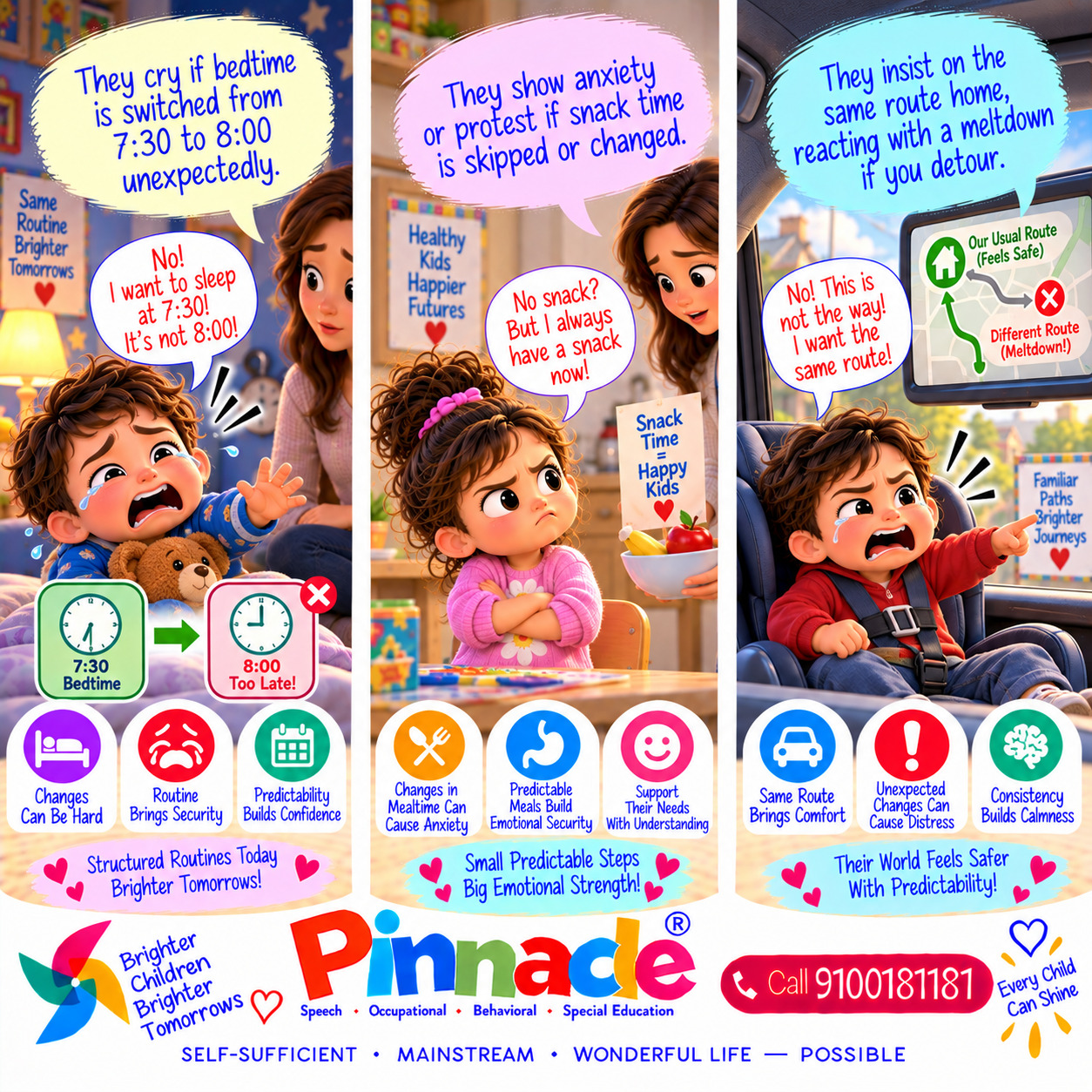
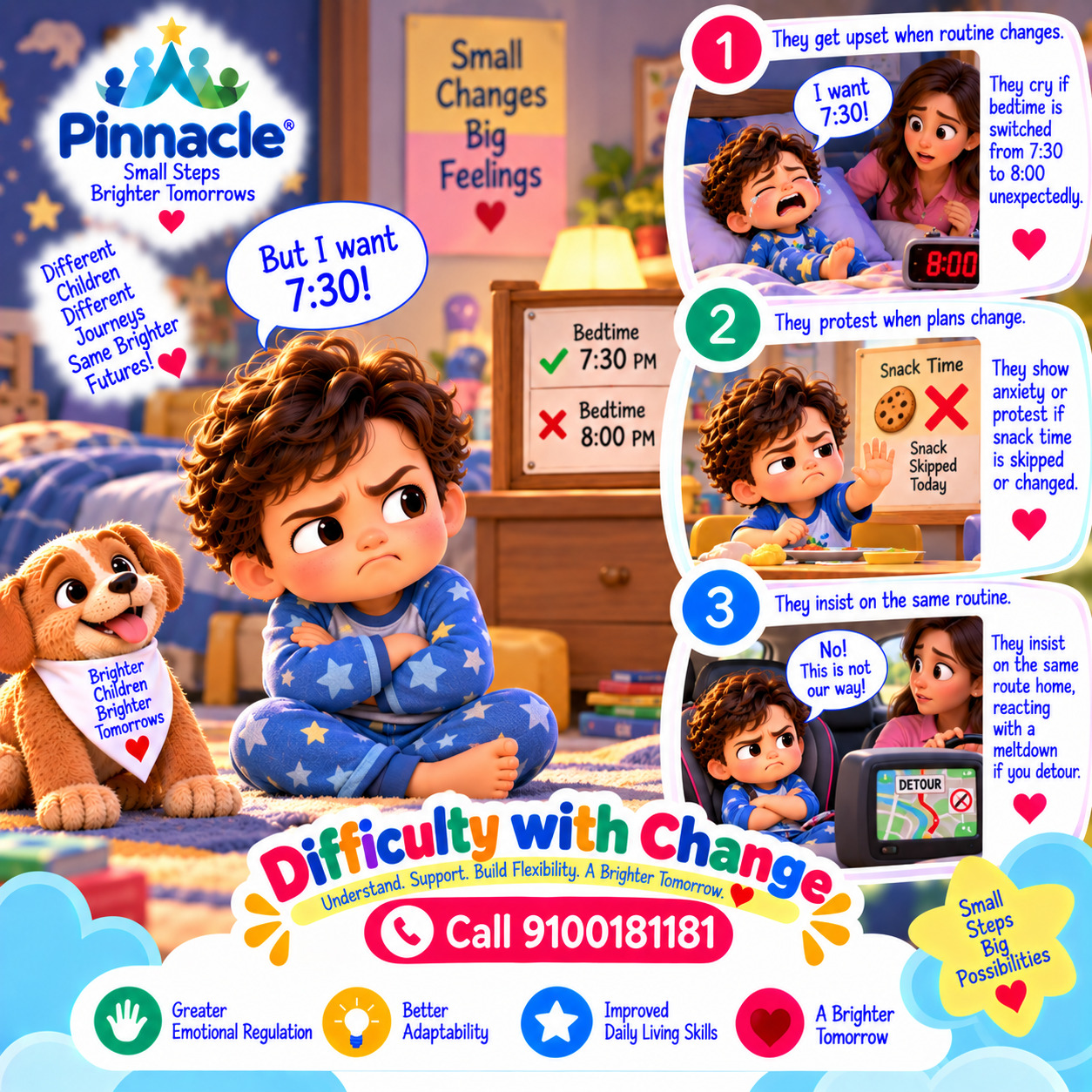
Does the child get upset by changes in routine or transitions?
Topic: Difficulty with Change
Example 1
They cry if bedtime is switched from 7:30 to 8:00 unexpectedly.
Example 2
They show anxiety or protest if snack time is skipped or changed.
Example 3
They insist on the same route home, reacting with a meltdown if you detour.
Example illustrationQuestion illustration
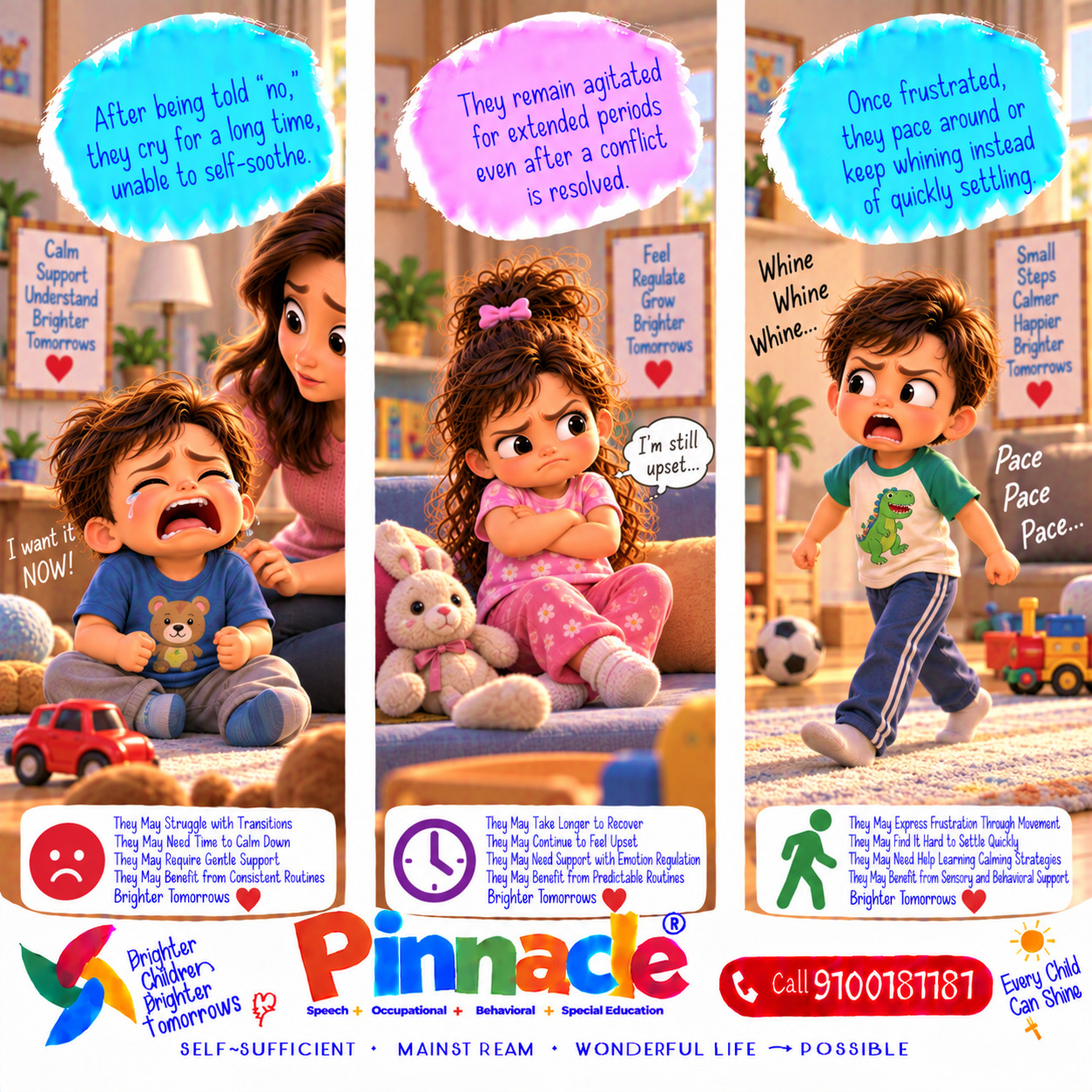
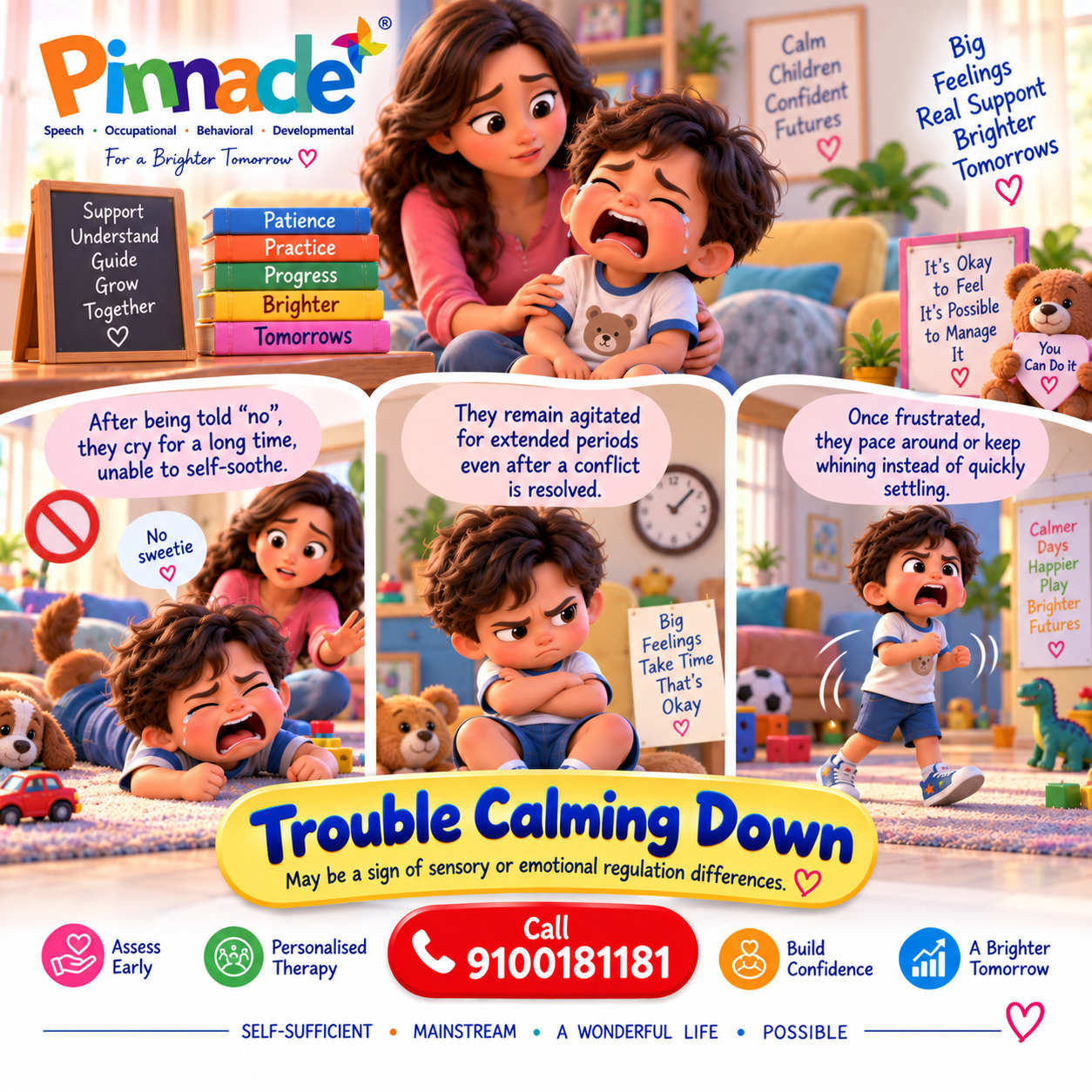
Does the child have difficulty calming down after being upset?
Topic: Trouble Calming Down
Example 1
After being told “no,” they cry for a long time, unable to self-soothe.
Example 2
They remain agitated for extended periods even after a conflict is resolved.
Example 3
Once frustrated, they pace around or keep whining instead of quickly settling.
Example illustrationQuestion illustration
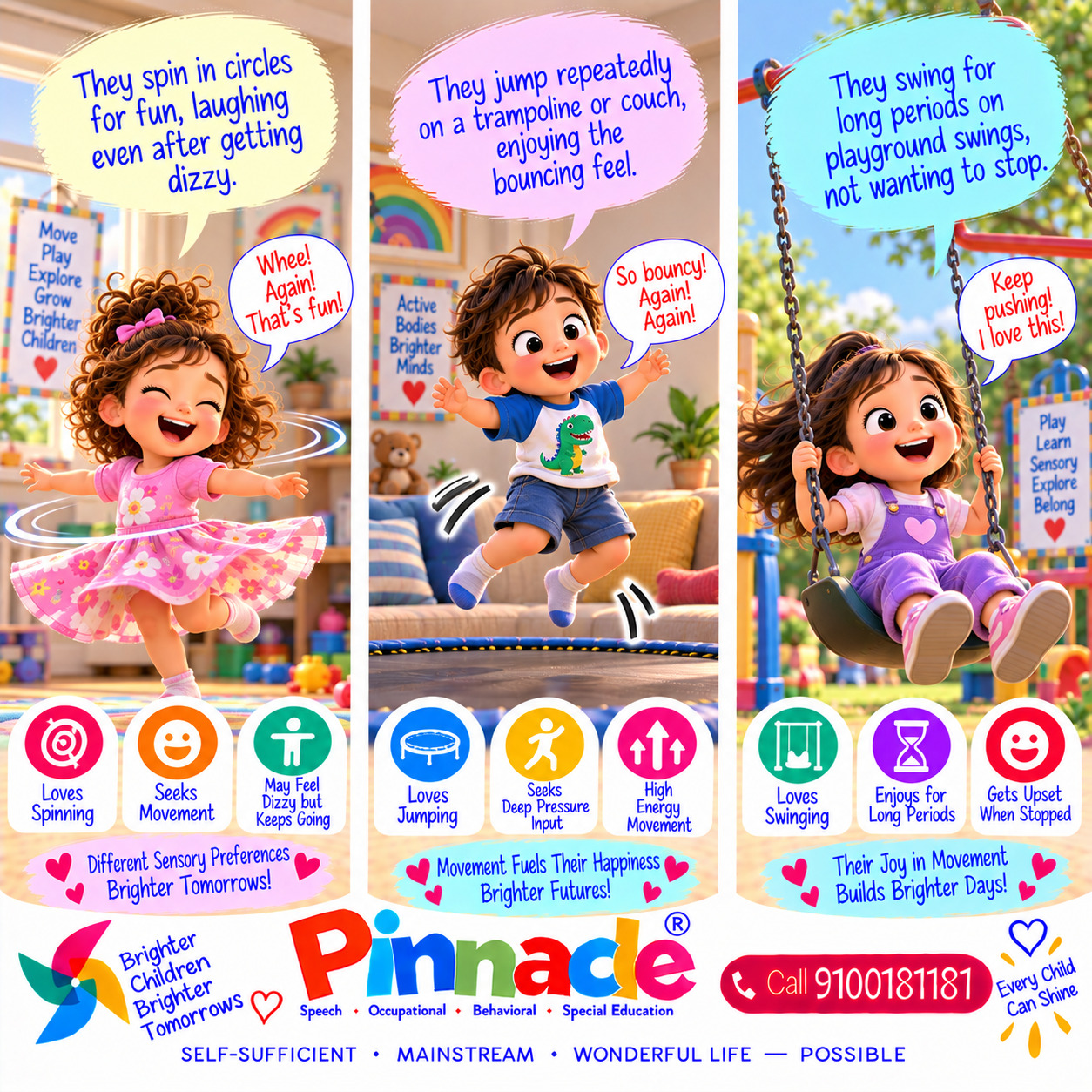
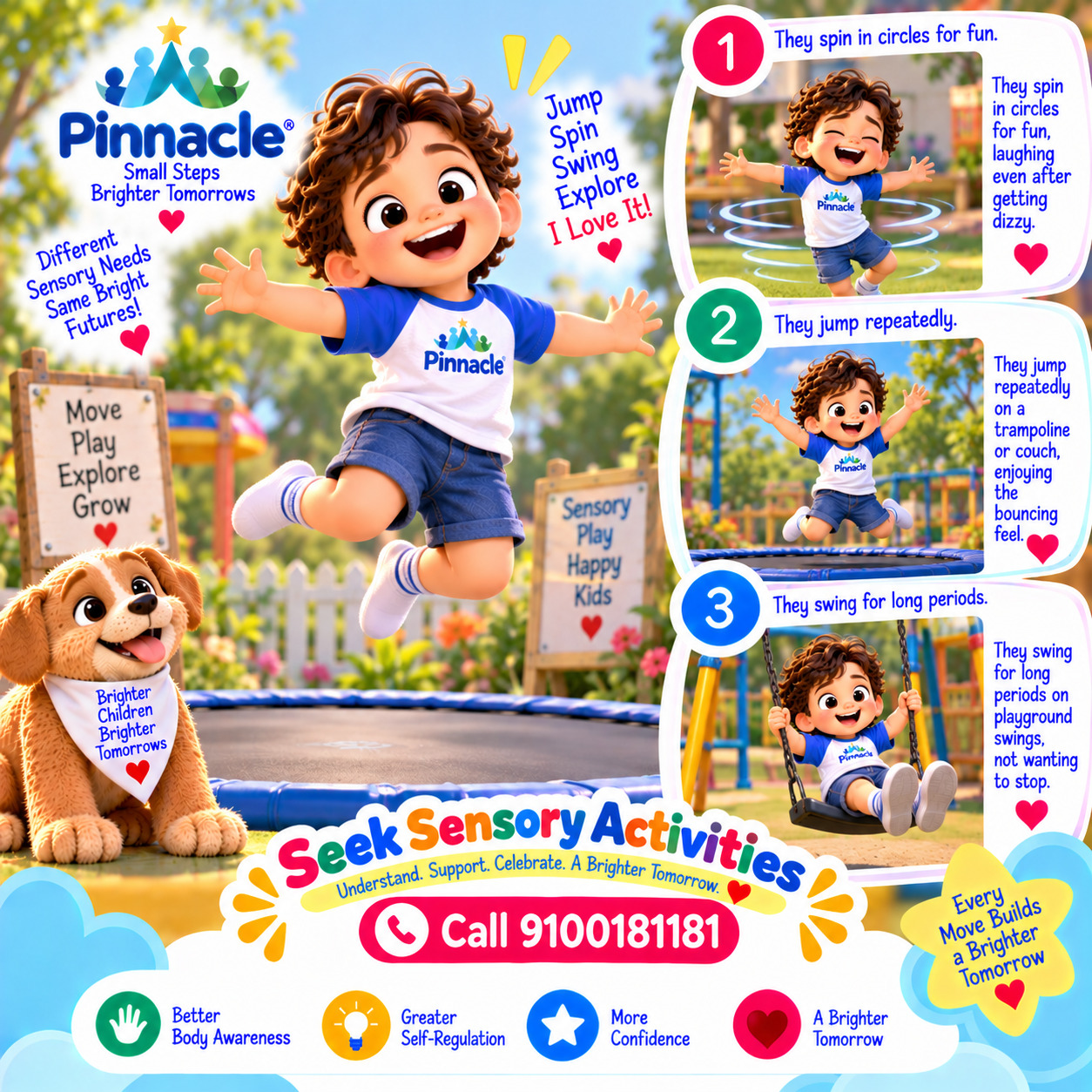
Does the child actively seek out sensory activities (e.g., spinning, jumping)?
Topic: Seek Sensory Activities
Example 1
They spin in circles for fun, laughing even after getting dizzy.
Example 2
They jump repeatedly on a trampoline or couch, enjoying the bouncing feel.
Example 3
They swing for long periods on playground swings, not wanting to stop.