The Pinnacle Childhood Autism Rating Scale is a structured assessment designed to identify the developmental and behavioral needs of children with autism spectrum disorder (ASD). This scale facilitates early intervention, helping each child reach their full potential.
The Pinnacle Childhood Autism Rating Scale is an evaluation tool that assesses various aspects of a child''s developmental patterns related to autism. It focuses on key areas like communication, social interaction, and behavioral tendencies.
Early assessment using this scale can greatly enhance understanding of a child''s specific needs, allowing for targeted therapy plans. It empowers parents with knowledge and equips therapists to tailor interventions effectively.
Using pioneering methodologies and the Pinnacle TherapeuticAI, our experts conduct assessments with a personalized approach. Each child is observed and evaluated across multiple sessions to ensure 97%+ accuracy in diagnosing and planning interventions.
Parents are encouraged to consider assessments as early as potential signs of developmental delays or atypical behavior are observed, typically between 9 months to 7 years of age.
The assessments are conducted at Pinnacle Blooms Network centers, which are located across India, USA, Dubai, and Singapore, ensuring accessibility and convenience for families worldwide.
With over 1,00,00,000 successful assessments, Pinnacle Blooms Network demonstrates a proven accuracy rate of 97% in providing personalized therapeutic interventions.
Aarav, a cheerful 4-year-old from Hyderabad, was once unable to express his needs. His parents were anxious and unsure about his future. After enrolling in the Pinnacle Childhood Autism Rating Scale assessment, Aarav received tailored therapies that unlocked his potential. Today, Aarav communicates effectively and joins his friends in play. His parents feel a wave of relief and joy. This transformation was made possible by early intervention and personalized therapy.
Progress : Significant improvement in communication and social skills.
Help your child thrive like Ishan! Call 9100 181 181 to schedule an assessment today.
*Names are indicative only and have been changed for privacy protectionSuccess Testimonial
Name : Meena Gupta
RelationShip : Mother
Testimonial : The assessment at Pinnacle Blooms Network changed Ishan''s life. We were guided every step of the way, and his growth has been extraordinary.
Pinnacle Blooms Network via its cutting-edge assessments and therapies stands as a pioneer in making a difference in the lives of children with developmental needs.
These are reference questions and illustrative examples. This section does not collect child responses, calculate scores or produce an individual assessment result.
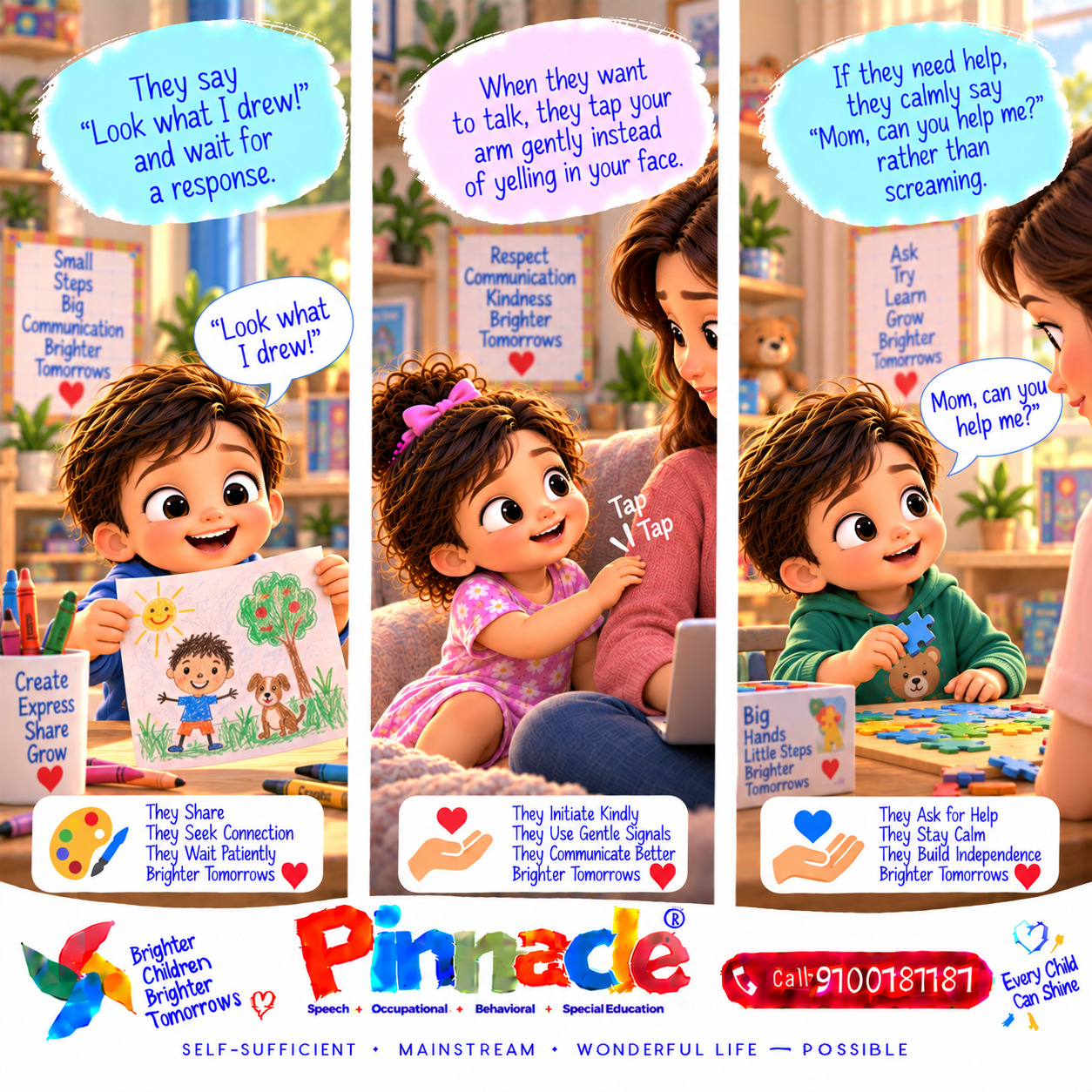
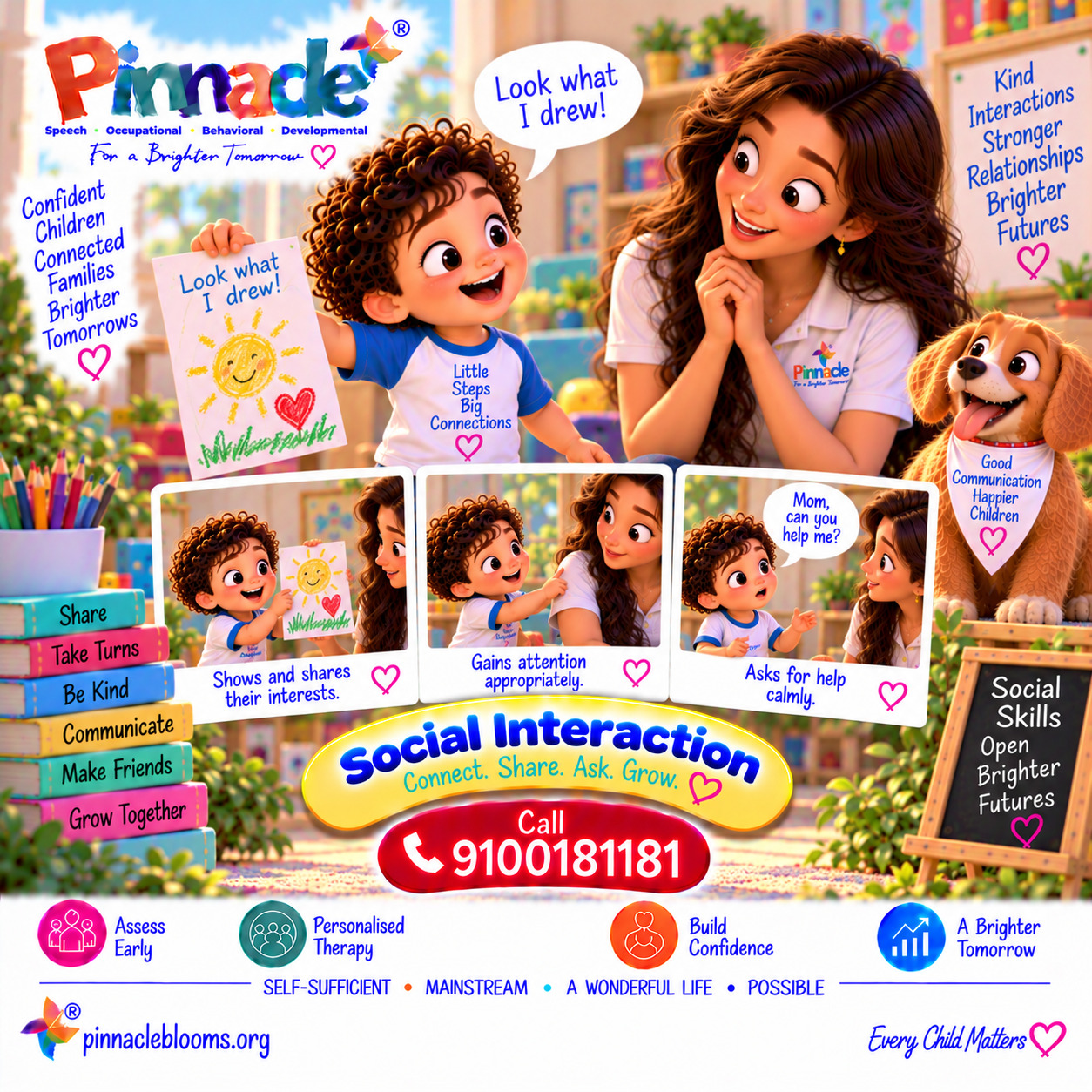
Does the child seek attention from others appropriately?
Topic: Social Interaction
Example 1
They say “Look what I drew!” and wait for a response.
Example 2
When they want to talk, they tap your arm gently instead of yelling in your face.
Example 3
If they need help, they calmly say “Mom, can you help me?” rather than screaming.
Example illustrationQuestion illustration
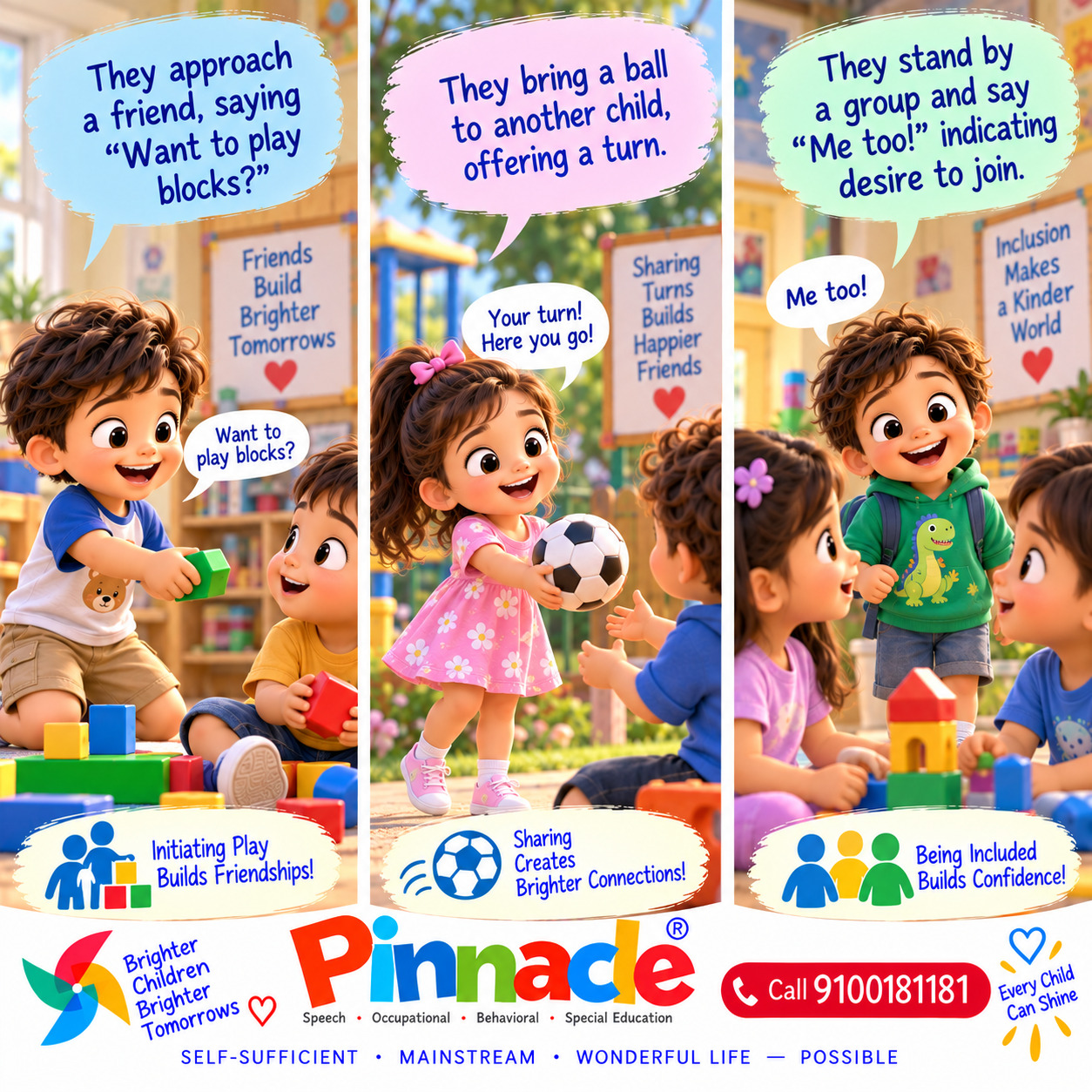
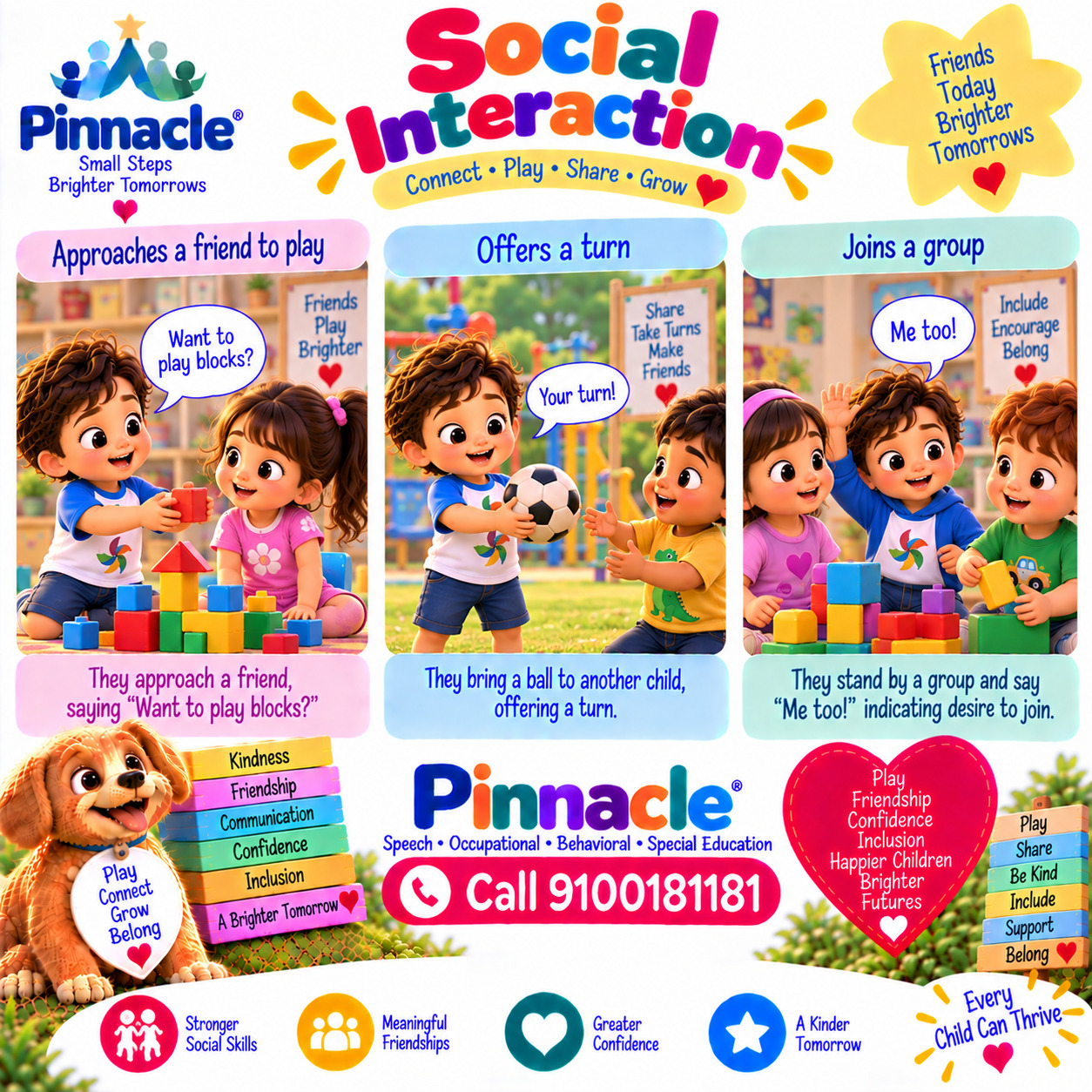
Does the child initiate play with peers?
Topic: Social Interaction
Example 1
They approach a friend, saying “Want to play blocks?”
Example 2
They bring a ball to another child, offering a turn.
Example 3
They stand by a group and say “Me too!” indicating desire to join.
Example illustrationQuestion illustration
Does the child participate in group activities?
Topic: Social Interaction
Example 1
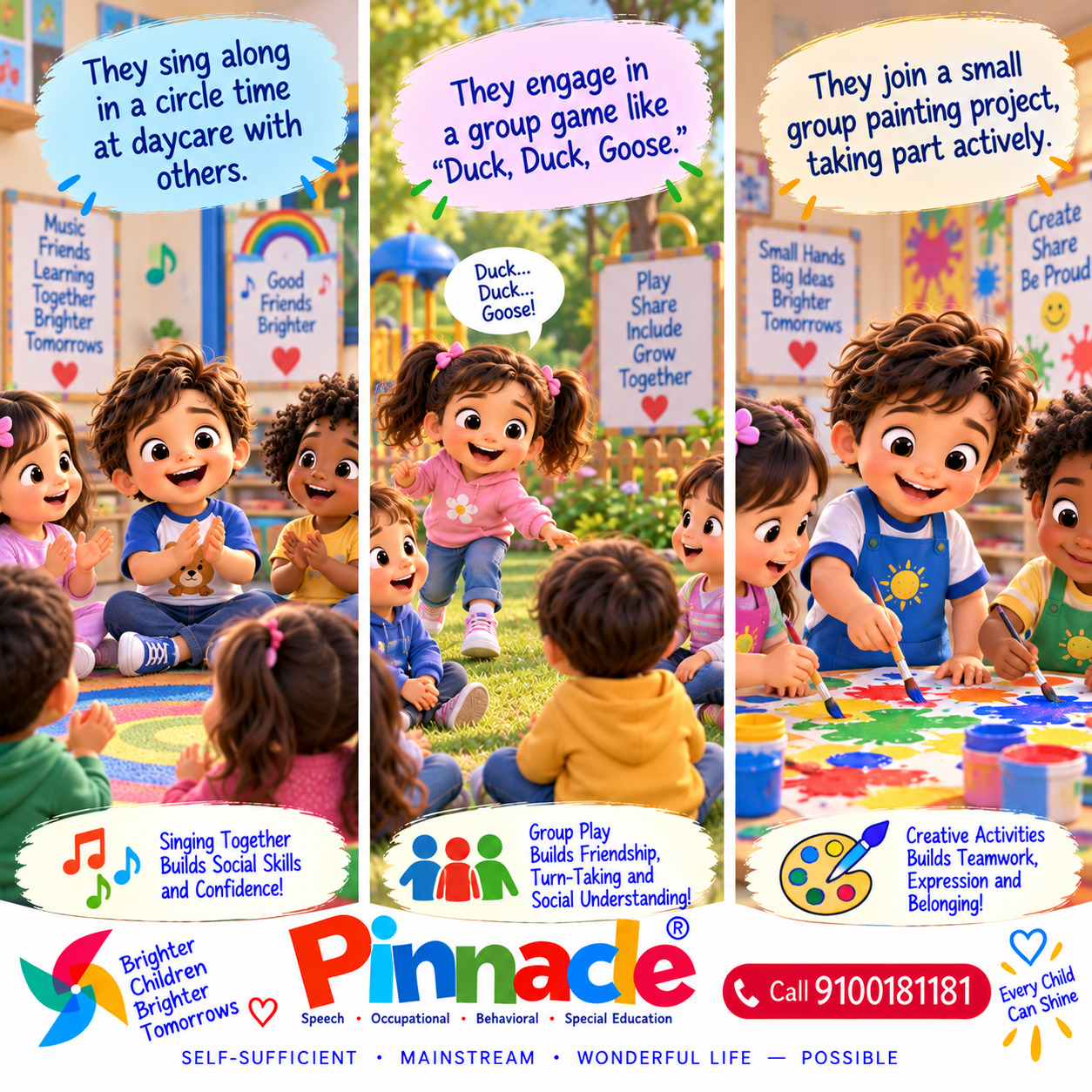
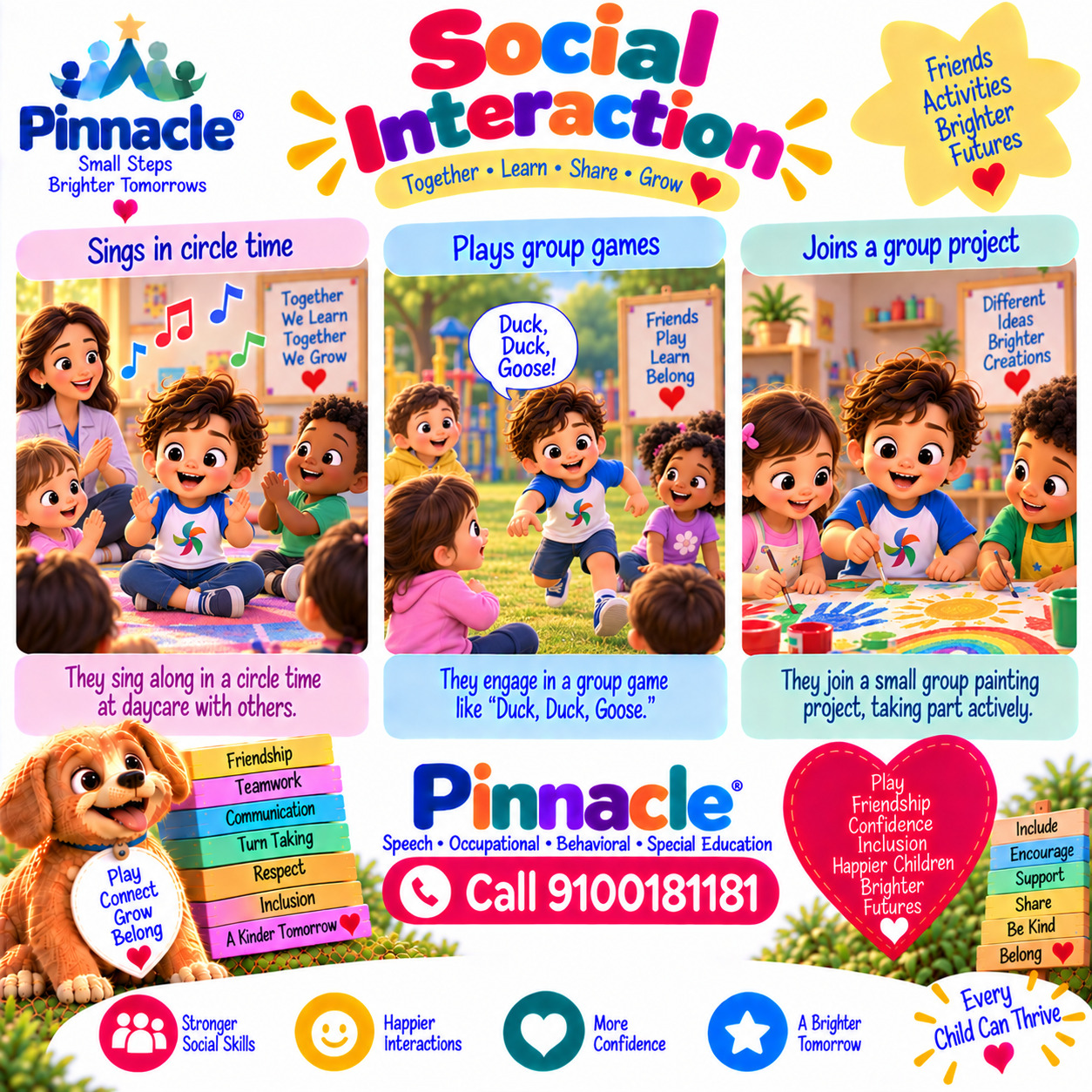
They sing along in a circle time at daycare with others.
Example 2
They engage in a group game like “Duck, Duck, Goose.”
Example 3
They join a small group painting project, taking part actively.
Example illustrationQuestion illustration
Does the child respond when spoken to by others?
Topic: Communication
Example 1
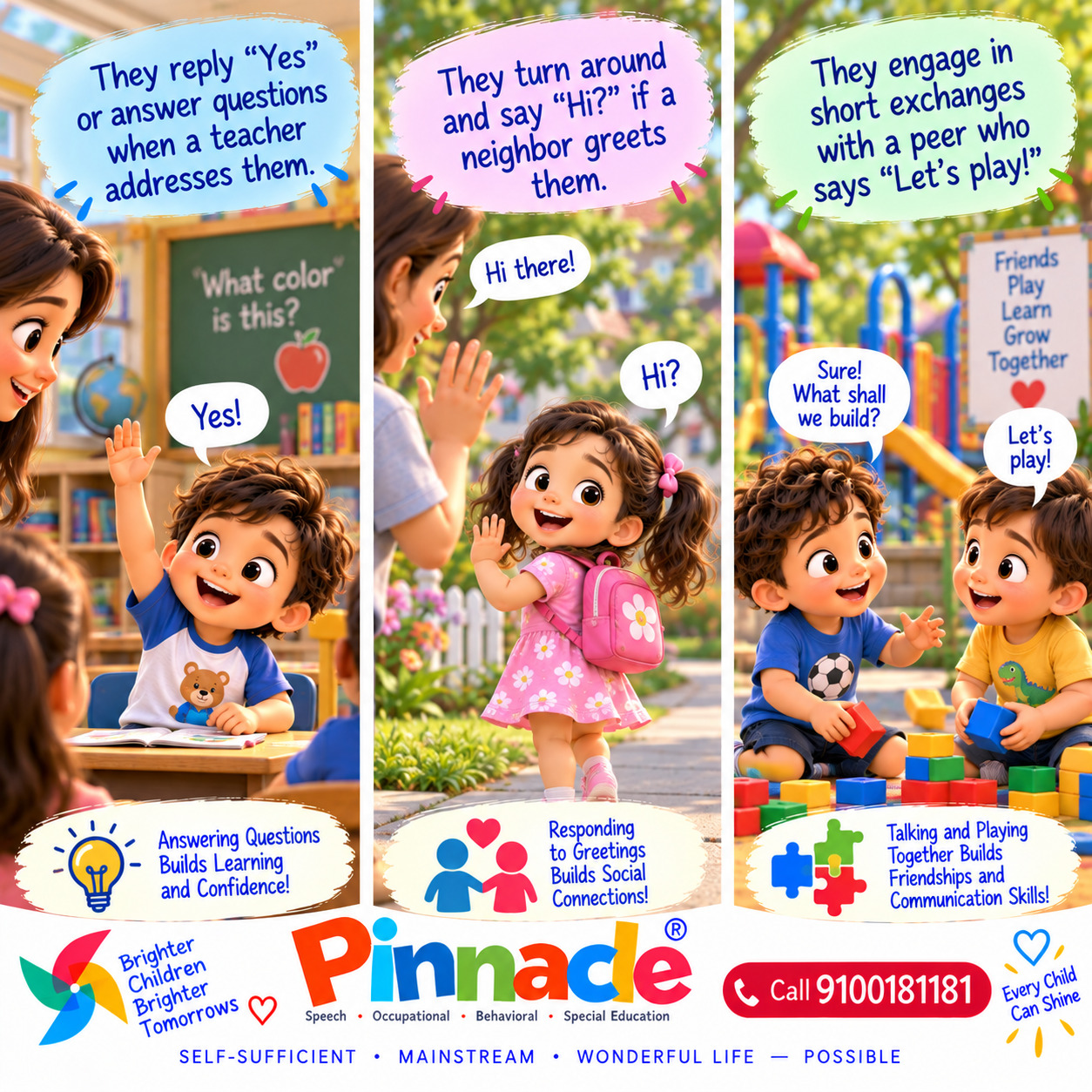
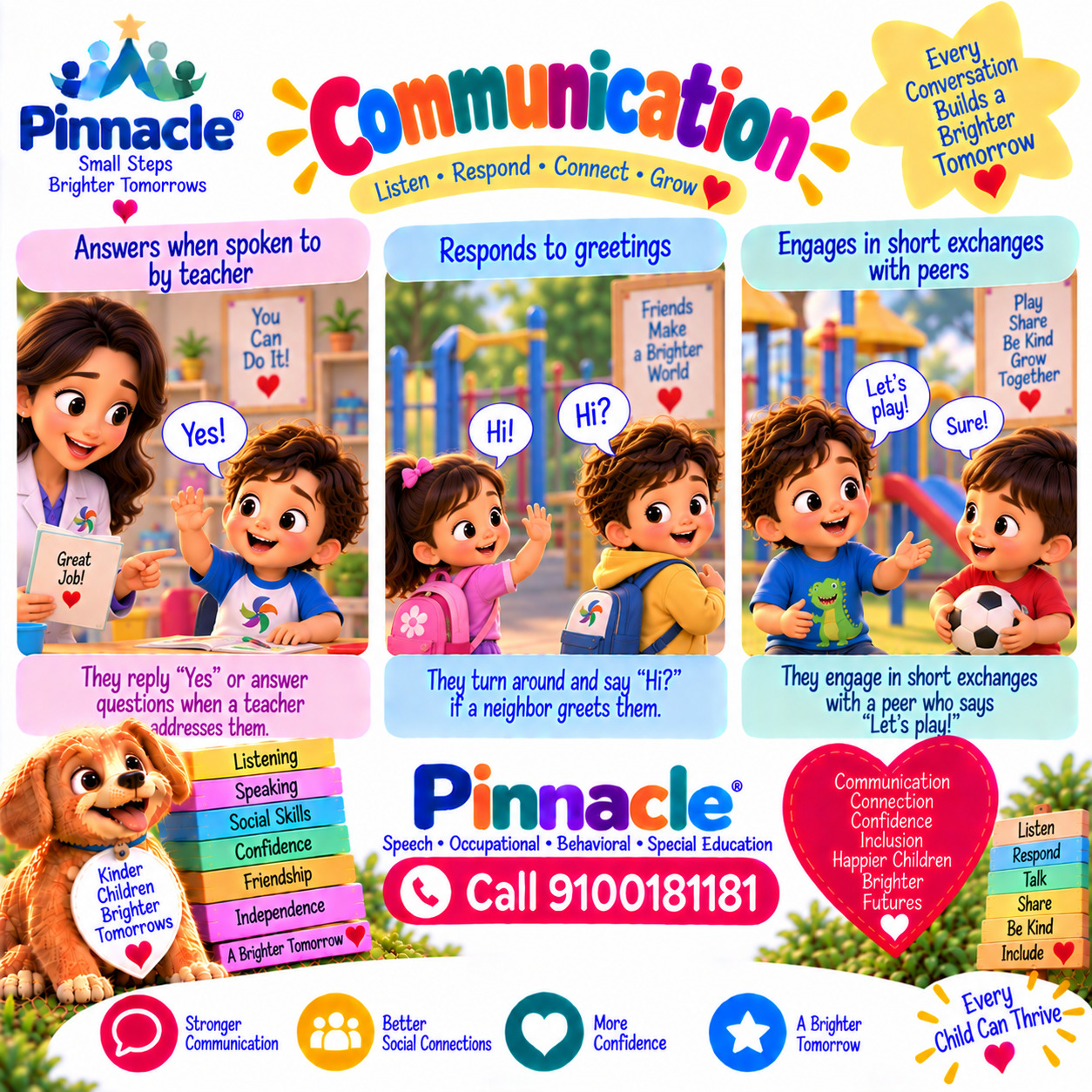
They reply “Yes” or answer questions when a teacher addresses them.
Example 2
They turn around and say “Hi?” if a neighbor greets them.
Example 3
They engage in short exchanges with a peer who says “Let’s play!”
Example illustrationQuestion illustration
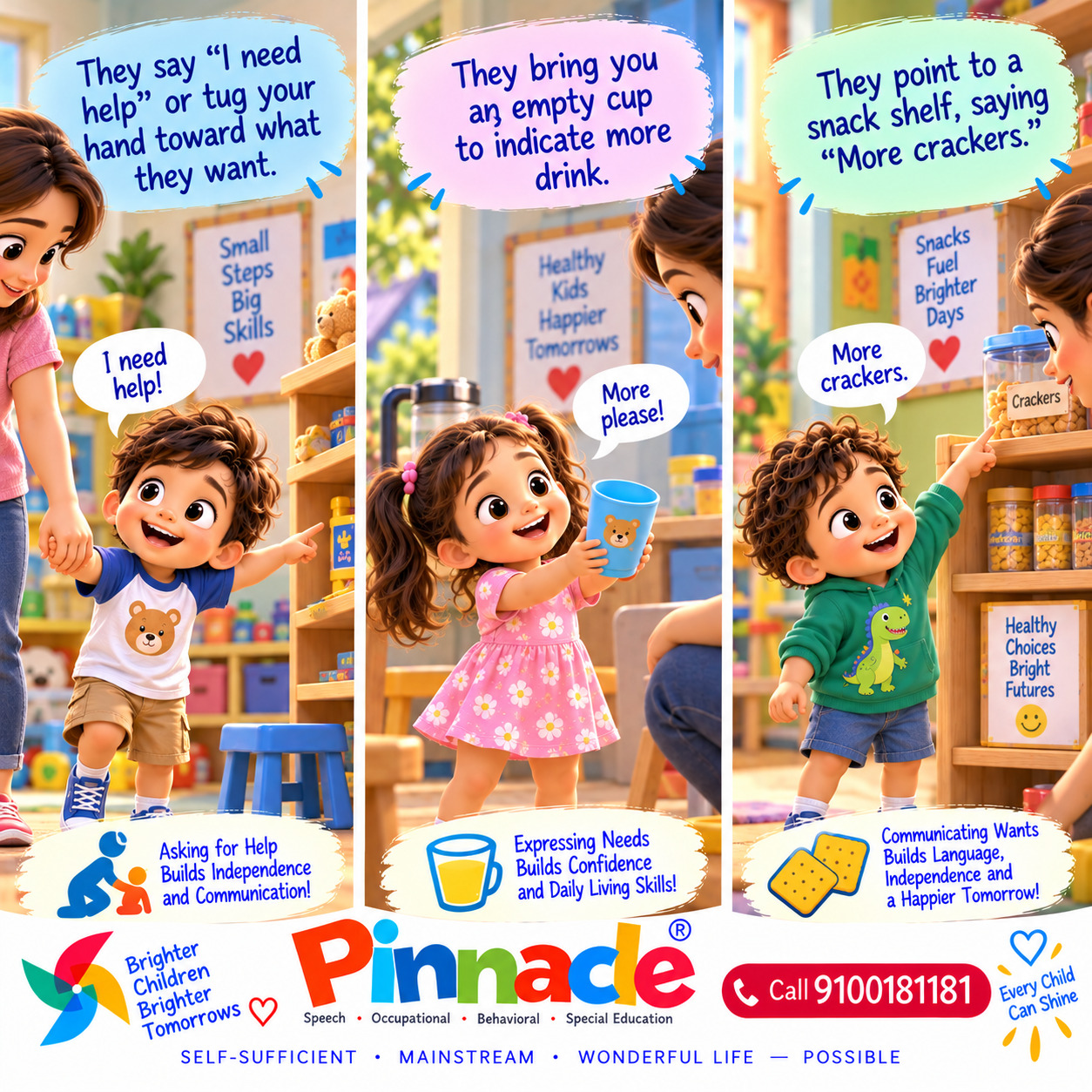
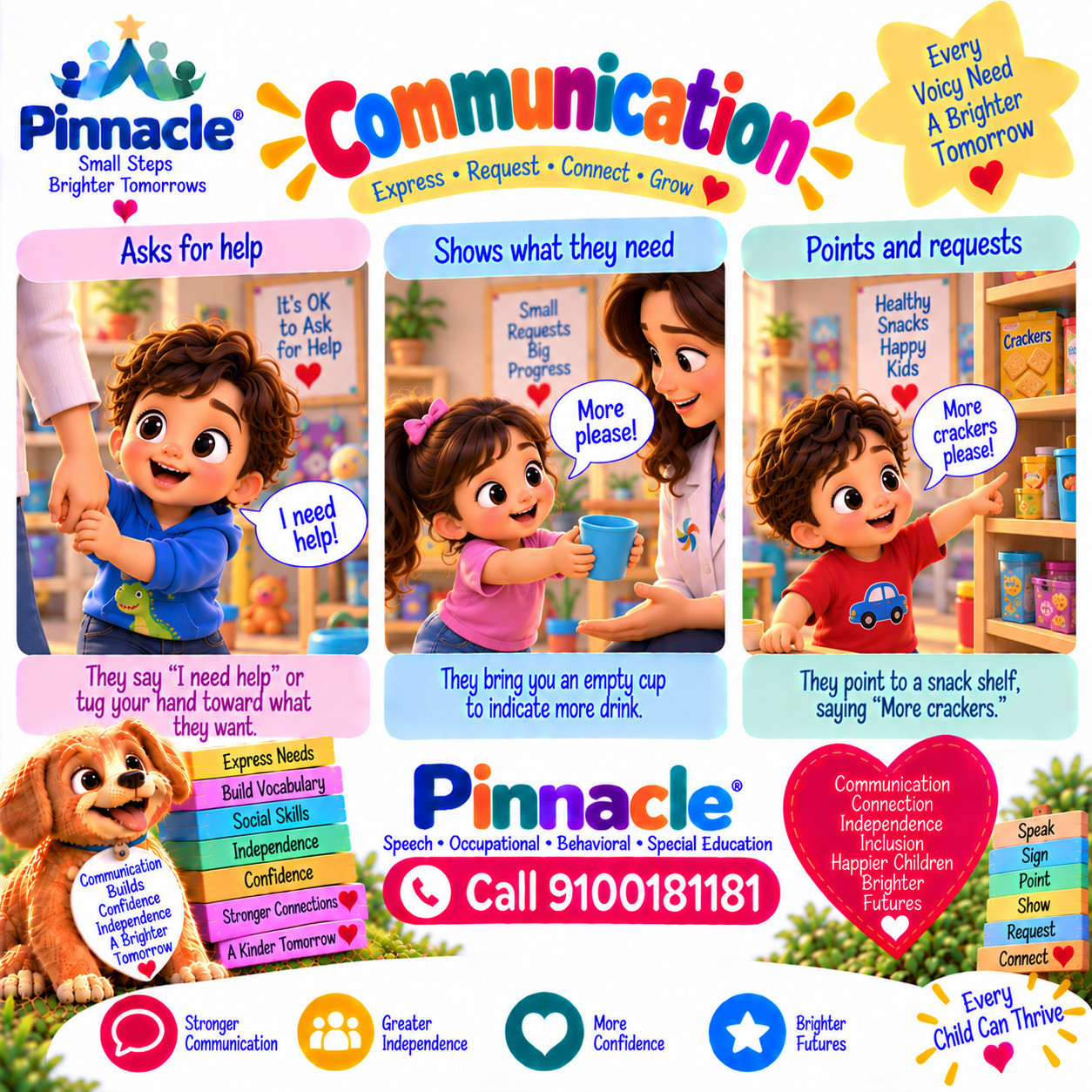
Can the child express their needs verbally or nonverbally?
Topic: Communication
Example 1
They say “I need help” or tug your hand toward what they want.
Example 2
They bring you an empty cup to indicate more drink.
Example 3
They point to a snack shelf, saying “More crackers.”
Example illustrationQuestion illustration
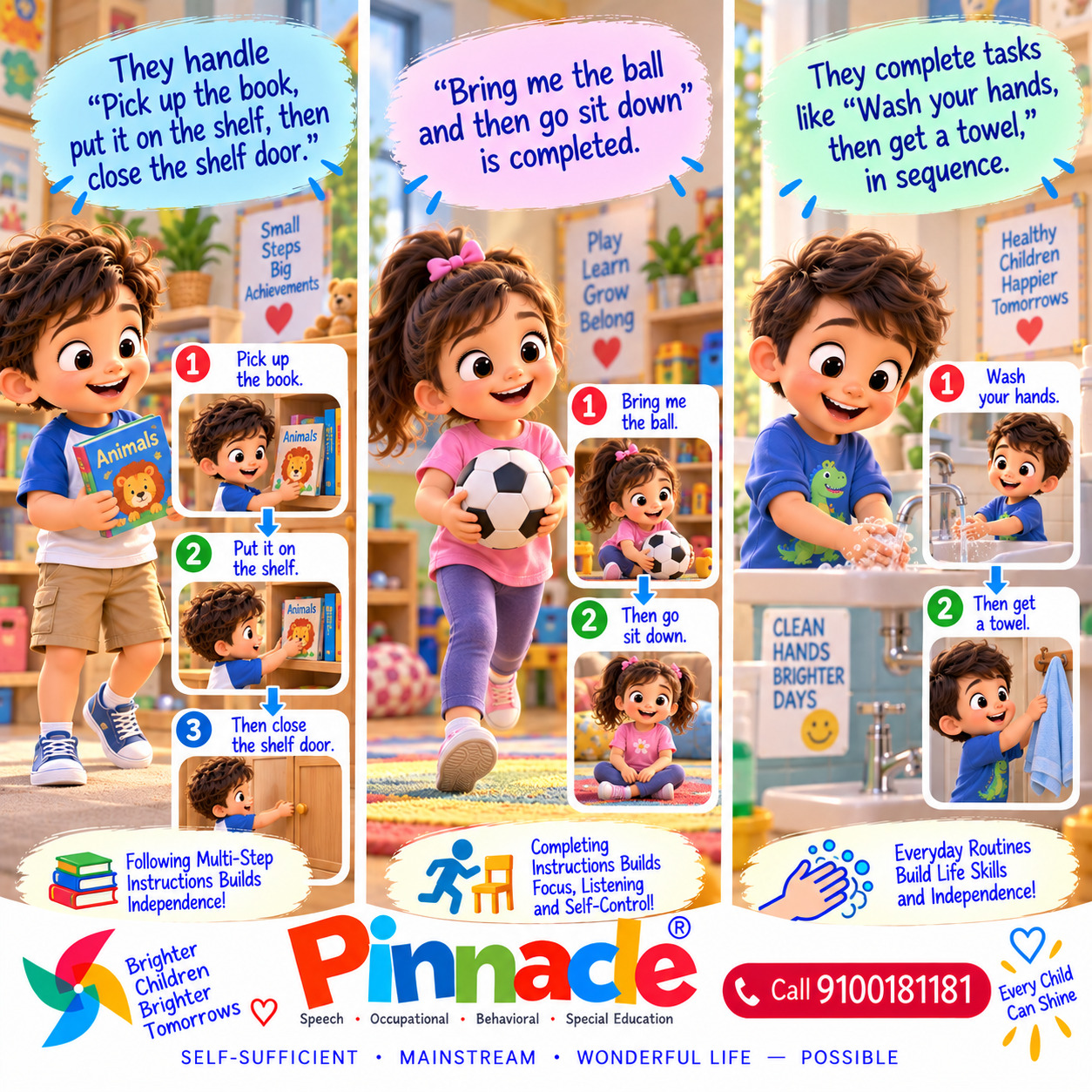
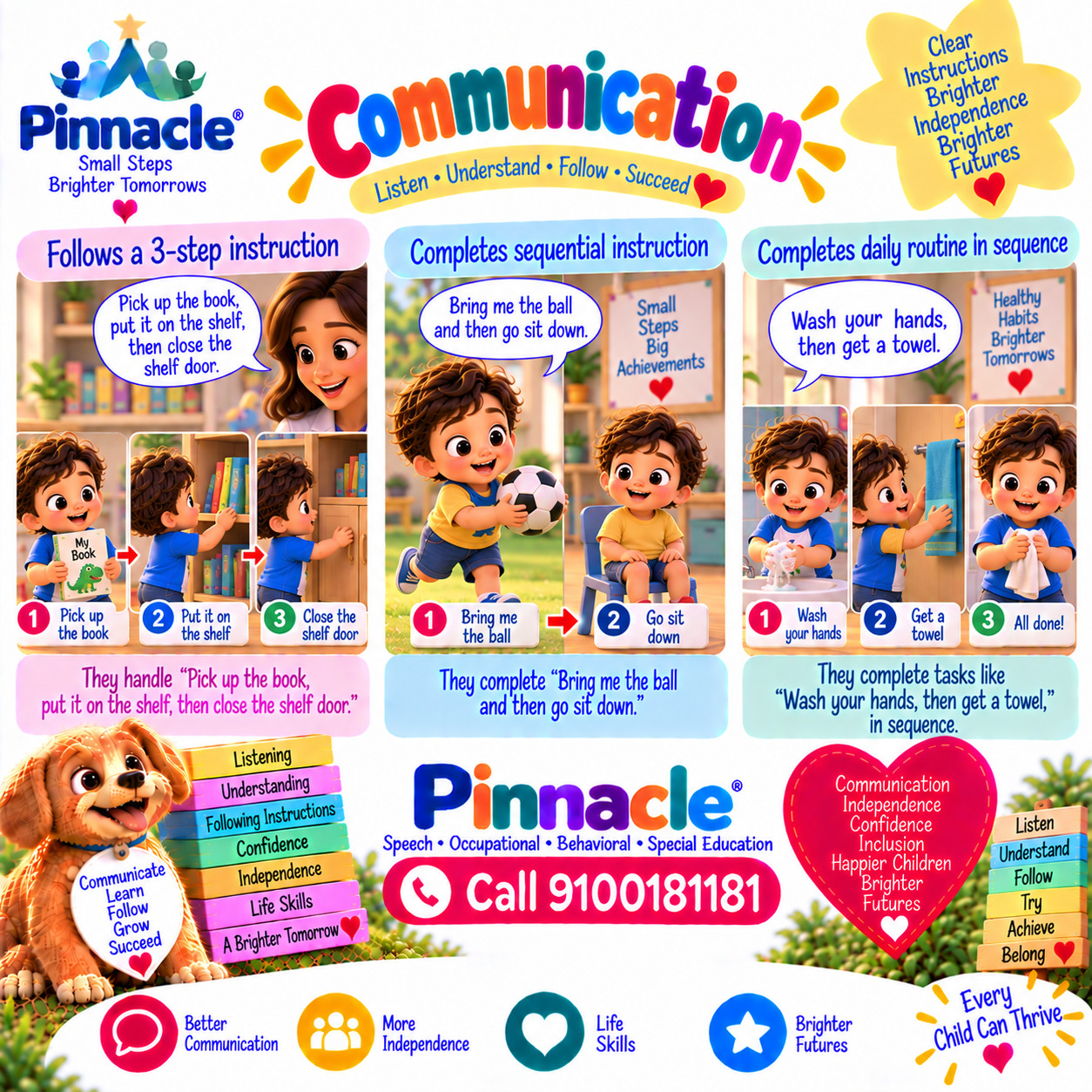
Does the child follow multi-step instructions?
Topic: Communication
Example 1
They handle “Pick up the book, put it on the shelf, then close the shelf door.”
Example 2
“Bring me the ball and then go sit down” is completed.
Example 3
They complete tasks like “Wash your hands, then get a towel,” in sequence.
Example illustrationQuestion illustration
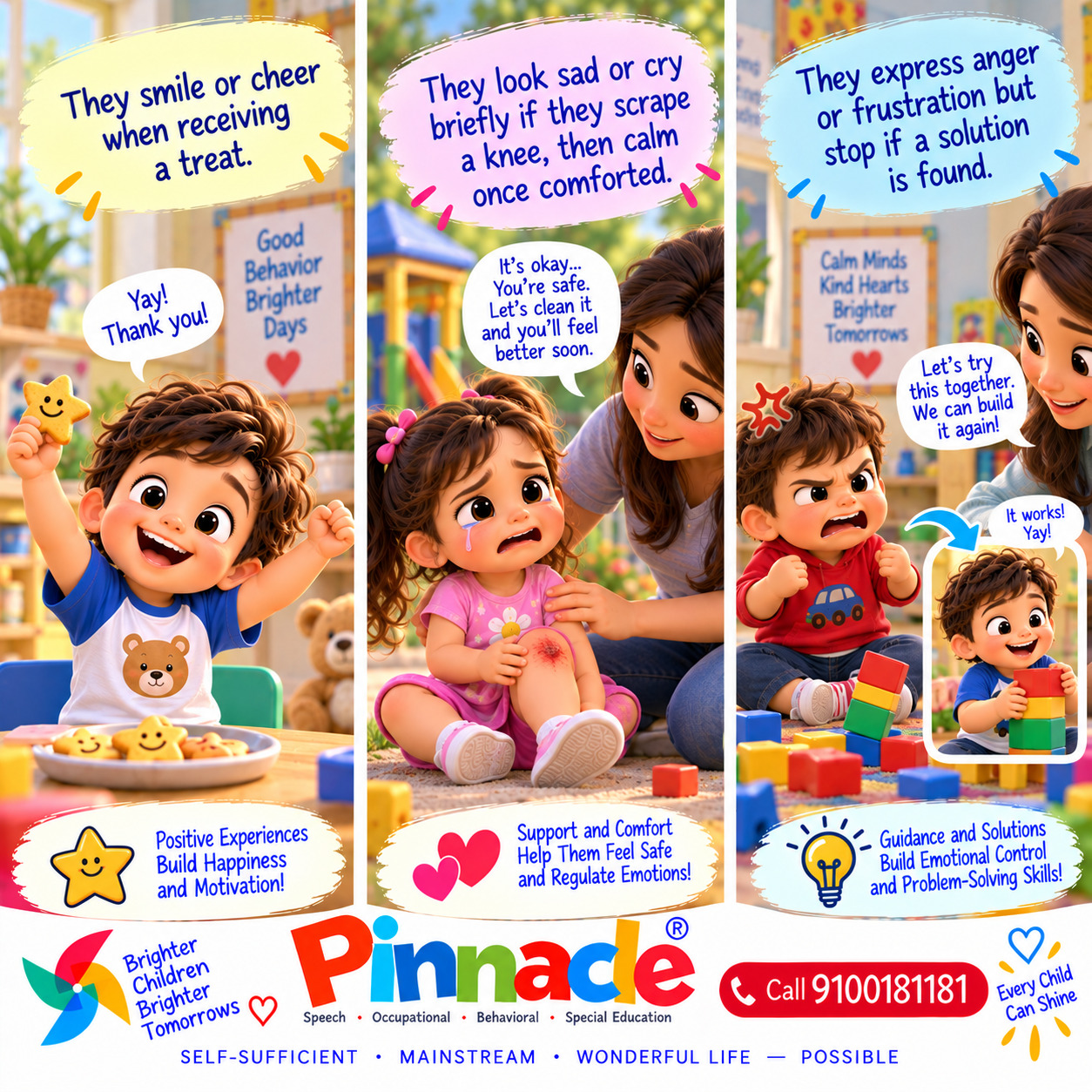
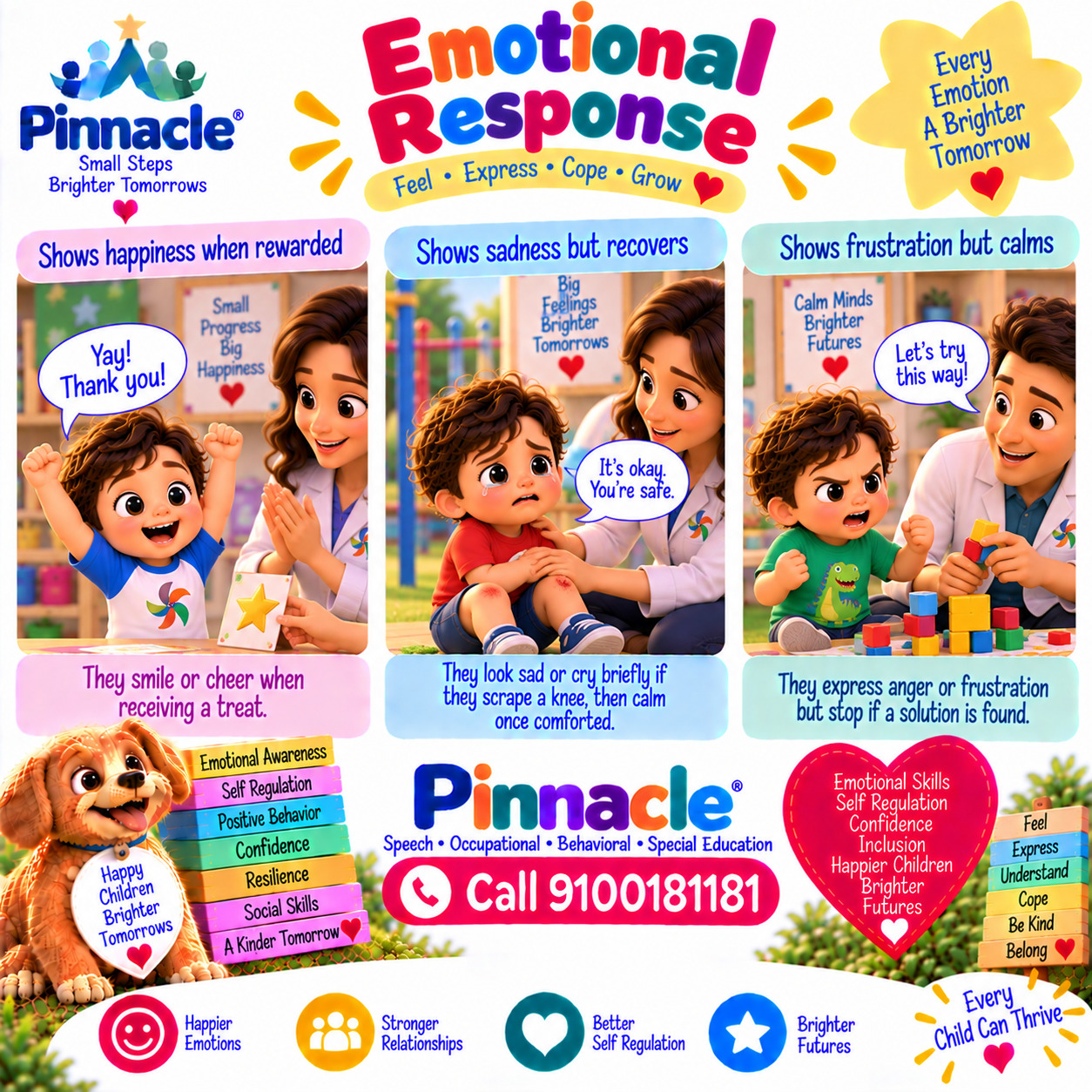
Does the child show appropriate emotional reactions?
Topic: Emotional Response
Example 1
They smile or cheer when receiving a treat.
Example 2
They look sad or cry briefly if they scrape a knee, then calm once comforted.
Example 3
They express anger or frustration but stop if a solution is found.
Example illustrationQuestion illustration
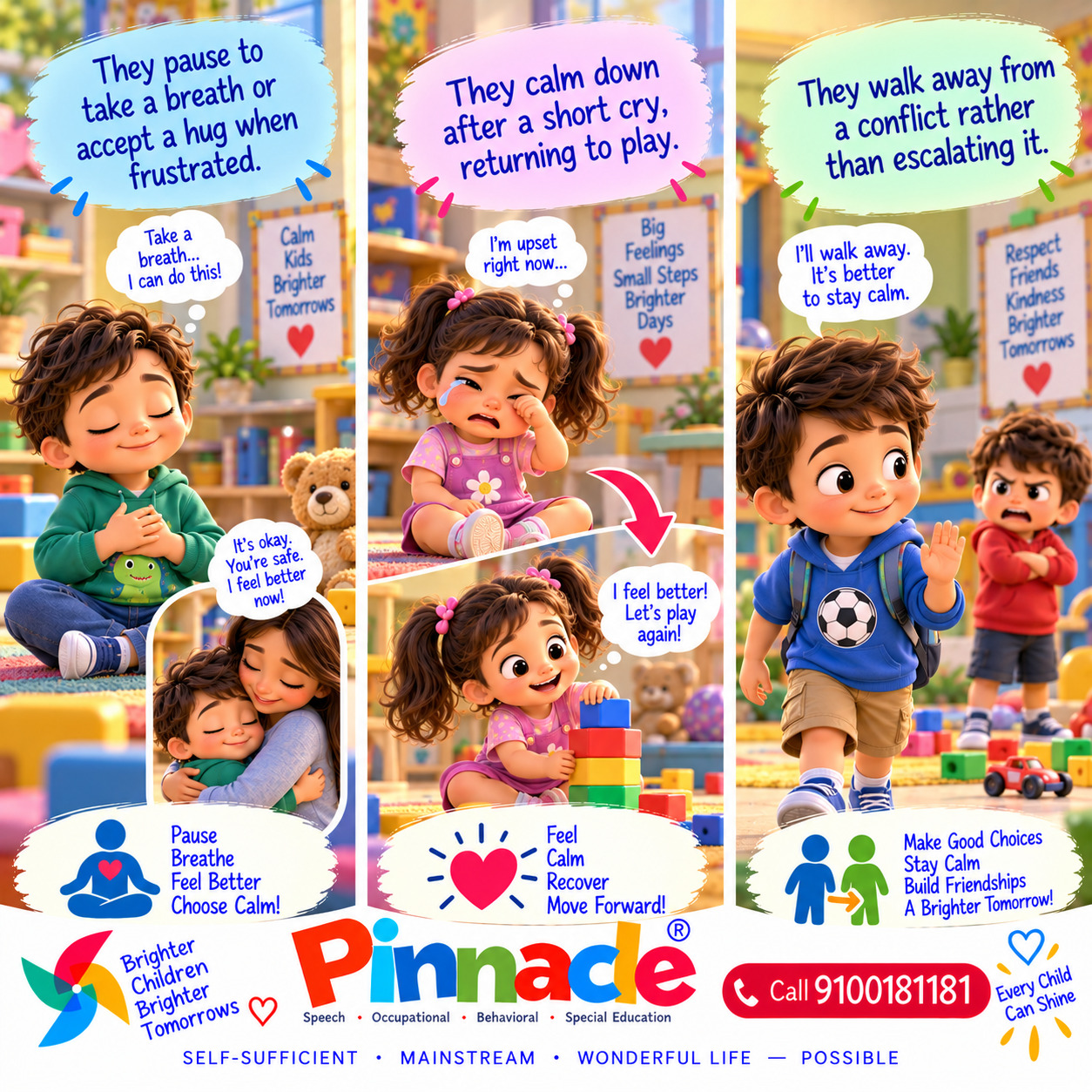
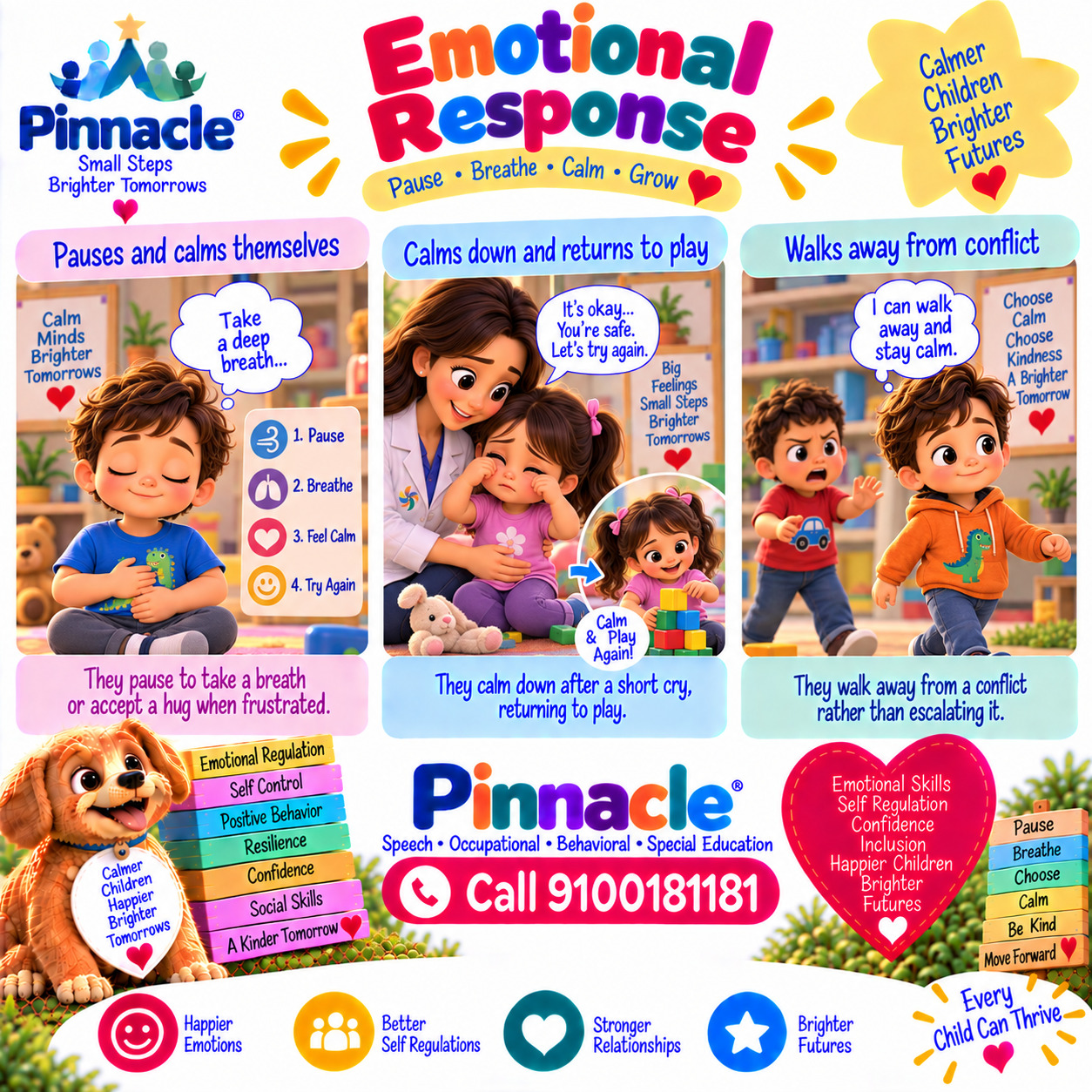
Can the child self-regulate when upset?
Topic: Emotional Response
Example 1
They pause to take a breath or accept a hug when frustrated.
Example 2
They calm down after a short cry, returning to play.
Example 3
They walk away from a conflict rather than escalating it.
Example illustrationQuestion illustration
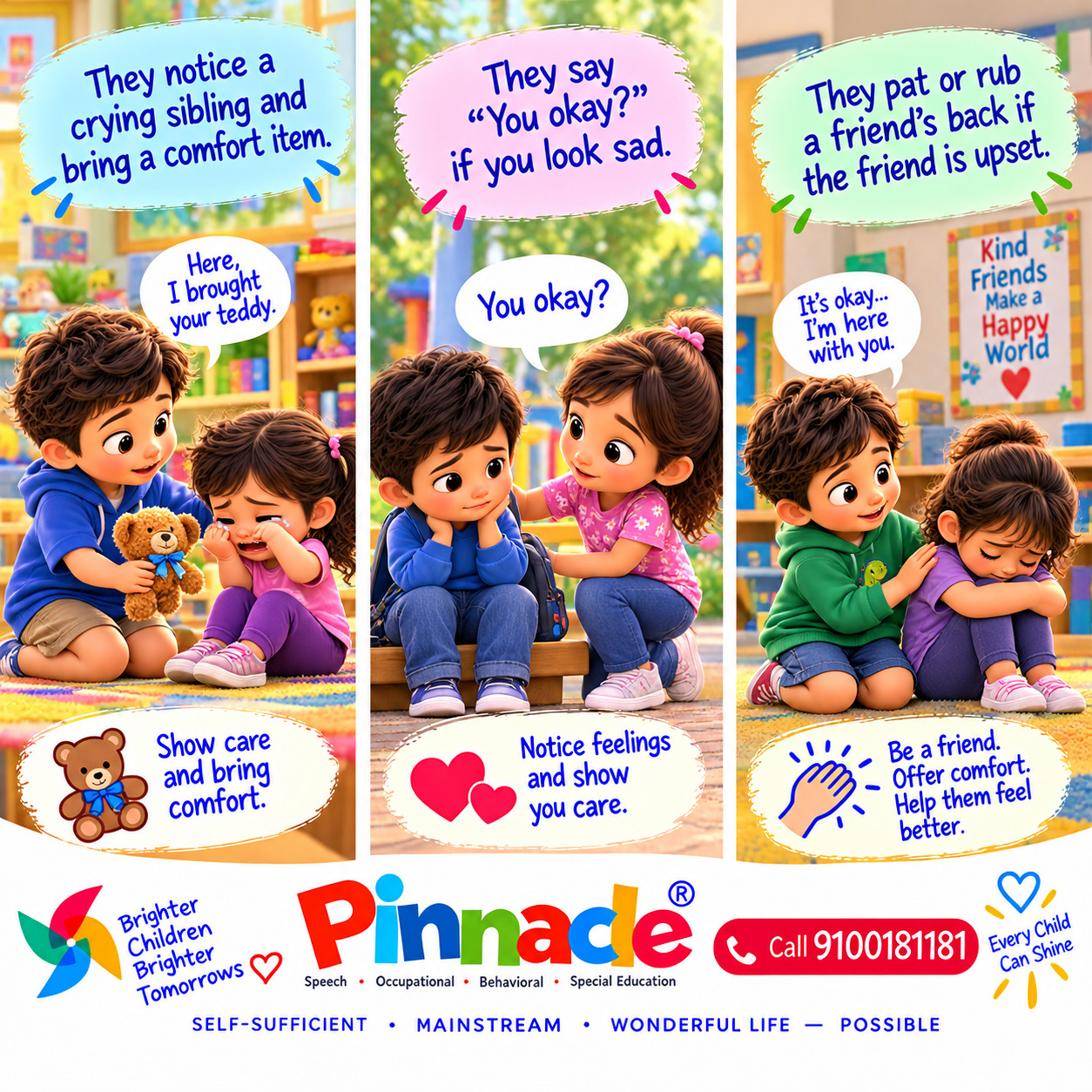
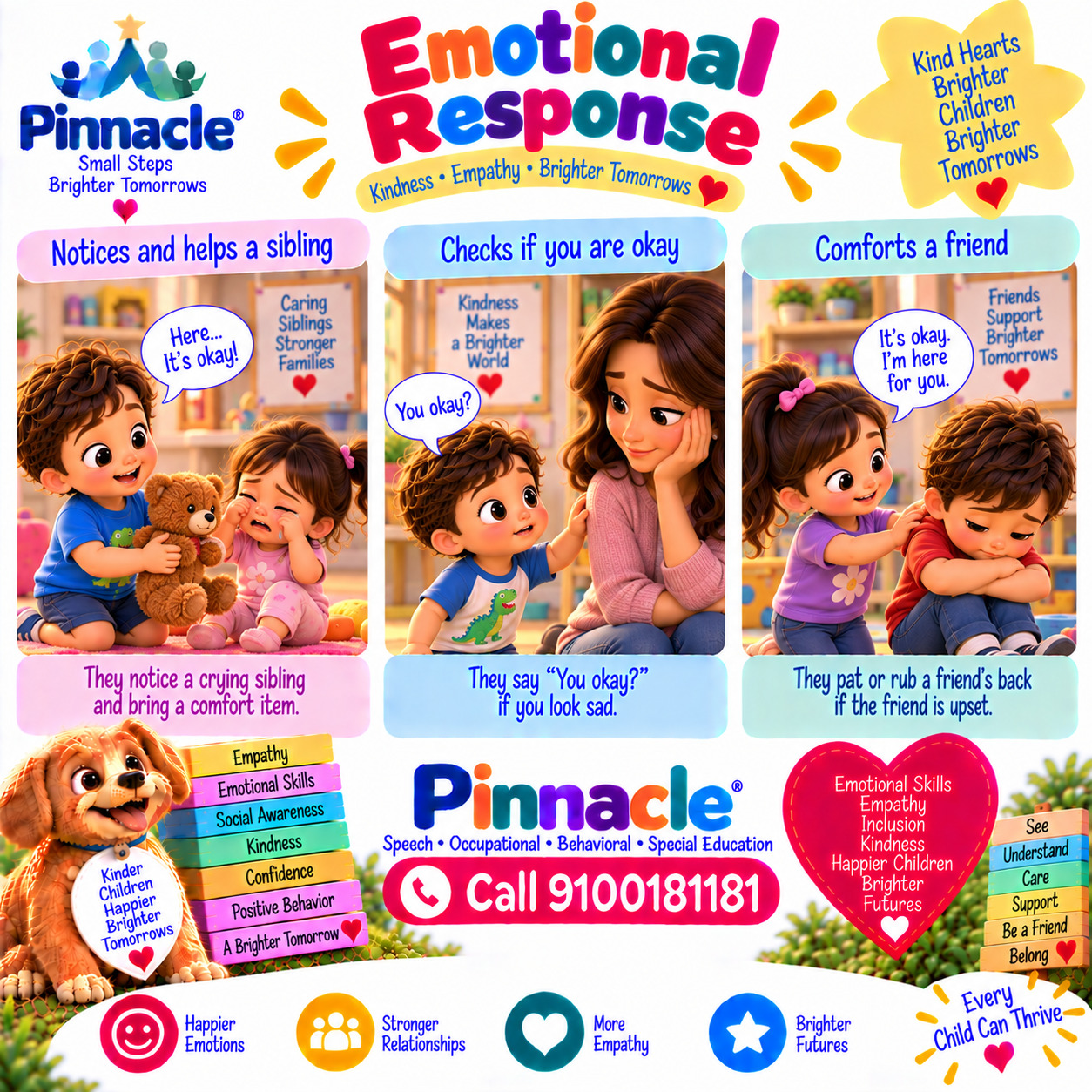
Does the child display empathy toward others in distress?
Topic: Emotional Response
Example 1
They notice a crying sibling and bring a comfort item.
Example 2
They say “You okay?” if you look sad.
Example 3
They pat or rub a friend’s back if the friend is upset.
Example illustrationQuestion illustration
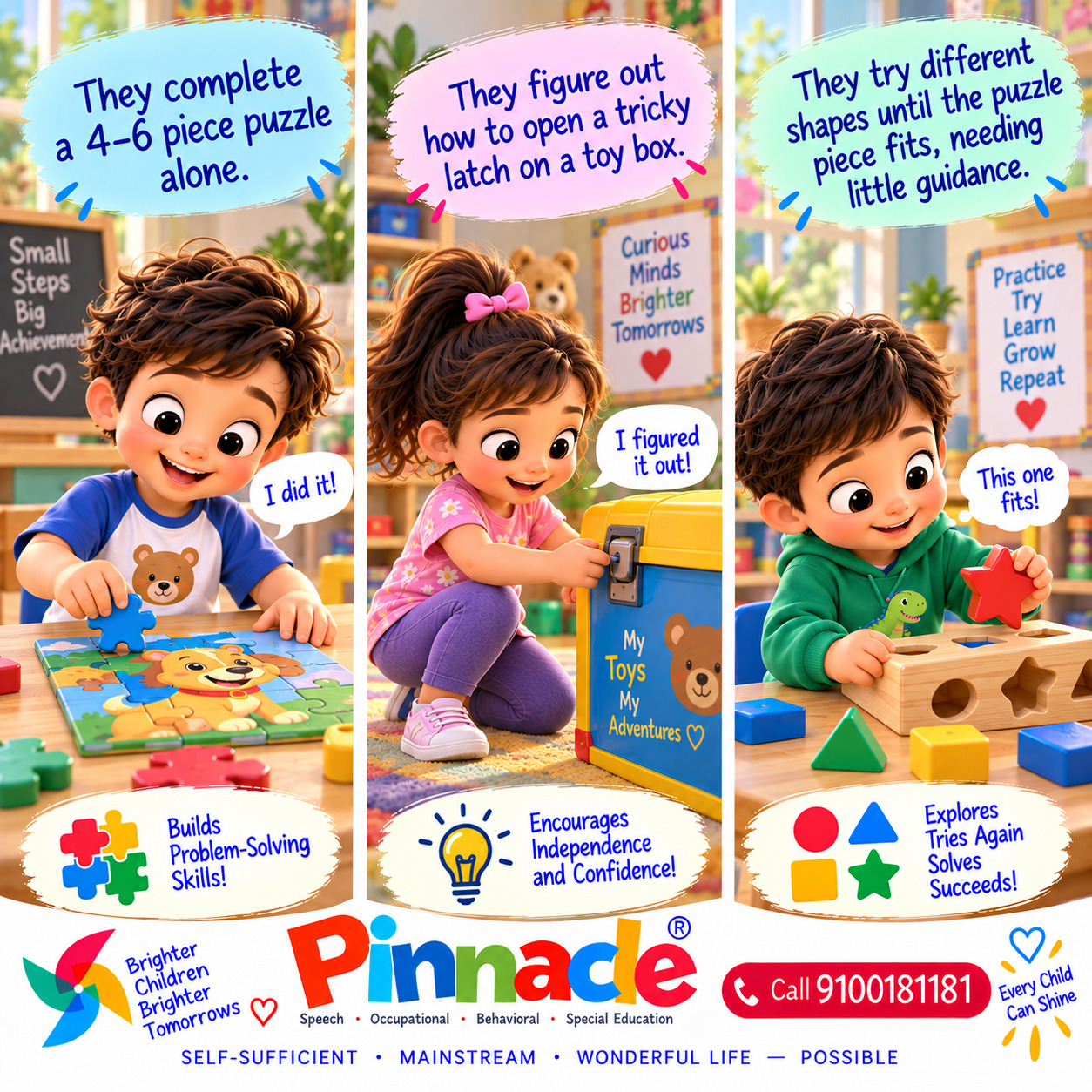
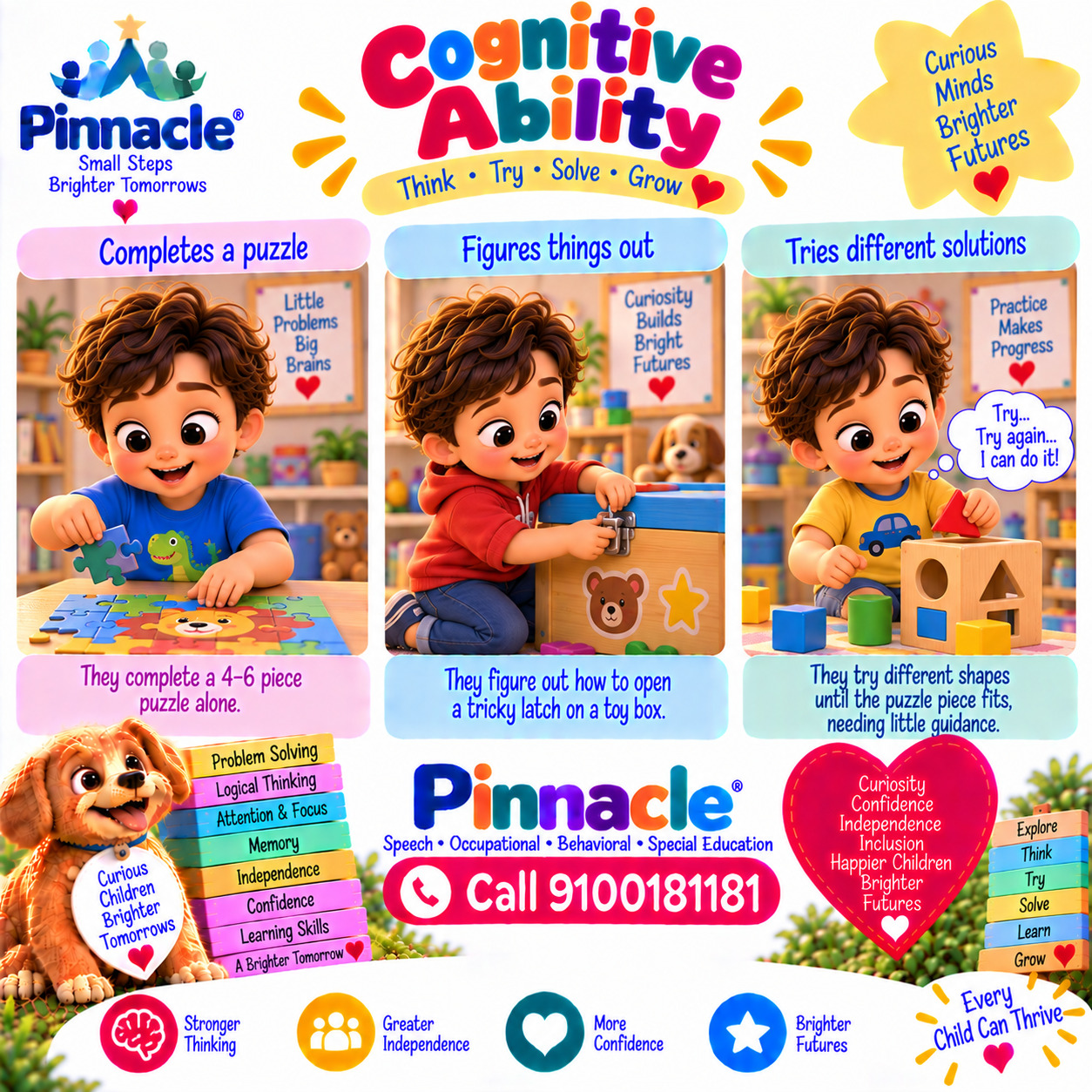
Can the child solve puzzles or age-appropriate problems?
Topic: Cognitive Ability
Example 1
They complete a 4–6 piece puzzle alone.
Example 2
They figure out how to open a tricky latch on a toy box.
Example 3
They try different shapes until the puzzle piece fits, needing little guidance.
Example illustrationQuestion illustration
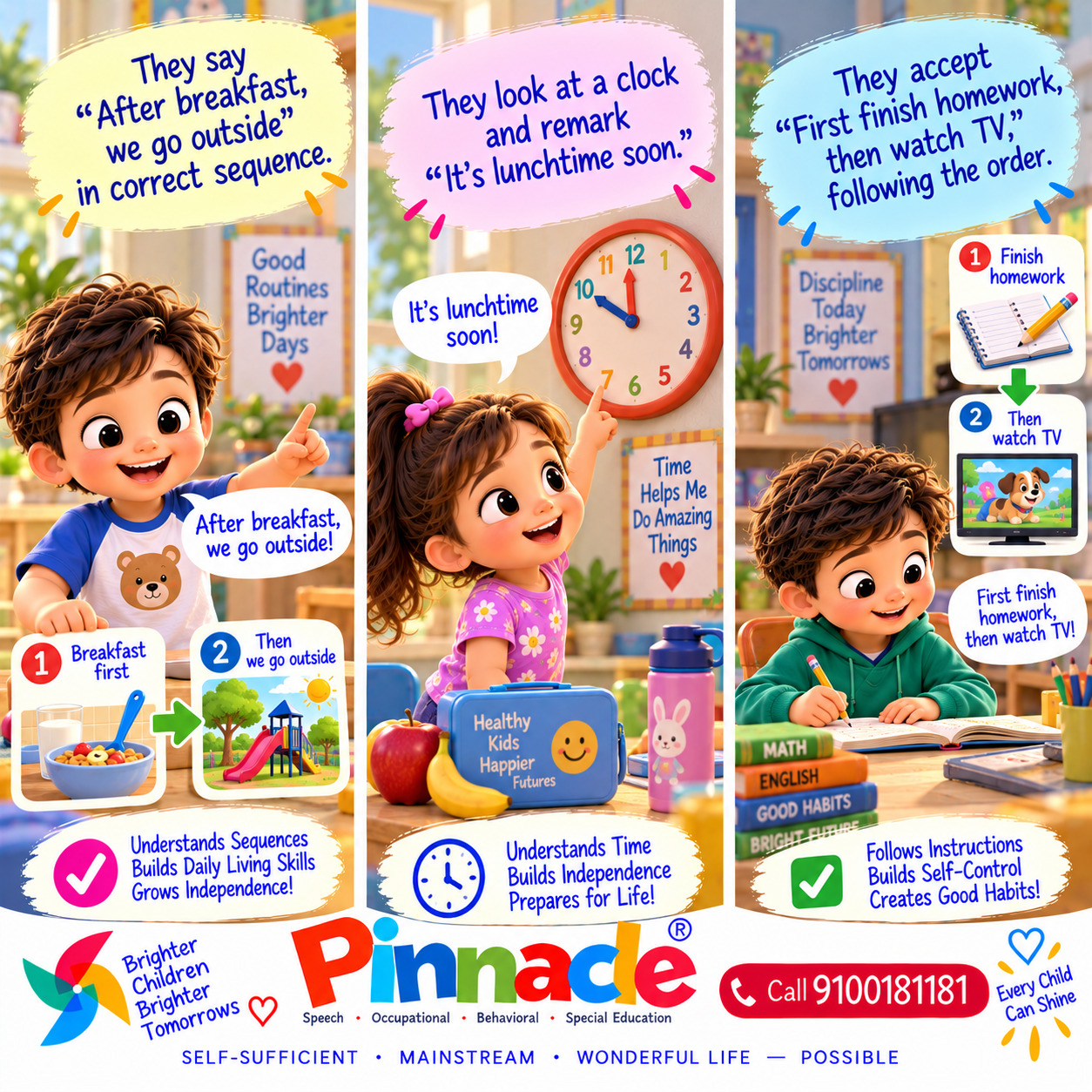
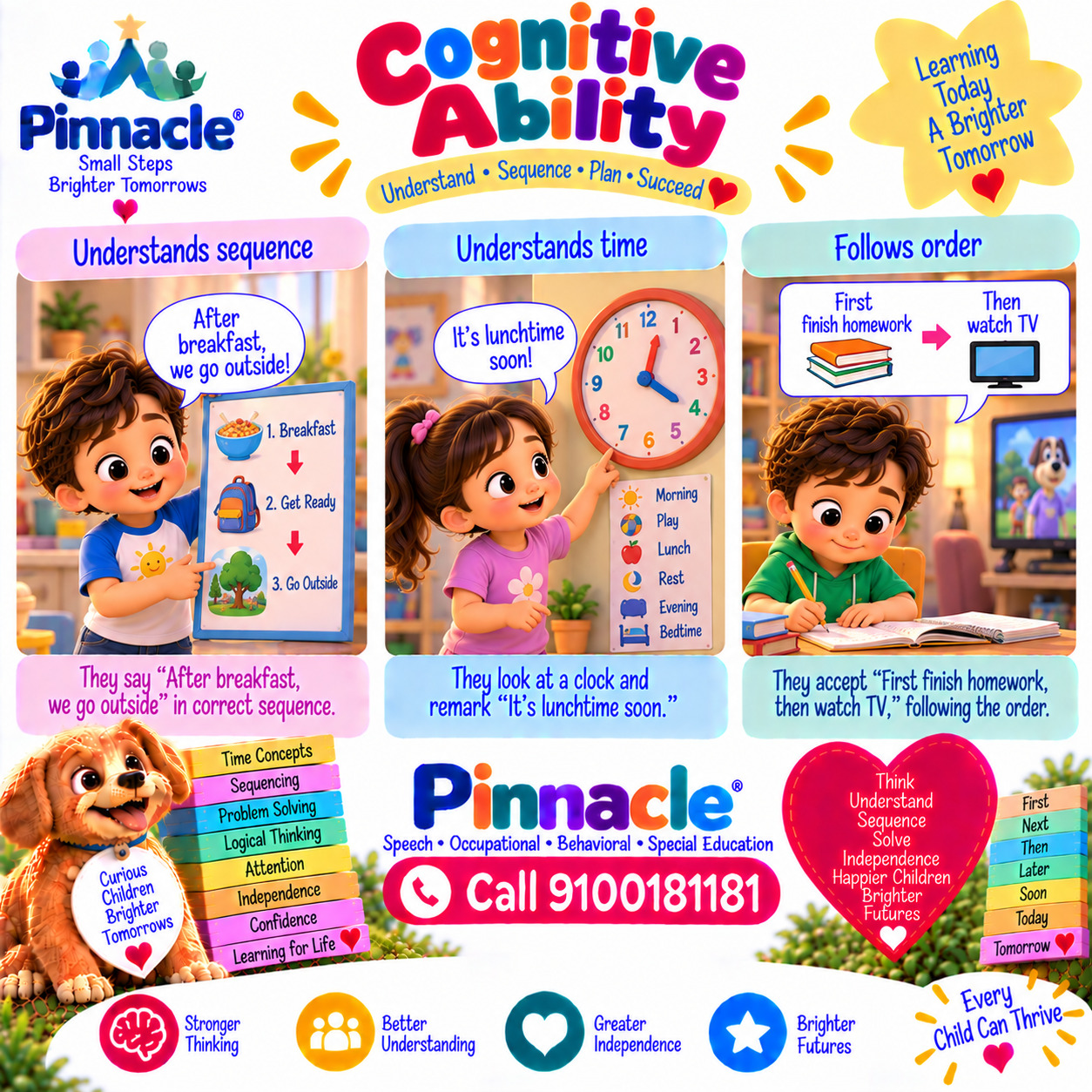
Does the child understand concepts like time or order?
Topic: Cognitive Ability
Example 1
They say “After breakfast, we go outside” in correct sequence.
Example 2
They look at a clock and remark “It’s lunchtime soon.”
Example 3
They accept “First finish homework, then watch TV,” following the order.
Example illustrationQuestion illustration
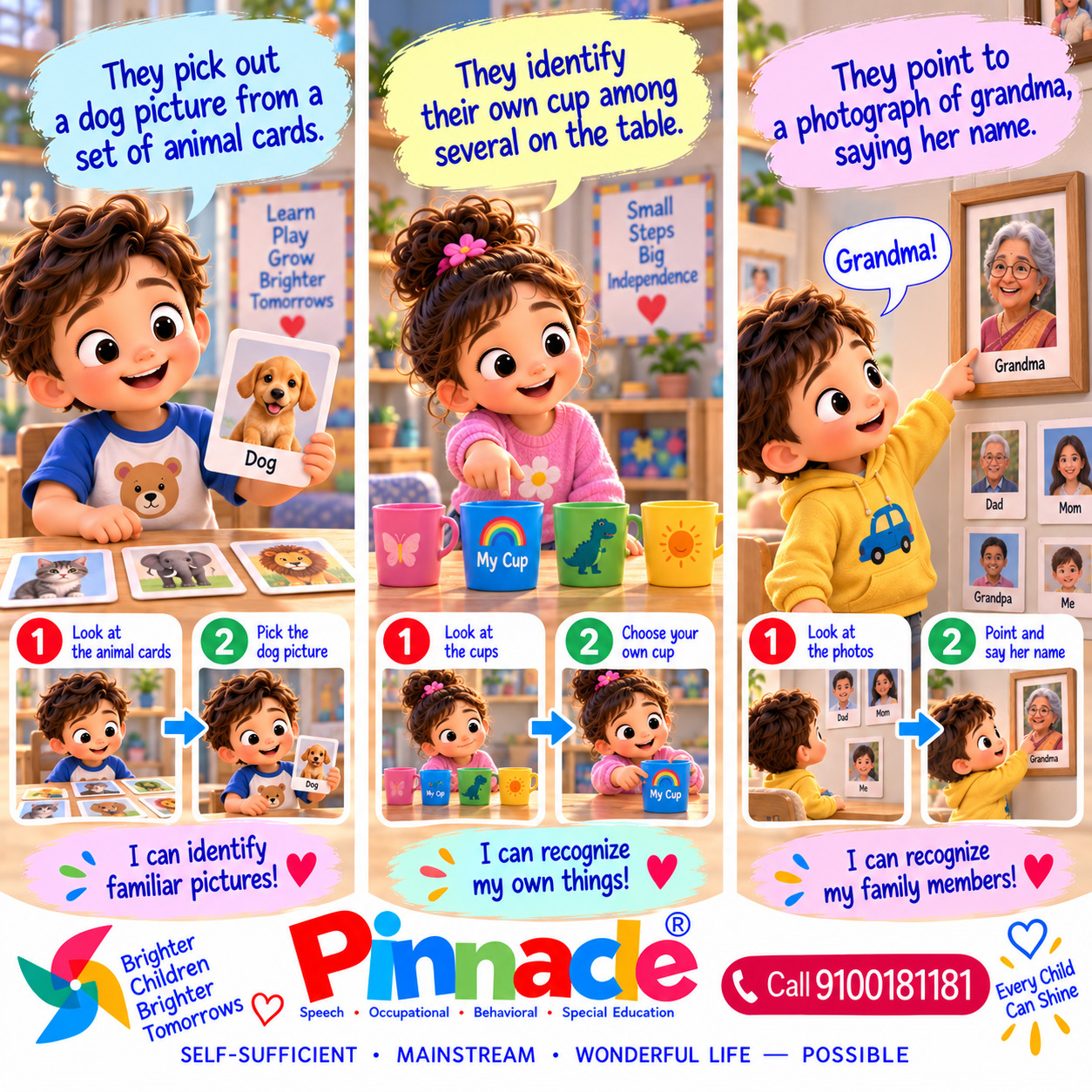
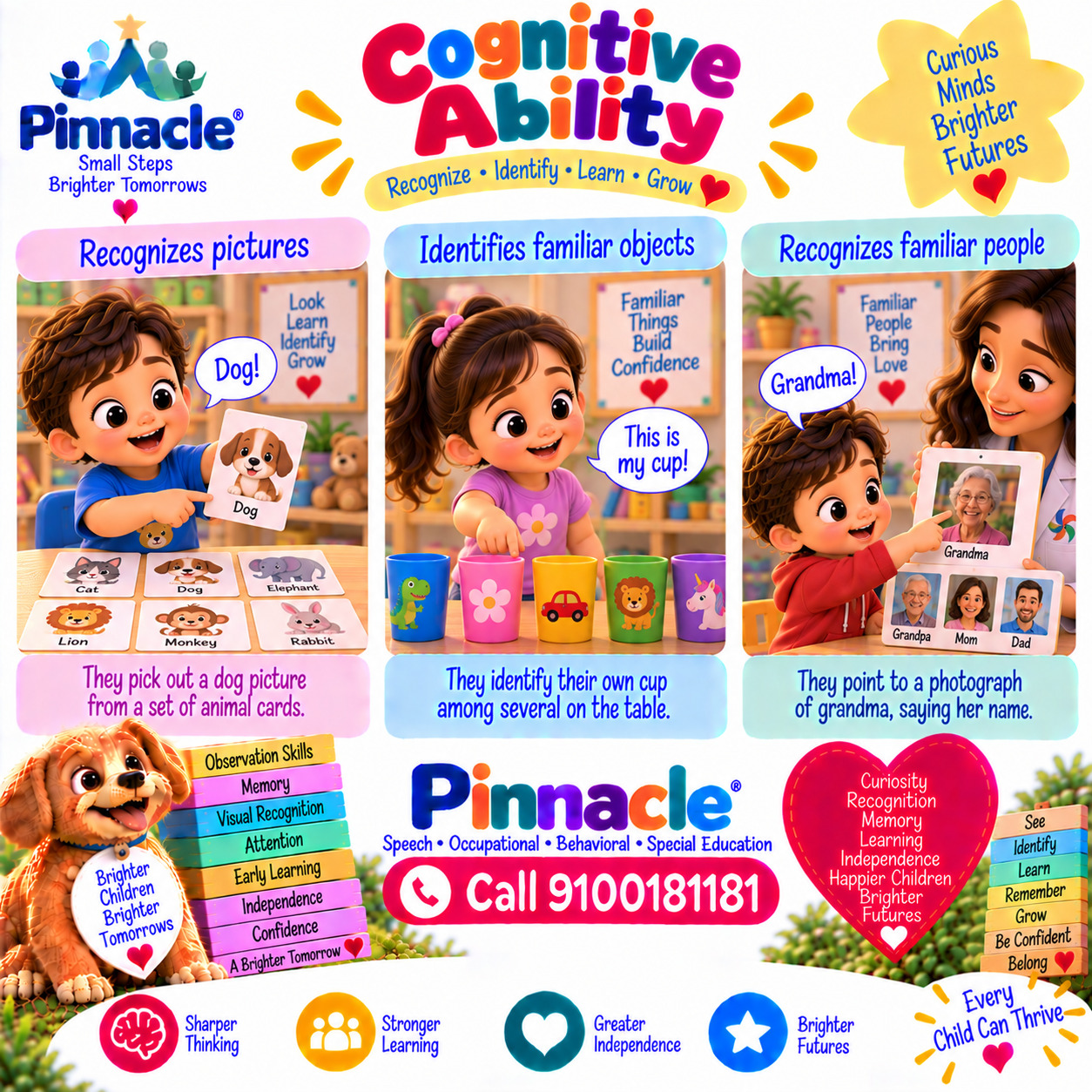
Can the child recognize familiar objects or pictures?
Topic: Cognitive Ability
Example 1
They pick out a dog picture from a set of animal cards.
Example 2
They identify their own cup among several on the table.
Example 3
They point to a photograph of grandma, saying her name.
Example illustrationQuestion illustration
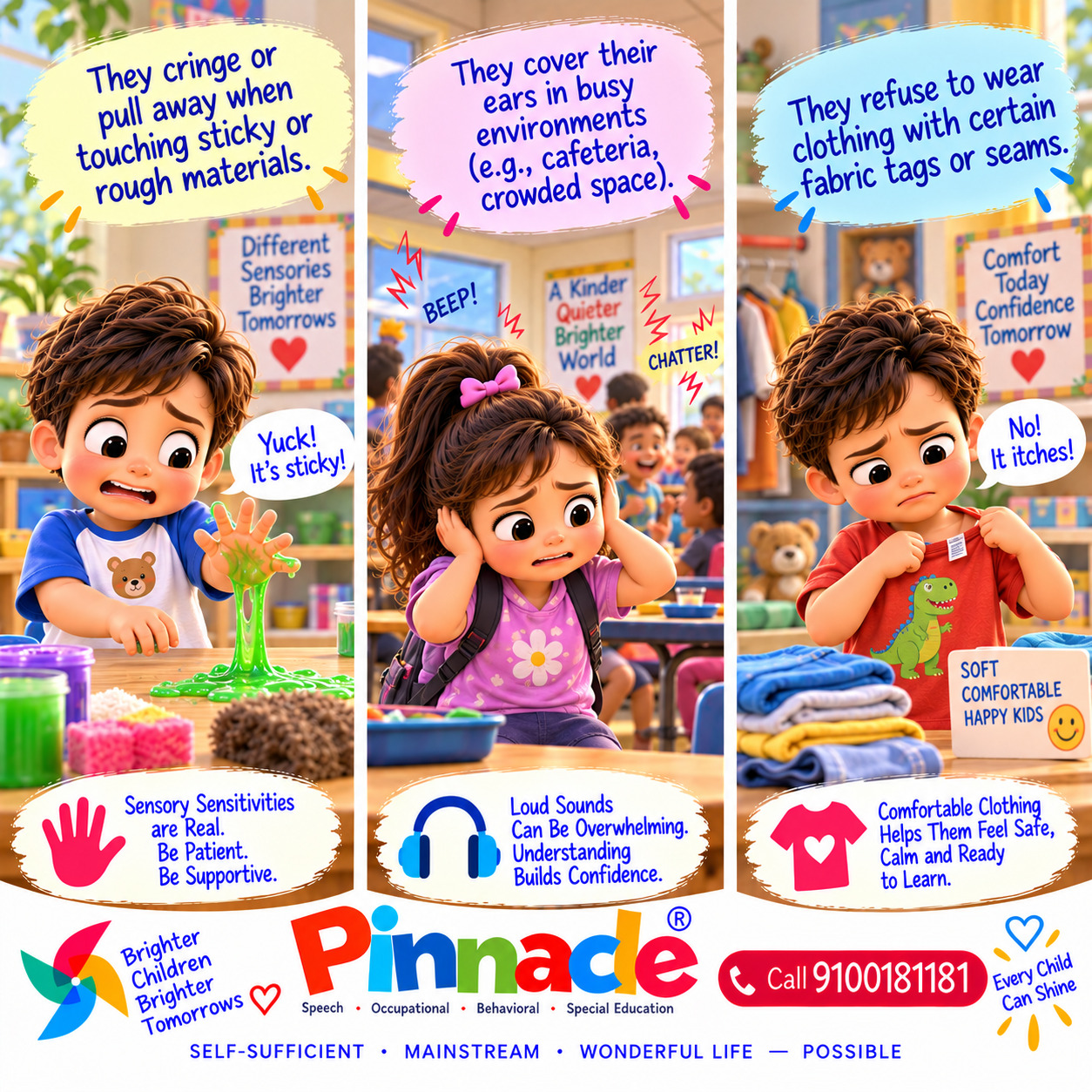
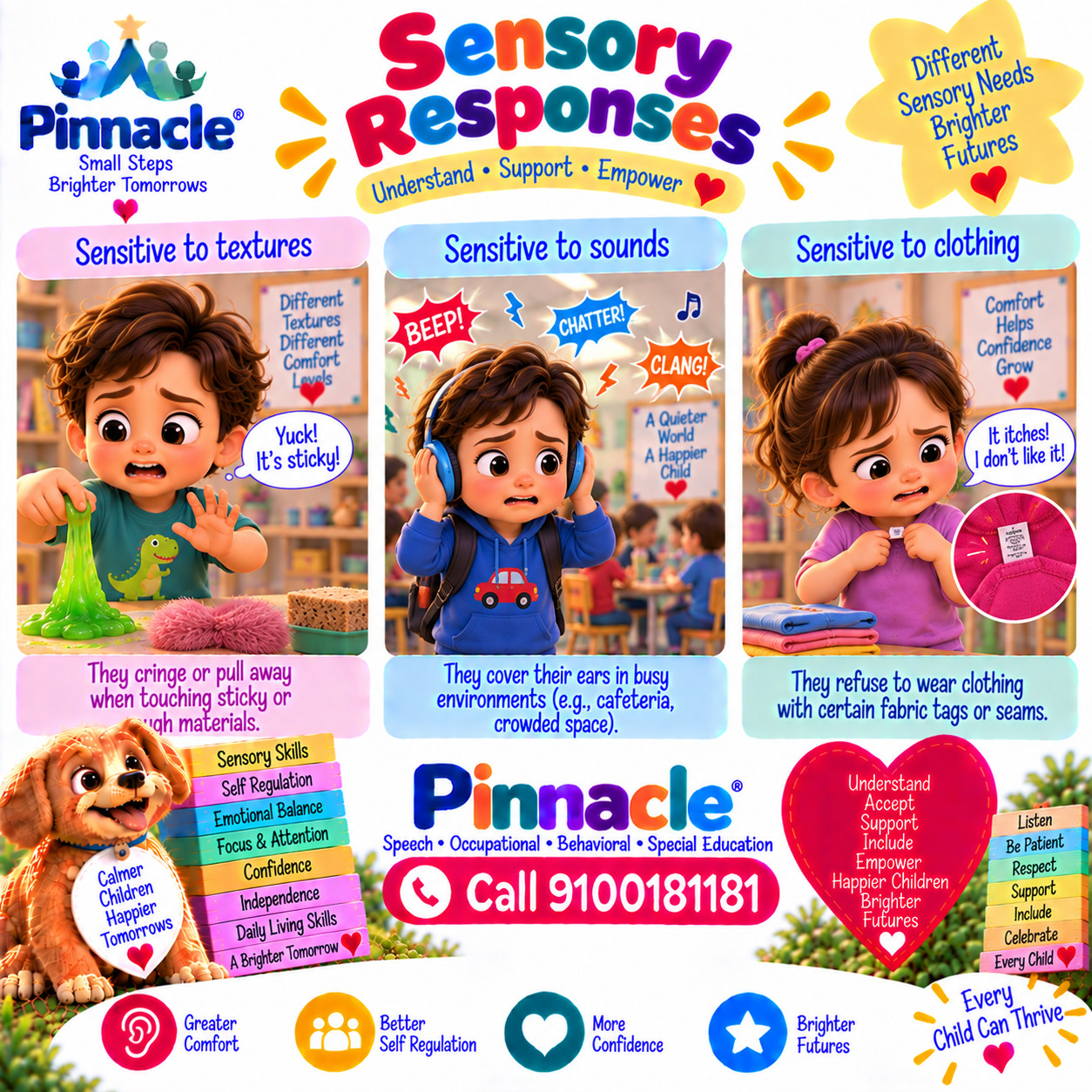
Is the child sensitive to certain textures or sounds?
Topic: Sensory Responses
Example 1
They cringe or pull away when touching sticky or rough materials.
Example 2
They cover their ears in busy environments (e.g., cafeteria, crowded space).
Example 3
They refuse to wear clothing with certain fabric tags or seams.
Example illustrationQuestion illustration
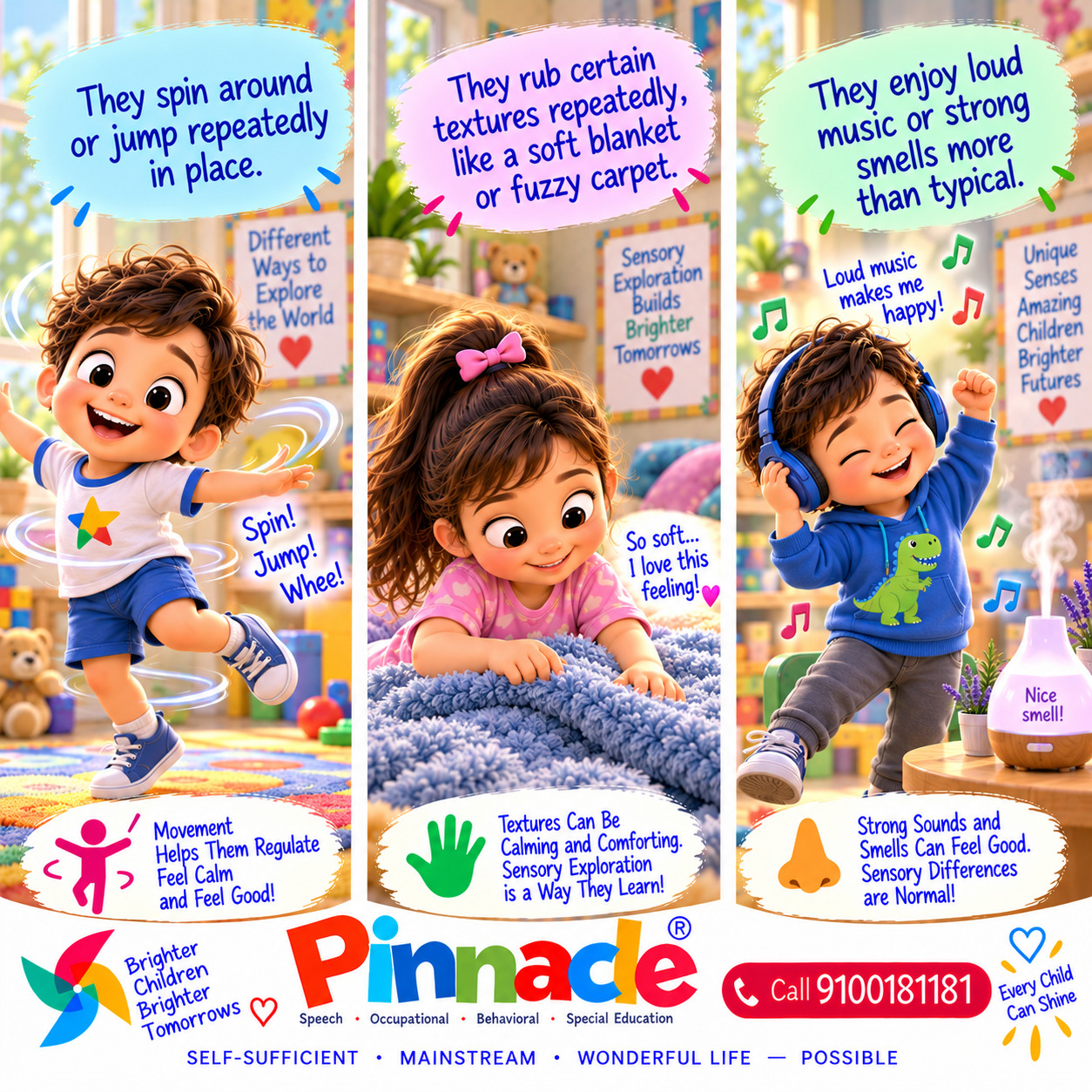
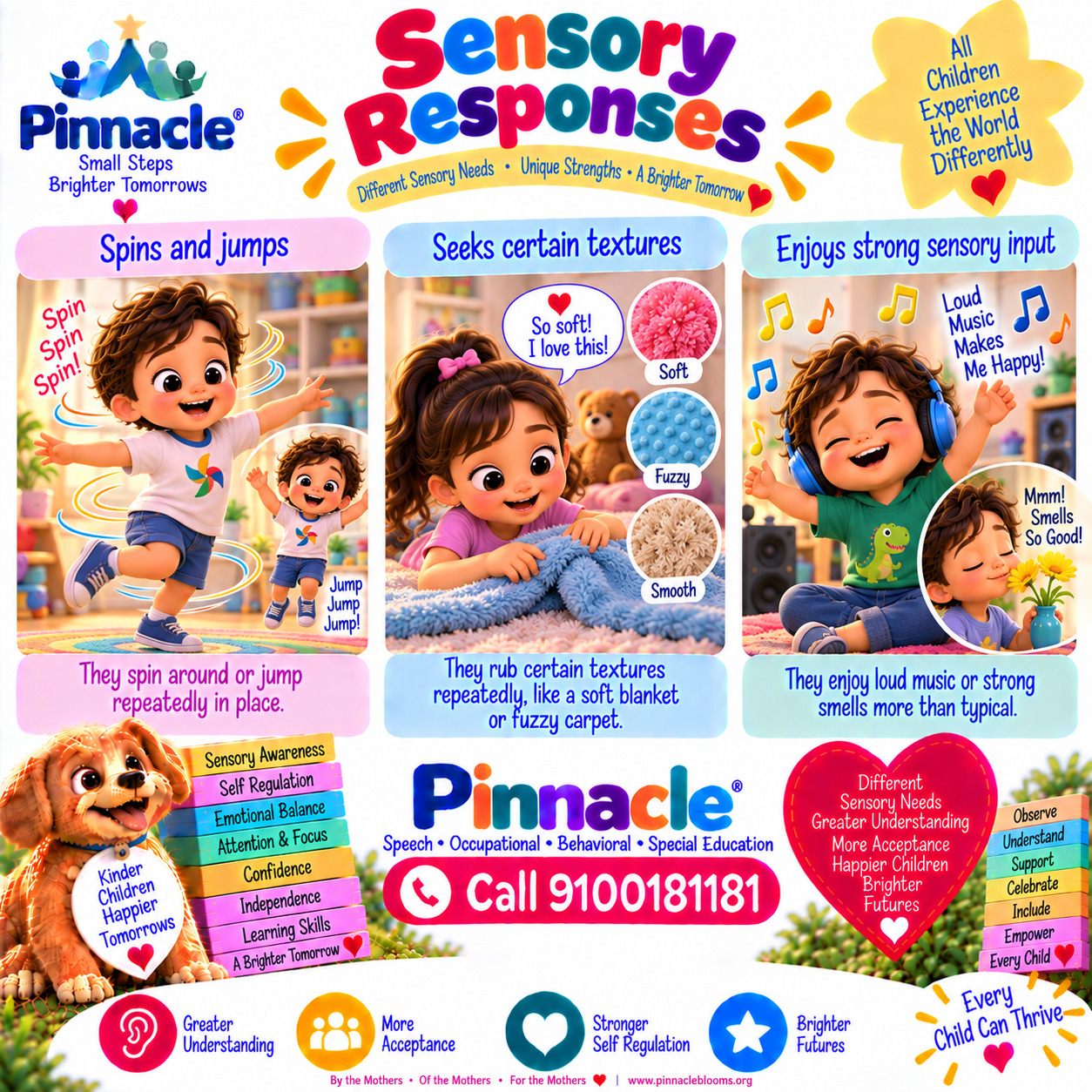
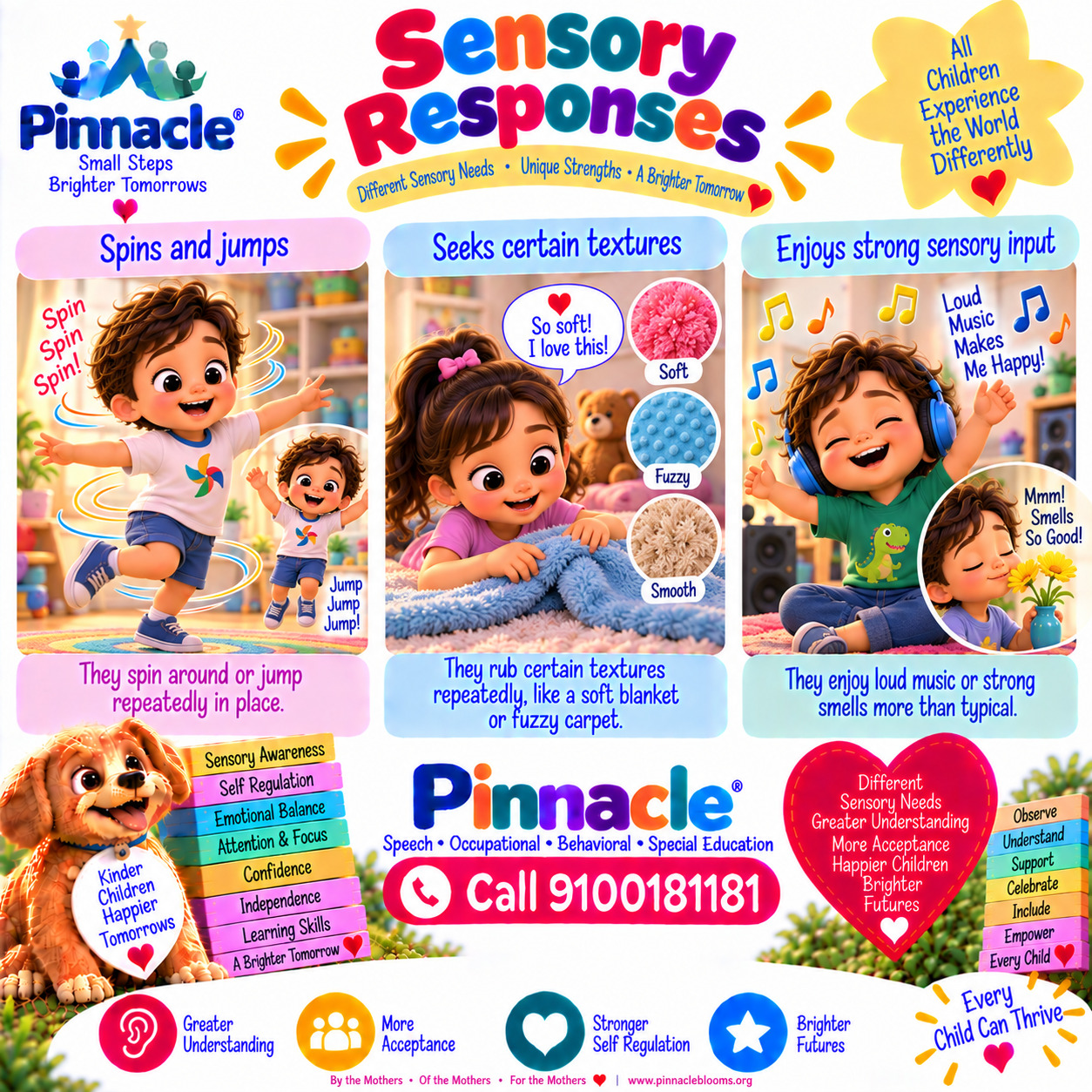
Does the child seek sensory stimulation (e.g., spinning)?
Topic: Sensory Responses
Example 1
They spin around or jump repeatedly in place.
Example 2
They rub certain textures repeatedly, like a soft blanket or fuzzy carpet.
Example 3
They enjoy loud music or strong smells more than typical.
Example illustrationQuestion illustration
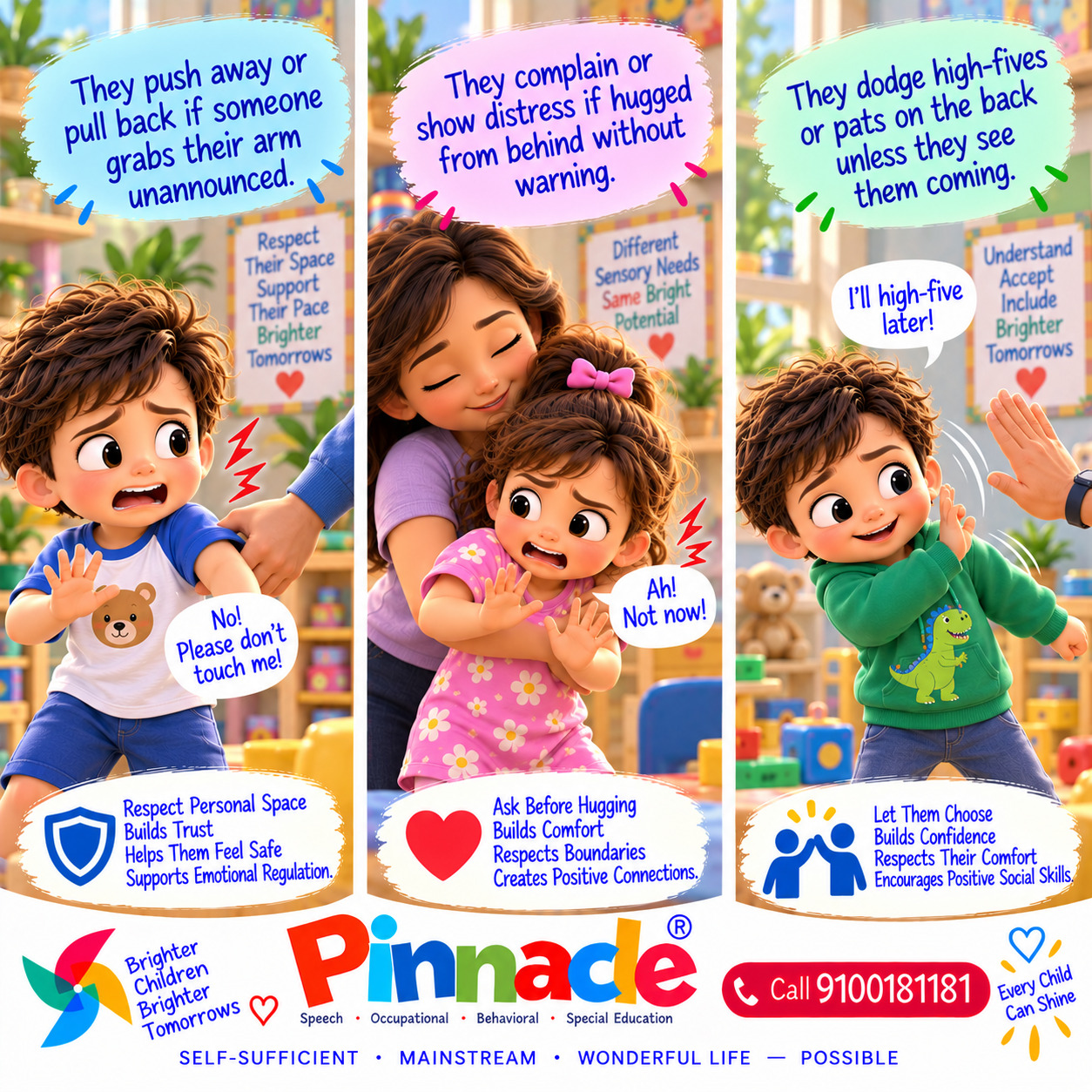
Does the child resist being touched unexpectedly?
Topic: Sensory Responses
Example 1
They push away or pull back if someone grabs their arm unannounced.
Example 2
They complain or show distress if hugged from behind without warning.
Example 3
They dodge high-fives or pats on the back unless they see them coming.
Example illustrationQuestion illustration
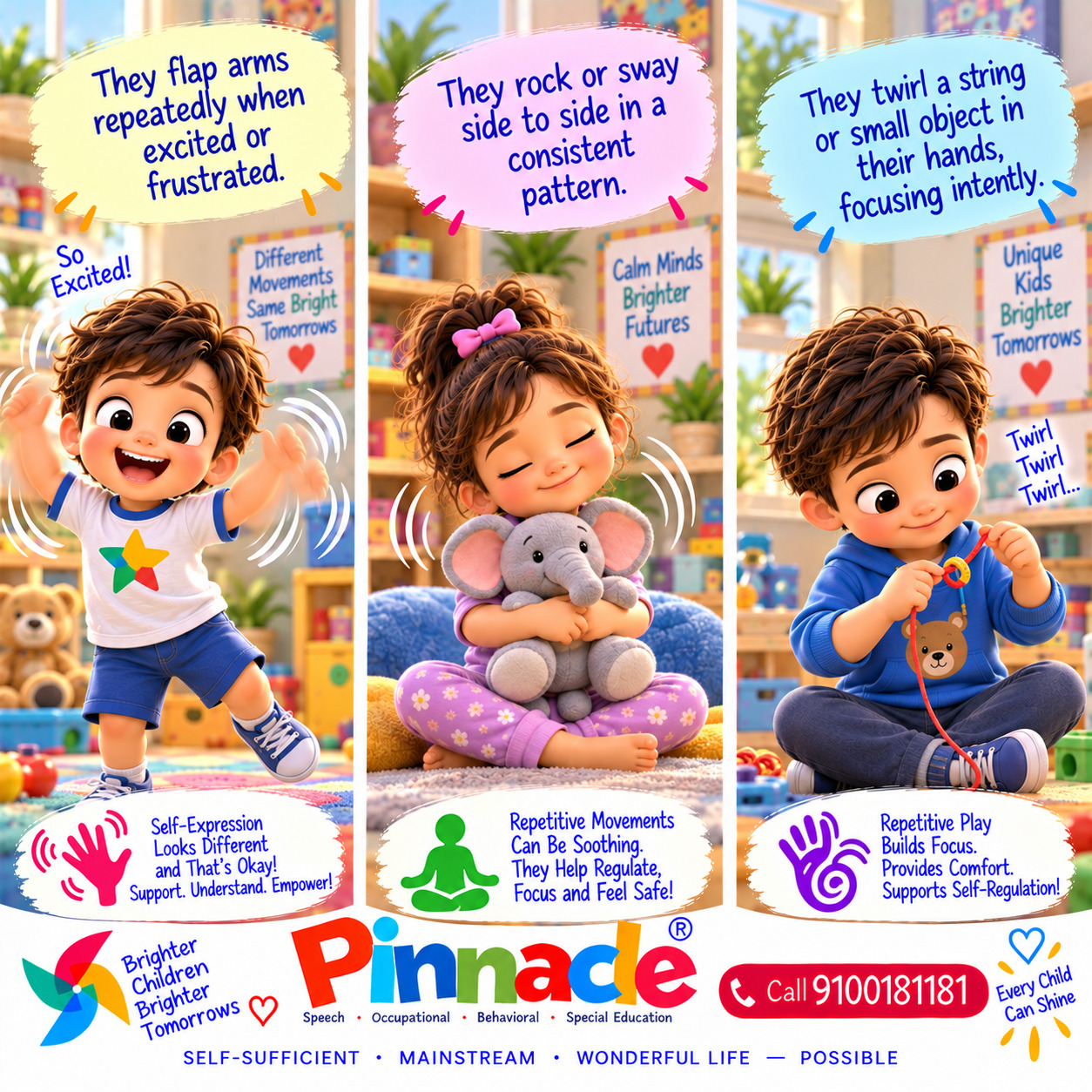
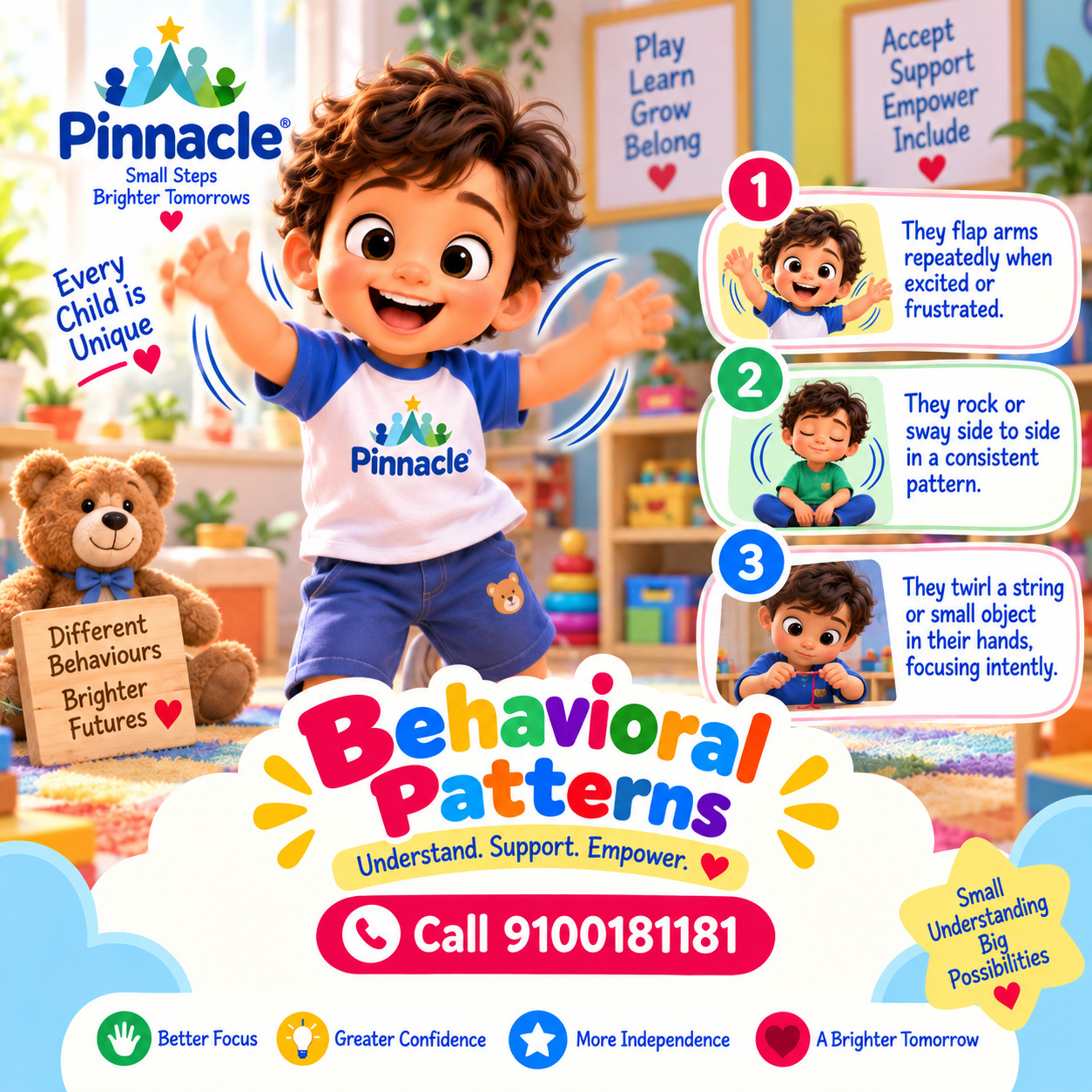
Does the child engage in repetitive movements (e.g., hand-flapping)?
Topic: Behavioral Patterns
Example 1
They flap arms repeatedly when excited or frustrated.
Example 2
They rock or sway side to side in a consistent pattern.
Example 3
They twirl a string or small object in their hands, focusing intently.
Example illustrationQuestion illustration
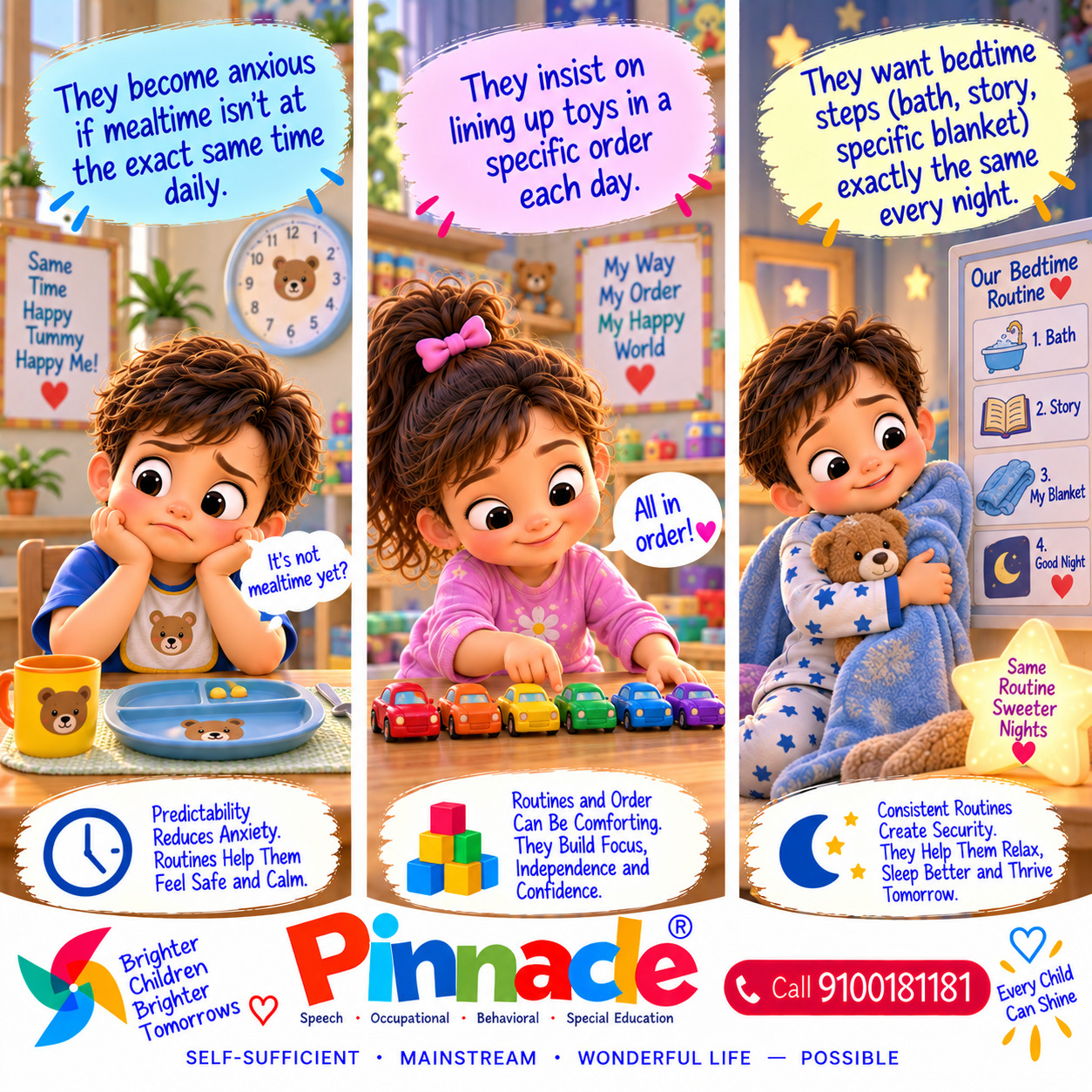
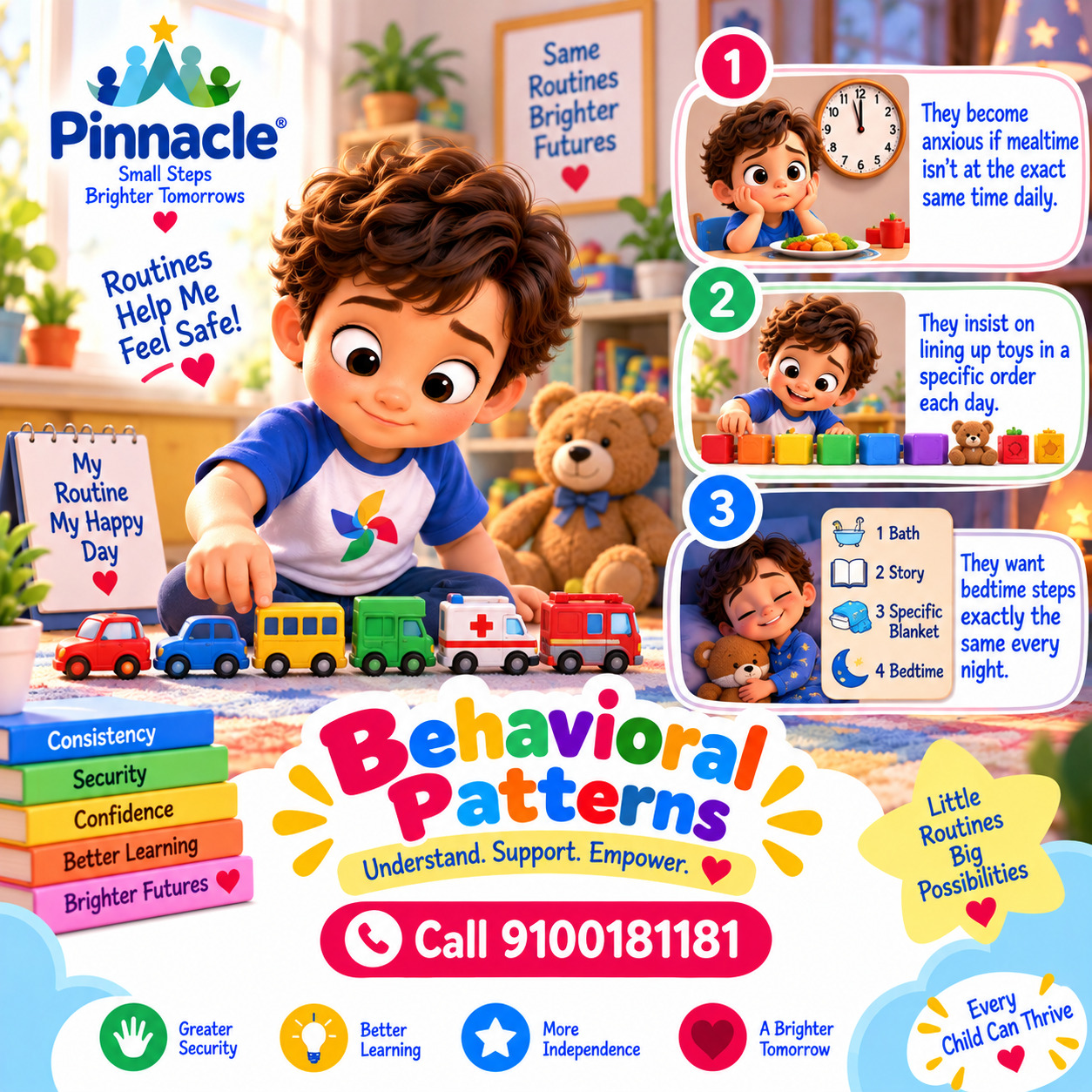
Does the child follow strict routines or patterns?
Topic: Behavioral Patterns
Example 1
They become anxious if mealtime isn’t at the exact same time daily.
Example 2
They insist on lining up toys in a specific order each day.
Example 3
They want bedtime steps (bath, story, specific blanket) exactly the same every night.
Example illustrationQuestion illustration
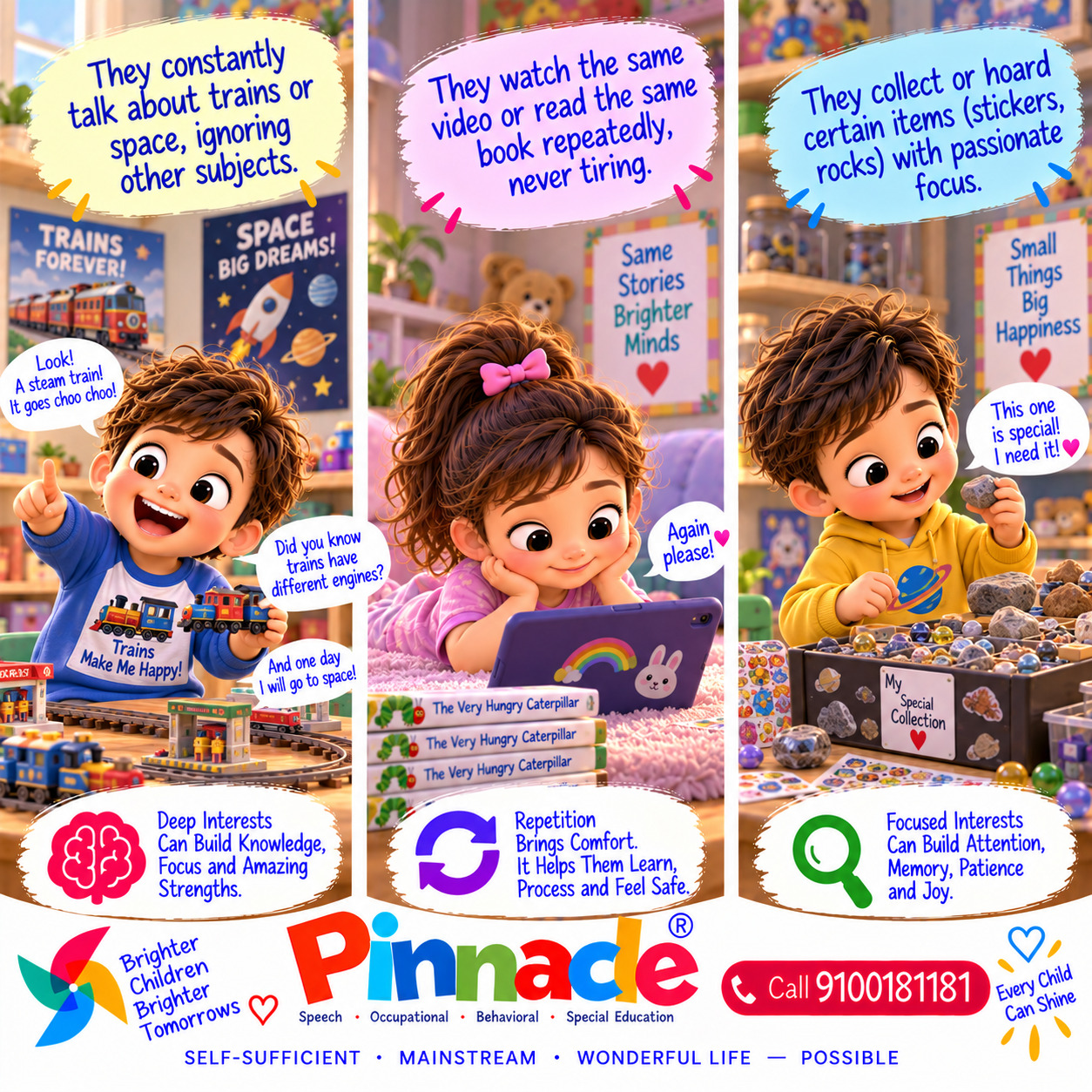
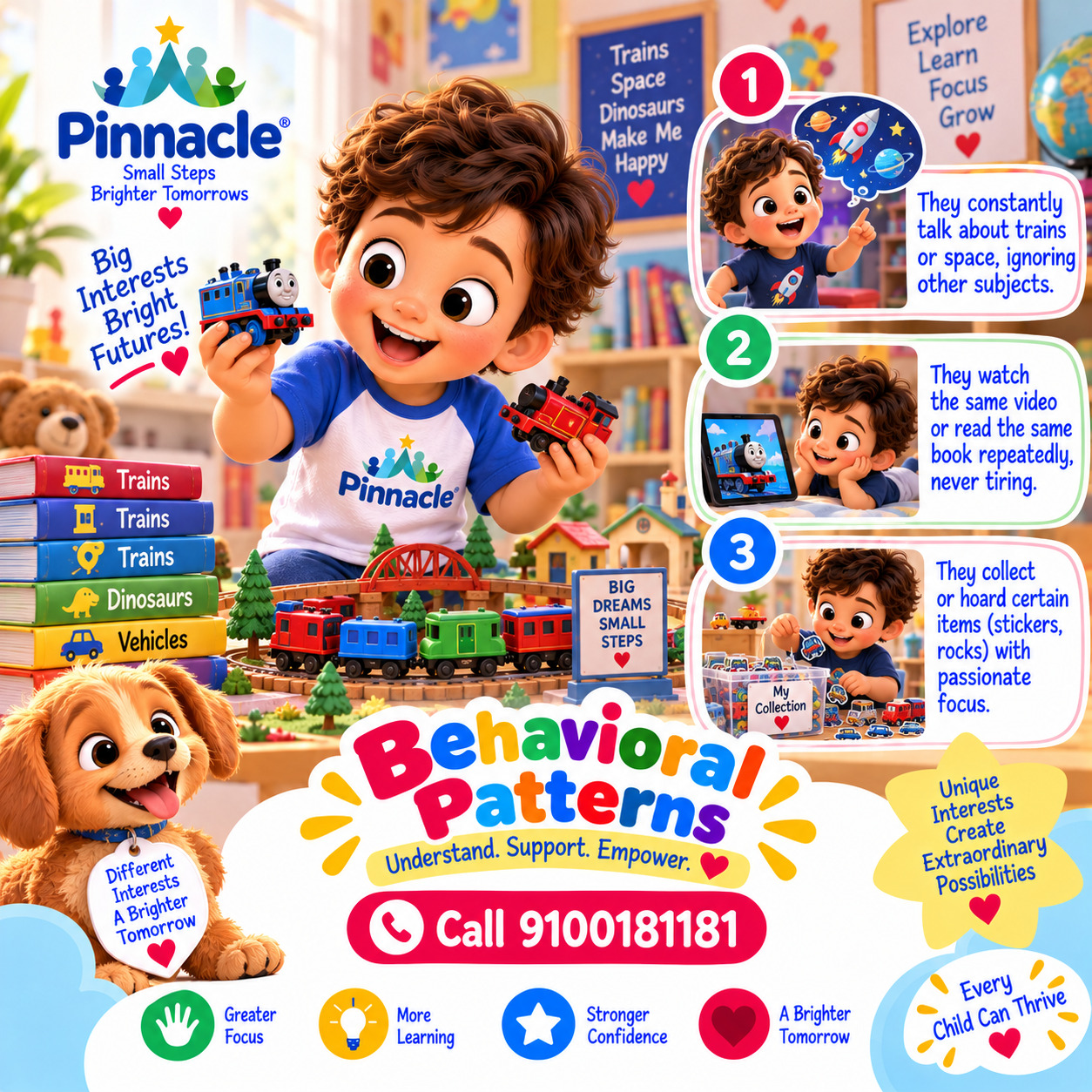
Does the child display intense interests in specific topics or objects?
Topic: Behavioral Patterns
Example 1
They constantly talk about trains or space, ignoring other subjects.
Example 2
They watch the same video or read the same book repeatedly, never tiring.
Example 3
They collect or hoard certain items (stickers, rocks) with passionate focus.
Example illustrationQuestion illustration
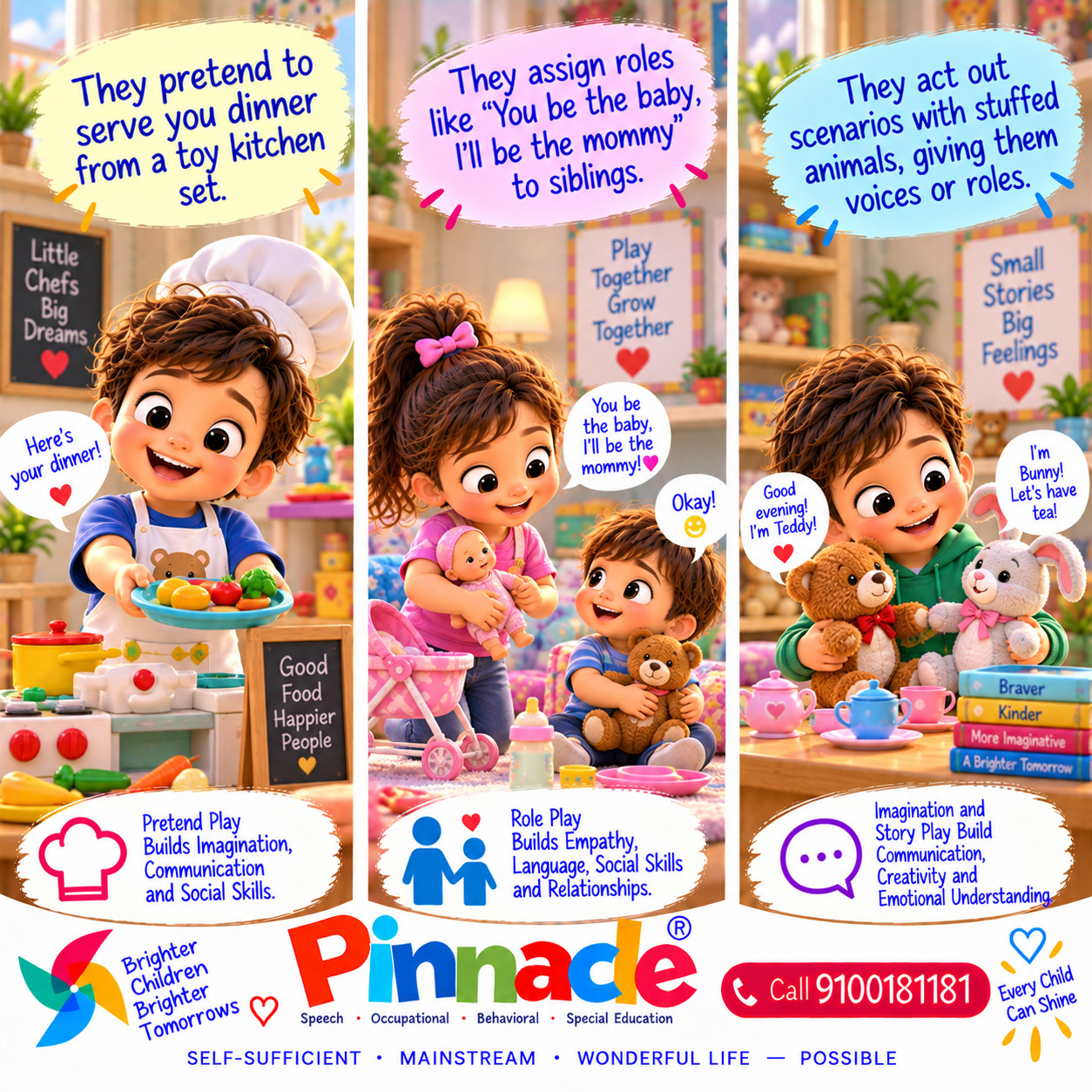
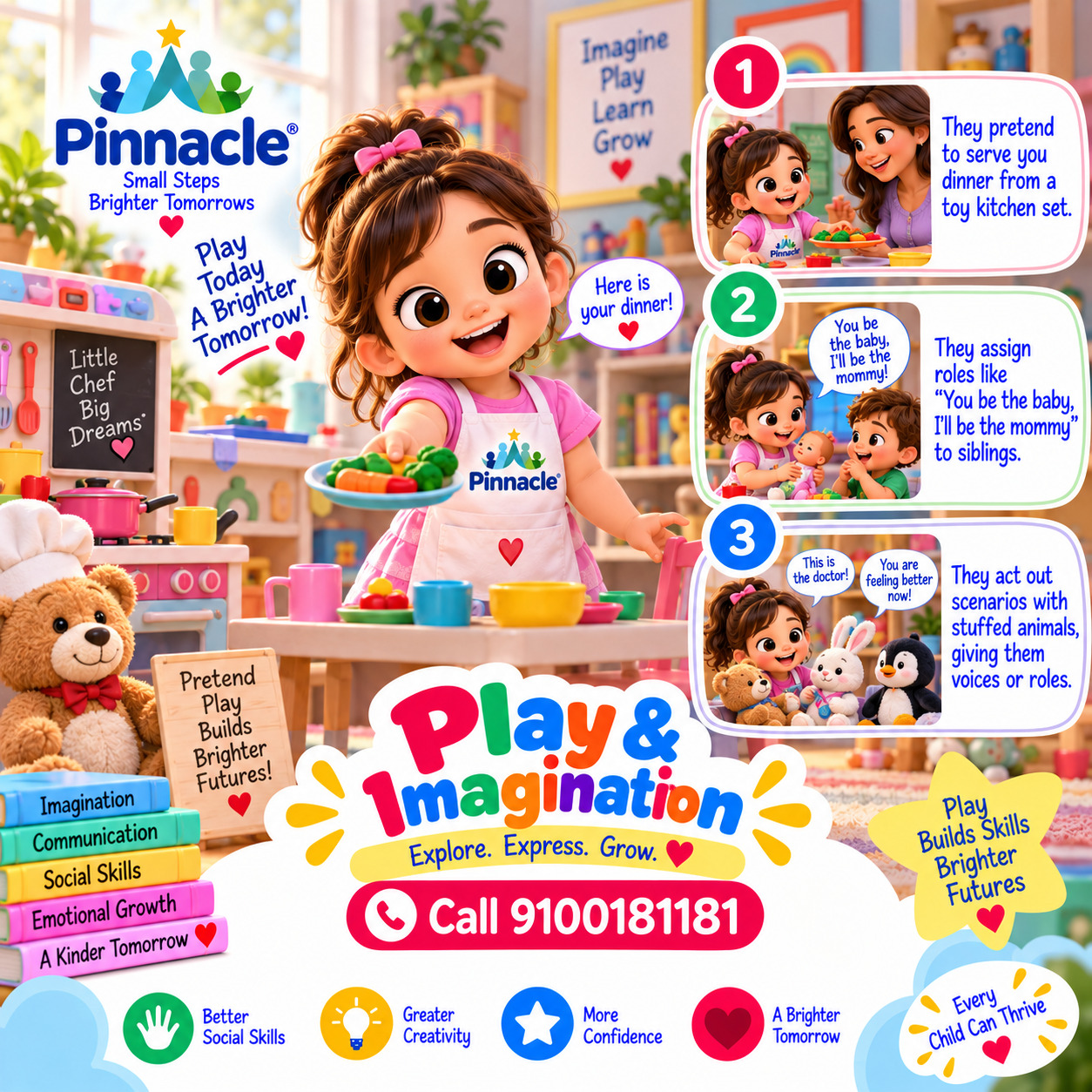
Does the child engage in pretend play (e.g., playing house)?
Topic: Play & Imagination
Example 1
They pretend to serve you dinner from a toy kitchen set.
Example 2
They assign roles like “You be the baby, I’ll be the mommy” to siblings.
Example 3
They act out scenarios with stuffed animals, giving them voices or roles.
Example illustrationQuestion illustration
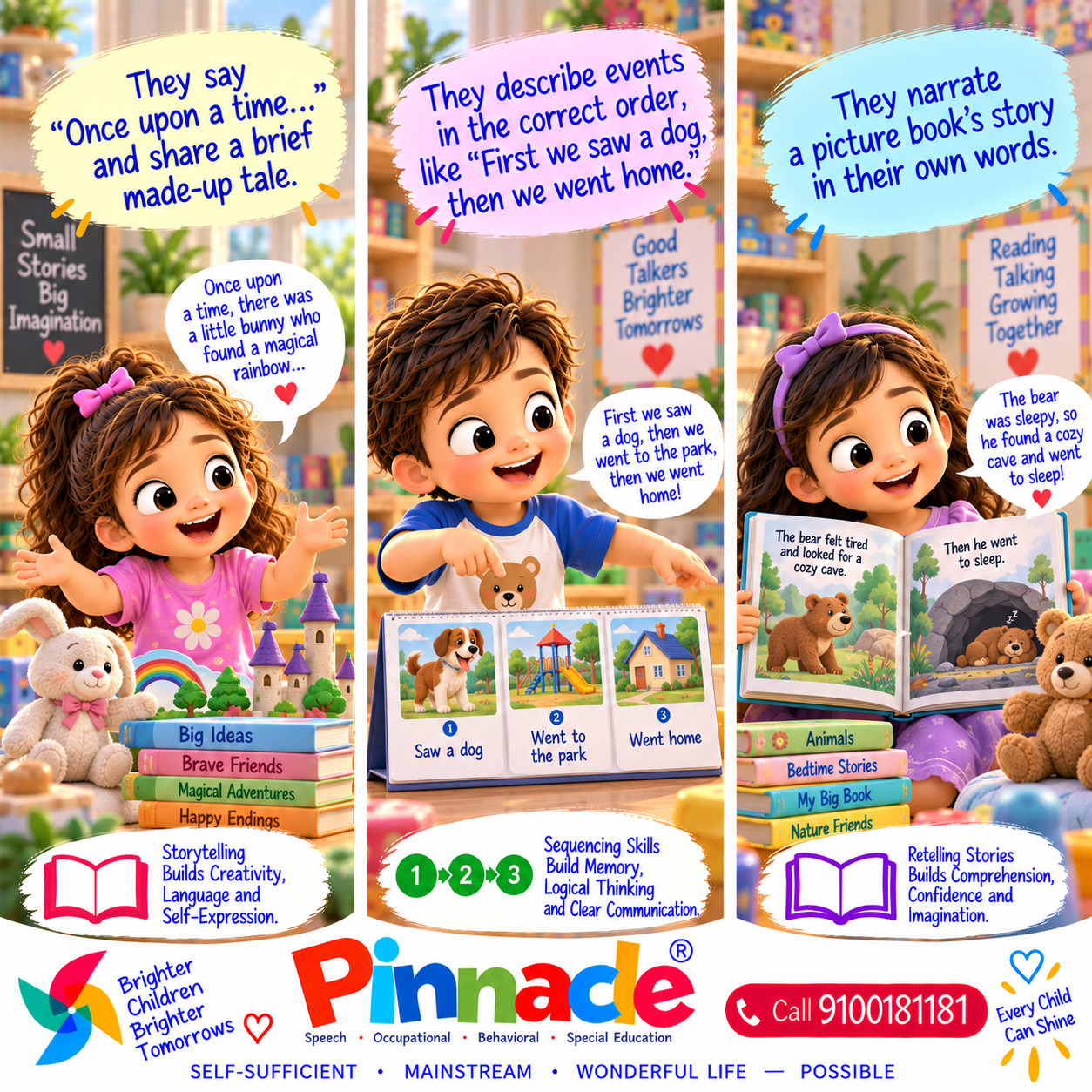
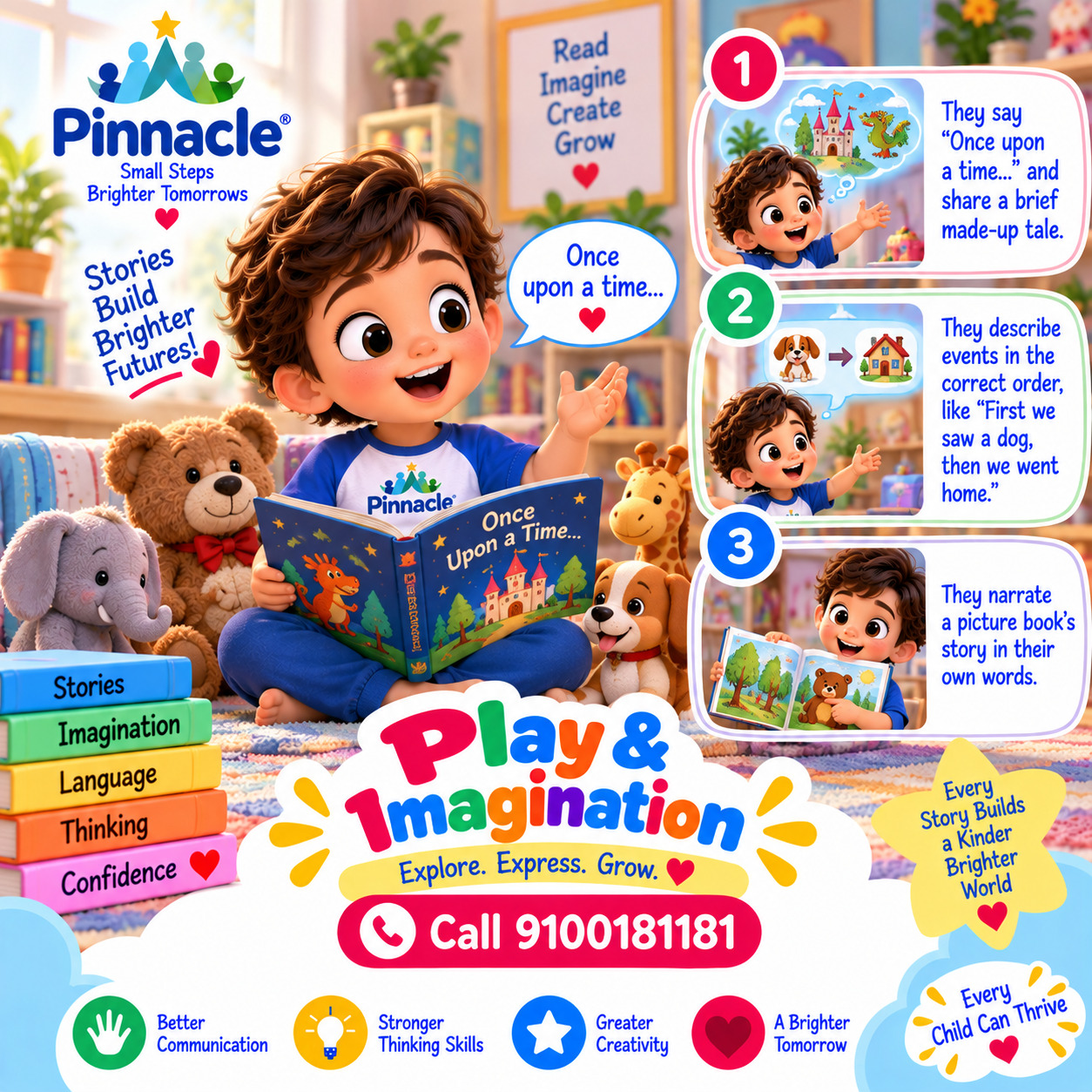
Can the child create or narrate simple stories?
Topic: Play & Imagination
Example 1
They say “Once upon a time...” and share a brief made-up tale.
Example 2
They describe events in the correct order, like “First we saw a dog, then we went home.”
Example 3
They narrate a picture book’s story in their own words.