Pinnacle iCELF-P2 - Clinical Evaluation of Language Fundamentals–Preschool-2
share
The Clinical Evaluation of Language Fundamentals–Preschool-2 (CELF-P2) is a vital tool in assessing the language skills of young children. At Pinnacle Blooms Network, we leverage CELF-P2 to identify language delays and set the path for targeted interventions.
CELF-P2 is an assessment tool designed to evaluate the language skills of preschool children and analyze components such as semantics, syntax, and morphology.
Early and accurate assessment of language skills is crucial for implementing timely interventions that can significantly enhance a child''s developmental trajectory.
Conducted at Pinnacle Blooms Network centers worldwide, including locations in India, USA, Dubai, and Singapore, ensuring accessibility for families everywhere.
The child may not be meeting expected language milestones for their age. Early intervention, including speech therapy or additional assessments, is highly recommended.
Typical Development
The child is demonstrating language skills within the expected range for their age. There may still be minor inconsistencies, but overall, the child is progressing well in their language development.
Advanced Development
The child is ahead of their peers in language development, showing strong receptive and expressive language abilities, and consistent social communication. No immediate concerns.
Anaya, a 4-year-old from Bangalore, was struggling with communication. His parents were worried and sought guidance from Pinnacle Blooms Network. Through CELF-P2, we identified specific language delays and initiated speech therapy. With consistent sessions, Anaya began to express himself, turning frustration into joyous communication. His parents celebrated every word he spoke, witnessing the transformation that early diagnosis and intervention can make.
Progress : Ajay gained significant improvement in vocabulary and communication skills within six months.
Unlock your child’s potential with Pinnacle Blooms Network. Schedule your CELF-P2 assessment today by calling our 24x7 Free National Care Center at 9100 181 181.
*Names are indicative only and have been changed for privacy protectionSuccess Testimonial
Name : Sneha Rao
RelationShip : Mother
Testimonial : The CELF-P2 assessment at Pinnacle Blooms gave us clarity about Ajay''s language challenges. The therapy changed our lives and opened a whole new world for our child.
These are reference questions and illustrative examples. This section does not collect child responses, calculate scores or produce an individual assessment result.
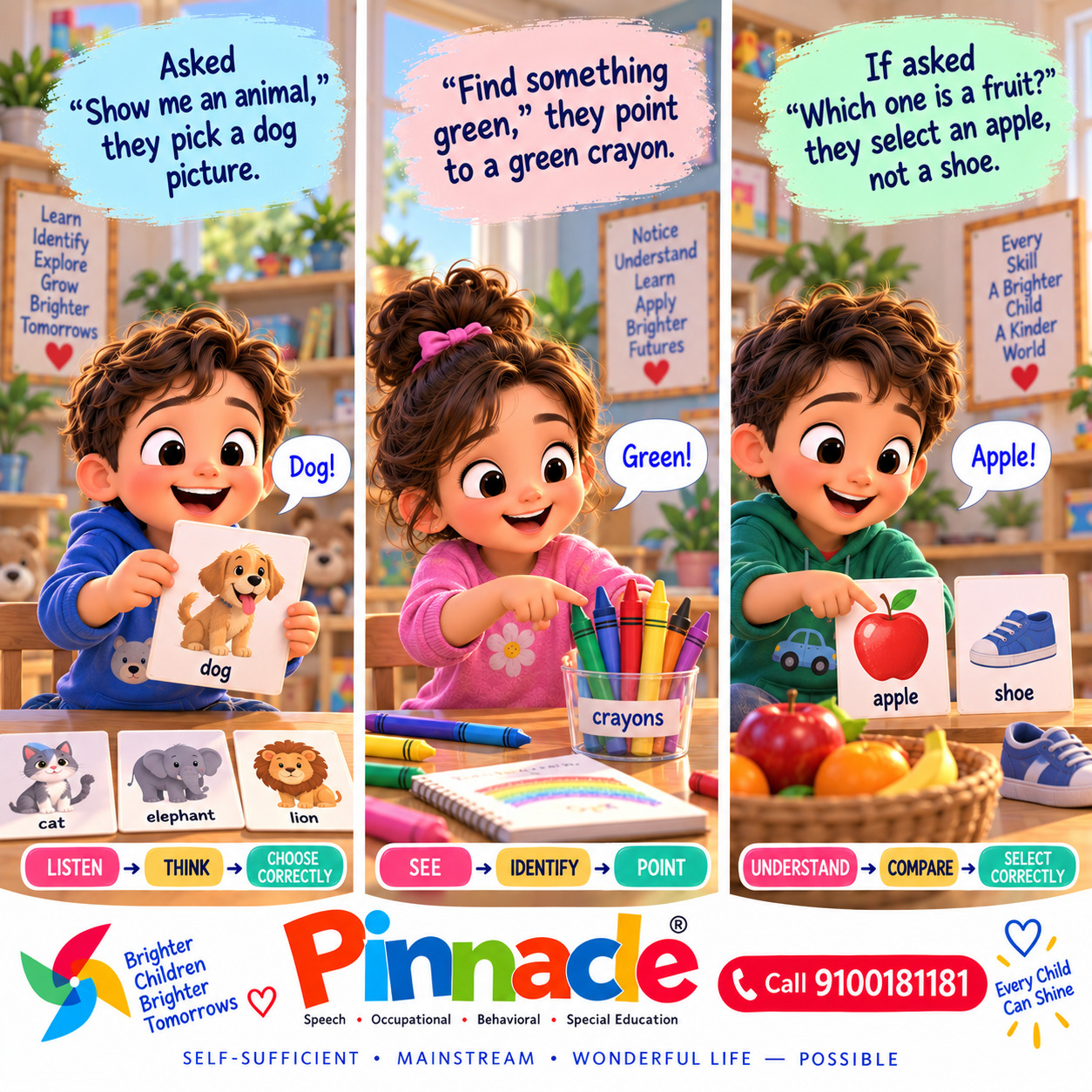
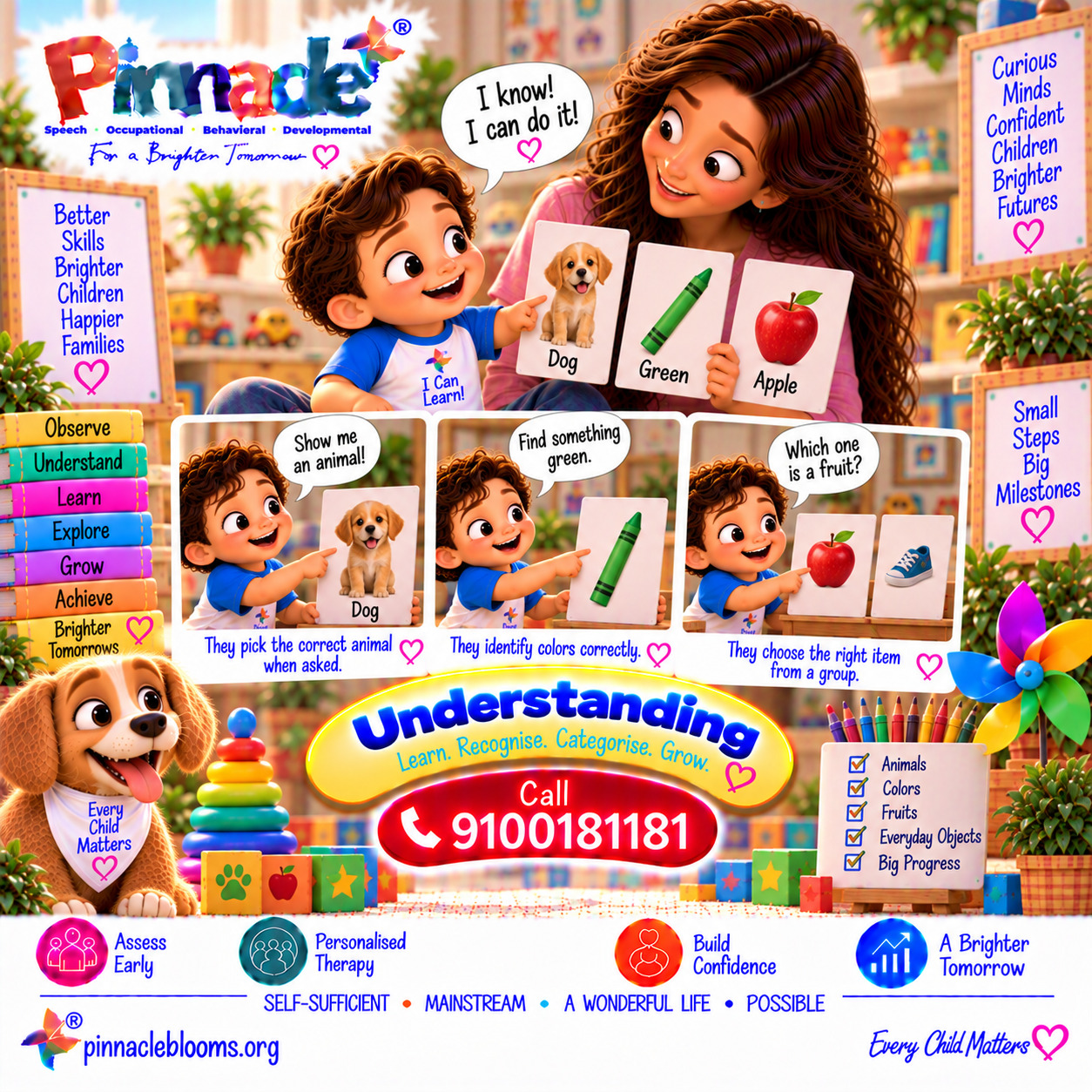
Does the child understand basic categories, such as animals or colors?
Topic: Understanding
Example 1
Asked “Show me an animal,” they pick a dog picture.
Example 2
“Find something green,” they point to a green crayon.
Example 3
If asked “Which one is a fruit?” they select an apple, not a shoe.
Example illustrationQuestion illustration
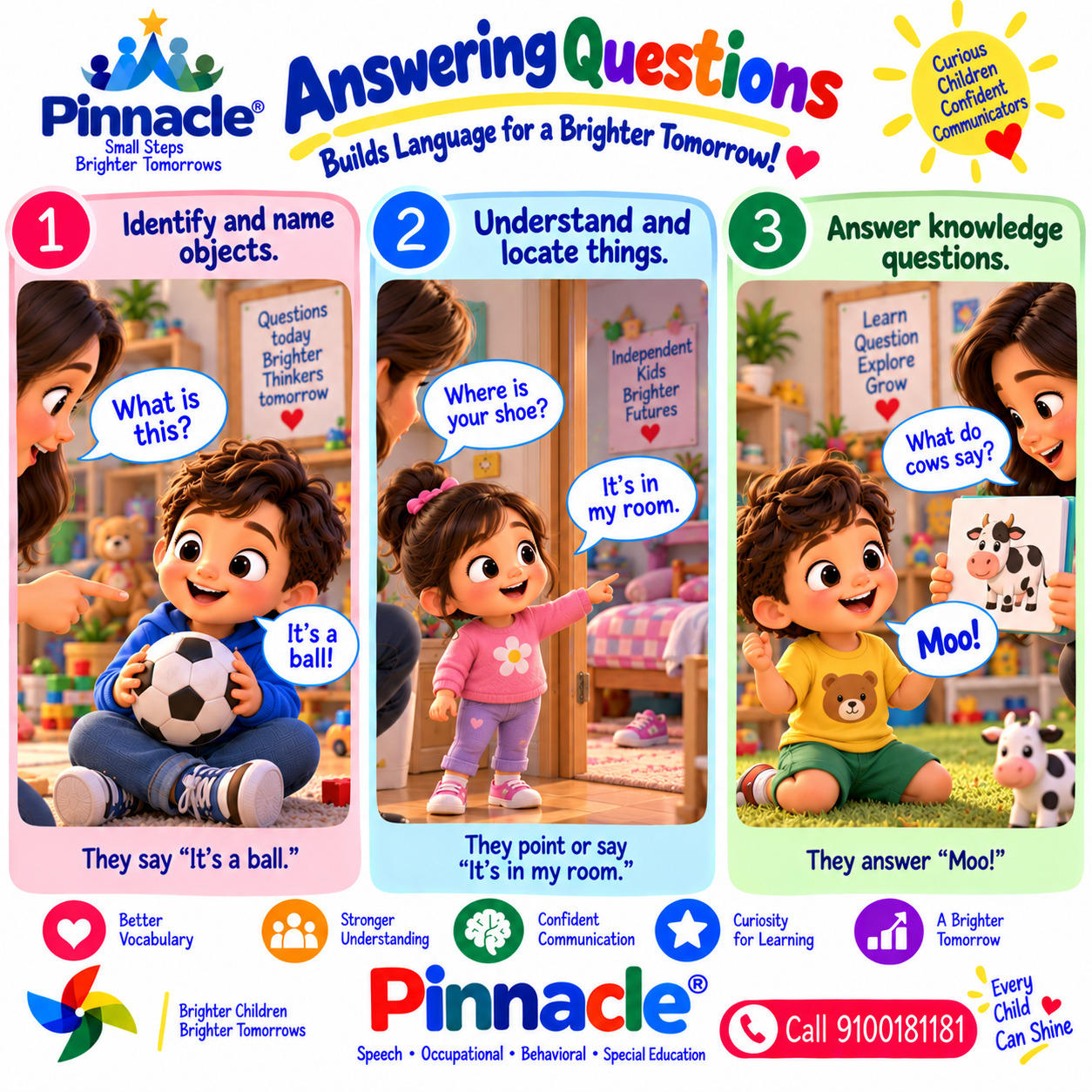
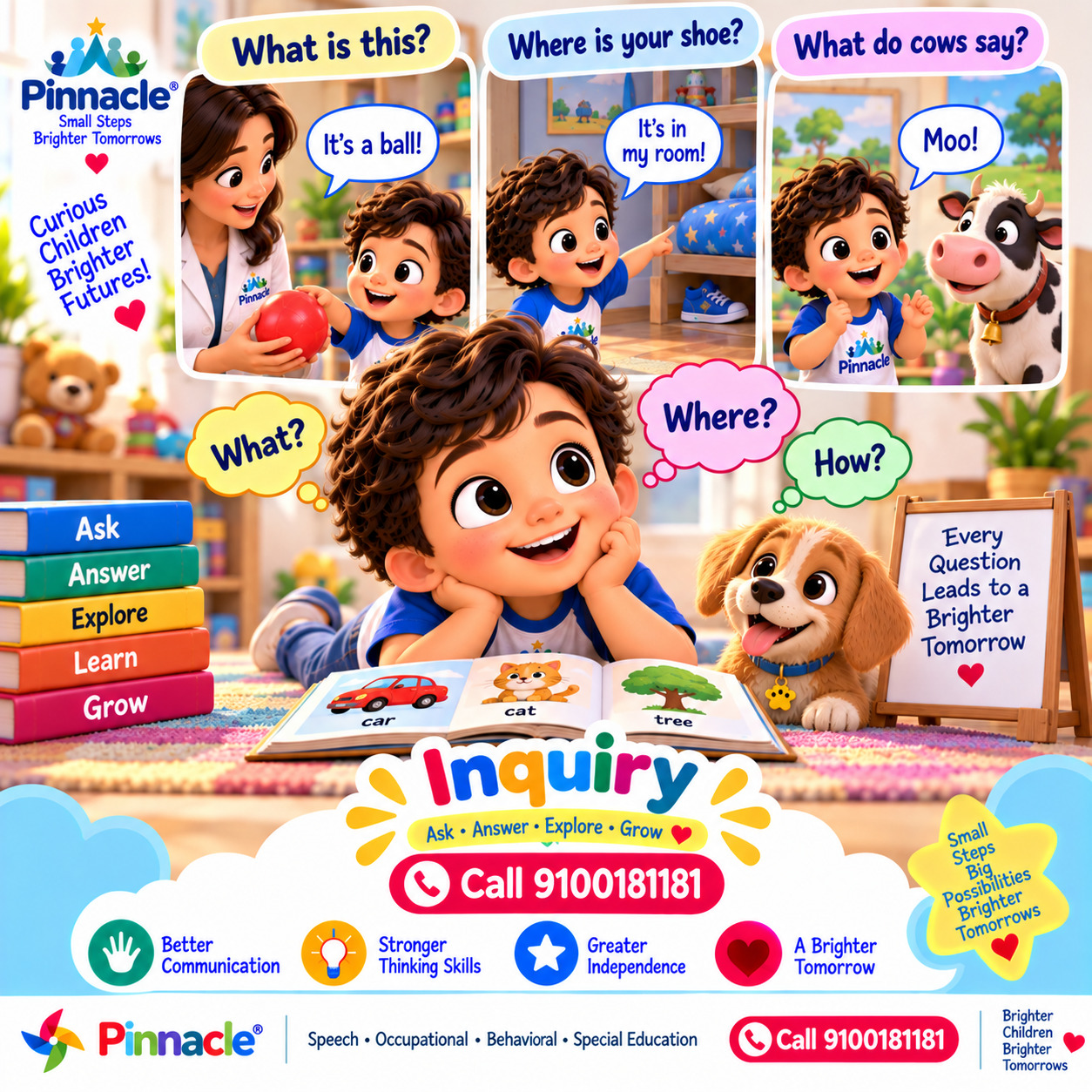
Can the child answer simple 'What' or 'Where' questions?
Topic: Inquiry
Example 1
“What is this?”—they say “It’s a ball.”
Example 2
“Where is your shoe?”—they point or say “It’s in my room.”
Example 3
“What do cows say?”—they answer “Moo!”
Example illustrationQuestion illustration
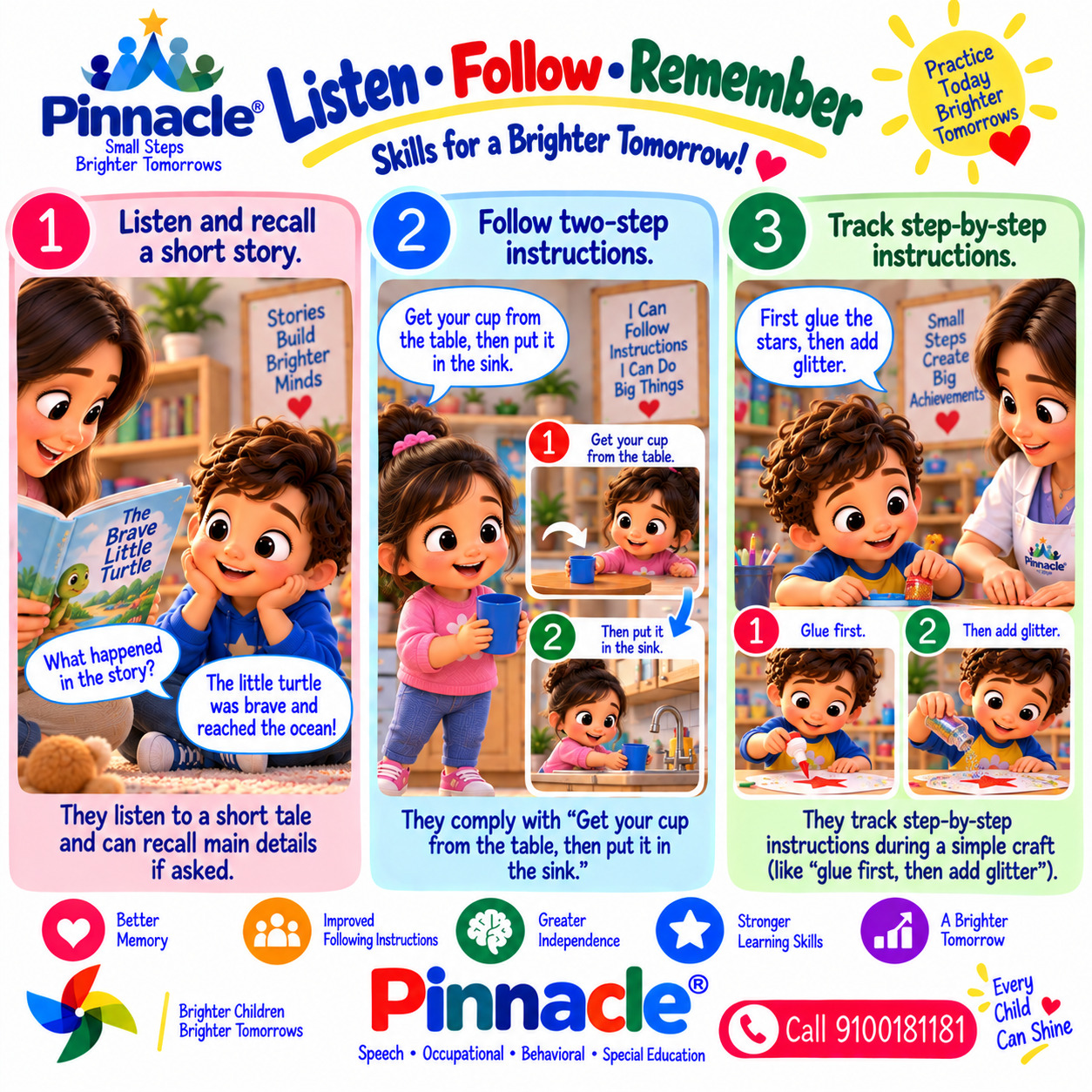
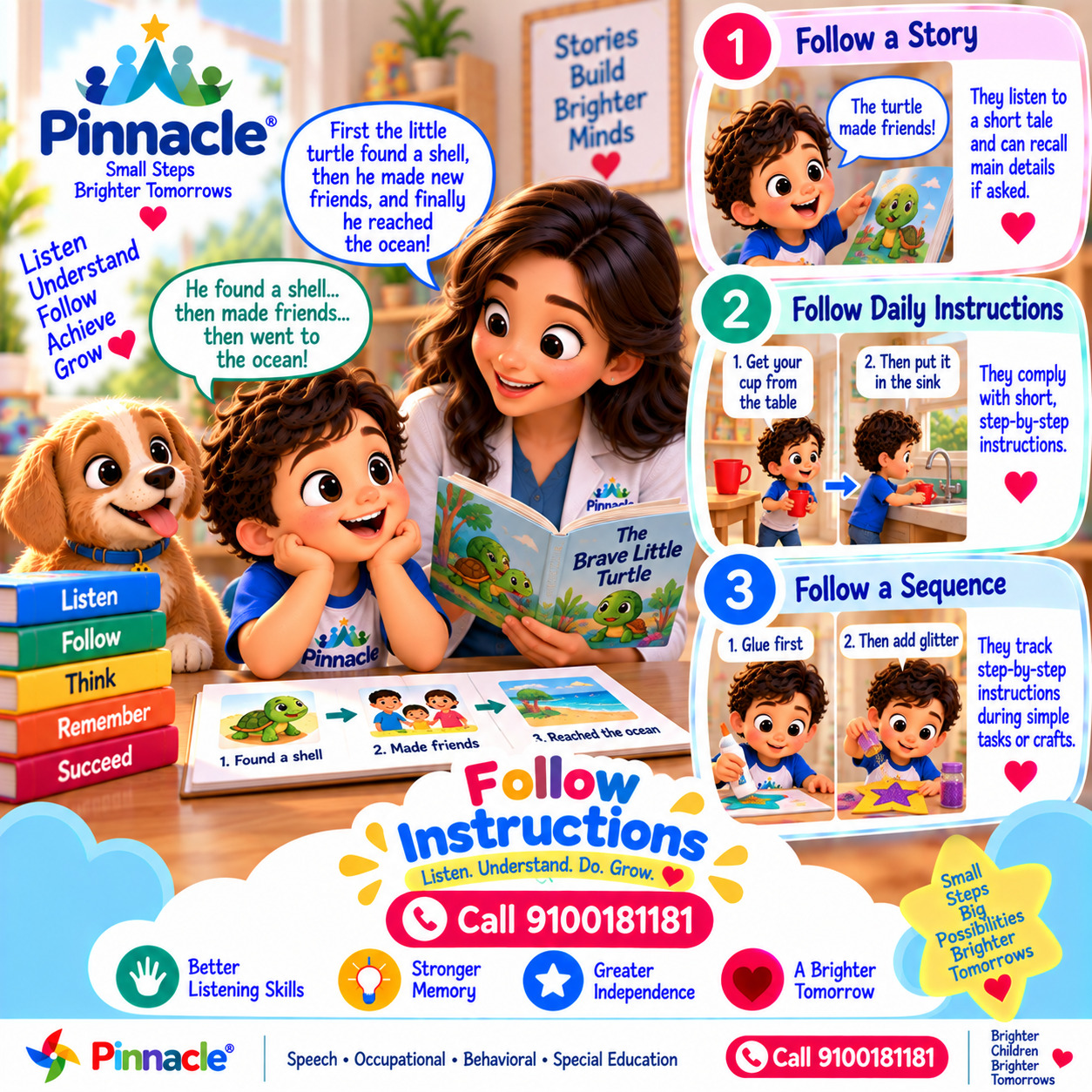
Is the child able to follow a short story or sequence of instructions?
Topic: Follow Instructions
Example 1
They listen to a short tale and can recall main details if asked.
Example 2
They comply with “Get your cup from the table, then put it in the sink.”
Example 3
They track step-by-step instructions during a simple craft (like “glue first, then add glitter”).
Example illustrationQuestion illustration
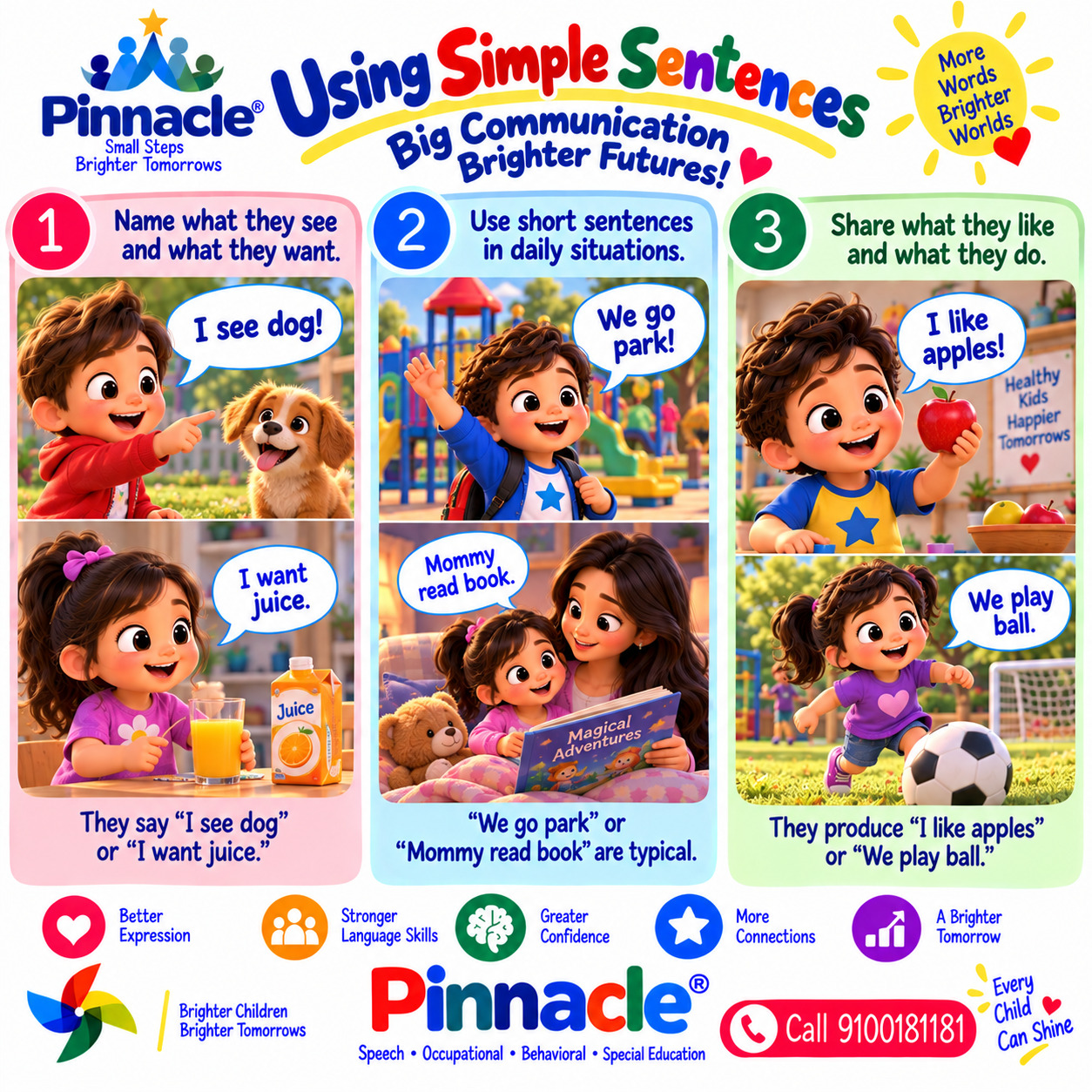
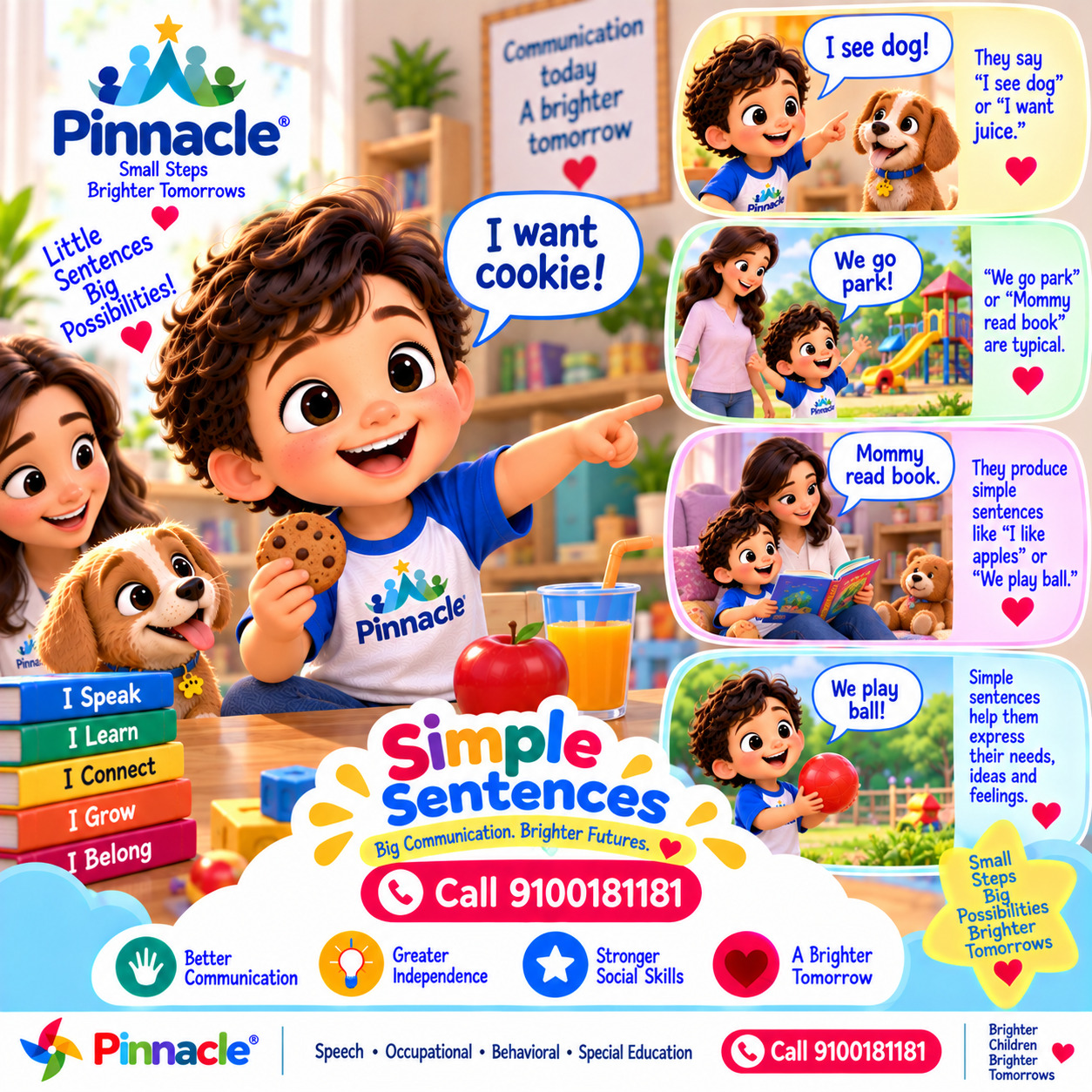
Can the child form simple sentences, like 'I want cookie'?
Topic: Sentence Formation
Example 1
They say “I see dog” or “I want juice.”
Example 2
“We go park” or “Mommy read book” are typical.
Example 3
They produce “I like apples” or “We play ball.”
Example illustrationQuestion illustration
Is the child able to describe actions, like saying 'boy running'?
Topic: Describe Actions
Example 1
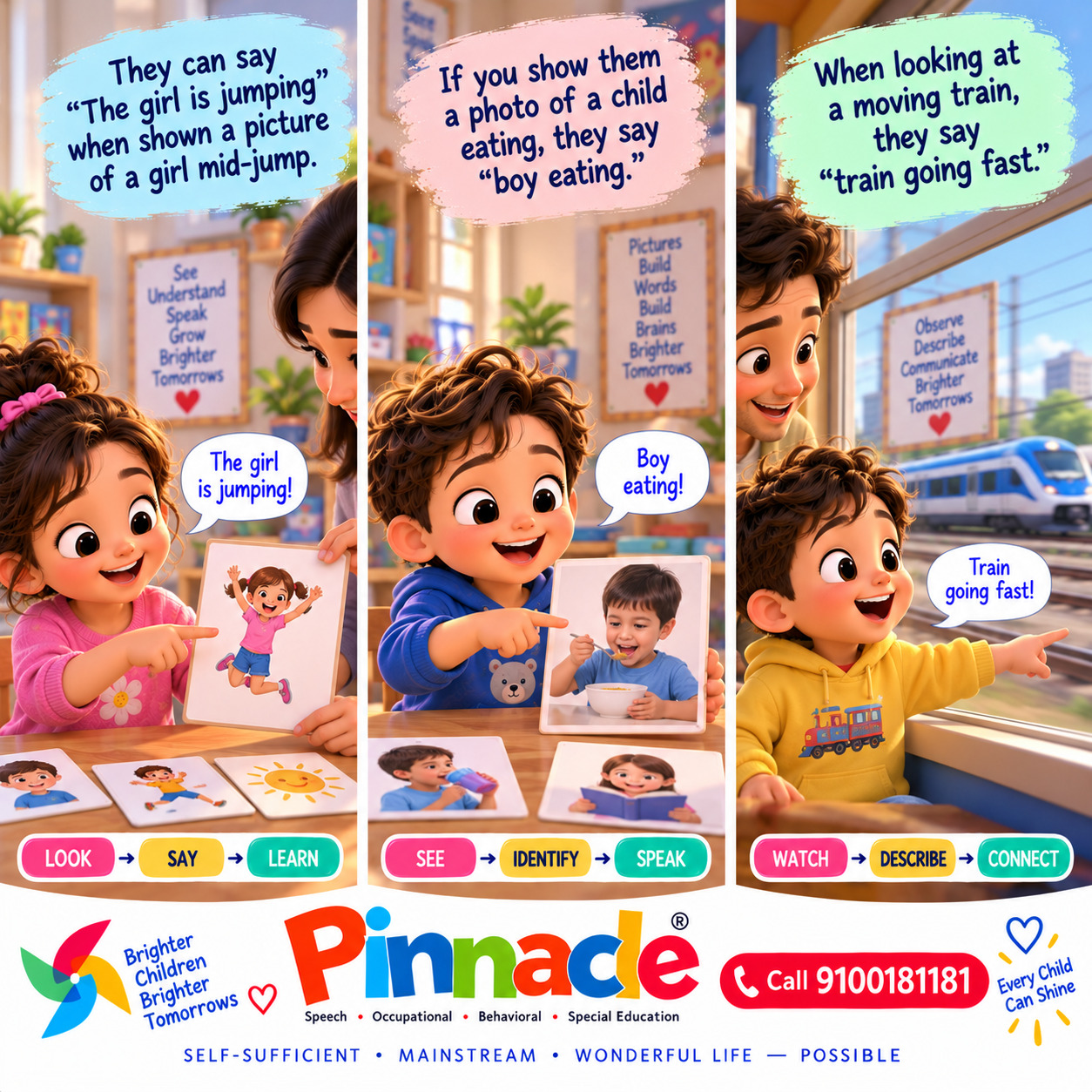
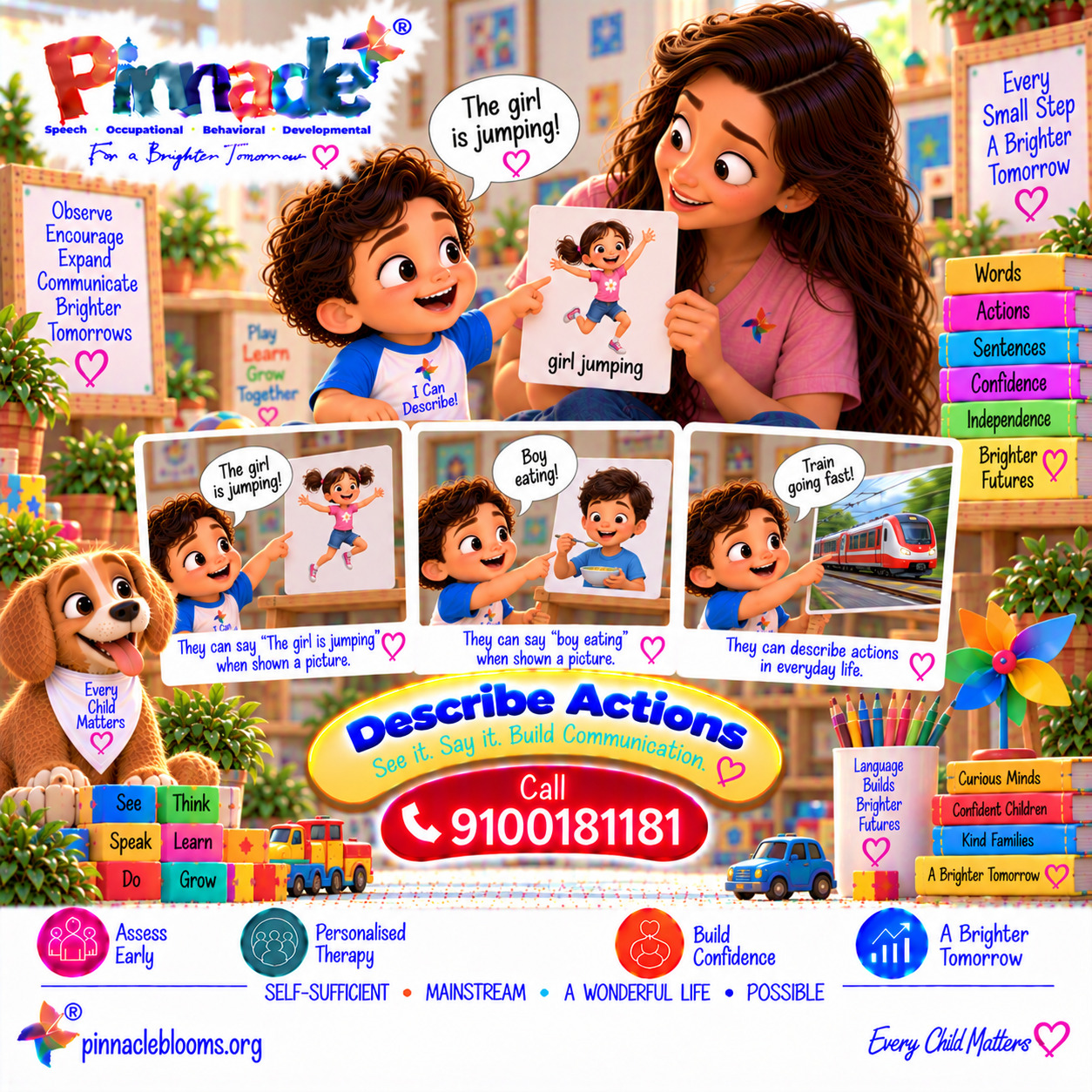
They can say “The girl is jumping” when shown a picture of a girl mid-jump.
Example 2
If you show them a photo of a child eating, they say “boy eating.”
Example 3
When looking at a moving train, they say “train going fast.”
Example illustrationQuestion illustration
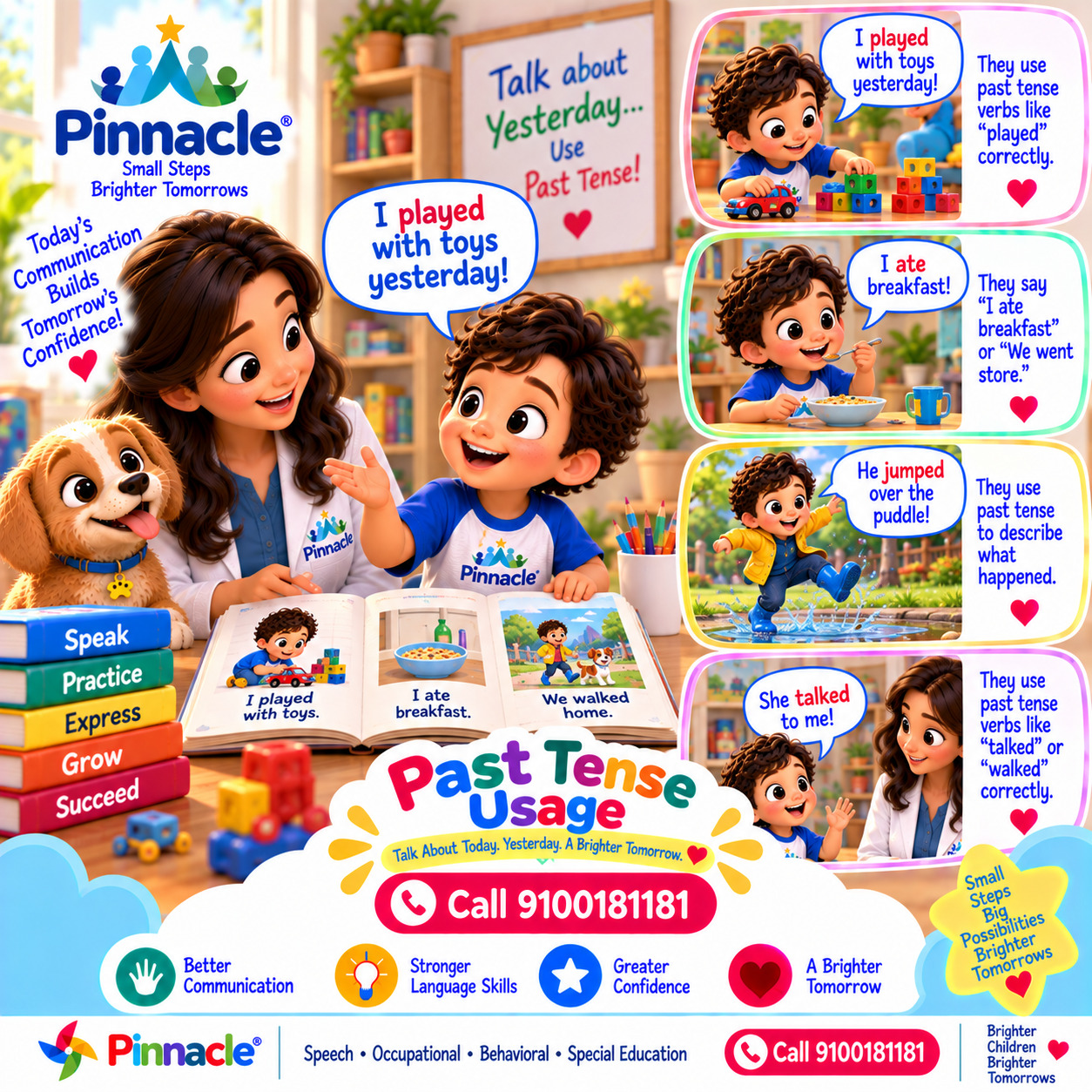
Can the child use past tense verbs, like 'played'?
Topic: Past Tense Usage
Example 1
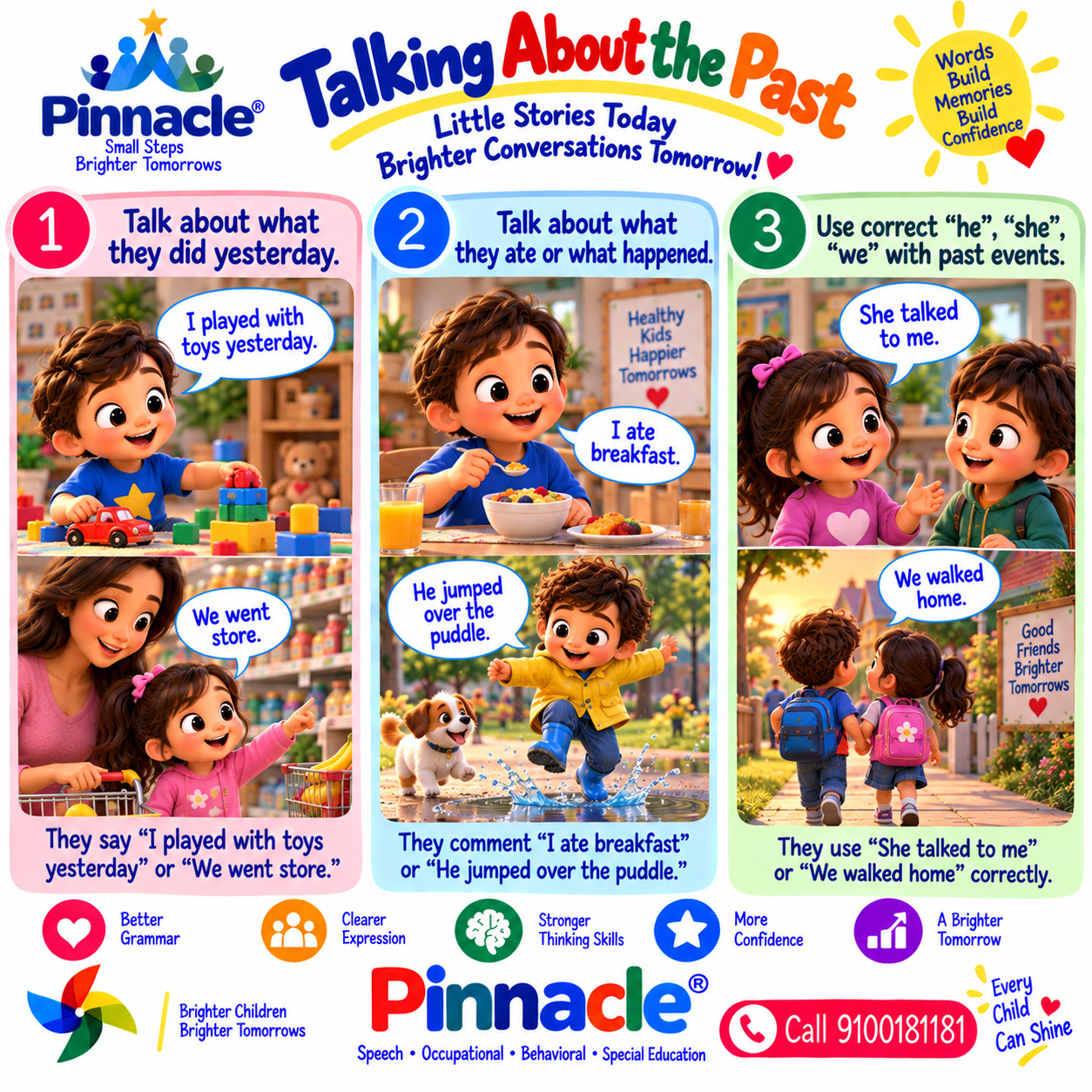
They say “I played with toys yesterday” or “We went store.”
Example 2
They comment “I ate breakfast” or “He jumped over the puddle.”
Example 3
They use “She talked to me” or “We walked home” correctly.
Example illustrationQuestion illustration
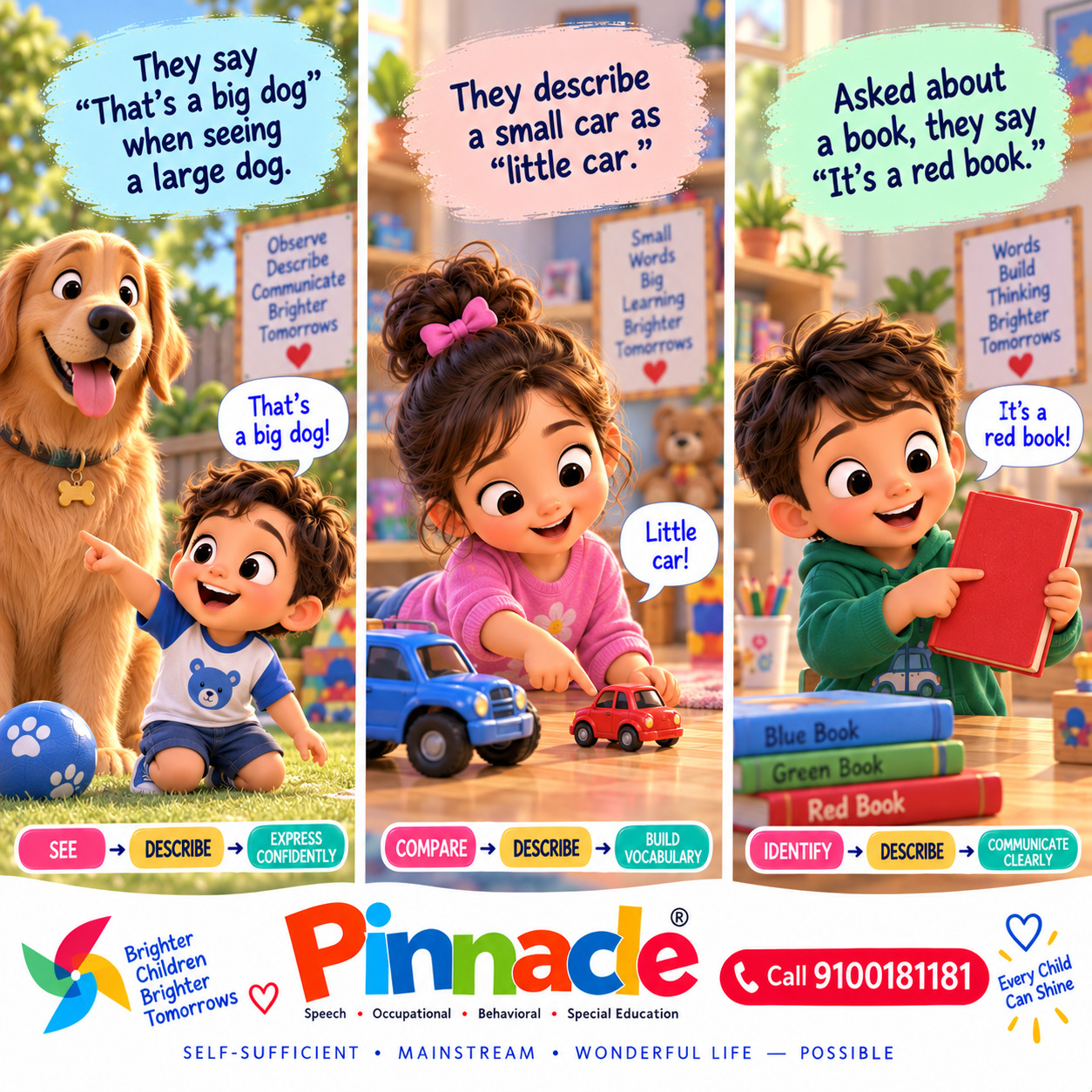
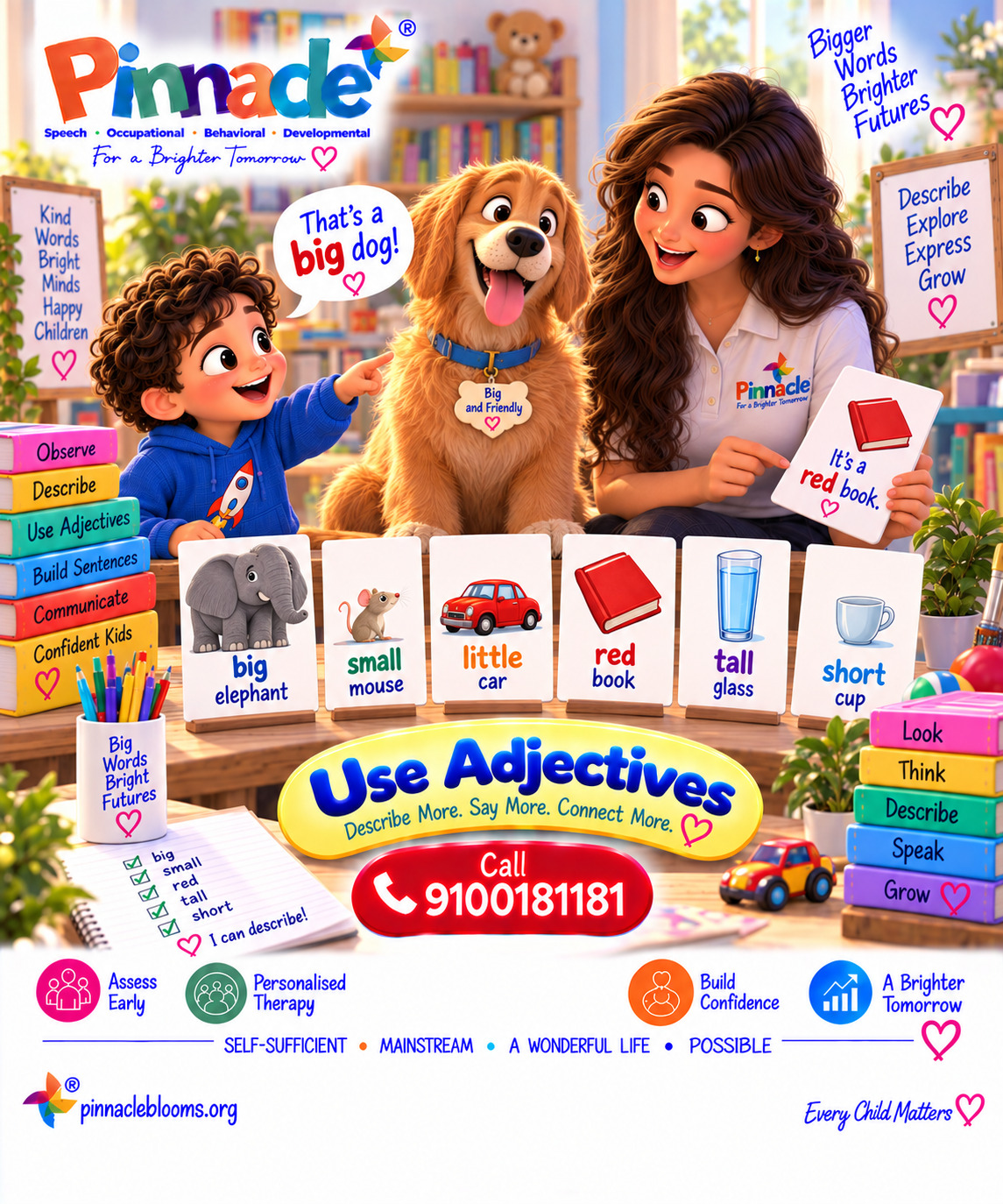
Does the child use adjectives, like 'big', 'small'?
Topic: Use Adjectives
Example 1
They say “That’s a big dog” when seeing a large dog.
Example 2
They describe a small car as “little car.”
Example 3
Asked about a book, they say “It’s a red book.”
Example illustrationQuestion illustration
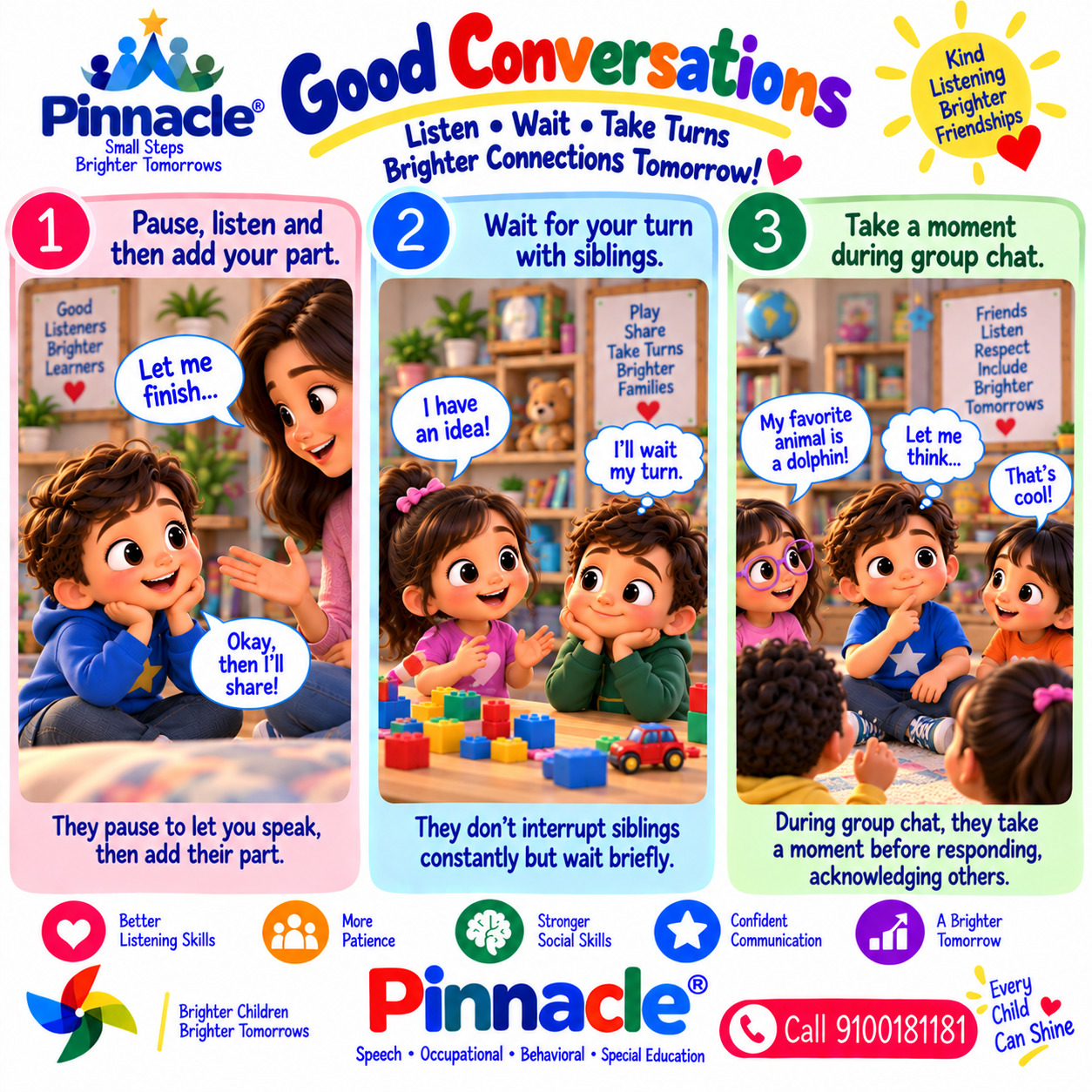
Does the child take turns when talking with others?
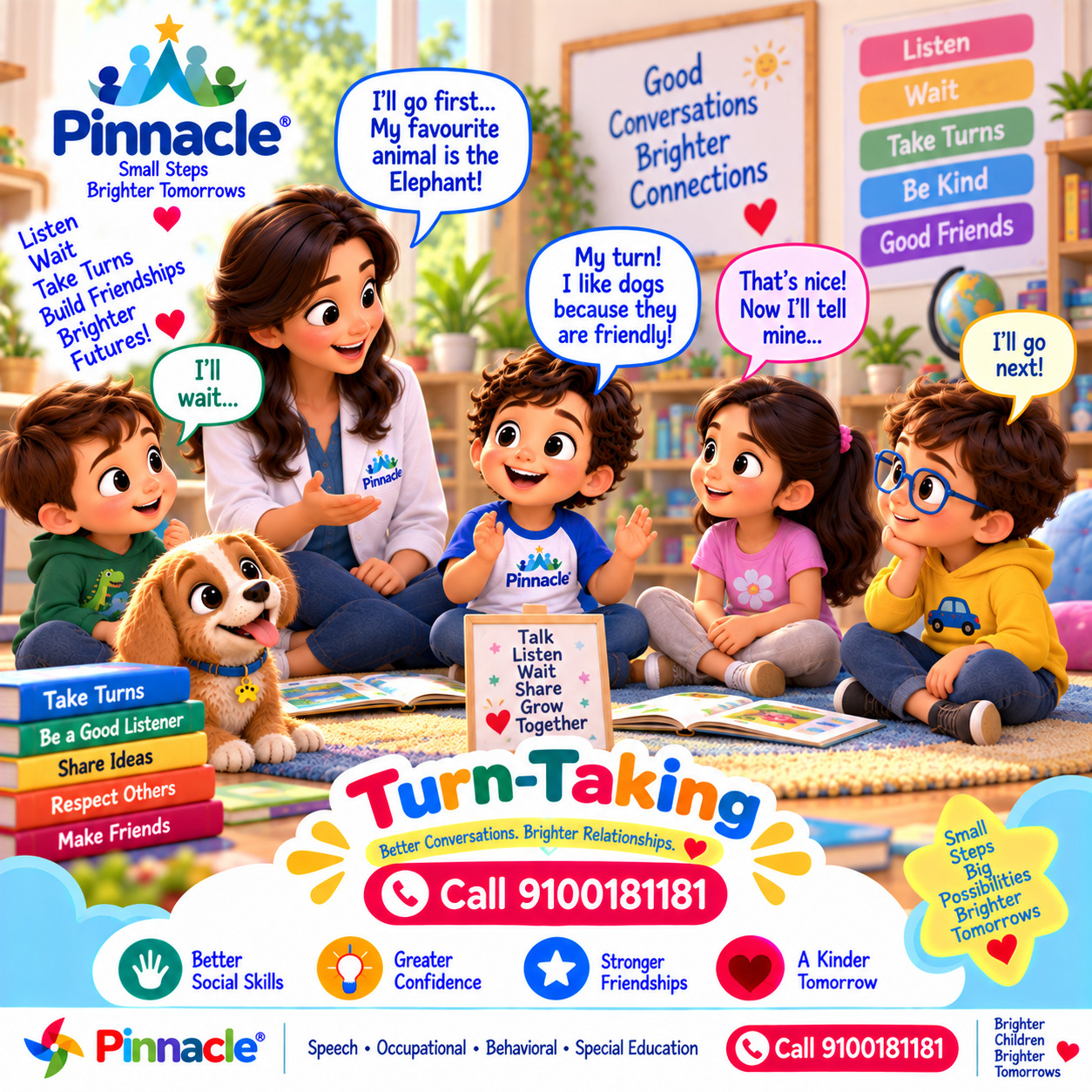
Topic: Turn-Taking
Example 1
They pause to let you speak, then add their part.
Example 2
They don’t interrupt siblings constantly but wait briefly.
Example 3
During group chat, they take a moment before responding, acknowledging others.
Example illustrationQuestion illustration
Does the child respond appropriately to greetings or farewells?
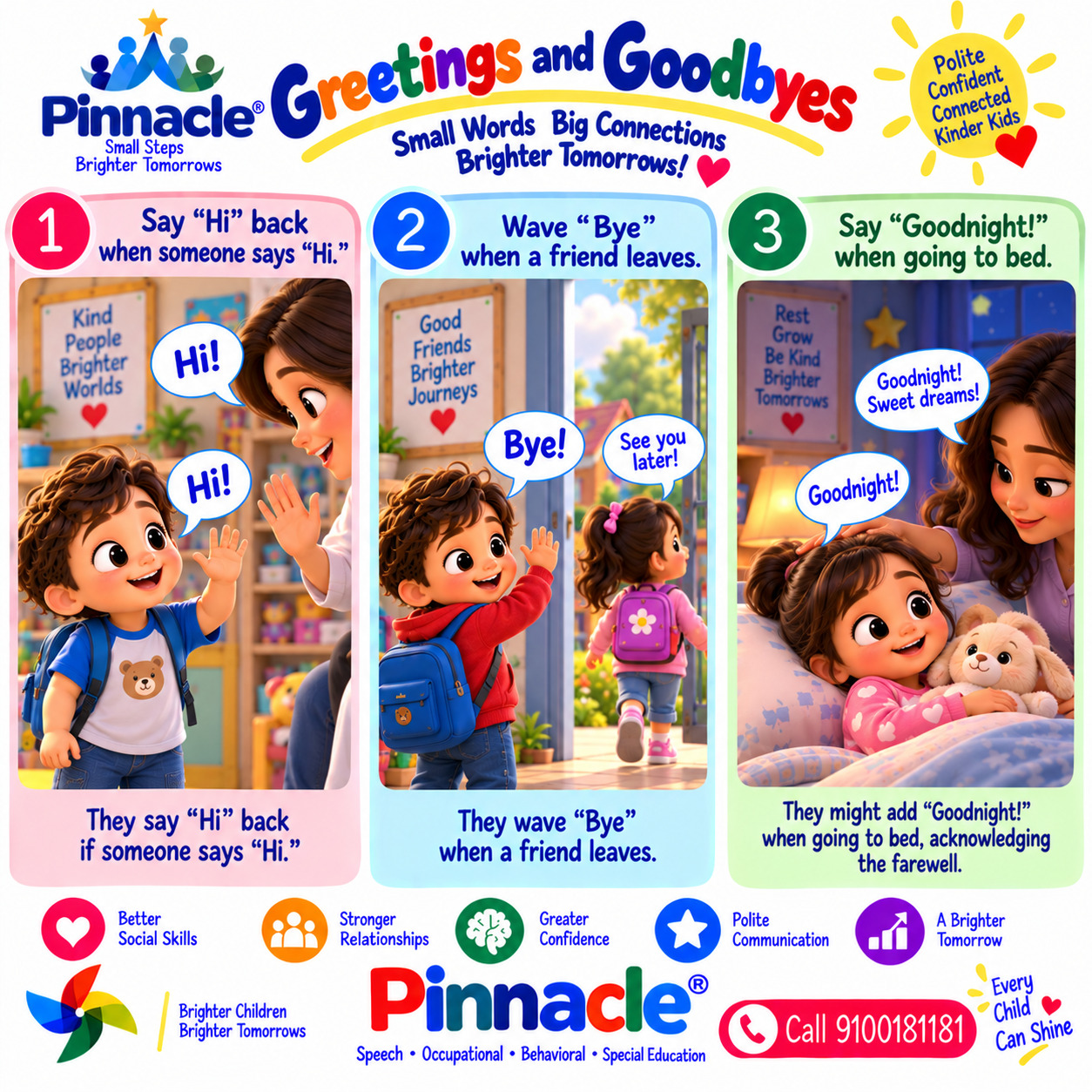
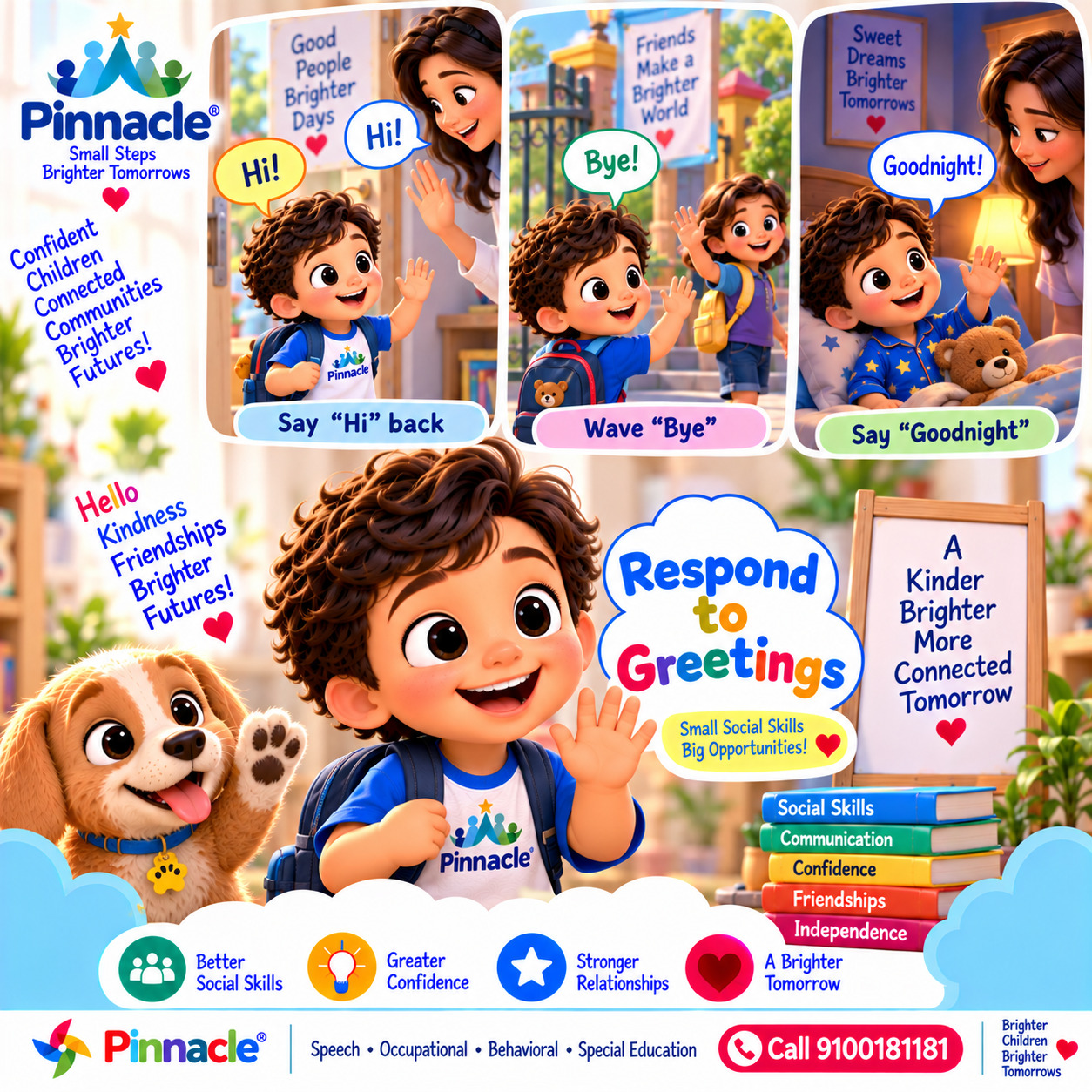
Topic: Respond to Greetings
Example 1
They say “Hi” back if someone says “Hi.”
Example 2
They wave “Bye” when a friend leaves.
Example 3
They might add “Goodnight!” when going to bed, acknowledging the farewell.
Example illustrationQuestion illustration
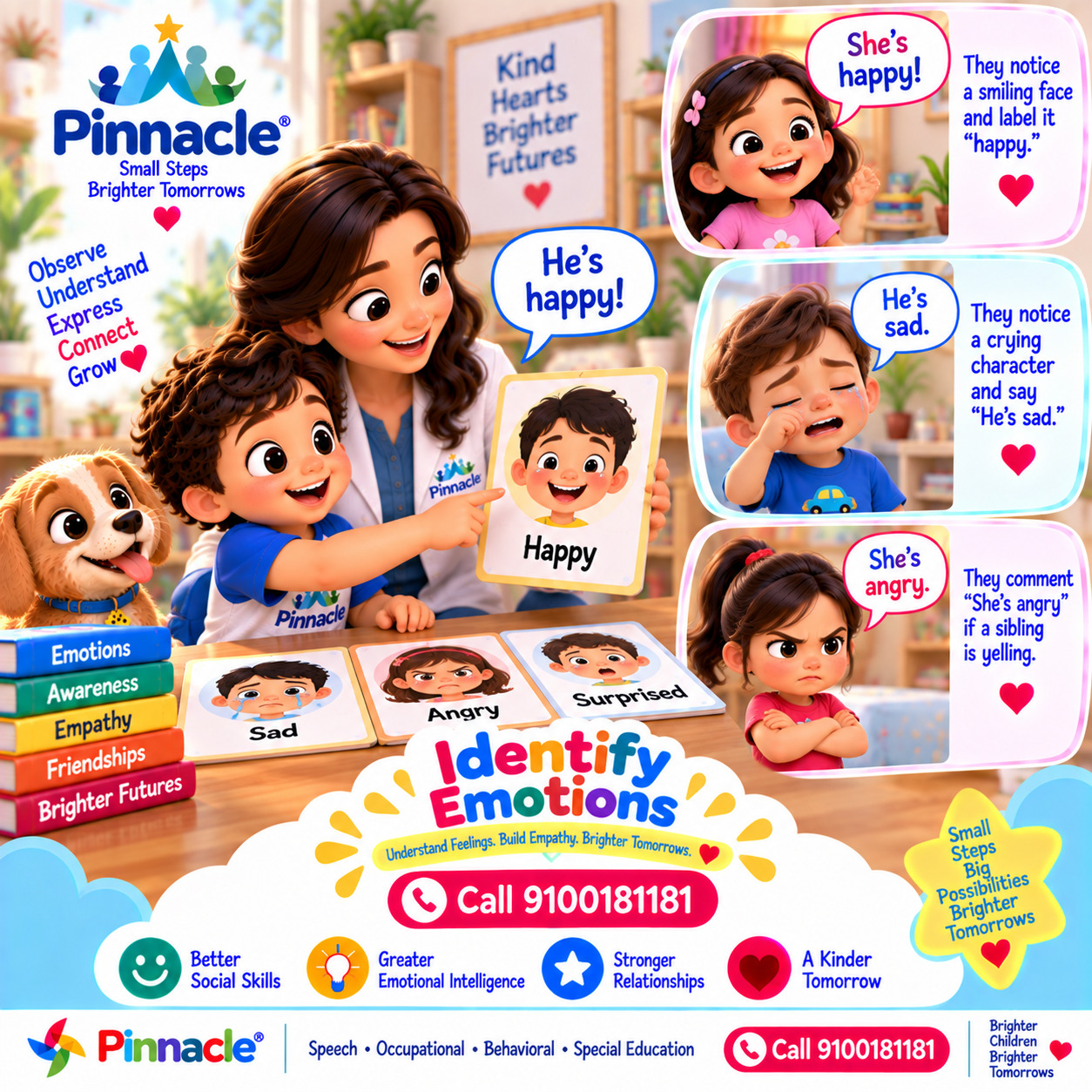
Can the child identify emotions in others, like 'happy' or 'sad'?
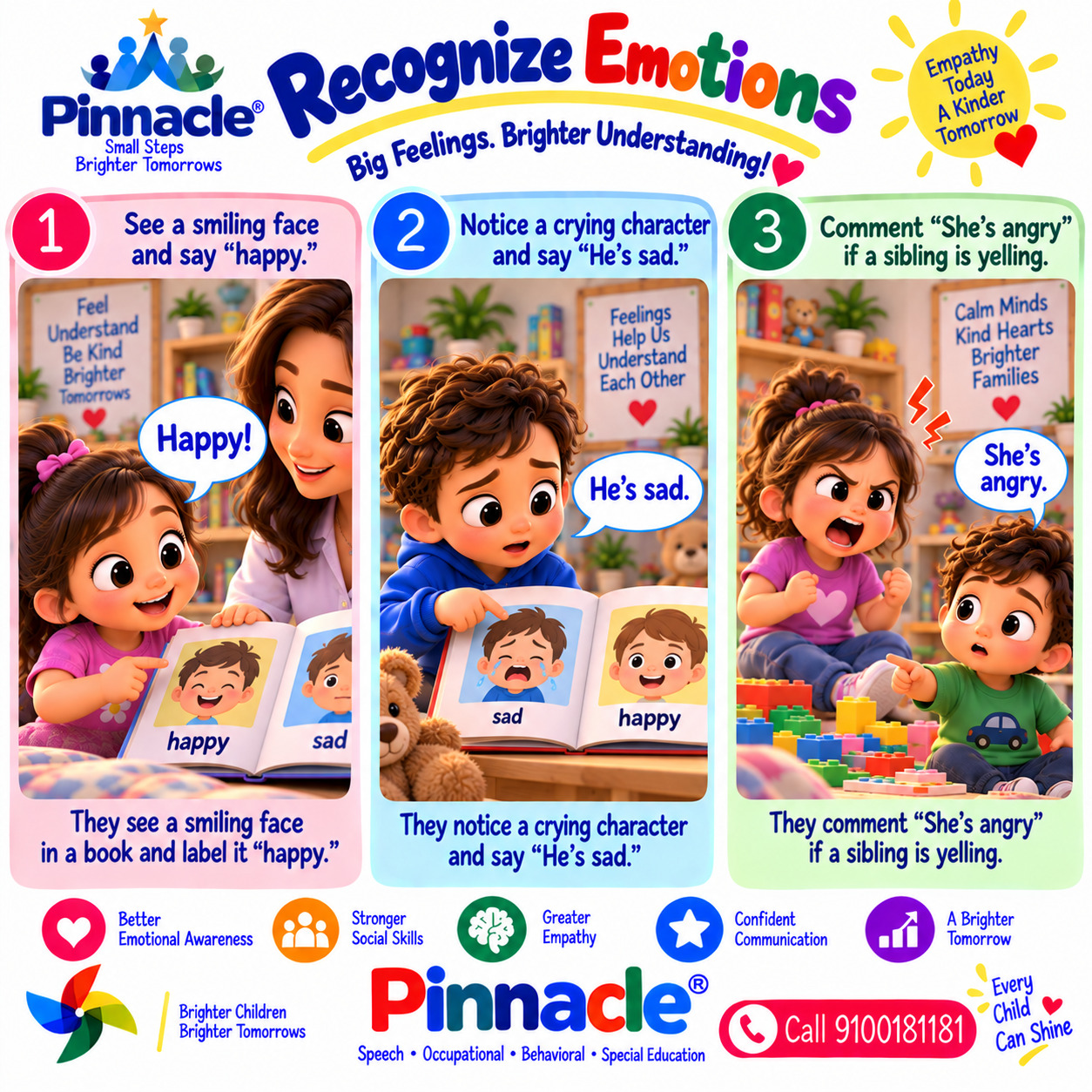
Topic: Identify Emotions
Example 1
They see a smiling face in a book and label it “happy.”
Example 2
They notice a crying character and say “He’s sad.”
Example 3
They comment “She’s angry” if a sibling is yelling.
Example illustrationQuestion illustration
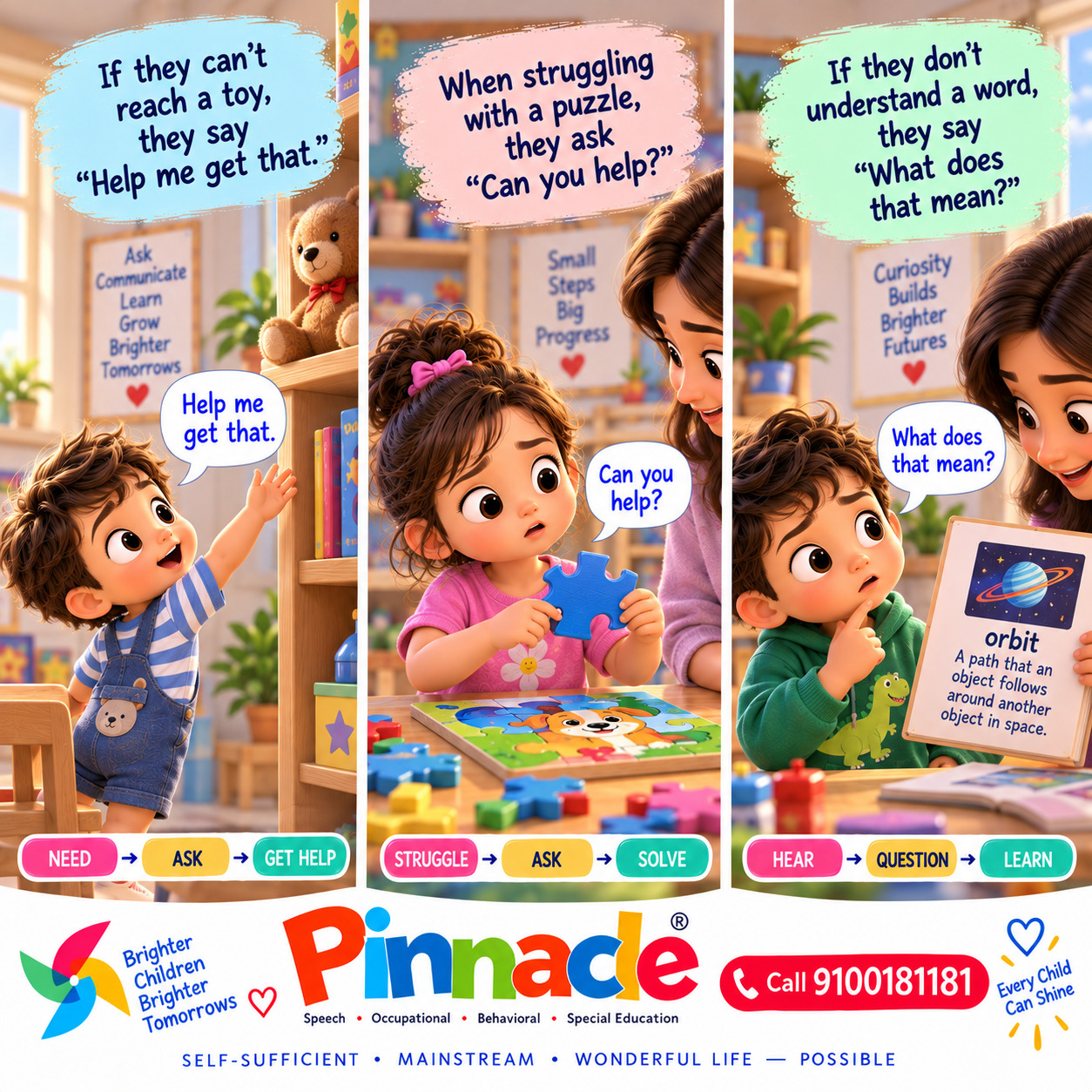
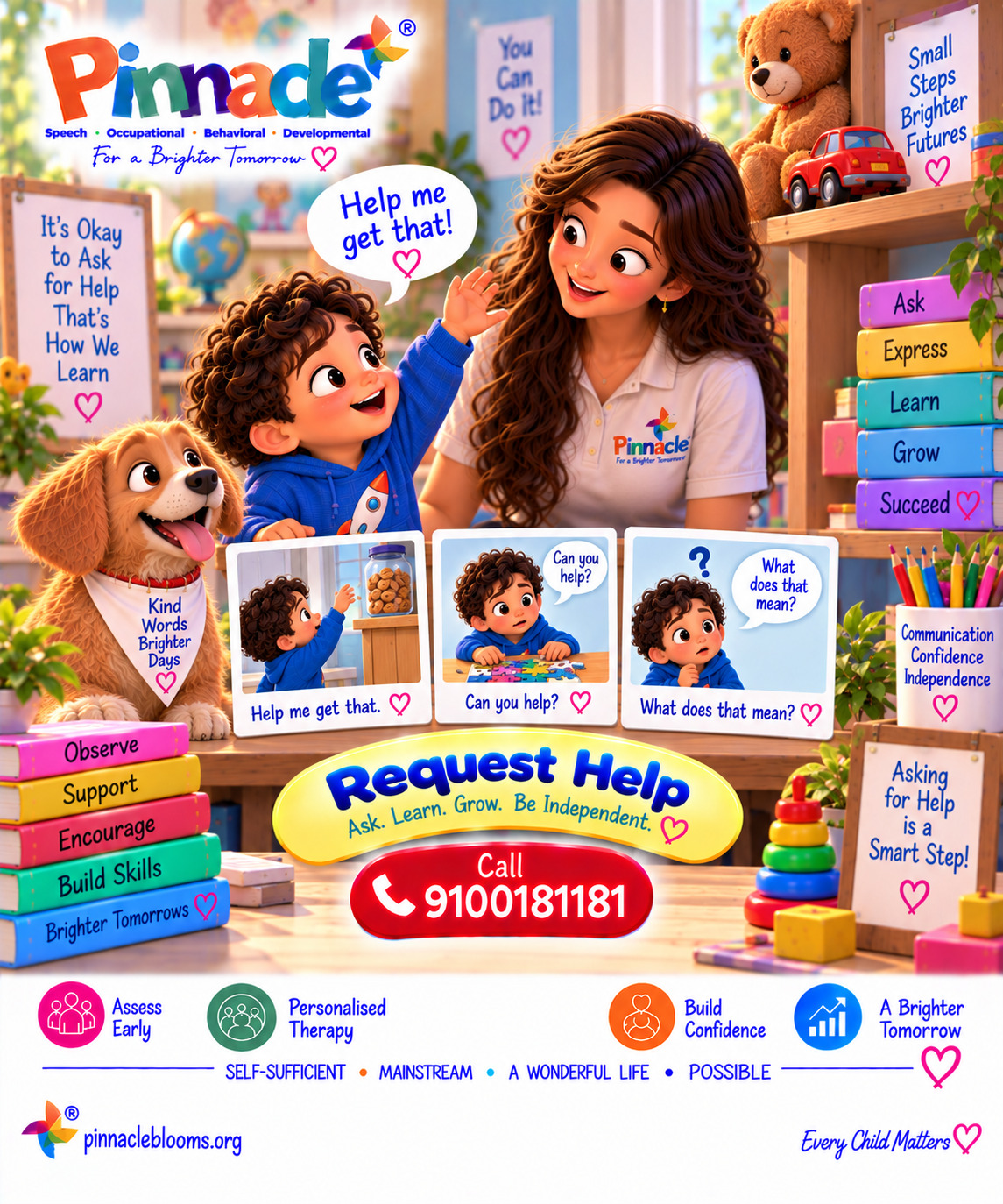
Does the child ask for help when needed?
Topic: Request Help
Example 1
If they can’t reach a toy, they say “Help me get that.”
Example 2
When struggling with a puzzle, they ask “Can you help?”
Example 3
If they don’t understand a word, they say “What does that mean?”
Example illustrationQuestion illustration
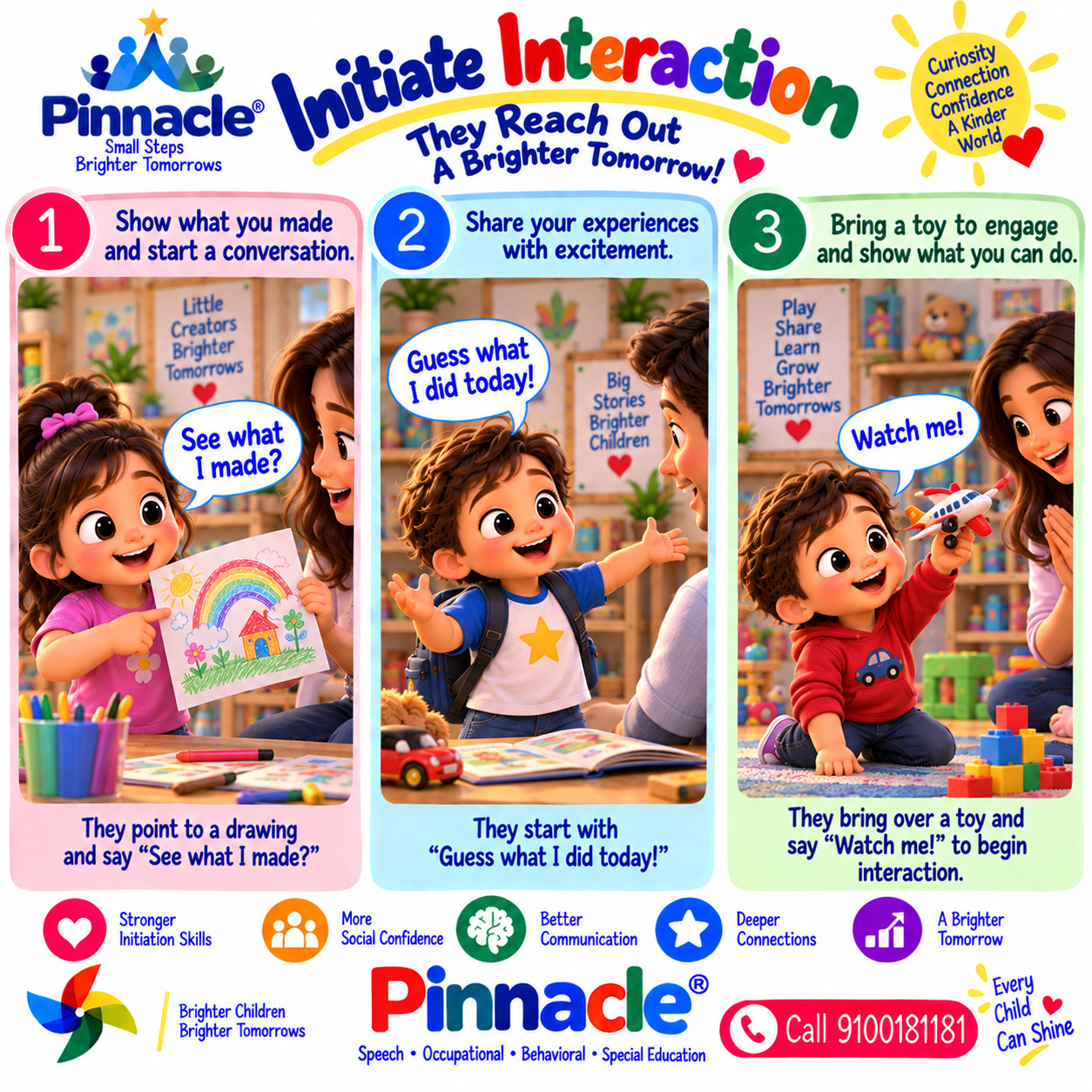
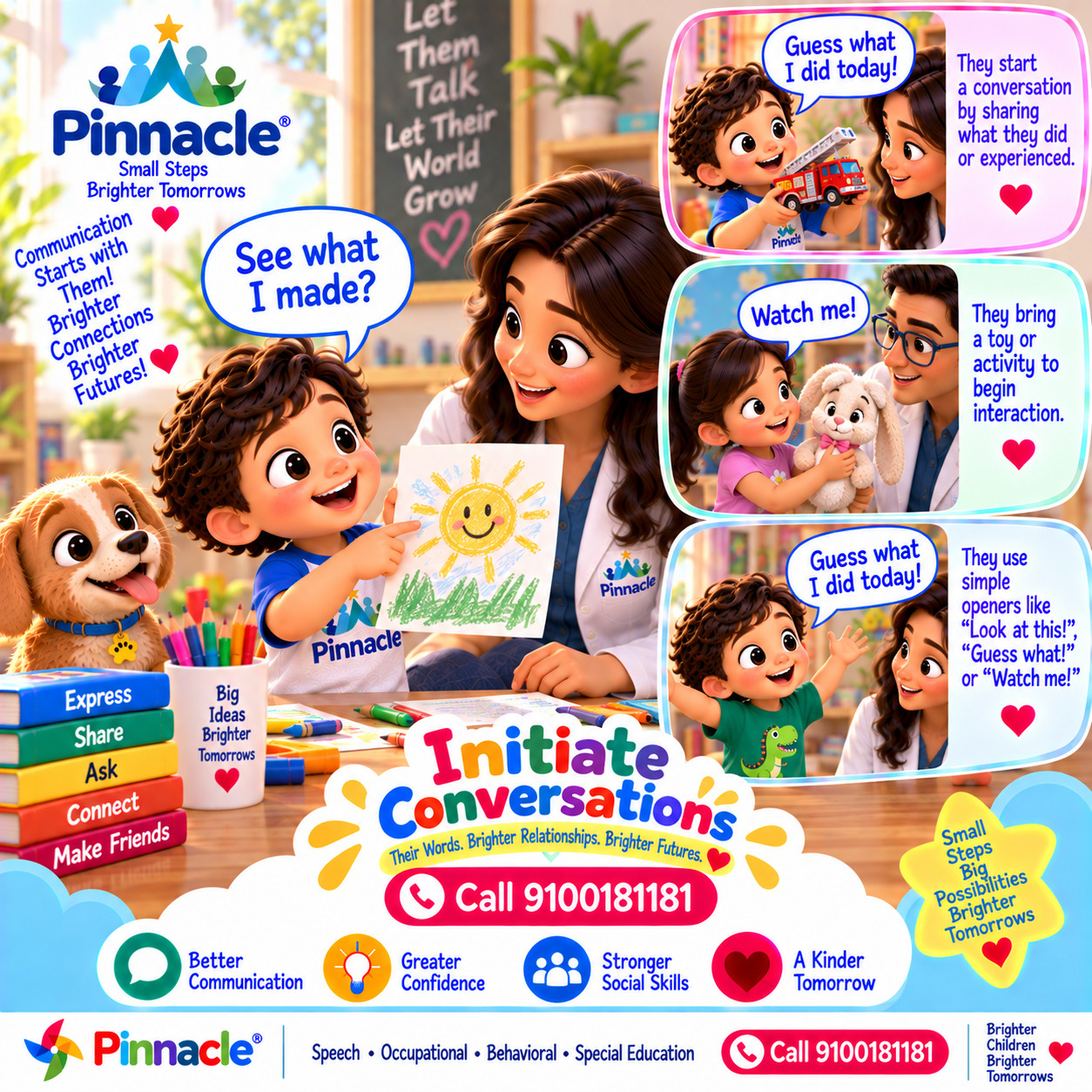
Can the child initiate a conversation (e.g., 'Look at this')?
Topic: Initiate Conversations
Example 1
They point to a drawing and say “See what I made?”
Example 2
They start with “Guess what I did today!”
Example 3
They bring over a toy and say “Watch me!” to begin interaction.