Pinnacle Blooms Network offers comprehensive 1:1 assessments designed to support children with autism and developmental conditions, providing tailored therapy solutions.
When Ananya was 3, her parents noticed she wasn''t making eye contact or responding to her name. Feeling lost, they turned to Pinnacle Blooms Network. The detailed assessment provided clarity and a tailored therapy plan. Today, Ananya is more engaged and happier, thanks to early intervention.
*Names are indicative only and have been changed for privacy protectionBreaking Barriers
Kid Name : Rohan
Age : 5
Gender : Male
Diagnosis : Autism Spectrum Disorder
Progress : Significant improvement in communication and social interaction.
Join us at Pinnacle Blooms Network to make similar progress with your child through tailored therapeutic interventions.
*Names are indicative only and have been changed for privacy protectionSuccess Testimonial
Name : Priya
RelationShip : Mother
Testimonial : Seeing Rohan find his voice has been the biggest blessing. Pinnacle Blooms Network''s approach gave us hope and the tools we needed.
These are reference questions and illustrative examples. This section does not collect child responses, calculate scores or produce an individual assessment result.
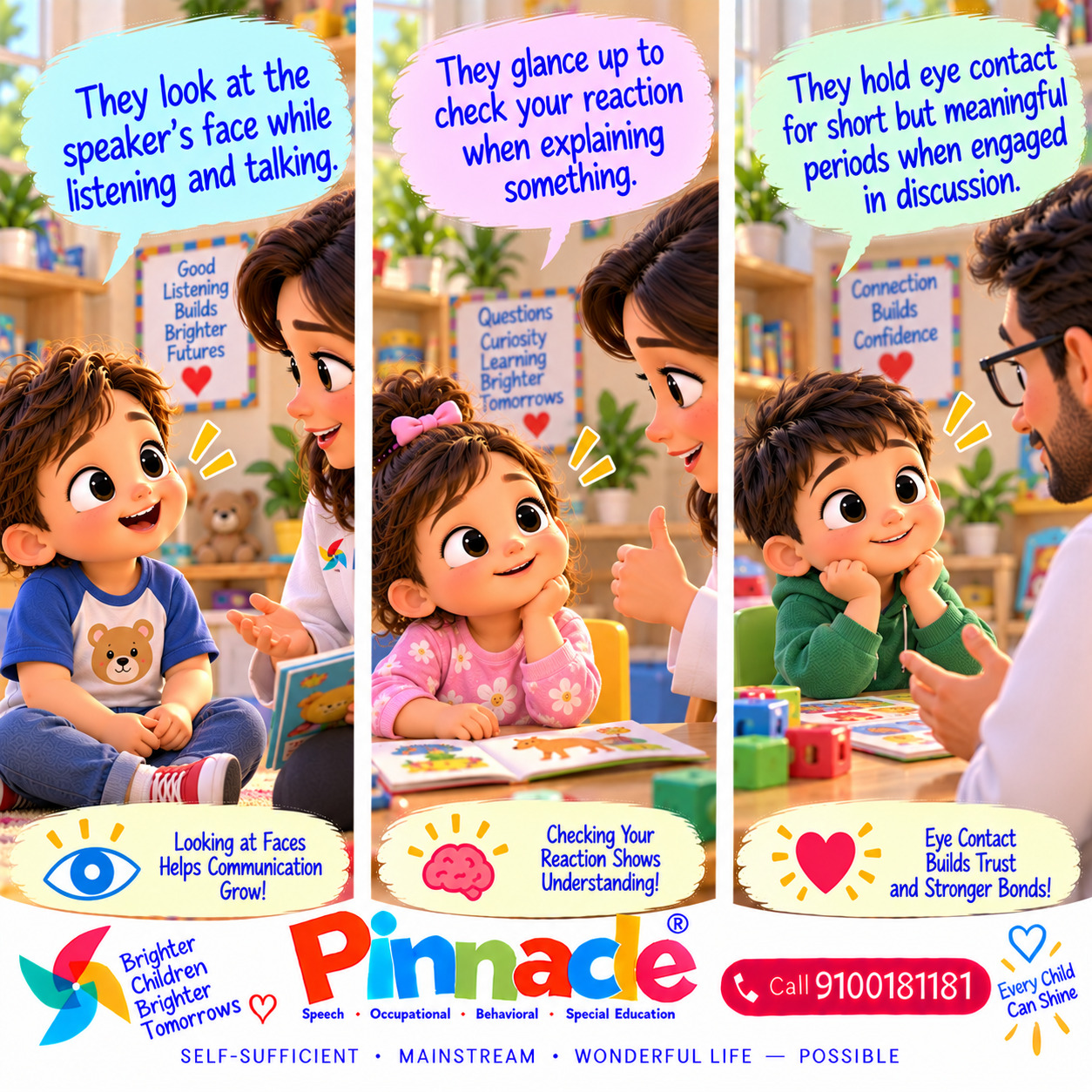
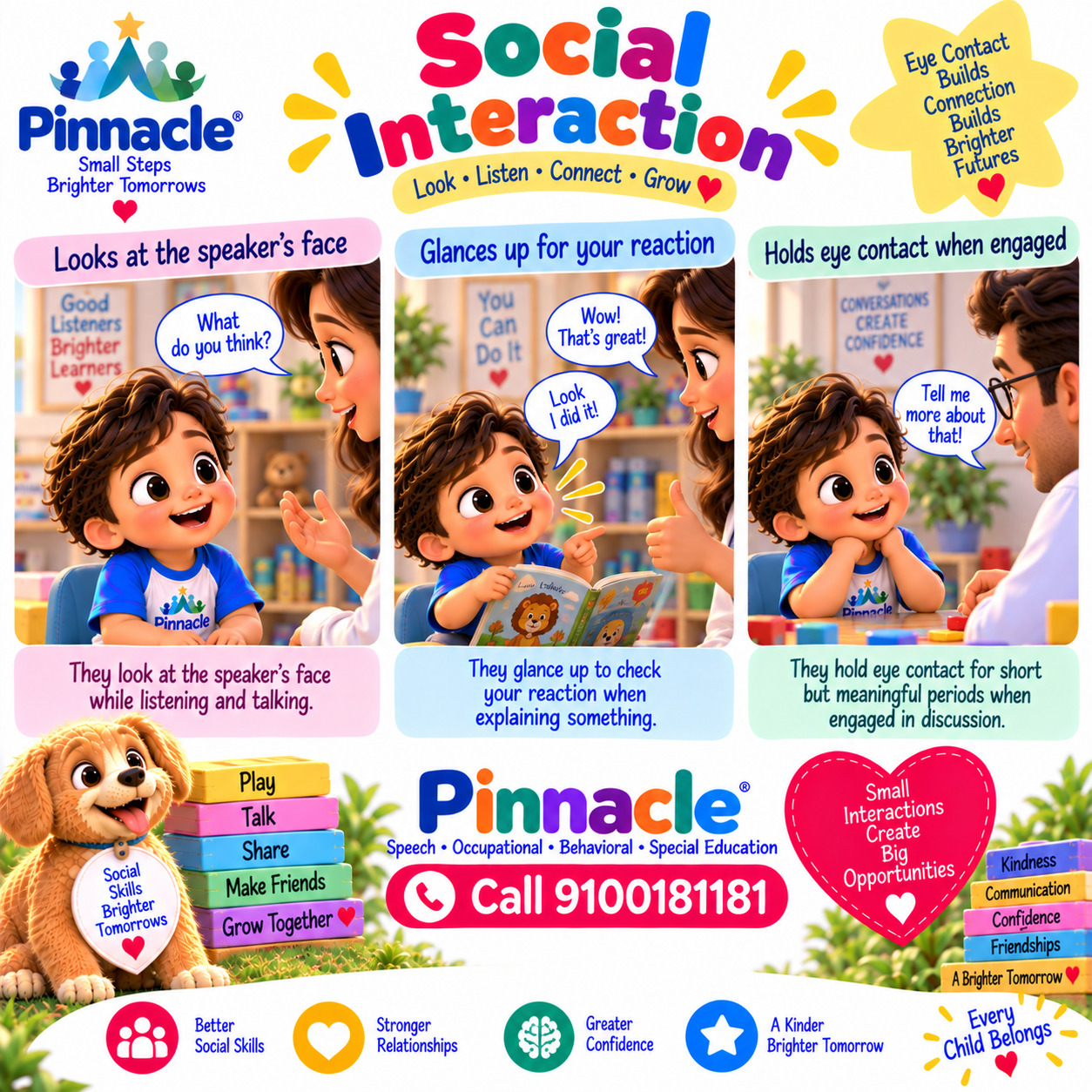
Does the child make appropriate eye contact during conversations?
Topic: Social Interaction
Example 1
They look at the speaker’s face while listening and talking.
Example 2
They glance up to check your reaction when explaining something.
Example 3
They hold eye contact for short but meaningful periods when engaged in discussion.
Example illustrationQuestion illustration
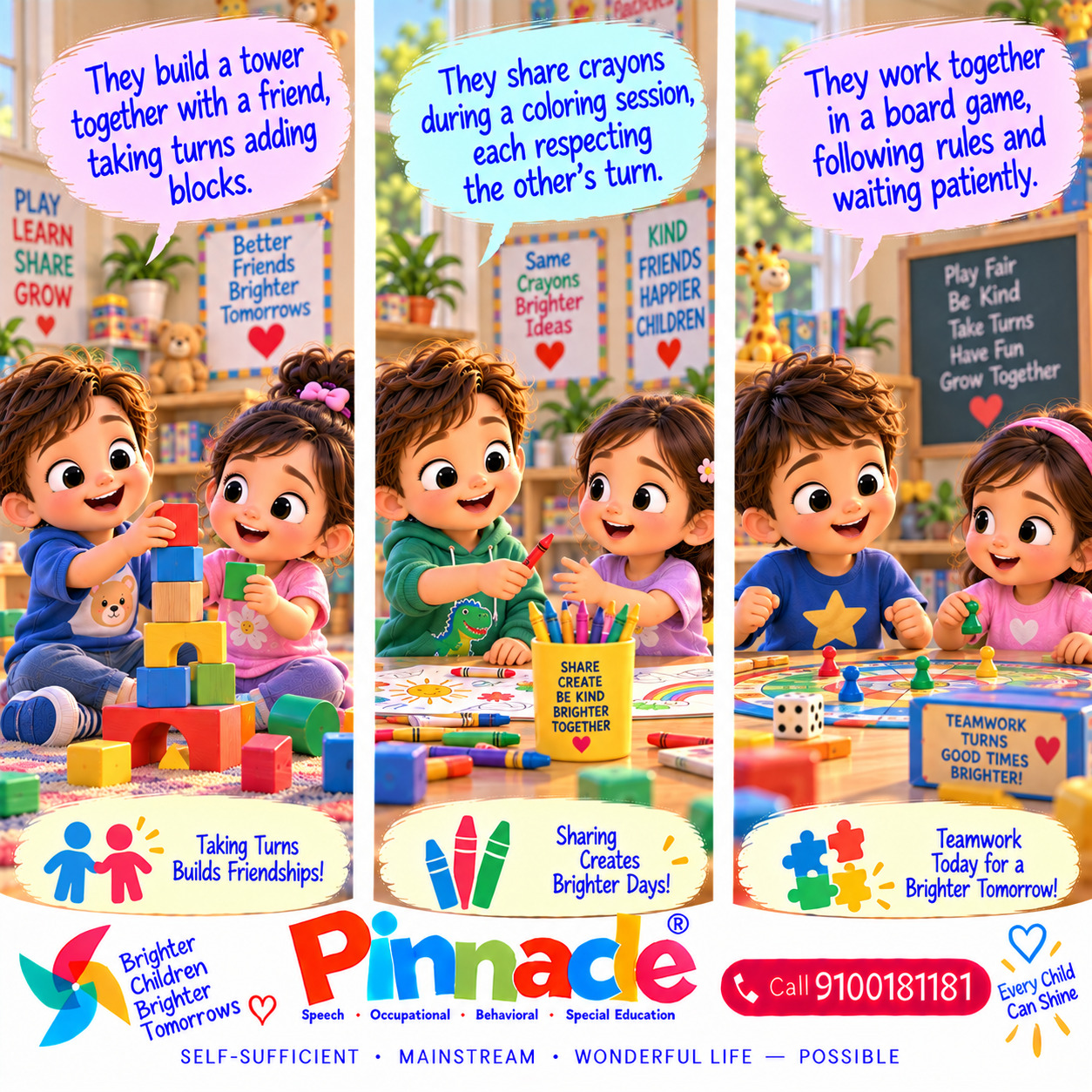
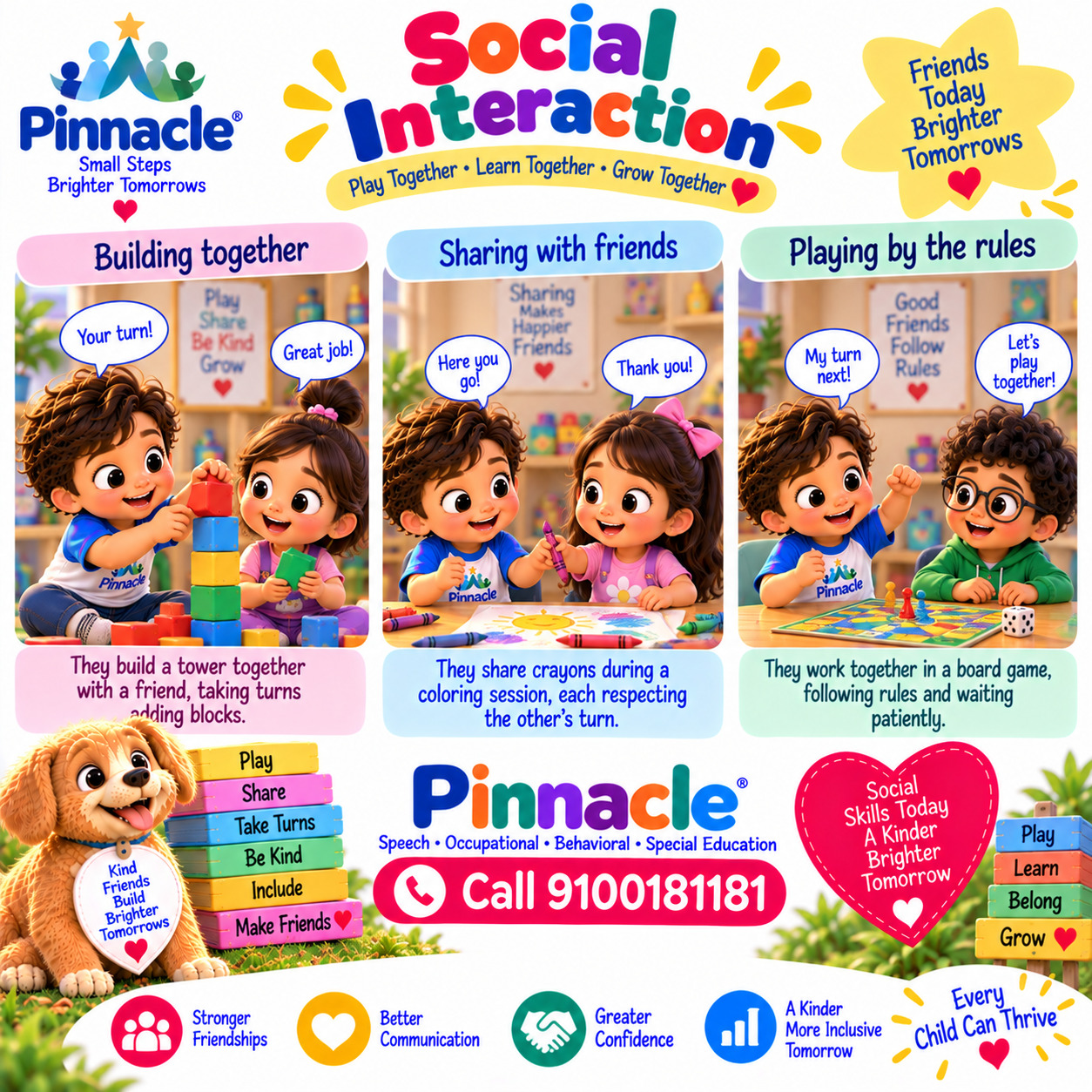
Does the child play cooperatively with other children?
Topic: Social Interaction
Example 1
They build a tower together with a friend, taking turns adding blocks.
Example 2
They share crayons during a coloring session, each respecting the other’s turn.
Example 3
They work together in a board game, following rules and waiting patiently.
Example illustrationQuestion illustration
Does the child show interest in making friends?
Topic: Social Interaction
Example 1
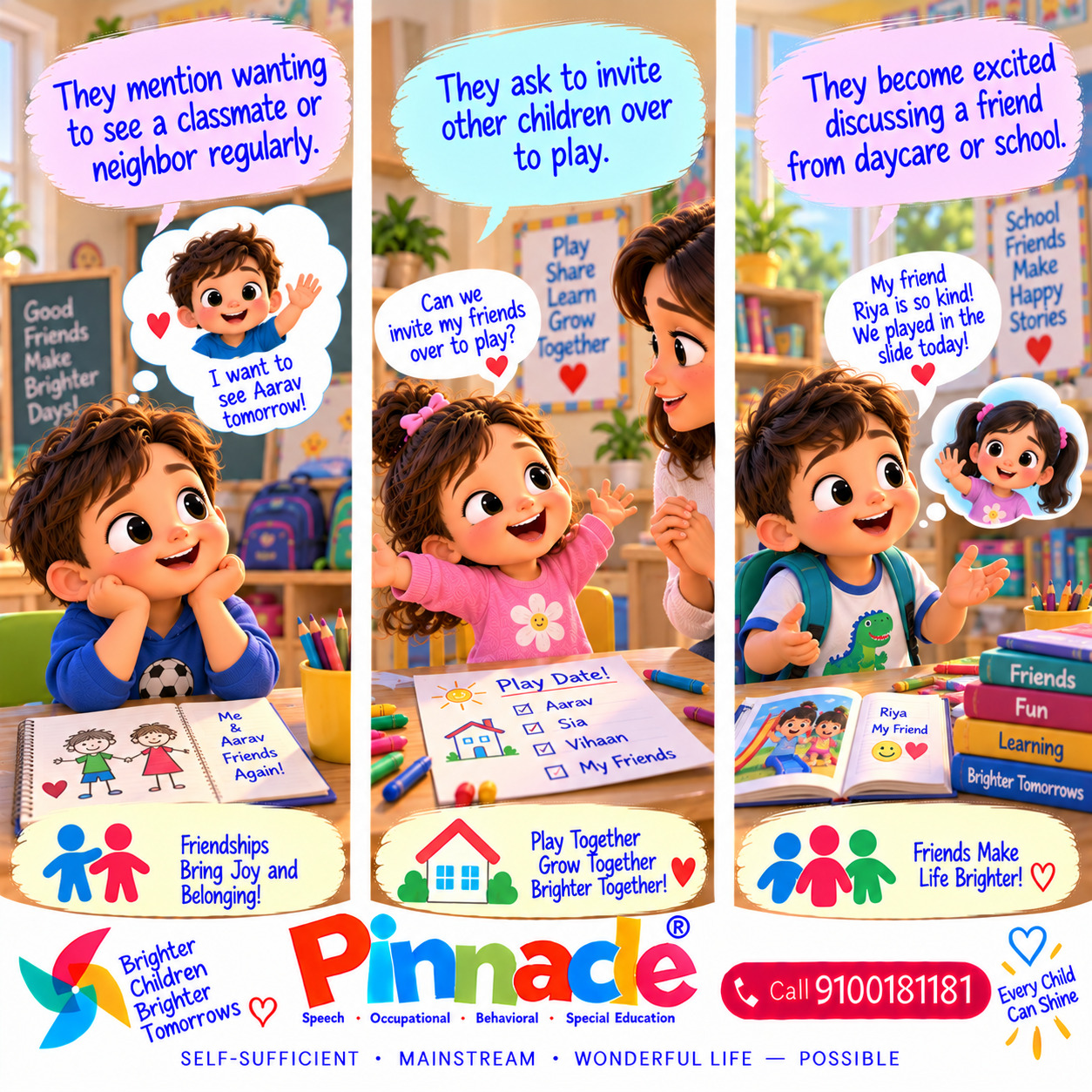
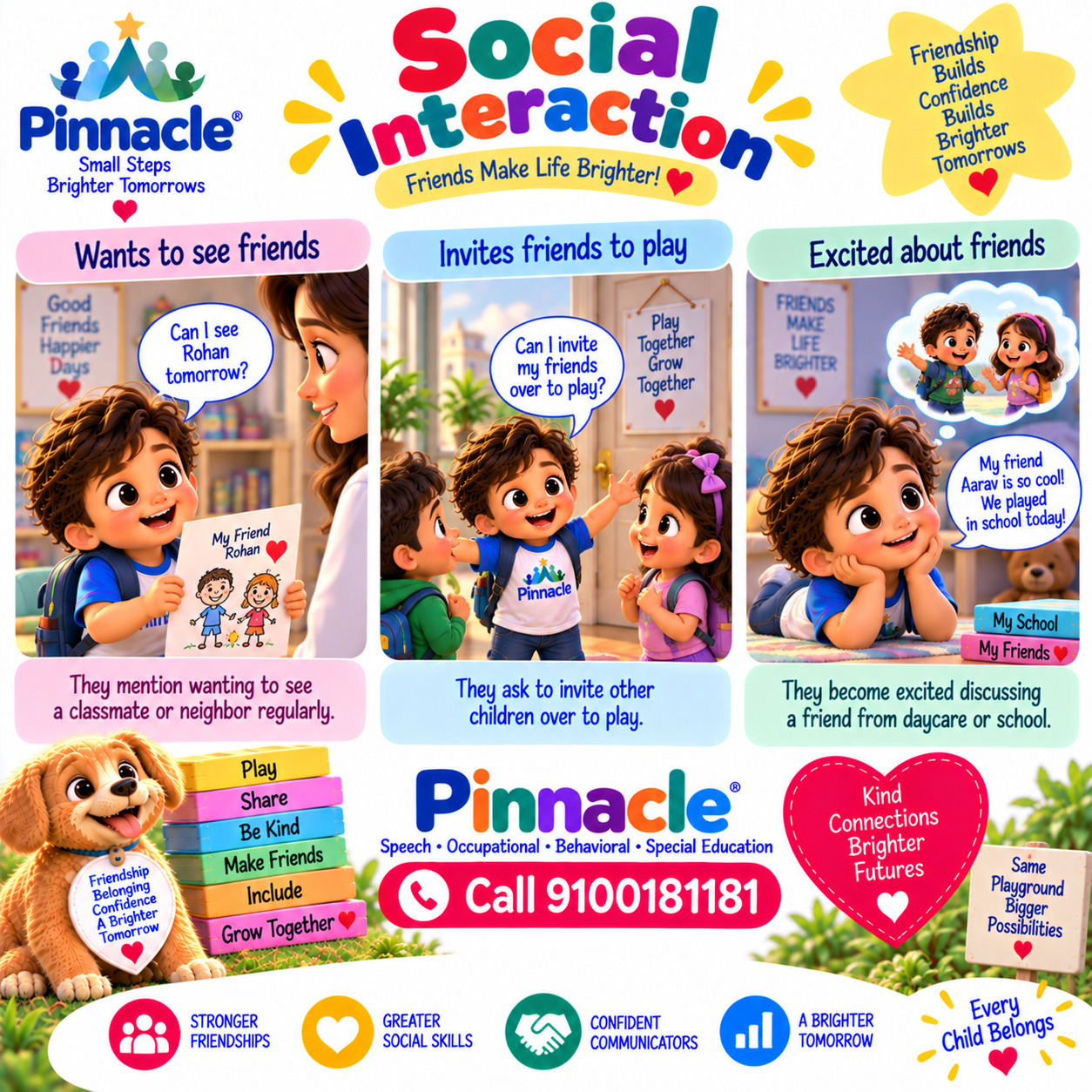
They mention wanting to see a classmate or neighbor regularly.
Example 2
They ask to invite other children over to play.
Example 3
They become excited discussing a friend from daycare or school.
Example illustrationQuestion illustration
Does the child initiate interactions with adults or peers?
Topic: Social Interaction
Example 1
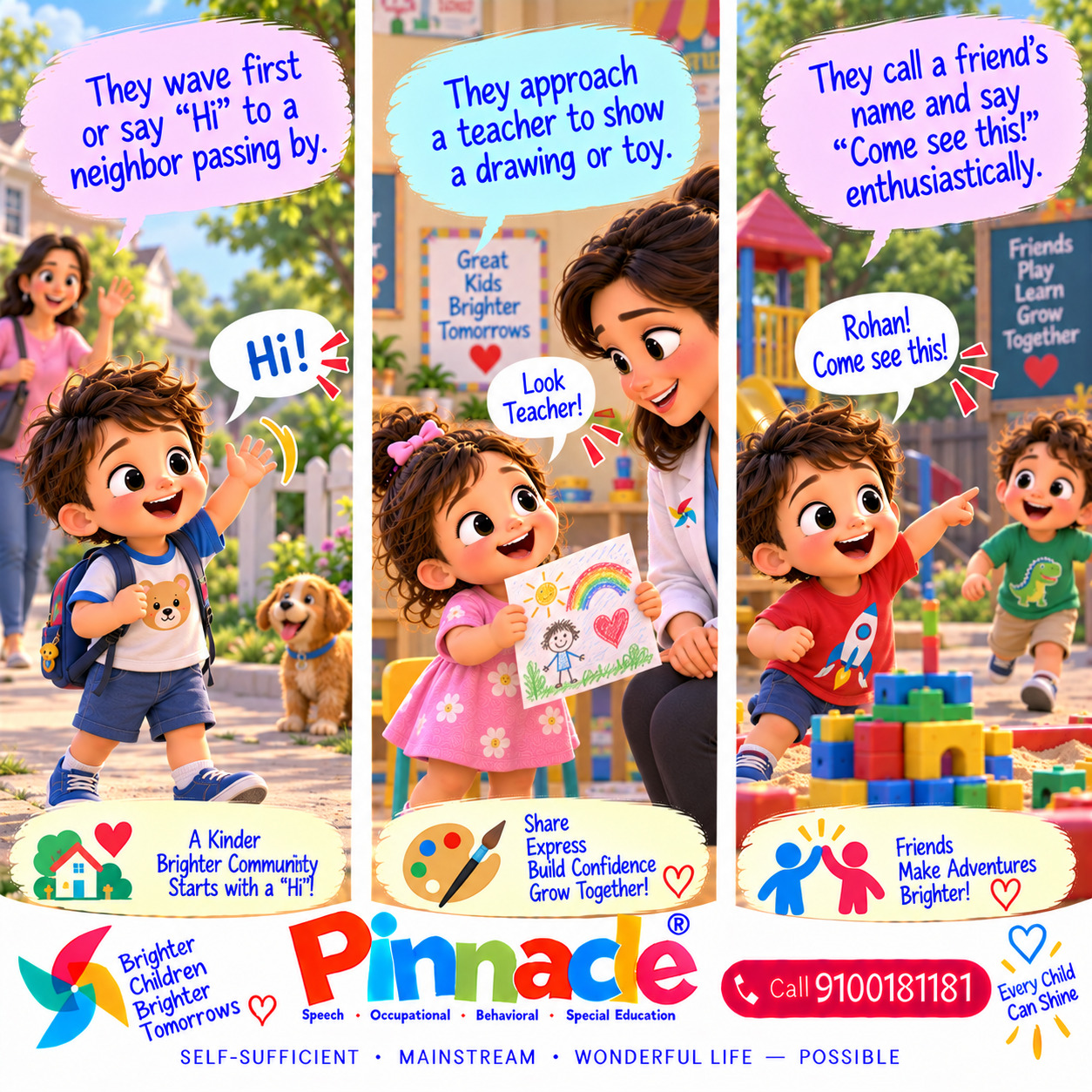
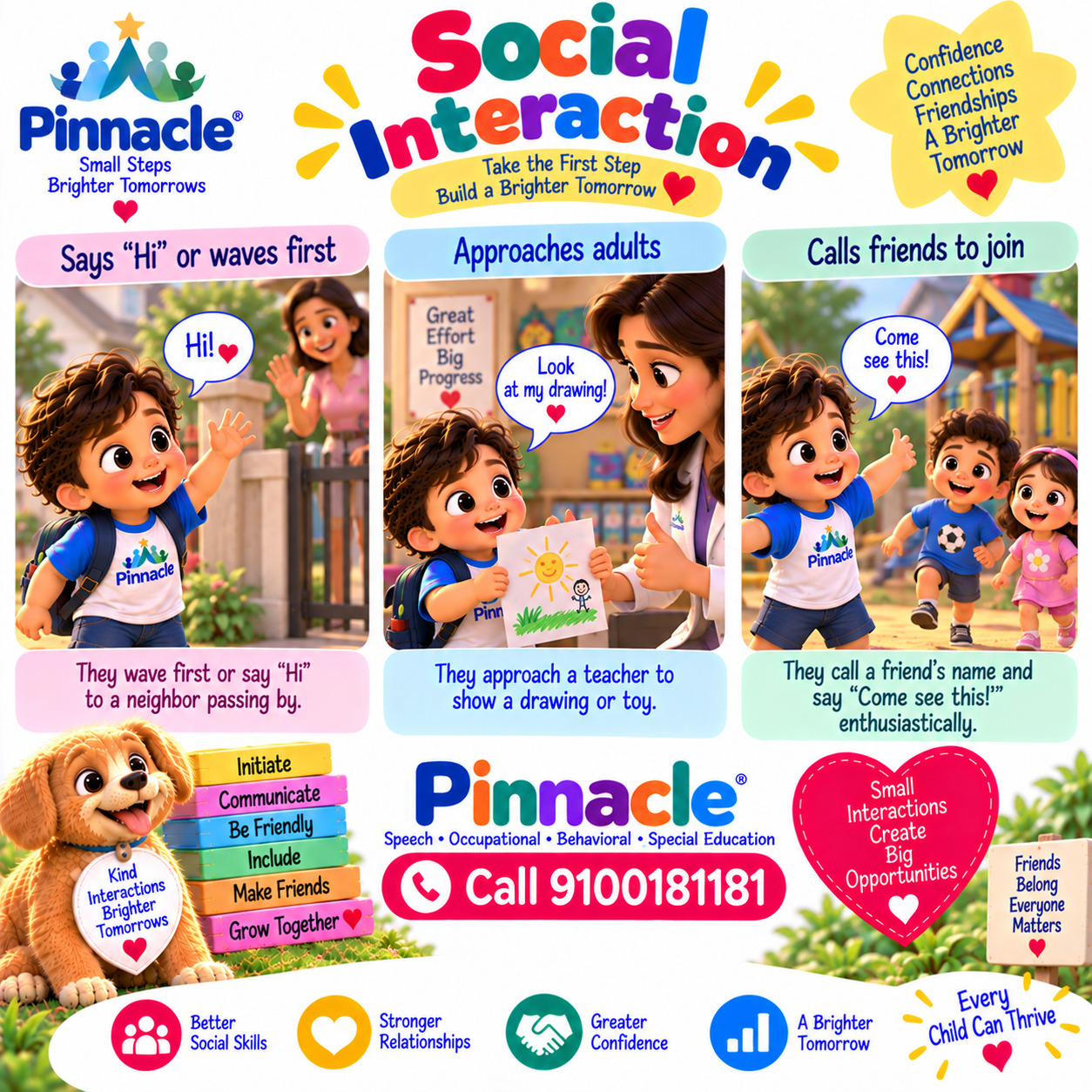
They wave first or say “Hi” to a neighbor passing by.
Example 2
They approach a teacher to show a drawing or toy.
Example 3
They call a friend’s name and say “Come see this!” enthusiastically.
Example illustrationQuestion illustration
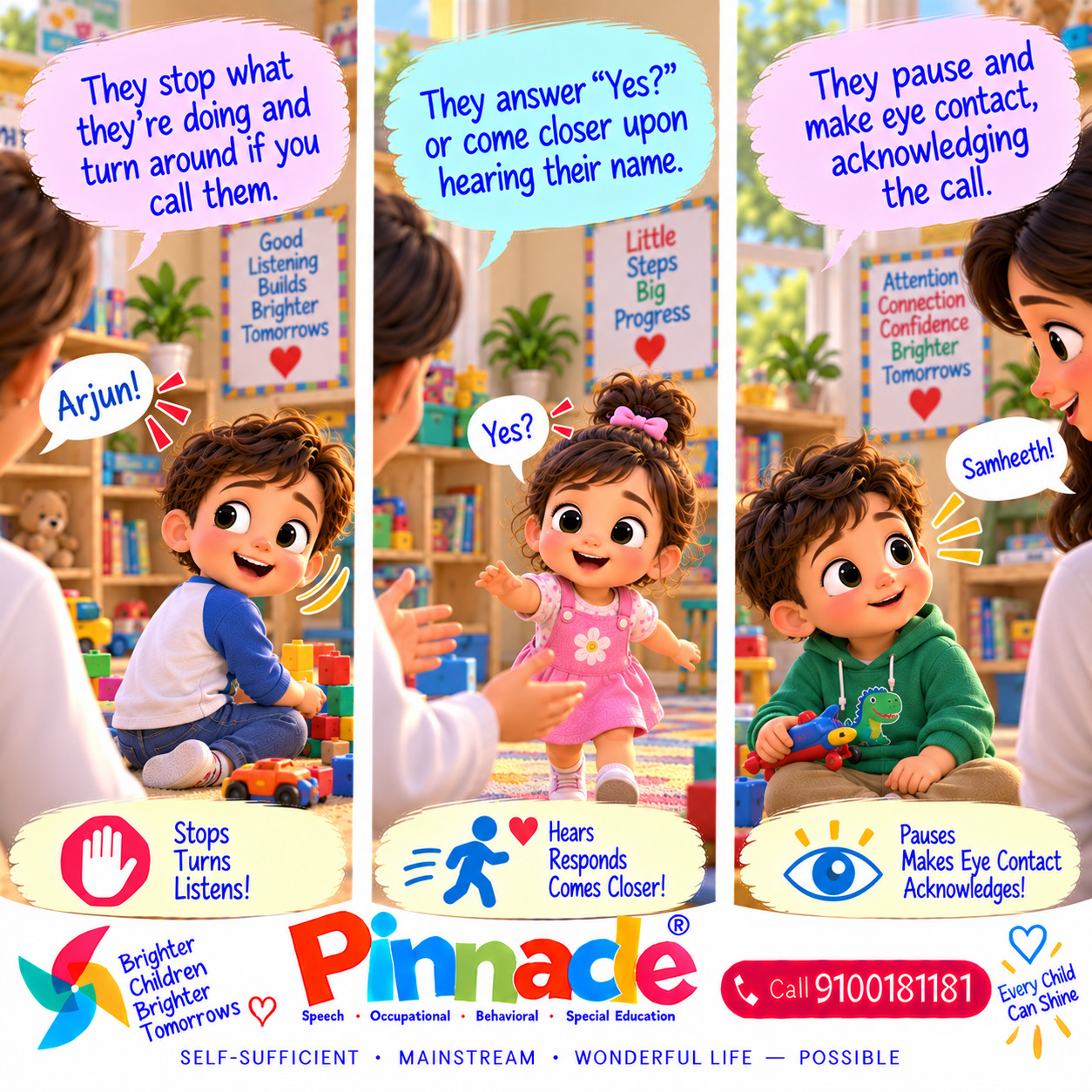
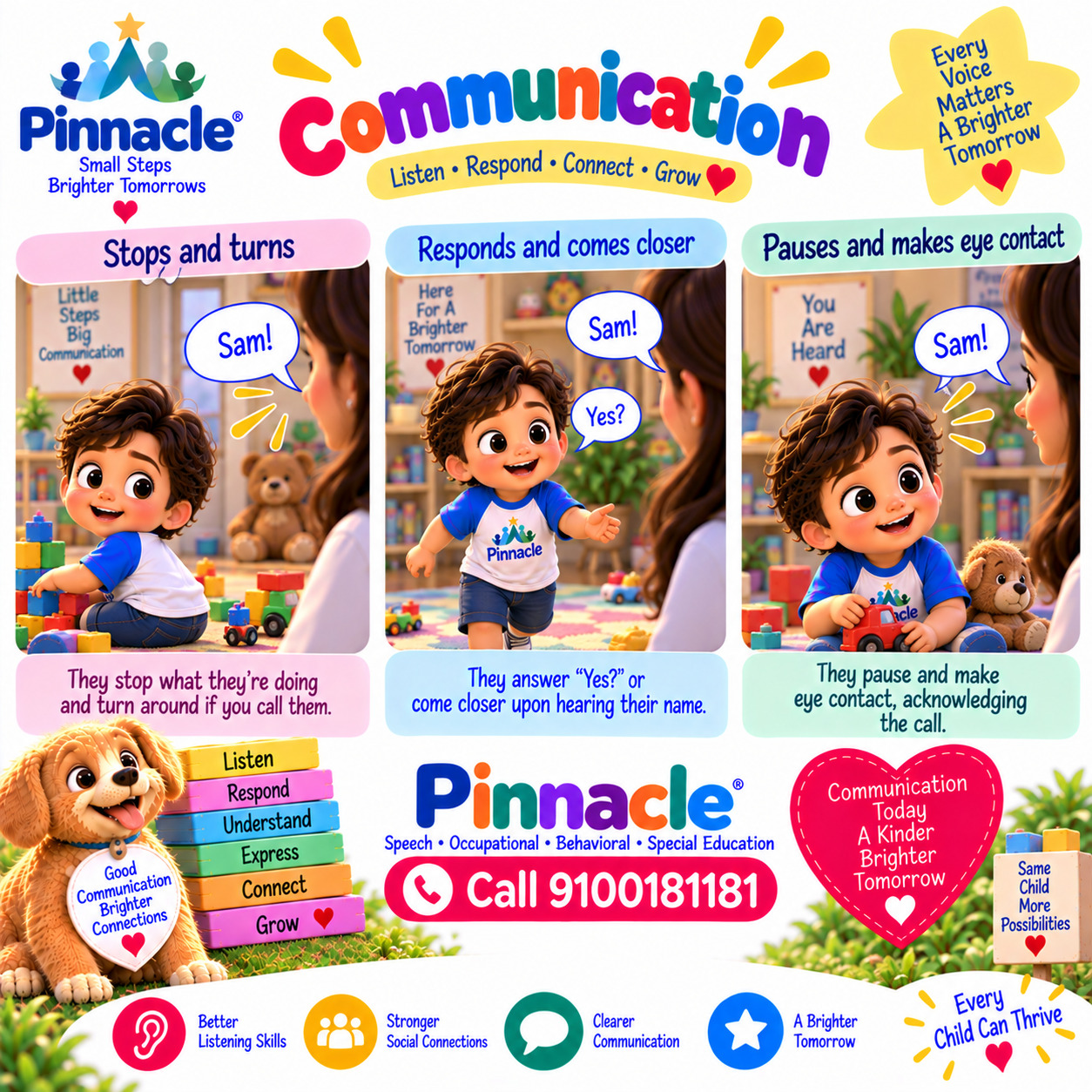
Does the child respond when their name is called?
Topic: Communication
Example 1
They stop what they’re doing and turn around if you call them.
Example 2
They answer “Yes?” or come closer upon hearing their name.
Example 3
They pause and make eye contact, acknowledging the call.
Example illustrationQuestion illustration
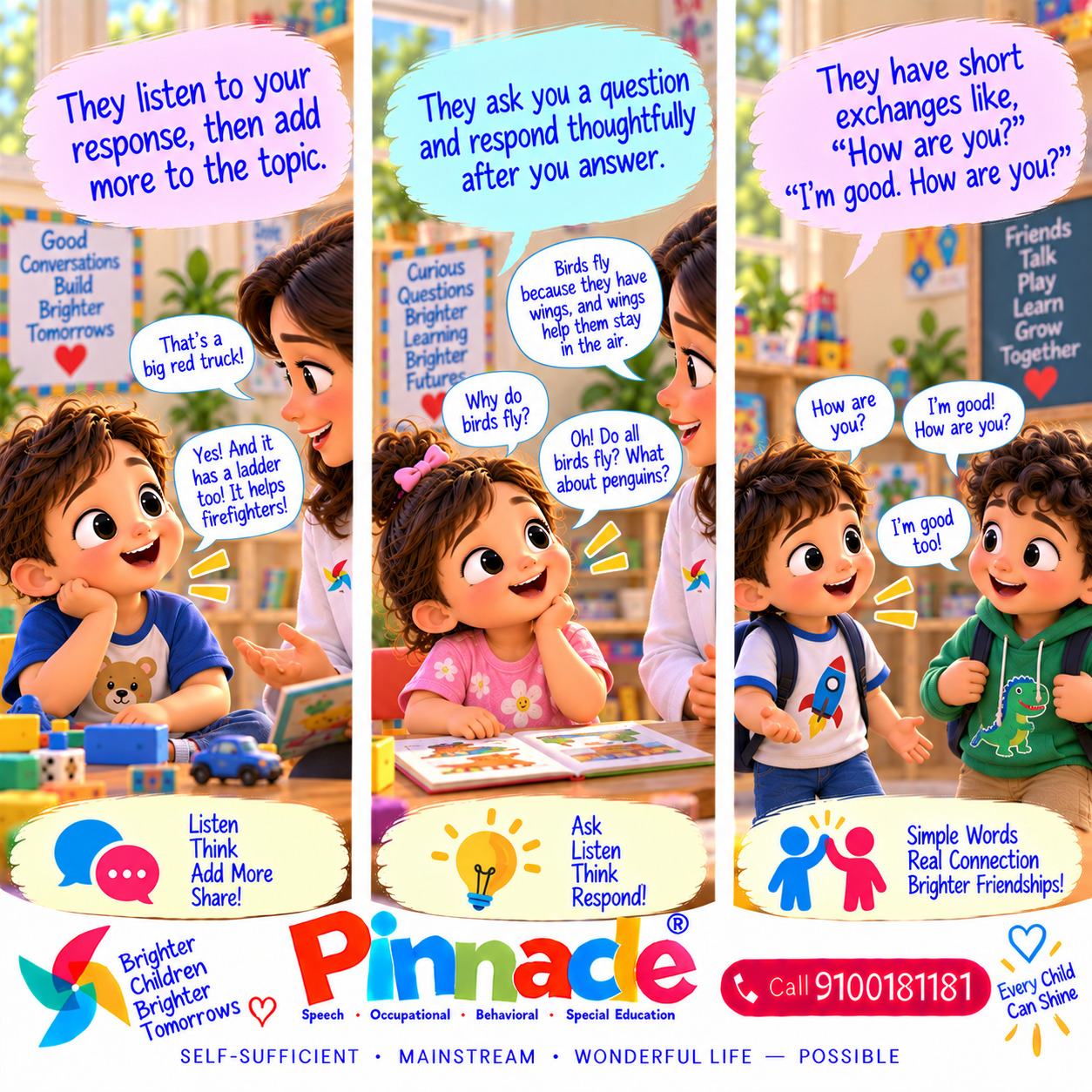
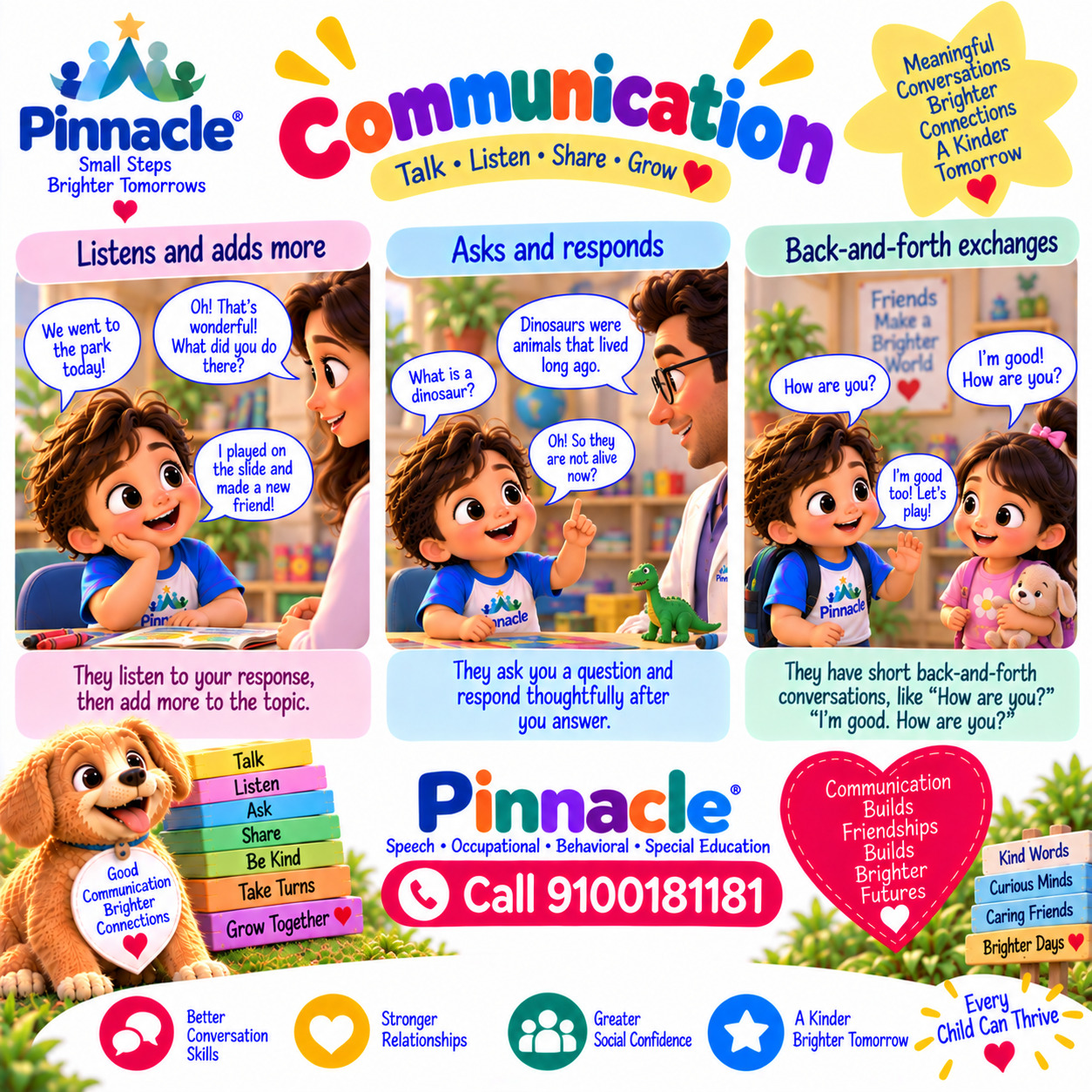
Does the child engage in back-and-forth conversations?
Topic: Communication
Example 1
They listen to your response, then add more to the topic.
Example 2
They ask you a question and respond thoughtfully after you answer.
Example 3
They have short exchanges like, “How are you?” “I’m good. How are you?”
Example illustrationQuestion illustration
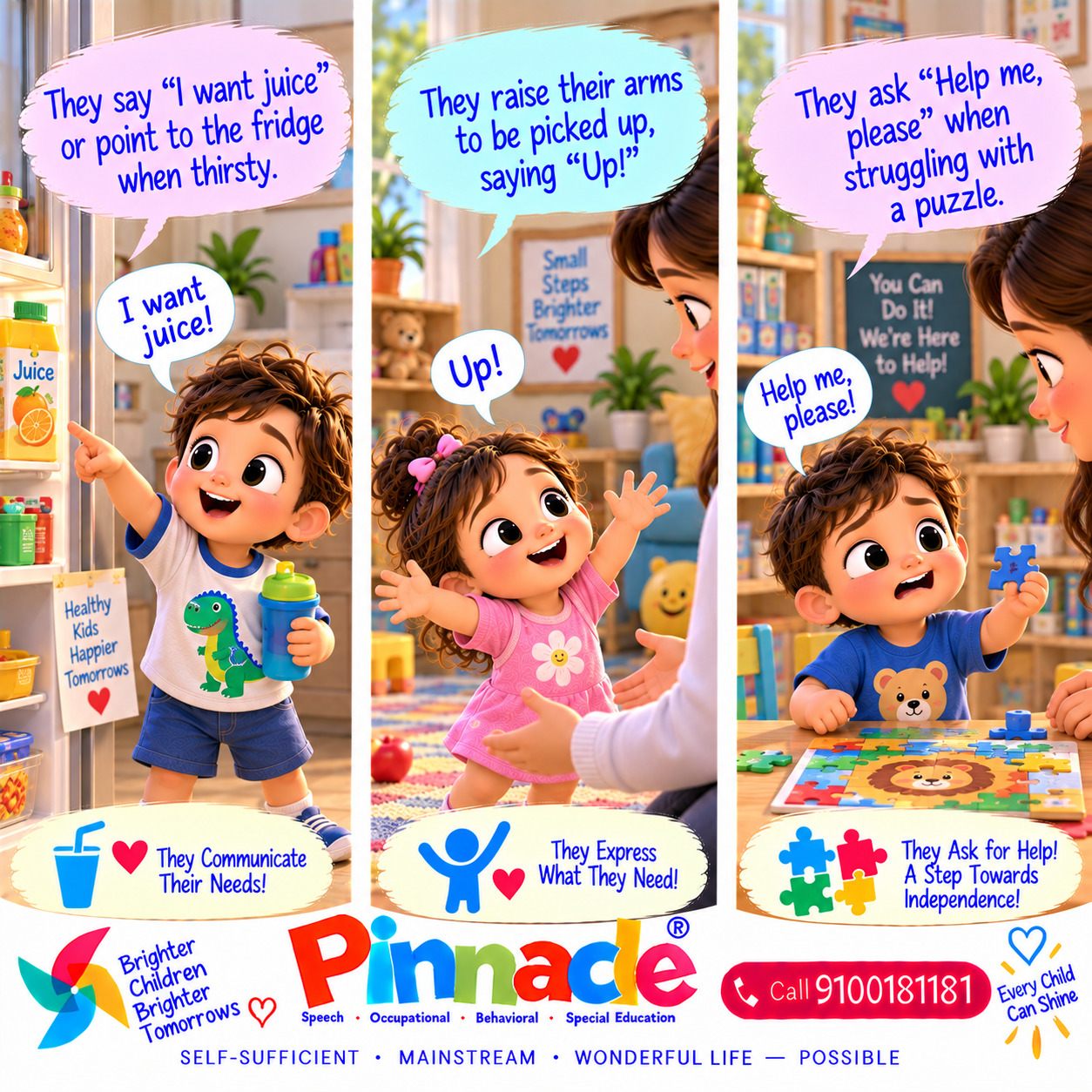
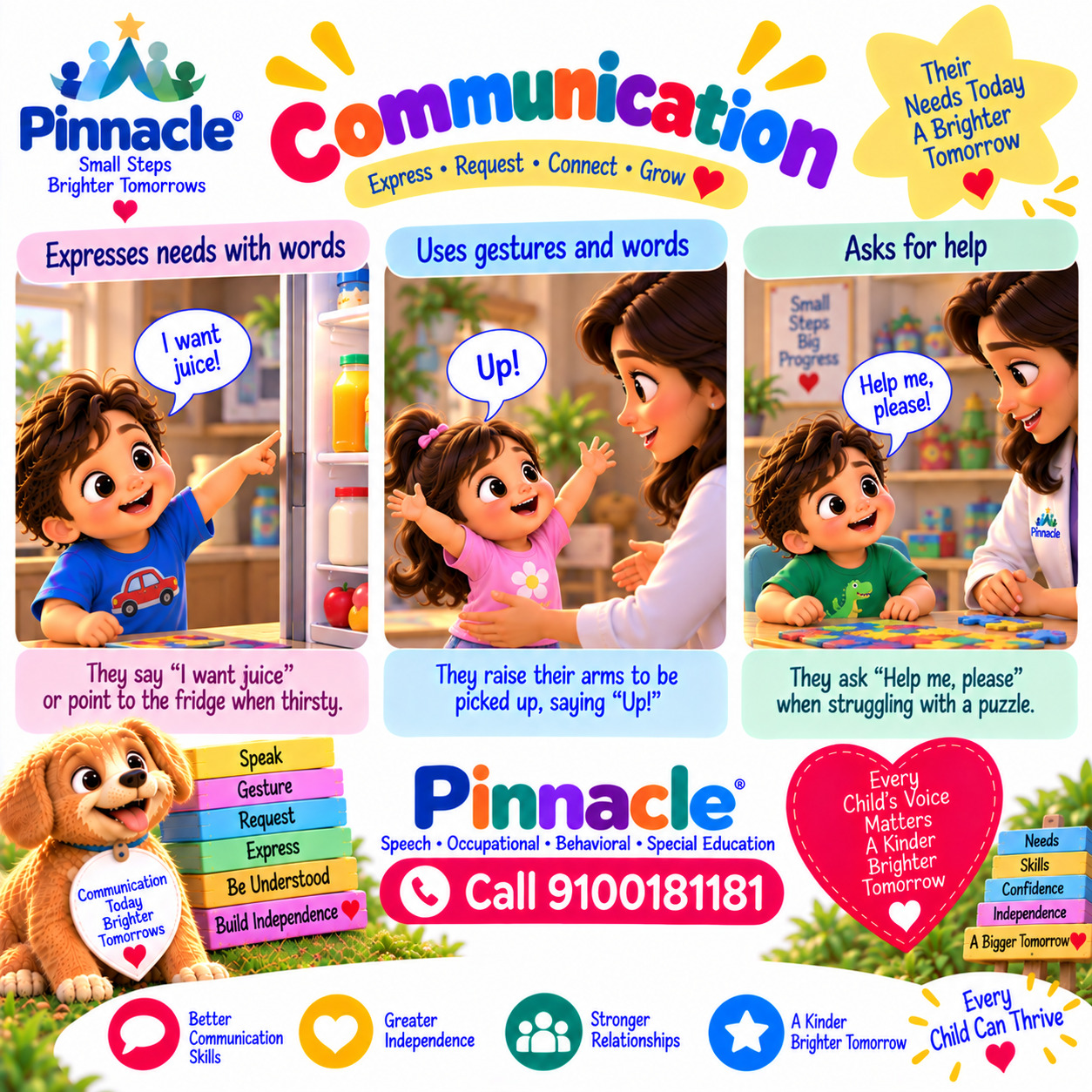
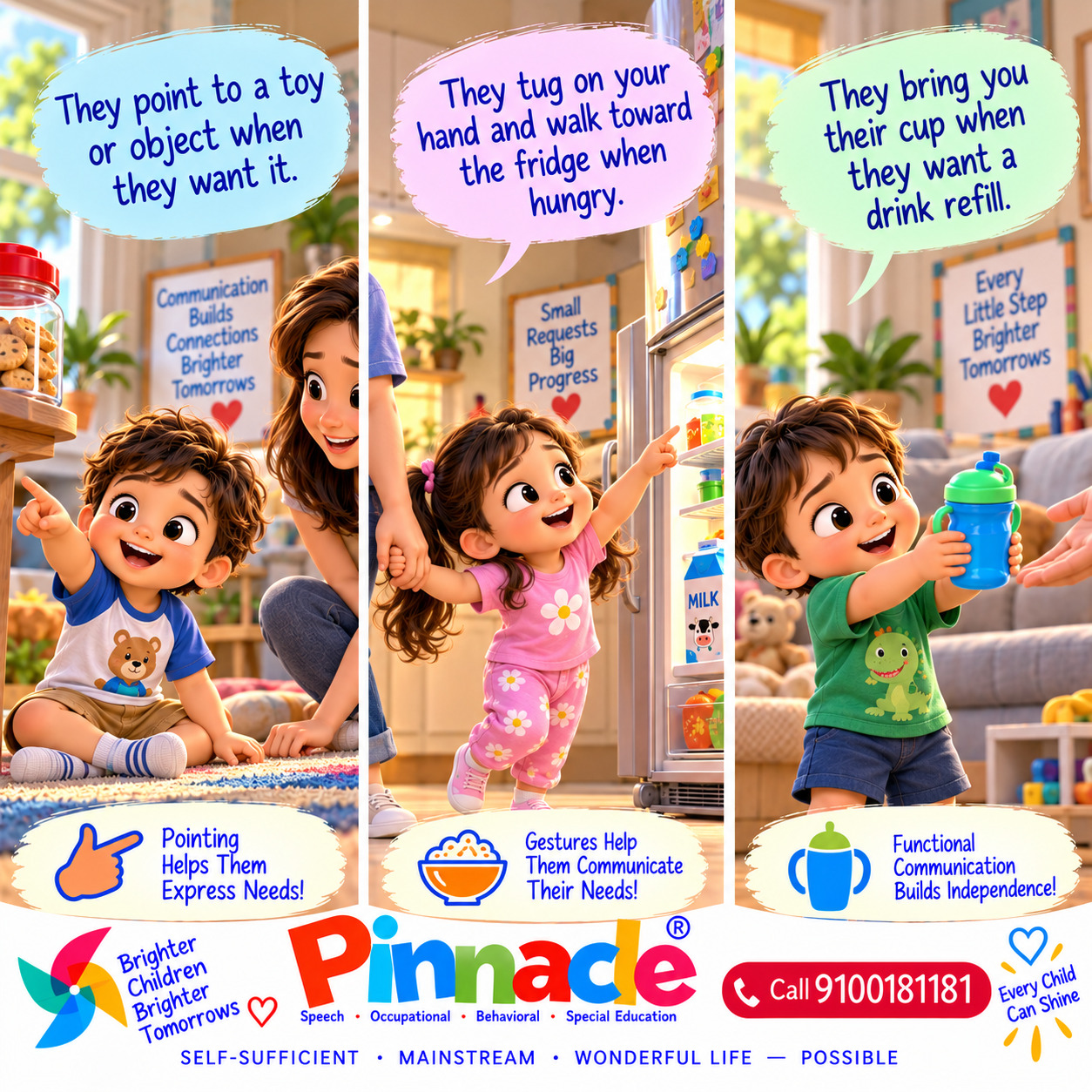
Does the child express their needs using words or gestures?
Topic: Communication
Example 1
They say “I want juice” or point to the fridge when thirsty.
Example 2
They raise their arms to be picked up, saying “Up!”
Example 3
They ask “Help me, please” when struggling with a puzzle.
Example illustrationQuestion illustration
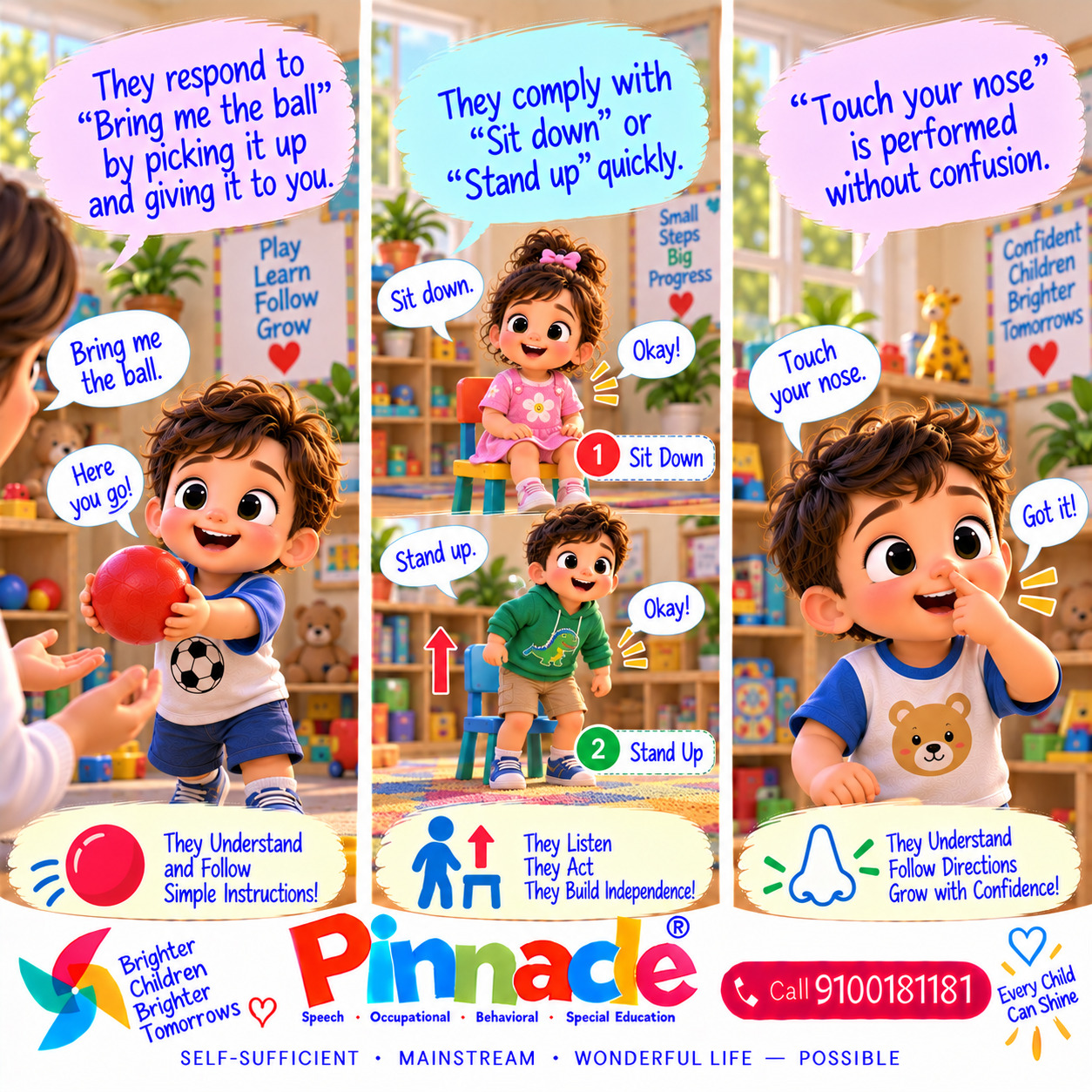
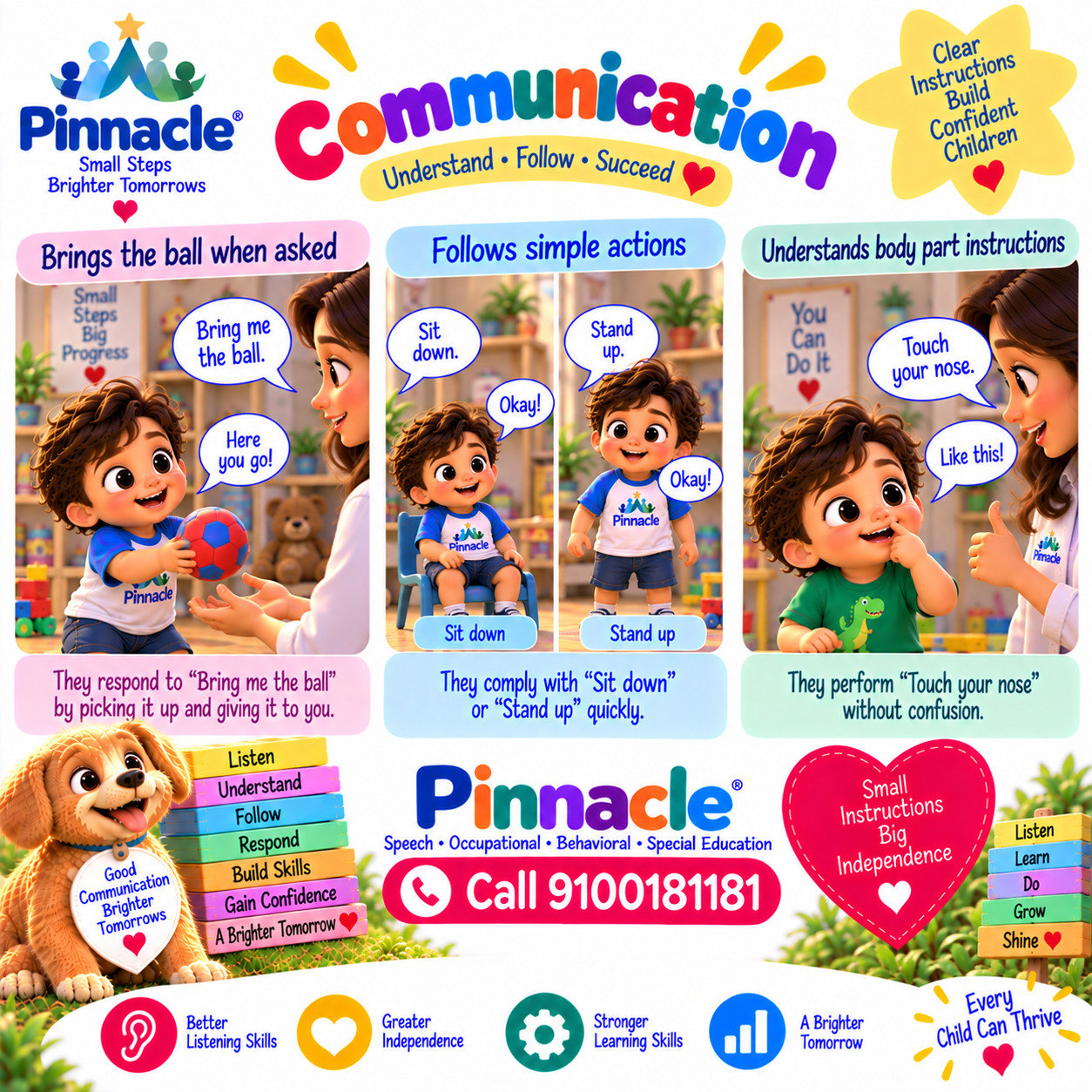
Can the child understand and follow simple instructions?
Topic: Communication
Example 1
They respond to “Bring me the ball” by picking it up and giving it to you.
Example 2
They comply with “Sit down” or “Stand up” quickly.
Example 3
“Touch your nose” is performed without confusion.
Example illustrationQuestion illustration
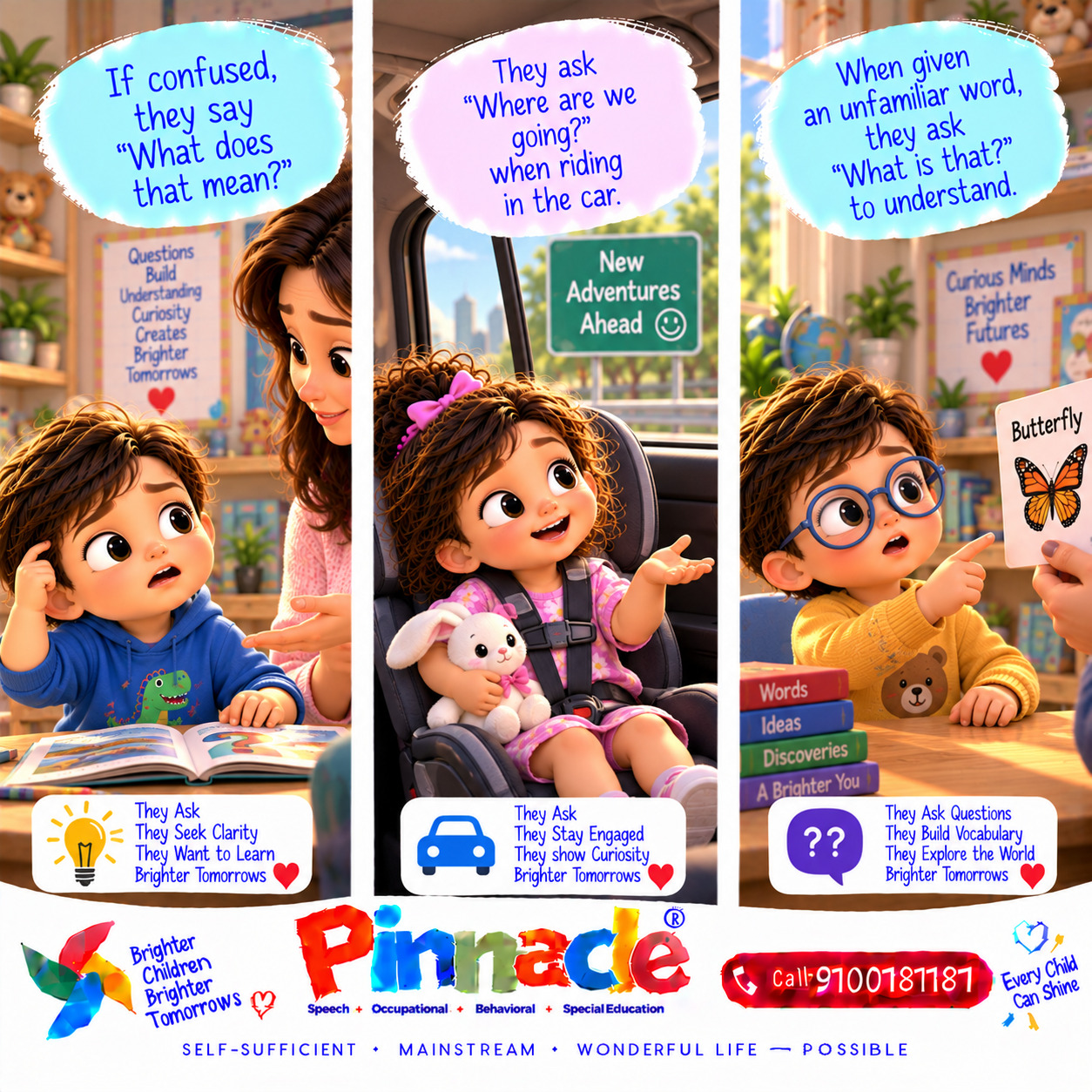
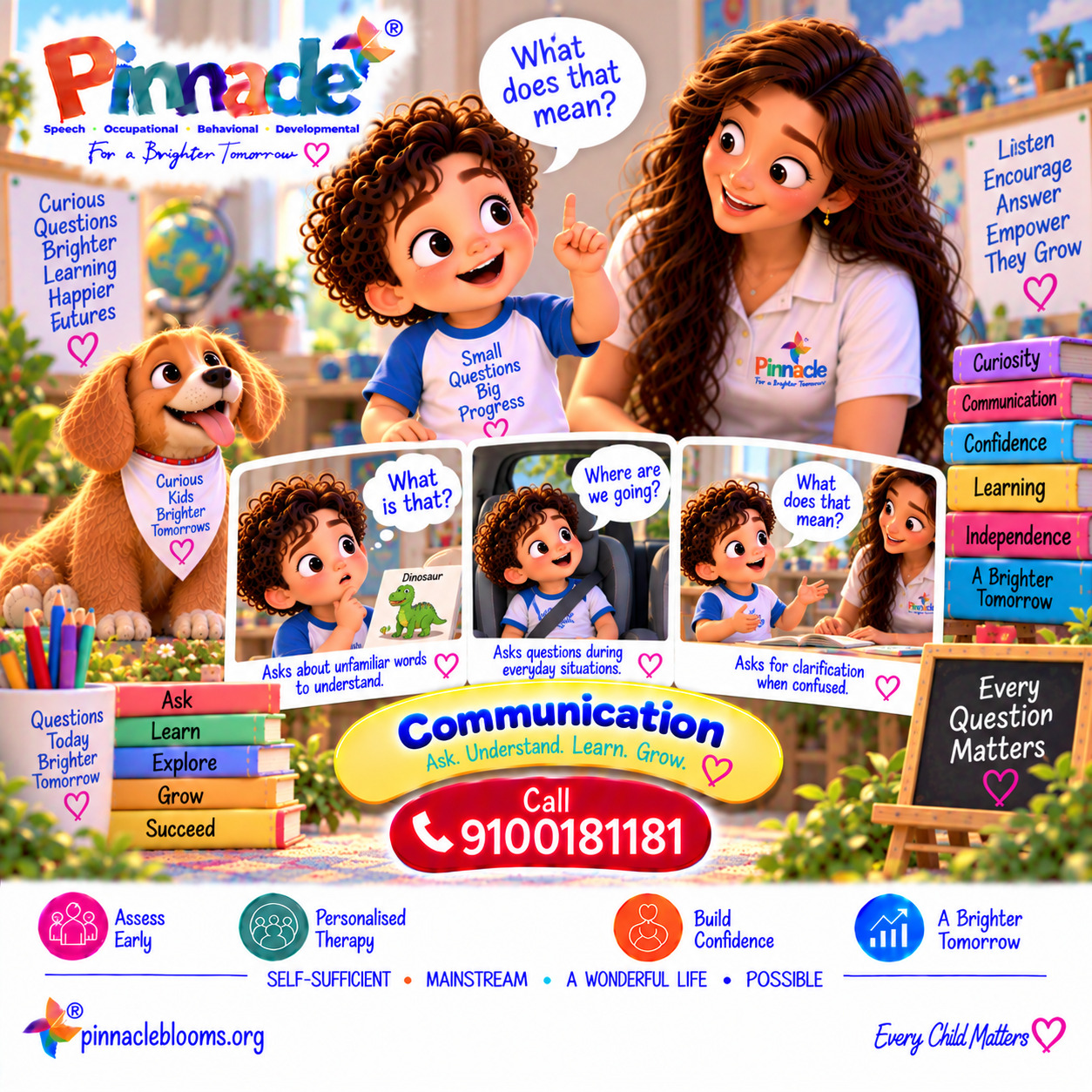
Does the child ask questions for information or clarification?
Topic: Communication
Example 1
If confused, they say “What does that mean?”
Example 2
They ask “Where are we going?” when riding in the car.
Example 3
When given an unfamiliar word, they ask “What is that?” to understand.
Example illustrationQuestion illustration
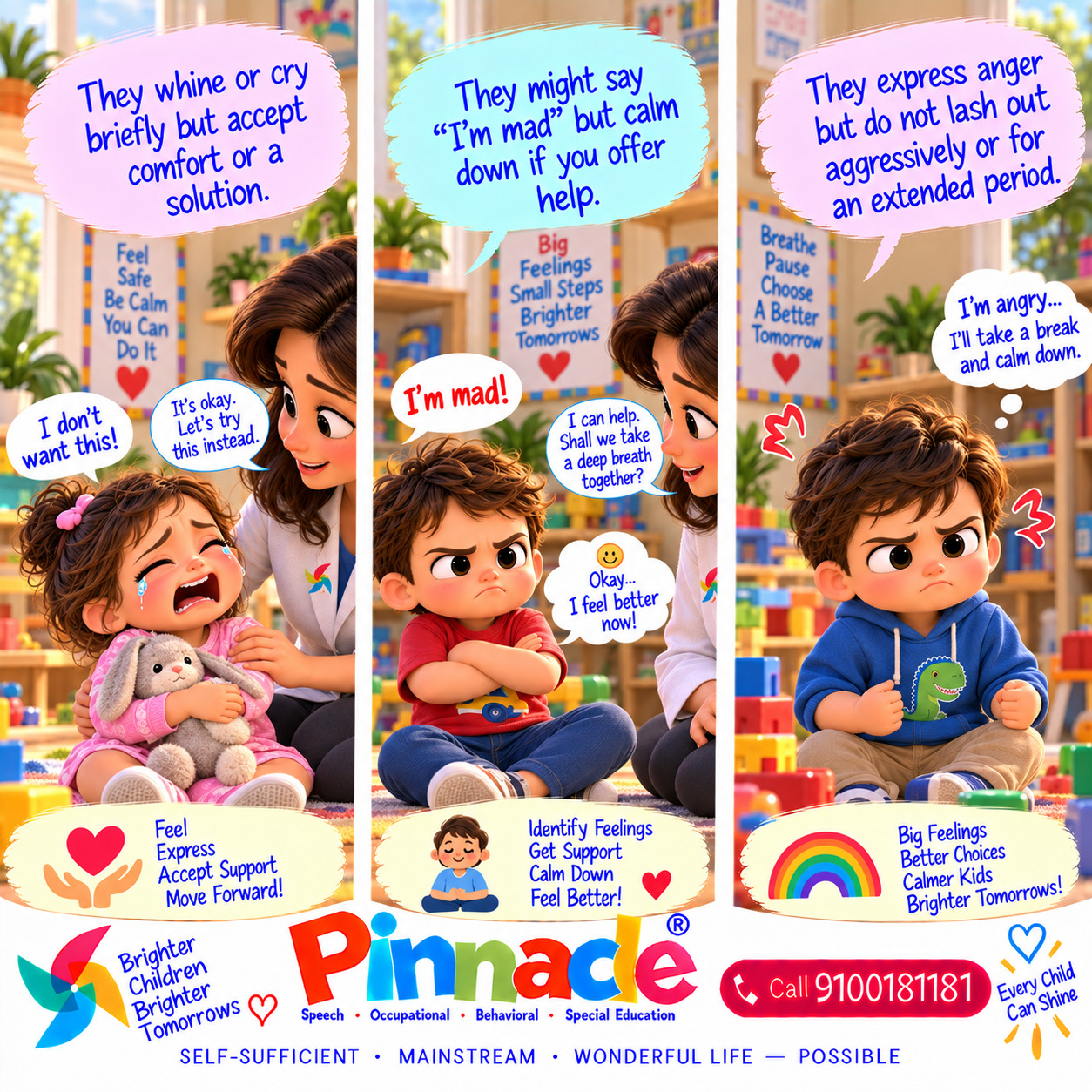
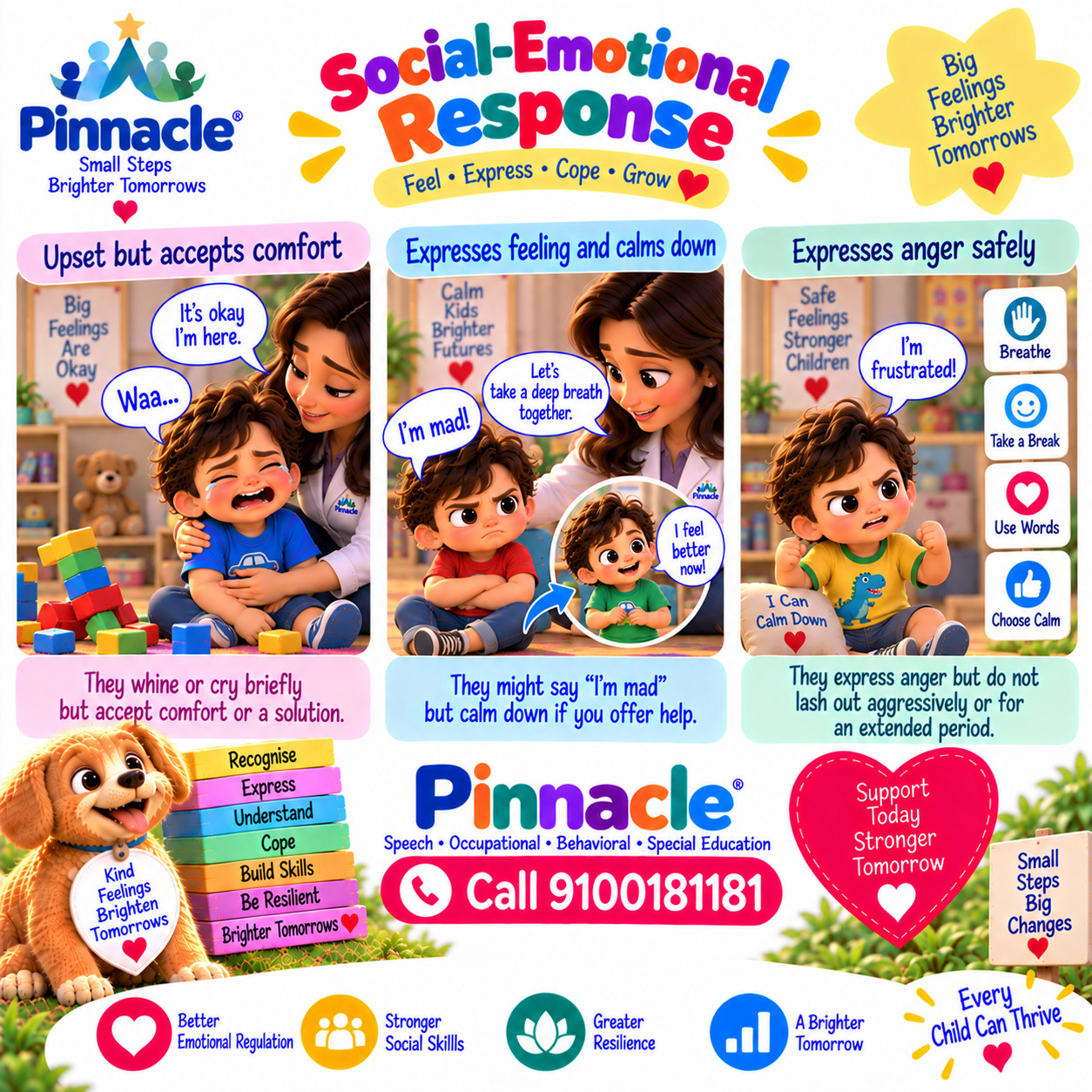
Does the child react appropriately when upset or frustrated?
Topic: Social-Emotional Response
Example 1
They whine or cry briefly but accept comfort or a solution.
Example 2
They might say “I’m mad” but calm down if you offer help.
Example 3
They express anger but do not lash out aggressively or for an extended period.
Example illustrationQuestion illustration
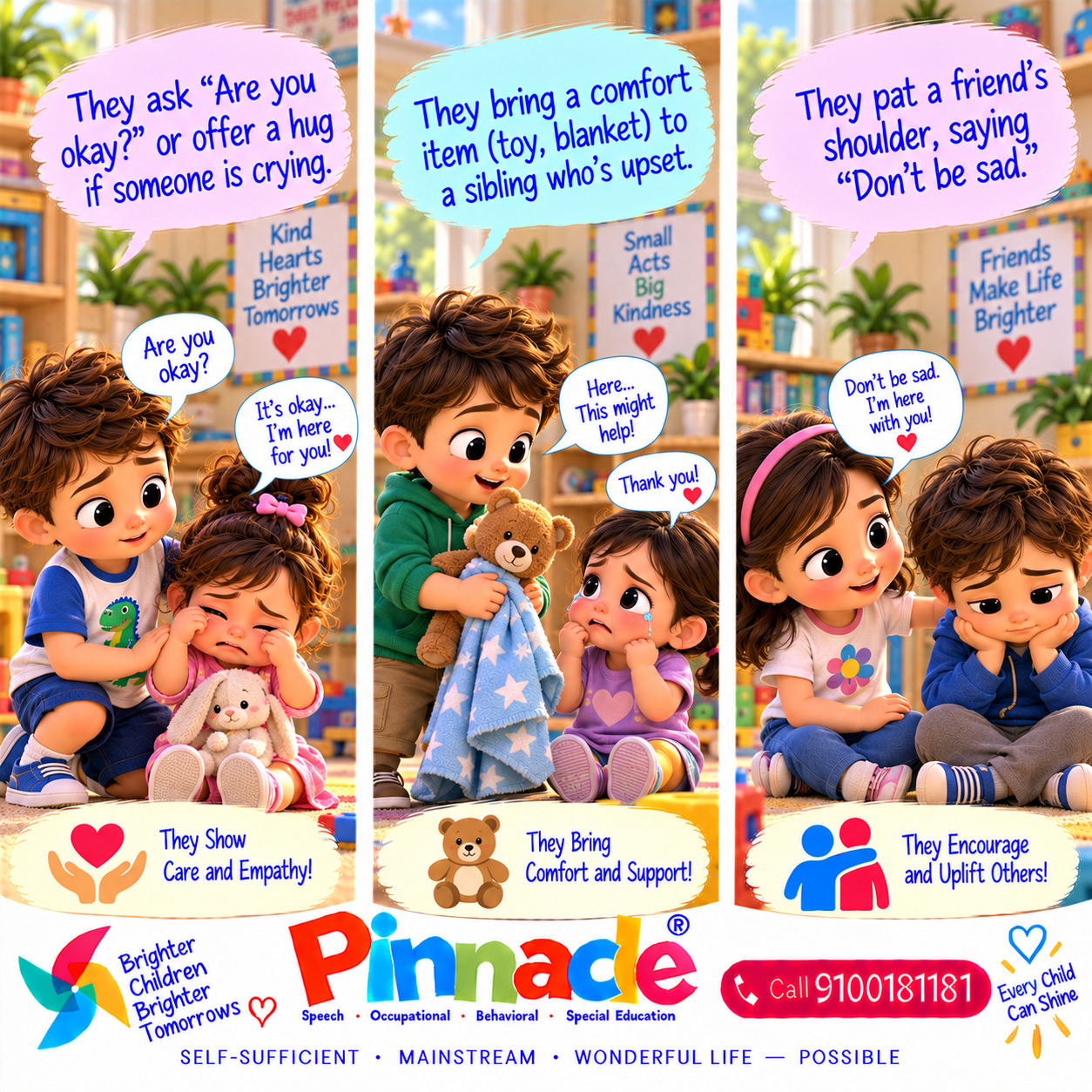
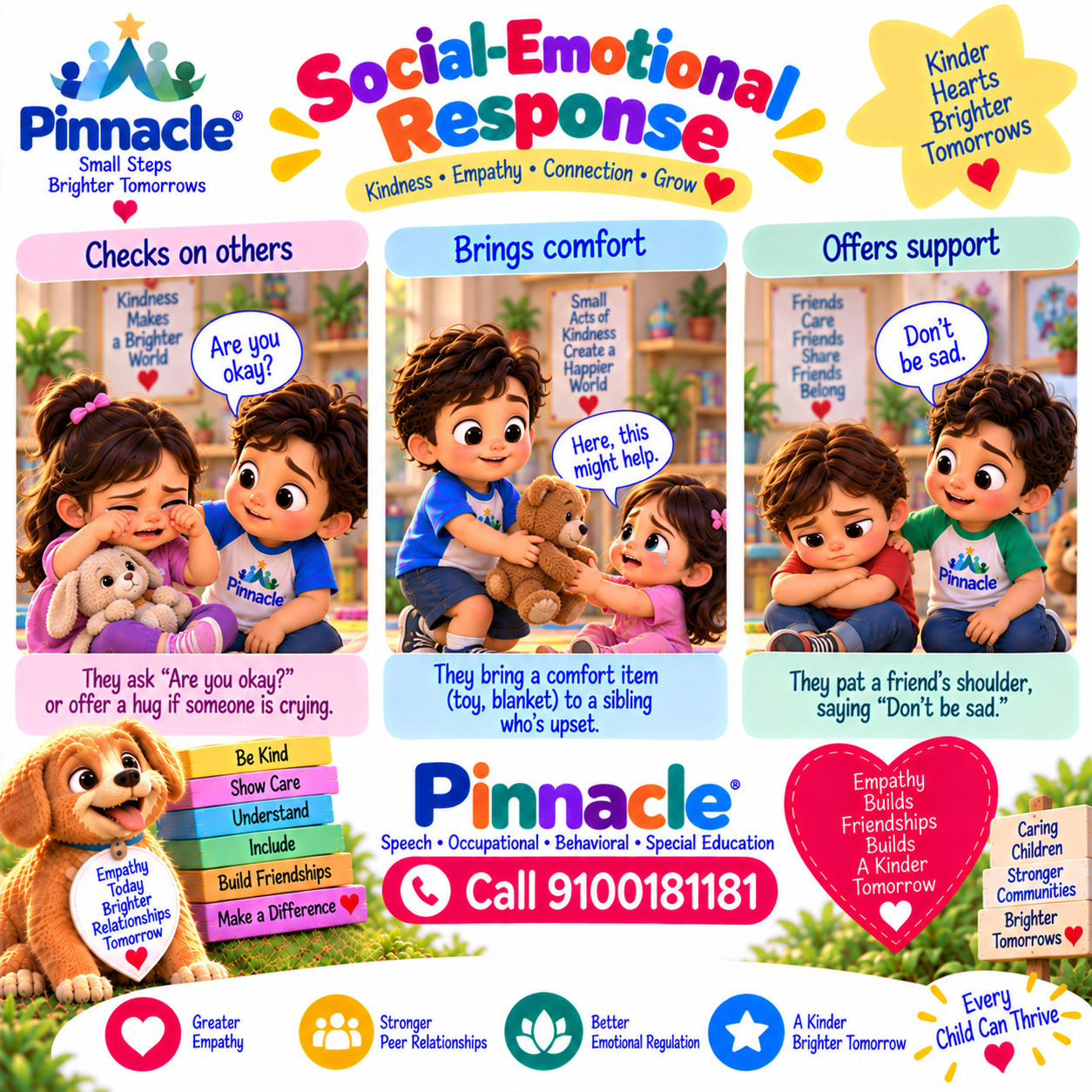
Does the child show empathy toward others in distress?
Topic: Social-Emotional Response
Example 1
They ask “Are you okay?” or offer a hug if someone is crying.
Example 2
They bring a comfort item (toy, blanket) to a sibling who’s upset.
Example 3
They pat a friend’s shoulder, saying “Don’t be sad.”
Example illustrationQuestion illustration
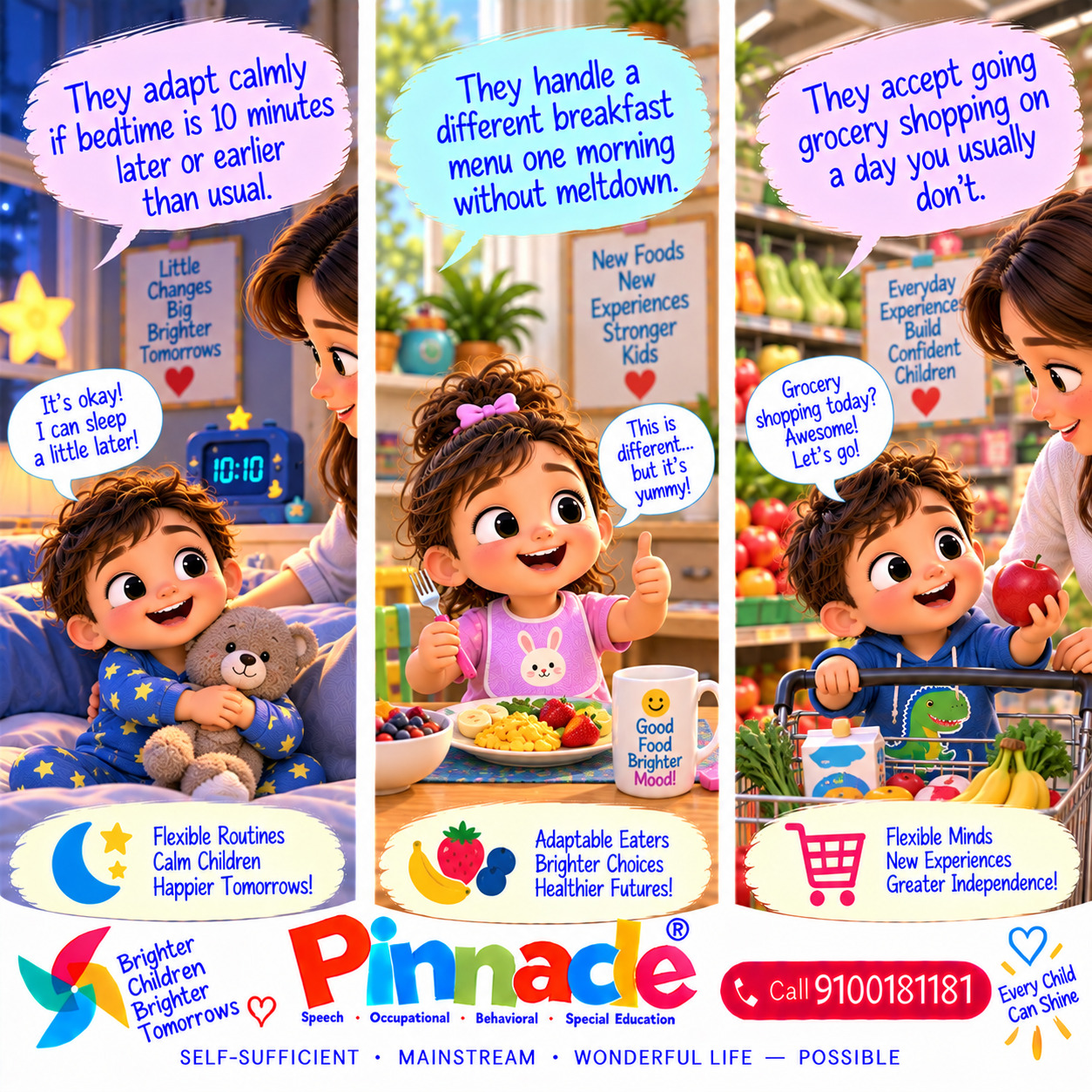
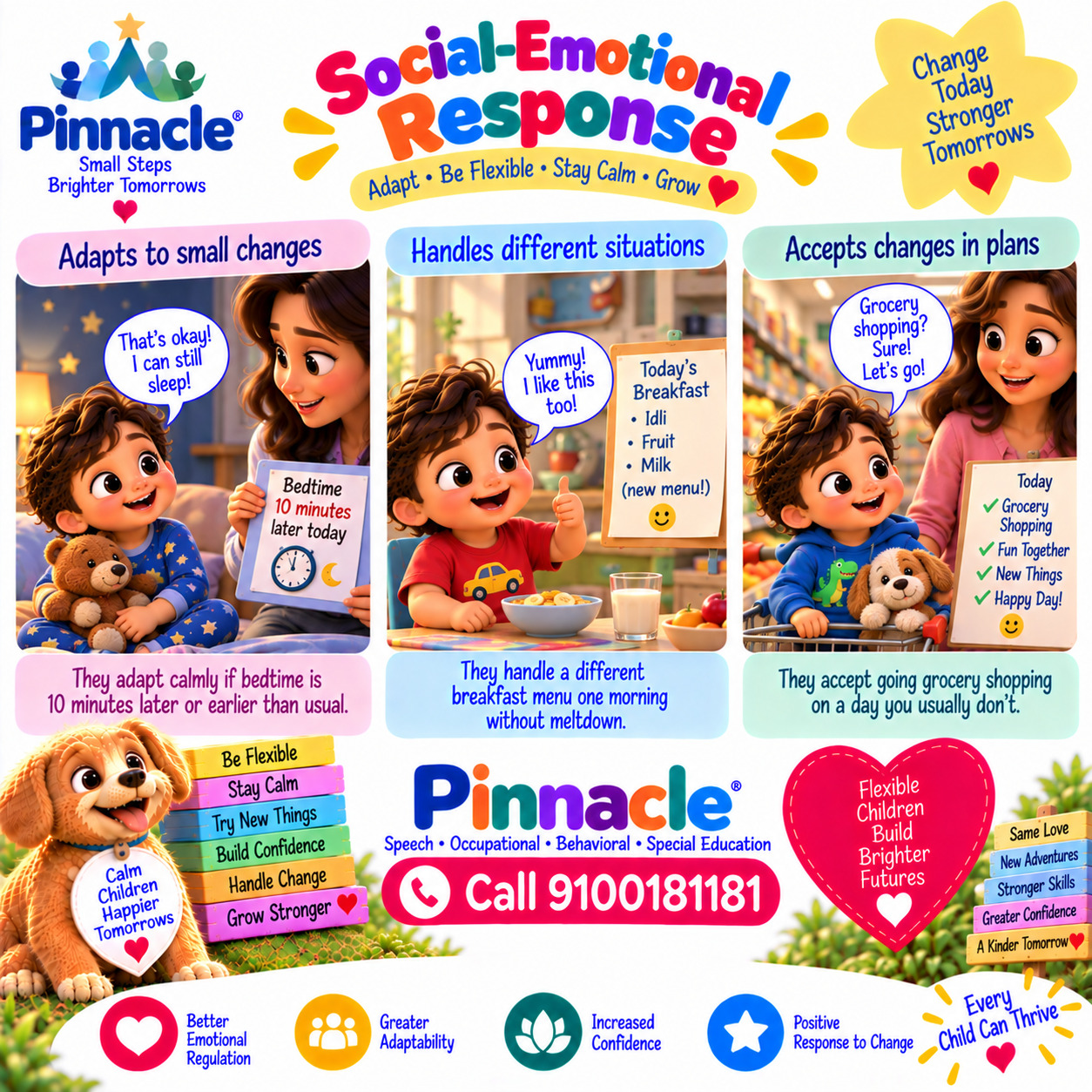
Can the child manage changes in routines without distress?
Topic: Social-Emotional Response
Example 1
They adapt calmly if bedtime is 10 minutes later or earlier than usual.
Example 2
They handle a different breakfast menu one morning without meltdown.
Example 3
They accept going grocery shopping on a day you usually don’t.
Example illustrationQuestion illustration
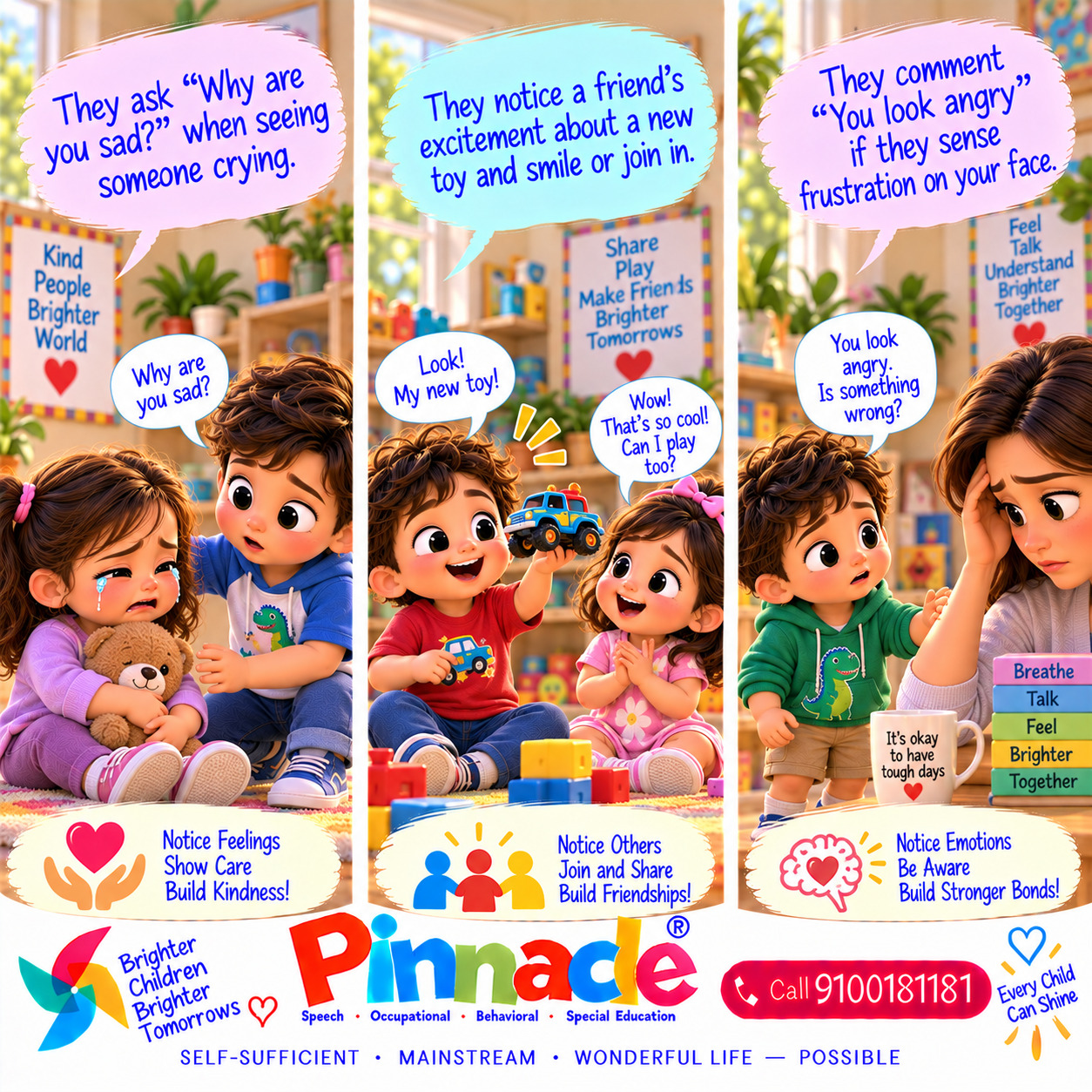
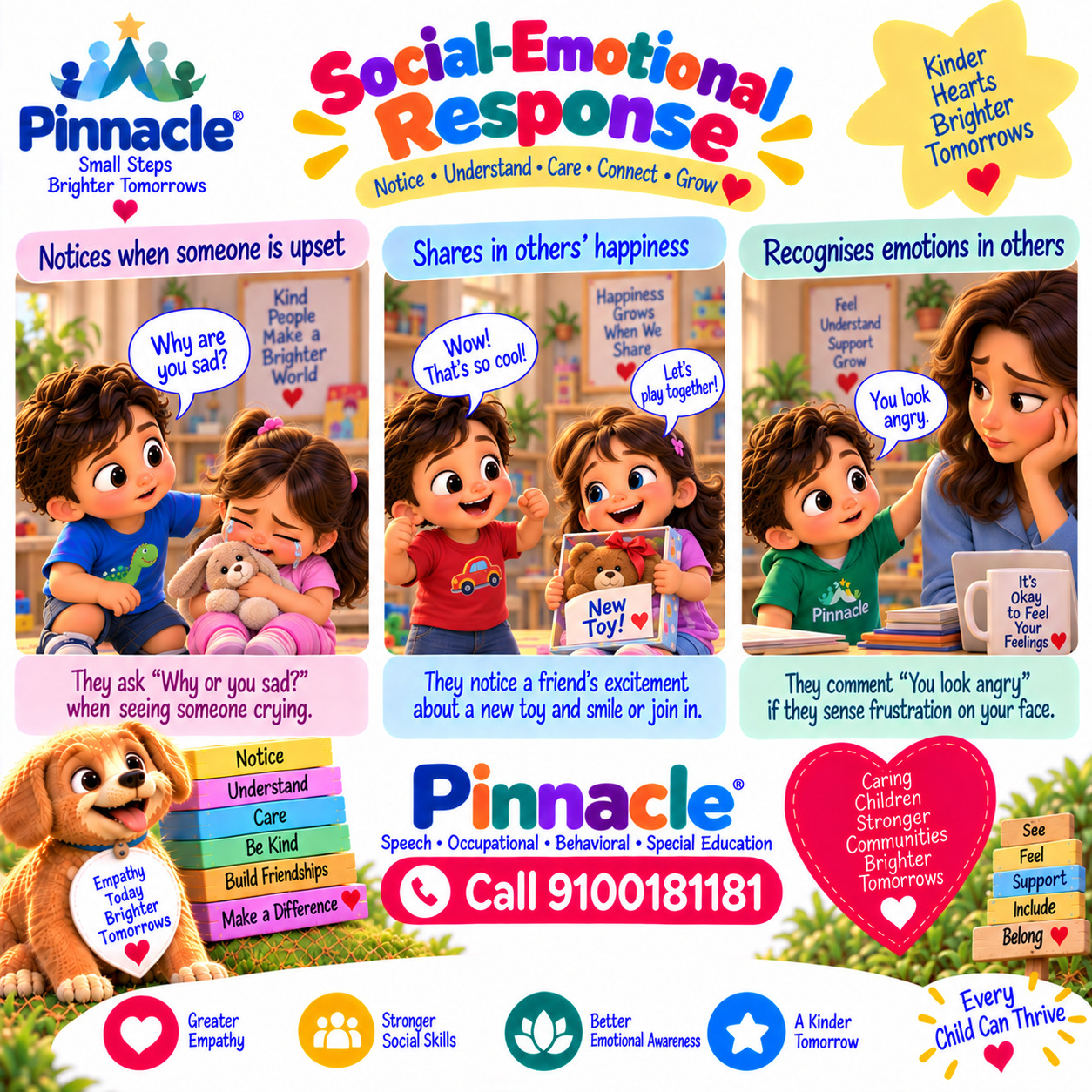
Does the child show interest in others' feelings or emotions?
Topic: Social-Emotional Response
Example 1
They ask “Why are you sad?” when seeing someone crying.
Example 2
They notice a friend’s excitement about a new toy and smile or join in.
Example 3
They comment “You look angry” if they sense frustration on your face.
Example illustrationQuestion illustration
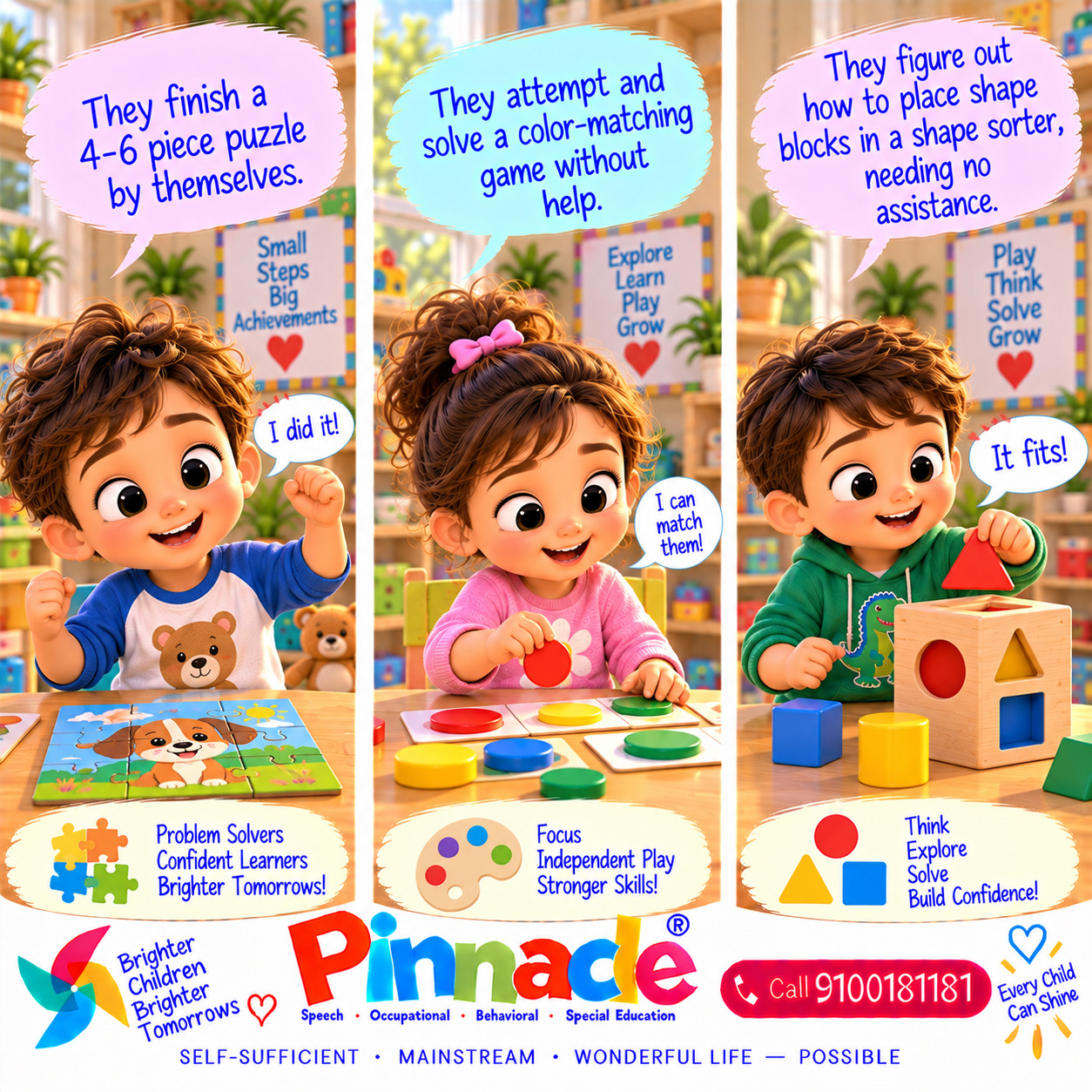
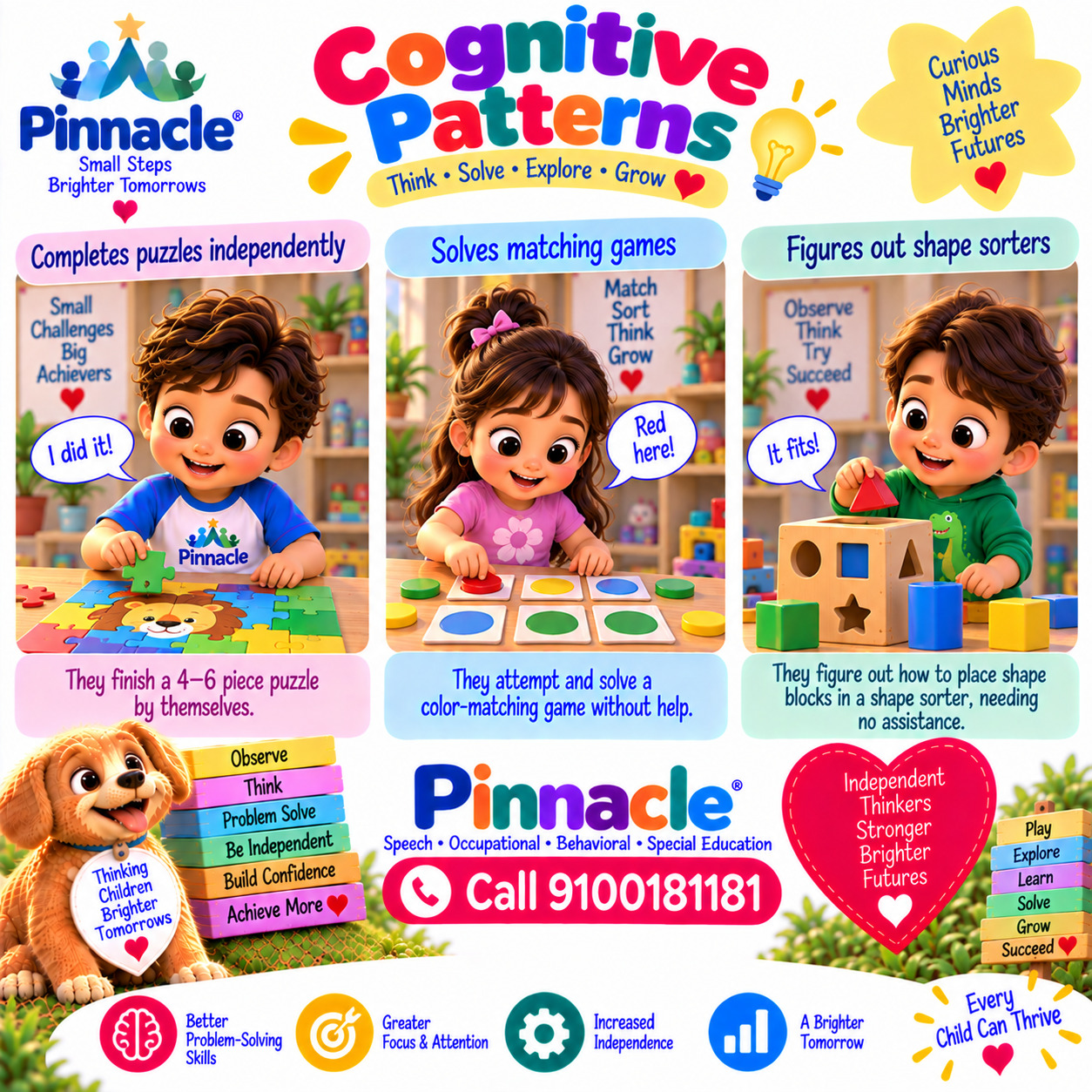
Can the child complete puzzles or problem-solving tasks independently?
Topic: Cognitive Patterns
Example 1
They finish a 4–6 piece puzzle by themselves.
Example 2
They attempt and solve a color-matching game without help.
Example 3
They figure out how to place shape blocks in a shape sorter, needing no assistance.
Example illustrationQuestion illustration
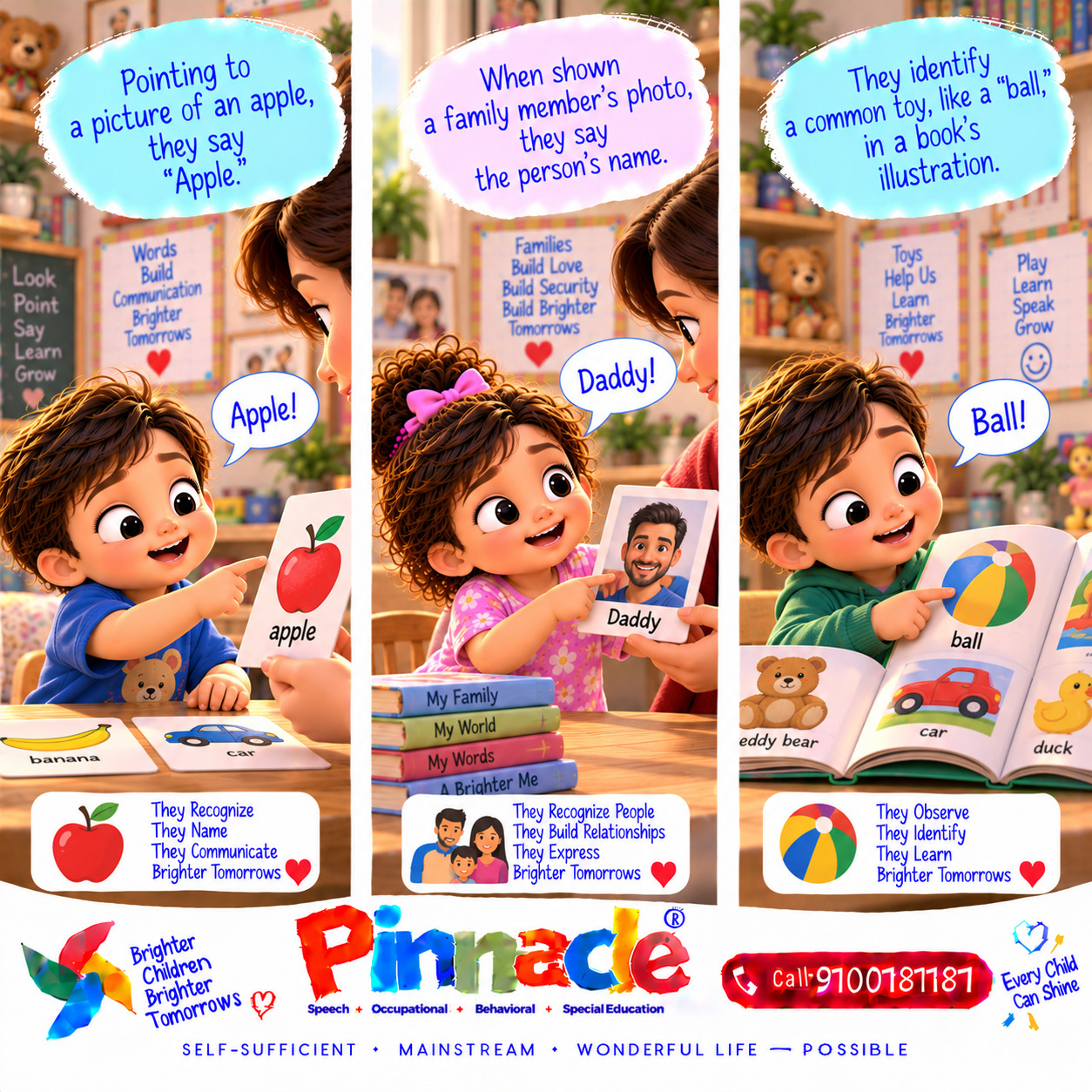
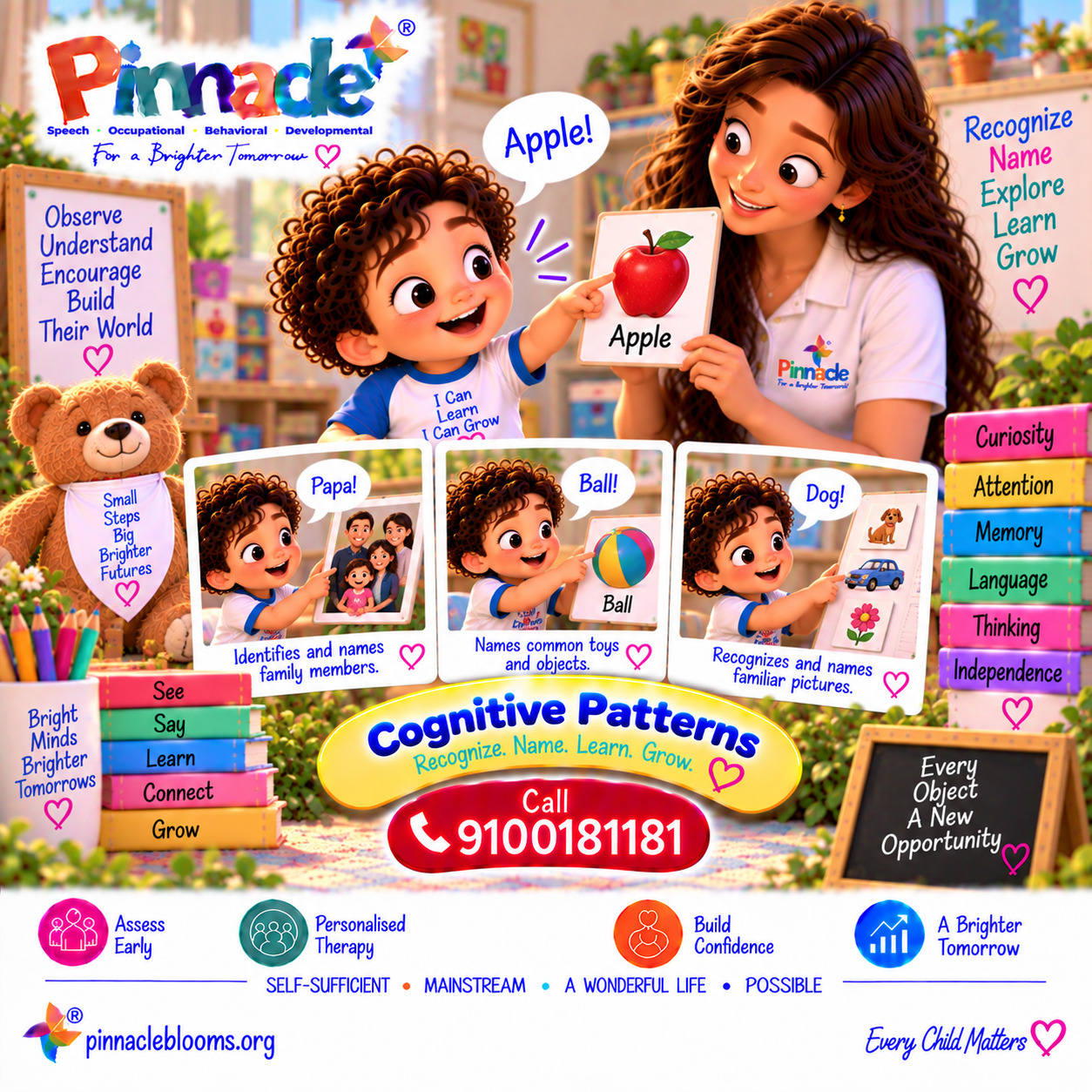
Does the child recognize and name familiar objects or pictures?
Topic: Cognitive Patterns
Example 1
Pointing to a picture of an apple, they say “Apple.”
Example 2
When shown a family member’s photo, they say the person’s name.
Example 3
They identify a common toy, like a “ball,” in a book’s illustration.
Example illustrationQuestion illustration
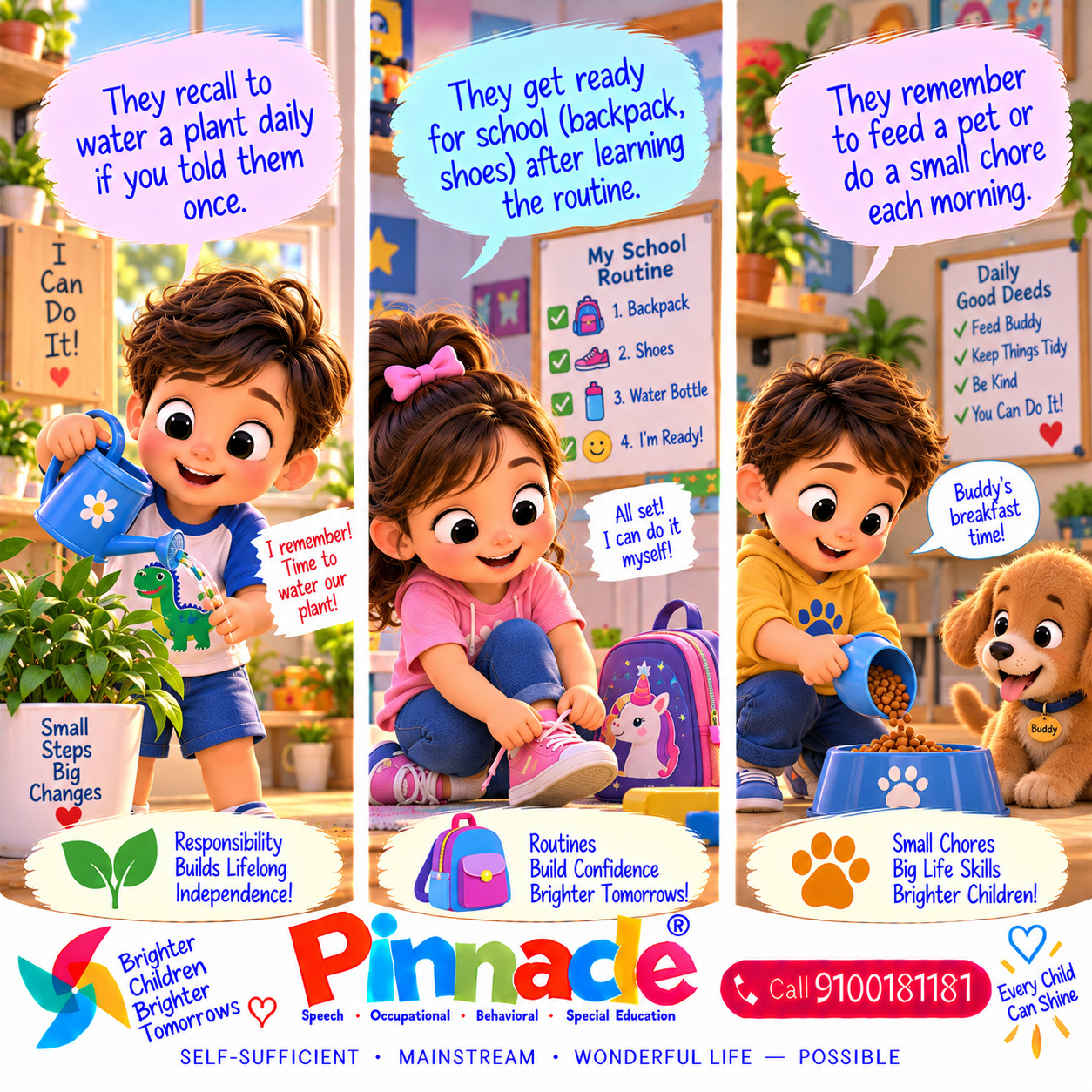
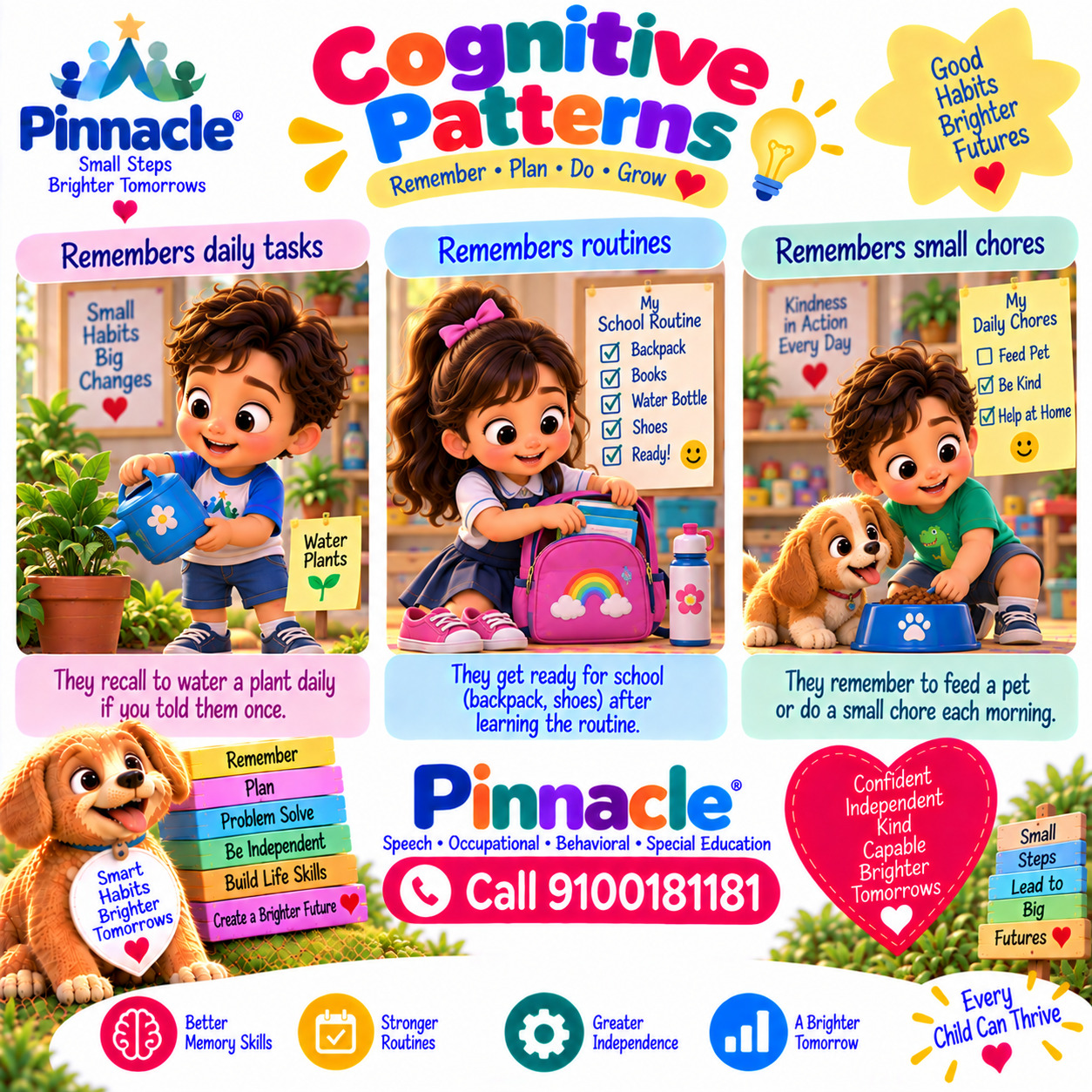
Can the child remember simple tasks from one day to the next?
Topic: Cognitive Patterns
Example 1
They recall to water a plant daily if you told them once.
Example 2
They get ready for school (backpack, shoes) after learning the routine.
Example 3
They remember to feed a pet or do a small chore each morning.
Example illustrationQuestion illustration
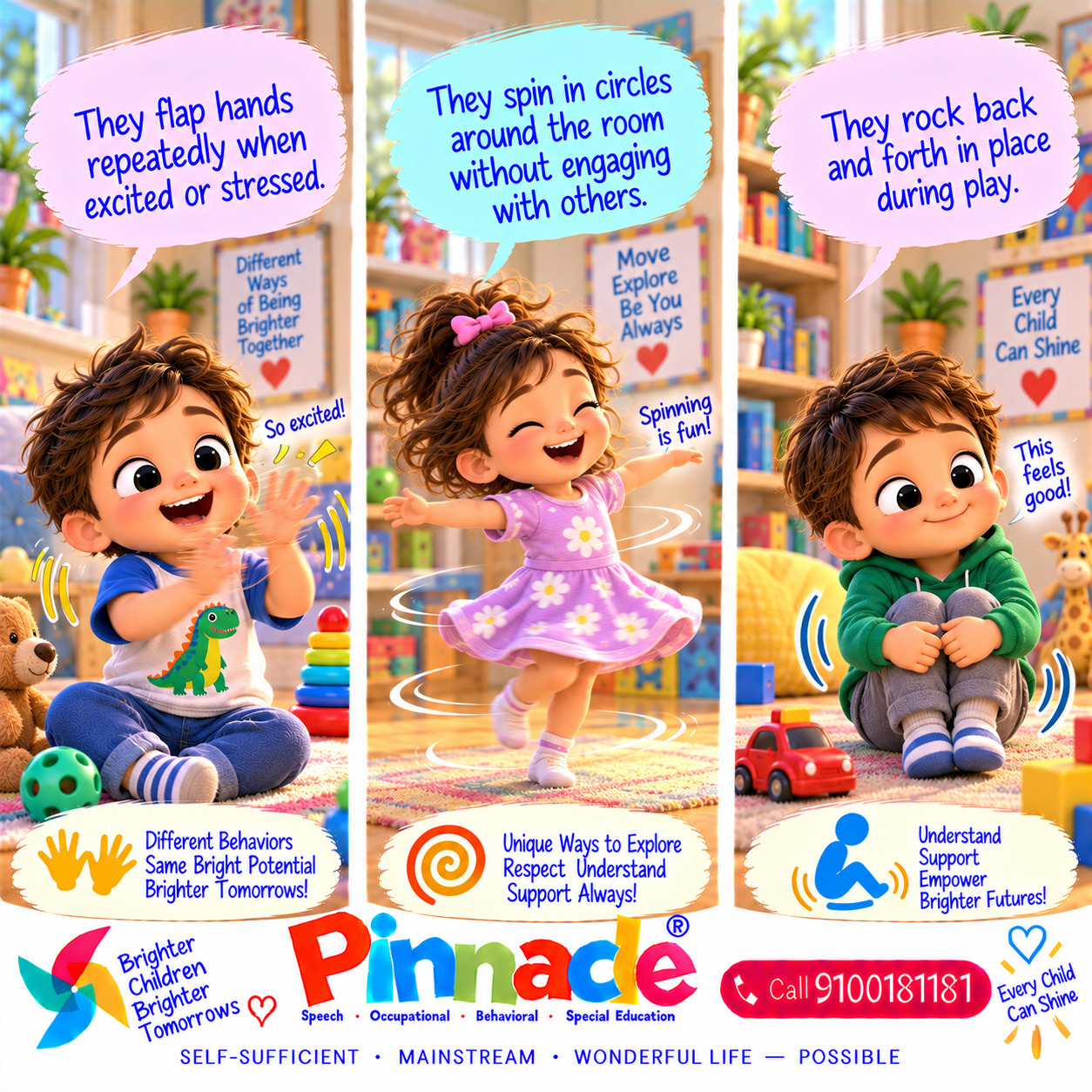
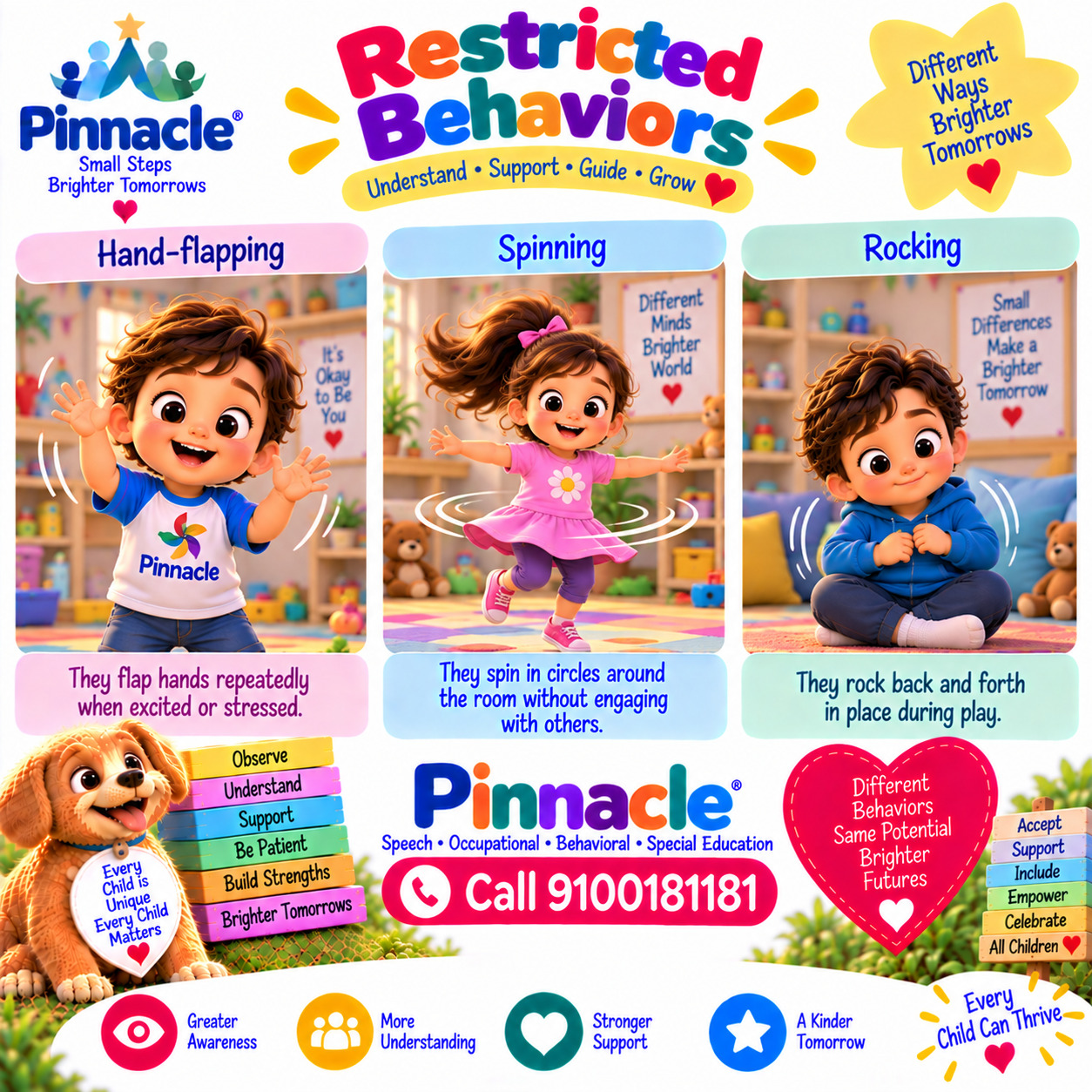
Does the child engage in repetitive body movements such as hand-flapping or spinning?
Topic: Restricted Behaviors
Example 1
They flap hands repeatedly when excited or stressed.
Example 2
They spin in circles around the room without engaging with others.
Example 3
They rock back and forth in place during play.
Example illustrationQuestion illustration
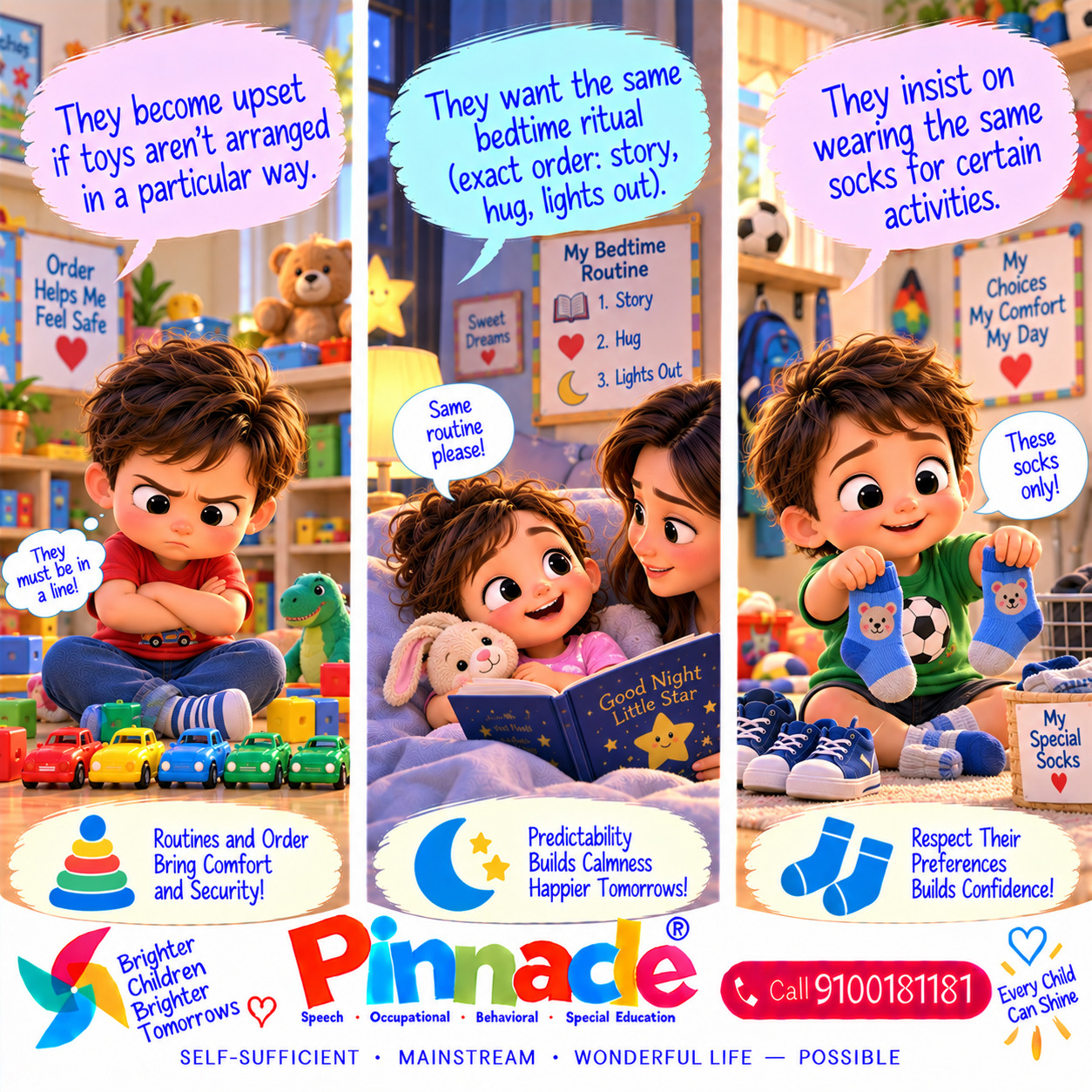
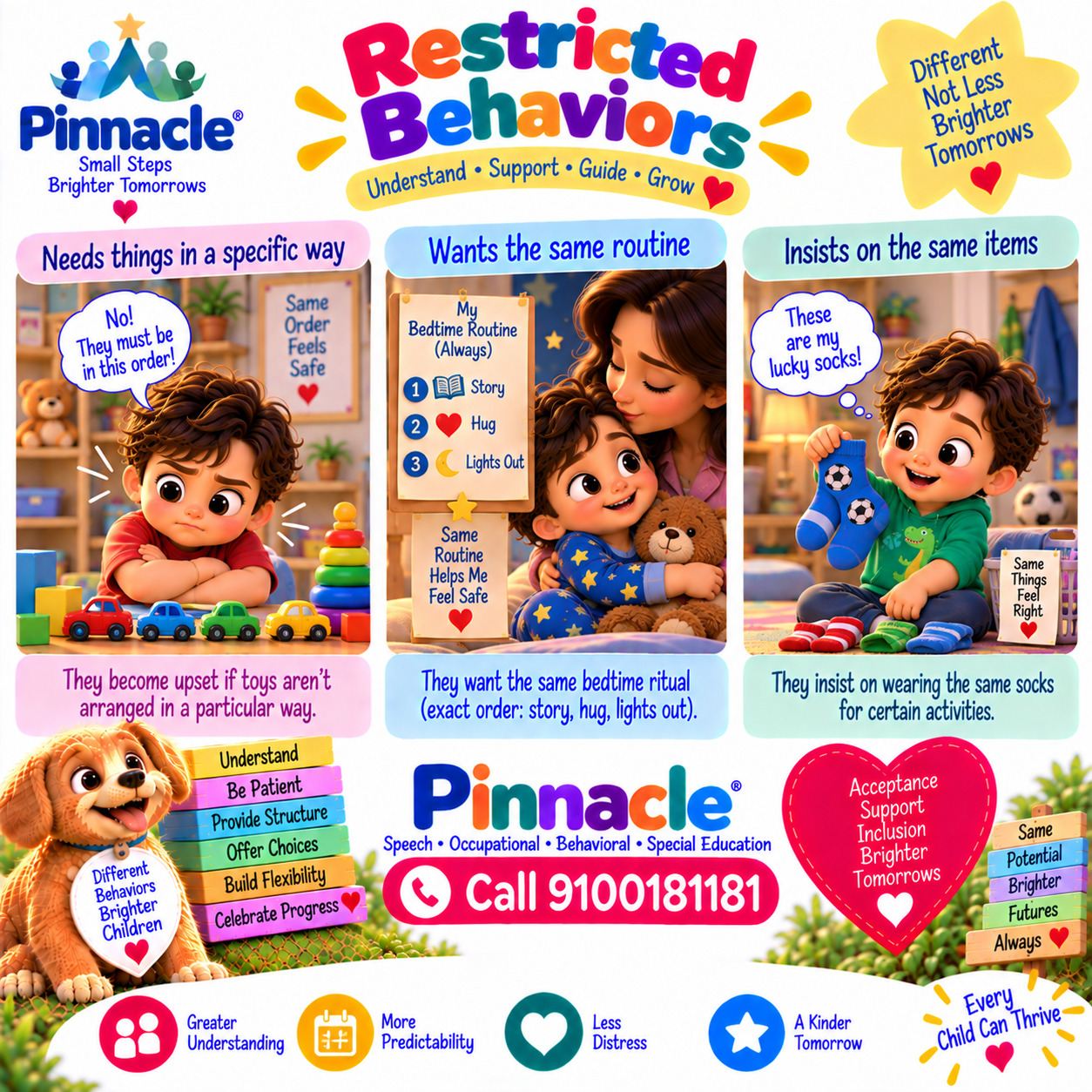
Does the child insist on following routines or specific patterns?
Topic: Restricted Behaviors
Example 1
They become upset if toys aren’t arranged in a particular way.
Example 2
They want the same bedtime ritual (exact order: story, hug, lights out).
Example 3
They insist on wearing the same socks for certain activities.
Example illustrationQuestion illustration
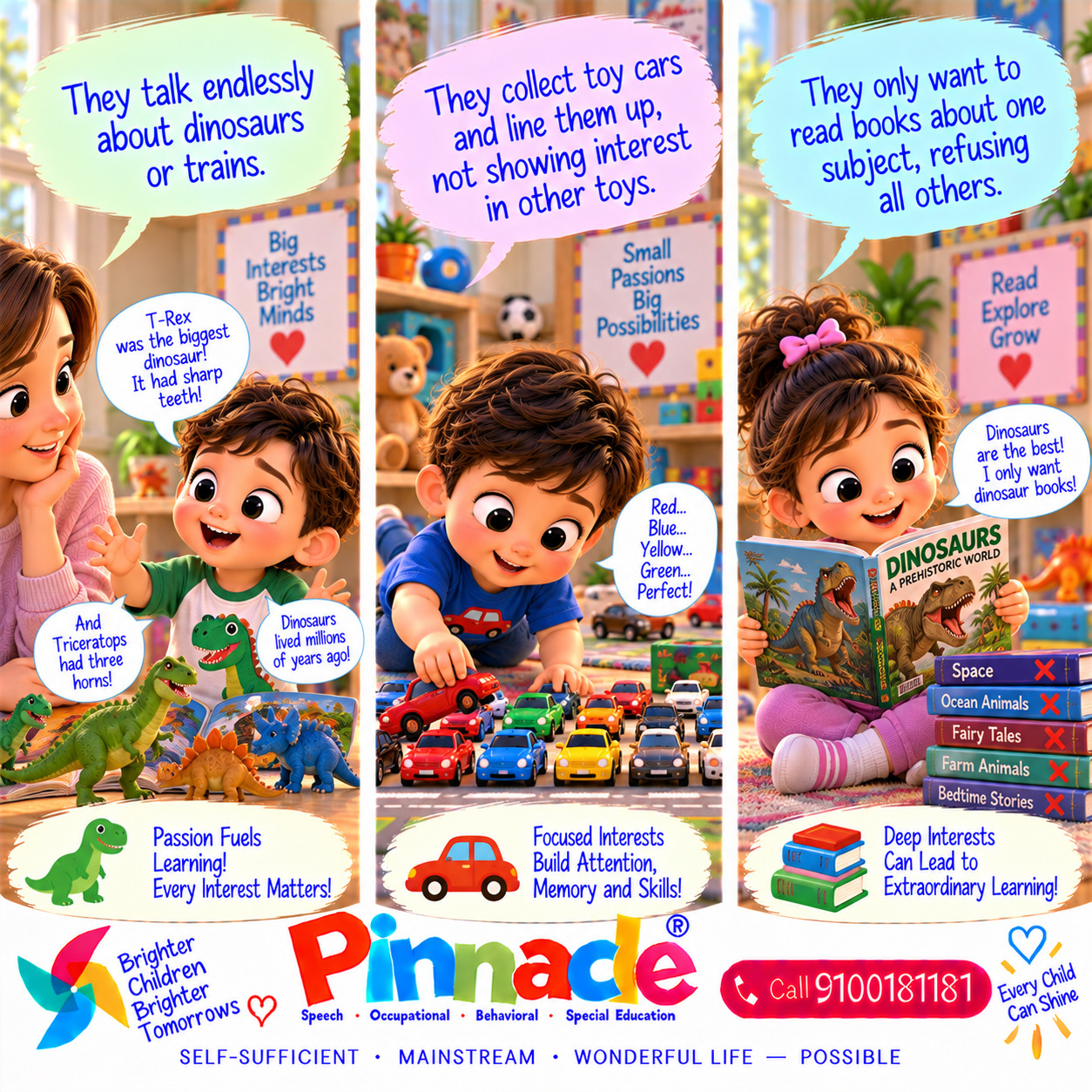
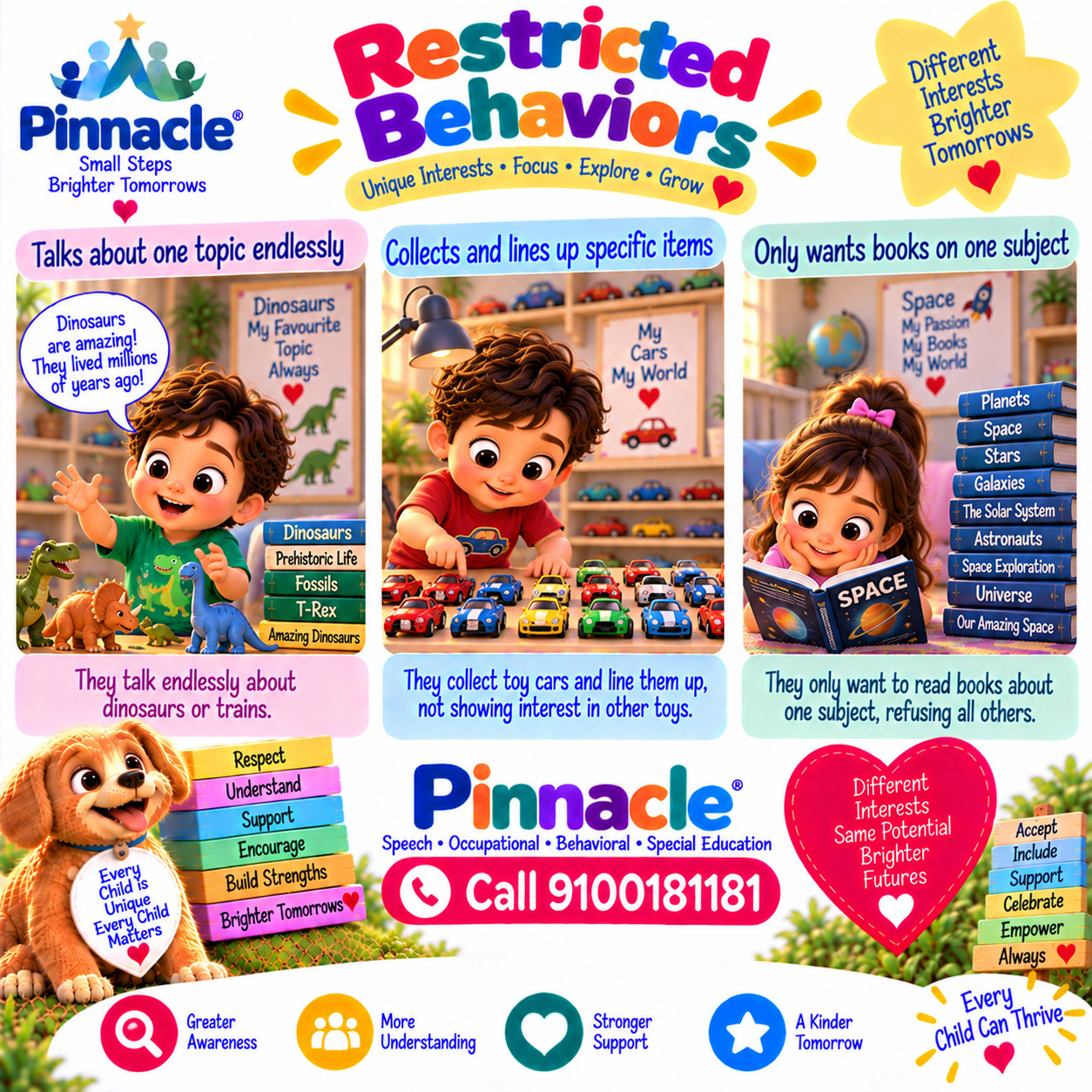
Does the child have intense interest in specific objects or topics?
Topic: Restricted Behaviors
Example 1
They talk endlessly about dinosaurs or trains.
Example 2
They collect toy cars and line them up, not showing interest in other toys.
Example 3
They only want to read books about one subject, refusing all others.
Example illustrationQuestion illustration
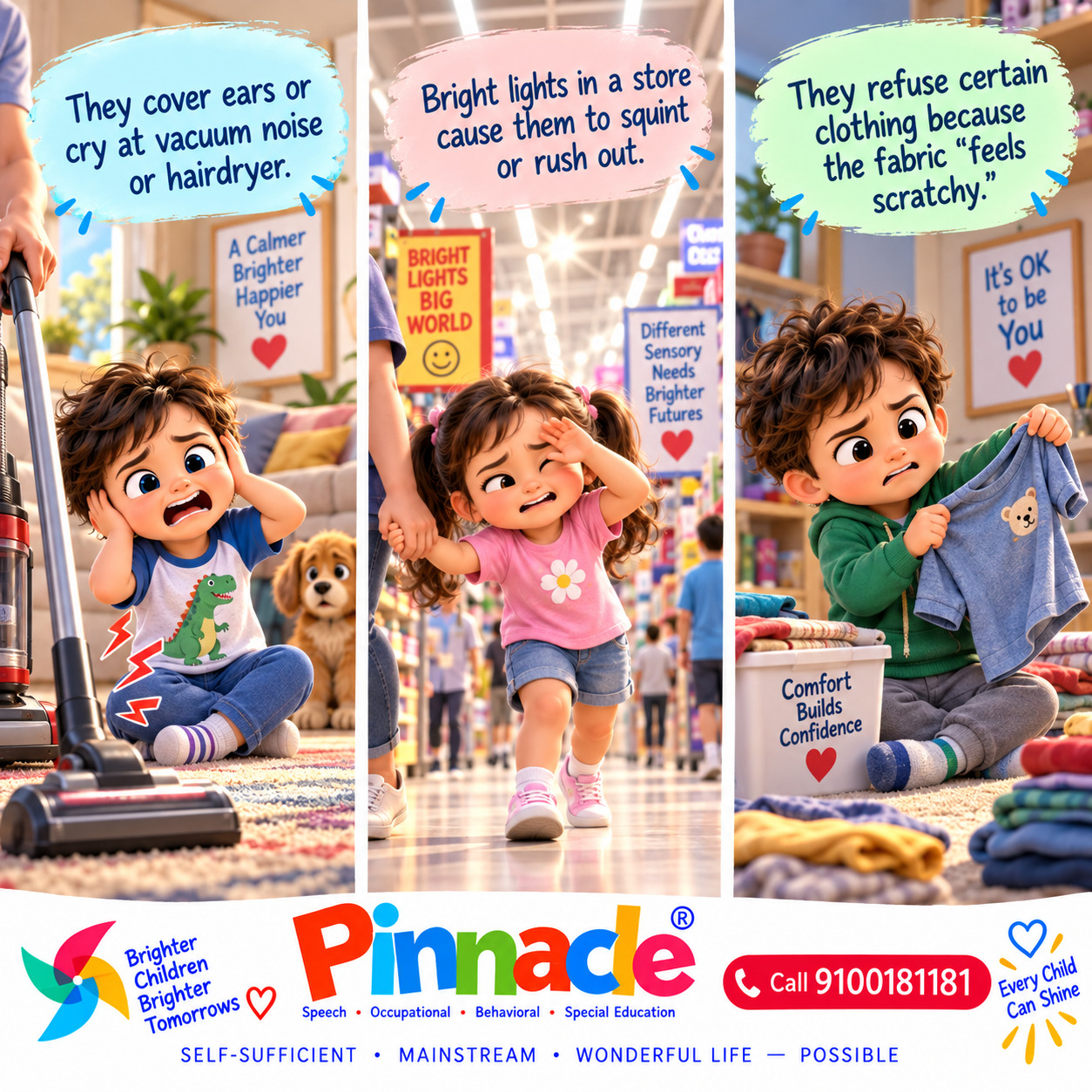
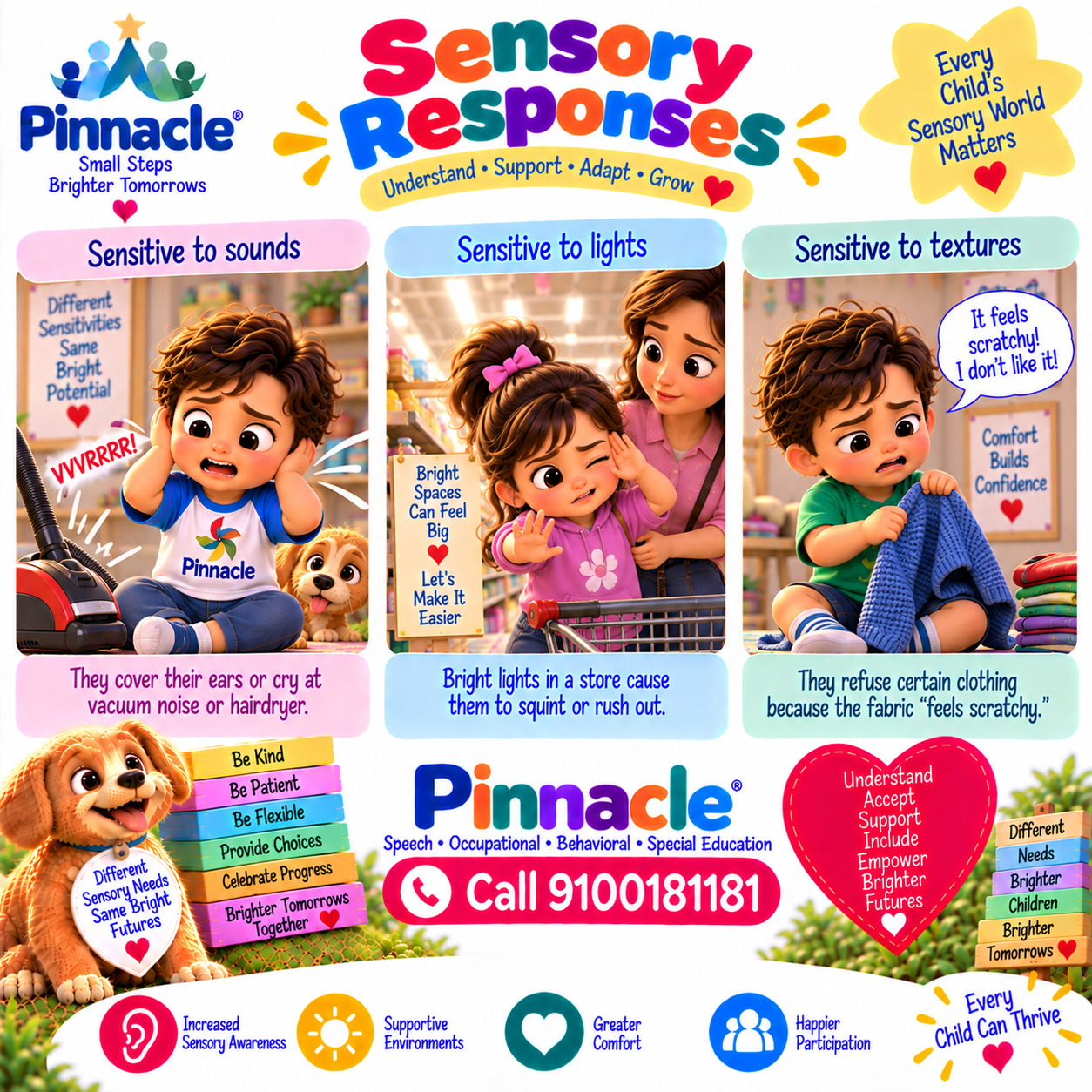
Does the child react negatively to certain sounds, lights, or textures?
Topic: Sensory Responses
Example 1
They cover ears or cry at vacuum noise or hairdryer.
Example 2
Bright lights in a store cause them to squint or rush out.
Example 3
They refuse certain clothing because the fabric “feels scratchy.”
Example illustrationQuestion illustration
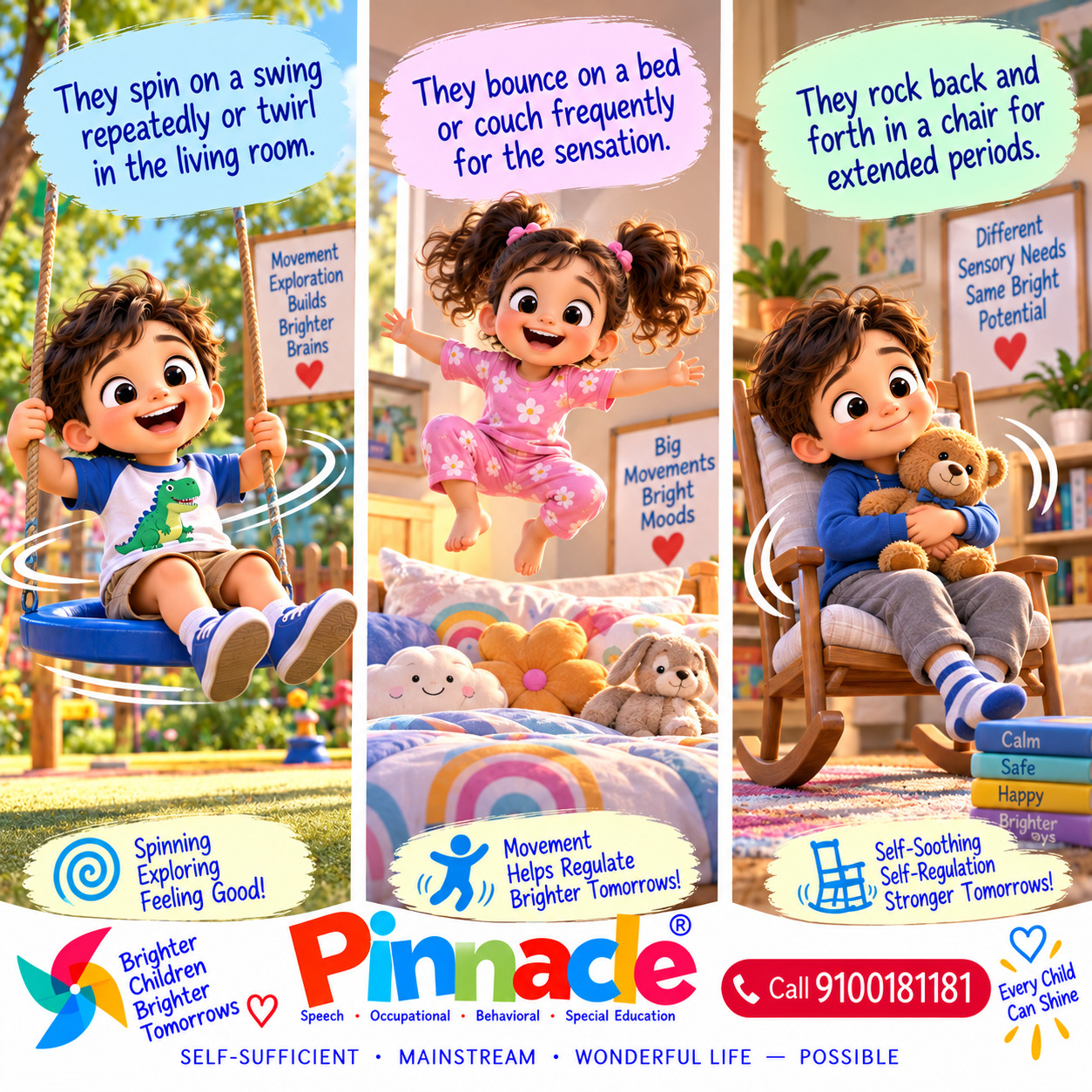
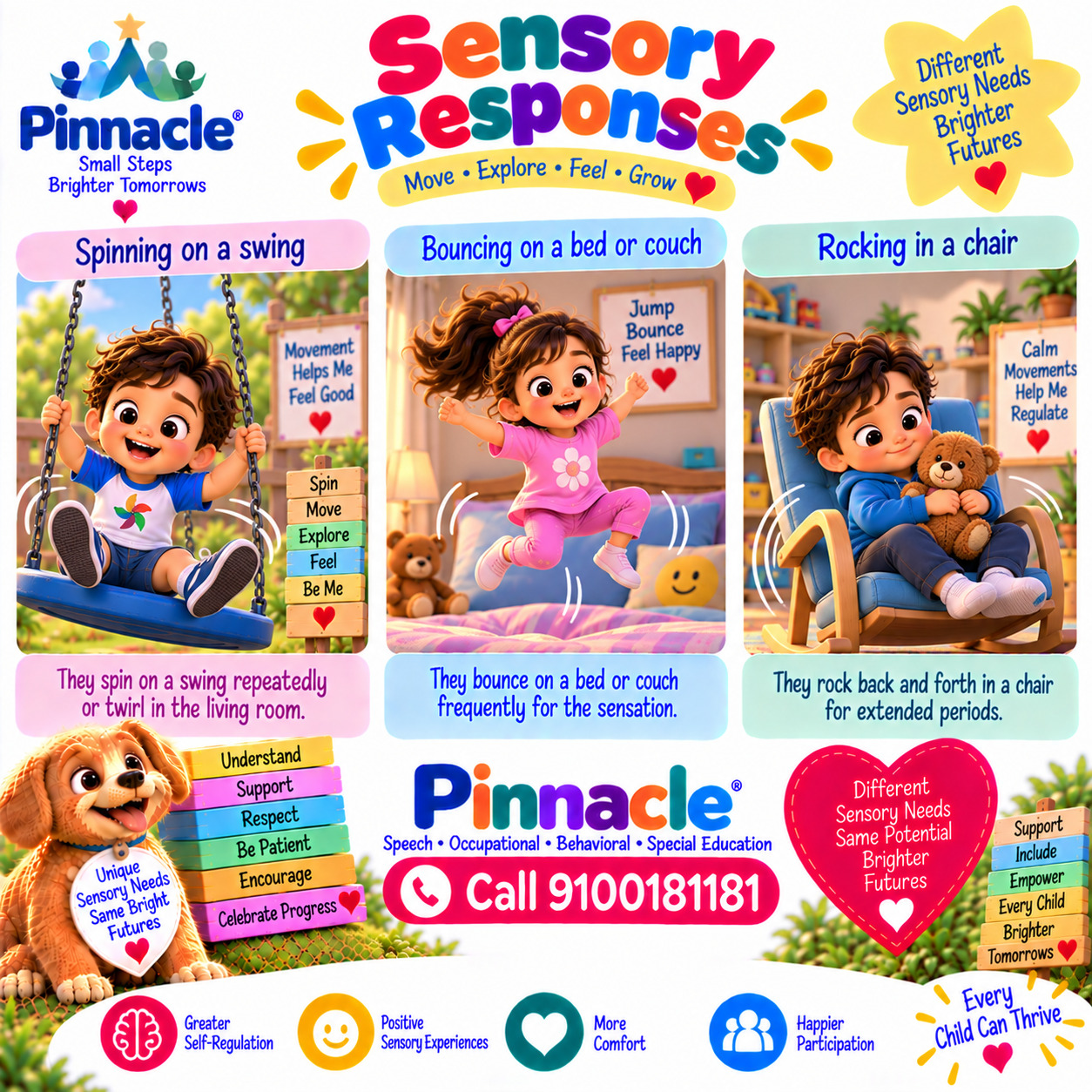
Does the child seek sensory input such as rocking or spinning?
Topic: Sensory Responses
Example 1
They spin on a swing repeatedly or twirl in the living room.
Example 2
They bounce on a bed or couch frequently for the sensation.
Example 3
They rock back and forth in a chair for extended periods.
Example illustrationQuestion illustration
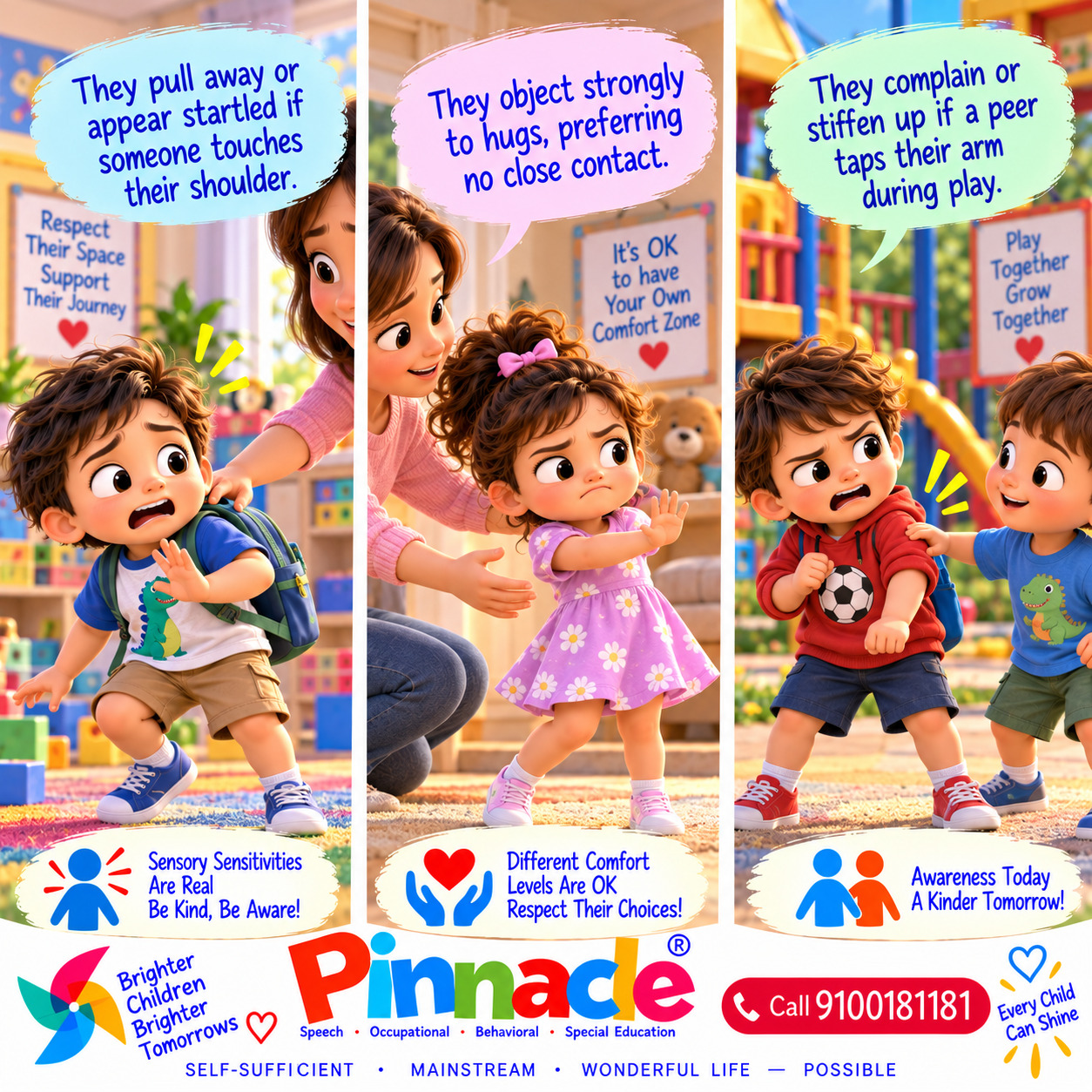
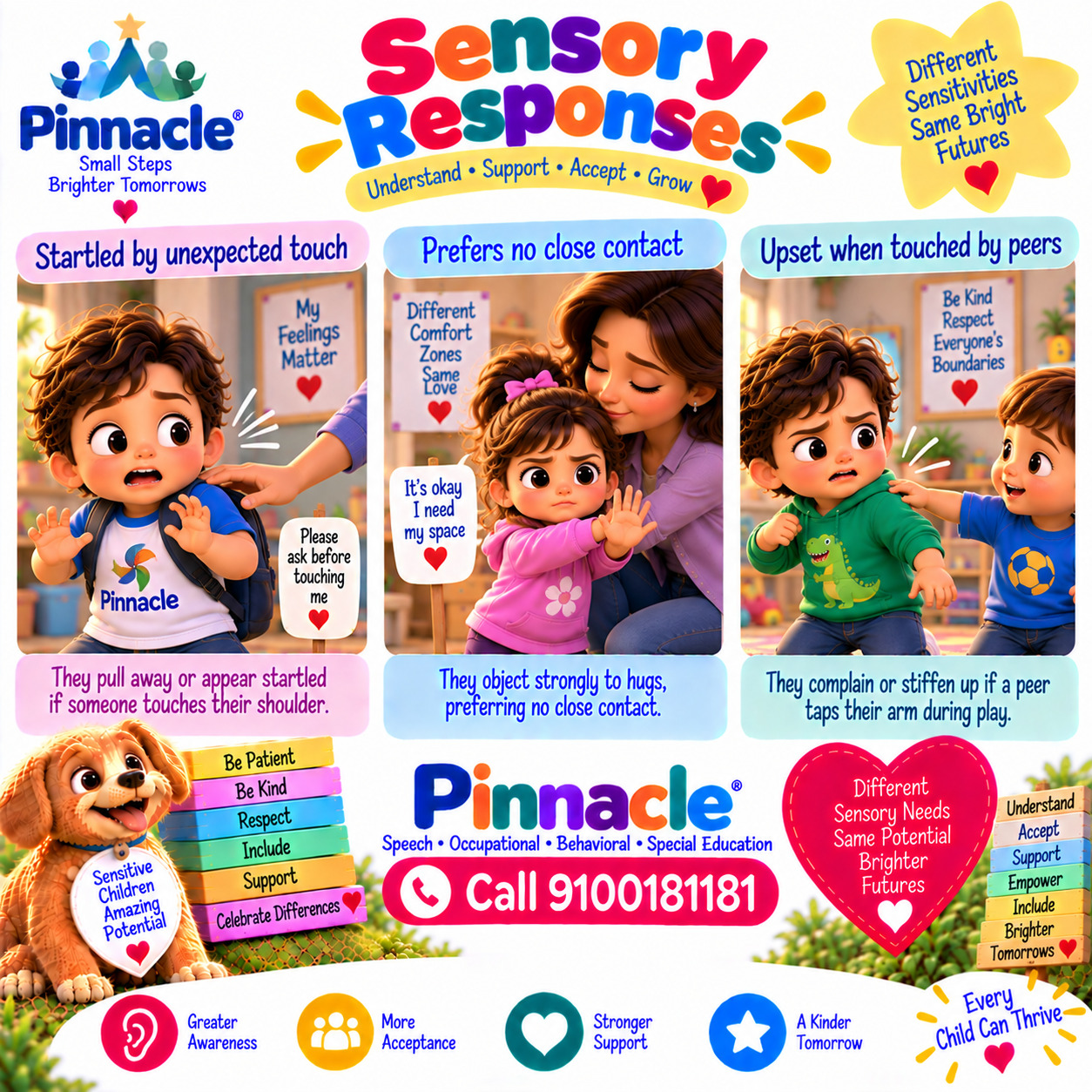
Does the child avoid physical touch or become upset when touched unexpectedly?
Topic: Sensory Responses
Example 1
They pull away or appear startled if someone touches their shoulder.
Example 2
They object strongly to hugs, preferring no close contact.
Example 3
They complain or stiffen up if a peer taps their arm during play.
Example illustrationQuestion illustration
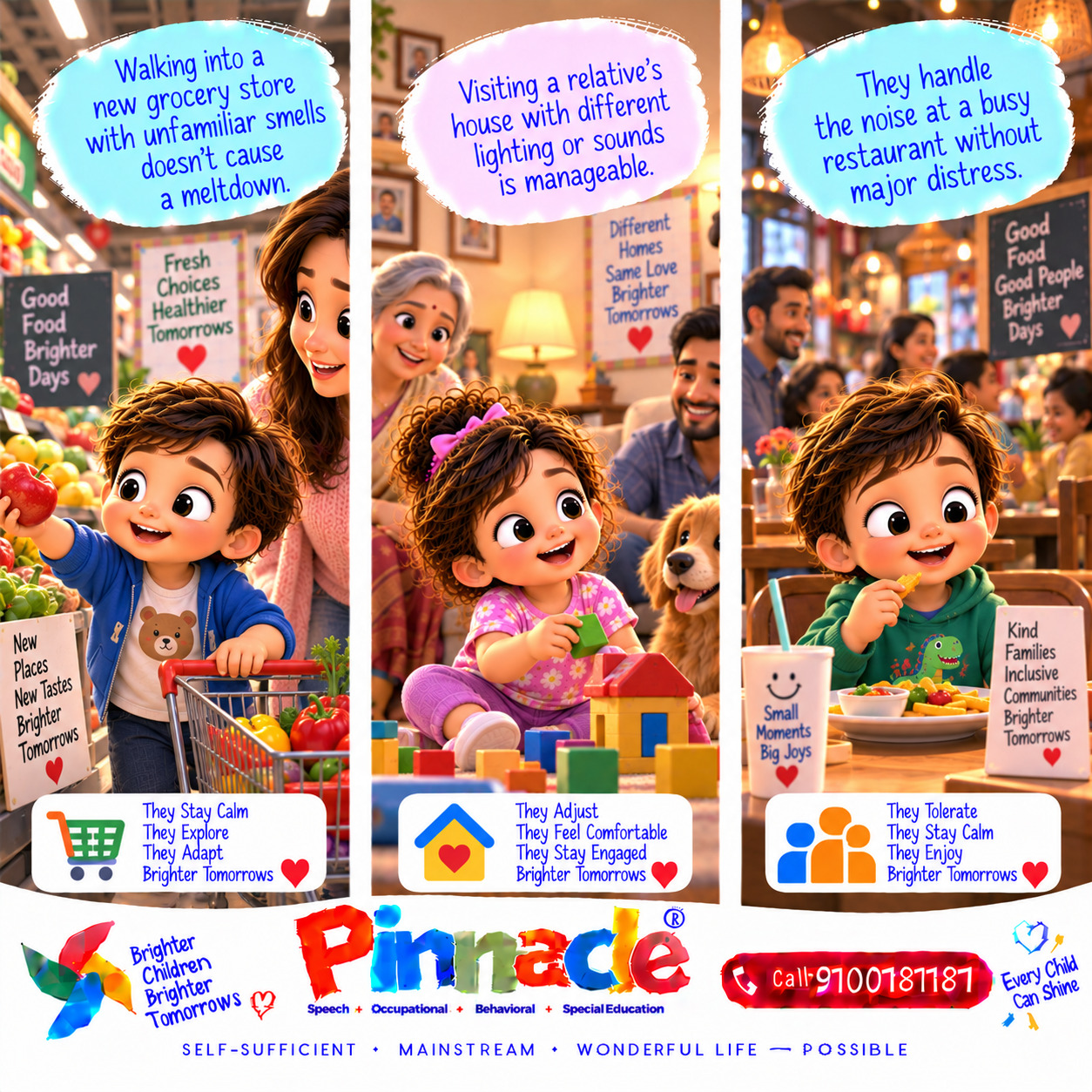
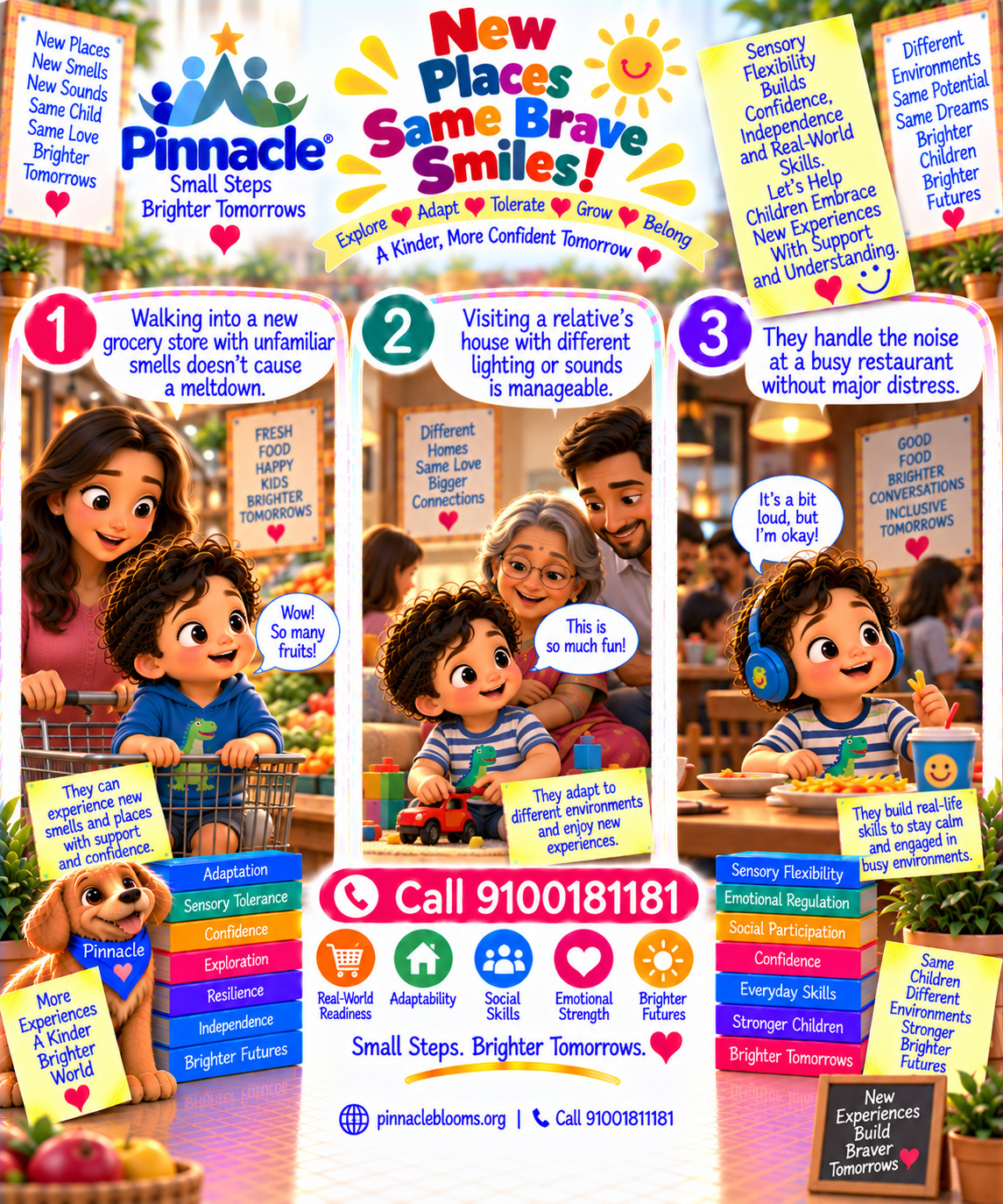
Can the child tolerate changes in sensory environments (e.g., new places or smells)?
Topic: Sensory Responses
Example 1
Walking into a new grocery store with unfamiliar smells doesn’t cause a meltdown.
Example 2
Visiting a relative’s house with different lighting or sounds is manageable.
Example 3
They handle the noise at a busy restaurant without major distress.
Example illustrationQuestion illustration
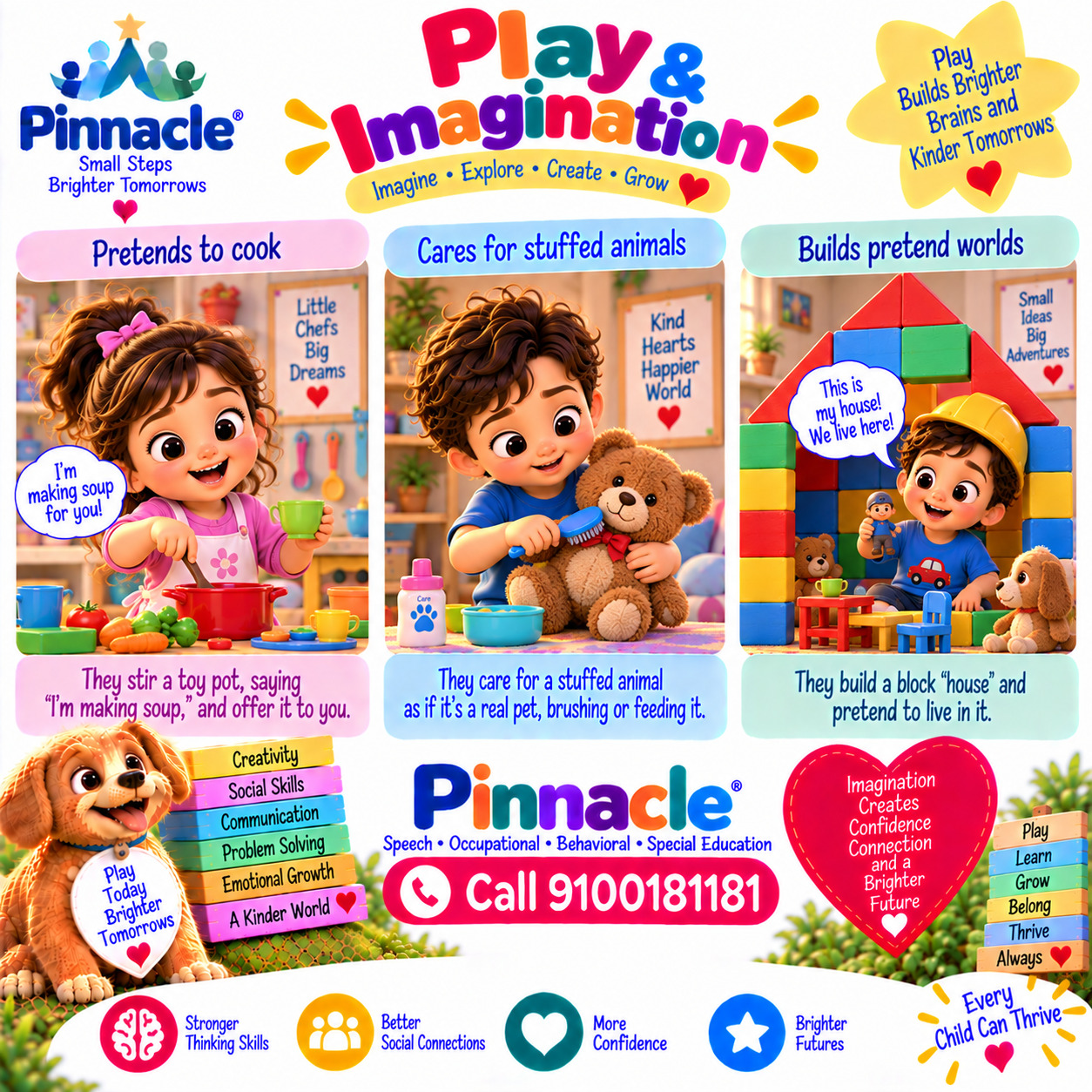
Does the child engage in pretend play such as playing house or pretending to cook?
Topic: Play & Imagination
Example 1
They stir a toy pot, saying “I’m making soup,” and offer it to you.
Example 2
They care for a stuffed animal as if it’s a real pet, brushing or feeding it.
Example 3
They build a block “house” and pretend to live in it.
Example illustrationQuestion illustration
Can the child create stories or explain events in a logical sequence?
Topic: Play & Imagination
Example 1
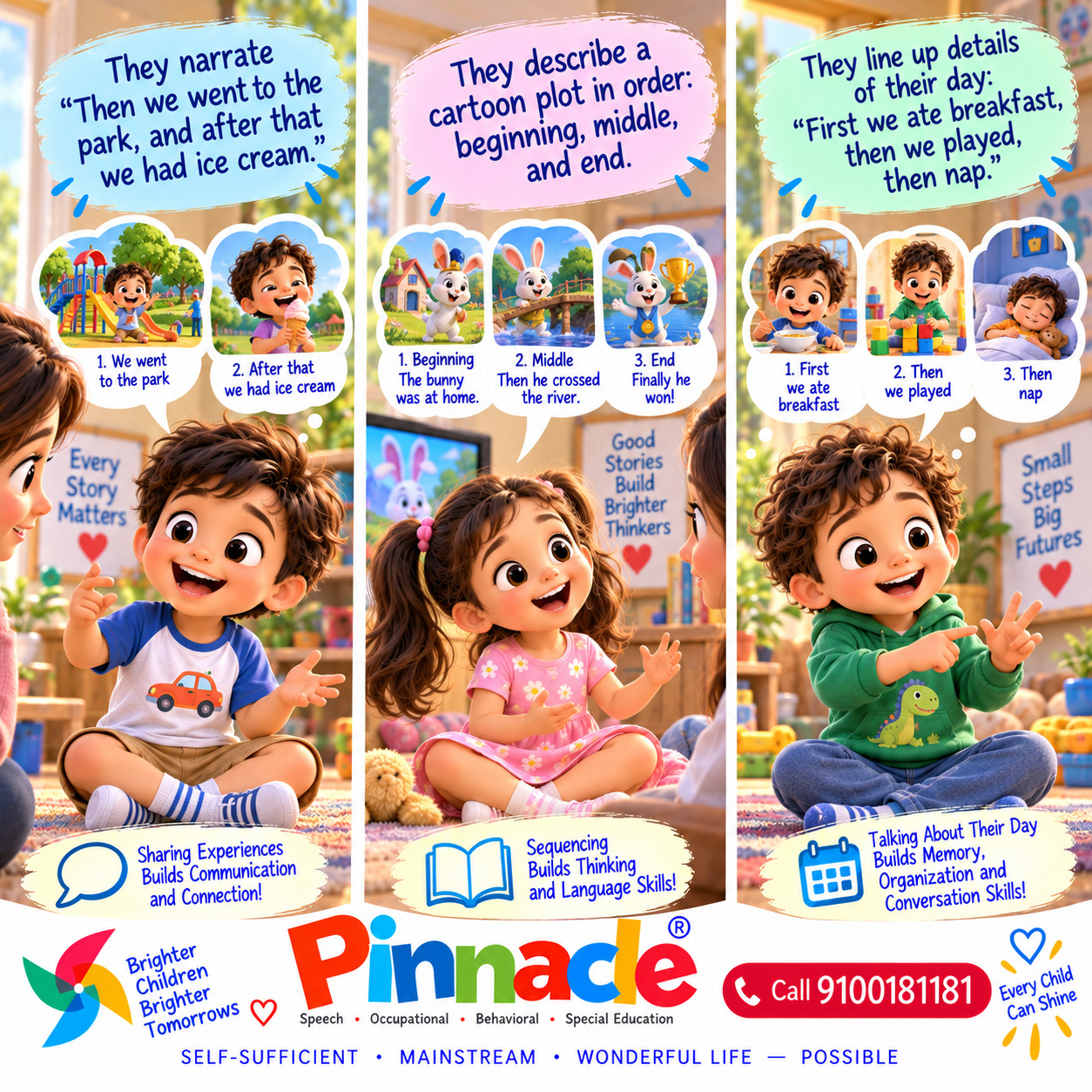
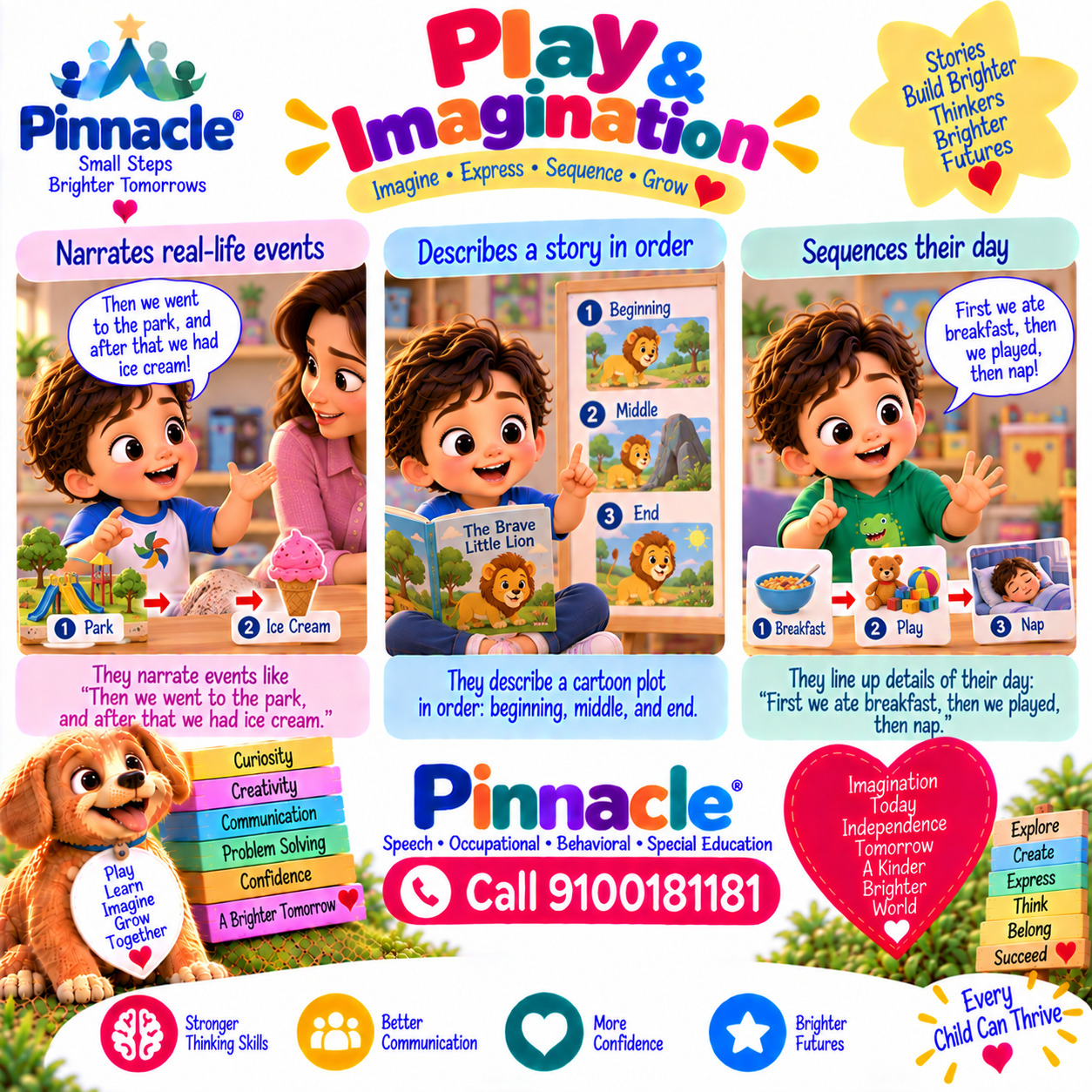
They narrate “Then we went to the park, and after that we had ice cream.”
Example 2
They describe a cartoon plot in order: beginning, middle, and end.
Example 3
They line up details of their day: “First we ate breakfast, then we played, then nap.”