Pinnacle iCDI - MacArthur-Bates Communicative Development Inventories
share
The MacArthur-Bates Communicative Development Inventories (CDIs) are a powerful tool to evaluate and understand your child''s language and communication skills, key for tailoring effective therapies.
MacArthur-Bates CDIs are standardized tools used to assess the early communicative abilities of children aged between 9 months to 3 years, including vocabulary and understanding gestures.
Accurate assessments like the MacArthur-Bates CDIs are crucial to identify any developmental challenges early, enabling timely intervention that helps bridge the gap in communication skills.
Our expert team conducts the MacArthur-Bates CDI assessments through structured interviews and observations, transforming the insights into personalized therapy plans.
It''s best to conduct these assessments as early as possible, ideally before the age of 3, to ensure any developmental concerns are addressed promptly.
At Pinnacle Blooms Network locations across India, USA, Dubai, and Singapore, providing access to dedicated professionals experienced in handling the CDIs.
Pinnacle Blooms Network has successfully conducted over 1,00,00,000+ assessments with a 97%+ measured accuracy rate, improving life for families worldwide.
Aarav was just 18 months old when his parents noticed he was not using gestures like other kids his age. Concerned, they approached Pinnacle Blooms Network. Through the MacArthur-Bates CDI assessment, experts identified pivotal areas where Aarav needed support. With a customized therapy plan, Aarav gradually started using gestures followed by words, lighting up his parents'' world with each new expression.
These are reference questions and illustrative examples. This section does not collect child responses, calculate scores or produce an individual assessment result.
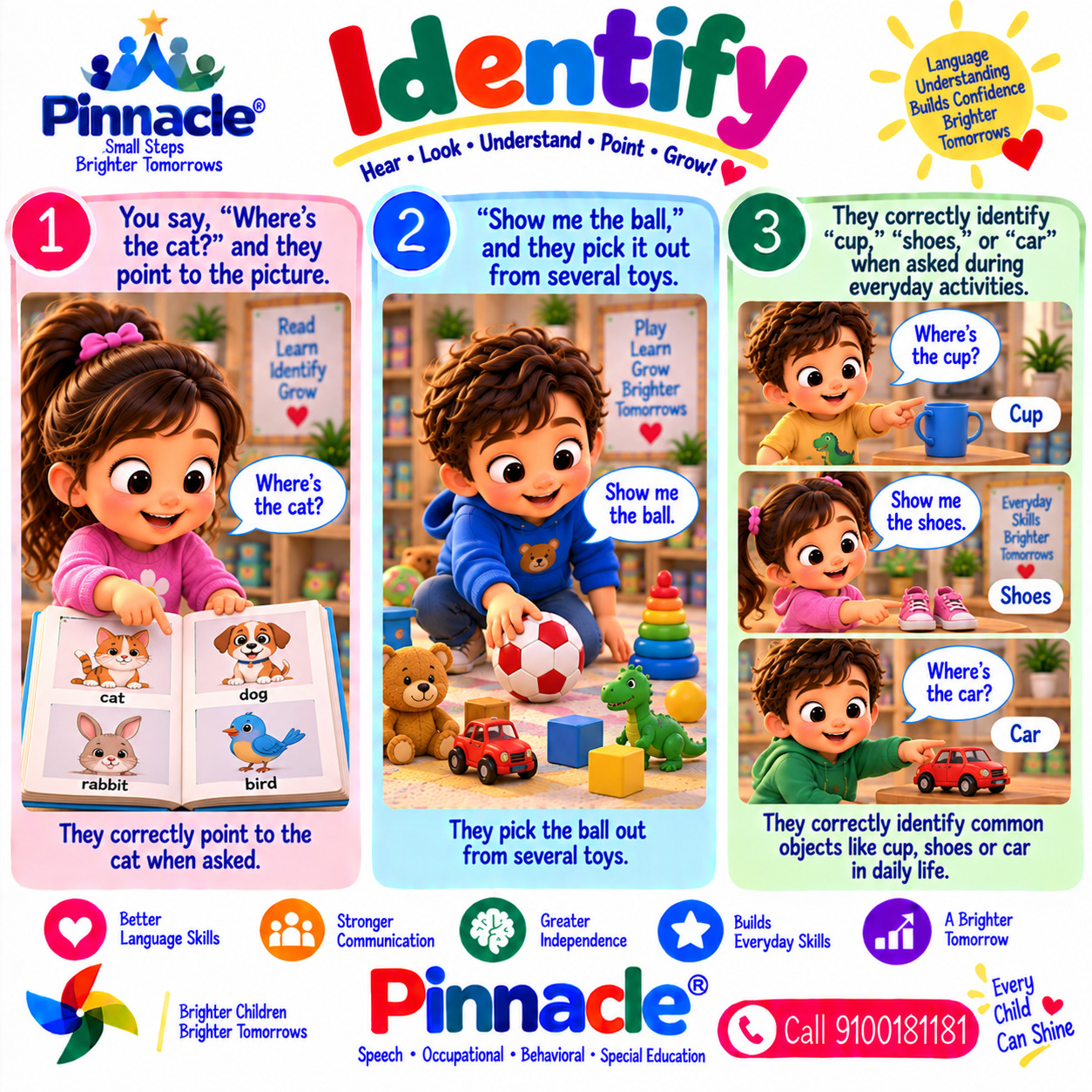
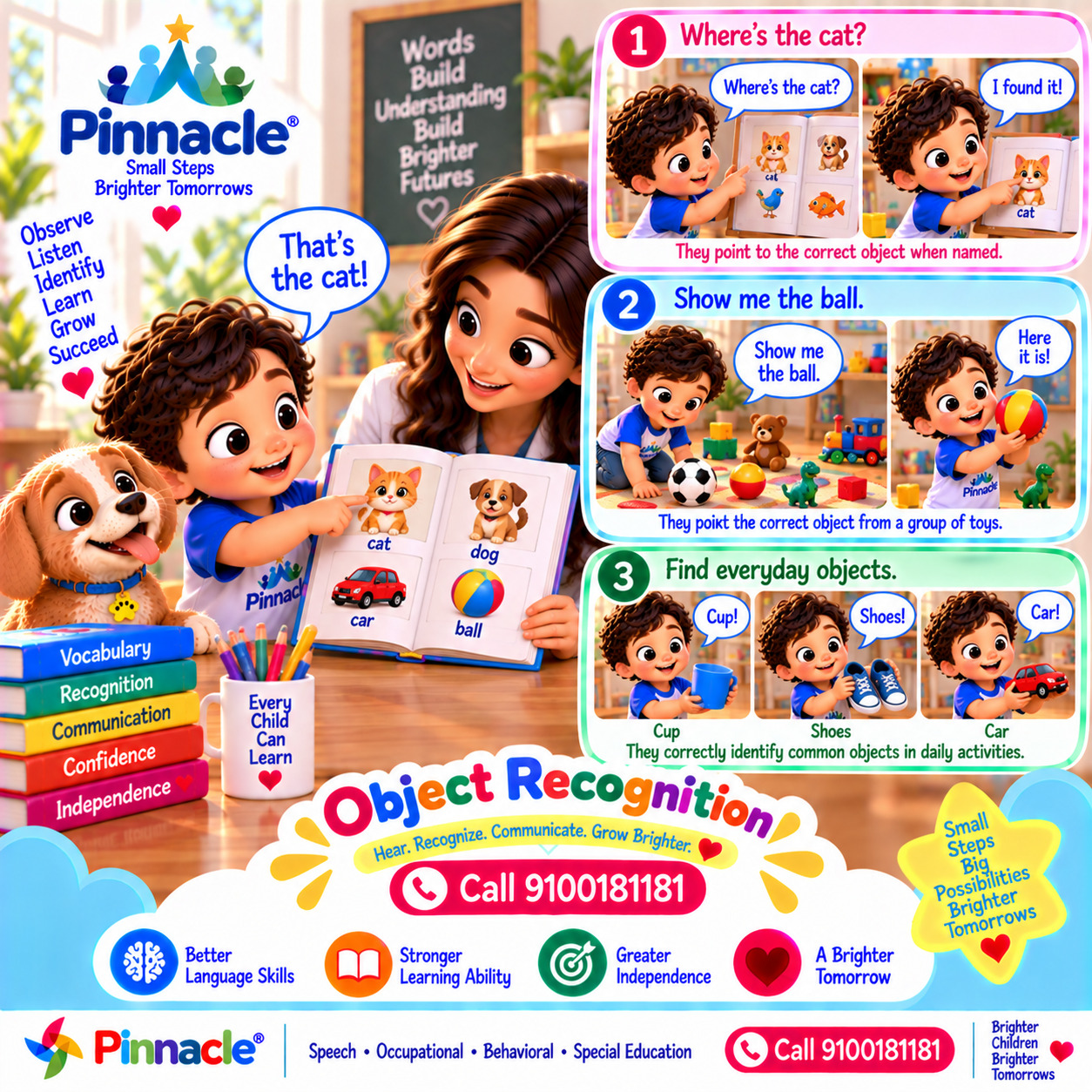
Does the child recognize common objects when named (e.g., ball, cat)?
Topic: Object Recognition
Example 1
You say, “Where’s the cat?” and they point to a picture of a cat in a book.
Example 2
“Show me the ball,” and they pick it out from several toys on the floor.
Example 3
They correctly identify “cup,” “shoes,” or “car” when asked during everyday activities.
Example illustrationQuestion illustration
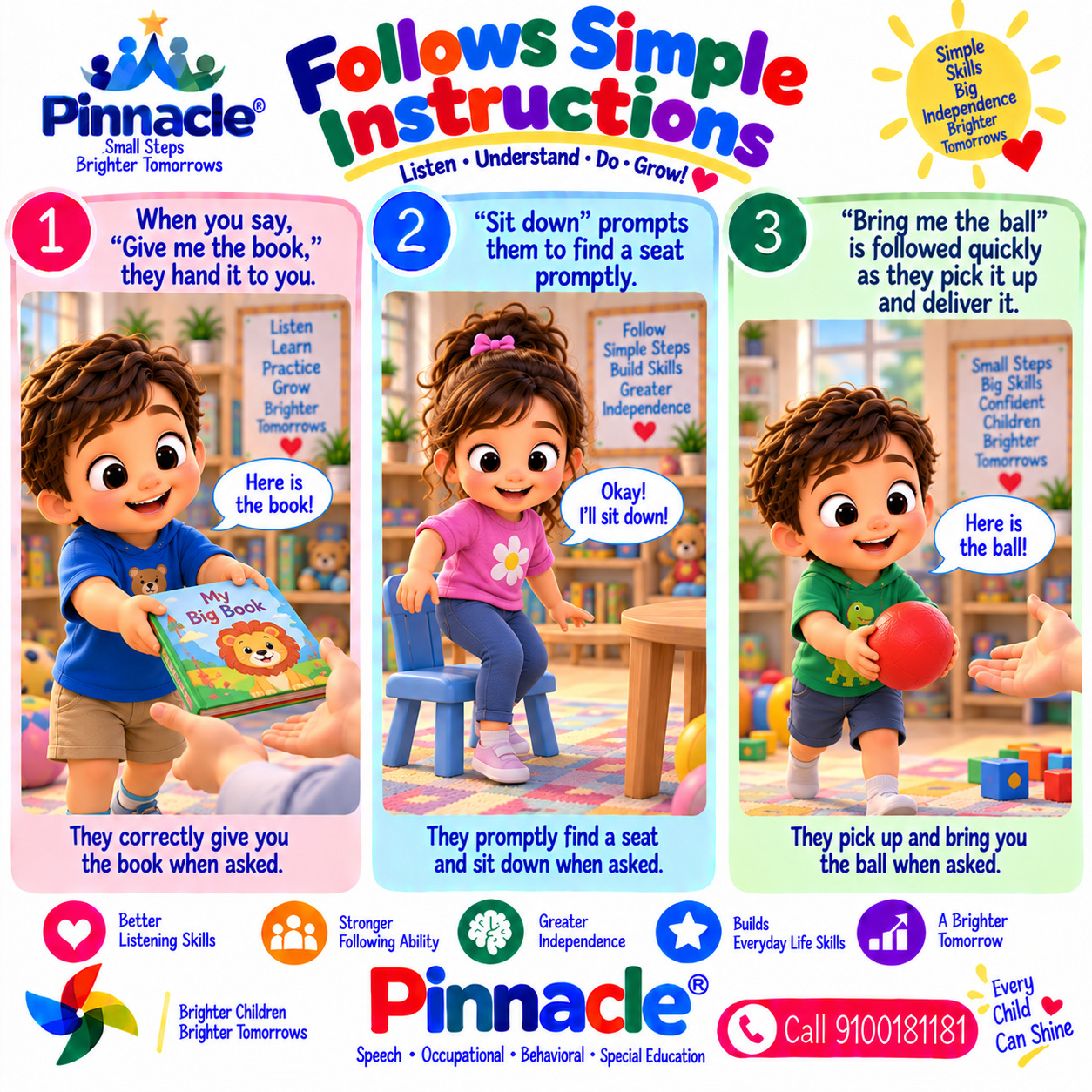
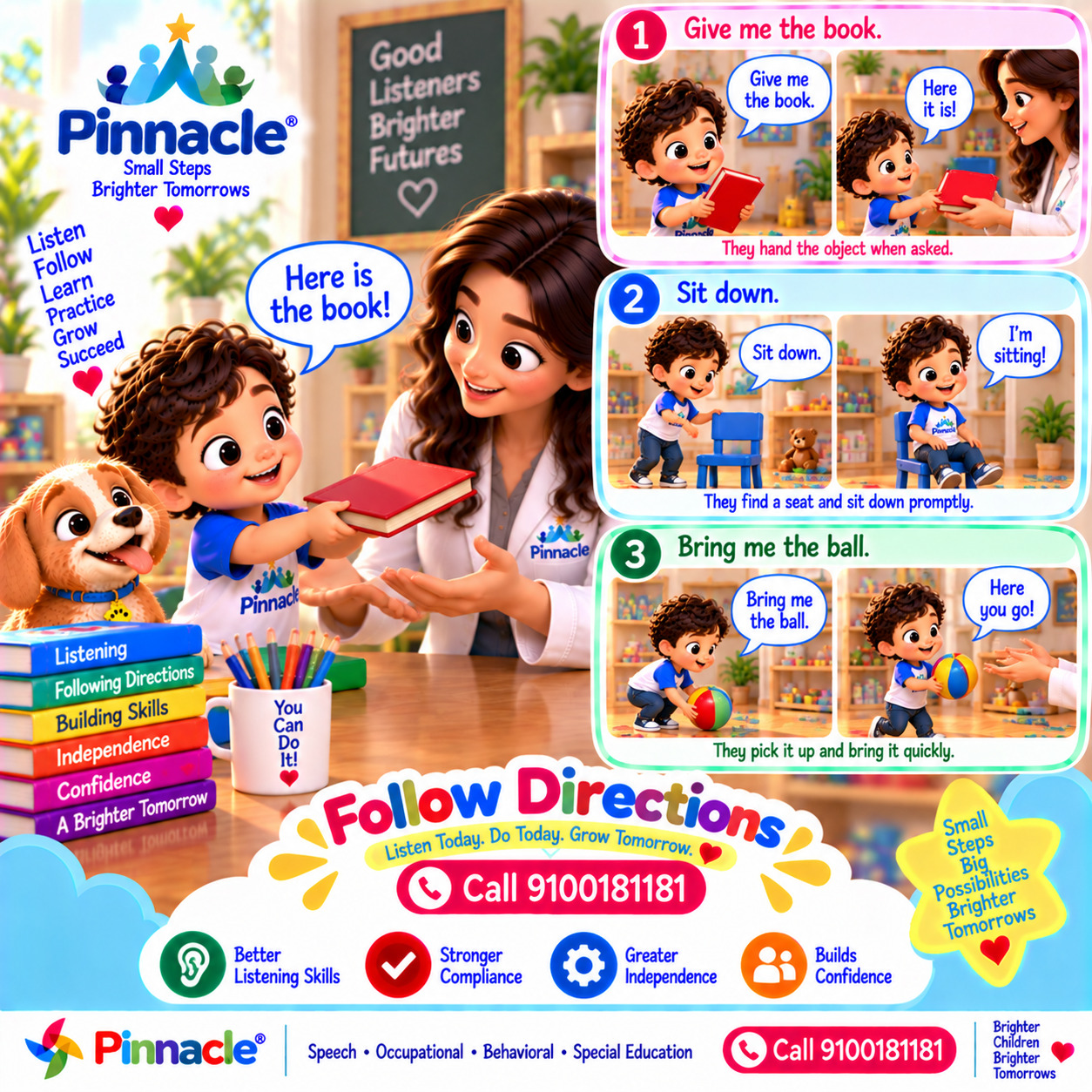
Can the child follow simple directions, such as 'Give me the toy'?
Topic: Follow Directions
Example 1
When you say, “Give me the book,” they hand it to you without hesitation.
Example 2
“Sit down” prompts them to find a seat promptly.
Example 3
“Bring me the ball” is followed quickly as they pick it up and deliver it.
Example illustrationQuestion illustration
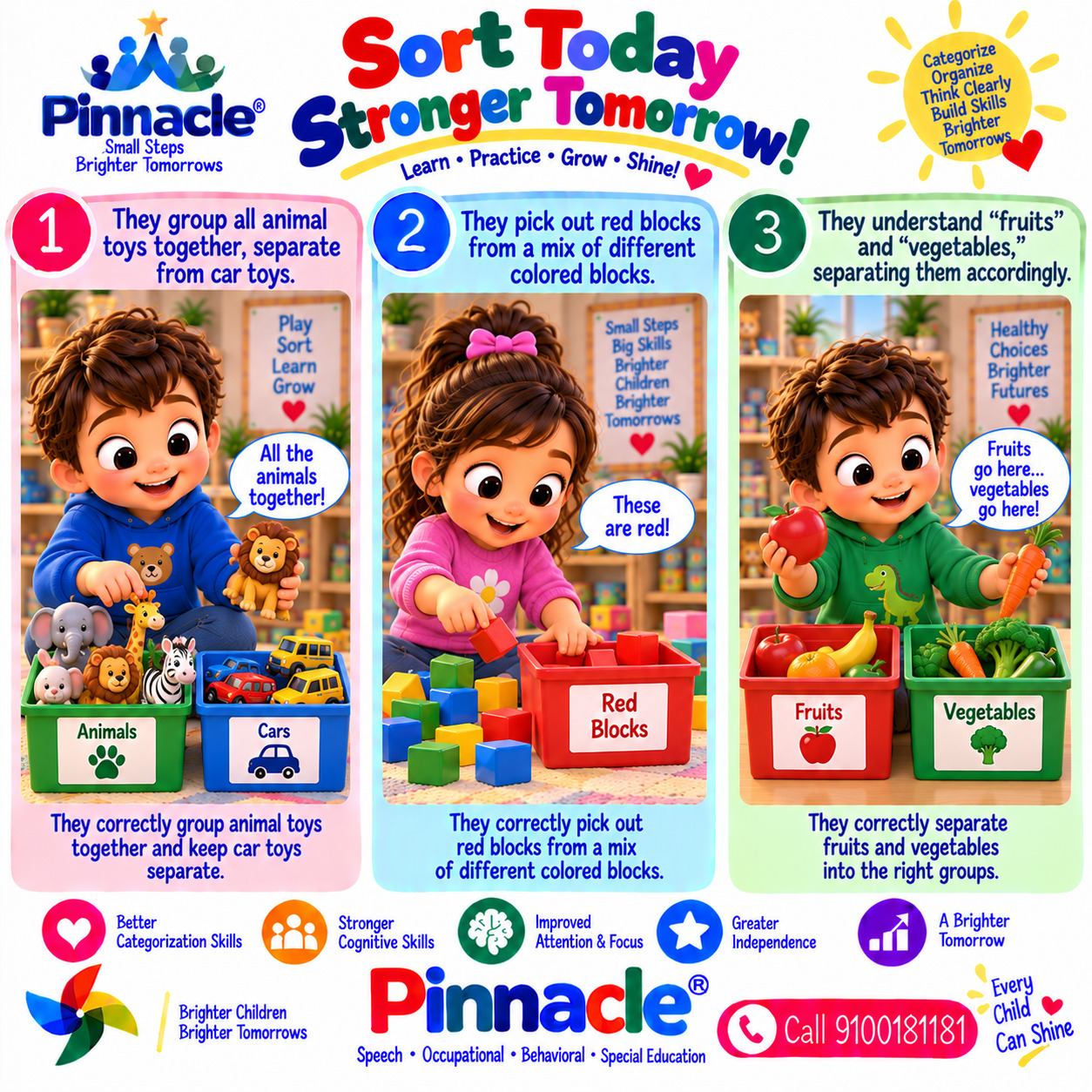
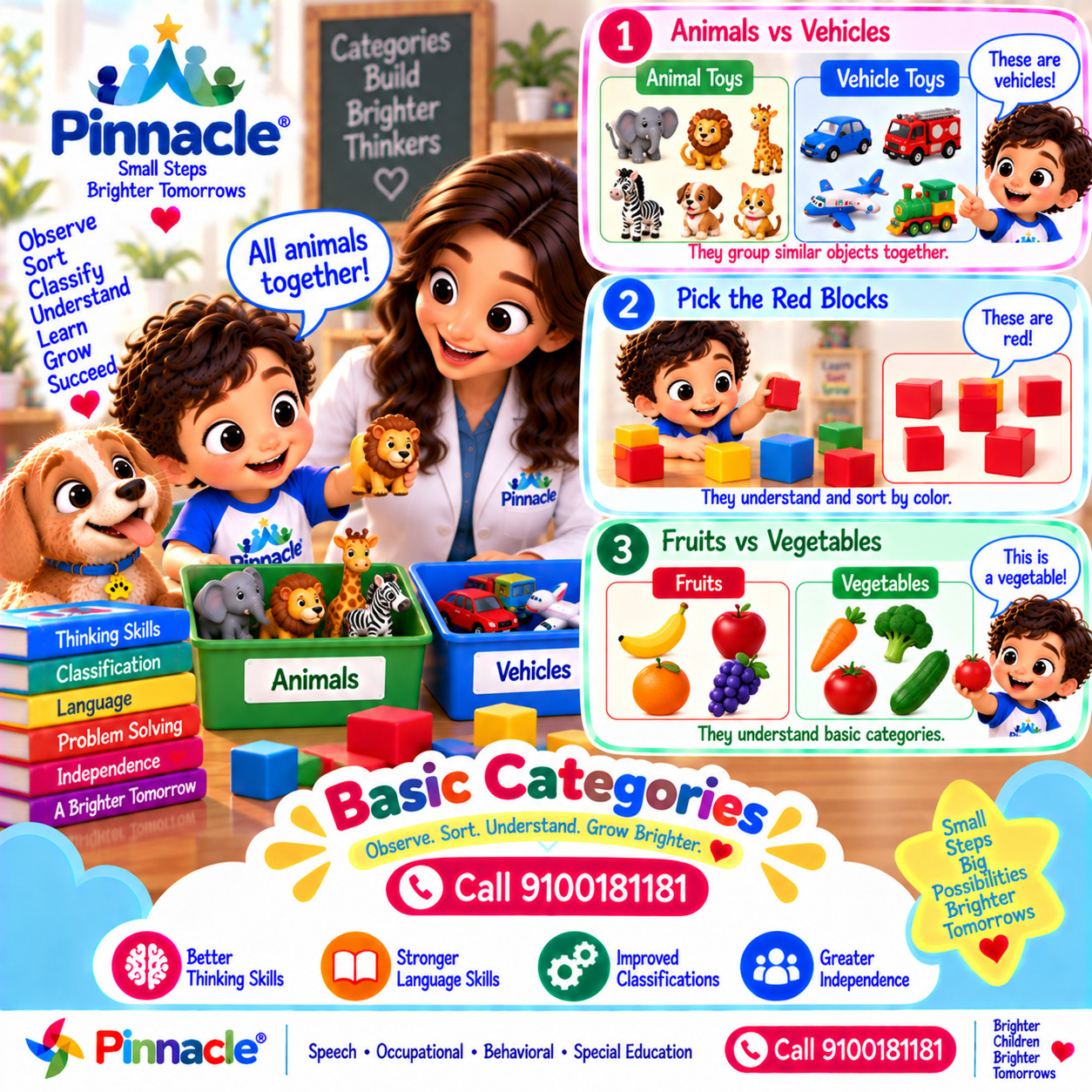
Does the child understand basic categories, such as animals or colors?
Topic: Basic Categories
Example 1
They group all animal toys together, separate from car toys.
Example 2
They pick out red blocks from a mix of different colored blocks.
Example 3
They understand “These are fruits, and these are vegetables,” separating them accordingly.
Example illustrationQuestion illustration
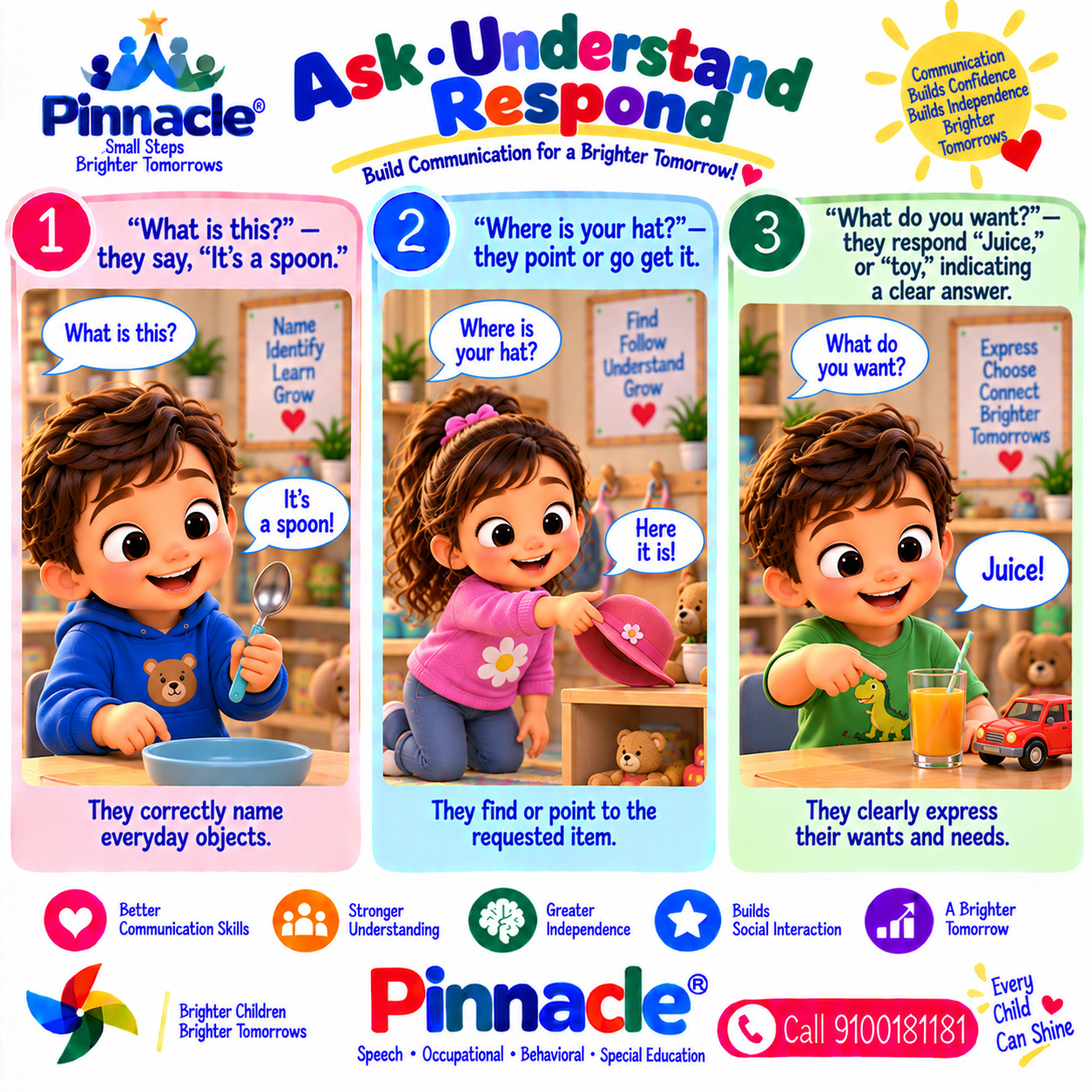
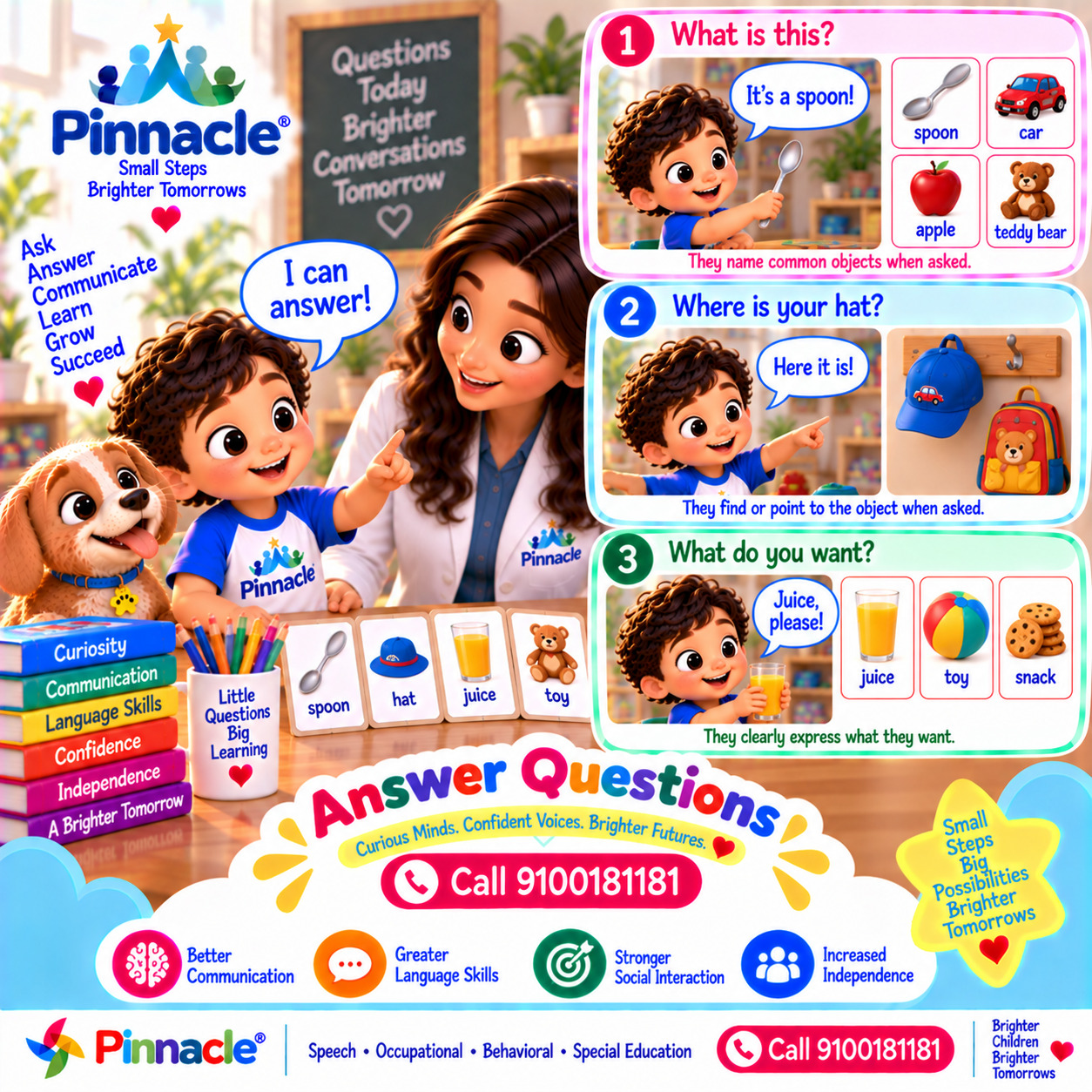
Can the child answer simple 'What' or 'Where' questions?
Topic: Answer Questions
Example 1
“What is this?” — they say “It’s a spoon.”
Example 2
“Where is your hat?” — they point or go get it.
Example 3
“What do you want?” — they respond “Juice,” or “toy,” indicating a clear answer.
Example illustrationQuestion illustration
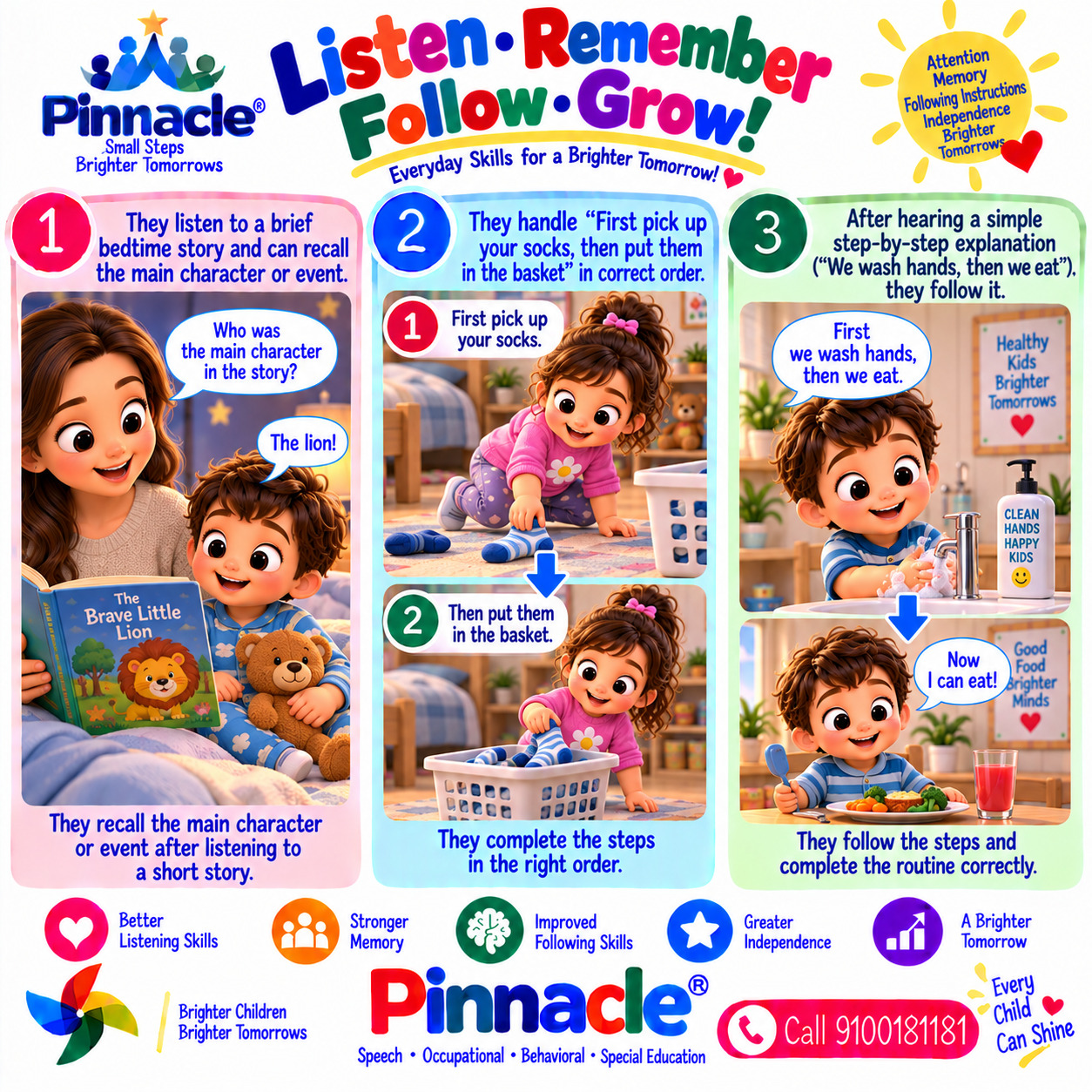
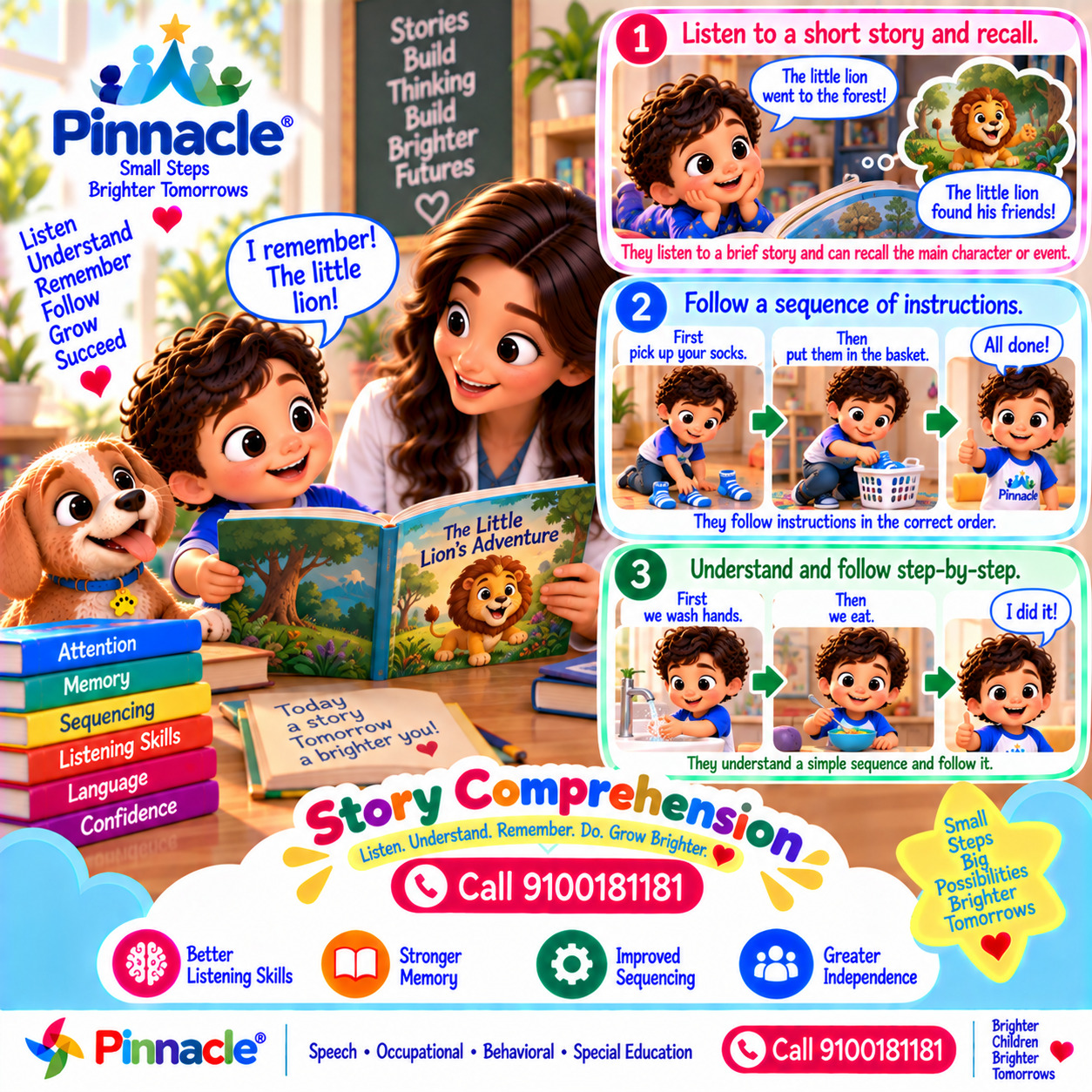
Is the child able to follow a short story or sequence of instructions?
Topic: Story Comprehension
Example 1
They listen to a brief bedtime story and can recall the main character or event.
Example 2
They handle “First pick up your socks, then put them in the basket” in correct order.
Example 3
After hearing a simple step-by-step explanation (“We wash hands, then we eat”), they follow it.
Example illustrationQuestion illustration
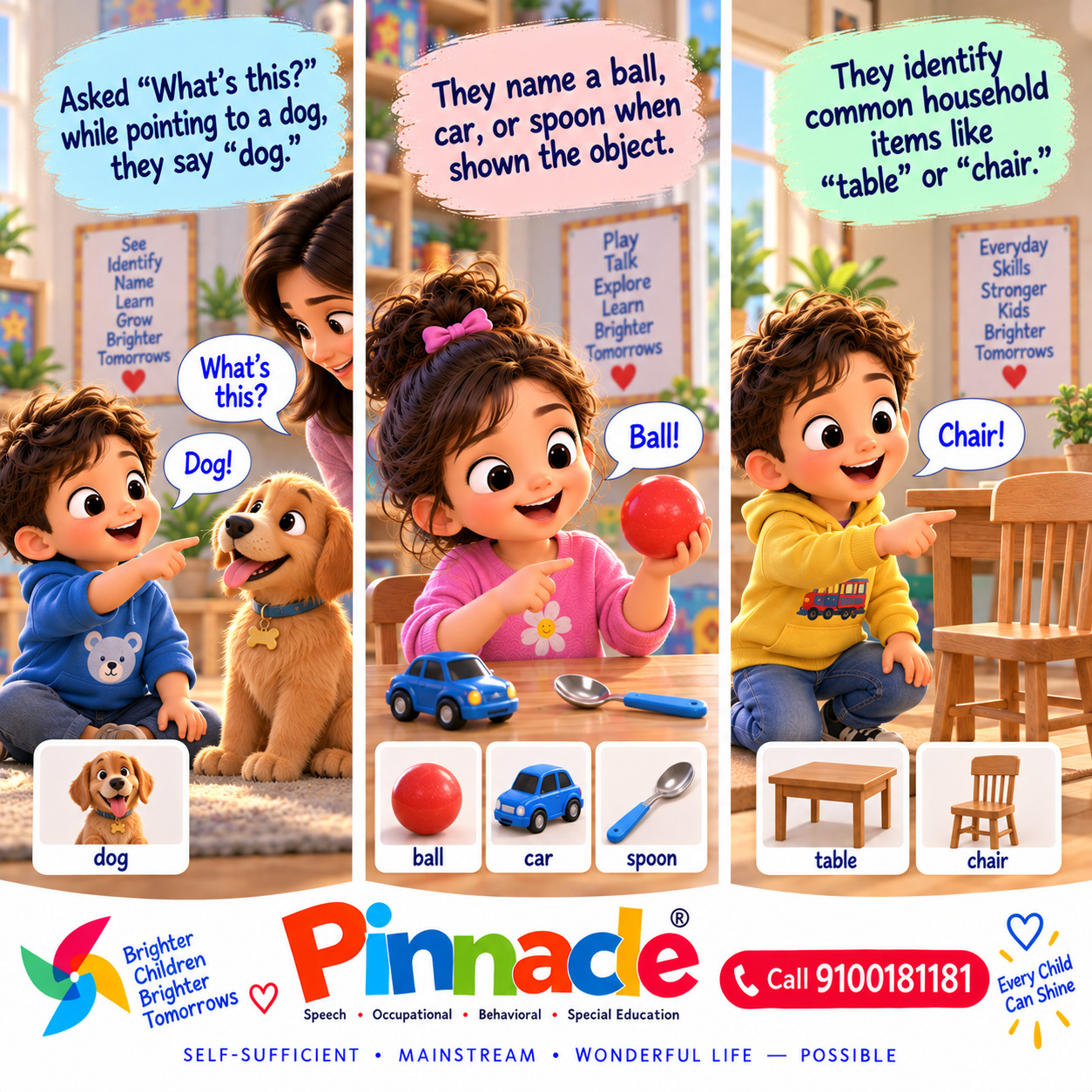
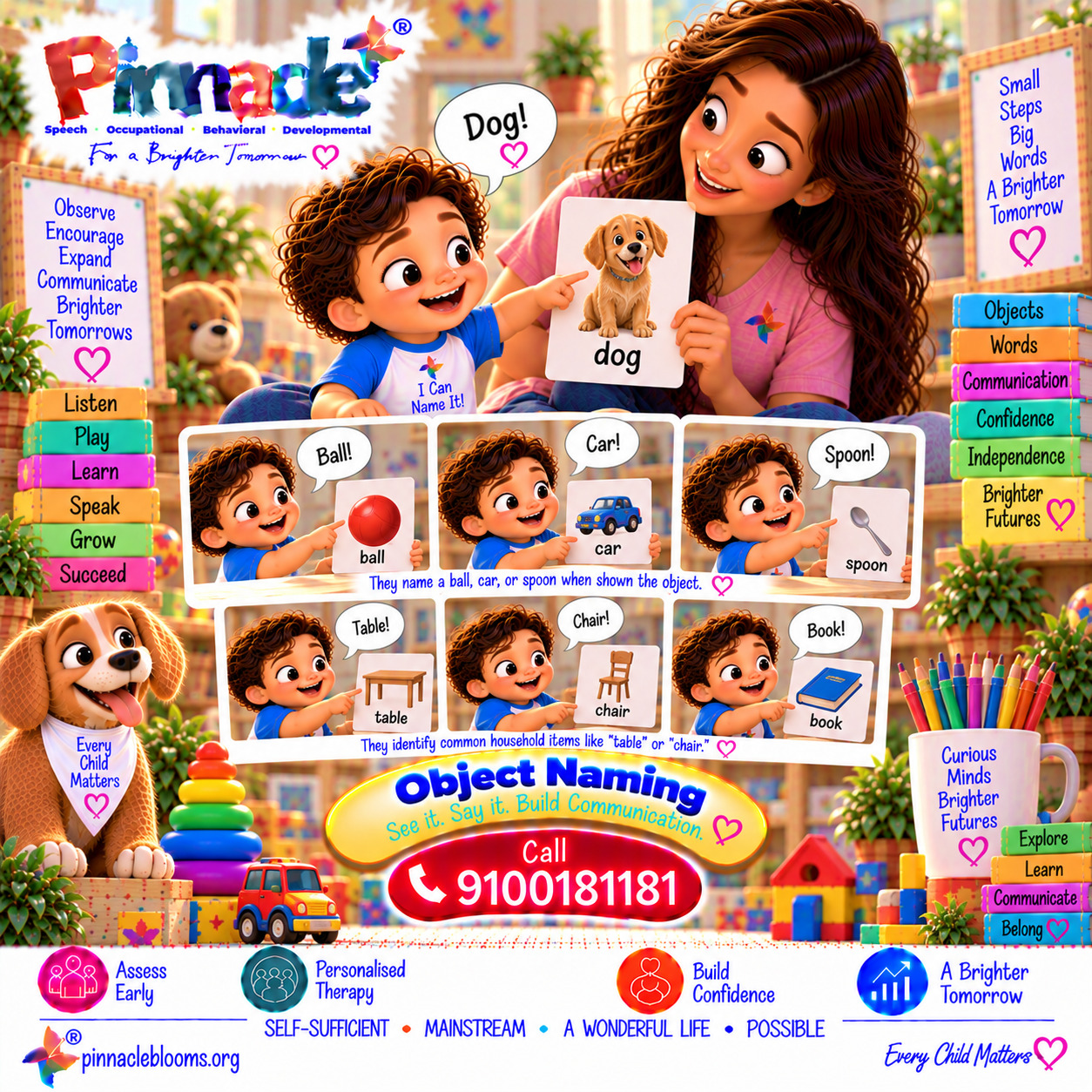
Can the child name familiar objects (e.g., toy, dog, book)?
Topic: Object Naming
Example 1
Asked “What’s this?” while pointing to a dog, they say “dog.”
Example 2
They name a ball, car, or spoon when shown the object.
Example 3
They identify common household items like “table” or “chair.”
Example illustrationQuestion illustration
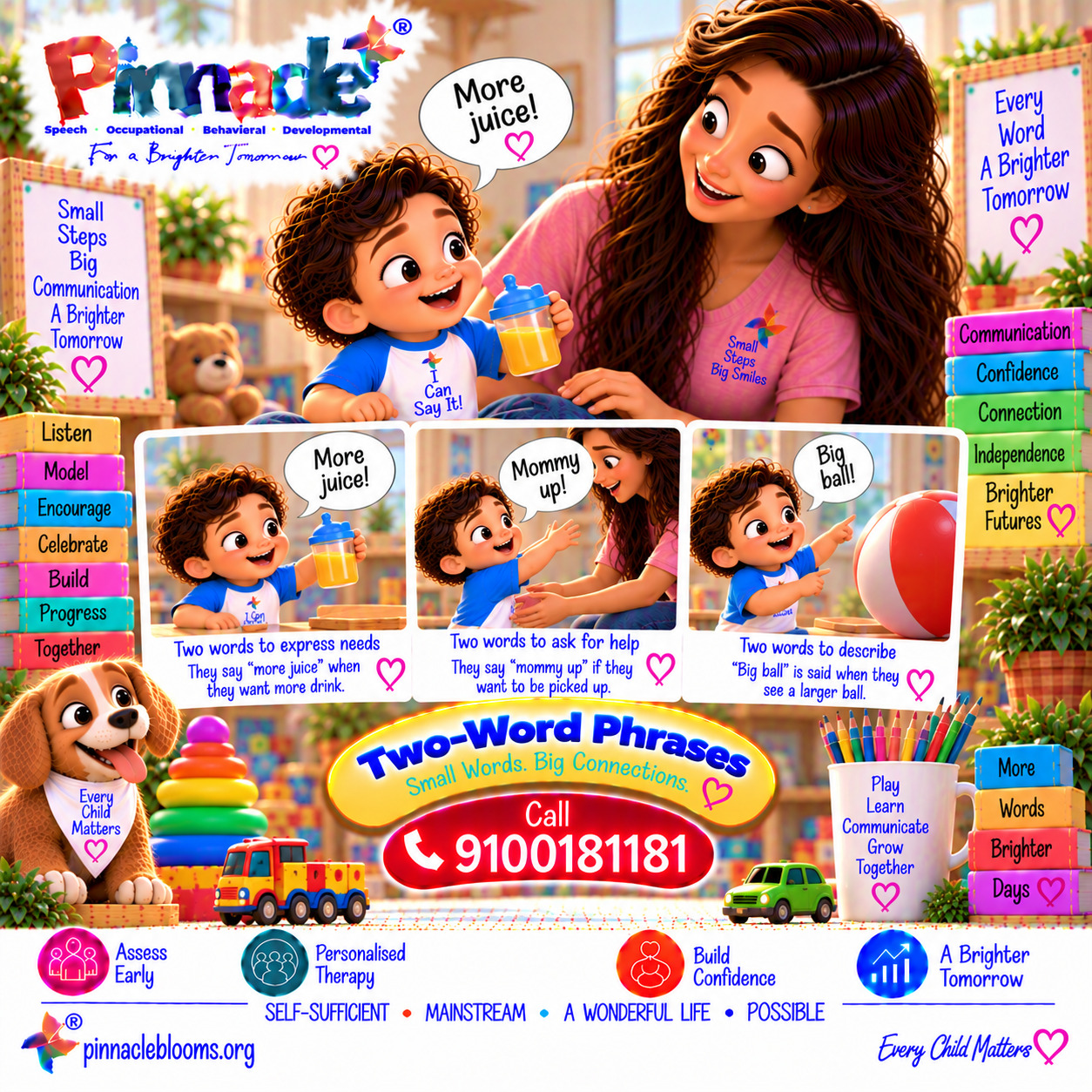
Does the child use two-word phrases, like 'more juice'?
Topic: Two-Word Phrases
Example 1
They say “more juice” when they want more drink.
Example 2
They say “mommy up” if they want to be picked up.
Example 3
“Big ball” is said when they see a larger ball.
Example illustrationQuestion illustration
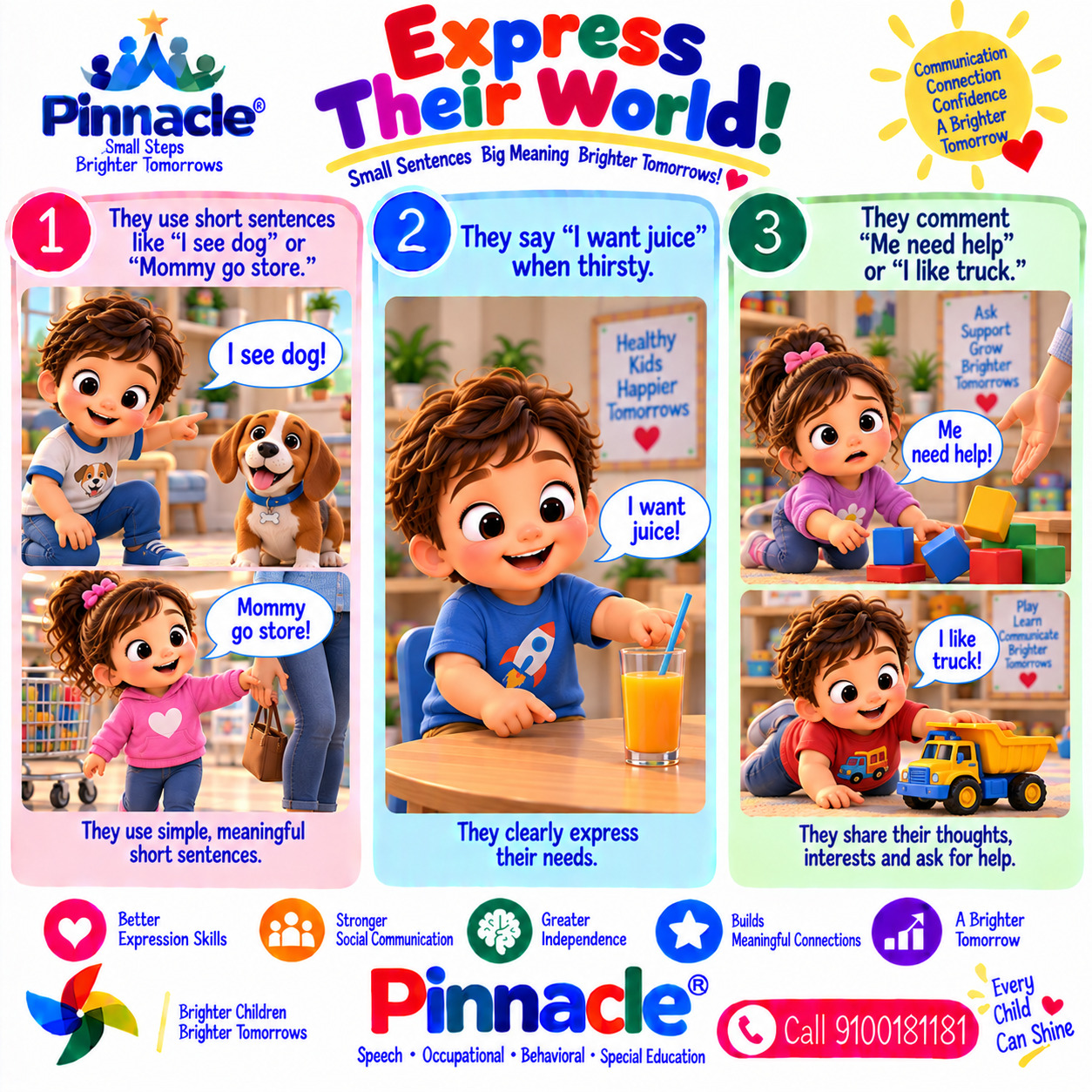
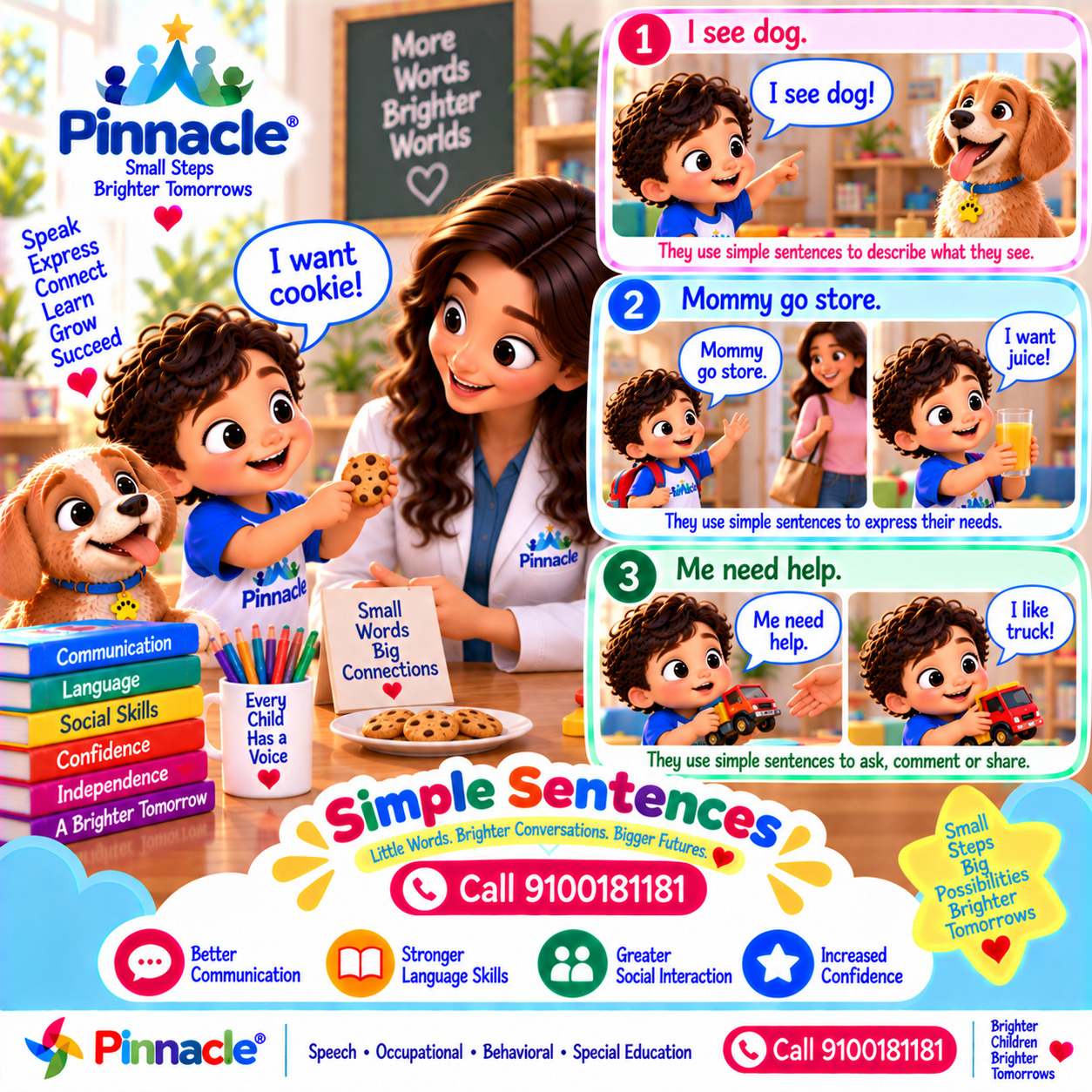
Can the child form simple sentences, like 'I want cookie'?
Topic: Simple Sentences
Example 1
“I see dog” or “Mommy go store” are typical short sentences they use.
Example 2
They say “I want juice” when thirsty.
Example 3
They comment, “Me need help” or “I like truck.”
Example illustrationQuestion illustration
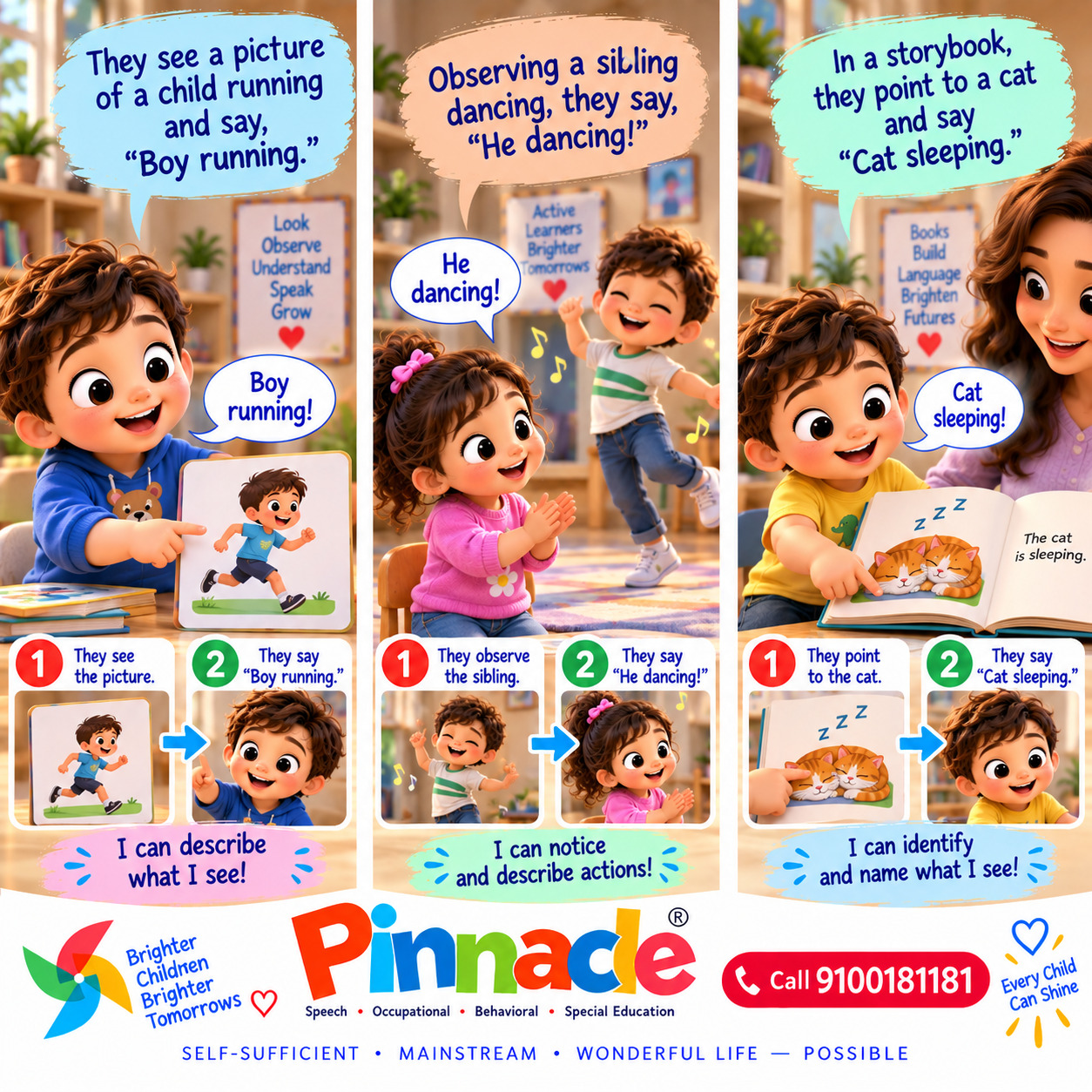
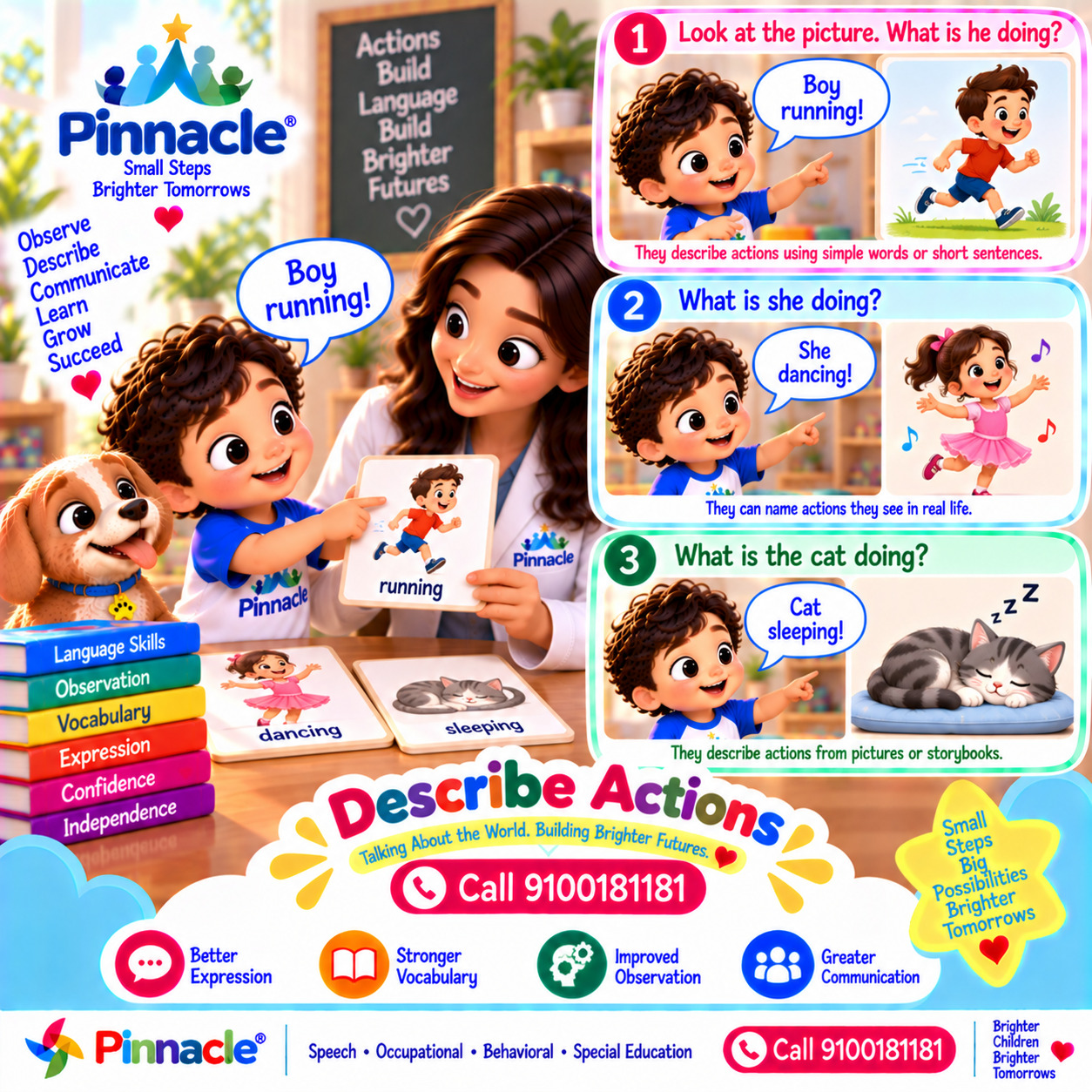
Is the child able to describe actions, like saying 'boy running'?
Topic: Describe Actions
Example 1
They see a picture of a child running and say, “Boy running.”
Example 2
Observing a sibling dancing, they say, “He dancing!”
Example 3
In a storybook, they point to a cat and say “Cat sleeping.”
Example illustrationQuestion illustration
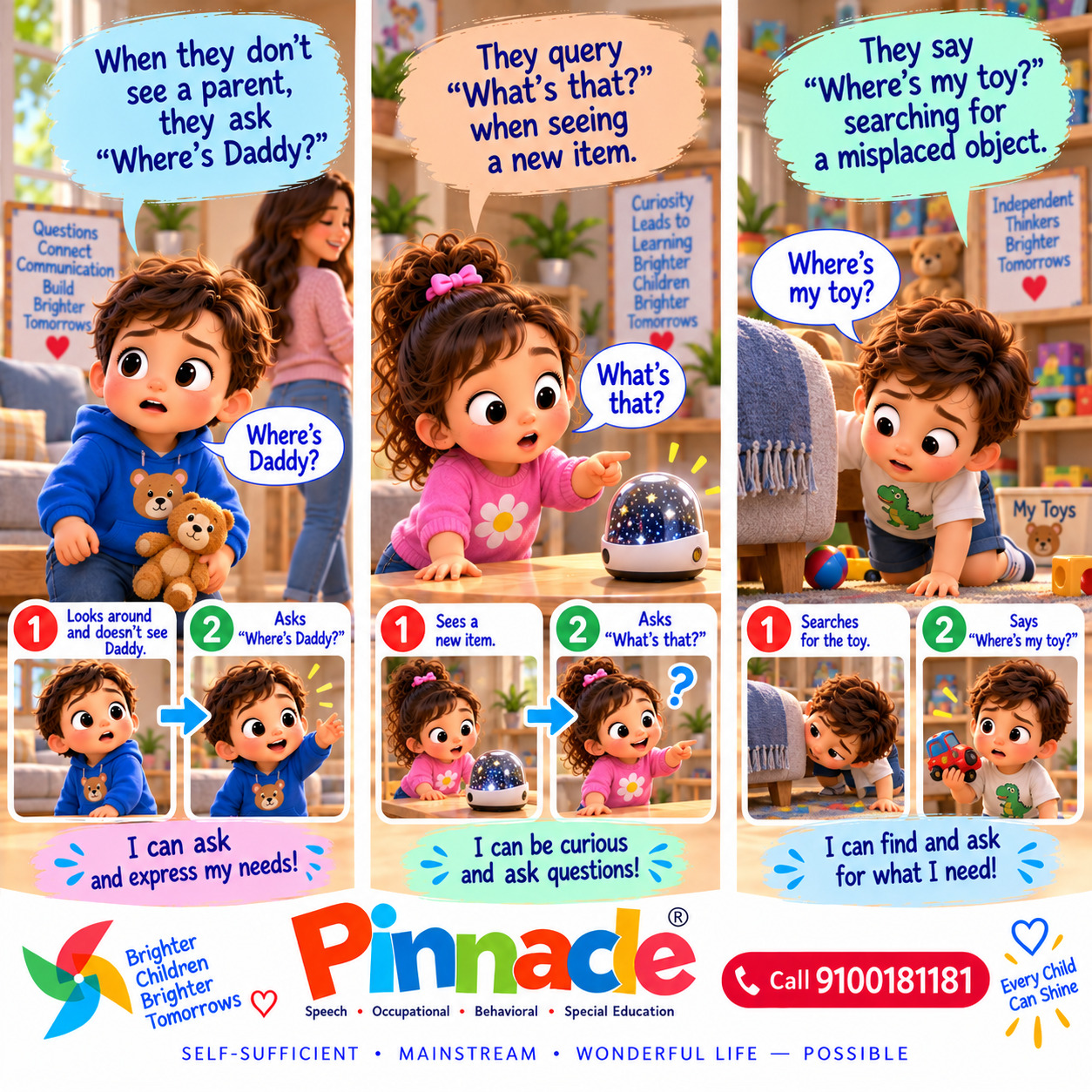
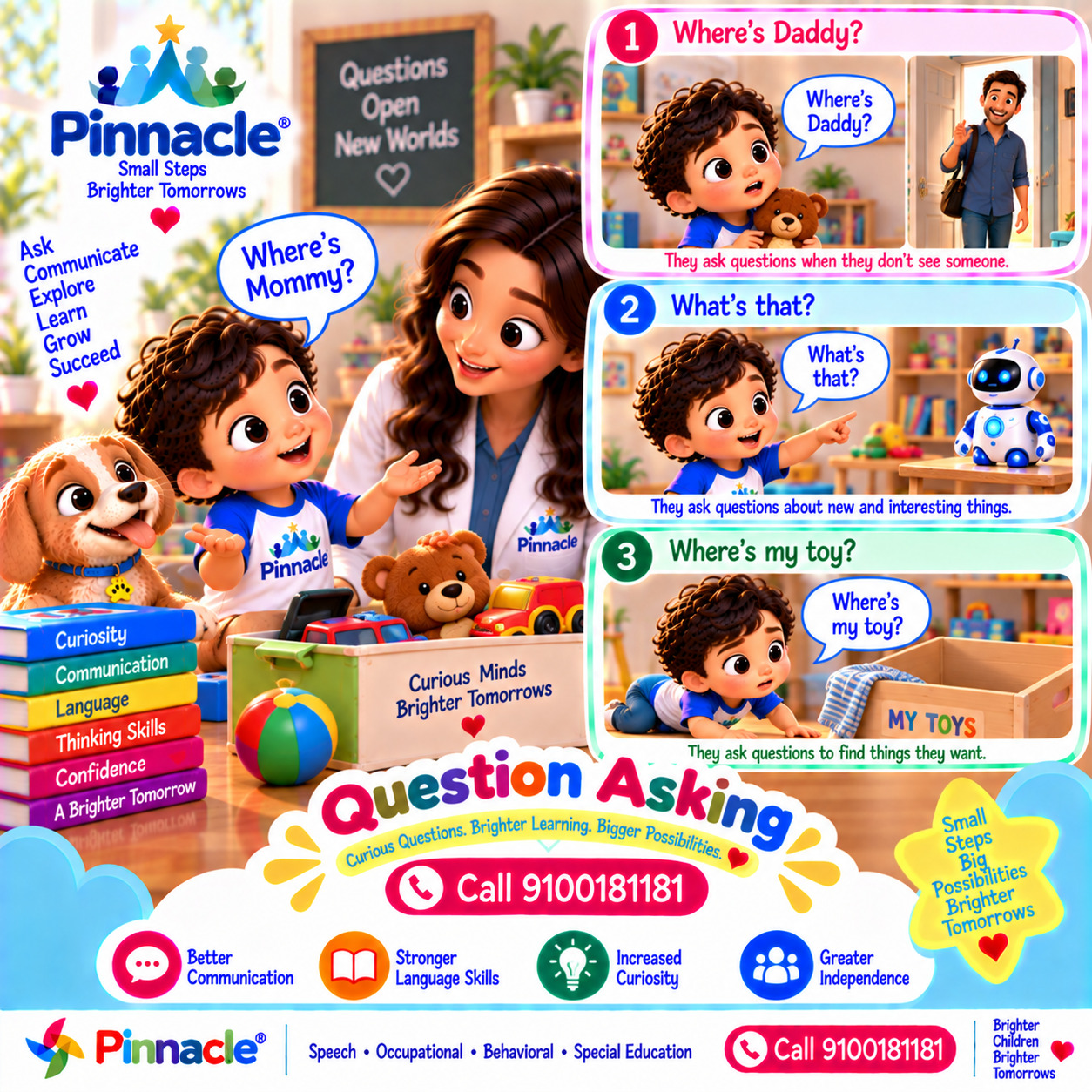
Does the child ask questions like 'Wheres mommy?'?
Topic: Question Asking
Example 1
When they don’t see a parent, they ask “Where’s Daddy?”
Example 2
They query, “What’s that?” when seeing a new item.
Example 3
They say “Where’s my toy?” searching for a misplaced object.
Example illustrationQuestion illustration
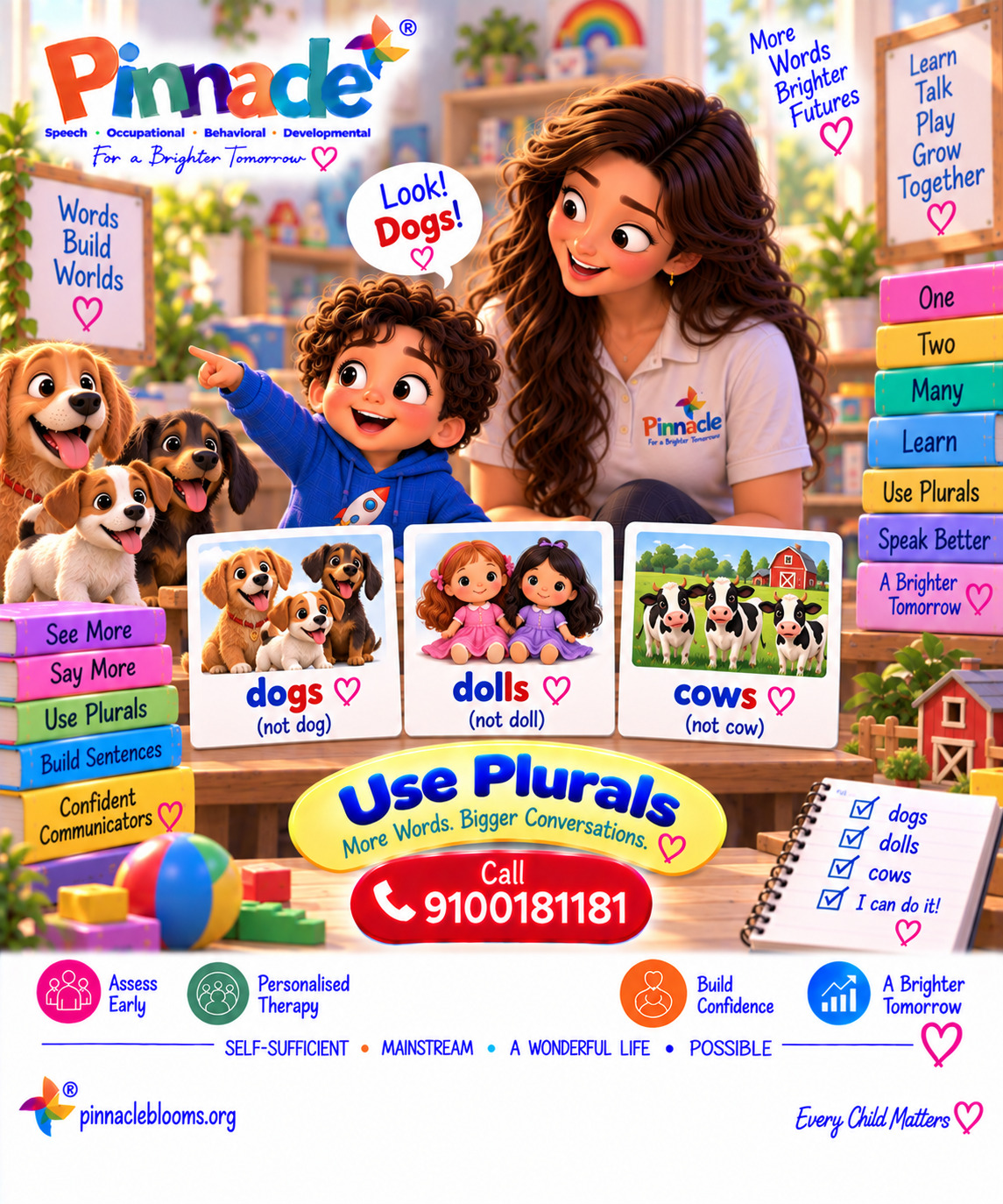
Does the child use plurals, like 'dogs'?
Topic: Use Plurals
Example 1
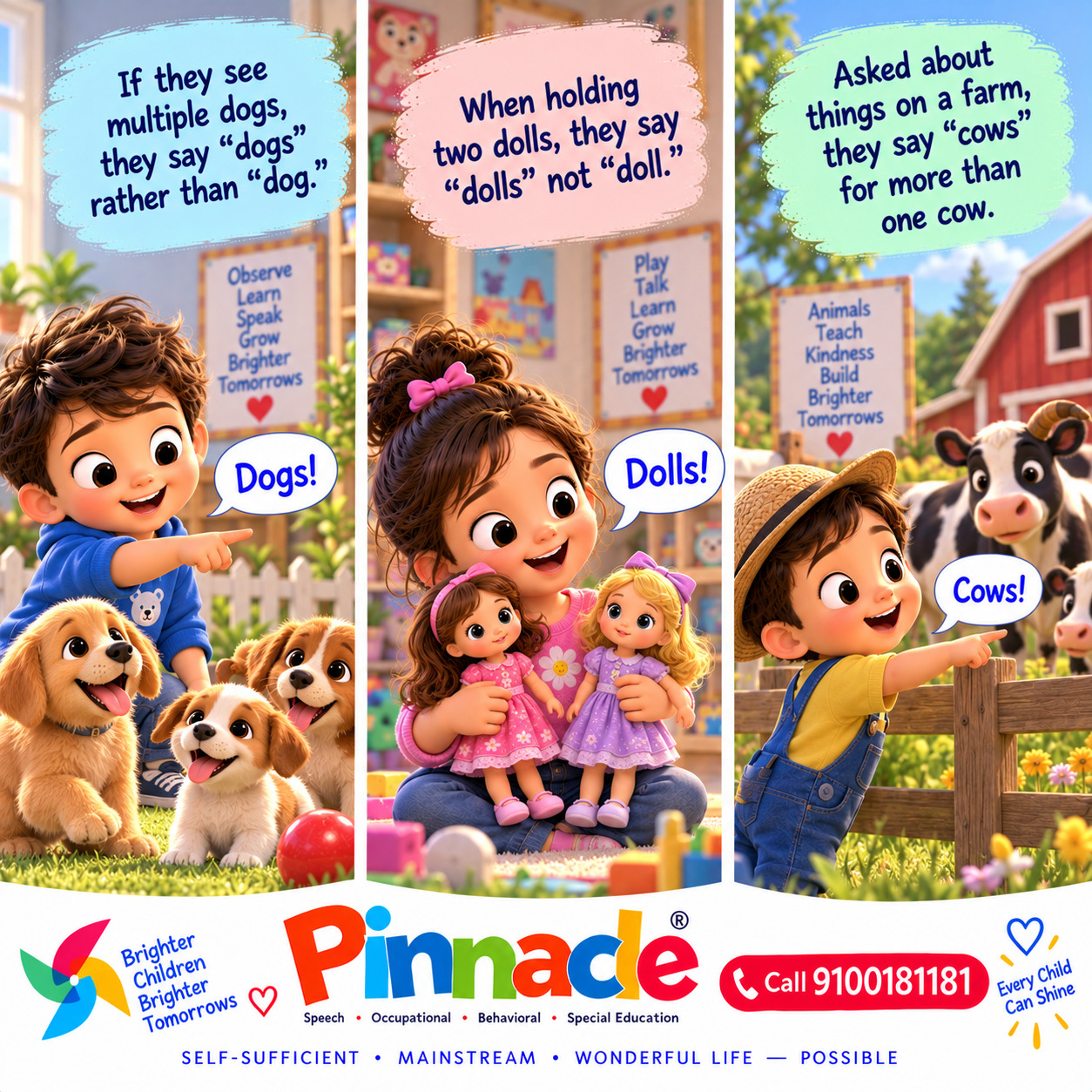
If they see multiple dogs, they say “dogs” rather than “dog.”
Example 2
When holding two dolls, they say “dolls” not “doll.”
Example 3
Asked about things on a farm, they say “cows” for more than one cow.
Example illustrationQuestion illustration
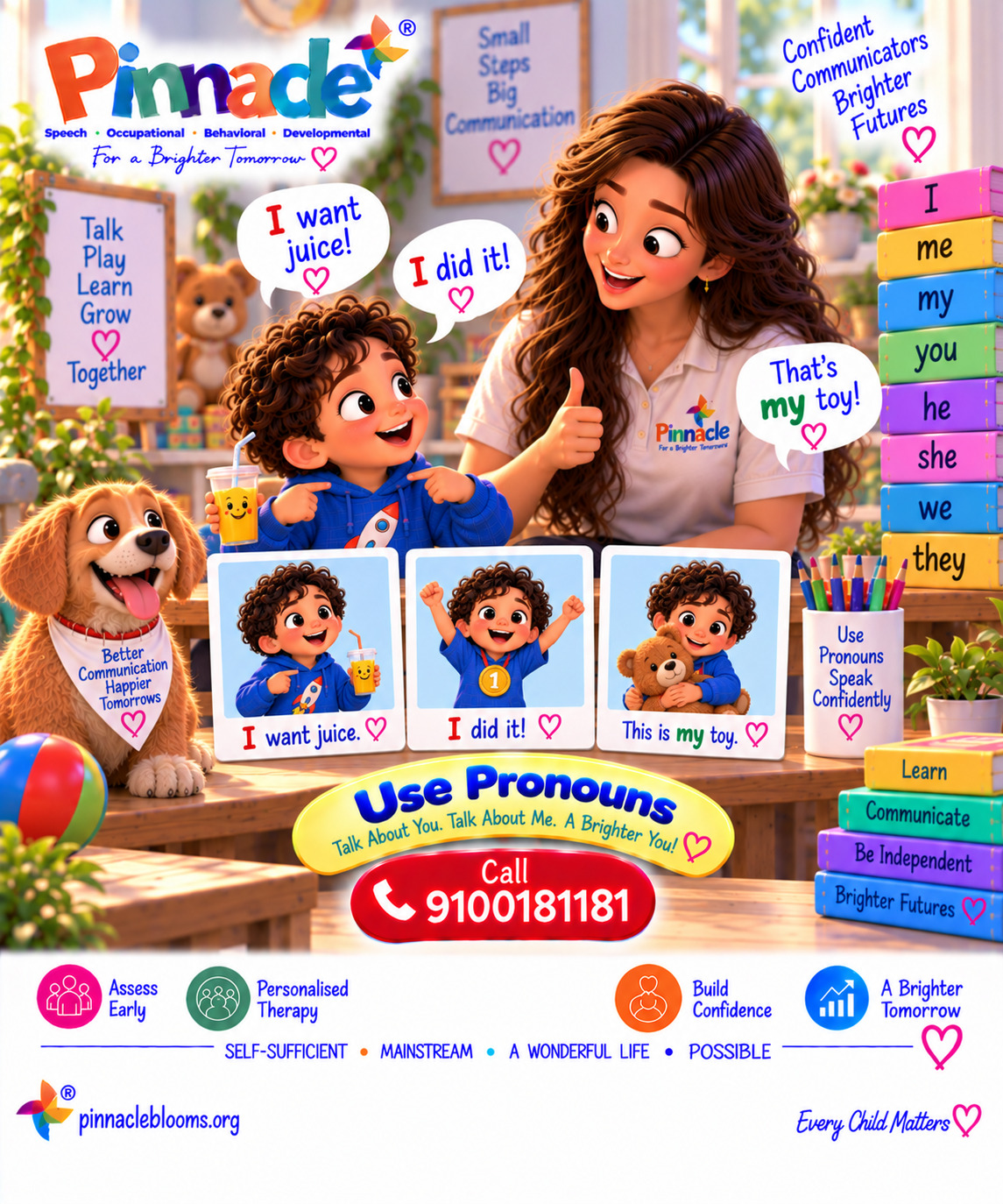
Does the child use pronouns correctly, like 'I', 'me'?
Topic: Use Pronouns
Example 1
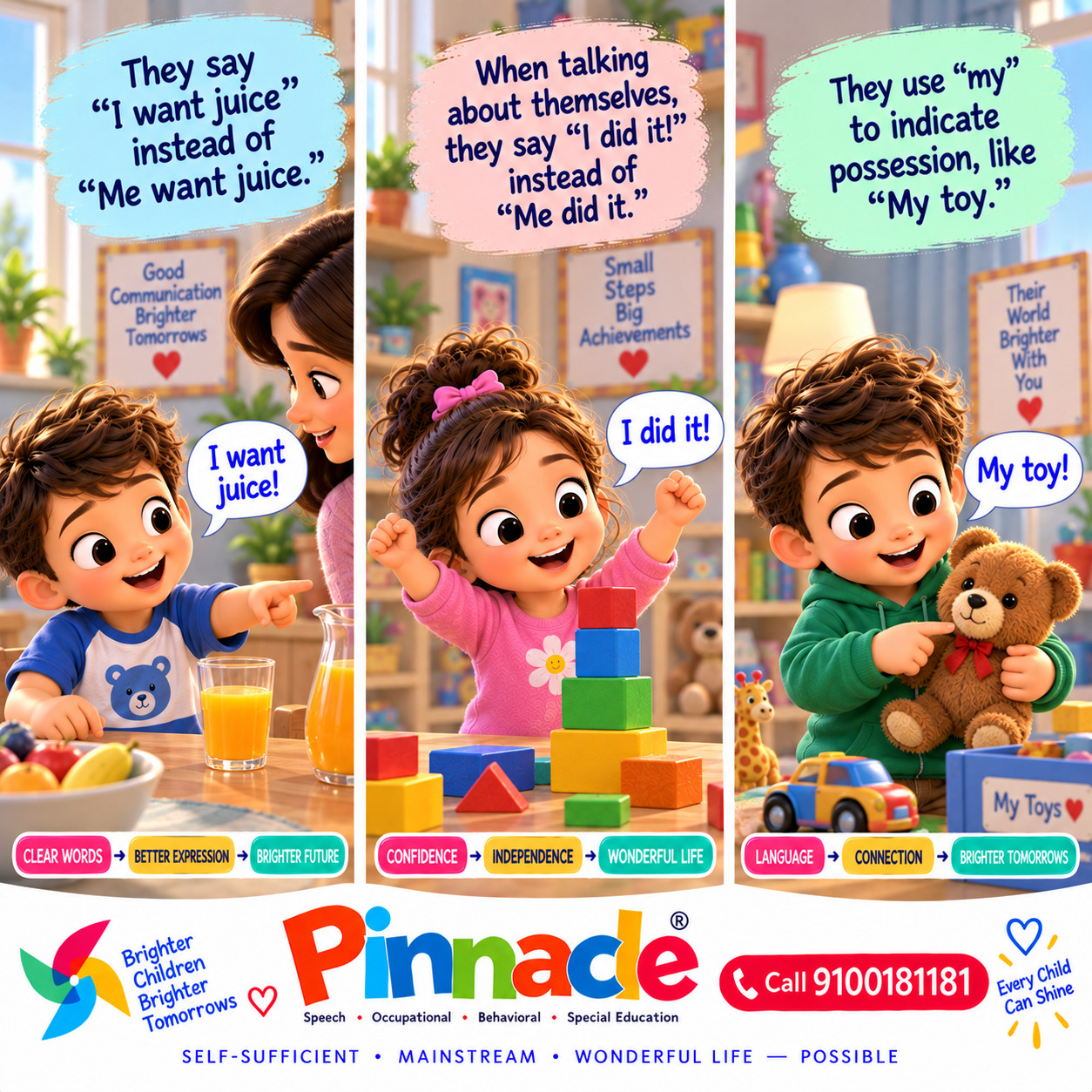
They say “I want juice” instead of “Me want juice.”
Example 2
When talking about themselves, they say “I did it!” instead of “Me did it.”
Example 3
They use “my” to indicate possession, like “My toy.”
Example illustrationQuestion illustration
Can the child use past tense verbs, like 'played'?
Topic: Past Tense Verbs
Example 1
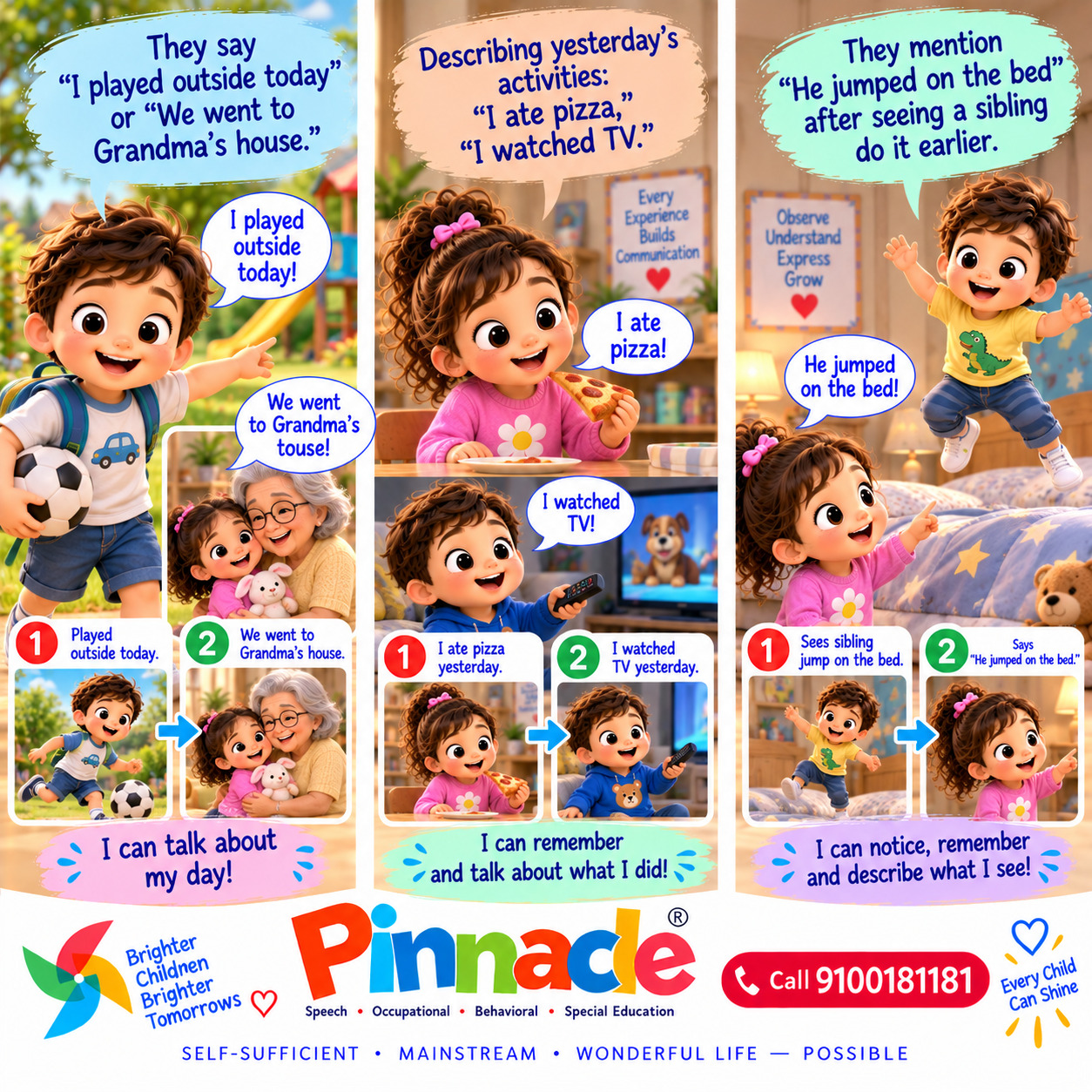
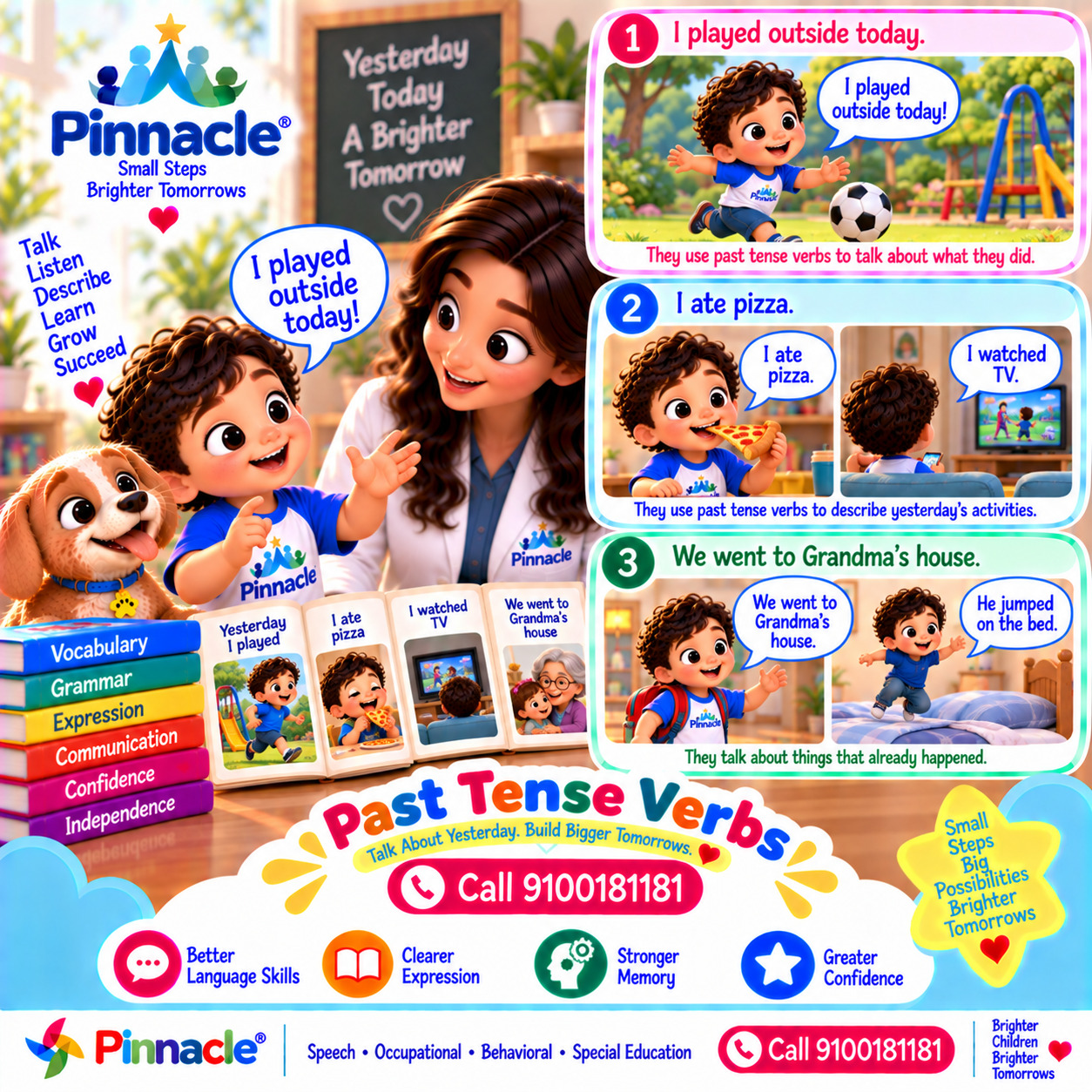
They say “I played outside today” or “We went to Grandma’s house.”
Example 2
Describing yesterday’s activities: “I ate pizza,” “I watched TV.”
Example 3
They mention “He jumped on the bed” after seeing a sibling do it earlier.
Example illustrationQuestion illustration
Does the child use adjectives, like 'big', 'small'?
Topic: Use Adjectives
Example 1
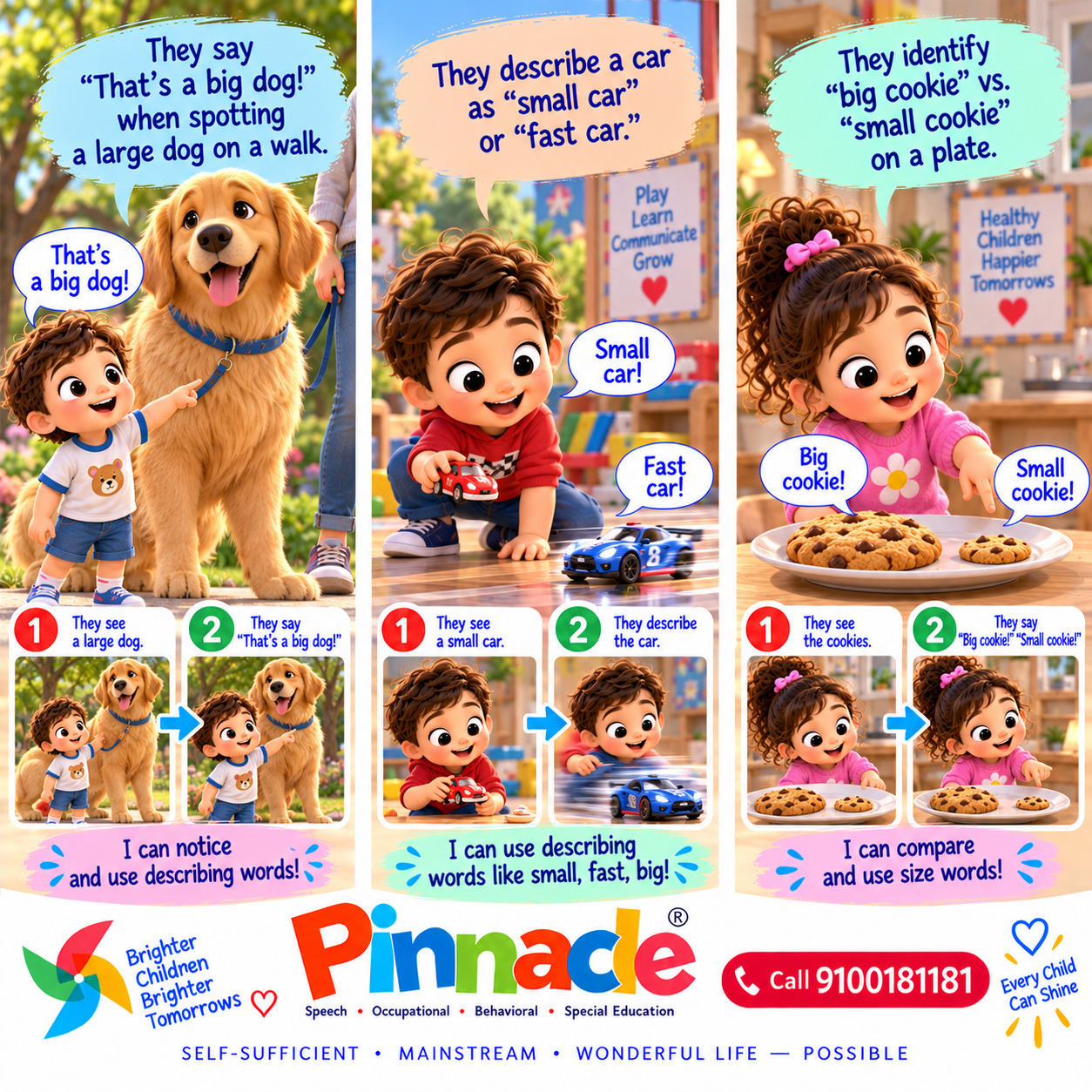
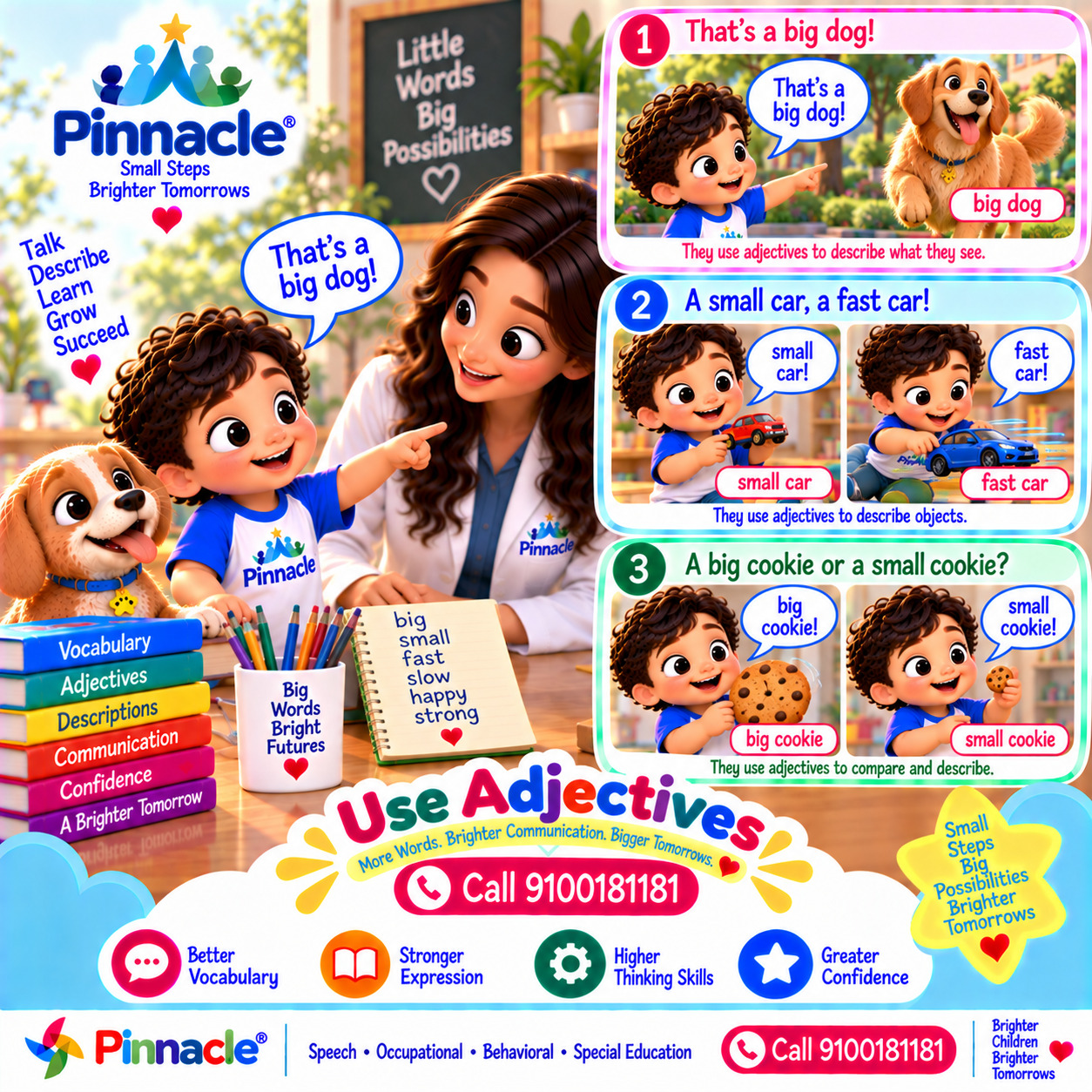
They say “That’s a big dog!” when spotting a large dog on a walk.
Example 2
They describe a car as “small car” or “fast car.”
Example 3
They identify “big cookie” vs. “small cookie” on a plate.
Example illustrationQuestion illustration
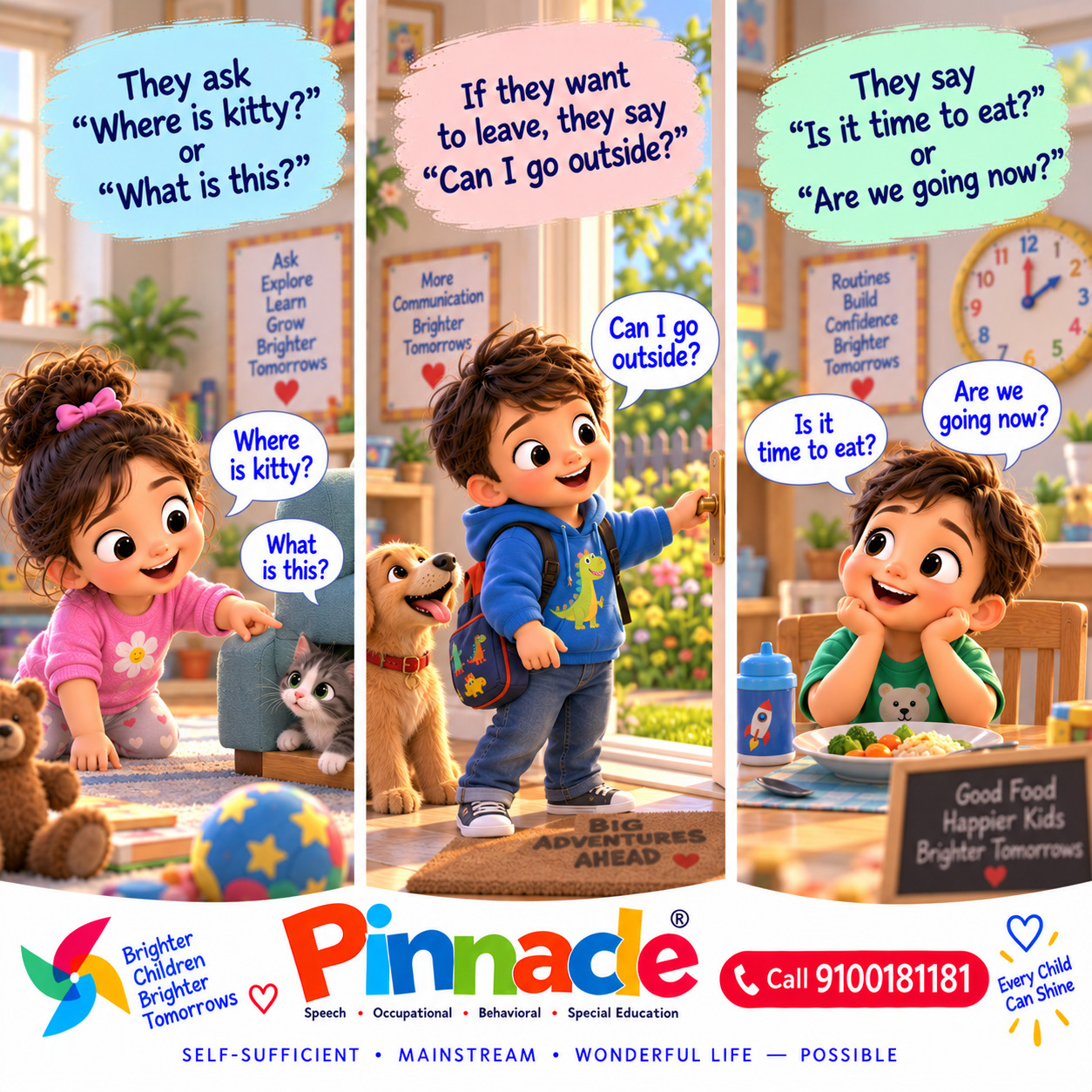
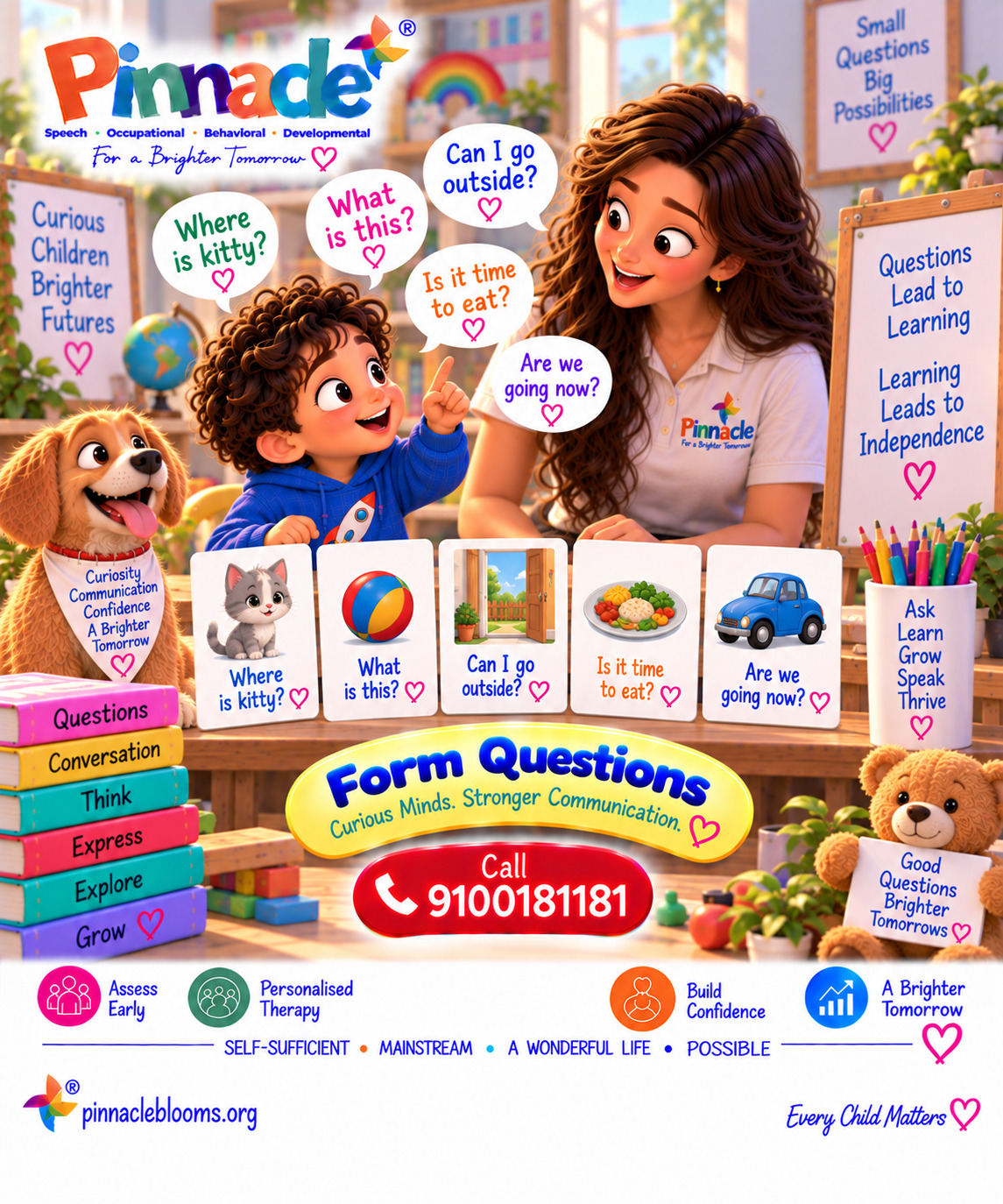
Can the child form questions, like 'Can I go?'?
Topic: Form Questions
Example 1
They ask “Where is kitty?” or “What is this?”
Example 2
If they want to leave, they say “Can I go outside?”
Example 3
They say “Is it time to eat?” or “Are we going now?”
Example illustrationQuestion illustration
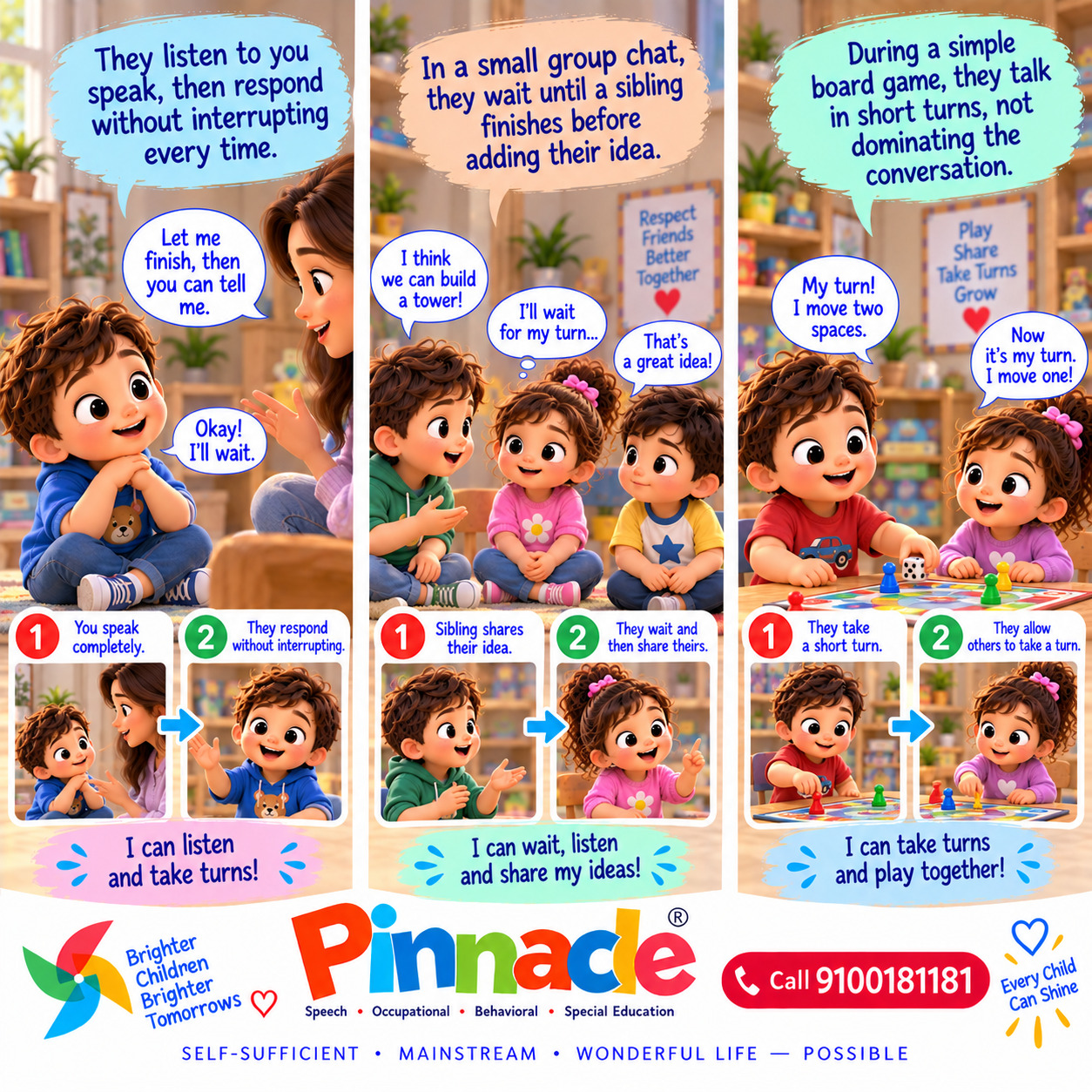
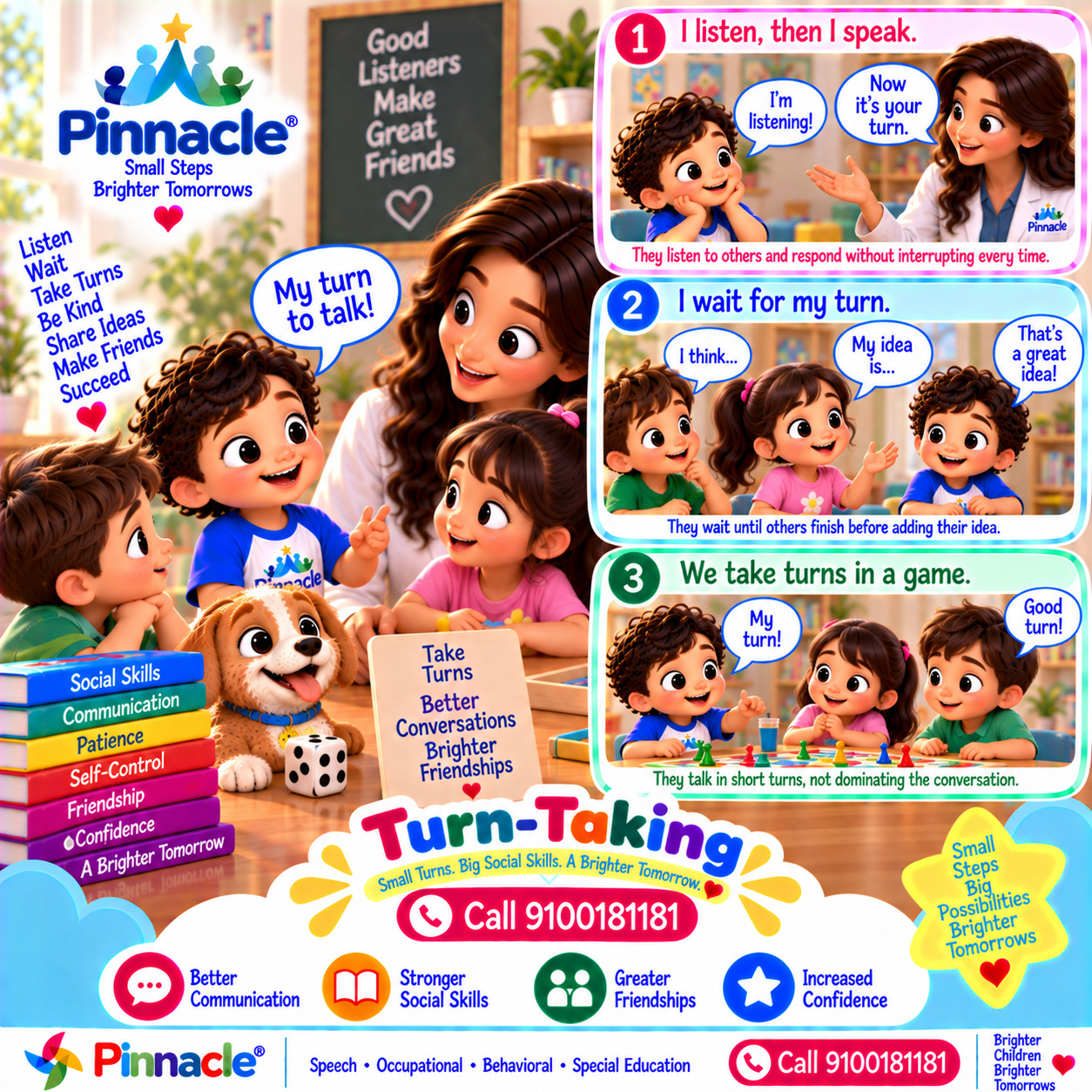
Does the child take turns when talking with others?
Topic: Turn-Taking
Example 1
They listen to you speak, then respond without interrupting every time.
Example 2
In a small group chat, they wait until a sibling finishes before adding their idea.
Example 3
During a simple board game, they talk in short turns, not dominating the conversation.
Example illustrationQuestion illustration
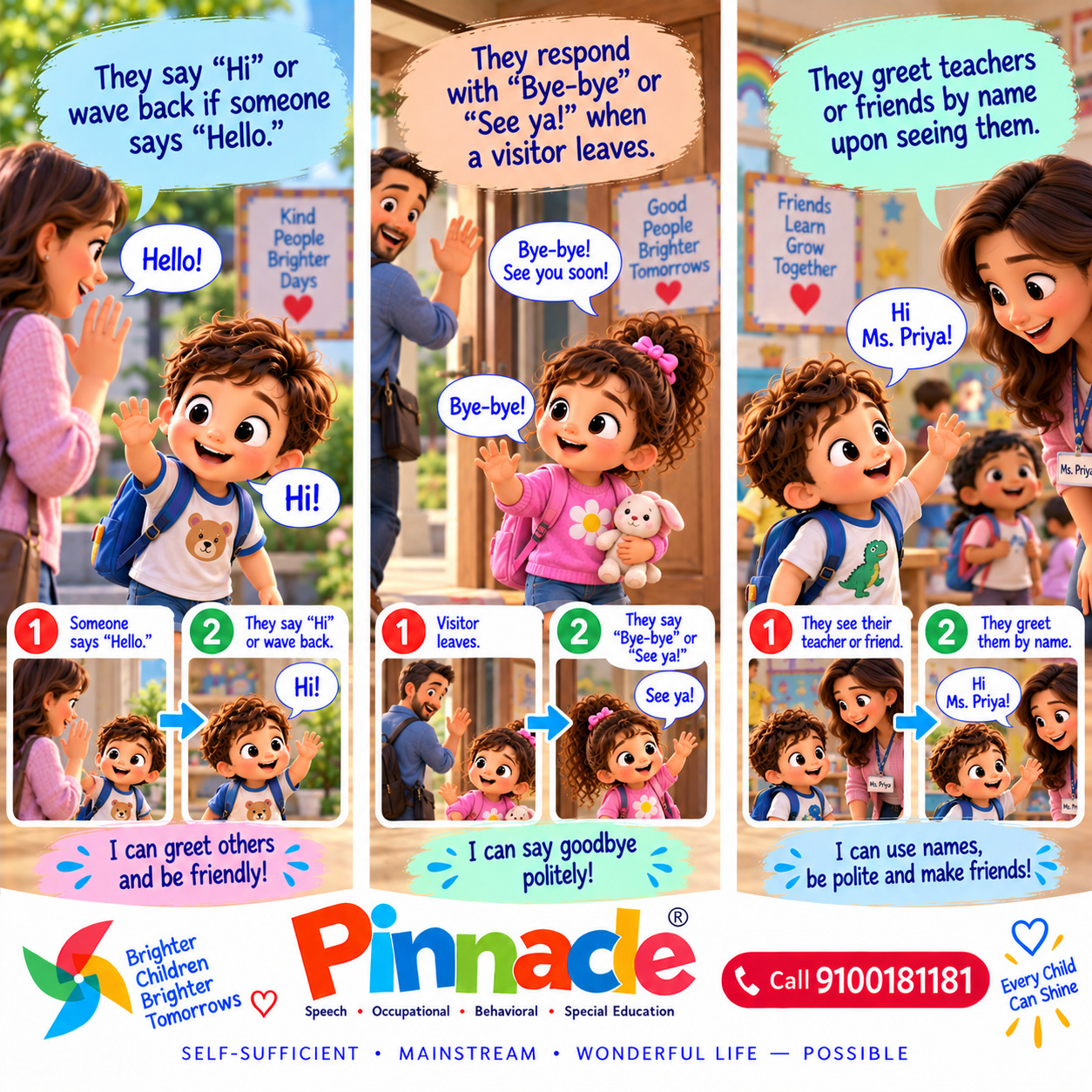
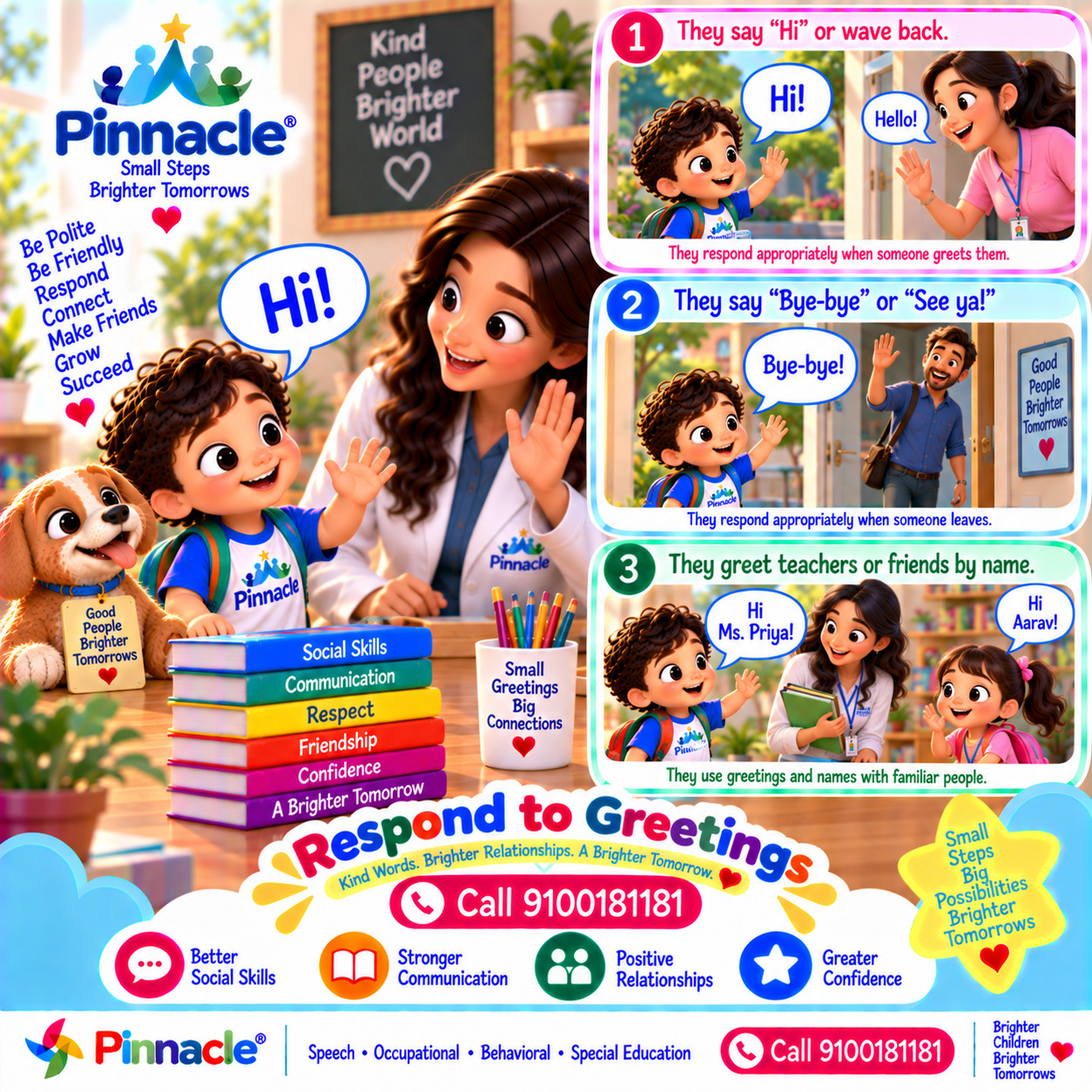
Does the child respond appropriately to greetings or farewells?
Topic: Respond to Greetings
Example 1
They say “Hi” or wave back if someone says “Hello.”
Example 2
They respond with “Bye-bye” or “See ya!” when a visitor leaves.
Example 3
They greet teachers or friends by name upon seeing them.
Example illustrationQuestion illustration
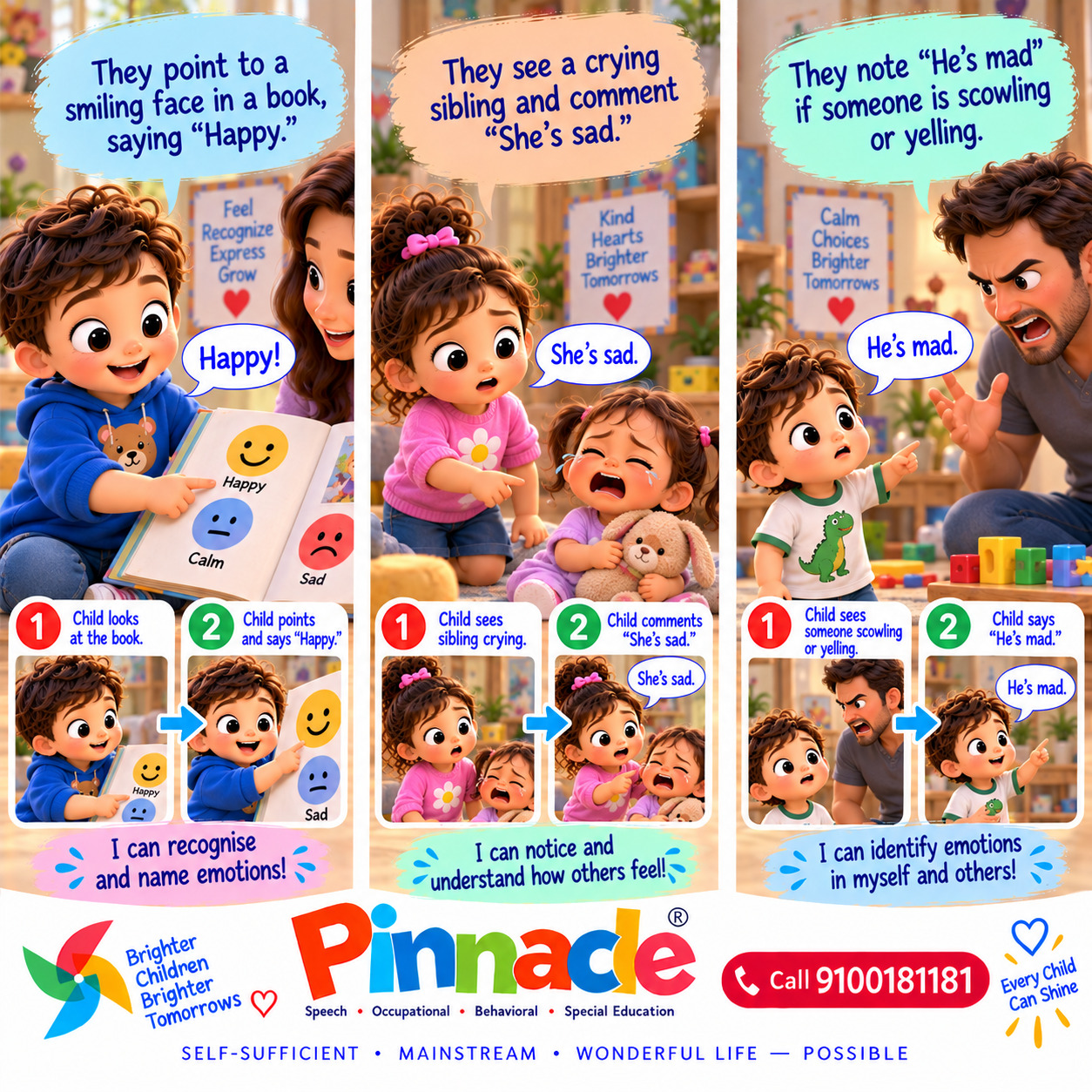
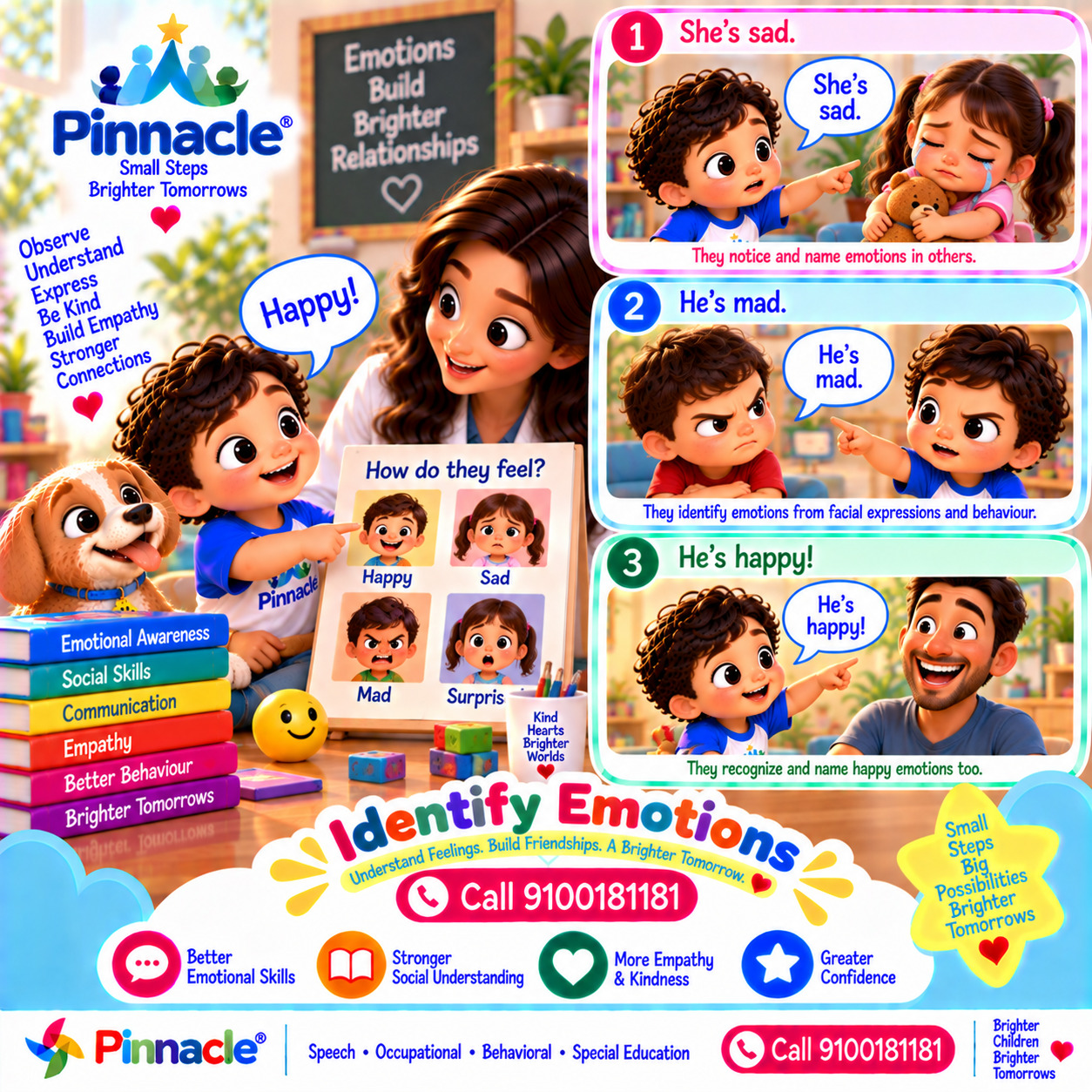
Can the child identify emotions in others, like 'happy' or 'sad'?
Topic: Identify Emotions
Example 1
They point to a smiling face in a book, saying “Happy.”
Example 2
They see a crying sibling and comment “She’s sad.”
Example 3
They note “He’s mad” if someone is scowling or yelling.
Example illustrationQuestion illustration
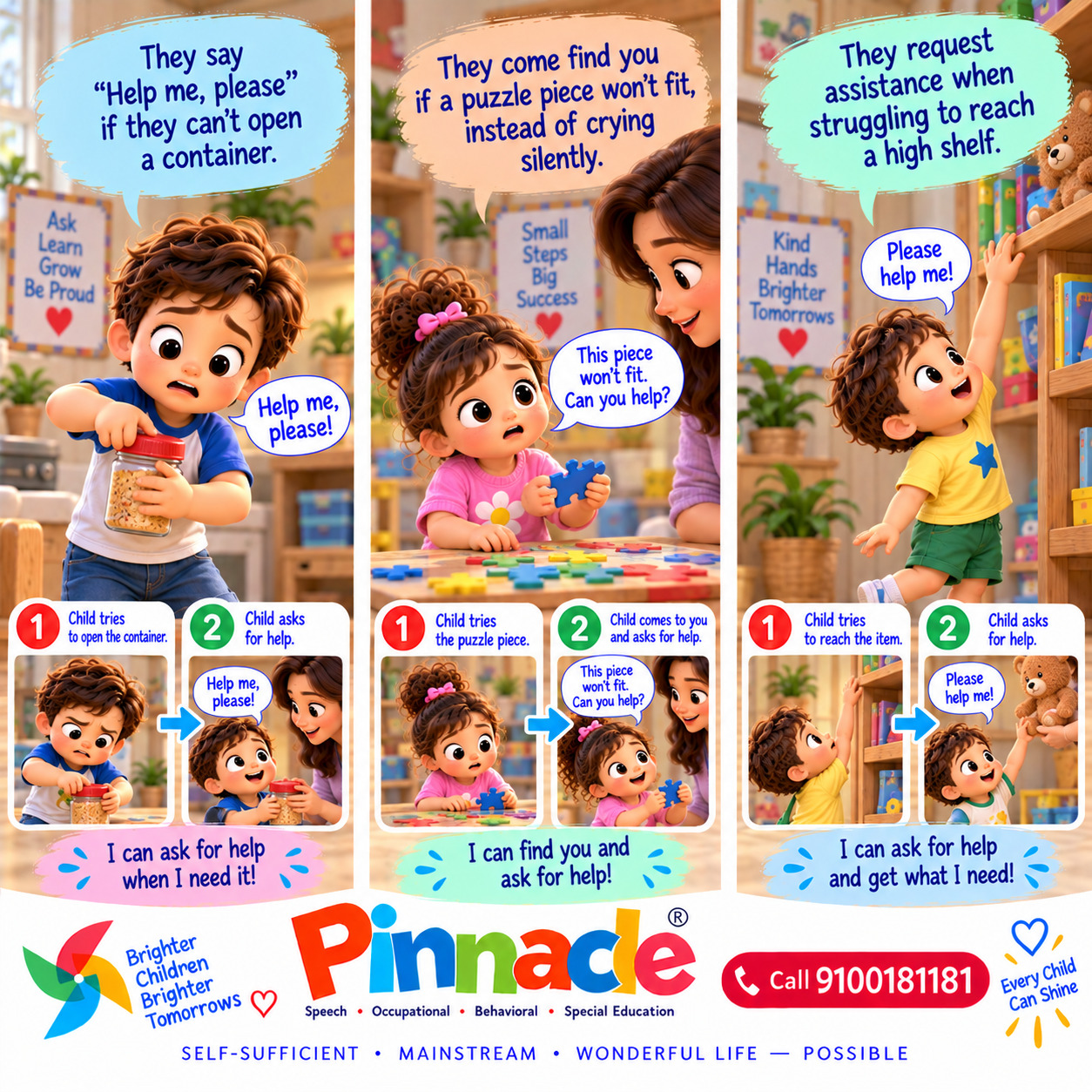
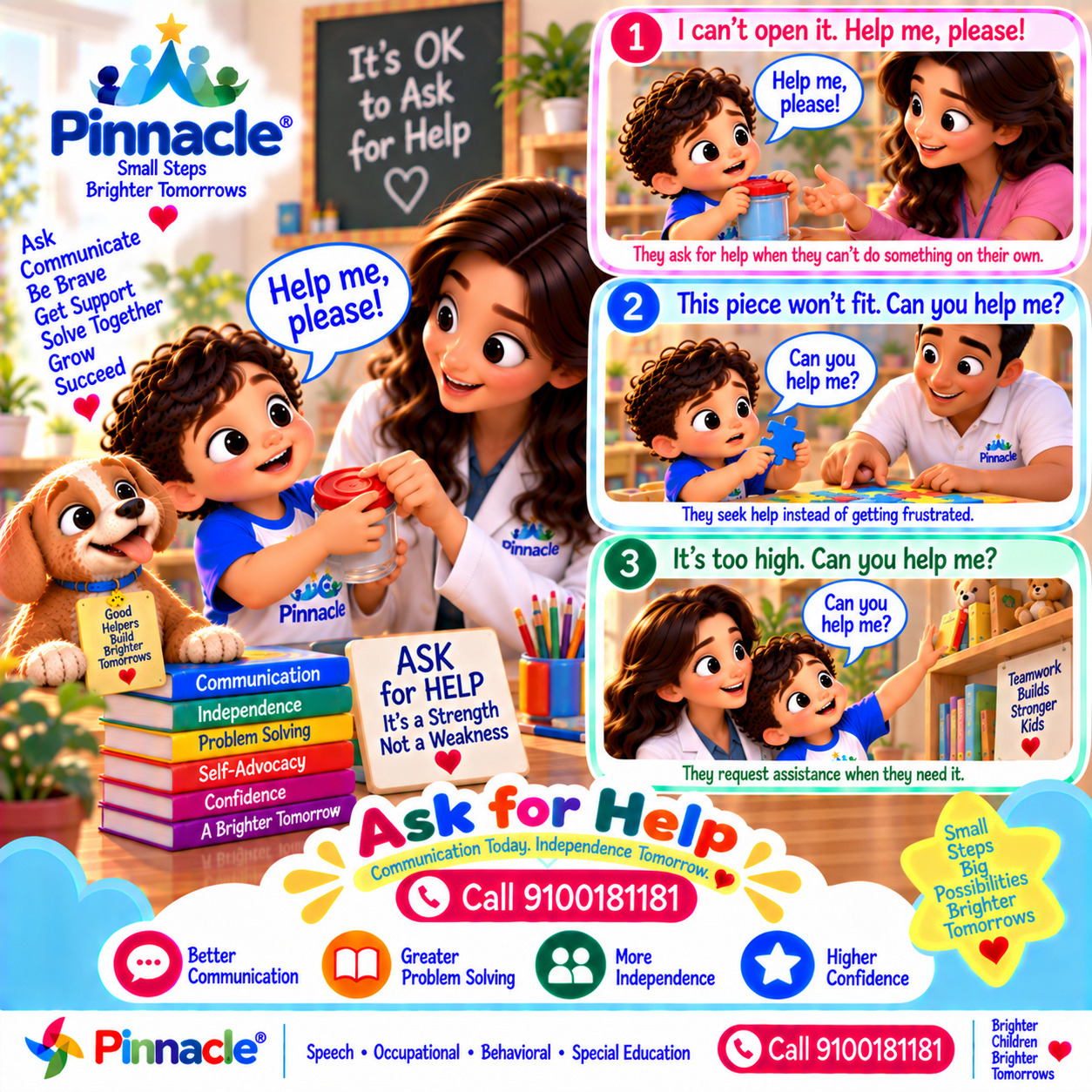
Does the child ask for help when needed?
Topic: Ask for Help
Example 1
They say “Help me, please” if they can’t open a container.
Example 2
They come find you if a puzzle piece won’t fit, instead of crying silently.
Example 3
They request assistance when struggling to reach a high shelf.
Example illustrationQuestion illustration
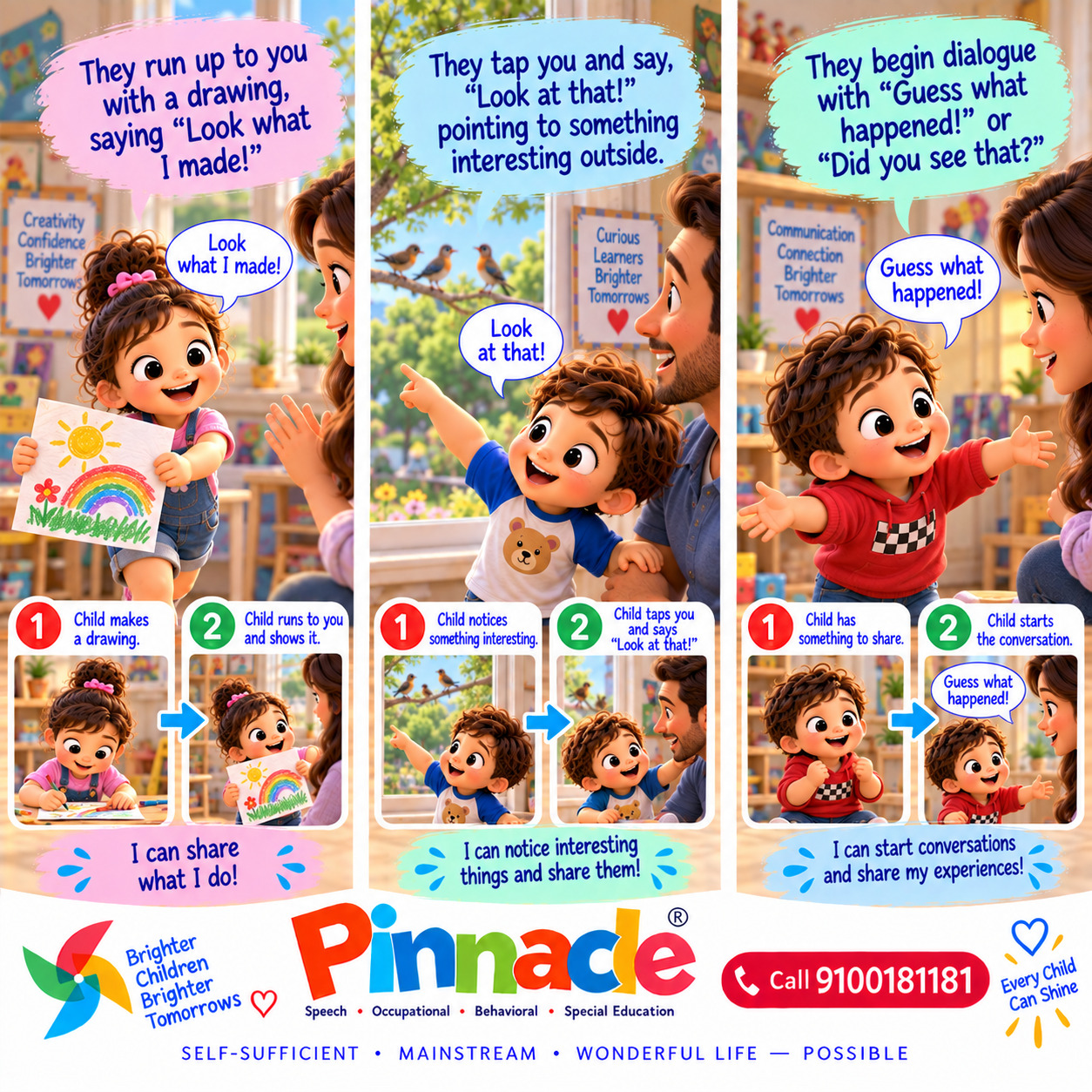
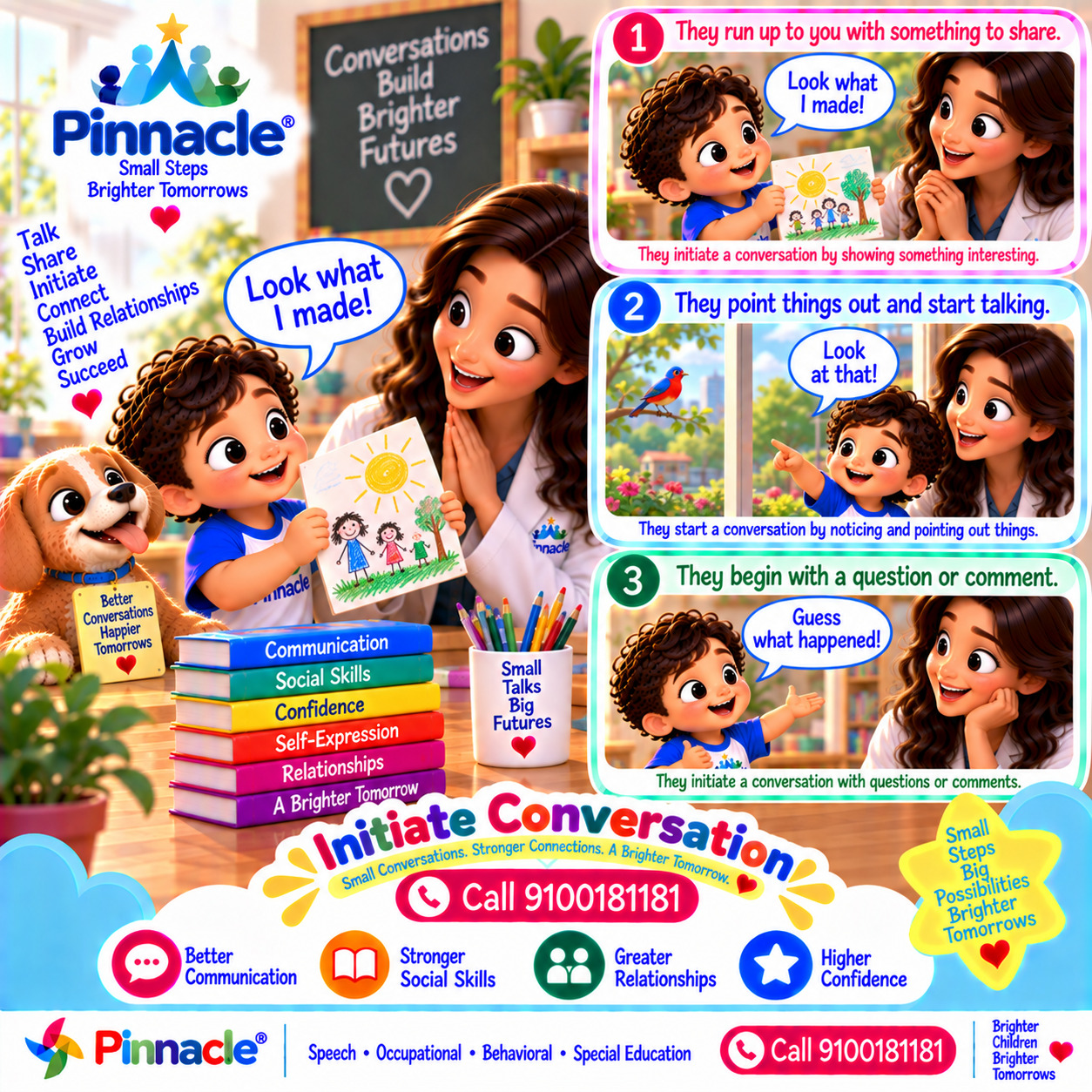
Can the child initiate a conversation (e.g., 'Look at this')?
Topic: Initiate Conversation
Example 1
They run up to you with a drawing, saying “Look what I made!”
Example 2
They tap you and say, “Look at that!” pointing to something interesting outside.
Example 3
They begin dialogue with “Guess what happened!” or “Did you see that?”