Pinnacle iBOT-2 - Bruininks-Oseretsky Test of Motor Proficiency-2
share
Understanding your child''s developmental journey is crucial. At Pinnacle Blooms Network, we offer comprehensive assessments such as the Bruininks-Oseretsky Test of Motor Proficiency-2 to better evaluate and support your child''s motor skill development.
The Bruininks-Oseretsky Test of Motor Proficiency-2 is an individually administered test that assesses the motor proficiency of children. It evaluates various motor skills and is a vital tool in identifying motor development delays and planning appropriate interventions.
Early assessment of motor skills can significantly influence interventions and outcomes for children with developmental disorders. By understanding specific motor development needs, families and therapists can target therapeutic interventions more effectively.
Contact our 24x7 Free National Care Center at 9100 181 181 or email care@pinnacleblooms.org to book an assessment appointment for your child at Pinnacle Blooms Network.
It is recommended to conduct assessments early when developmental concerns are identified to achieve the best possible outcomes through tailored interventions.
With over 1,00,00,000 assessments conducted for children across 60+ countries, Pinnacle Blooms Network has maintained a 97%+ proven accuracy rate in our therapeutic interventions.
Ananya, a 5-year-old from Bangalore, was diagnosed with developmental delays. Her parents, anxious and unsure of the next steps, approached Pinnacle Blooms Network. Through a detailed assessment using the Bruininks-Oseretsky Test, Ananya''s specific motor skill needs were understood, allowing for customized therapy sessions. Over months, Ananya showed remarkable improvement, gaining confidence and independence, transforming her family''s worry into hope and joy.
The Bruininks-Oseretsky Test of Motor Proficiency-2 is crucial for understanding motor development in children and setting them on a path to successful therapy outcomes.
These are reference questions and illustrative examples. This section does not collect child responses, calculate scores or produce an individual assessment result.
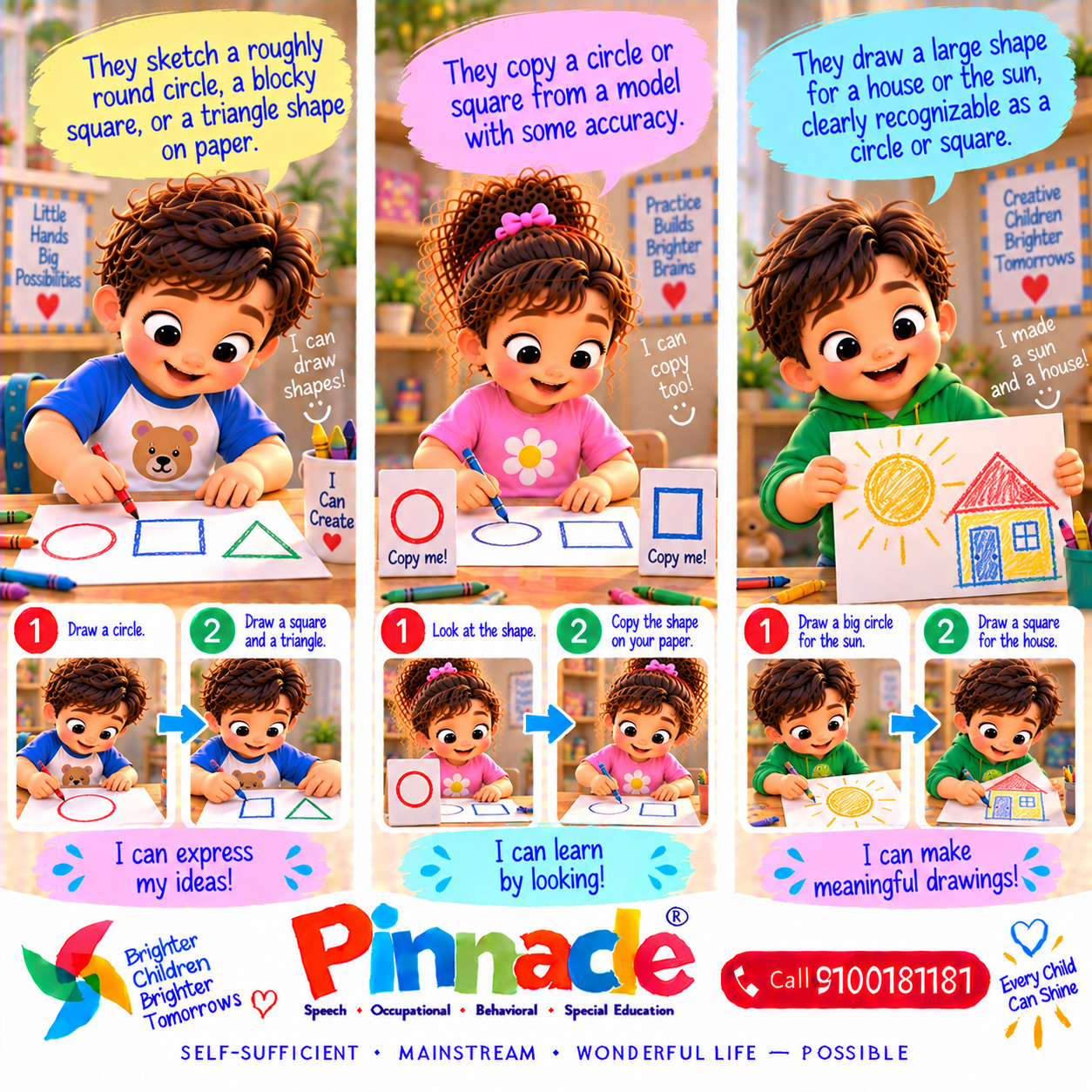
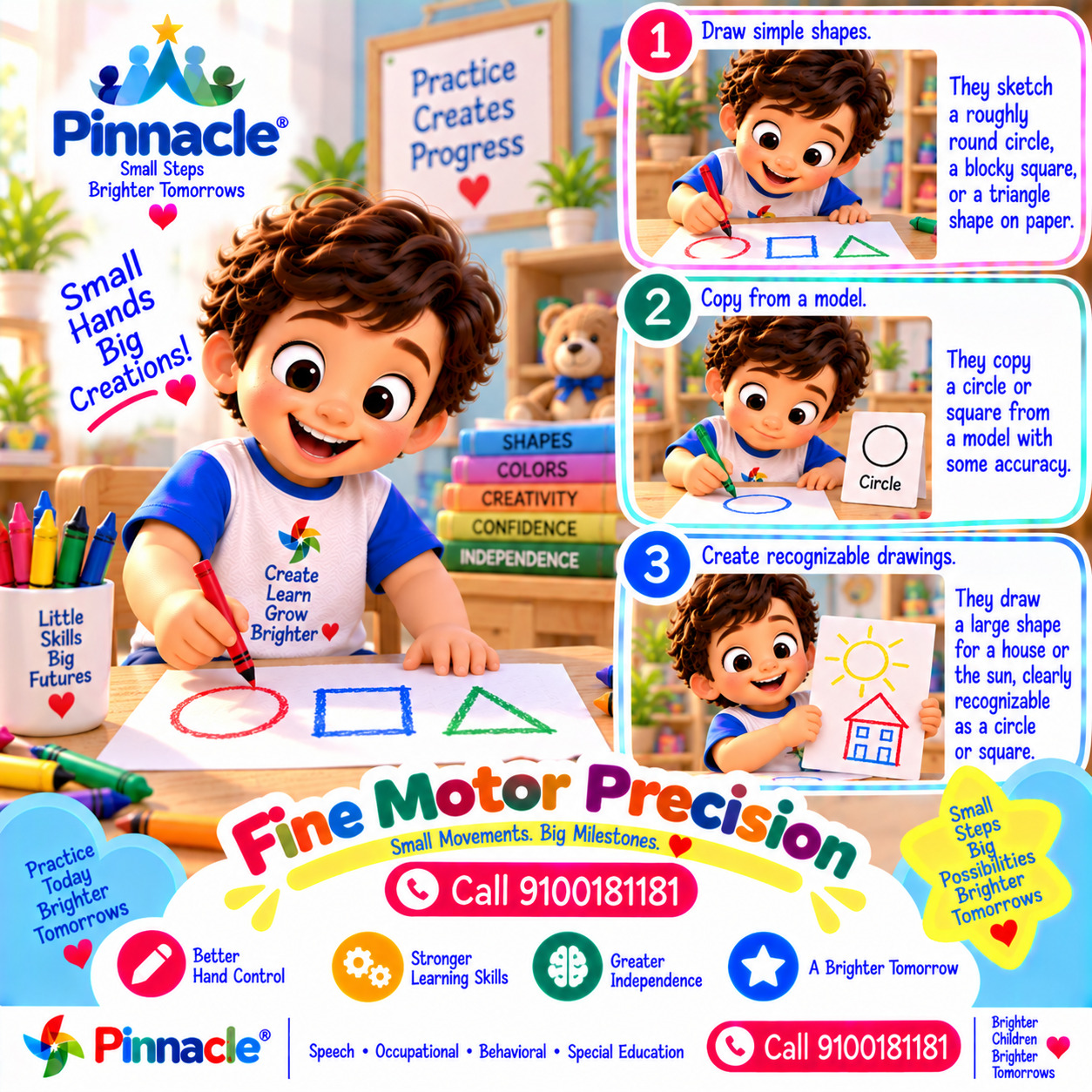
Can the child draw simple shapes like circles, squares, or triangles?
Topic: Fine Motor Precision
Example 1
They sketch a roughly round circle, a blocky square, or a triangle shape on paper.
Example 2
They copy a circle or square from a model with some accuracy.
Example 3
They draw a large shape for a house or the sun, clearly recognizable as a circle or square.
Example illustrationQuestion illustration
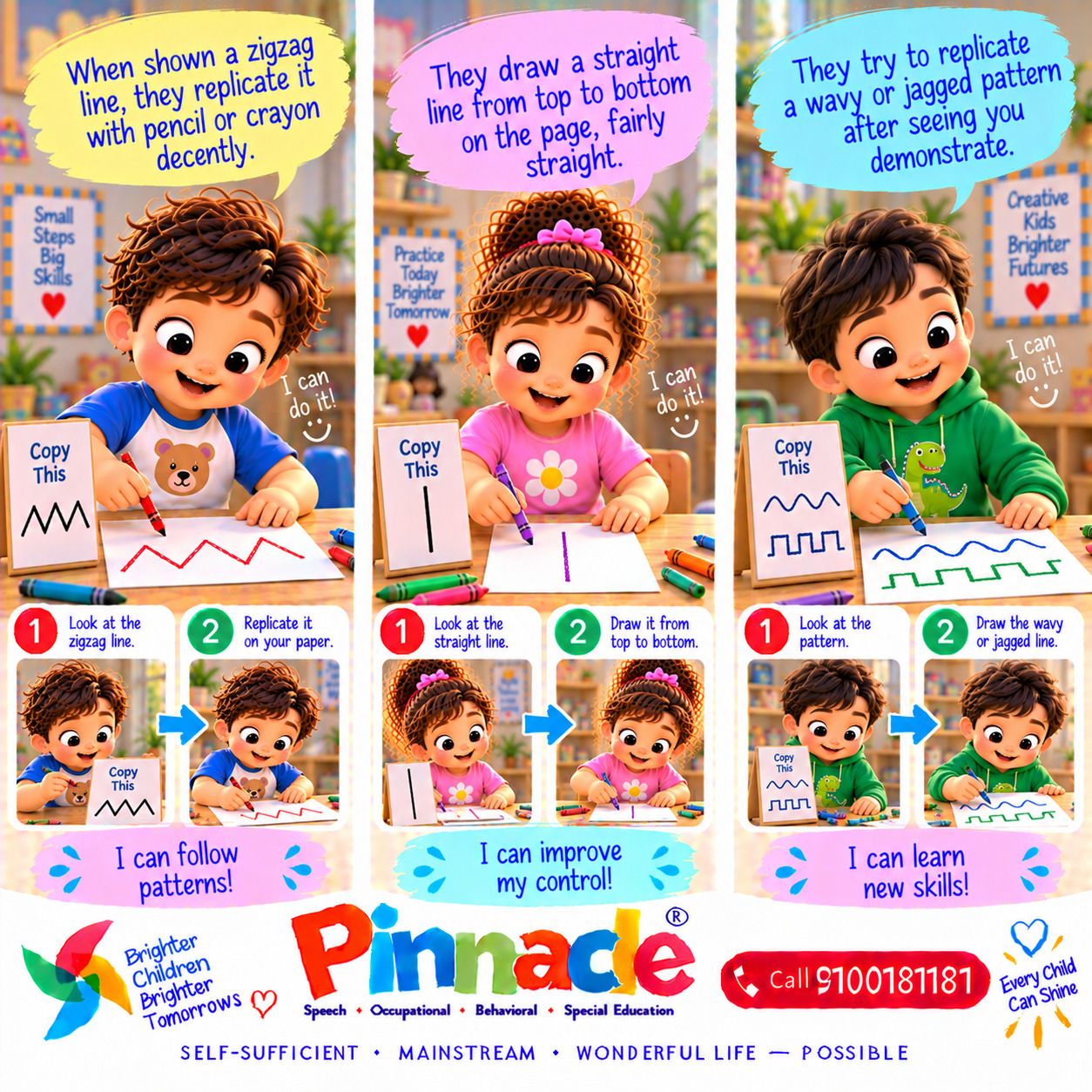
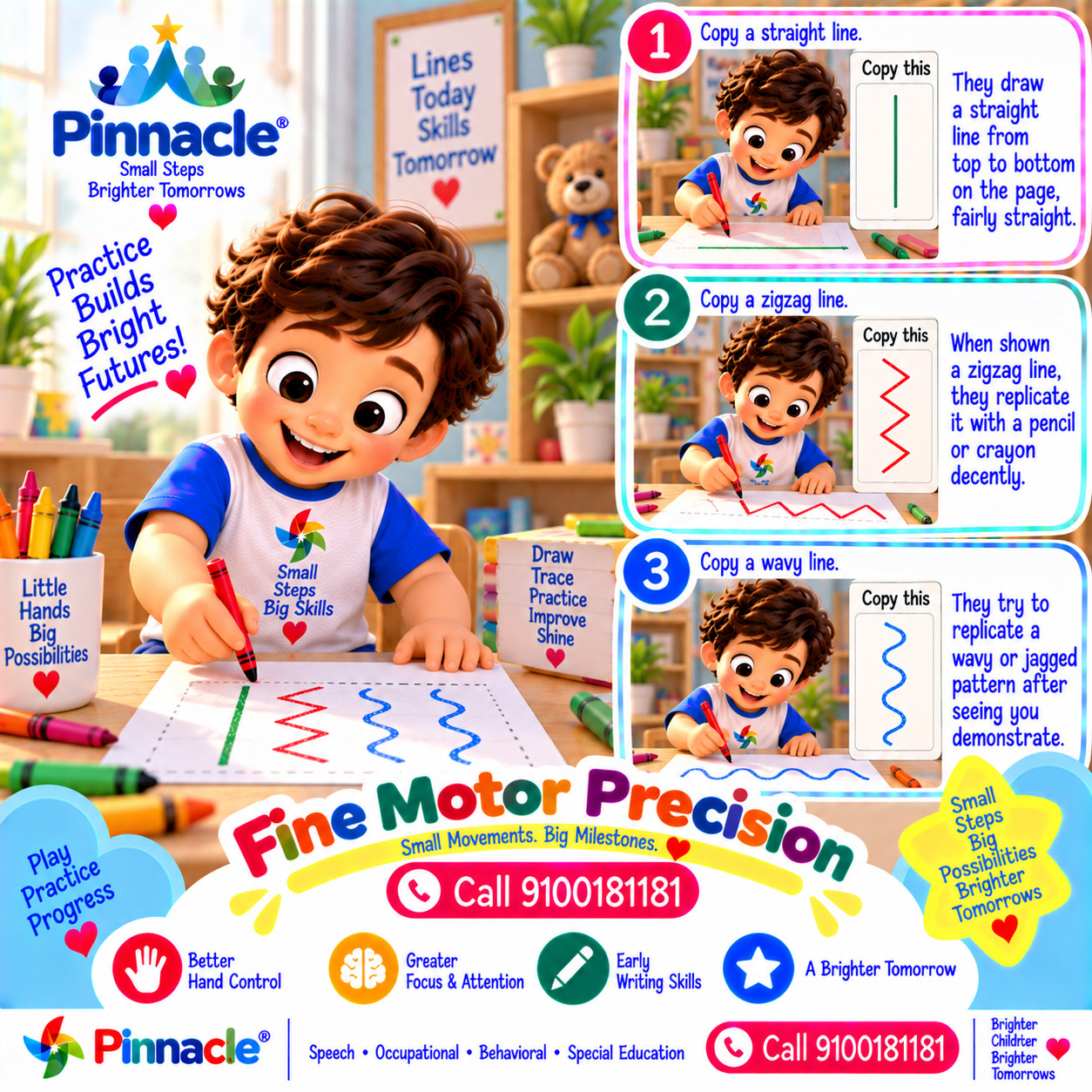
Can the child copy a straight line or a zigzag pattern accurately?
Topic: Fine Motor Precision
Example 1
When shown a zigzag line, they replicate it with pencil or crayon decently.
Example 2
They draw a straight line from top to bottom on the page, fairly straight.
Example 3
They try to replicate a wavy or jagged pattern after seeing you demonstrate.
Example illustrationQuestion illustration
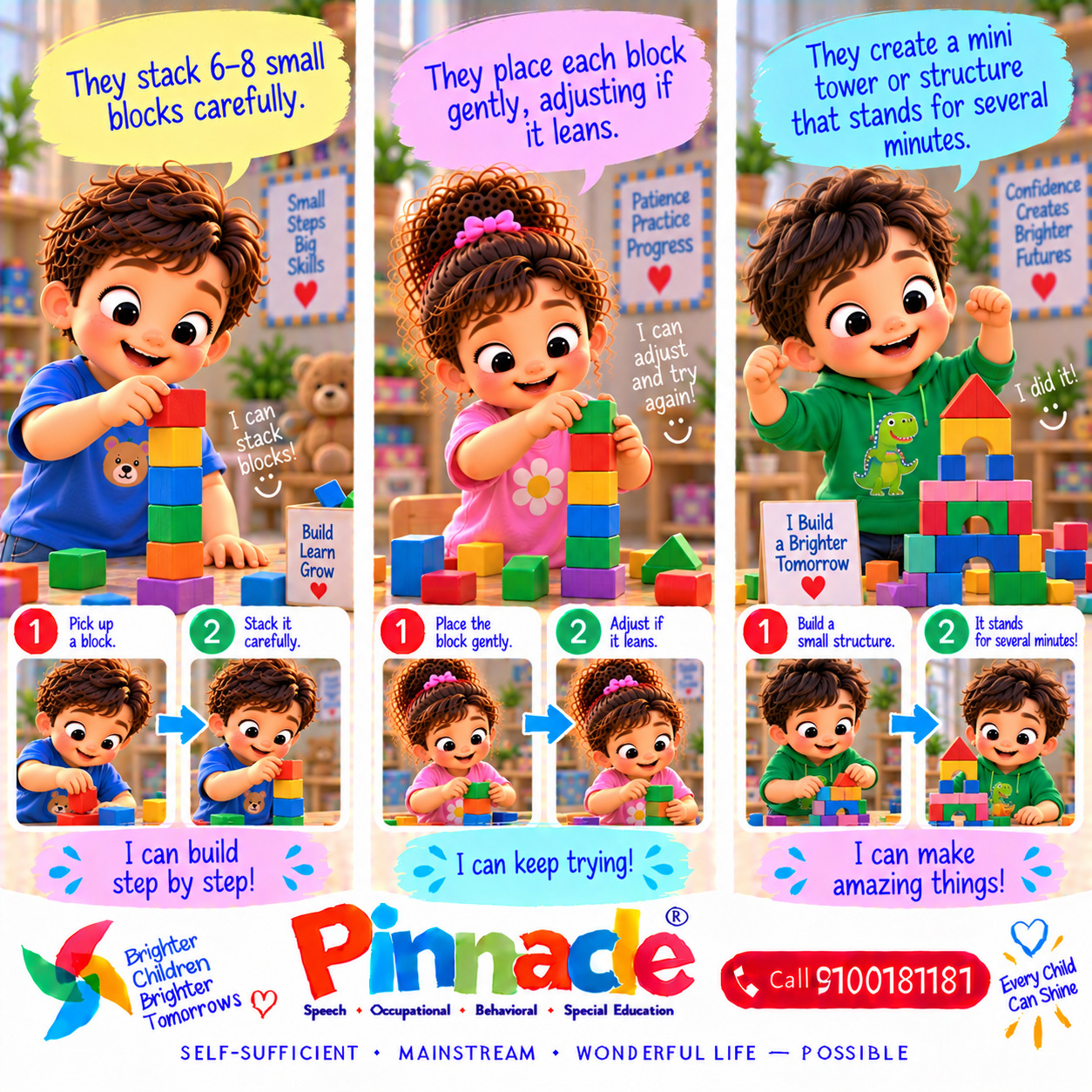
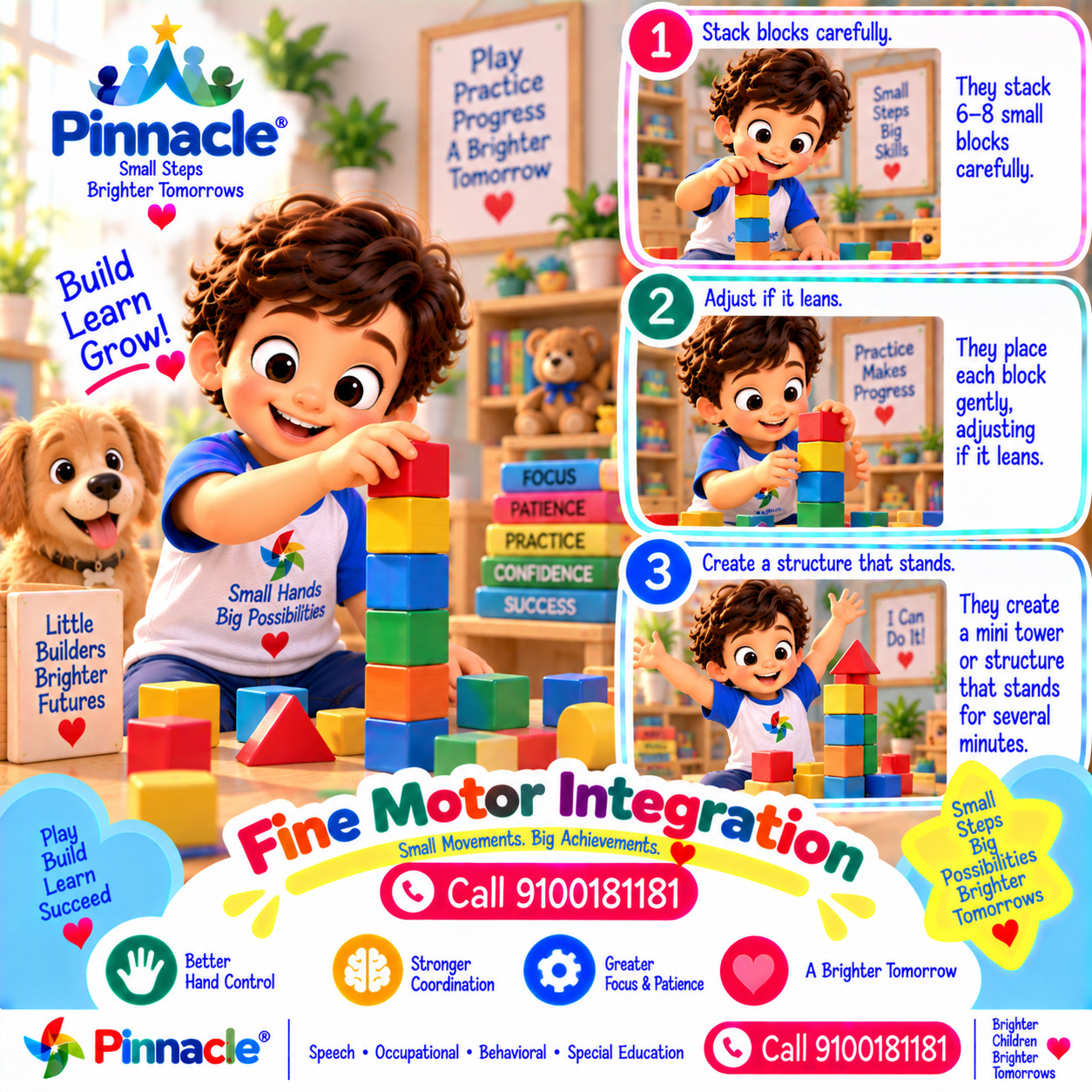
Can the child build simple block towers without knocking them over?
Topic: Fine Motor Integration
Example 1
They stack 6–8 small blocks carefully.
Example 2
They place each block gently, adjusting if it leans.
Example 3
They create a mini tower or structure that stands for several minutes.
Example illustrationQuestion illustration
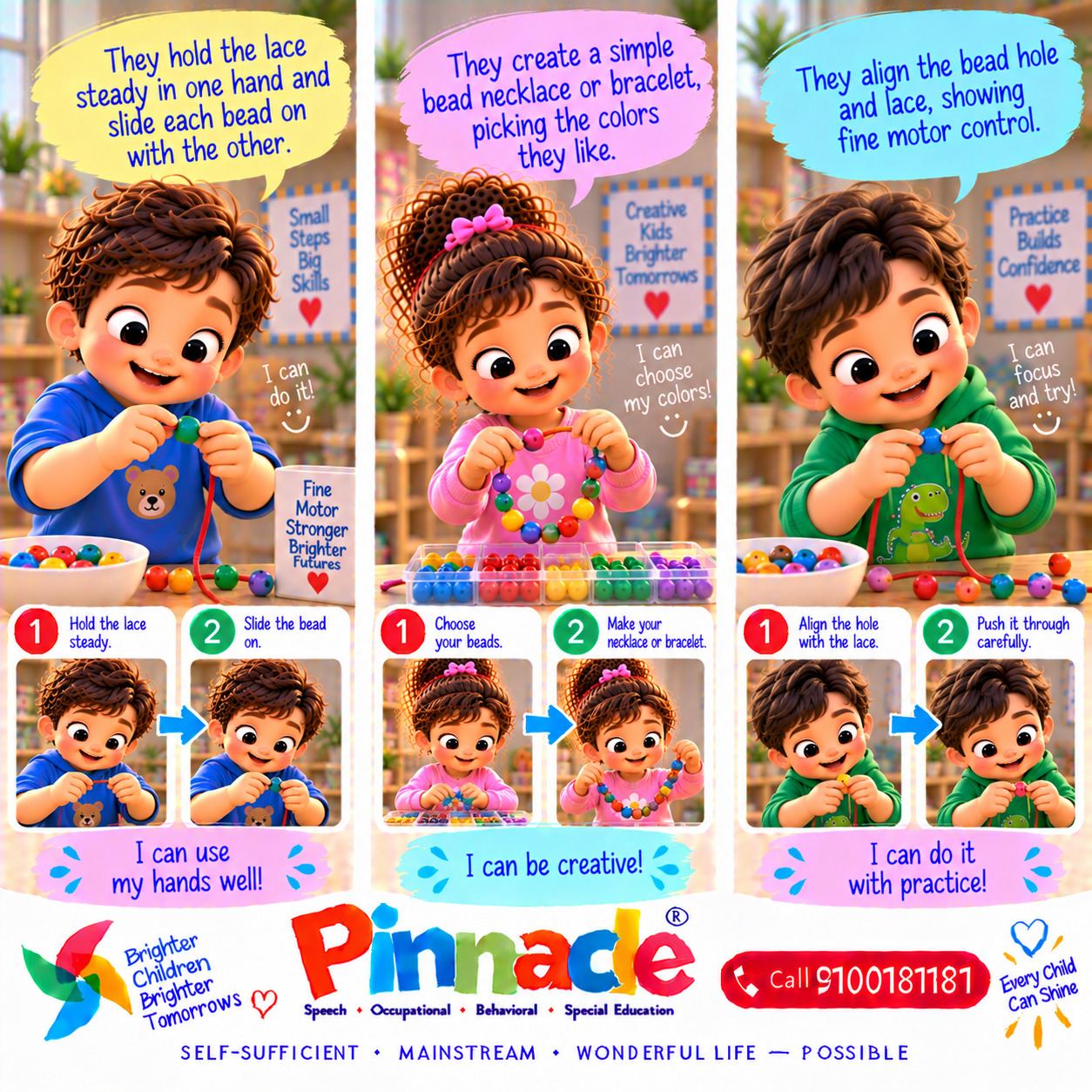
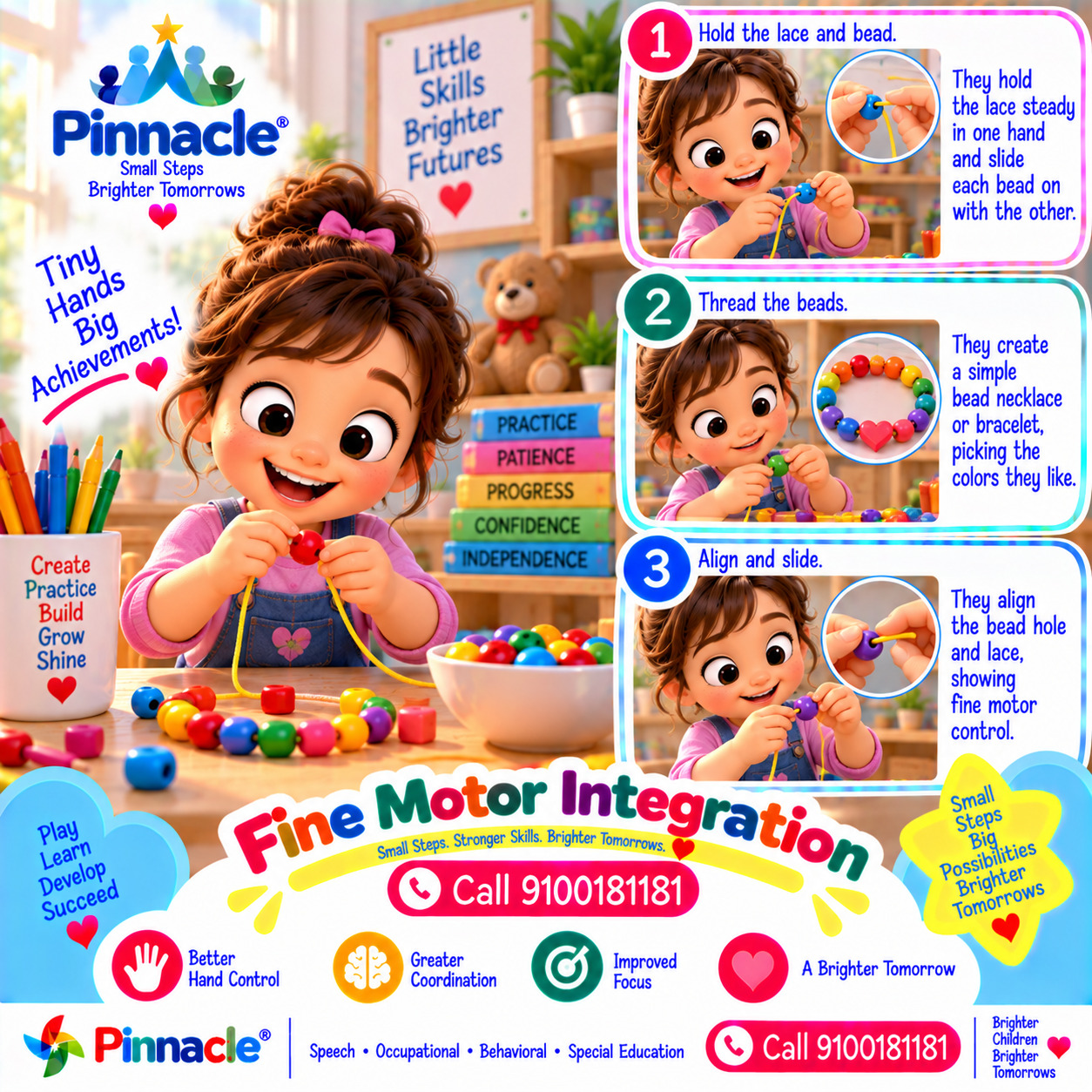
Can the child thread beads onto a string?
Topic: Fine Motor Integration
Example 1
They hold the lace steady in one hand and slide each bead on with the other.
Example 2
They create a simple bead necklace or bracelet, picking the colors they like.
Example 3
They align the bead hole and lace, showing fine motor control.
Example illustrationQuestion illustration
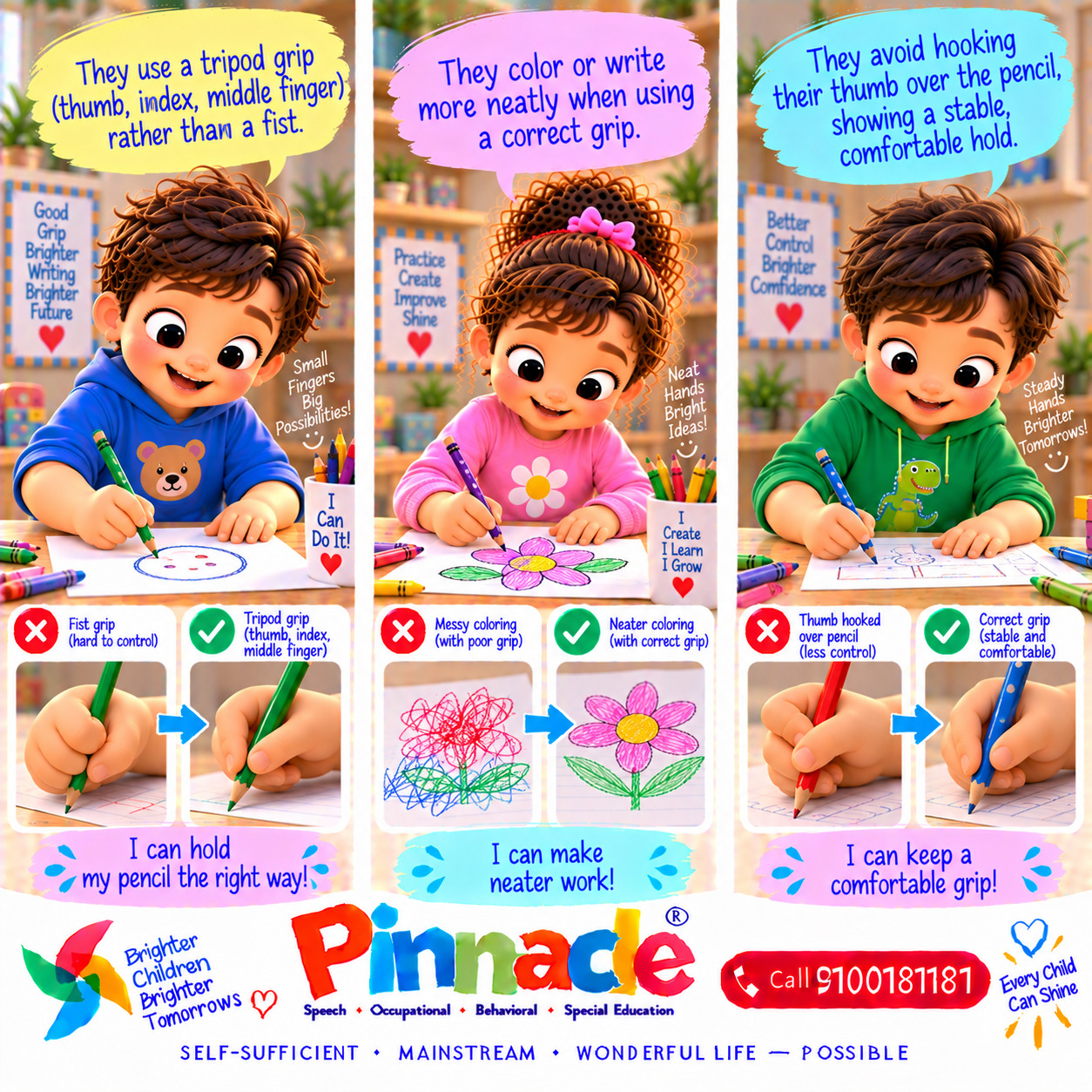
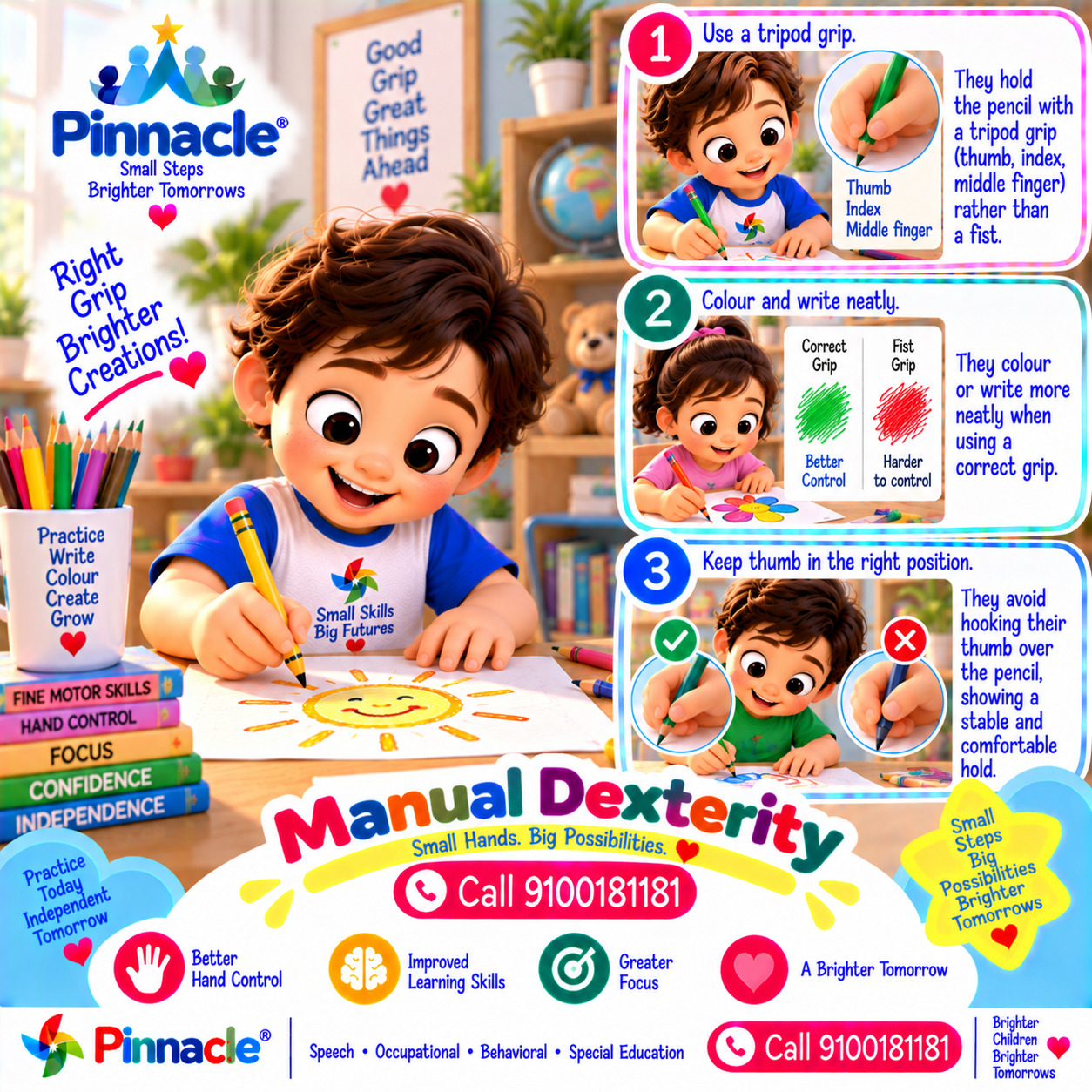
Can the child hold a pencil with a proper grip?
Topic: Manual Dexterity
Example 1
They use a tripod grip (thumb, index, middle finger) rather than a fist.
Example 2
They color or write more neatly when using a correct grip.
Example 3
They avoid hooking their thumb over the pencil, showing a stable, comfortable hold.
Example illustrationQuestion illustration
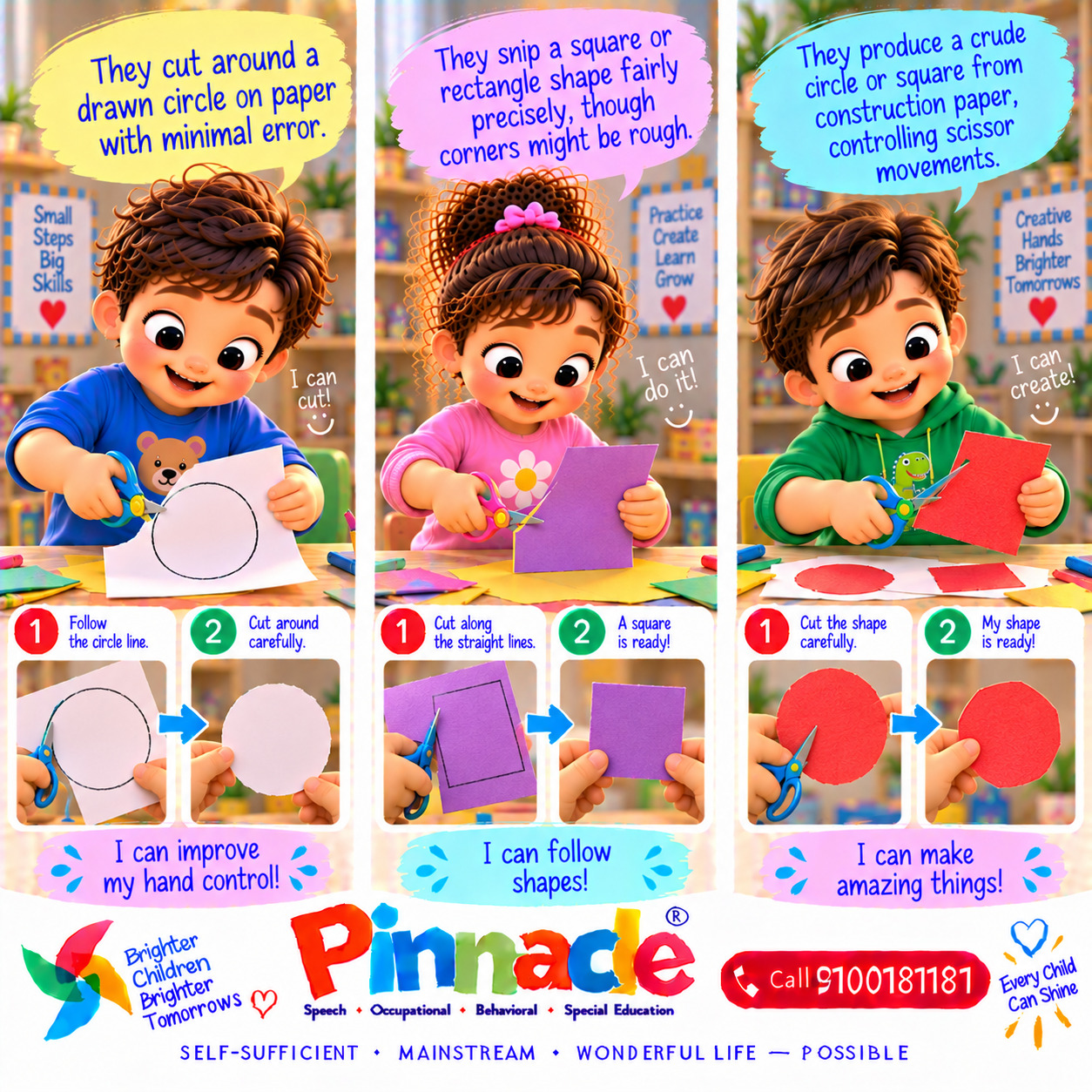
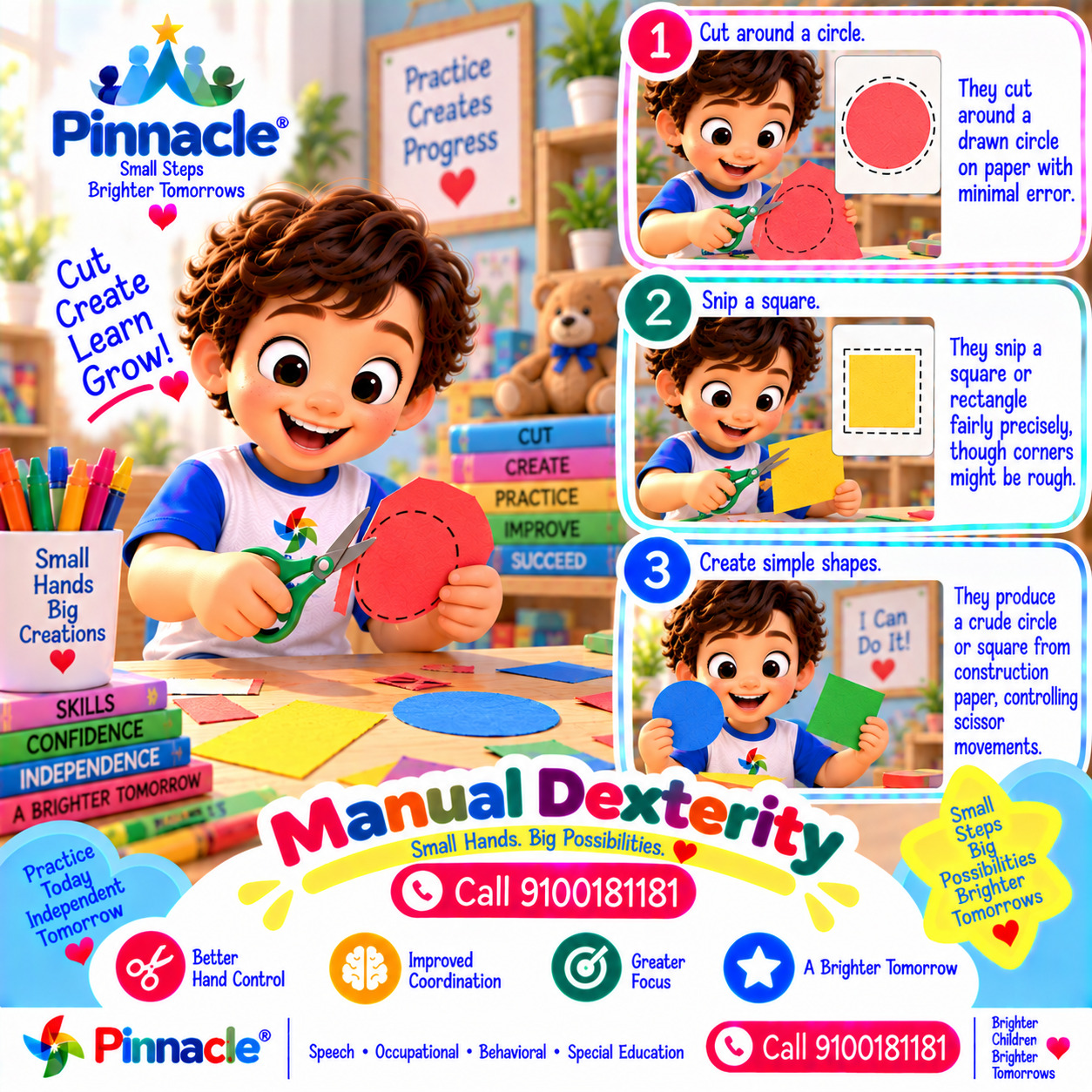
Can the child use scissors to cut out simple shapes (circle or square)?
Topic: Manual Dexterity
Example 1
They cut around a drawn circle on paper with minimal error.
Example 2
They snip a square or rectangle shape fairly precisely, though corners might be rough.
Example 3
They produce a crude circle or square from construction paper, controlling scissor movements.
Example illustrationQuestion illustration
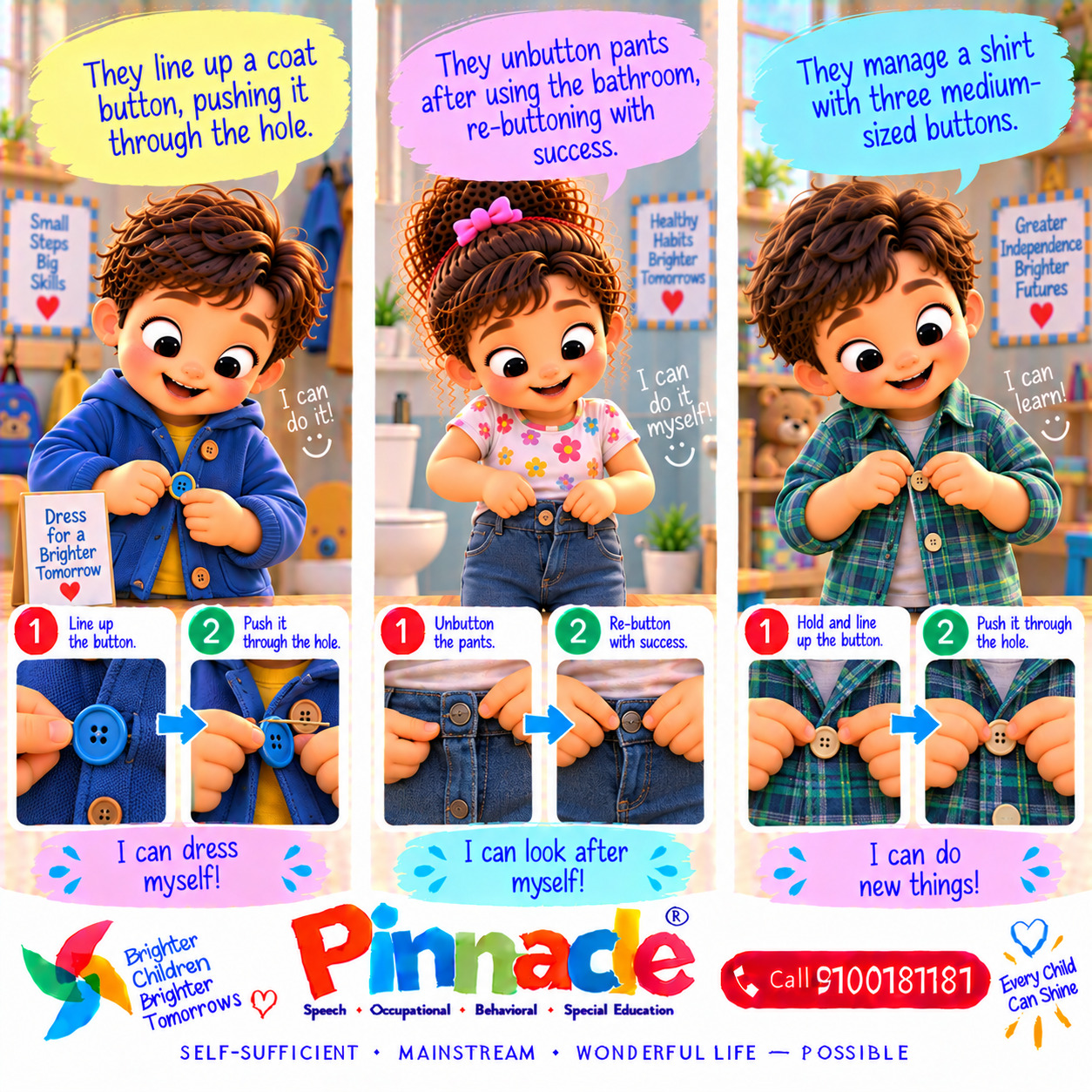
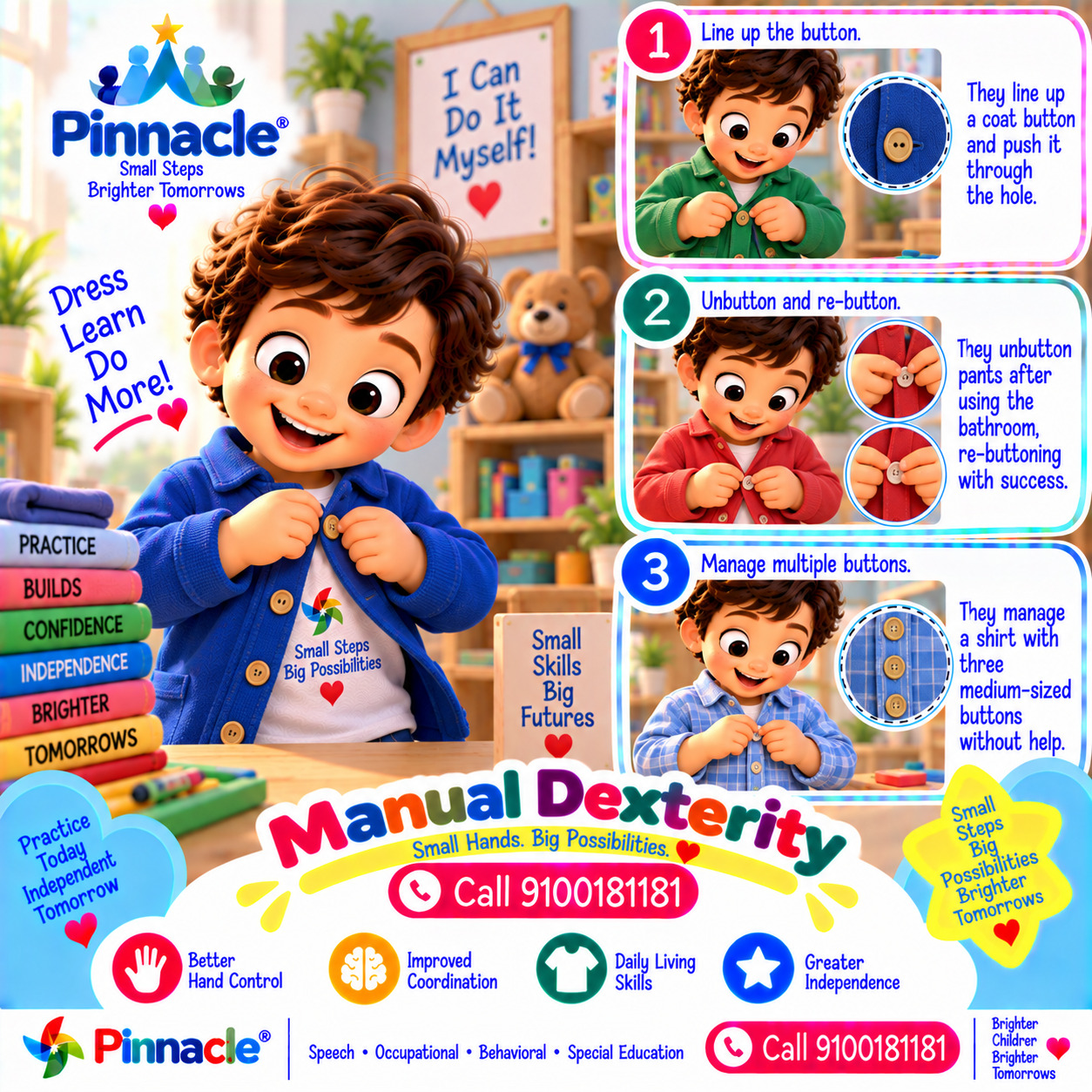
Can the child button or unbutton clothing without help?
Topic: Manual Dexterity
Example 1
They line up a coat button, pushing it through the hole.
Example 2
They unbutton pants after using the bathroom, re-buttoning with success.
Example 3
They manage a shirt with three medium-sized buttons.
Example illustrationQuestion illustration
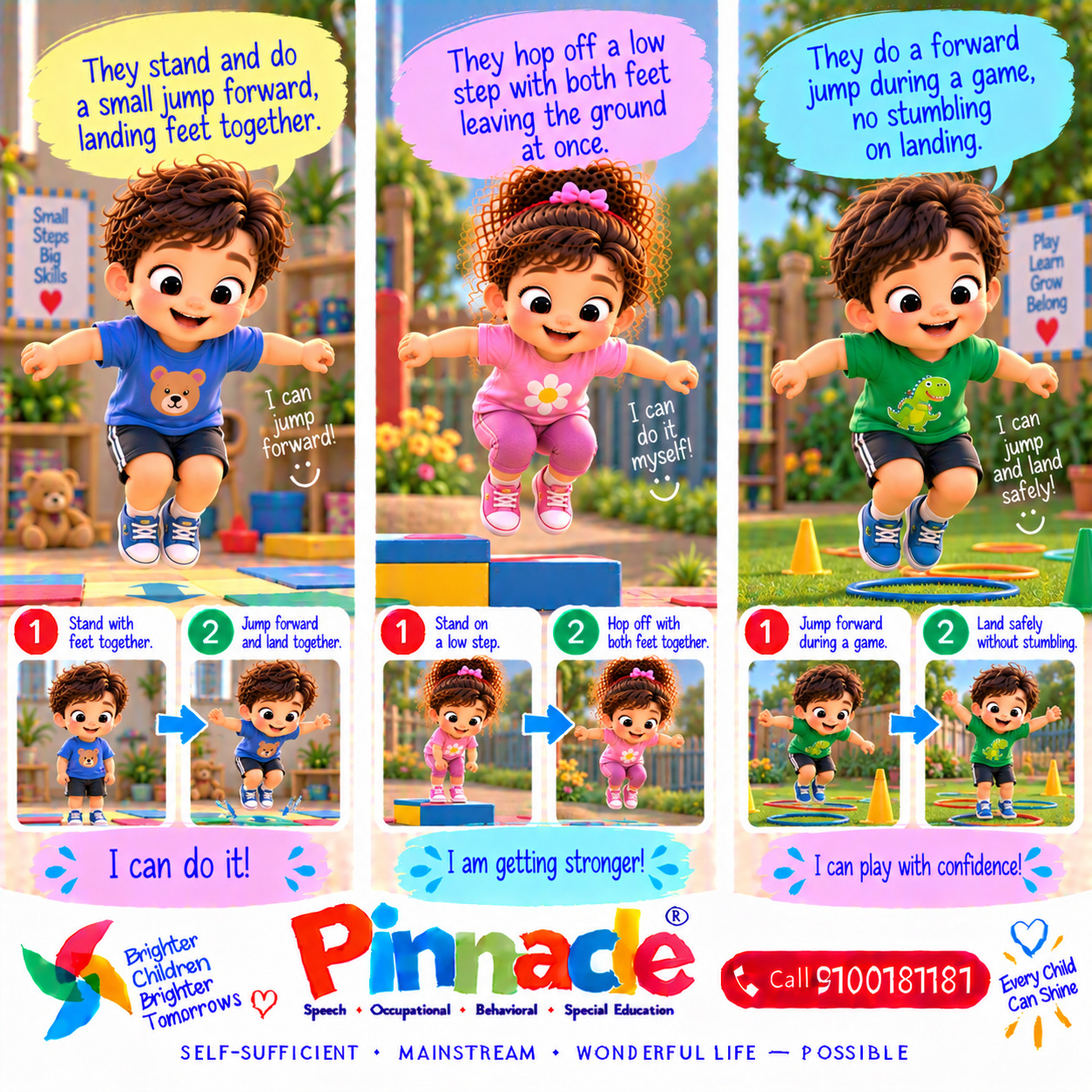
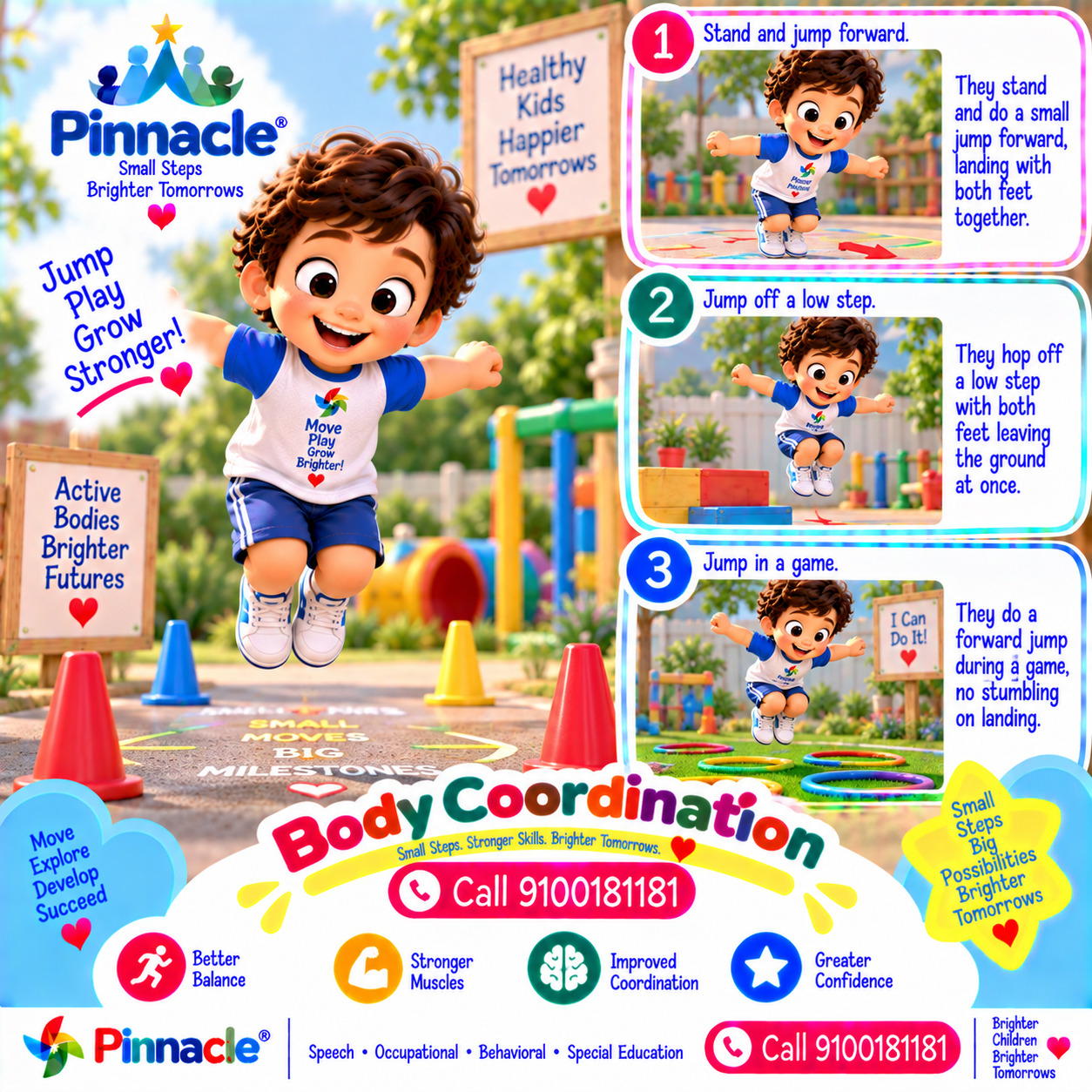
Can the child jump forward with both feet together?
Topic: Body Coordination
Example 1
They stand and do a small jump forward, landing feet together.
Example 2
They hop off a low step with both feet leaving the ground at once.
Example 3
They do a forward jump during a game, no stumbling on landing.
Example illustrationQuestion illustration
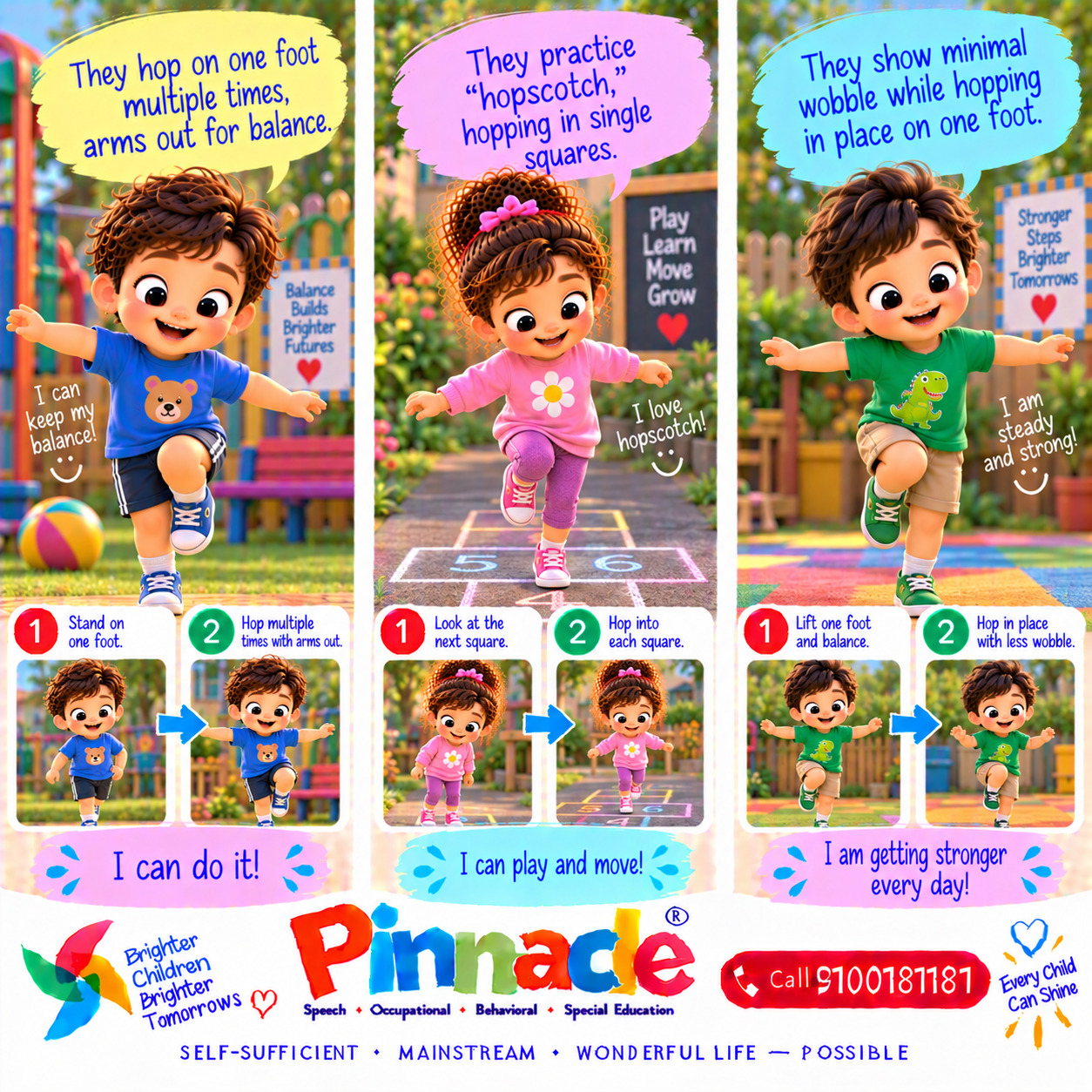
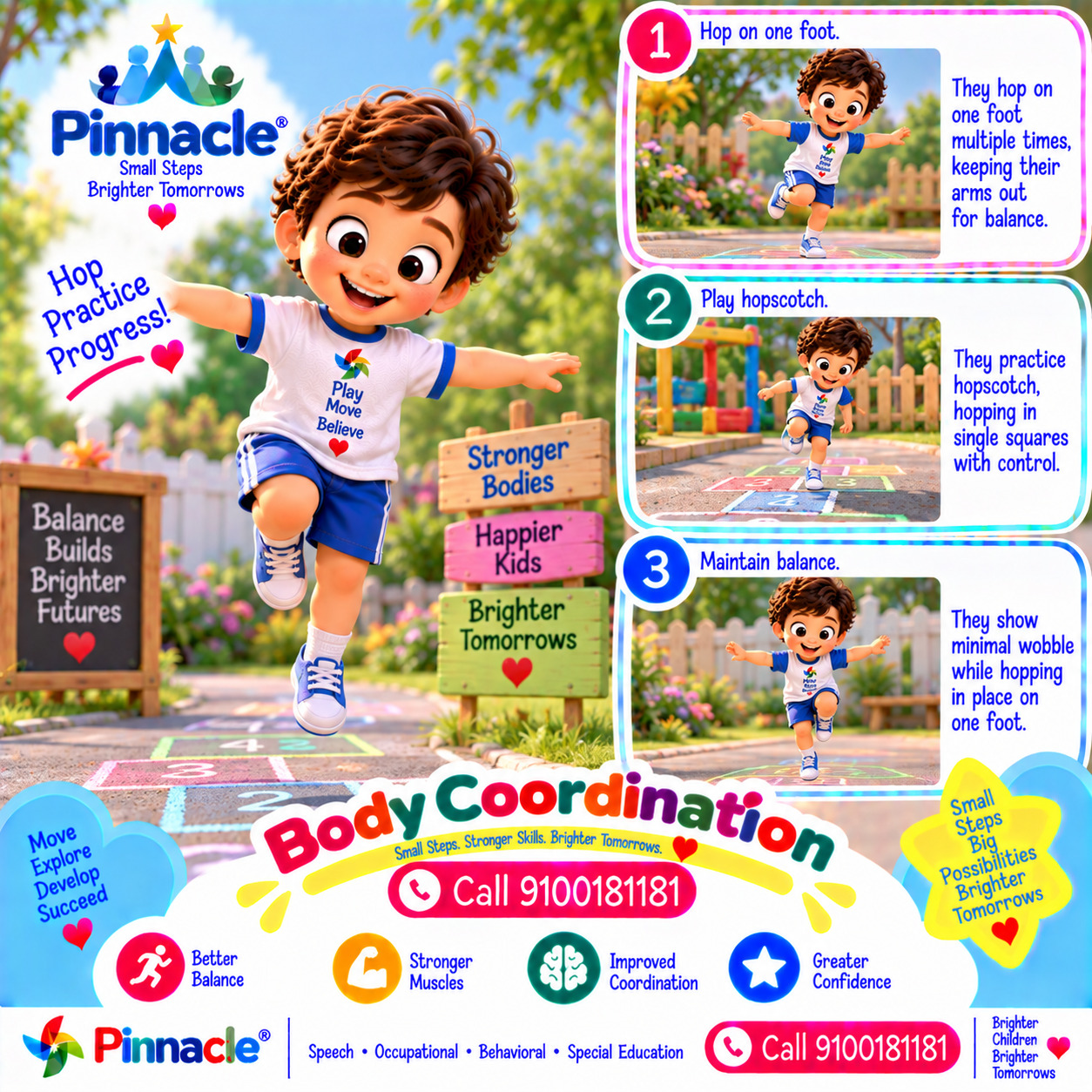
Can the child hop on one foot and maintain balance?
Topic: Body Coordination
Example 1
They hop on one foot multiple times, arms out for balance.
Example 2
They practice “hopscotch,” hopping in single squares.
Example 3
They show minimal wobble while hopping in place on one foot.
Example illustrationQuestion illustration
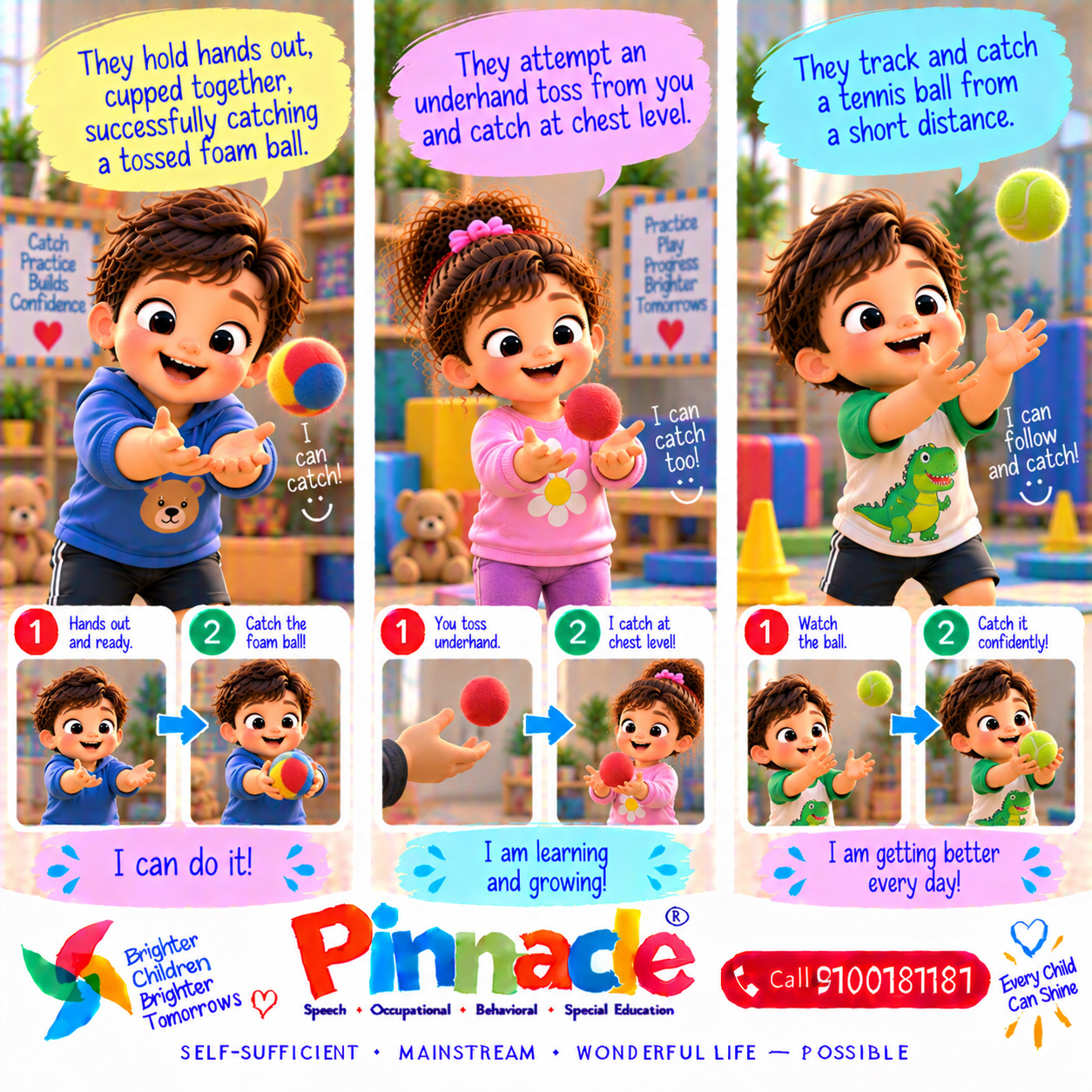
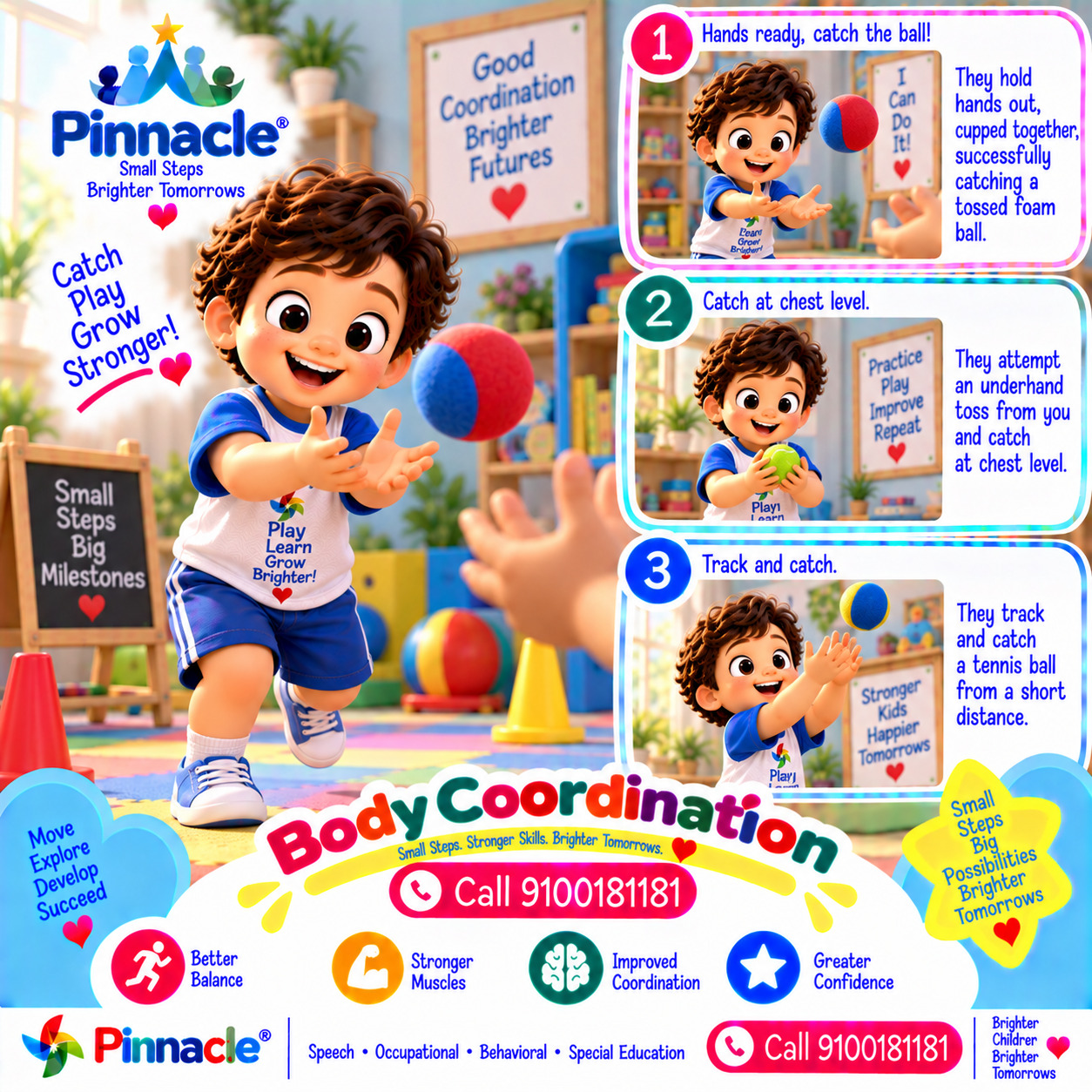
Can the child perform a two-handed catch of a small ball?
Topic: Body Coordination
Example 1
They hold hands out, cupped together, successfully catching a tossed foam ball.
Example 2
They attempt an underhand toss from you and catch at chest level.
Example 3
They track and catch a tennis ball from a short distance.
Example illustrationQuestion illustration
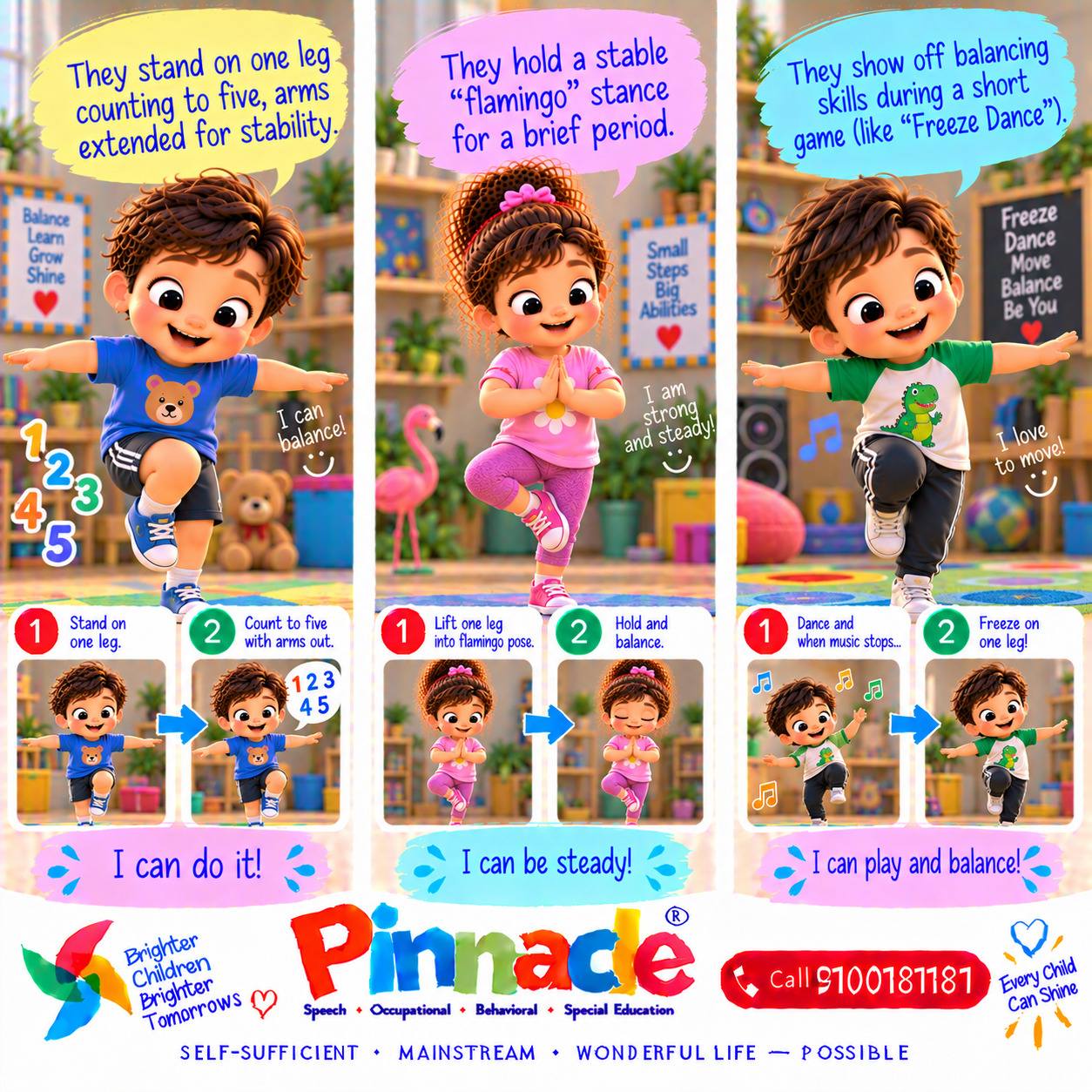
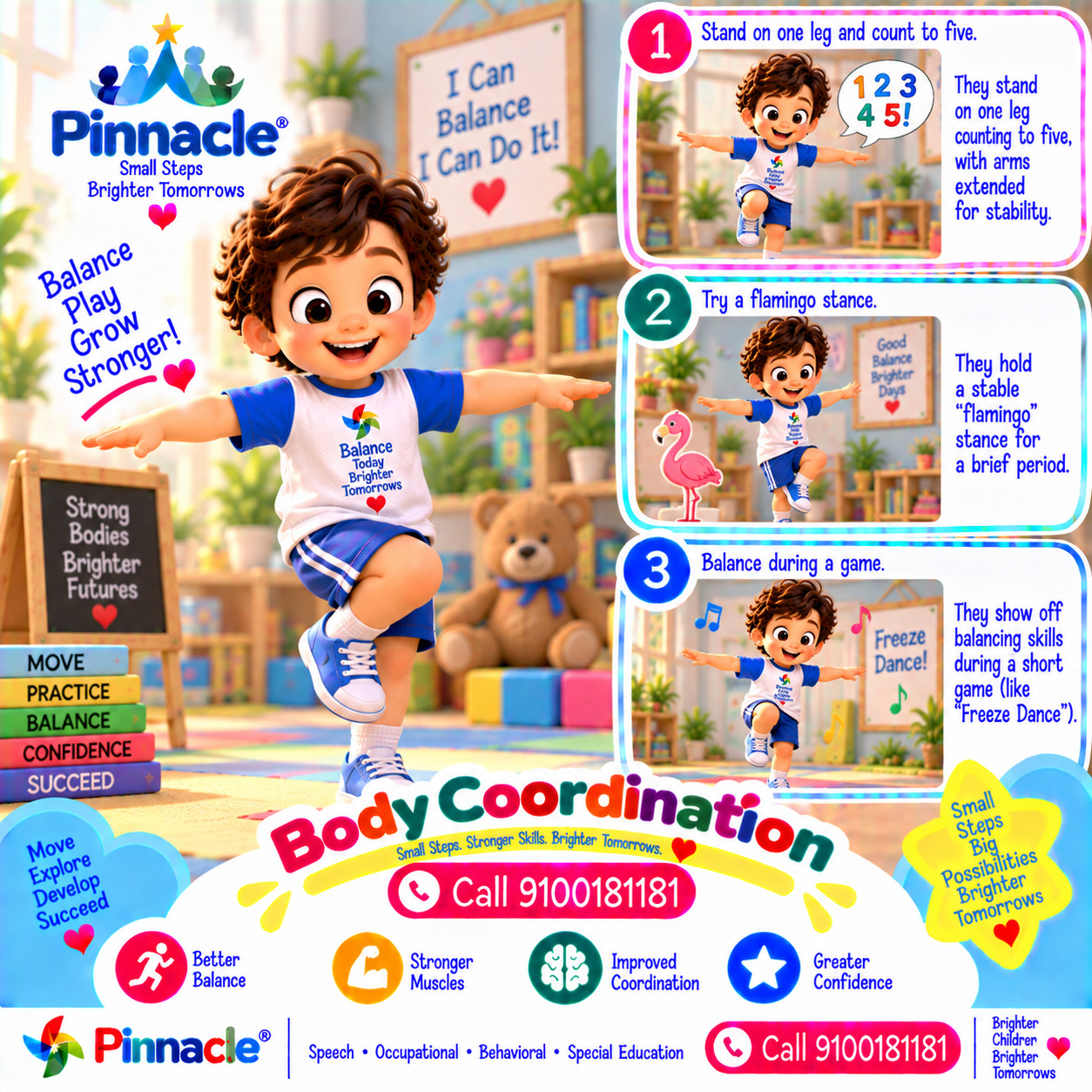
Can the child perform a simple balance activity, such as standing on one leg for 5 seconds?
Topic: Body Coordination
Example 1
They stand on one leg counting to five, arms extended for stability.
Example 2
They hold a stable “flamingo” stance for a brief period.
Example 3
They show off balancing skills during a short game (like “Freeze Dance”).
Example illustrationQuestion illustration
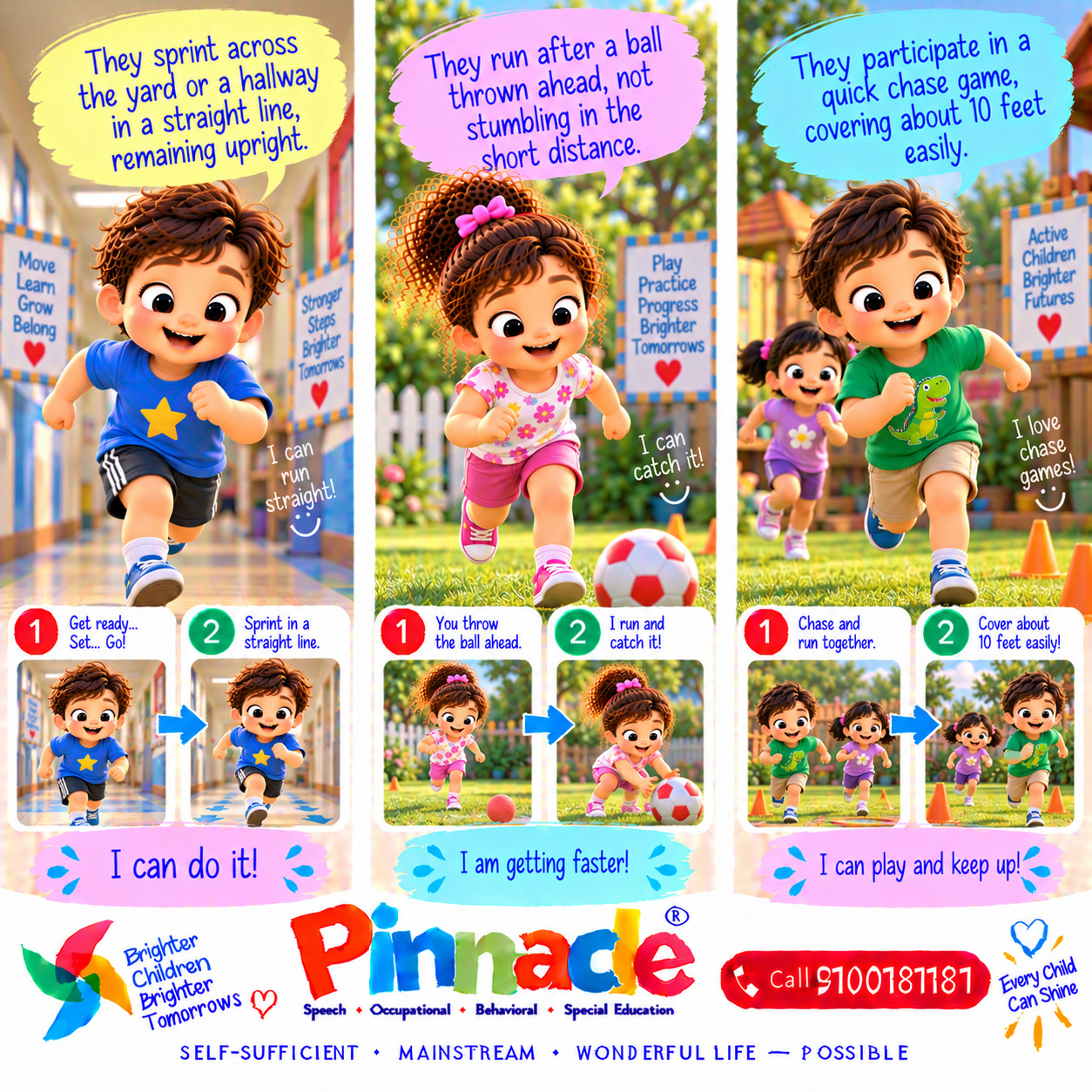
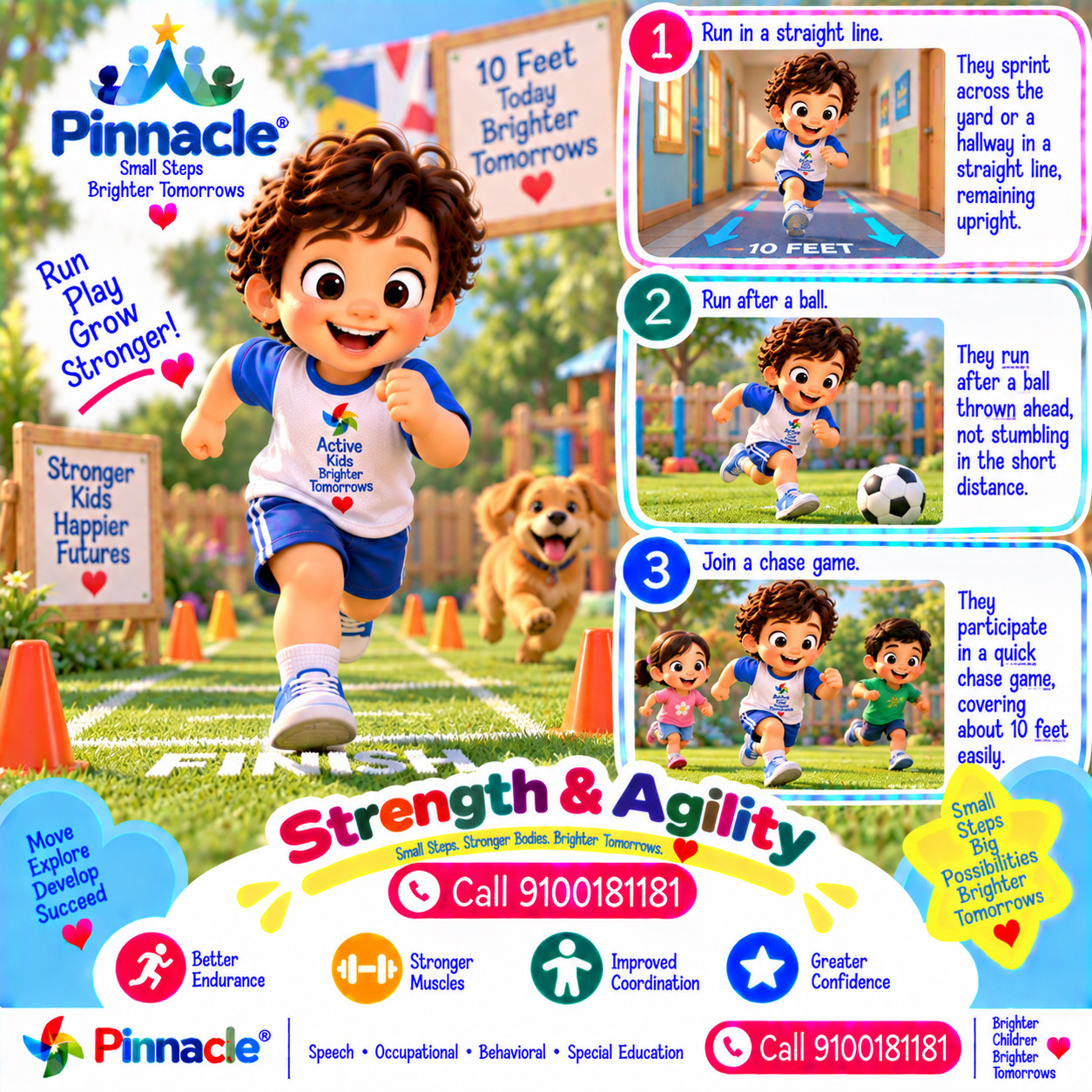
Can the child run 10 feet without tripping or falling?
Topic: Strength & Agility
Example 1
They sprint across the yard or a hallway in a straight line, remaining upright.
Example 2
They run after a ball thrown ahead, not stumbling in the short distance.
Example 3
They participate in a quick chase game, covering about 10 feet easily.
Example illustrationQuestion illustration
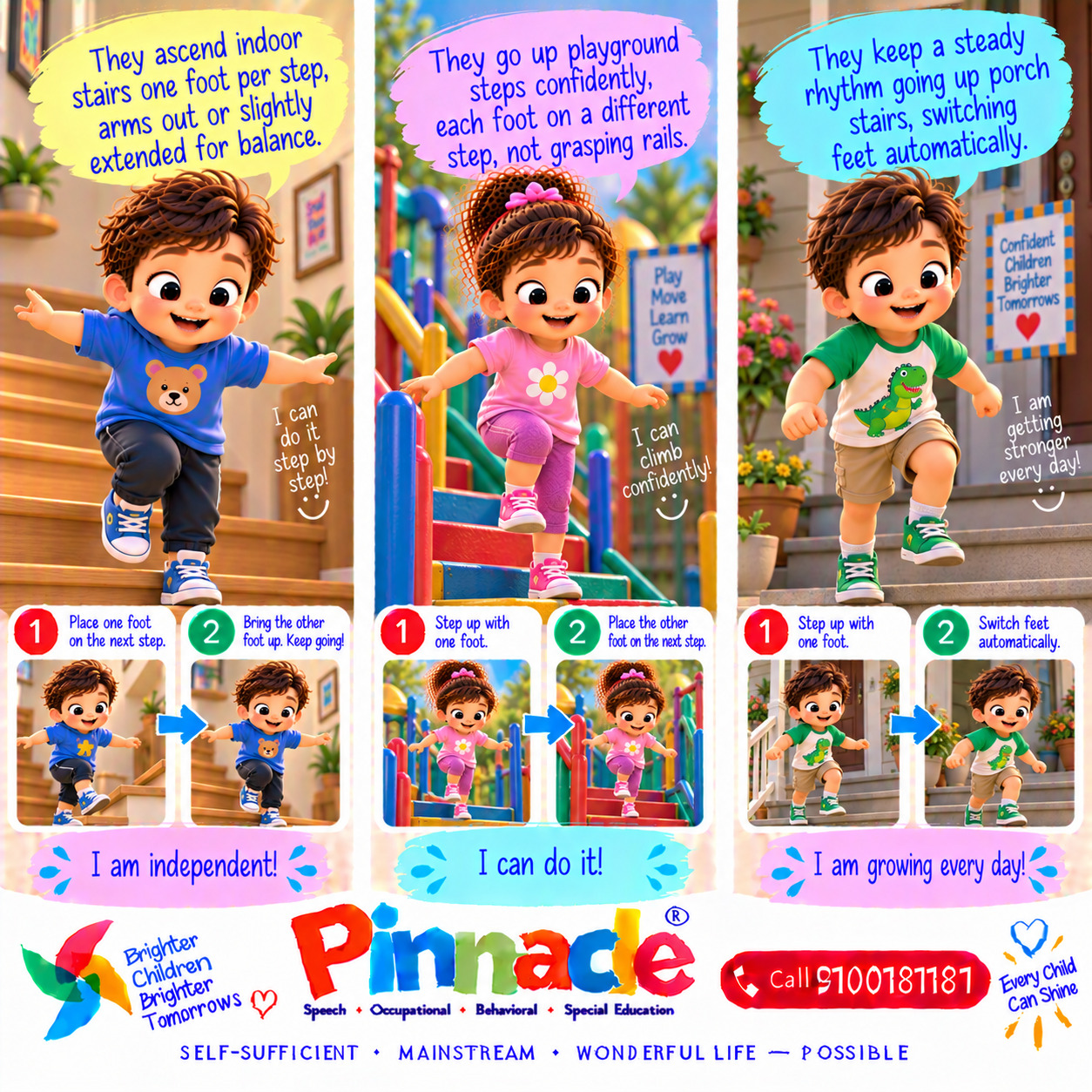
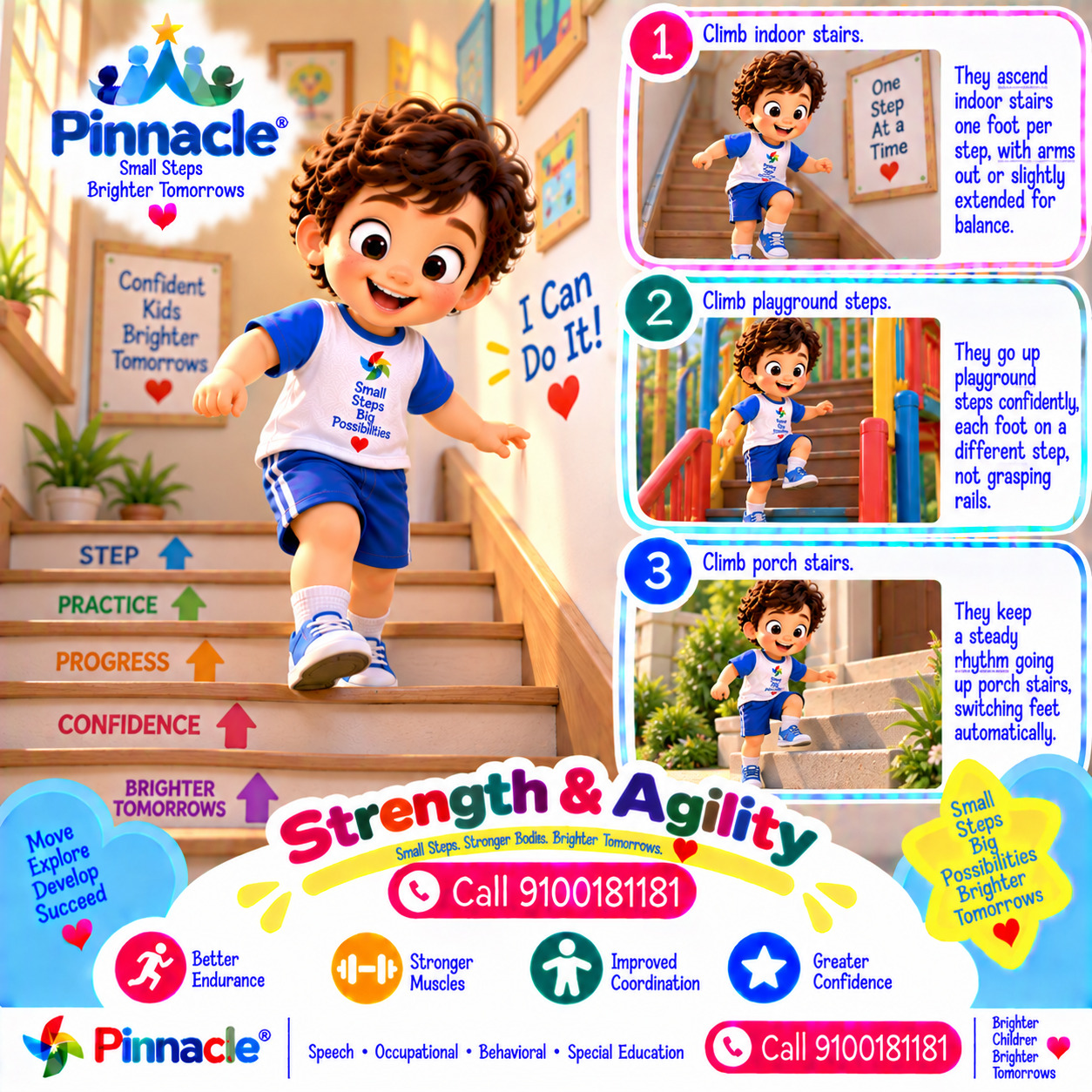
Can the child climb stairs using alternate feet without holding the railing?
Topic: Strength & Agility
Example 1
They ascend indoor stairs one foot per step, arms out or slightly extended for balance.
Example 2
They go up playground steps confidently, each foot on a different step, not grasping rails.
Example 3
They keep a steady rhythm going up porch stairs, switching feet automatically.
Example illustrationQuestion illustration
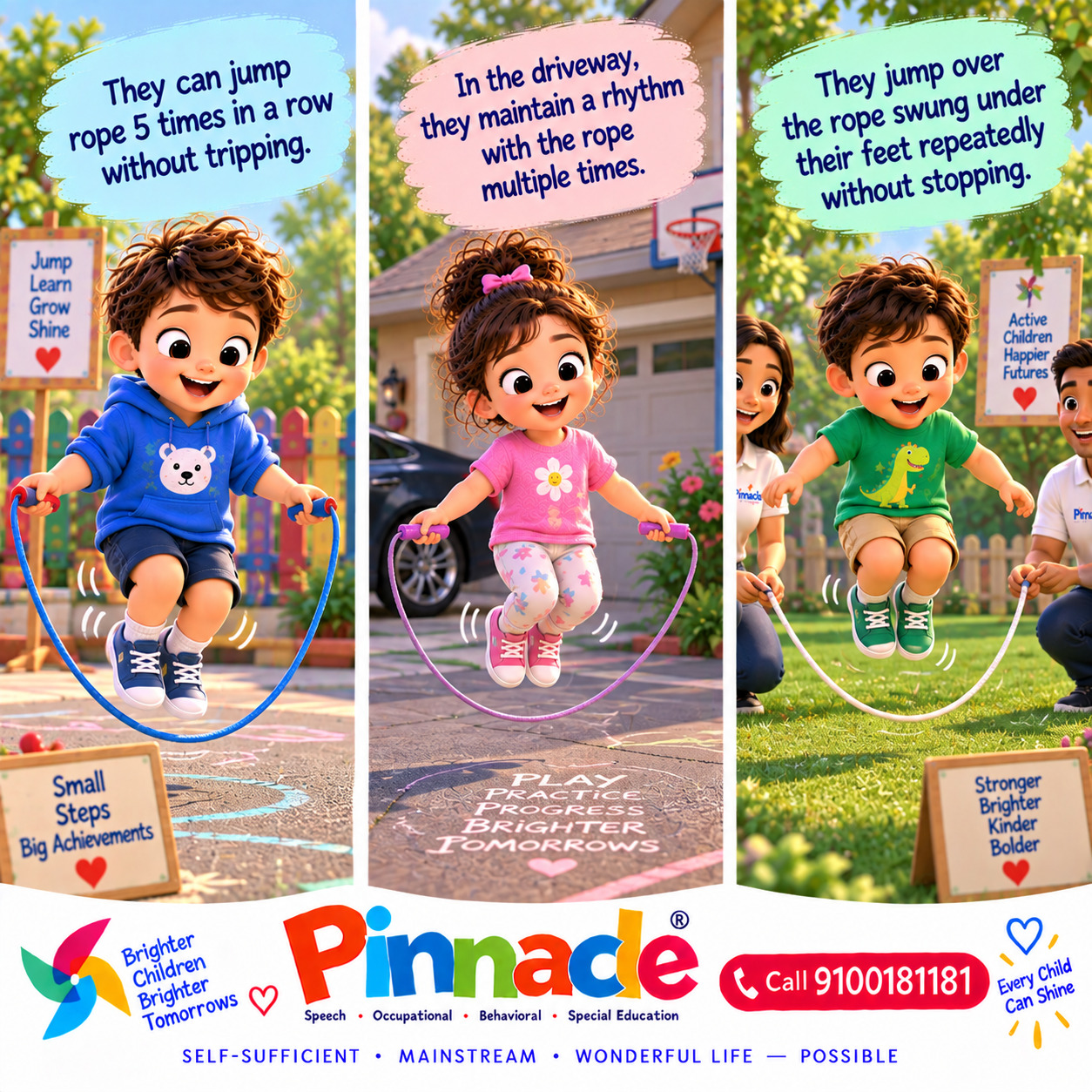
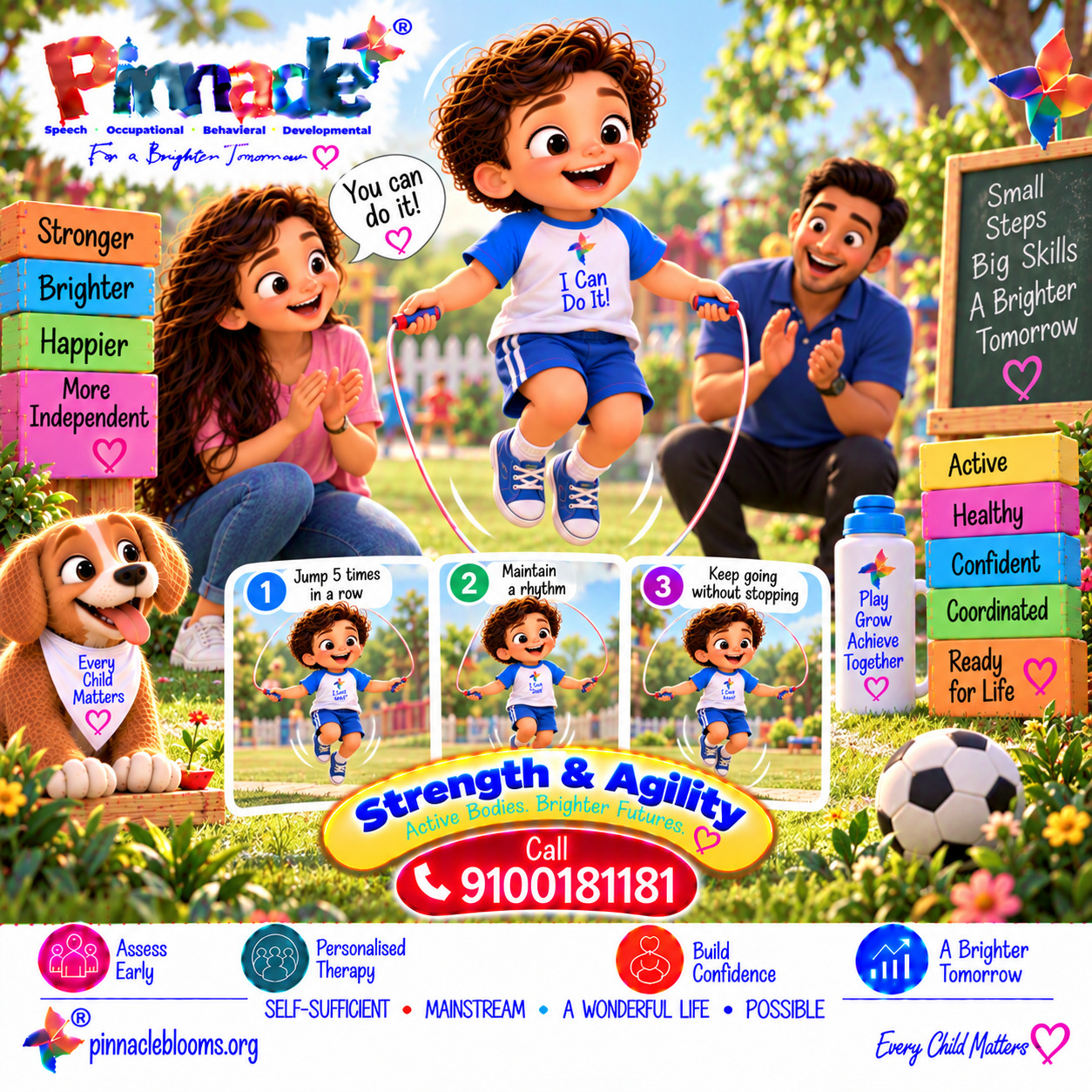
Can the child jump rope continuously for at least 5 jumps?
Topic: Strength & Agility
Example 1
They can jump rope 5 times in a row without tripping.
Example 2
In the driveway, they maintain a rhythm with the rope multiple times.
Example 3
They jump over the rope swung under their feet repeatedly without stopping.
Example illustrationQuestion illustration
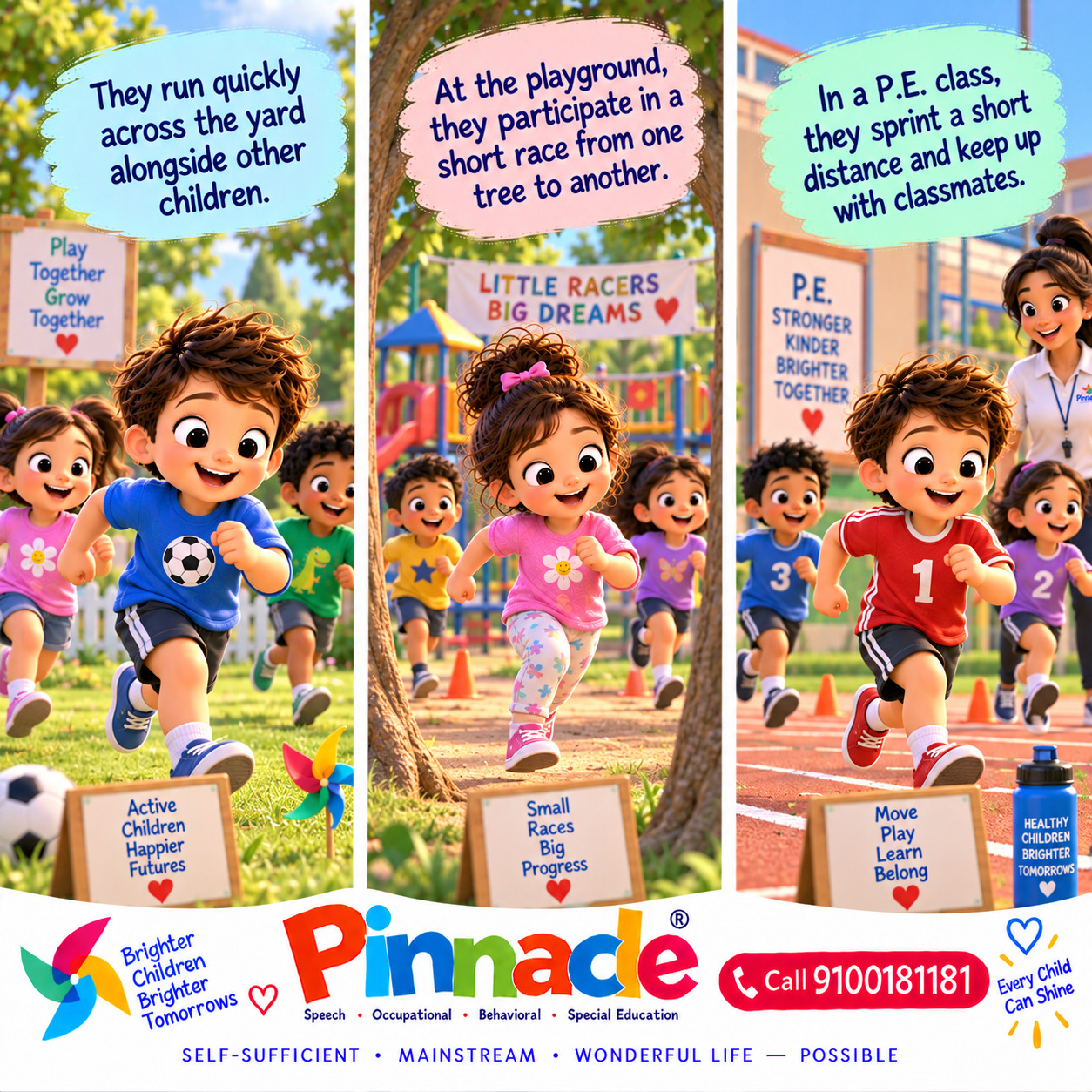
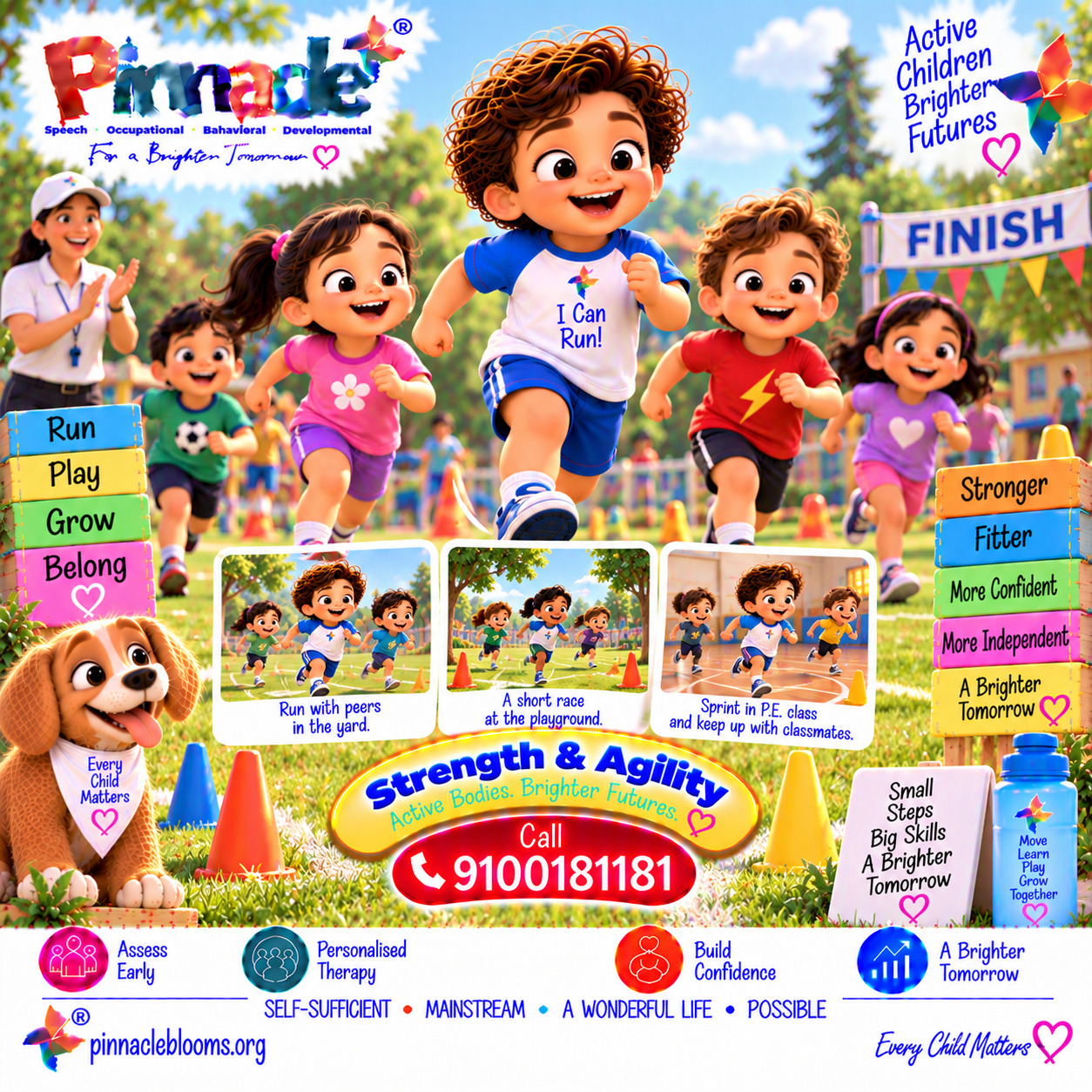
Can the child perform a short sprint or race with peers?
Topic: Strength & Agility
Example 1
They run quickly across the yard alongside other children.
Example 2
At the playground, they participate in a short race from one tree to another.
Example 3
In a P.E. class, they sprint a short distance and keep up with classmates.
Example illustrationQuestion illustration
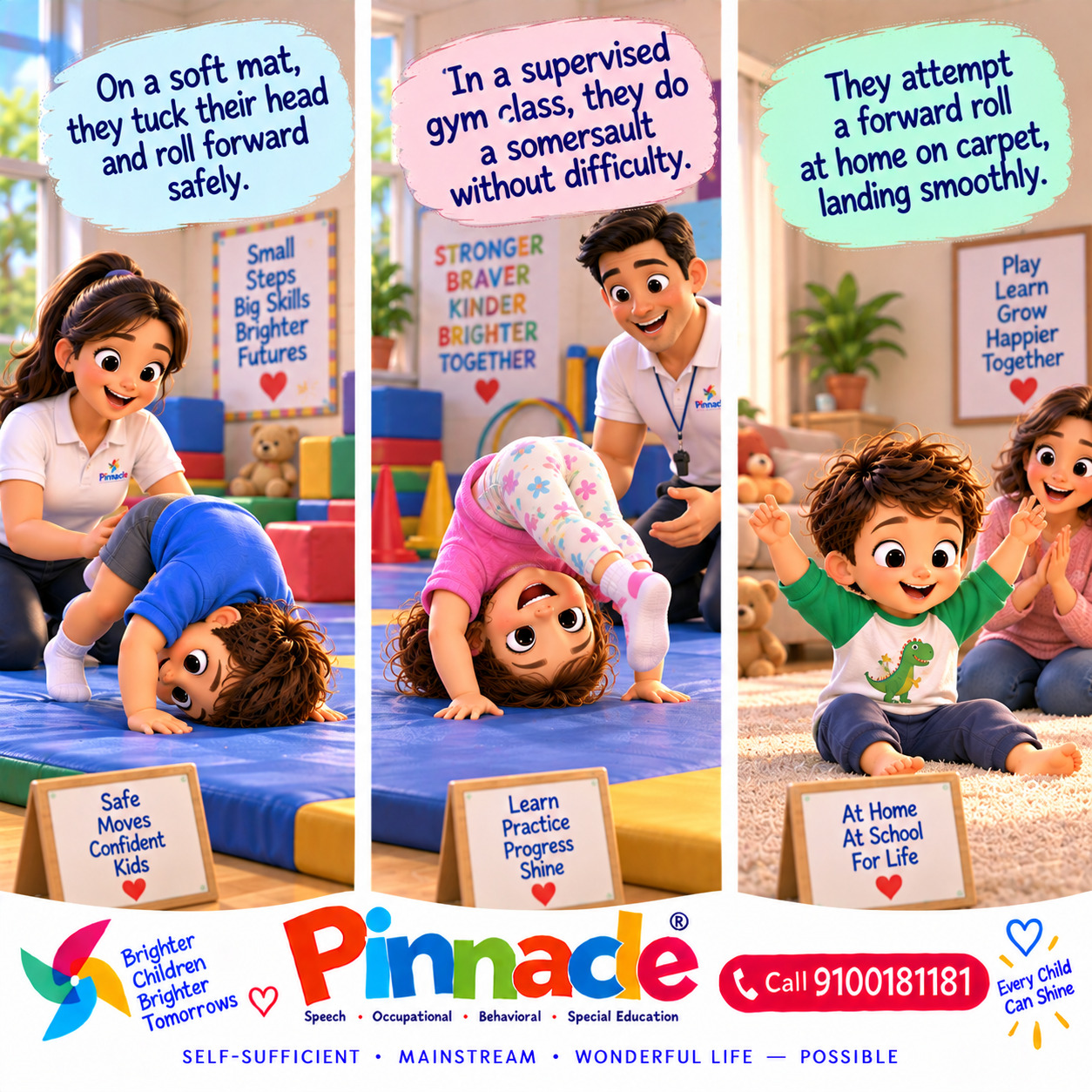
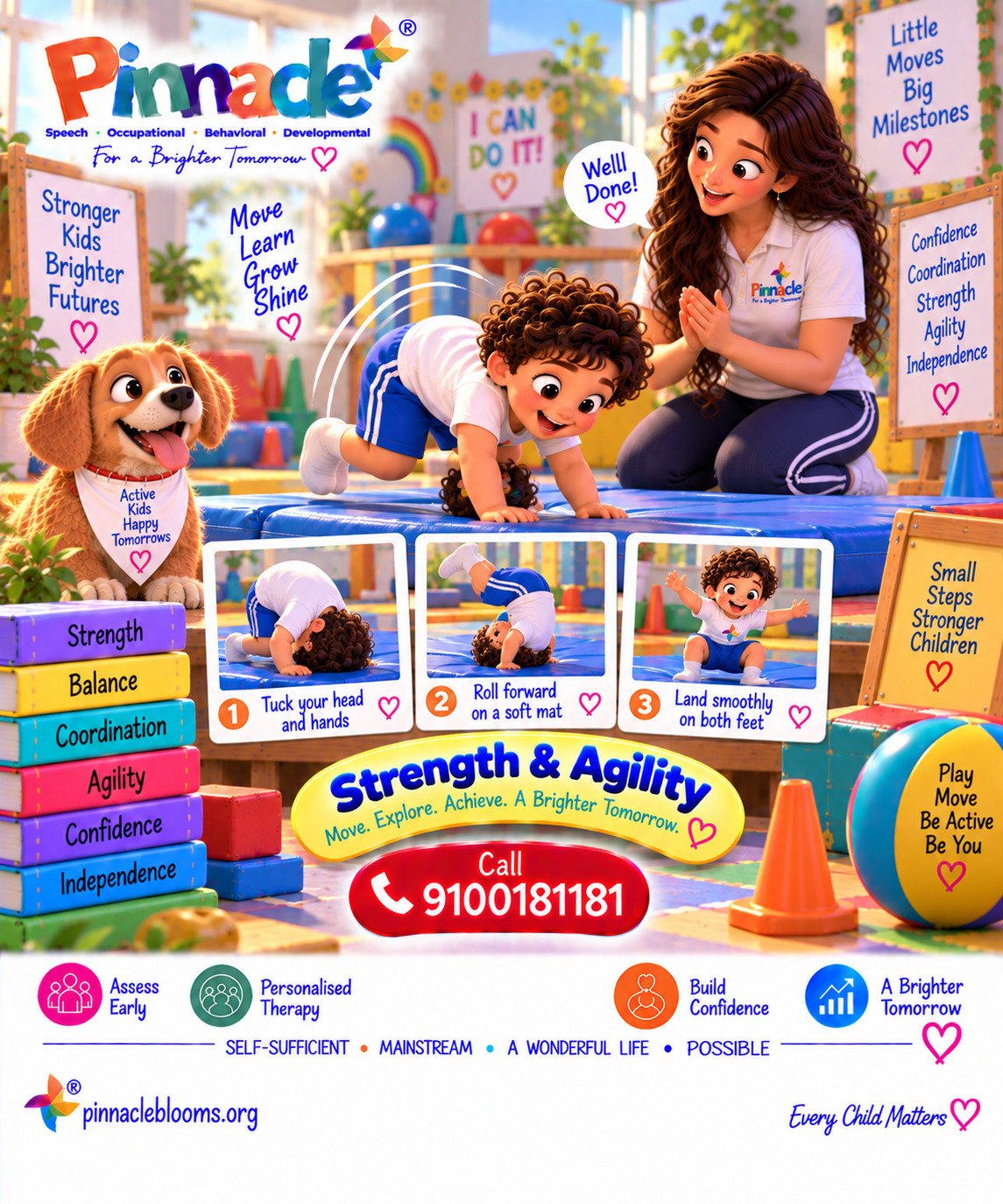
Can the child perform a forward roll on the floor?
Topic: Strength & Agility
Example 1
On a soft mat, they tuck their head and roll forward safely.
Example 2
In a supervised gym class, they do a somersault without difficulty.
Example 3
They attempt a forward roll at home on carpet, landing smoothly.
Example illustrationQuestion illustration
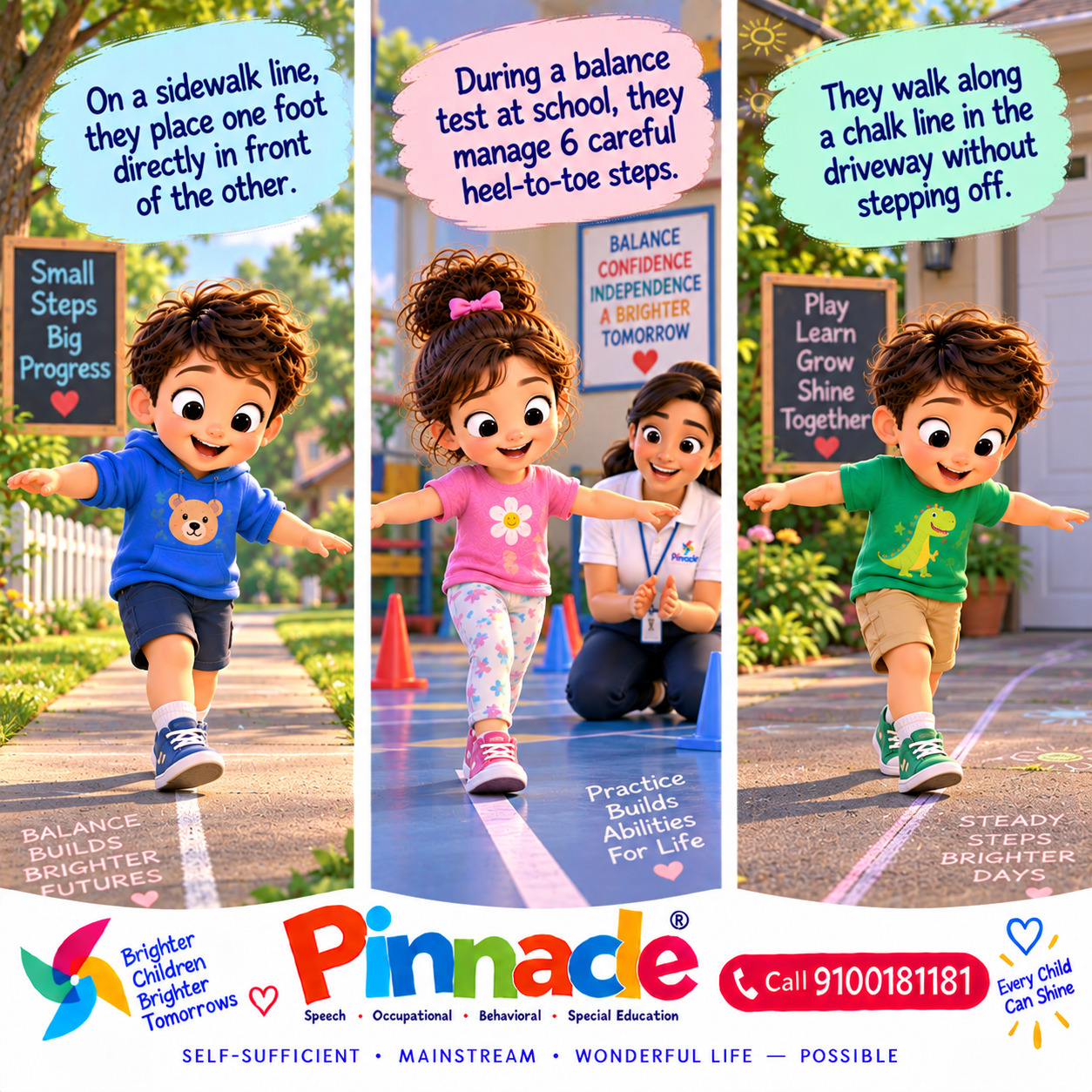
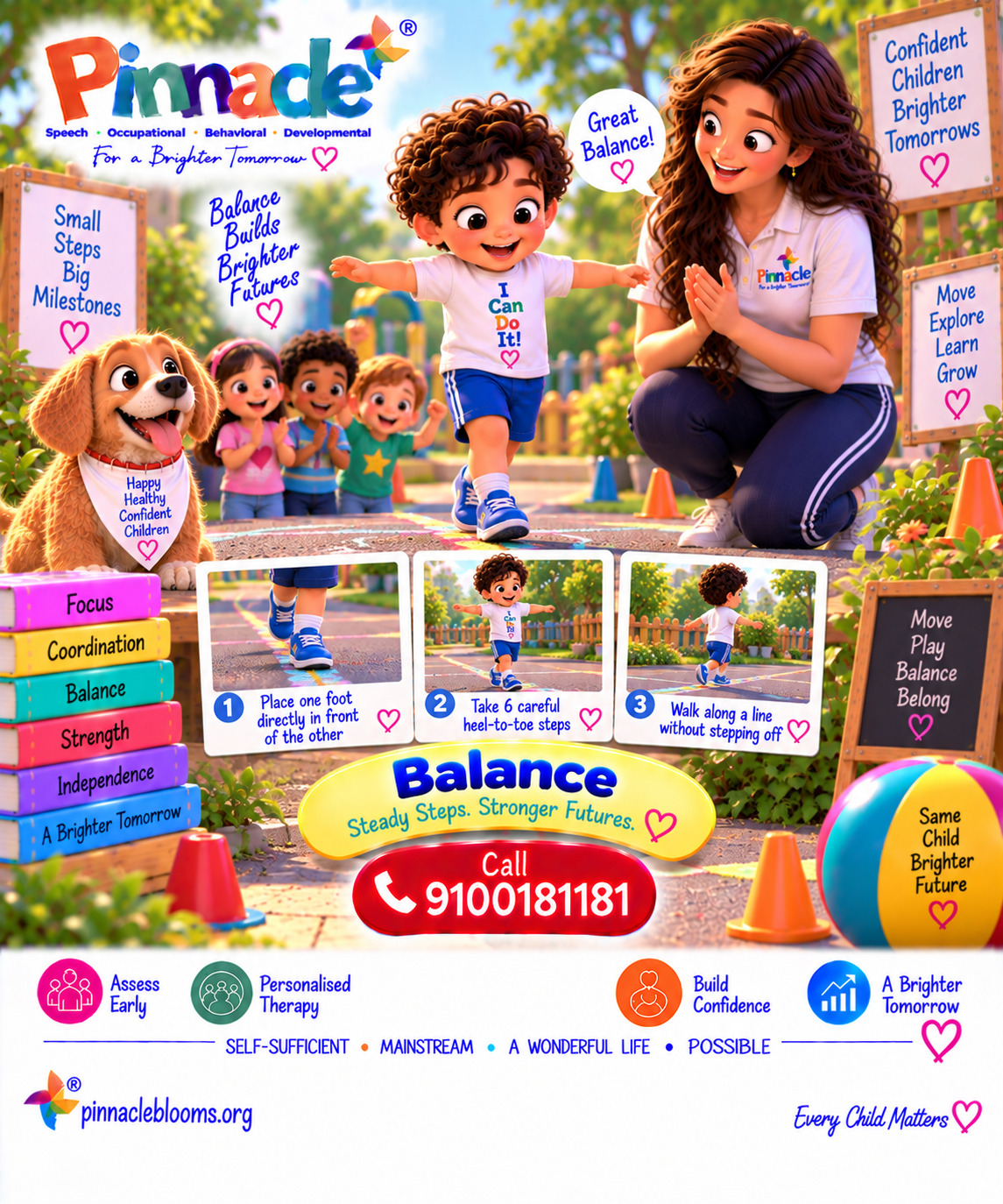
Can the child walk in a straight line (heel-to-toe) for at least 6 steps?
Topic: Balance
Example 1
On a sidewalk line, they place one foot directly in front of the other.
Example 2
During a balance test at school, they manage 6 careful heel-to-toe steps.
Example 3
They walk along a chalk line in the driveway without stepping off.
Example illustrationQuestion illustration
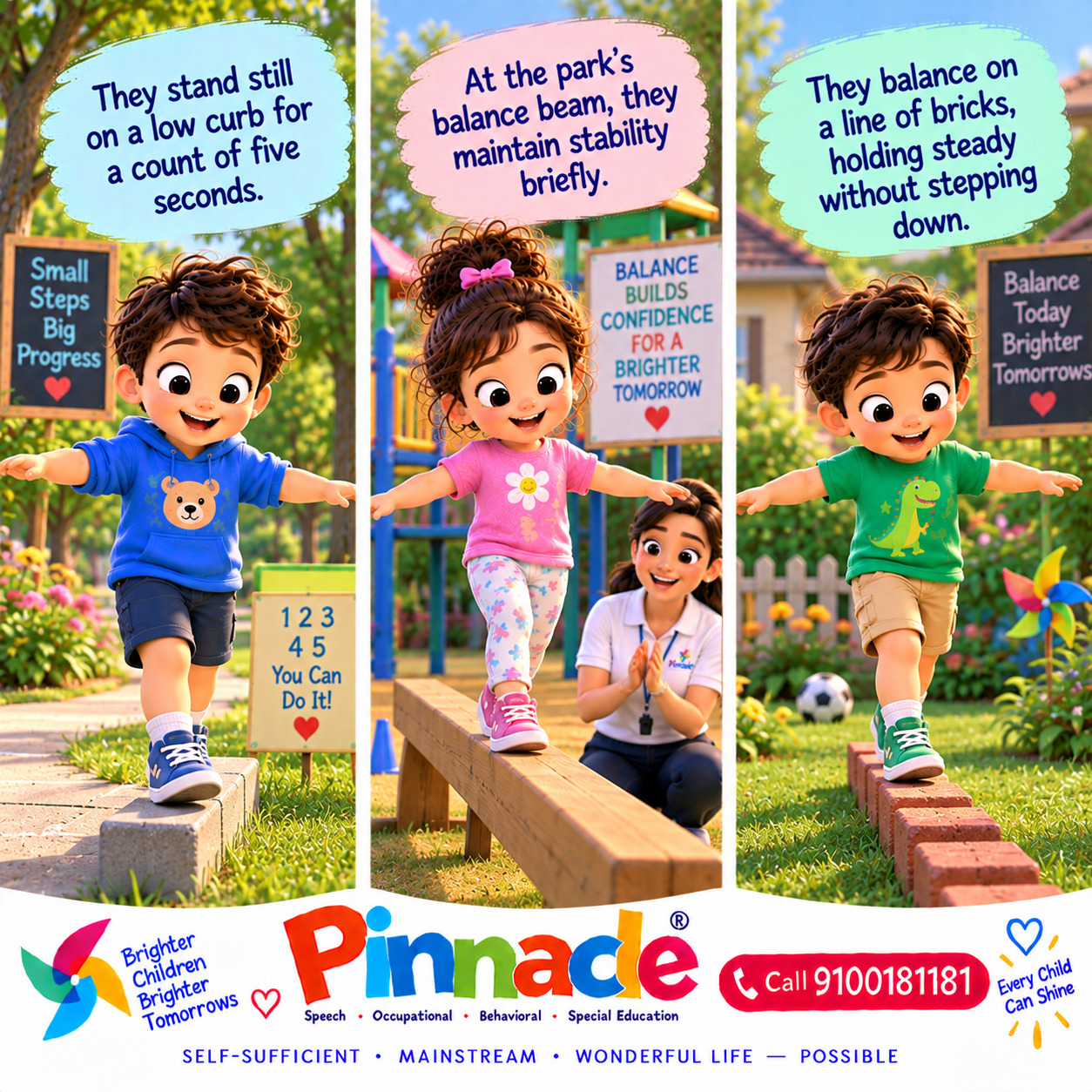
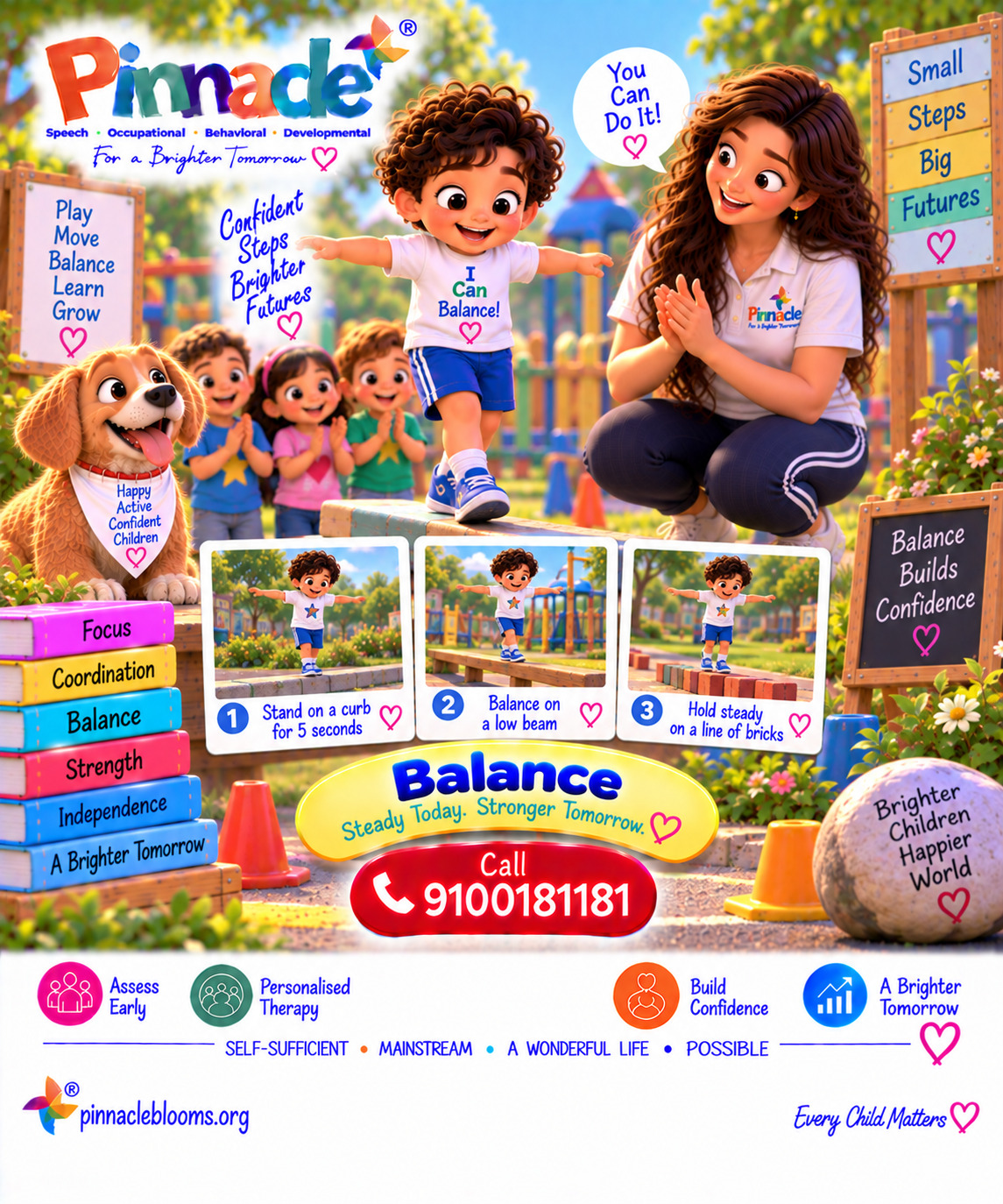
Can the child balance on a balance beam or curb for at least 5 seconds?
Topic: Balance
Example 1
They stand still on a low curb for a count of five seconds.
Example 2
At the park’s balance beam, they maintain stability briefly.
Example 3
They balance on a line of bricks, holding steady without stepping down.
Example illustrationQuestion illustration
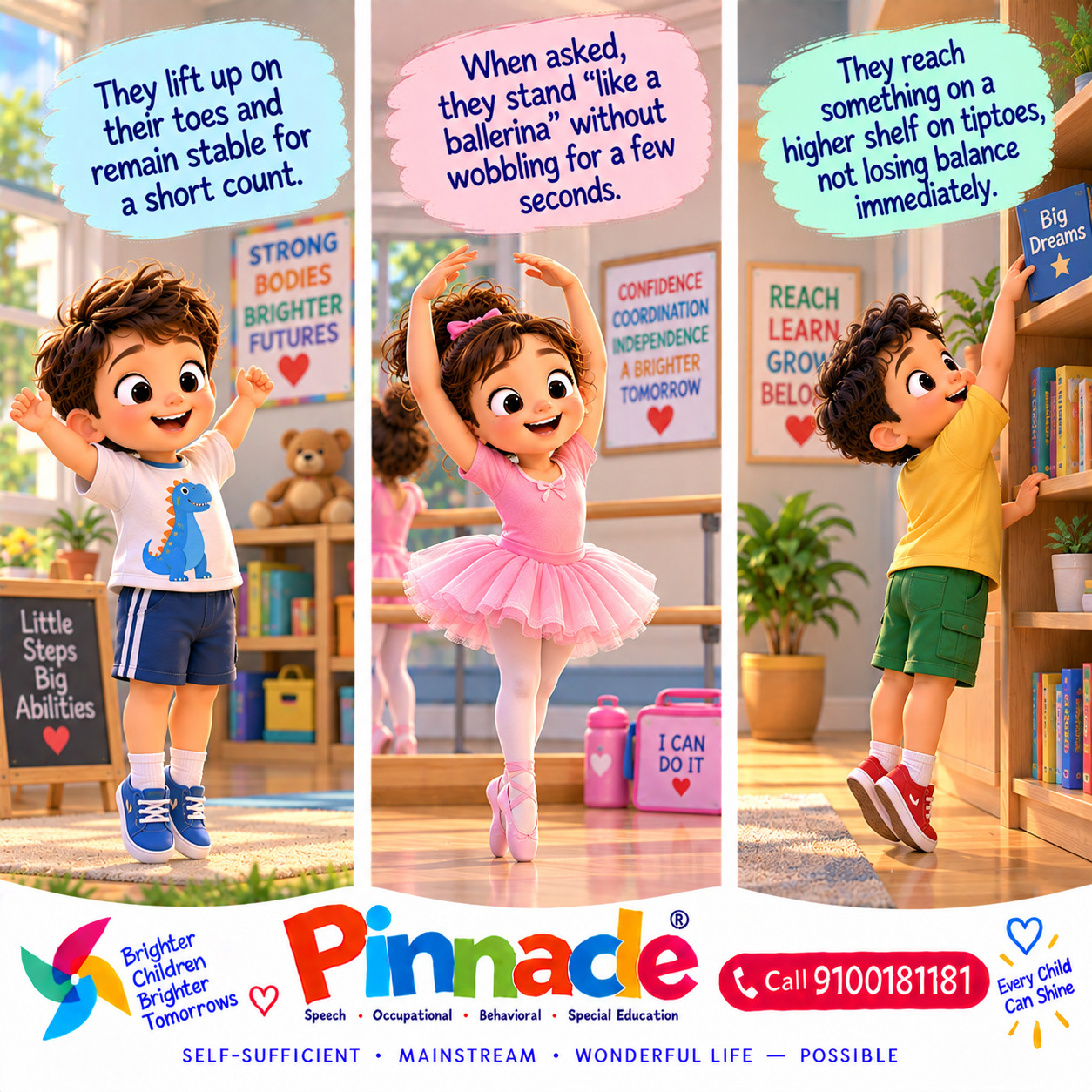
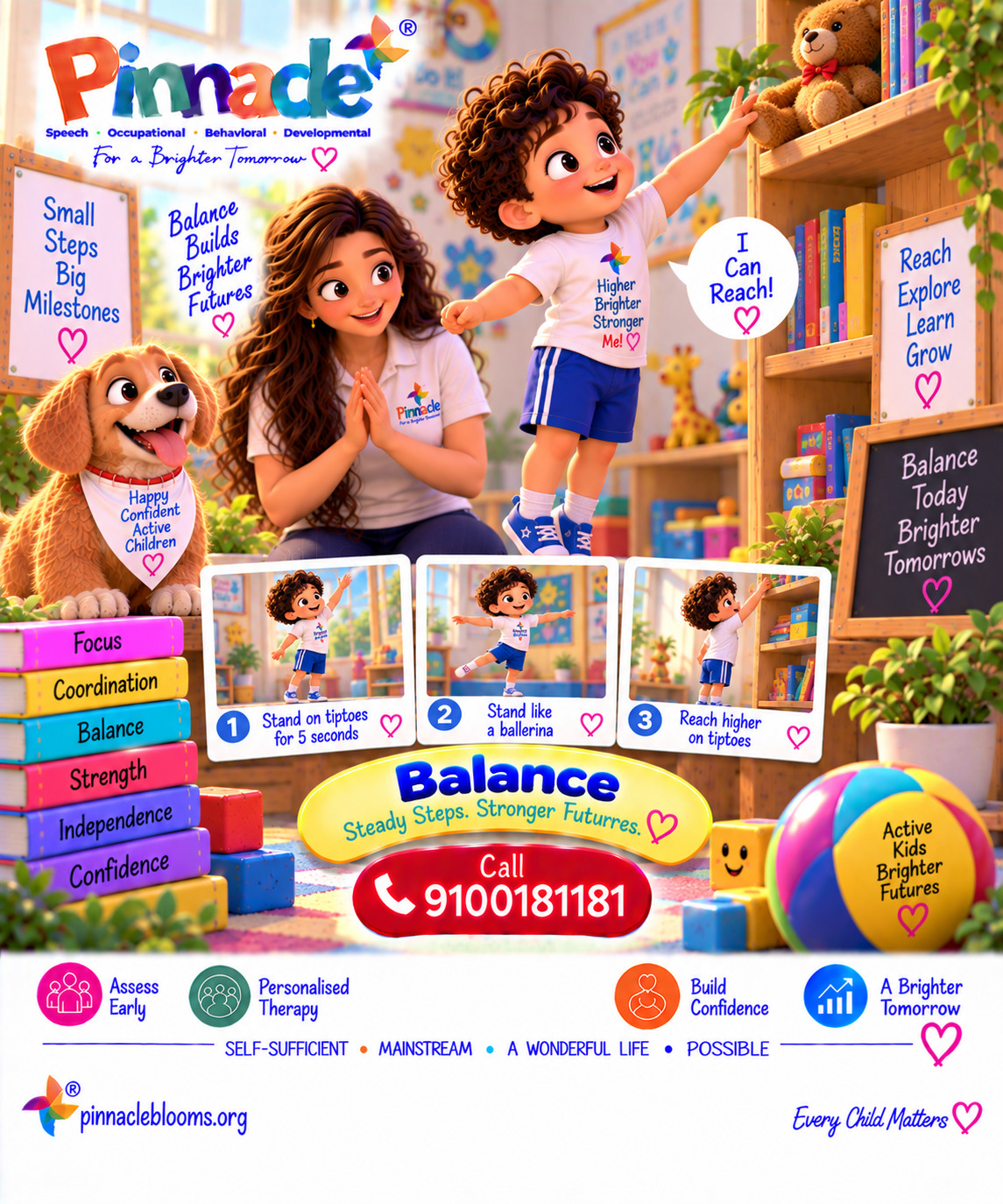
Can the child stand on tiptoes without losing balance for 5 seconds?
Topic: Balance
Example 1
They lift up on their toes and remain stable for a short count.
Example 2
When asked, they stand “like a ballerina” without wobbling for a few seconds.
Example 3
They reach something on a higher shelf on tiptoes, not losing balance immediately.
Example illustrationQuestion illustration
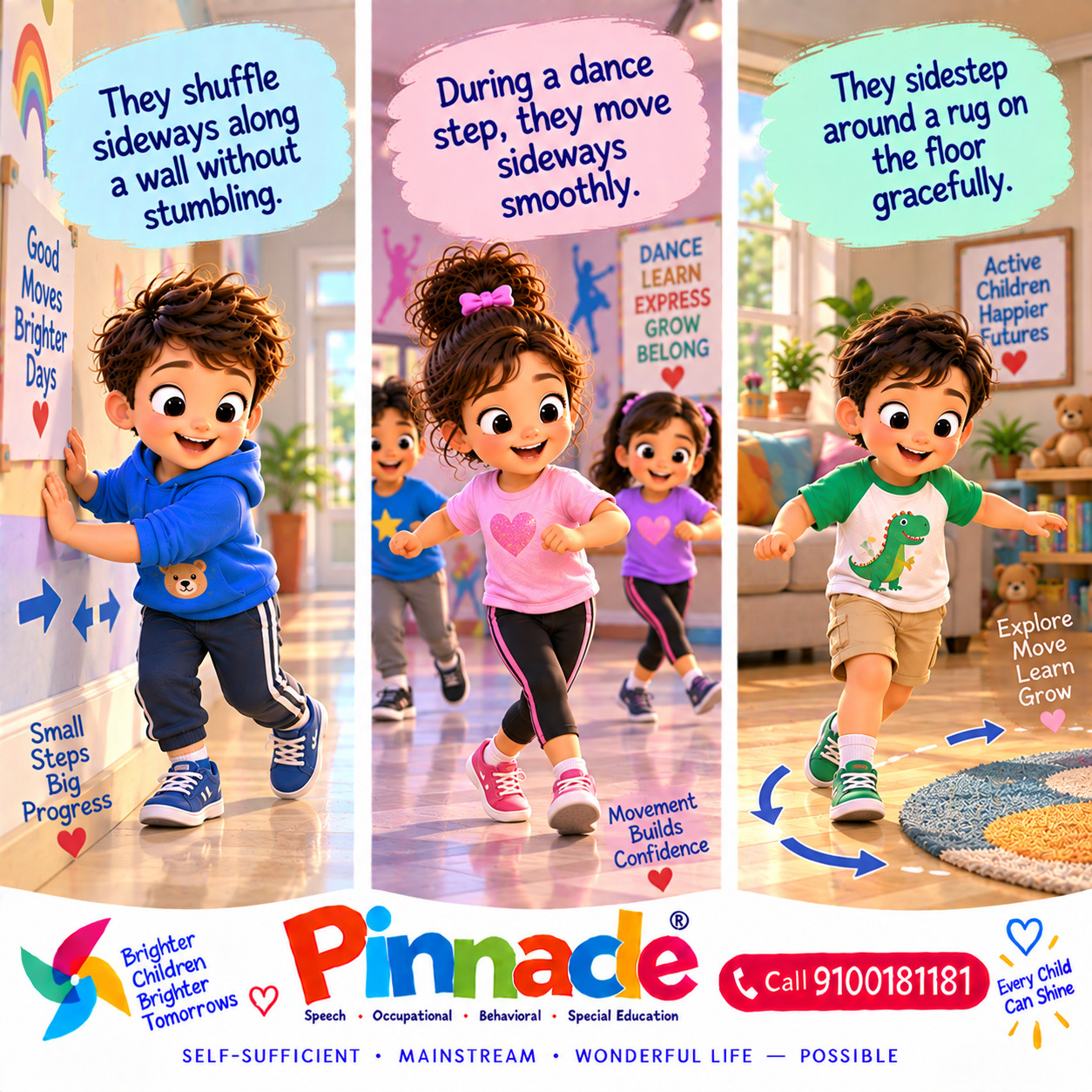
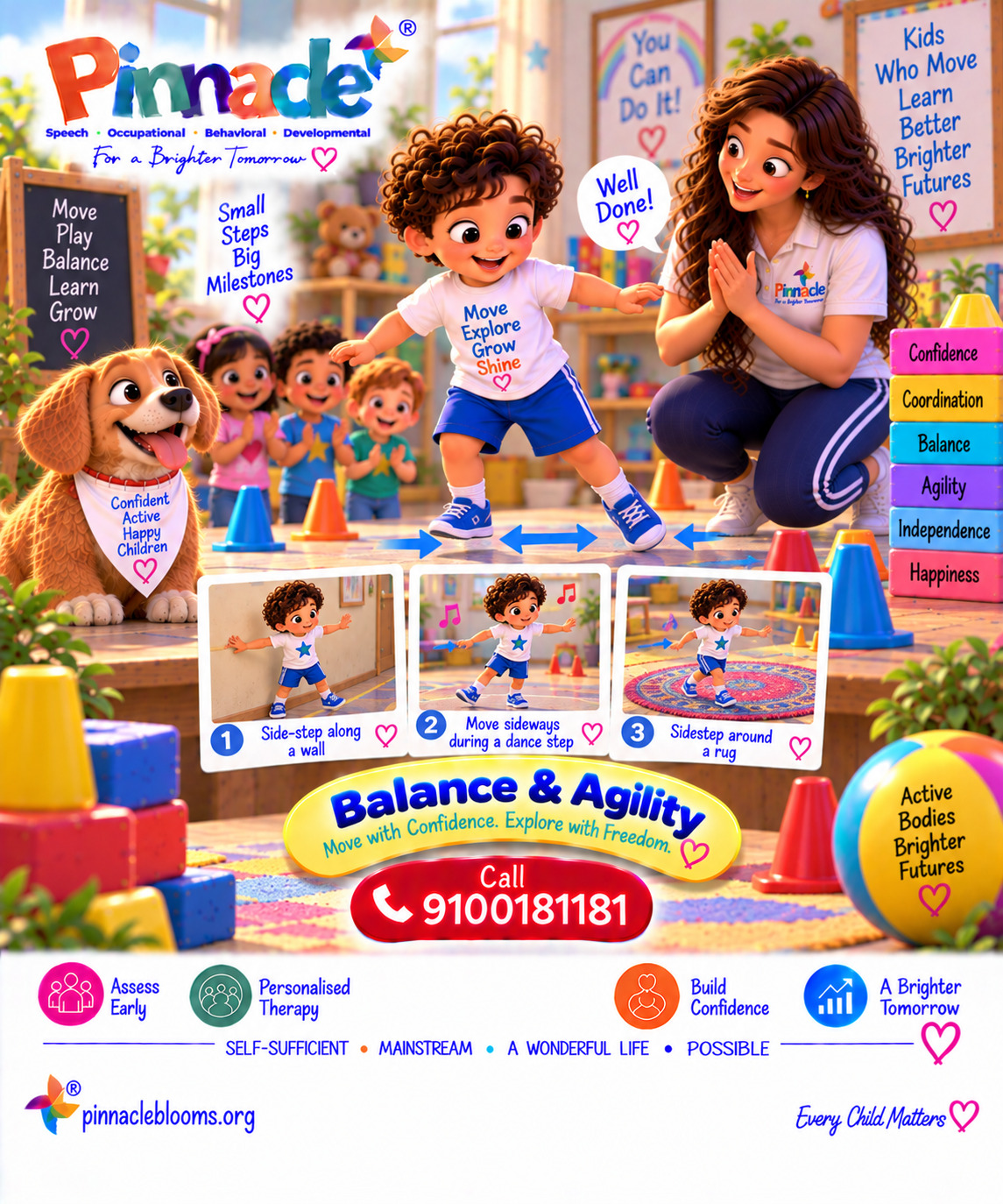
Can the child perform a side-step movement without losing balance?
Topic: Balance & Agility
Example 1
They shuffle sideways along a wall without stumbling.
Example 2
During a dance step, they move sideways smoothly.
Example 3
They sidestep around a rug on the floor gracefully.