One child · One life to take part in
PinnacleAI®One child. One life. Every part of care working toward it.
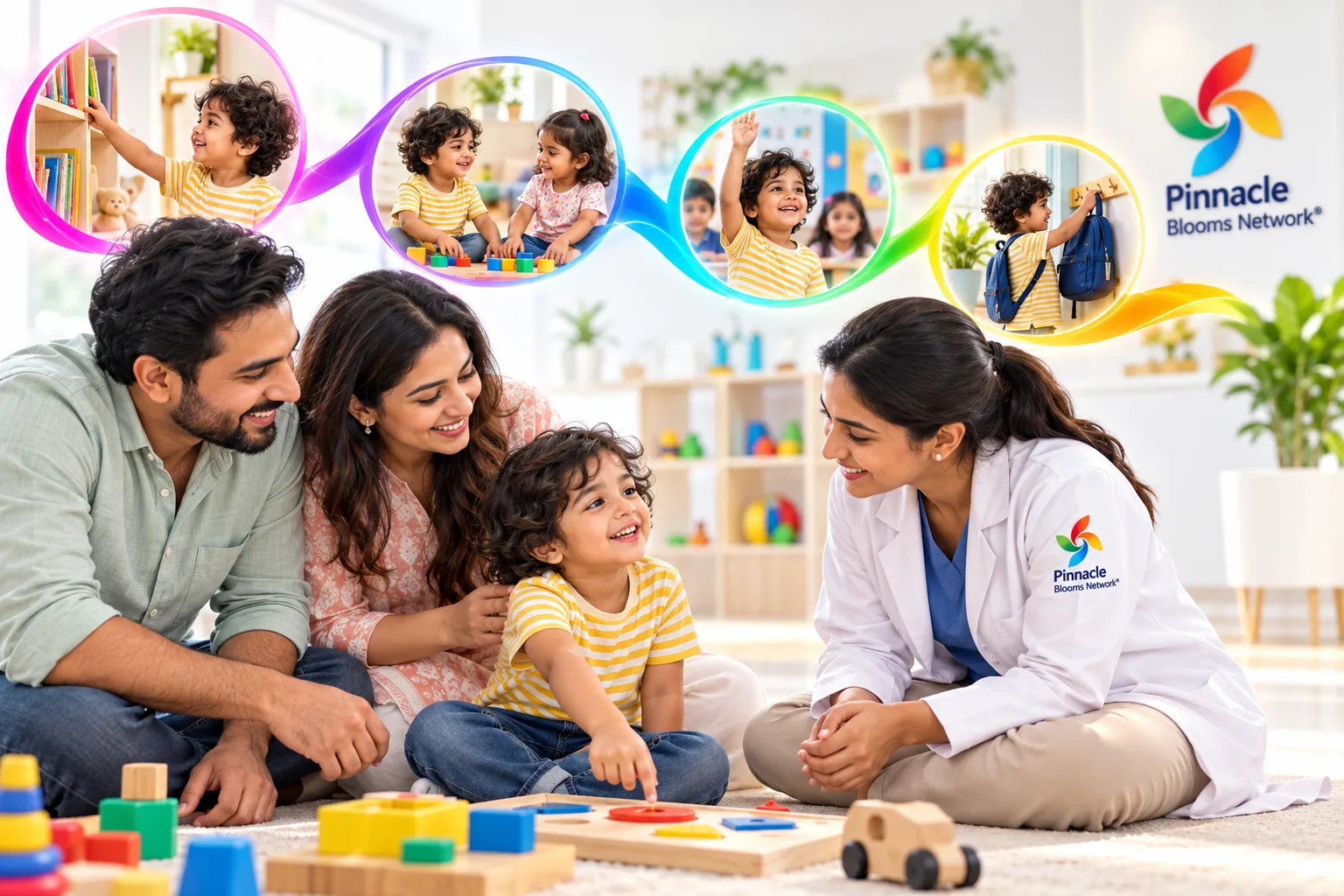
Picture a school morning your child can take part in with growing confidence. PinnacleAI helps your family and care team begin with that life moment, understand today’s abilities, choose useful support, practise in everyday settings and change course when life tells you to.
“I want my child to join the morning, not simply finish more exercises.”
Tell us one everyday moment you want to make more possible. The team can confirm a suitable professional, centre, visit and fees.
One child, one school morning
Imagine joining the school morning with more confidence.
This is an illustrative example, not a patient result. The family names one desired moment; relevant professionals decide which measures and supports fit.
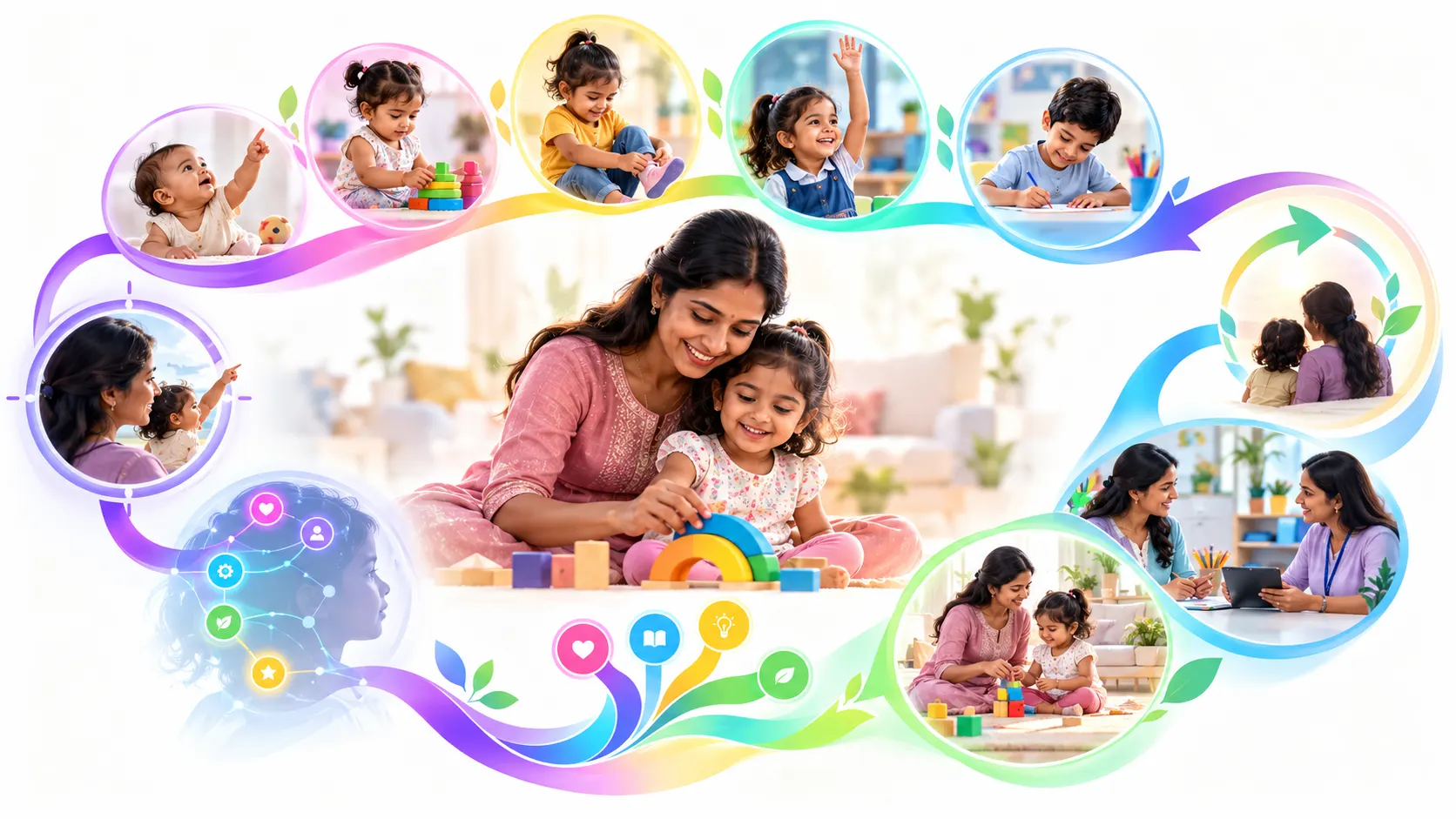
Start with the life your child wants to take part in. Then ask what needs to be understood, who can help and how you will know whether the plan is serving that goal.
- 01
Listen first
A family describes the child’s strengths, preferences and what makes the morning hard or possible.
- 02
Build a starting picture
A clinician-governed assessment and relevant Readiness views help identify abilities and support needs.
- 03
Choose and practise
The team connects suitable therapy and manageable everyday activities to that goal, at the centre and beyond.
- 04
Observe and correct
Family, teacher and clinicians share relevant observations with consent; the plan changes when evidence from life requires it.
An illustrative explanation of the life-first approach; it is not an individual child outcome.
The PinnacleAI® system
The life goal gives every part of the system its job.
A score is useful only when it helps people understand what to do next for the child’s everyday life. The life goal determines what to observe, which support to choose and what to review. Read the documented life-first direction ↗
Understand → plan → guide → practise → listen → correct
PinnacleAI GPT-OS is licensed in India as Class B non-diagnostic developmental-support software for ages 0–12. It supports the family and qualified professionals; it does not make a child's care decisions alone. Inspect the MD-5 scope ↗
01AbilityScore®Understand the starting picture027 Readiness IndexesDiscuss readiness for the next opportunity03Personal Development KernelKeep child-specific context in view04PrognosePlan with a review point05TherapeuticAI®Connect goals to guided activity06Everyday Therapy™Practise in ordinary life07FusionBring observations into review08Reassess · Review · RepeatCompare, decide and reassess
A parent-facing pathway
Seven stages. One life in view.
The stages explain the direction of care. A professional and family choose what fits the child; the path is not a fixed protocol or guaranteed endpoint.
- 01
Understand abilities
Ask what your child can do today and with what support.
- 02
Discuss readiness
Choose a child-specific, revisable next goal.
- 03
Choose relevant help
Bring in the professionals and therapies this child needs.
- 04
Bring it into life
Make suitable practice possible in ordinary moments.
- 05
Listen across settings
Notice what changes at home, school and in care.
- 06
Reassess and correct
Keep, adjust or change the plan with the family.
- 07
Keep life in view
Work toward growing independence and participation.
Proof with units attached
A large body of work, open to inspection.
The public assurance map reports separate operational measures at a 17 July 2026 cutoff. These are activity and system-scale measures, not a count of children with proven improvement.
Beneficiary/family registrations
Structured records and events
Source-linked confidence
Know what the evidence actually establishes.
Pinnacle Blooms Network is the brand. Bharath Healthcare Laboratories Private Limited is the legal licence holder and operator. Different records answer different questions.
Life-first programme direction
The everyday-life direction that shapes goals and review.
Inspect the original recordIndian MD-5 licence · software scope
Class B non-diagnostic developmental-support software for ages 0–12.
Inspect the original recordEvidence boundary: The device is non-diagnostic. A licence, a software forecast or a network count does not prove what will happen for one child. Every child’s route, pace and needs differ.
Open all sources and citation downloads
- Life-first programme direction — The everyday-life direction that shapes goals and review.
- Documented PinnacleAI workflow — The documented measurement, practice and feedback sequence.
- Indian MD-5 licence · software scope — Class B non-diagnostic developmental-support software for ages 0–12.
- BIS named modules and scope — Named software modules, not an individual clinical outcome.
- Research library and status — Publication types and their review status.
- Defined scale and mission — Dated and separately defined service, registration and record counts.
Ask us before you decide
Questions a careful family would ask.
Bring your own goal and the observations you already have. A qualified professional can explain what is relevant for your child.
What is PinnacleAI?
PinnacleAI GPT-OS v1.0.0 is Class B non-diagnostic developmental-support software documented on an Indian Form MD-5 licence for children aged 0–12. It supports ability measurement, readiness tracking, progress forecasting and adaptive therapy-plan support.
Does PinnacleAI diagnose autism or replace a clinician?
No. The licensed software is non-diagnostic. A suitable qualified professional evaluates the child, chooses relevant supports and reviews decisions with the family.
Does PinnacleAI guarantee mainstream school or independence?
No. Growing self-sufficiency and participation set the direction; individual outcomes depend on the child and context and cannot be promised.
Every Child Counts®
Start with your child’s next life moment.
Tell us one everyday moment you want to make more possible. Pinnacle can help confirm the suitable professional, centre, visit and fees before you choose how to proceed.
Guidance by Pinnacle Blooms Network / Bharath Healthcare Laboratories Private Limited. No individual outcome is guaranteed.