Play and friendship
Enjoy an activity with another person, share an interest or communicate an invitation in their own way.

Mainstream-included life · a place to belong
A shared game. A classroom activity. A family outing. You want your child to have a place in everyday life. We start with that possibility and work with your family around the abilities and support that can help.
Pinnacle / BHCL · Free 24/7 telephone guidance. The team confirms appointments, suitable professionals, services and fees.
How Pinnacle connects the work with life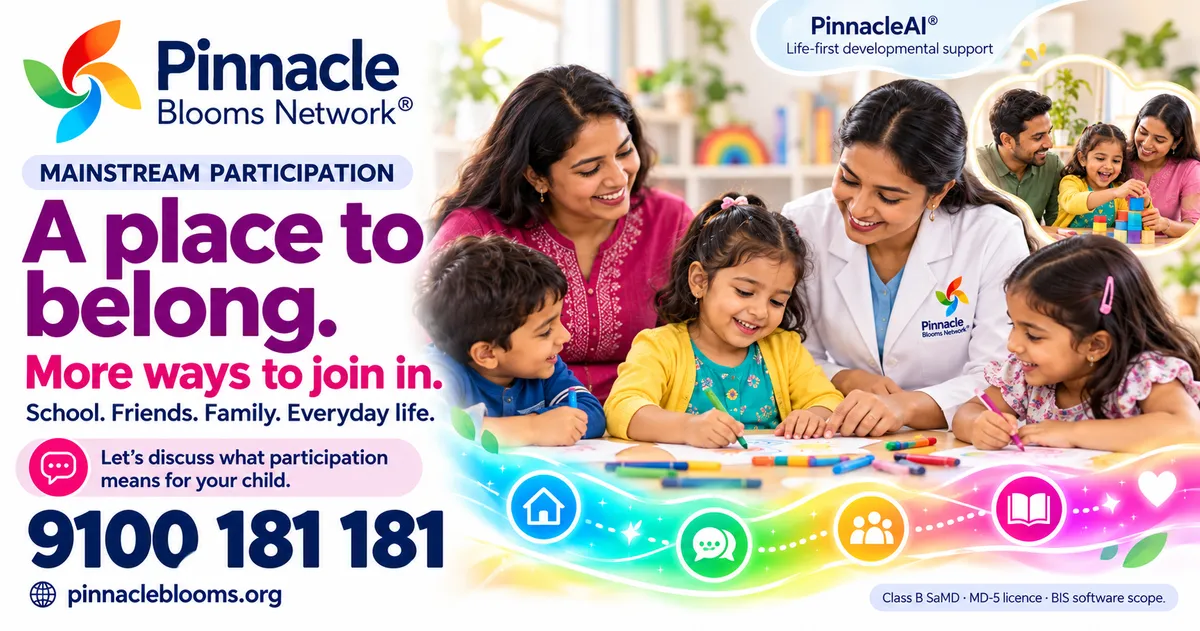
Start with the life you want to open up
Mainstream participation means taking part in school, family, play and community life in ways that are meaningful and accessible to your child. Readiness, support and the environment all matter. Pinnacle’s life-first approach connects suitable assessment, relevant therapies, family and teacher observations, practice and review around that direction.
Enjoy an activity with another person, share an interest or communicate an invitation in their own way.
Discuss participation in an activity, communicating needs and the support or adaptations that help.
Join a familiar outing, celebration or shared routine with comfort, choice and suitable support.
Make a preference or need understood. Participation includes being heard and having choices respected.
The PinnacleAI® paradigm shift
You build a home for the life it makes possible. Its individual bricks serve that purpose. At Pinnacle, meaningful communication, routines, learning and participation give assessment, therapy, practice and review their direction.
Your family helps choose the priorities, understands the plan and brings real-life observations into review. Suitable professionals choose and adjust relevant support around your child.
Read the documented life-first approachOne example · a useful way to think about the process
“My child enjoys drawing at home. What could help them join a small activity with others?”
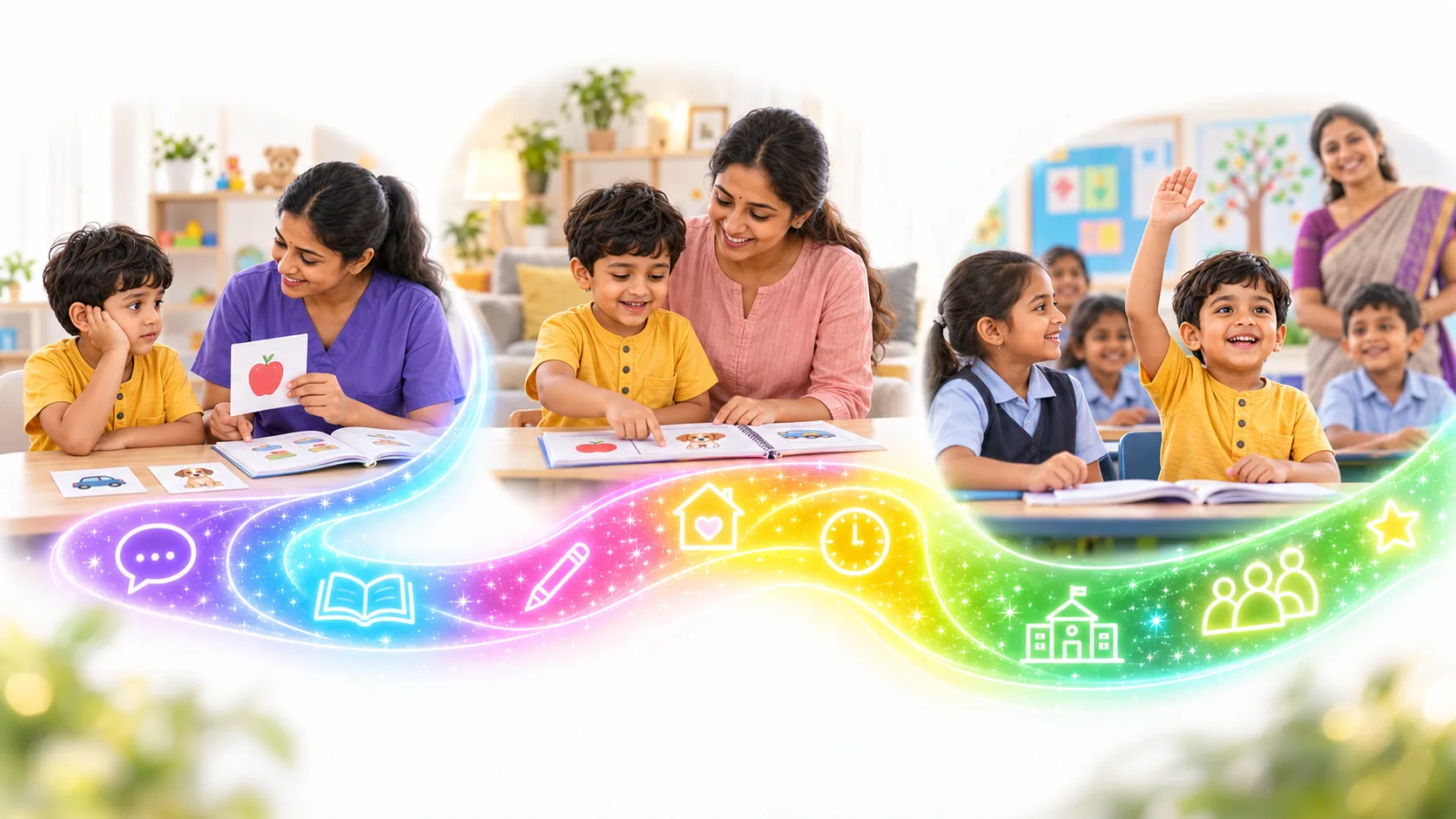
In this example, a child enjoys drawing at home, points to a favourite colour and makes marks with a thick crayon. The family wants to open a comfortable opportunity to draw beside another child. Joining, watching first, asking for help or declining are all choices the adults need to understand and respect.
With the family’s consent, the relevant professional and teacher discuss the child’s communication, preferred materials and comfort in the setting. They agree a short invitation at a quieter table with one peer, a thick crayon within reach, space for the child’s own paper and a familiar help or break cue. The teacher can offer a shared colour choice without requiring the children to produce the same drawing.
An illustrative observation: at home the child chooses a colour and uses the help gesture with a parent; in a larger, noisy drawing group, they watch but do not reach for the materials or use the gesture. The family and consenting teacher describe the invitation, materials, help offered, interest and comfort. Finishing a picture alone would not explain whether the opportunity was accessible.
In this illustrative review, the family, relevant professional and teacher agree to keep the familiar crayon and help cue, then try the quieter invitation beside one peer with the child’s own paper. The child can watch, join briefly, ask for a break or decline. At the next agreed review, the adults compare choice, comfort, communication and participation across settings, and decide what support to keep or adapt. This decision does not promise a school place or admission.
This is an illustrative planning example, not a recorded child outcome or school transition. Your child, family, suitable professionals and the consenting school shape the actual opportunity and support.
Seven stages · one life-first direction
Start with strengths, everyday observations and suitable assessment. Read AbilityScore with the child’s age, context and skills.
Explore this part →Discuss what you want to make possible and agree useful priorities. Readiness views support professional judgement.
Explore this part →Bring in the therapies, educational support or health review that fit this child. Every child does not need every service.
Explore this part →Use manageable, guided practice in meaningful routines. Family participation connects the work with daily life.
Explore this part →Bring relevant observations back into review. Ask what became useful, what support remains and what needs to change.
Explore this part →Compare abilities and context over time. Continue, adapt or complete support according to the child’s needs.
Explore this part →Keep self-sufficiency, learning, relationships and mainstream participation in view. Progress is individual.
Explore this part →Family knowledge + suitable professional support
Define a useful activity with the family and relevant professional or teacher. Entry to a school alone does not describe the whole experience.
Consider communication, comfort, appropriate adjustments and the people involved. Inclusion does not require the child to become someone else.
Use observations from the family and, with consent, the school. Readiness views support judgement; a score does not decide placement.
Speech therapy can support communication. Occupational therapy can support daily activities and participation. Behavioural support and special education can contribute when the child-specific priorities indicate them.
Confidence with a source you can inspect
The child’s self-sufficient, mainstream-included life sets the direction for abilities, goals, methods, people, everyday practice and review. This is the programme purpose; outcomes are individual.
Read the source →The scope schedule names Self Sufficiency and Mainstream Inclusion within the software system. A named module is distinct from a demonstrated child outcome or school admission.
Read the source →PinnacleAI GPT-OS v1.0.0 is Class B non-diagnostic developmental-support software for children aged 0–12. The licence describes the device’s scope, not a guaranteed result.
Read the source →Inspect each study’s question, version and publication status. Methodology, research protocols and completed findings have different meanings.
Read the source →Pinnacle Blooms Network is the brand operated by Bharath Healthcare Laboratories Private Limited.
Read the source →Questions families ask
It means meaningful participation in ordinary family, school, play and community life with appropriate support and access. Goals, settings and support differ for each child.
No. Admission is one event. Participation also involves learning access, communicating needs, relationships, comfort and suitable support. A school and family make placement decisions using relevant professional advice and the child’s circumstances.
Pinnacle’s separate readiness views support conversations about developmental priorities, including school, self-sufficiency and mainstream participation. They are read with abilities, context and professional judgement; they are not an automatic placement decision.
Yes. Relevant family observations and, with your consent, teacher observations can help guide meaningful priorities and review. Ask how information will be shared and who will use it.
No. The programme works toward meaningful participation with child-specific support. The software’s regulatory scope and research records do not guarantee admission, independence or an individual outcome.
Call 9100 181 181 with one part of school, play or community life you want to make more possible. The team can help confirm a suitable professional, centre, service, appointment and fee before a visit.
Bring one moment that matters
The first conversation can help clarify a suitable assessment, professional and centre. You can ask what the visit includes, how your family participates and how the work will be reviewed before deciding.